How to Increase Sales in Your Retail Shop in Nigeria: 10 Strategies That Actually Work in 2026
SwiftPOS Team
Published April 18, 2026

You open your shop every morning, you attend to customers all day, you close late — and at the end of the month, the numbers just don't add up the way they should. Sound familiar? You're not alone.
Across Nigeria, thousands of retail shop owners are caught in exactly this trap: high activity, high effort, but frustratingly flat or unpredictable revenue. The shop is busy, but the business isn't growing. The problem is almost never the products. It's almost never the location. More often than not, it's strategy — specifically, what you're doing (and not doing) to consistently drive sales and protect every naira you earn.
This guide breaks down ten concrete, field-tested strategies for increasing sales in your retail shop in 2026 — built specifically around the realities of running a business in Nigeria. No generic textbook advice. Just what actually moves the needle.
If you haven't already, also check out our post on why your shop is always busy but your account is always empty — it tackles the mindset side of this same problem.

1. Know Exactly What Is Selling — and What Is Just Taking Up Space
This is the most underrated sales strategy of all, and most Nigerian shop owners skip it entirely. Before you can increase sales, you need to know what is actually driving your current revenue versus what is sitting on the shelf collecting dust and tying up your capital.
The 80/20 rule applies heavily to retail: in most shops, roughly 20% of your products are generating 80% of your sales. If you can identify those products quickly and keep them consistently in stock, you've already solved half the problem.
The challenge is that without proper tracking, you're guessing. You rely on memory — "I think sachet water moves the most," "I feel like we sell more of the big rice bags" — but feeling and knowing are completely different things in business.
Poor inventory awareness is one of the biggest reasons Nigerian supermarkets and retail shops lose money. When you don't know your top sellers, you overspend on slow movers and constantly run out of your best products — both of which kill revenue.

A proper retail management system like SwiftPOS tracks every product sold so you can see — in real time — what moves fast, what moves slow, and what hasn't moved at all this month. That data alone is worth more than any marketing spend, because it lets you stock smarter, display better, and never leave cash sitting on a shelf.
2. Stop Losing Customers to Stockouts
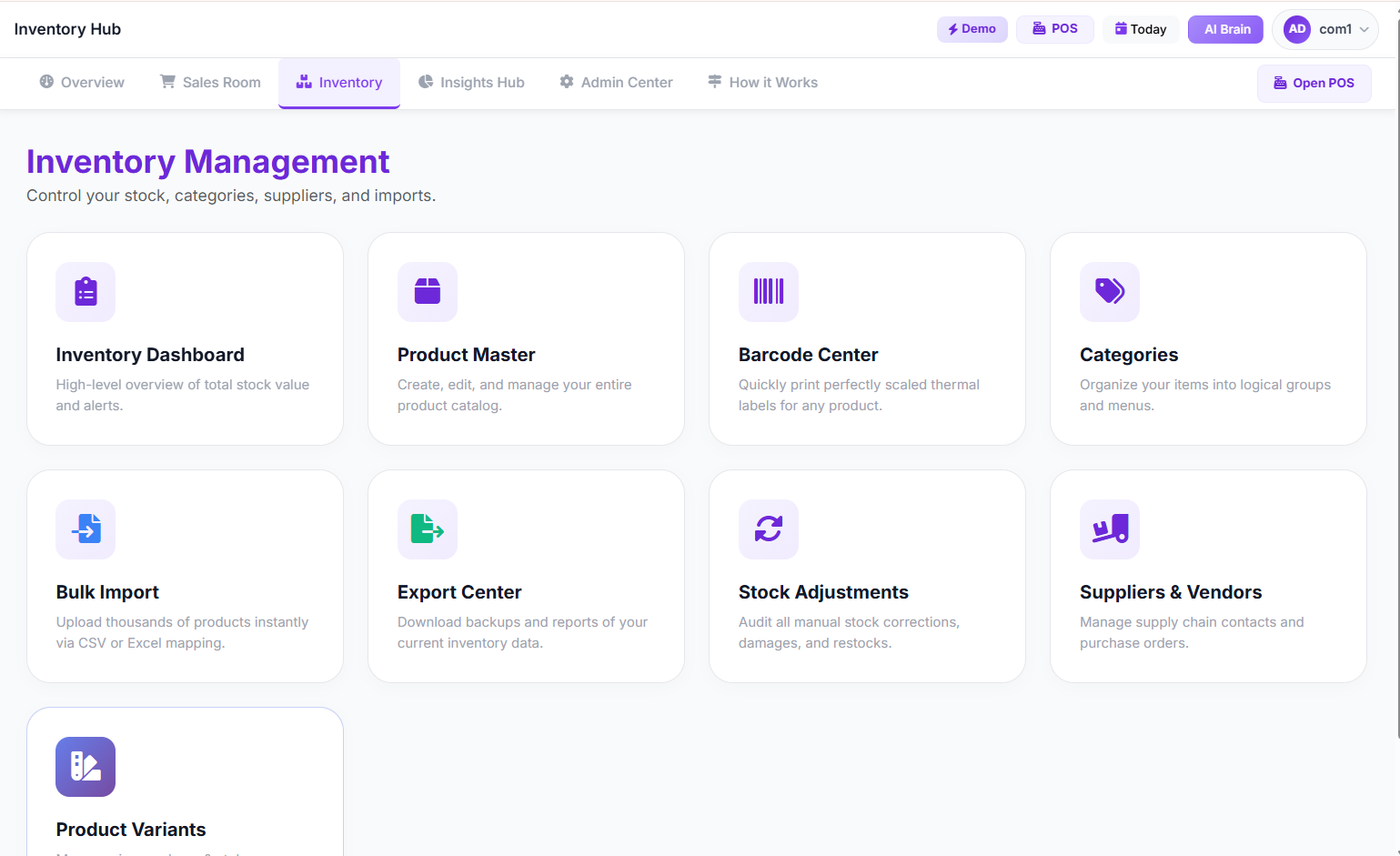
There is nothing more frustrating to a loyal customer than walking into your shop and being told that the specific thing they came for isn't available. Most of the time, they'll turn around and buy it from your competitor down the road. And if it happens twice, you might lose them permanently.
Stockouts are one of the most avoidable causes of lost sales, yet they happen constantly in retail shops that don't have an automated reorder system. The shop gets busy, you forget to reorder, the supplier doesn't show up, and suddenly your fastest-selling item has a gap on the shelf for three days.
Research from Retail Dive estimates that out-of-stocks cost retailers trillions globally each year — and this hits smaller shops proportionally harder, because a loyal customer base built over years can evaporate quickly when expectations are repeatedly unmet.
The solution is low-stock alerts. When your system knows that your reorder point for a product is 10 units and your stock drops to 12, it flags it before you actually run out. Automating your reorder process is one of the most direct ways to protect revenue that you're currently losing without even knowing it.
3. Train Your Staff to Sell, Not Just Serve
There's a big difference between a staff member who hands over what a customer asks for and one who actively increases the value of every transaction. The former is order fulfilment. The latter is selling.
In a well-trained retail team, every customer interaction is an opportunity. When someone comes in for a bottle of vegetable oil, a well-trained cashier might mention that the seasoning cubes are on special today, or that the bigger pack of the same oil saves them ₦200. That upsell, done naturally and without pressure, adds to the transaction value without the customer feeling pushed.

But here's the problem: most shop owners in Nigeria have no way to measure how their staff are actually performing at the sales level. You don't know if one staff member consistently sells 30% more per transaction than another. You don't know who is most effective at serving high-value customers. Without that data, training is just a guess.
This is why staff performance tracking matters. Beyond theft prevention, knowing which staff members are genuinely driving sales gives you the power to reward top performers, coach underperformers, and build a team that actually contributes to revenue growth rather than just showing up.
4. Make It Easier for Customers to Come Back
Acquiring a new customer costs significantly more than retaining an existing one. This is true globally, and it's especially true in Nigerian retail where word-of-mouth and community relationships drive a huge portion of traffic.
Your repeat customers are your most valuable asset. They already trust you, they already know where you are, and they already buy from you. The question is: what are you doing to make sure they come back more frequently and spend more each time?
Some of the most effective customer retention tactics in Nigerian retail are surprisingly simple:
- Remembering regular customers by name and knowing what they usually buy
- Offering a structured, tracked customer credit system that rewards loyalty with trust
- Notifying customers when a product they asked about earlier is back in stock
- Providing branded receipts that reinforce your shop's professionalism
A customer management system that logs every purchase and builds a profile for each customer makes all of this possible. You can see who your most loyal customers are, how often they visit, and what they typically spend. That information drives better decisions — and better relationships.

5. Price Smarter, Not Just Cheaper
One of the most common mistakes Nigerian shop owners make when trying to increase sales is cutting prices. Lower prices can attract more customers, yes — but if your margins collapse, higher foot traffic just means you're working harder to make less money.
Smarter pricing looks different from this. It means understanding your cost per unit, your desired margin, and what your customers are actually willing to pay. It means knowing which products can carry a slightly higher margin without affecting purchase rates, and which ones need to stay competitive to protect volume.
According to Harvard Business Review's research on retail pricing strategies, the most effective approach is to offer good, better, and best options — multiple price points for similar products — so customers self-select at different spending levels rather than you having to choose one price for everyone.
In practical terms, this means stocking both the budget sachet and the branded bottle of the same product. The customer who can only spend ₦50 buys the sachet. The customer who wants quality buys the bottle. You serve both and lose neither.
Your P&L reports — which a system like SwiftPOS's Standard and Pro plans generate automatically — show you exactly where your margins are strongest and where you might be leaving money on the table.
6. Get Serious About Seasonal and Festive Sales Planning
In Nigeria, the festive calendar is a goldmine — Eid, Christmas, Easter, back-to-school, ember months — each one represents a predictable spike in consumer spending. The shops that capture the most of this spend are not the biggest ones. They're the most prepared ones.
Preparation means stocking up the right products two to three weeks ahead of a major festive period, not the week before. It means knowing, from previous years' data, which products spiked in sales during Eid or December. It means having your shelves full, your staff briefed, and your promotions running before the rush hits — not scrambling to restock when your competitors are already sold out.
This is where historical sales data becomes a genuine competitive advantage. If your POS system tracked last December's best sellers, you can walk into this December with a shopping list instead of a guess. Proper inventory management turns seasonal spikes from chaos into controlled profit.

7. Display Your Products Intentionally
Walk into almost any thriving retail shop — anywhere in the world — and you'll notice that nothing is randomly placed. The most profitable items are at eye level. The impulse purchases are near the checkout. Related products are grouped together. This is retail merchandising, and it works.
In Nigerian provision stores and supermarkets, display is often an afterthought. Products are arranged based on what arrived when, not based on what drives sales. This is a missed opportunity.
Simple changes in how you arrange your shop can increase sales without adding a single new product:
- Place your highest-margin items at eye level on your main display shelves
- Put impulse-buy items — small snacks, sachets, phone accessories — near the counter where customers wait
- Group complementary items together (e.g., rice next to palm oil, noodles next to eggs)
- Use clear, visible price tags — customers are more likely to buy when pricing is transparent
- Rotate your display regularly so returning customers notice new things
Shopify's guide on retail store layouts covers many of these principles in depth and is worth reading alongside your own shop walkthrough.
8. Build a Reputation That Does the Marketing for You
In Nigeria, word-of-mouth is still the most powerful marketing channel for most local retail shops. People don't search for "best provision store near me" — they ask their neighbour, their colleague, or their WhatsApp group. And the shops that consistently get recommended are not the ones with the lowest prices. They're the ones people trust.
Trust in retail is built from small things that add up: a clean shop, friendly staff who greet customers by name, prices that are clearly marked and consistent, correct change given without argument, receipts handed over without being asked, and complaints handled without drama.
A branded receipt, for example, does more than record a sale. It tells the customer that this shop is professional, that there is a paper trail, and that they can come back if something is wrong. These are subtle signals that build confidence — and confidence keeps people coming back.

Digital presence is increasingly important too. Connect Nigeria's research on customer attraction highlights that Nigerian consumers now check social media and ask for recommendations online before making in-person buying decisions. A simple, active Instagram page or WhatsApp Business account showing your products and prices can funnel new customers directly to your door.
9. Manage Your Suppliers Better — Or They Will Manage You
Your sales ceiling is partly set by the quality and reliability of your supply chain. If your most popular product regularly runs out because your supplier delivers late or inconsistently, that's a revenue cap that no amount of customer service can overcome.
Nigerian retailers who grow consistently tend to do a few things with their suppliers that their struggling counterparts don't:
- They maintain relationships with at least two suppliers for every key product category — so when one lets them down, the other steps in
- They negotiate based on volume and loyalty, not just price — reliability often matters more than the cheapest quote
- They track supplier performance: who delivers on time, who comes up short, and who consistently offers the best quality
- They pay on time, which earns goodwill that pays back during festive periods when supply is tight and suppliers prioritise their best customers
Having a proper supplier management module — where you can track supplier orders, delivery history, and outstanding payments — is part of what separates a shop that runs smoothly from one that's always scrambling. SwiftPOS covers this as part of its full retail management system.
10. Track Your Numbers Weekly — Not Just When There's a Problem
Most Nigerian shop owners only pay close attention to their numbers when something is clearly wrong — when cash feels short, when stock is missing, when a supplier is unpaid. By that point, the problem has usually been building for weeks.
The shops that grow consistently are the ones where the owner sits down at least once a week to look at the numbers: total sales, cost of goods sold, profit margin, top-selling products, customer count, and average transaction value. These are not complicated reports. They're simple, weekly check-ins that take 20 minutes and prevent months of silent money leaks.

According to Moniepoint's small business data, the majority of Nigerian SMEs that fail do so not because of external market conditions alone, but because of internal financial mismanagement — spending that wasn't tracked, revenue that wasn't measured, losses that weren't noticed until too late.
A proper retail POS system makes record keeping effortless because it captures everything automatically. Your daily sales report, your weekly P&L summary, your monthly stock audit — all generated with a few clicks, no manual tallying required. That visibility is not a luxury. It is what lets you make decisions that actually grow your business.
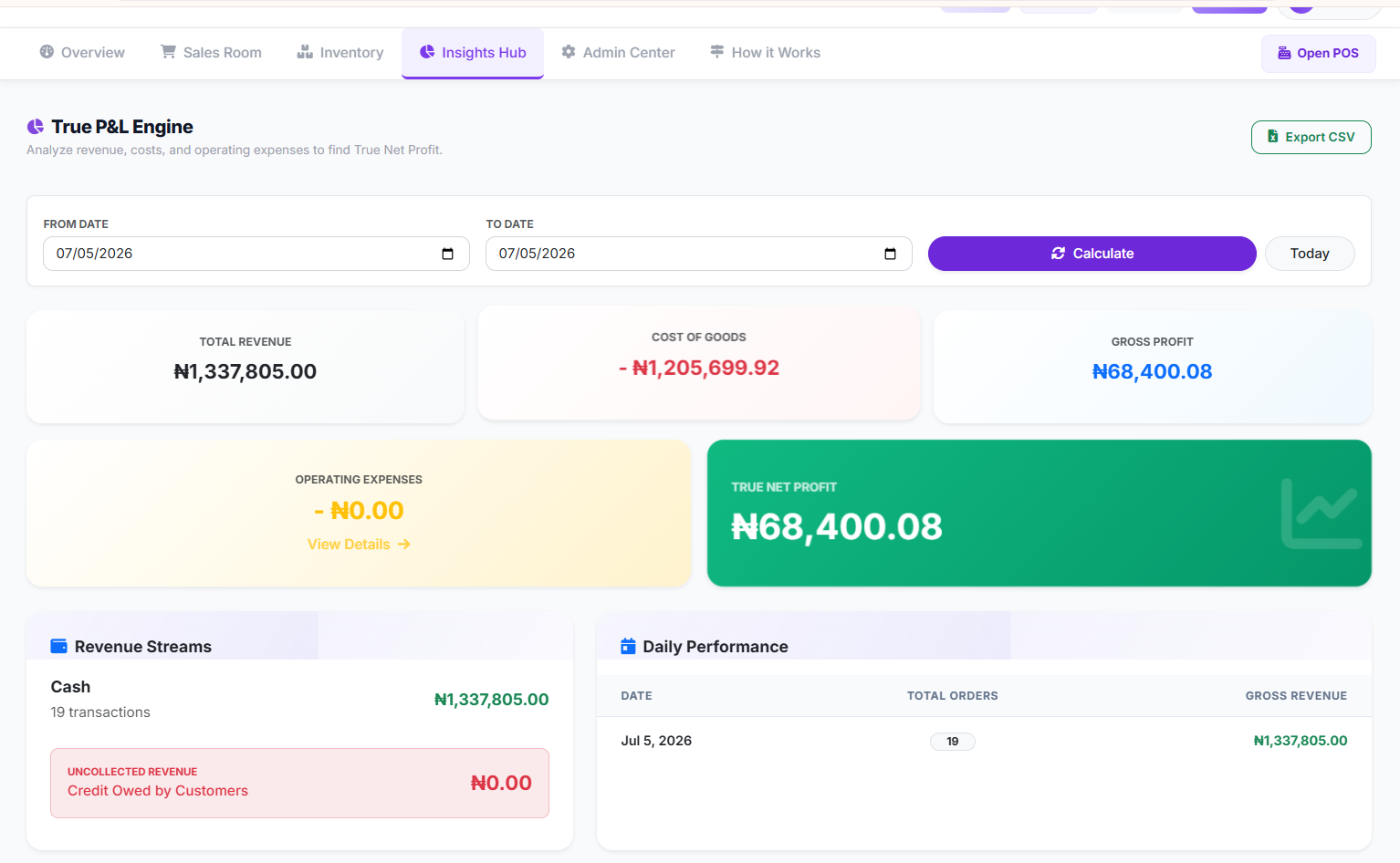
The SwiftPOS P&L report — your full profit and loss picture, generated automatically. No spreadsheet required.
Putting It All Together: The Common Thread
If you read through those ten strategies, you'll notice they all share something: they require you to know what's happening in your business, not just feel what's happening. Increasing sales in a Nigerian retail shop in 2026 is not about working harder. It's about working with better information.
Which products drive 80% of your revenue? When do your sales peak during the week? Which staff member serves the most customers per hour? Which customers have been absent for three months? Which supplier misses delivery deadlines most often? These are all answerable questions — if you have the right system in place.
We've covered many of the underlying issues that block shop growth in our previous articles. If any of the strategies above resonated, these deep dives are worth your time:
- Stock Management for Small Businesses in Nigeria: Stop Losing Products, Start Making Real Profit
- The True Cost of Manual Bookkeeping for Growing Retail Businesses
- Point of Sale Software in Nigeria: What the Best Retailers Know That You Don't
- How to Run a Supermarket Business Successfully in Nigeria in 2026
- Your Shop Is Bleeding Money — and Your Staff Might Be Holding the Knife
Frequently Asked Questions
How can I increase sales in my Nigerian provision store without spending much money?
Start with what you already have: better product placement, staff training on upselling, and consistent stock of your fastest-moving items. These cost nothing but attention. From there, investing in a low-cost POS system to track your data gives you the insights to make every other improvement more effective.
What is the fastest way to grow a retail shop in Nigeria?
Fix your stockout problem first. Nothing kills revenue faster than not having what your customers want when they want it. Once your shelves are consistently stocked with the right products, focus on customer retention — bringing existing customers back more often is faster and cheaper than acquiring new ones.
How do I know which products to stock more of in my shop?
Track your sales data. Manually, this means reviewing your sales ledger weekly. With a POS system, it's automatic — your dashboard shows your top-selling products by revenue and volume, updated in real time. This is one of the most immediate benefits of switching from a notebook to a digital retail management system.
Can a small provision store benefit from a POS system?
Absolutely. SwiftPOS's Starter plan at ₦3,000/month is built specifically for smaller shops — provision stores, mini marts, pharmacies — and includes inventory management, POS processing, and customer credit tracking from day one. The return on that ₦3,000 monthly investment is often visible within the first week through reduced stock losses and better reordering decisions.
Ready to Grow Your Shop With Better Information?
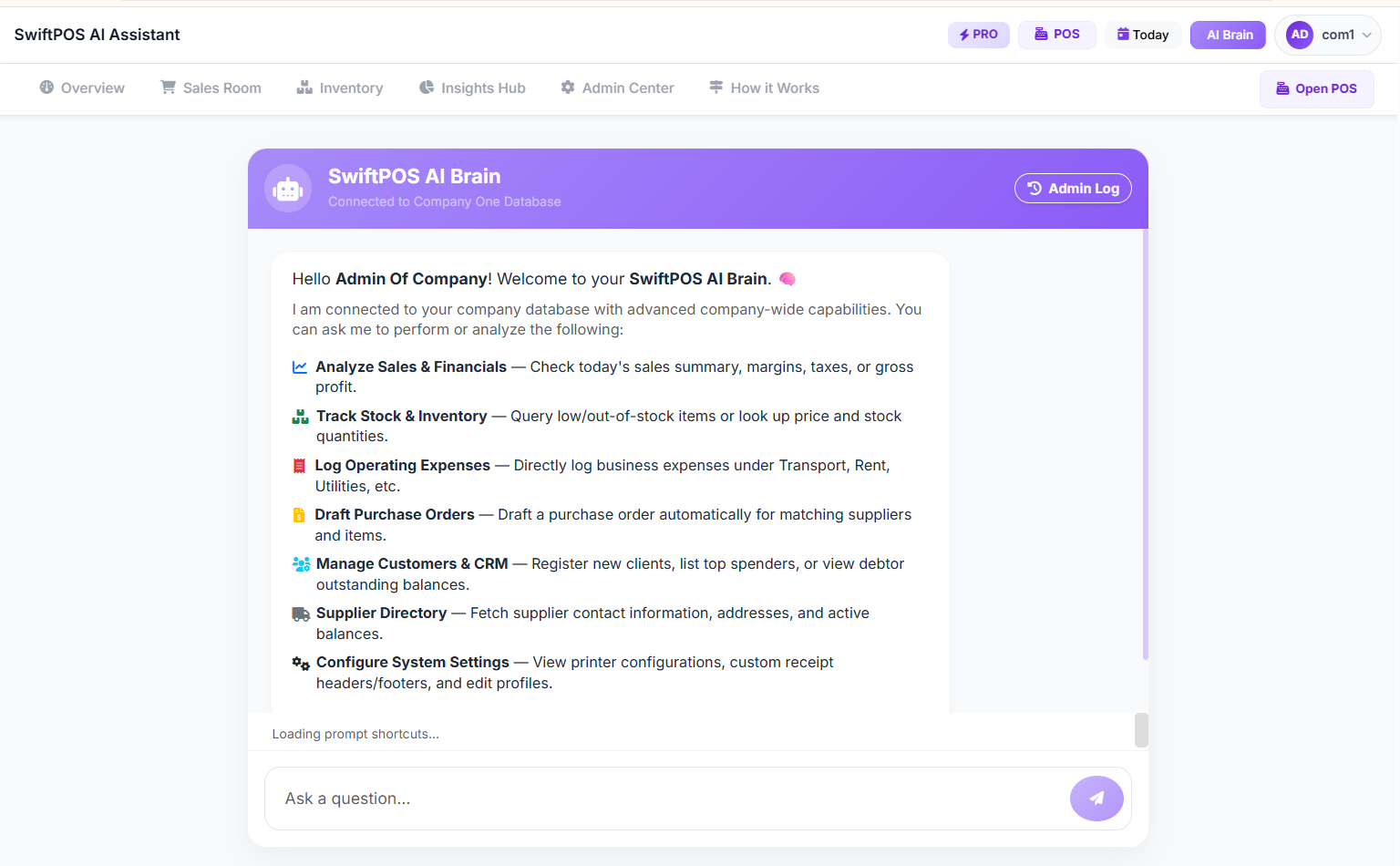
Every strategy in this article becomes significantly more powerful when you can measure it. That's what SwiftPOS is built to give Nigerian retail business owners: the real-time data, the staff controls, the inventory visibility, and the customer insights that turn good intentions into actual sales growth.
Plans start at ₦3,000 per month — less than the cost of a single lost sale for most shops.
👉 Compare all plans and pricing here
📲 Chat directly on WhatsApp: +2349164601810
Subscribe on any annual plan and get your first month completely free.
7 Key Retail Metrics Nigerian Businesses Must Track fo…
Aug 23, 2026
How to Set Up Your SwiftPOS Account: A Step-by-Step On…
Aug 22, 2026
Build Unbreakable Habits: The Ultimate Guide to Lastin…
Aug 19, 2026