How to Reduce Stock Theft in Your Shop in Nigeria (Practical Steps That Work)
SwiftPOS Team
Published April 22, 2026

You close your shop on Friday, open on Monday, and something just doesn't add up. Your stock is lower than your sales records suggest. Your cashier looks nervous when you start counting. A delivery came in last week — but several units are nowhere to be found. If this sounds familiar, you're not alone. Stock theft is one of the biggest silent killers of small and medium retail businesses in Nigeria, and it happens in supermarkets, provisions stores, pharmacies, boutiques, and market stalls alike.
The good news? It is preventable. In this guide, we'll show you exactly how to reduce stock theft in your shop in Nigeria — covering employee theft, customer shoplifting, and supplier fraud — with practical, affordable steps you can start implementing today.
Why Stock Theft Is Such a Big Problem for Nigerian Shops
Stock theft — often called "shrinkage" in the retail industry — refers to any loss of inventory that isn't linked to a legitimate sale. Globally, retail shrinkage costs businesses over $130 billion every year. In Nigeria, where many shops still operate manually, without CCTV, and without real-time inventory tracking, the losses can be even more severe.
There are four main types of stock loss to be aware of:
- Employee theft — The most common type in Nigerian retail. This includes staff taking goods home, under-ringing sales at the till, giving unauthorised discounts to friends, or recording fake "damaged goods."
- Customer shoplifting — More common in open-shelf, self-service stores. Items are concealed and walked out, especially in busy periods.
- Supplier fraud — Deliveries are short-counted, goods are swapped for lower quality, or the delivery note is inflated. This is common with fast-moving items like drinks, grains, and packaged food.
- Administrative errors — Honest mistakes in data entry, pricing, or counting that cause losses to go undetected.
The painful truth for most shop owners is that the people stealing from them are often people they trust. That's what makes this problem so emotionally difficult — and why having a system, not just suspicion, is essential.
Warning Signs That Stock Is Being Stolen in Your Shop
Before you can fix the problem, you need to confirm it's happening. Here are the most common red flags:
- Your stock levels don't match your sales records at end of day or week
- You keep running out of fast-moving items faster than expected
- A specific staff member is always around when stock goes missing
- The "damaged" or "expired" pile seems unusually large
- Cash doesn't balance at closing time, even when sales seem normal
- Deliveries look correct on the waybill but actual goods are short
- Customers complain about items being "out of stock" when you thought you had plenty
If you're nodding to two or more of these, it's time to take action — not panic, but take structured, deliberate action.
How to Reduce Stock Theft in Your Shop in Nigeria: 10 Practical Steps
1. Implement a Stock Management System
The single most powerful thing you can do is move away from manual stock books. A good inventory management system records every item coming into your store and every item sold, making it nearly impossible for theft to go unnoticed.
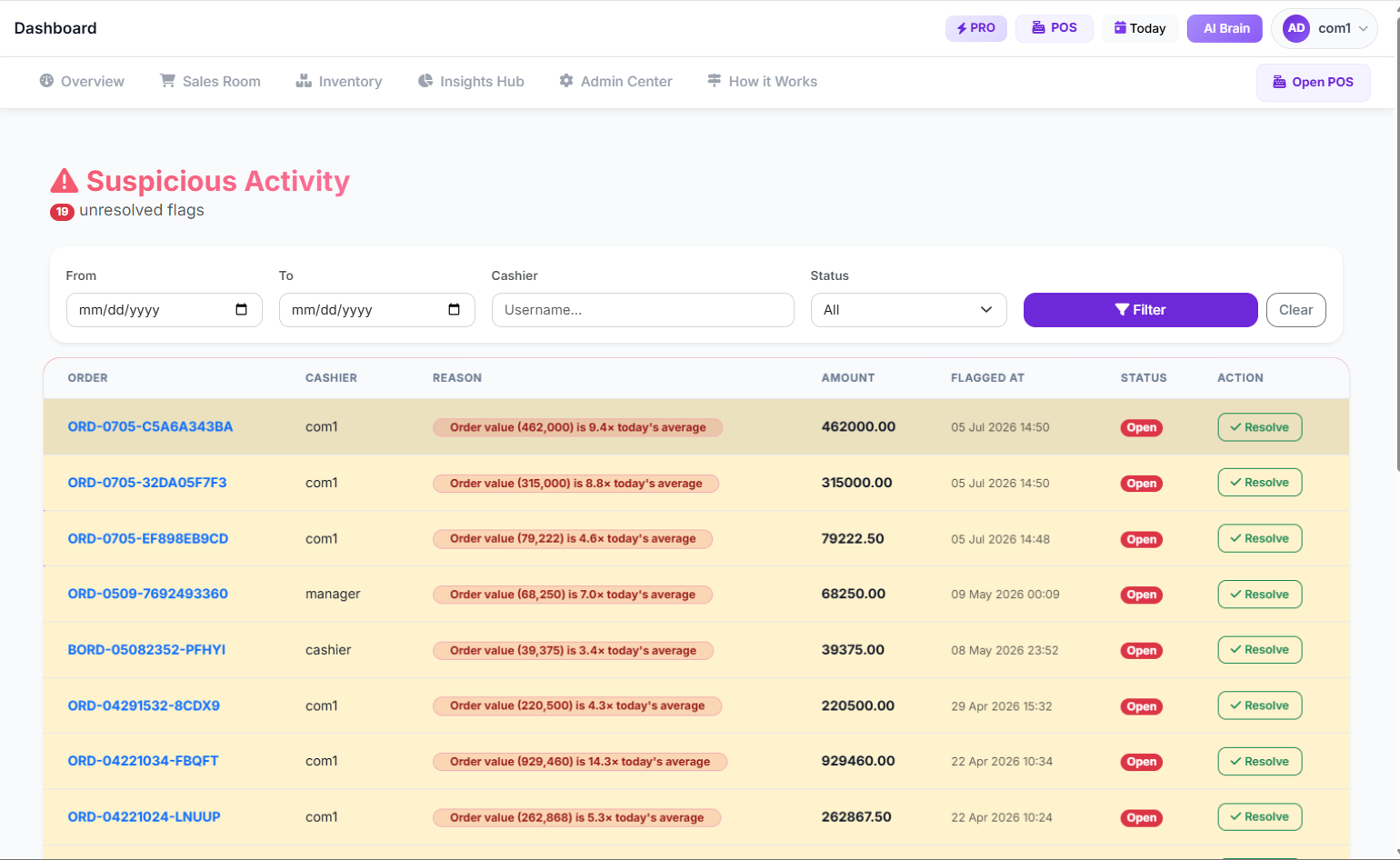
With SwiftPOS's inventory management feature, you get a real-time view of your stock levels at all times — on your phone or laptop, from anywhere. Any discrepancy between physical count and system records is flagged automatically, so you know exactly when and where to investigate.
Even if you're not ready for a full system yet, a well-maintained spreadsheet is better than nothing. The key is to have a record that can be cross-checked against physical stock.
2. Do Surprise Stock Takes — Regularly
Schedule stock counts frequently — ideally weekly for fast-moving items — and don't announce them in advance. The moment your staff know a count is coming, discrepancies tend to "resolve themselves." Surprise stock takes keep everyone honest and help you catch patterns quickly.
Compare your physical count to your system record and investigate any variance immediately. Small variances add up to big losses over a month.
3. Control Access to the Stock Room
Your stock room should not be a free-for-all. Limit access to one or two trusted staff, log who enters and exits, and require a signed request for every item removed from storage. A simple "stock release book" — where staff sign out items before putting them on shelves — creates accountability at every step.
As a rule: never allow a single employee unsupervised access to both the stock room and the cash till.
4. Install CCTV Cameras (Even Budget Ones)
Visible cameras are one of the cheapest and most effective theft deterrents available. You don't need an expensive system — affordable CCTV kits are available in Computer Village (Lagos), Wuse Market (Abuja), and on Jumia and Konga.
Focus cameras on: the till area, the store room entrance, and the main shop entrance/exit. The goal isn't just to catch thieves — it's to discourage theft before it happens. Research consistently shows that the presence of cameras alone reduces opportunistic theft significantly.
5. Use a POS System Linked to Your Inventory
A Point-of-Sale (POS) system that connects directly to your inventory is a game-changer for theft prevention. Every sale is recorded in real time and automatically deducted from stock. There is no room for a staff member to sell an item and pocket the cash without it showing up as a discrepancy.
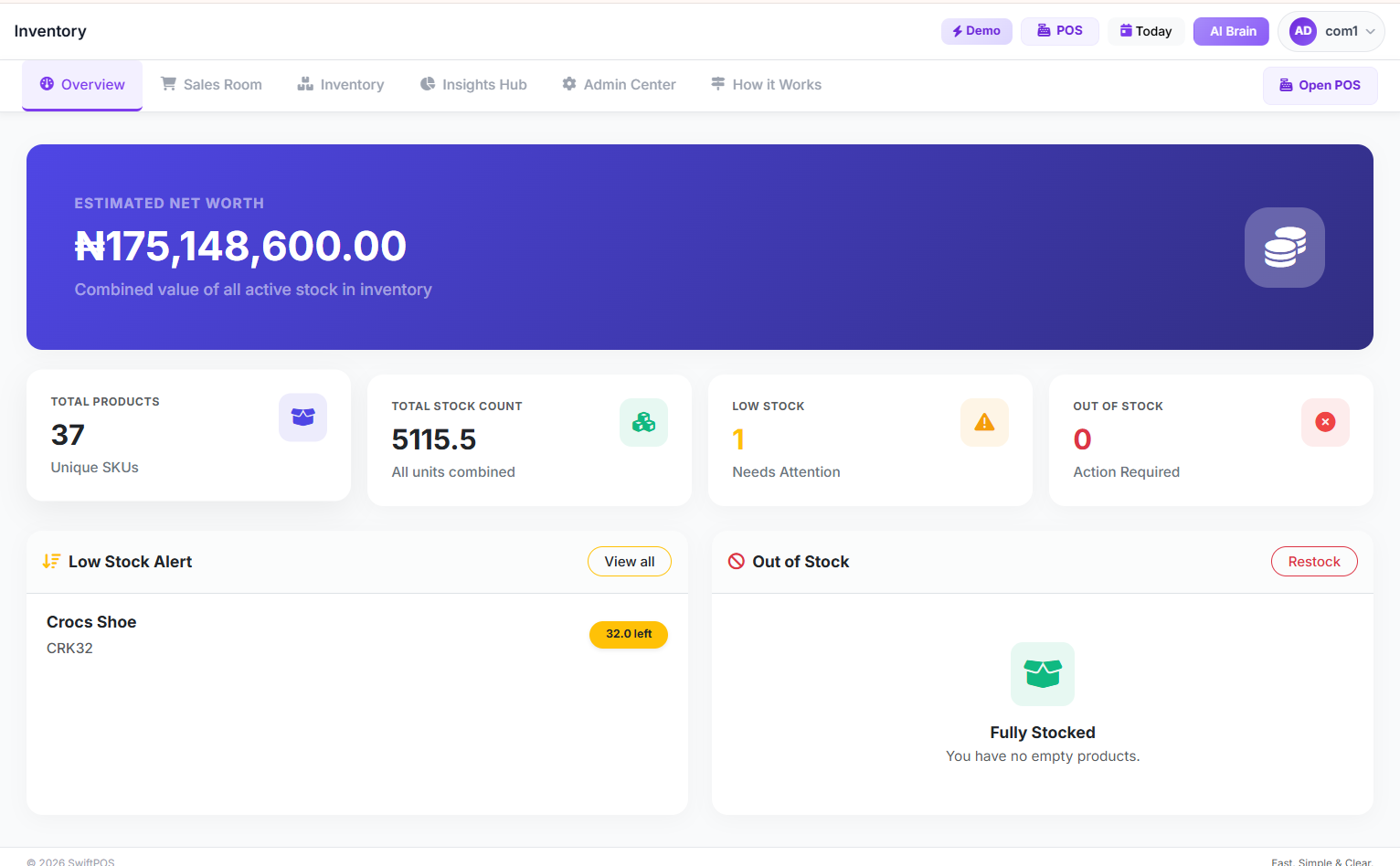
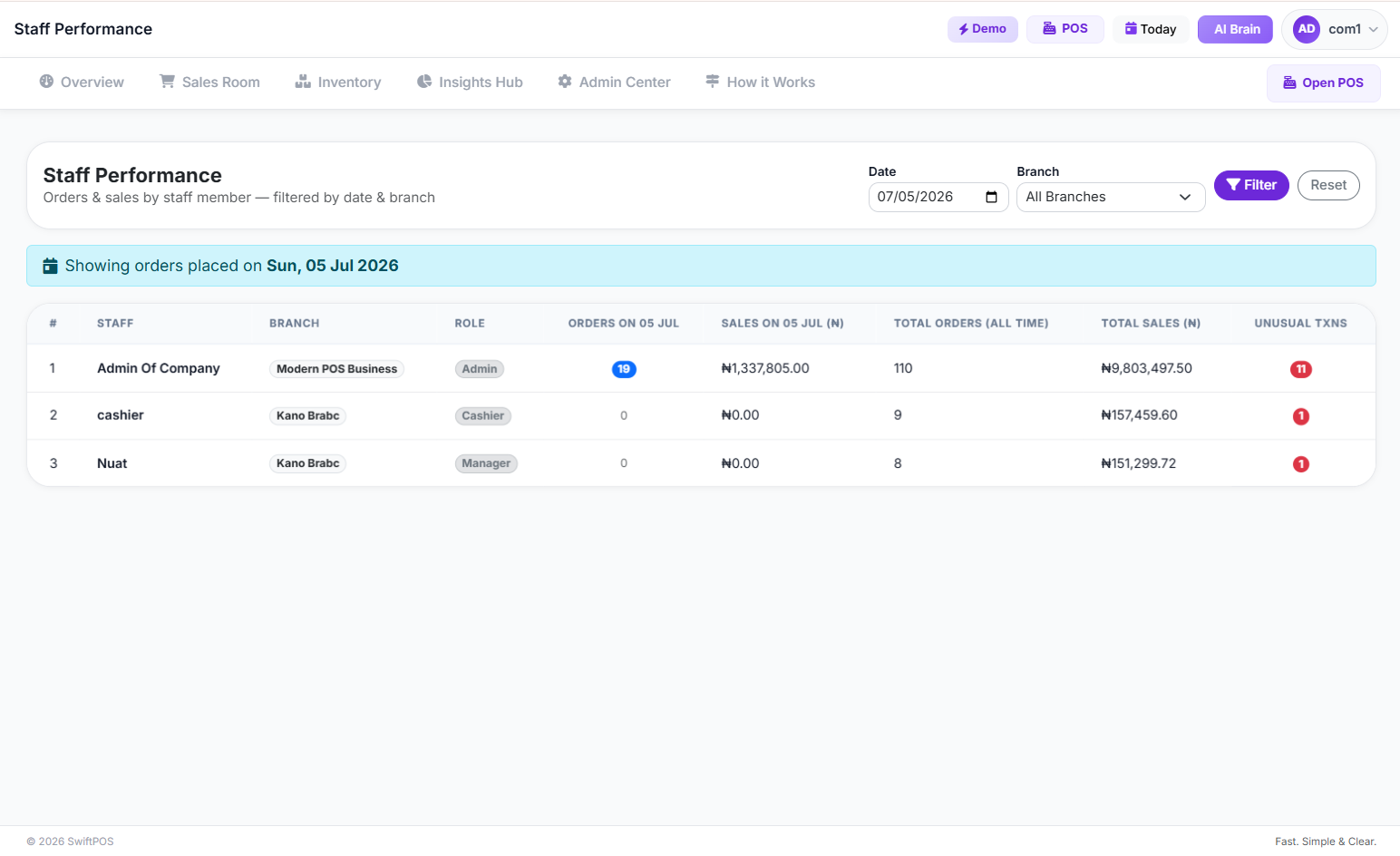
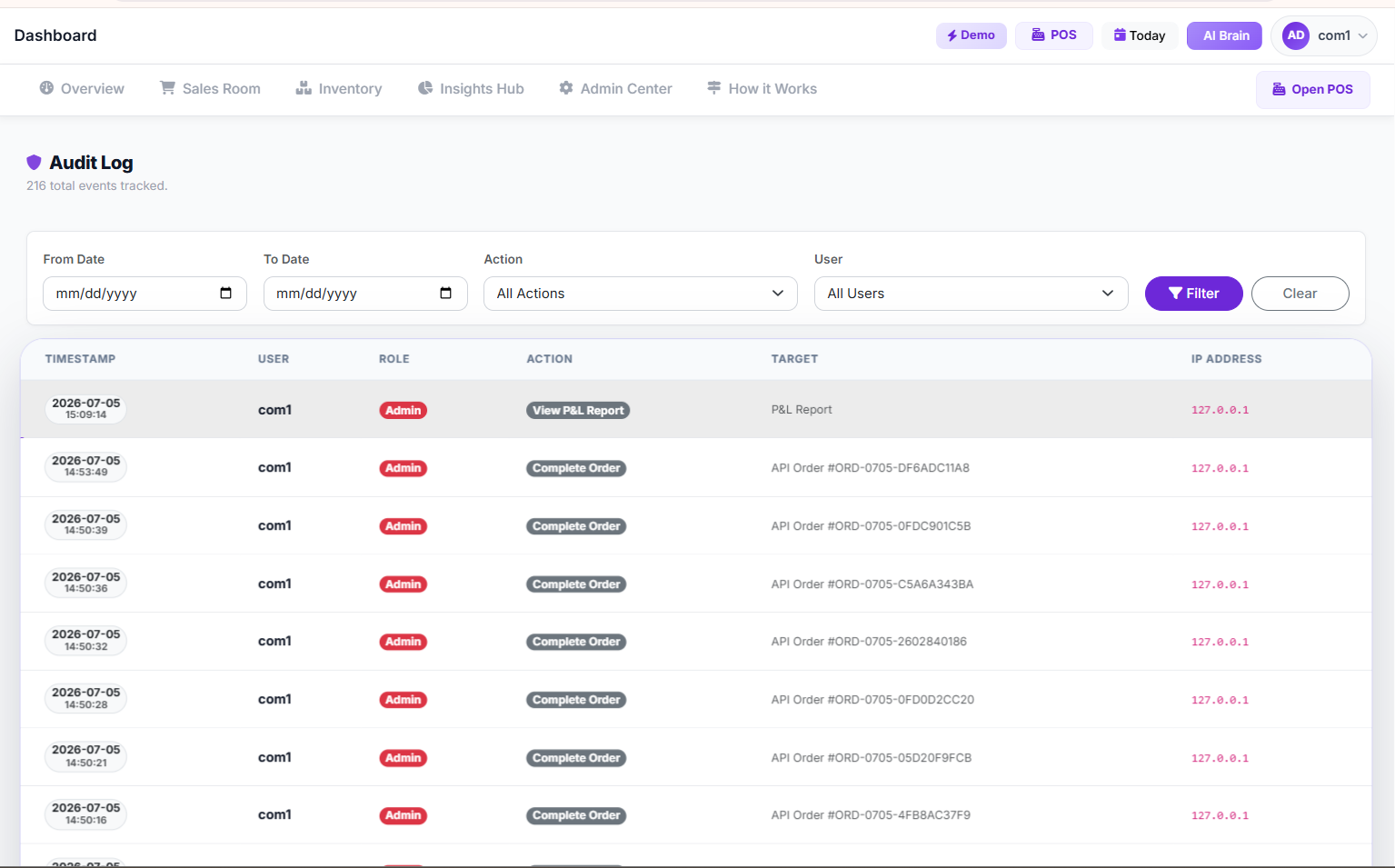
SwiftPOS does exactly this — every transaction at the till updates your stock level instantly, giving you an unbroken audit trail from shelf to sale. You can even see sales reports broken down by staff member, so you can spot if a particular cashier's transactions consistently don't add up.
6. Separate Duties (The "Two-Key Rule")
This is one of the oldest and most effective fraud prevention principles in business. No single person should be responsible for both receiving stock and recording it. No single person should handle both sales and cash reconciliation.
When two people are involved in any financial or stock-related process, they act as checks on each other. This simple change, which costs you nothing, makes collusion and solo theft dramatically harder.
7. Verify Every Supplier Delivery Yourself
Never just sign a waybill and wave the delivery driver off. Count every unit. Where applicable, weigh goods — especially grains, beverages, and provisions sold by weight. Cross-check the delivery note against your original purchase order. If numbers don't match, do not sign and document the discrepancy before the driver leaves.
Supplier short-delivery is common and often goes undetected for months in shops that rely on trust rather than verification.
8. Build a Culture of Accountability
Rules alone don't prevent theft — culture does. Brief your team on your stock control policies. Make it clear what is measured, how, and how often. Go further: reward staff who flag discrepancies and help protect your stock. Create an environment where honesty is valued and dishonesty has clear consequences.
When employees understand that every unit is tracked, the temptation to steal shrinks dramatically.
9. Track Damaged and Returned Goods Carefully
One of the most exploited loopholes in Nigerian retail is the "damaged goods" category. Some employees mark perfectly good items as damaged or expired to take them home. Implement a strict policy: any item recorded as damaged must be photographed, approved by a supervisor, and physically inspected before disposal. Keep a log.
Similarly, customer returns should require a receipt, manager approval, and be logged back into inventory properly to prevent a staff member from returning a "ghost" item and pocketing the refund.
10. Screen New Hires and Rotate Staff Roles
Ask for references from previous employers — and actually call them. For roles involving cash or stock access, consider a guarantor system. Periodically rotate staff between roles (cashier, floor staff, stock room) so no one becomes too comfortable with a single position. Rotation also prevents collusion between staff members who've worked in fixed roles together for too long.
Technology Tools Nigerian Shop Owners Can Use Today
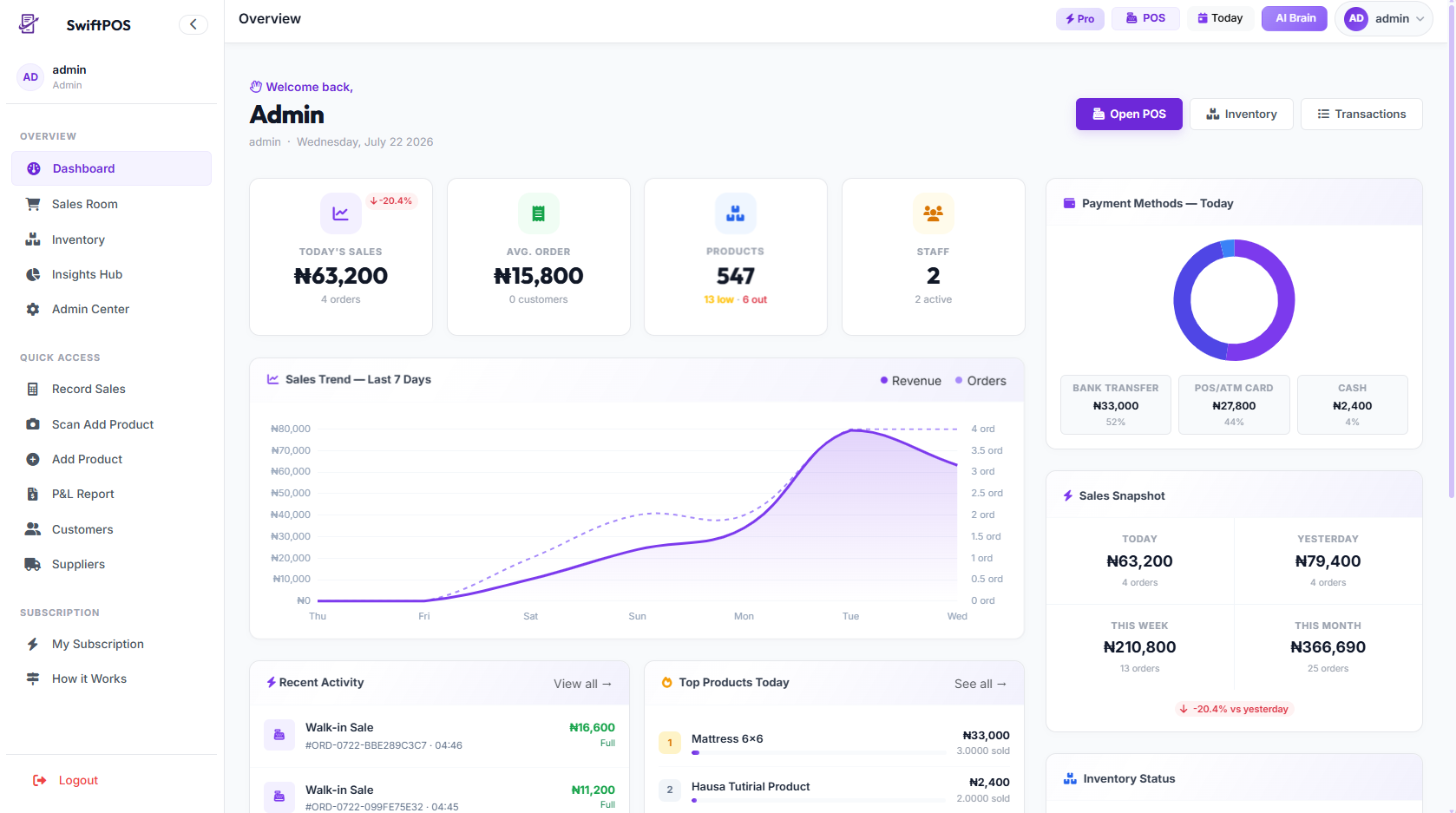
You don't need a big budget to fight stock theft. Here are some practical tools to get started:
- SwiftPOS — A Nigeria-built POS and inventory system that tracks every sale and stock movement in real time, across one or multiple branches. Start free today.
- Affordable CCTV kits — Available from ₦15,000–₦60,000 on Jumia and Konga, or from electronics markets in Lagos and Abuja.
- Google Sheets or Excel — Free and powerful enough for a basic stock tracking system if you're not yet ready for dedicated software.
- WhatsApp Business — Use group alerts to keep supervisors informed of daily stock counts and discrepancies without needing expensive communication tools.
You can also read our guide on inventory management tips for Nigerian businesses to go deeper on building a full stock control process.
What to Do If You Catch an Employee Stealing
First: don't act on suspicion alone. Gather concrete evidence — CCTV footage, stock records, transaction logs — before confronting anyone. A false accusation can damage trust, morale, and even expose you to legal liability.
Once you have clear evidence, follow a structured process: document everything, involve a witness during any confrontation, and consult Nigerian labour law before terminating employment. Wrongful dismissal claims are real and costly.
After resolving the situation, use it as an opportunity to tighten your processes — not to create a climate of fear, but to ensure the same gap cannot be exploited again.
Frequently Asked Questions
How do I know if my staff are stealing from my shop?
The most reliable signs are: stock shortages that don't match sales records, cash imbalances at end of day, a high frequency of "damaged" or "expired" goods, and suspicious behaviour during stock counts. A POS and inventory system makes these discrepancies visible automatically.
What is the most common type of theft in Nigerian retail shops?
Employee theft is the most common form of stock loss in Nigerian small and medium businesses. It often includes taking goods home, under-ringing sales, and manipulating damaged-goods records. Customer shoplifting is a secondary concern, especially in self-service stores.
How much does a stock control system cost in Nigeria?
Prices vary widely. SwiftPOS offers plans starting from an affordable monthly subscription, with a free trial available. Basic CCTV setups start from as low as ₦15,000. Even free tools like Google Sheets can serve as a starting point if budget is very tight.
Can I reduce stock theft without CCTV?
Yes. CCTV is helpful but not mandatory. The most impactful steps — implementing an inventory system, separating duties, doing surprise stock takes, and controlling stock room access — can all be done without cameras. Start with the process changes, then invest in technology as you grow.
What should I do if a supplier is short-counting my deliveries?
Count every delivery before signing the waybill. If a discrepancy is found, document it immediately in writing and have the driver acknowledge it. Raise it with the supplier's sales rep and request a credit or replacement delivery. If it happens repeatedly, consider switching suppliers or renegotiating terms with a stricter delivery verification clause.
Stop Losing Stock. Start Using SwiftPOS.
SwiftPOS is Nigeria's smart POS and inventory management system — built to give shop owners real-time visibility over every item, every sale, and every naira. Track stock across one or multiple branches, get automatic low-stock alerts, and spot discrepancies before they become big losses.
Join thousands of Nigerian business owners who've taken back control of their stock.
Start Your Free Trial →
How to Know If Your Business Is Actually Profitable: A…
Oct 08, 2026
How to Stop Cash Leakage in Your Business: A Comprehen…
Oct 04, 2026
How to Start a Food Business with Low Capital: A Step-…
Oct 01, 2026