
How to Run a Supermarket Business Successfully in Nigeria in 2026: The Complete Owner's Guide
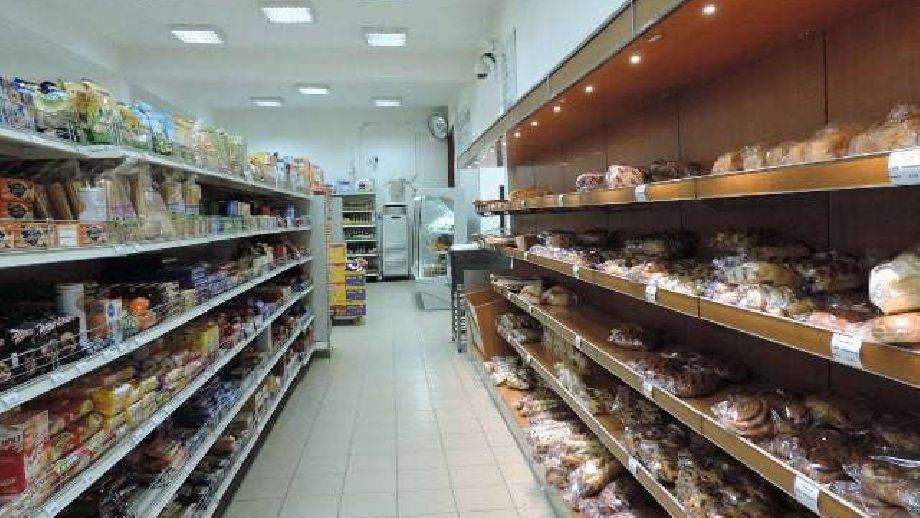
Opening a supermarket in Nigeria feels like a dream come true — until you're three months in, surrounded by stock you didn't order, staff you can barely supervise, and customers asking for products you've been out of for two weeks. The dream doesn't disappear. But it does get complicated fast.
The truth is, running a supermarket in Nigeria in 2026 is both a huge opportunity and a genuinely demanding operation. Nigeria's retail sector is growing — Mordor Intelligence projects the Nigerian retail and e-commerce market to hit $18.68 billion by 2031 — and brick-and-mortar supermarkets remain the backbone of how most Nigerians shop. But capturing that opportunity requires more than shelf space and a cheerful staff. It requires a system.
This guide covers everything an existing or aspiring supermarket owner in Nigeria needs to understand — from daily operations and stock management to staff control, customer retention, and the technology that ties it all together. Whether you're just launching or trying to get a struggling shop back on track, there's something here for you.

A well-run supermarket isn't just about stocked shelves — it's about the invisible systems that keep everything in order behind the scenes.
1. Start With the Right Location — But Don't Stop There
Location is often the first thing aspiring supermarket owners obsess over — and rightly so. High foot traffic, proximity to residential areas, ease of access, and visible storefronts all directly affect how many people walk through your door. A supermarket tucked away on a quiet street with no parking will always struggle, no matter how good the products are.
But the mistake most owners make is thinking location is the primary driver of profitability. It isn't. Location drives traffic. Your operations determine whether that traffic turns into loyal, profitable customers. A poorly run supermarket in a busy location will always underperform a well-run one in a slightly less prominent spot.
When evaluating a location, go beyond foot traffic and ask: Is there a reliable power supply or am I budgeting heavily for a generator? Is the area growing — are new residential buildings, schools, or offices coming up nearby? What are the competitor supermarkets doing, and where are their obvious gaps? These questions shape long-term success far more than rent alone.
2. Stock the Right Products — Not Just the Popular Ones
One of the fastest ways to lose money in a Nigerian supermarket is to stock products based on what feels right rather than what the data shows. New supermarket owners in particular tend to overbuy on slow-moving items and understock on essentials, creating a frustrating pattern: cash tied up in products nobody is buying, while customers keep asking for the ones you've run out of.
Your stocking strategy should be driven by sales velocity — how fast each product actually moves through your shop. This requires tracking. Not in a notebook. Not from memory. In a system that records every sale, shows you which products are flying and which are gathering dust, and alerts you when something is about to run out before it actually does.
Poor inventory management is one of the most expensive silent problems in Nigerian retail — and we've unpacked exactly how it happens and how to fix it in this post: How Poor Inventory Management Is Costing Your Supermarket. It's worth reading before you place your next order.

The difference between overstocked shelves and just-right stock levels comes down to tracking what actually moves — and acting on that data.
3. Build Supplier Relationships That Actually Work
Your suppliers are one of your most important business relationships, and most supermarket owners don't manage them nearly as intentionally as they should. Good supplier relationships mean better payment terms, priority access during shortages, consistent quality, and occasionally better pricing than what's listed.
But building that kind of relationship requires you to show up as an organised, reliable buyer — not one who calls erratically, places confusing orders, or disputes invoices over miscounted deliveries. When your inventory system is tight, you know exactly what you need and when. You place orders on time. You can verify deliveries against what was actually received. That professionalism makes suppliers want to work with you and often unlocks terms your less-organised competitors don't get access to.
Managing your supplier records within your POS system — tracking delivery history, stock received versus ordered, and outstanding supplier balances — gives you the kind of clarity that makes these conversations straightforward rather than stressful.
4. Managing Staff in a Supermarket: Accountability Without Toxicity
Staff management is where many supermarket owners in Nigeria spend the majority of their stress budget. A typical supermarket might have cashiers, floor staff, stock staff, and a manager — each with different responsibilities, different access levels, and different opportunities to either help or hurt the business.
The most important shift you can make is from trust-based management to systems-based management. This doesn't mean you stop trusting your staff. It means you stop relying on trust alone as your control mechanism. When every sale is recorded, when every discount has a logged reason, when only authorised staff can access certain functions, and when the system flags unusual patterns automatically — the entire working environment becomes more professional and more accountable.
Staff who know they're being watched by a system — not by a suspicious boss peering over their shoulder — generally work better. Performance reports showing each staff member's daily sales activity create healthy awareness of expectations. And for the small number of people who are actively dishonest, an audit trail and suspicious activity detection make that behaviour nearly impossible to sustain. We've covered this topic in depth here: Your Shop Is Bleeding Money and Your Staff Might Be Holding the Knife.

Good staff management creates a professional environment where everyone knows the standards — and meets them.
5. Customer Experience: The Reason People Come Back
Nigerian supermarket customers in 2026 have more options than ever. They can order online, shop at a competitor across the road, or simply stop visiting if the experience feels bad enough. Retaining a customer is far cheaper than acquiring a new one — and retention starts the moment someone walks through your door.
The basics matter enormously. Clean, well-organised aisles. Products that are consistently in stock. Prices that are clearly marked. A checkout process that doesn't take fifteen minutes. Staff who acknowledge customers with basic courtesy. None of these are revolutionary — but they're what most Nigerian supermarkets consistently fail to deliver, especially as the business grows and systems get looser.
Beyond the basics, a customer credit system — done properly — can be a genuine loyalty driver. Many Nigerian supermarket customers have long-standing relationships with shops that extend them credit. Managing that credit digitally, with clear records on both sides, builds trust rather than friction. When a customer knows their balance is accurate and their history is maintained professionally, they're far less likely to take their spending elsewhere.
6. Daily Operations: What Running a Supermarket Actually Looks Like
The day-to-day of a well-run Nigerian supermarket follows a rhythm. Opening checks — is yesterday's cash accounted for? Are the fridges running? Are low-stock items flagged for reorder? During trading hours — are the tills moving without long queues? Is the floor tidy? Is stock being replenished from the back as shelves clear? And at close — is the end-of-day reconciliation done? Does cash match the system? Are staff handovers documented?
Most of that rhythm is only possible when you have a system that supports it. Without a POS that tracks live sales, produces an end-of-day report, and flags discrepancies automatically, the reconciliation process becomes a guessing game — and guessing games, over time, produce consistent small losses that add up to significant money.
SwiftPOS is built around this exact daily rhythm. The end-of-day reconciliation feature closes the day cleanly — logging total sales, payments received, and any discrepancies for review. The today dashboard gives you a live picture of how trading is going without requiring you to be physically present. See how the full platform works in this walkthrough: How SwiftPOS Works: A Complete Guide to Managing Your Retail Business Smarter.
7. The Technology Stack Every Nigerian Supermarket Needs in 2026
You don't need enterprise software or a team of IT consultants. You need a few focused tools that handle the core functions of your supermarket — sales processing, inventory tracking, staff management, customer records, and financial reporting. These should ideally be in one integrated system rather than four separate apps you're trying to stitch together.
Here's what a complete technology setup looks like for a Nigerian supermarket:
- Cloud POS terminal — processes sales, generates receipts, and automatically updates stock and financial records in real time.
- Barcode scanner — speeds up checkout dramatically and eliminates manual price lookups for high-volume items.
- Inventory dashboard — shows live stock levels, low stock alerts, and movement history across all product categories.
- Staff management module — tracks performance, controls access levels, and maintains an audit log of every system action.
- Customer credit system — maintains customer profiles and balances digitally, replacing notebooks and memory.
- P&L and sales reports — gives you financial clarity on demand, not just at month-end.
All of that is available in SwiftPOS. If you're still deciding on hardware, our buying guide breaks down exactly what you need: POS Hardware Buying Guide for Nigerian Retail Businesses. And if you want to compare cloud POS against traditional cash registers before committing: Cloud POS vs Traditional Cash Registers in 2026.
A Look at SwiftPOS's Inventory Dashboard for Supermarkets
Supermarkets deal with hundreds of SKUs moving at different speeds. Keeping track of all of it without a proper system is genuinely impossible at scale — which is exactly why most supermarket owners either overstock or run out of things without warning. The SwiftPOS inventory dashboard solves this by showing you every product's live status in one place.

The SwiftPOS inventory dashboard — live stock levels, low stock alerts, and full product movement history across your entire catalogue.
What you're seeing above isn't complicated. It's clean, readable, and actionable — showing you exactly which products need attention without making you hunt for the information. Explore all features at swiftpos.ng/features.
8. Understanding Your Financials — Not Just Your Revenue
A supermarket can be turning over millions of naira a month and still be losing money — or at best, breaking even — because the owner doesn't have a clear picture of where the money is actually going. Revenue tells you what came in. Profit tells you what stayed. And most Nigerian supermarket owners only look at the first number.
Moniepoint's research on Nigerian SME statistics highlights that over 50% of Nigerian small businesses fail within their first year — and financial mismanagement, not lack of customers, is consistently the root cause. You don't need an accountant on retainer to fix this. You need a reporting tool that generates your P&L automatically, so you can see your real financial position any time you want to.
This topic is explored in depth in two of our most-read posts: Your Shop Is Bleeding Money and You Don't Even Know It, and our broader look at what the best retailers in Nigeria know about POS software that most owners don't.

Understanding your real profit — not just your revenue — is what separates supermarkets that grow from ones that stay stuck.
SwiftPOS Plans for Supermarket Owners
SwiftPOS is designed to scale with your business. Whether you're running a small neighbourhood supermarket or managing multiple locations, there's a plan built for where you are right now — and where you're going.
Starter
₦3,000/mo
- POS terminal
- Inventory management
- Customer credit system
- 100 orders/day
- Basic sales reports
Standard
₦6,000/mo
- Barcode POS + scanner
- Bulk product import
- Audit logs
- Full P&L reports
- Data export
Pro
₦12,000/mo
- Multi-branch support
- Unlimited orders
- 15 staff accounts
- Suspicious activity detection
- Advanced audit logs
- Custom branding
All plans include 1 month free when you subscribe annually. See full details at swiftpos.ng/pricing. Not sure which plan fits your stage? Our guide to the 7 best POS systems for small businesses in Nigeria in 2026 breaks down the landscape — and we've also covered the top inventory management options specifically for supermarkets: Top 5 Inventory Management Software for Supermarkets and Pharmacies in Nigeria 2026.
Frequently Asked Questions About Running a Supermarket in Nigeria
How much does it cost to start a supermarket in Nigeria?
Startup costs vary significantly depending on location, size, and product range. A small neighbourhood supermarket can be launched from ₦500,000 to ₦2 million, covering rent, initial stock, shelving, and basic equipment. Larger supermarkets in urban areas typically require ₦5 million and above. Keeping your initial operational costs lean — including choosing affordable POS software — helps protect your cash flow in the early months.
What's the biggest mistake new supermarket owners make?
Underestimating how fast things go wrong without systems. Stock discrepancies, staff theft, untracked credit, and cash handling errors all seem manageable when you're small. But they compound quickly. Putting a proper POS and inventory system in place from day one costs very little and saves enormously in lost stock, unrecorded sales, and recovered customer debt.
Do I need a barcode scanner for a small supermarket?
If you have more than about 50–100 SKUs, yes — a barcode scanner makes checkout dramatically faster and more accurate. SwiftPOS's Standard plan includes barcode POS support. Our POS hardware buying guide walks you through exactly what to get and at what stage.
How do I manage multiple supermarket branches from one place?
SwiftPOS's Pro plan includes full multi-branch support — giving you a centralised dashboard that shows sales, stock levels, and staff activity across all your locations. You can also read our dedicated guide on this: How to Manage Multiple Shop Branches in Nigeria Without Losing Control.
What if the internet goes down during trading hours?
SwiftPOS is built for Nigerian realities — it supports offline order processing, so your supermarket keeps running even without internet. All data syncs automatically once the connection is restored. No lost sales, no interrupted service.
The Supermarkets That Will Win in Nigeria in 2026
Nigeria's retail market is growing. Consumer spending is recovering. And physical supermarkets — well-run, consistently stocked, with reliable service — remain the dominant format for everyday shopping across the country. The opportunity is real.
But the supermarkets that capture that opportunity won't just be the ones with the best locations or the biggest budgets. They'll be the ones with the best systems. The ones whose owners know their numbers, manage their stock precisely, keep their staff accountable, and treat their customers like people worth tracking and serving well.
All of that is achievable for any supermarket in Nigeria today — at a cost that makes sense even for a small operation just getting started. For more practical guides on running a retail business in Nigeria, visit the SwiftPOS blog or explore the platform at swiftpos.ng.
Ready to Run Your Supermarket Like a Pro?
SwiftPOS gives Nigerian supermarket owners the tools to manage stock, staff, customers, and finances from one affordable platform — with offline support, real-time dashboards, and plans starting from just ₦3,000/month.
1 month free on annual plans. No long-term contracts.
