
How to Start and Run a Profitable Provision Store or Mini Mart in Nigeria in 2026
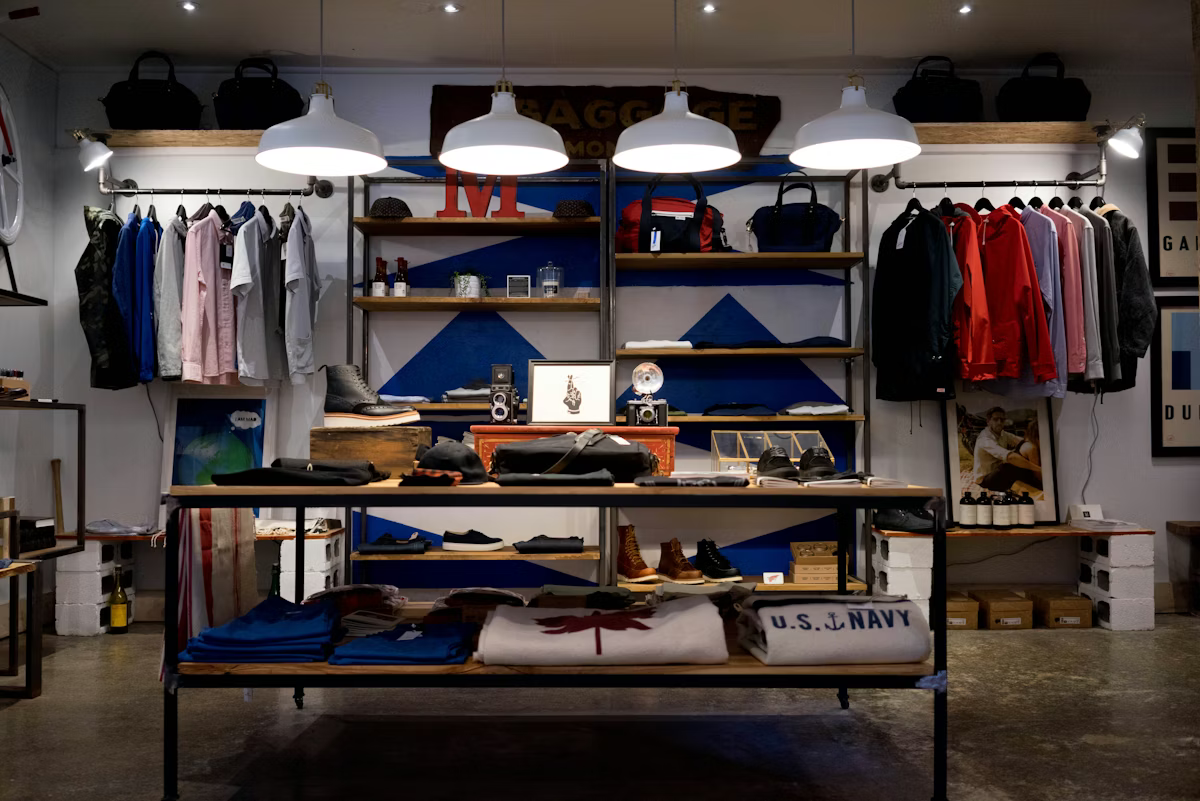
Walk down any street in Lagos, Abuja, Port Harcourt, or any Nigerian city and you'll find one on every block. The provision store — or mini mart — is the heartbeat of everyday Nigerian retail. It's where people grab noodles at 7am, buy sugar when they run out mid-cooking, and pick up cold drinks after work. Millions of Nigerian families rely on these shops every single day.
And yet despite that constant demand, a huge number of provision store owners in Nigeria are barely breaking even. Not because the market isn't there. Not because they're not working hard enough. But because the way most of these shops are run — manual stock counting, paper credit books, cash that never quite adds up — makes it nearly impossible to build a genuinely profitable operation that grows over time.
This guide is for anyone thinking about starting a provision store or mini mart in Nigeria — and for anyone already running one who wants to stop treading water and start building something real. We'll cover how to set up right, what to stock, how to manage your finances, and what tools actually make the difference between a shop that survives and one that thrives.

Nigeria's provision store and mini mart sector is one of the most active retail categories in Africa — but success requires more than just stocking shelves.
Why Provision Stores Are Still a Powerful Business Opportunity in 2026
The numbers make a compelling case. Nigeria's retail market hit $13.2 billion in recent valuations, outpacing both South Africa and Kenya in sales growth according to Finance in Africa's retail market analysis. And the engine driving much of that growth isn't big supermarket chains — it's the grassroots network of small shops, provision stores, and mini marts that serve the overwhelming majority of everyday Nigerian consumers.
Novatia Consulting's retail market analysis confirms that over 60% of Nigerian urban dwellers prefer shopping at locations that prioritise convenience — meaning neighbourhood provision stores and mini marts are exactly what the market wants. The opportunity is real and it's growing. The question is how to capture it properly.
Beyond the market dynamics, provision stores have one of the strongest value propositions in Nigerian retail: low barriers to entry, consistent everyday demand, high repeat customer potential, and the ability to scale from one location to multiple branches over time. The businesses that figure out operations early are the ones that compound that opportunity into something substantial.
Step 1 — Choosing the Right Location (It's More Than Just Foot Traffic)
Location is the first thing every provision store owner thinks about — and rightly so. But the mistake most people make is reducing location to a single question: "Is there traffic here?" The better questions are:
- Who lives nearby? A provision store serving a residential estate has a very different product mix than one near an office complex or a market area. Know your customer before you stock your first shelf.
- What do the existing competitors look like? Don't just count how many shops are around you — look at how well-run they are. A gap in quality is often more valuable than a gap in geography.
- Is power available or affordable? If you plan to sell cold drinks, dairy, or anything refrigerated, your generator and NEPA bill become a significant part of your operating cost. Plan for it before you sign the lease.
- Is the area growing? New housing developments, schools, or commercial activity nearby can dramatically increase your customer base over time — even if foot traffic seems modest at launch.
A mediocre location run by someone with excellent systems will consistently outperform a prime location run by someone without them. Location gets customers to your door. Systems are what make them come back.

The right location gives you a head start — but the right systems are what keep the business running profitably year after year.
Step 2 — What to Stock: Products That Actually Move
New provision store owners consistently make the same stocking mistake: they buy what feels right, what looks full on a shelf, and what the supplier is pushing hardest on the day they visit. The result is a shop full of products nobody asked for and empty spaces where the fast-movers should be.
Start with the basics that every Nigerian neighbourhood needs consistently — noodles, rice in small quantities, oil, seasoning, beverages, toiletries, soft drinks and water, bread and eggs if you can maintain freshness. Then build outward from there based on what your specific customer base asks for repeatedly. The best stocking decisions come from watching what sells, not from guessing.
This is where data becomes your most powerful tool. A provision store that tracks sales digitally knows within two weeks which products are flying and which are sitting. That intelligence drives smarter restocking, eliminates dead inventory, and keeps your cash working rather than sitting on shelves. We've covered the exact cost of getting this wrong in our post on how poor inventory management costs Nigerian retailers — the principles apply just as much to provision stores as to large supermarkets.
Step 3 — Setting Up Your Finances from Day One
This is the step most new provision store owners skip entirely — and it's the one that costs them the most. Starting without a clear financial system isn't just messy. It's how you end up three months in, busy every day, with nothing to show for it.
At minimum, your provision store needs to track three things from the very first day of trading:
- Every sale made. What was sold, how much it cost the customer, and how it was paid. This is your revenue record and your first line of theft protection.
- Every product received from suppliers. What came in, from which supplier, at what cost, and when. This is how you calculate your actual margins and manage your reordering cycle.
- Every customer credit extended. Who owes what, from which transaction, and what has been repaid. Untracked customer credit is one of the fastest ways to bleed cash in a provision store. Read our full breakdown here: Your Shop Is Bleeding Money and You Don't Even Know It.
If all three of those are handled by your POS system automatically — which is exactly what a cloud-based platform like SwiftPOS does — then your financial foundation is solid from the first transaction. You don't need a separate accounting system. You don't need to manually compile records. Everything is already there.

Setting up your financial tracking properly from day one is the single most important thing a new shop owner can do.
Step 4 — Managing Staff in a Small Shop
Even a small provision store or mini mart with just one or two staff members needs clear accountability structures. The reason is simple: when money passes through many hands every day in an informal environment, leakages happen — not always through malice, but through carelessness, confusion, and unchecked habits.
Role-based access controls mean your cashier can process sales but can't void transactions or edit product prices without authorisation. Audit logs mean every action is recorded — so if something doesn't add up, you can trace it to the specific transaction, the specific time, and the specific staff member. Suspicious activity detection flags unusual patterns automatically, so you don't have to monitor every transaction yourself.
This isn't about running a suspicious, toxic work environment. It's about creating the kind of professional structure where your staff knows the standards, meets them, and where problems surface fast enough to be addressed before they become expensive habits. Our full guide on this: Your Shop Is Bleeding Money and Your Staff Might Be Holding the Knife.
Step 5 — Building Customer Loyalty That Actually Holds
The greatest competitive advantage a neighbourhood provision store has over larger retailers is proximity and personal relationship. Customers come back to shops where they feel known, where the owner or staff remembers them, where credit is handled with dignity, and where the experience is consistently pleasant.
A digital customer management system reinforces that personal relationship with data. You know a customer's purchase history. You know their outstanding balance. You know how long they've been shopping with you. That information helps you serve them better — and it protects you from the financial risk of uncollected debt that comes with informal credit systems.
The basics of customer experience also matter enormously: clean, well-organised shelves; products consistently in stock; prices that are clear; and a checkout process that doesn't take ten minutes. None of those are complicated — but they're what separates the shops that build genuine loyal customer bases from the ones that rely on walk-in traffic that drifts to wherever is most convenient that day.
Step 6 — The Technology Setup Every Provision Store Needs
You don't need enterprise software. You don't need a team of IT people. A provision store or mini mart needs exactly four things from a technology perspective — and they should all be in one system:
- A POS terminal that records every sale automatically, generates receipts, and processes payments including cash and transfers.
- Live inventory tracking that updates stock counts with every sale, alerts you before products run out, and shows you movement history for every product.
- A customer credit system that replaces your credit notebook with a digital record everyone can access and nobody can quietly erase.
- Sales and P&L reports that give you a real financial picture on demand — not just at month-end when the damage is already done.
That's exactly what SwiftPOS delivers — built specifically for Nigerian retail businesses, with offline support for when your internet drops and a price point that works even for shops just getting started. For a full walkthrough of how the platform works in daily operation: How SwiftPOS Works: A Complete Guide to Managing Your Retail Business Smarter.
If you're still deciding between a cloud POS and a traditional cash register, this comparison settles it clearly: Cloud POS vs Traditional Cash Registers in 2026. And for what hardware to actually buy when setting up: POS Hardware Buying Guide for Nigerian Retail Businesses.
A Look at How SwiftPOS Tracks Your Stock in Real Time
One of the most immediately useful features for a provision store is live inventory tracking — knowing exactly what you have in stock at any moment without counting shelves manually. Here's what that looks like in SwiftPOS:

SwiftPOS inventory dashboard — live stock levels, low stock alerts, and full product movement history. No spreadsheets. No manual counting.
Clean, clear, and actionable. You can see what's in stock, what's running low, and what needs to be reordered — all from the same screen where you manage your sales and customers. Explore the full feature set at swiftpos.ng/features.

Knowing exactly what you have in stock — and what you're about to run out of — changes how you buy and how you serve customers.
How Much Does It Cost to Start a Provision Store in Nigeria?
Startup costs vary widely depending on location, size, and how well-stocked you want to be from day one. Here's a realistic breakdown for a small-to-medium provision store in a residential Nigerian neighbourhood:
| Item | Estimated Cost (₦) | Notes |
|---|---|---|
| Shop rent (first year) | 150,000 – 600,000 | Varies hugely by city and area |
| Initial stock | 200,000 – 500,000 | Start lean, restock fast-movers quickly |
| Shelving and fixtures | 50,000 – 150,000 | Secondhand works fine to start |
| Fridge/freezer | 80,000 – 200,000 | Optional but increases revenue significantly |
| POS tablet or device | 30,000 – 80,000 | Works on existing Android device |
| SwiftPOS Starter plan | ₦3,000/month | Sales, inventory, customer credit, reports |
The POS software is genuinely the cheapest line item — and the one with the highest return. At ₦3,000/month, SwiftPOS pays for itself within the first week through caught discrepancies alone in most shops.
SwiftPOS Plans for Provision Stores and Mini Marts
Starter
₦3,000/mo
- POS terminal (v1)
- Inventory management
- Customer credit system
- 100 orders/day
- 2 staff accounts
- Basic sales reports
Standard
₦6,000/mo
- Barcode POS + scanner
- 500 orders/day
- 5 staff accounts
- Bulk product import
- Full P&L reports
- Audit logs + data export
Pro
₦12,000/mo
- Multi-branch support
- Unlimited orders
- 15 staff accounts
- Suspicious activity detection
- Advanced audit logs
- Custom branding
All plans include 1 month free when you subscribe annually. See full details at swiftpos.ng/pricing. Not sure which plan fits your stage? Read our comparison of the 7 best POS systems for small businesses in Nigeria in 2026.
Frequently Asked Questions
How much capital do I need to start a provision store in Nigeria?
A small neighbourhood provision store can realistically be started with between ₦300,000 and ₦800,000 depending on location and initial stock range. The key is starting lean — stock the fastest-moving essentials first and expand your range as you learn what your specific customers actually want.
Is a provision store still profitable in Nigeria in 2026?
Yes — strongly so, when run with proper systems. Everyday consumer demand for groceries, beverages, and household essentials is constant regardless of economic conditions. The shops that are profitable are the ones managing their stock, their staff, and their customer credit tightly. The ones that struggle are the ones operating informally with no visibility into where their money is going.
Do I need a POS system for a small provision store?
If you're selling more than 20 products and processing more than 20 transactions a day — yes. A POS system doesn't just speed up checkout. It tracks your stock automatically, protects you from staff theft, manages customer credit digitally, and generates the financial records you need. At ₦3,000/month, SwiftPOS's Starter plan is built exactly for small provision stores.
What's the most common reason provision stores fail in Nigeria?
Untracked cash, unmanaged customer credit, and silent stock theft — often without the owner even realising it's happening. These aren't dramatic failures. They're slow bleeds that compound over months until the business is unprofitable and the owner doesn't know why. Read: Why Your Shop Is Always Busy But Your Account Is Always Empty.
Can I expand my provision store to multiple branches later?
Absolutely — and SwiftPOS is built to grow with you. The Pro plan includes full multi-branch support, letting you manage multiple locations from one dashboard. We've written the complete guide on how to do this successfully: How to Manage Multiple Shop Branches in Nigeria Without Losing Control.
The Provision Stores That Win Are the Ones Built to Last
Nigeria's demand for neighbourhood shops isn't going anywhere. If anything, the rise of convenience-focused urban consumers means the market for well-run provision stores and mini marts is getting stronger. The opportunity is genuinely there — the question is whether you build a shop that captures it or one that participates in it without ever truly owning it.
The difference is almost always systems. The provision stores that grow — that expand to second branches, that build loyal customer bases, that their owners can step away from without everything falling apart — are the ones with proper inventory tracking, digital financial records, accountable staff, and a clear view of where every naira goes.
All of that is available today, at a price point that makes sense even from day one. Find more guides for Nigerian retail business owners on the SwiftPOS blog, learn more about the platform at swiftpos.ng, or read about SwiftPOS's story on our about page.
Start Your Provision Store Right. Grow It With Confidence.
SwiftPOS gives Nigerian provision store and mini mart owners the tools to track stock, manage credit, record every sale, and understand their real profit — from ₦3,000/month with 1 month free on annual plans.
No long-term contracts. Offline support included. Start today.
