
Is Supermarket Business Profitable in Nigeria? Costs, Risks & Real Profit Insights

Let's cut straight to the question everyone's really asking: can you actually make good money running a supermarket in Nigeria?
The honest answer is — yes. But not automatically, and not without the right approach. Nigeria has one of the most active retail markets on the continent. Millions of households buy groceries, beverages, household products, and personal care items every single day. The demand is real, and it isn't going anywhere.
What makes the difference between a supermarket that earns consistent profit and one that limps along, bleeding money quietly, isn't usually product selection or location alone. It comes down to how the business is run — financially, operationally, and systematically.
In this article, we break down the real numbers: what it costs to run a supermarket in Nigeria, what profit margins actually look like, what the biggest risks are, and what separates profitable supermarkets from the ones that close before their second year.
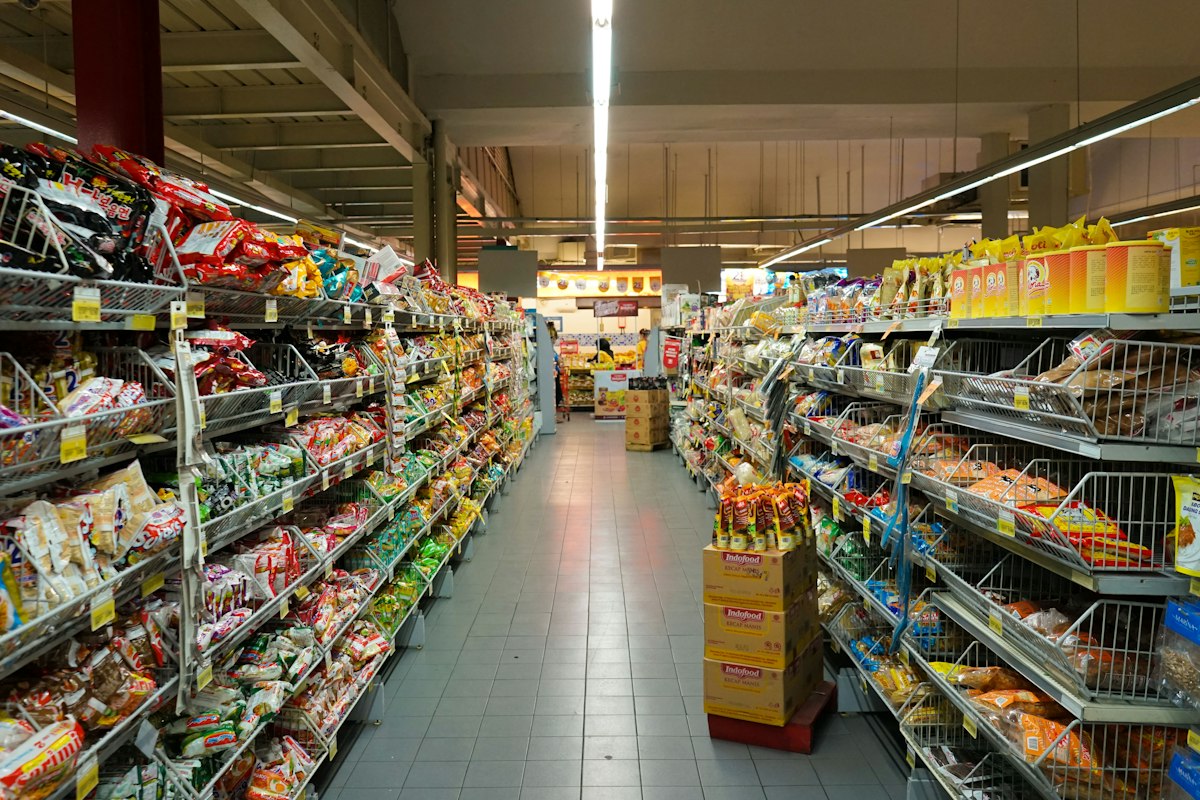
Nigeria's retail sector continues to grow — but profitability depends on more than just opening the doors.
The Real State of Supermarket Business in Nigeria
Nigeria's retail market is enormous. According to Statista, the Nigerian retail sector generates hundreds of billions of naira in annual revenue, with the fast-moving consumer goods (FMCG) segment being the largest driver. The country's growing urban middle class — particularly in Lagos, Abuja, Port Harcourt, and Kano — continues to drive demand for organised retail.
At the same time, the informal market dominates. Open-air markets, roadside sellers, and neighbourhood kiosks account for the majority of food and grocery purchases in Nigeria. This means a well-run supermarket doesn't just compete on price — it competes on experience, organisation, convenience, and trust.
Supermarkets that understand this distinction build loyal customer bases. Those that don't get undercut by the corner shop every time.
The Nigerian Investment Promotion Commission (NIPC) continues to list the retail sector as one of the priority areas for investment, citing consistent demand growth and market formalisation as key drivers. For entrepreneurs willing to run a tight operation, the opportunity is genuine.
What Does It Actually Cost to Run a Supermarket in Nigeria?
Before you can talk about profit, you need to understand costs. Many first-time supermarket owners underestimate ongoing expenses — and that's where the financial trouble starts.
Monthly Running Costs (Typical Small to Mid-Size Supermarket)
| Cost Category | Estimated Monthly Cost | Notes |
|---|---|---|
| Rent | ₦150,000 – ₦600,000 | Varies heavily by location. Lagos and Abuja are most expensive. |
| Stock replenishment | ₦500,000 – ₦5,000,000+ | Depends entirely on sales volume and product categories. |
| Staff salaries | ₦120,000 – ₦500,000 | Includes cashiers, floor staff, security, and cleaning. |
| Electricity / generator fuel | ₦60,000 – ₦250,000 | One of the highest pain points for Nigerian retail businesses. |
| POS and inventory software | ₦3,000 – ₦12,000 | Cloud-based systems like SwiftPOS eliminate the need for expensive on-premise software. |
| Internet/data | ₦10,000 – ₦30,000 | Required for cloud POS, card payment terminals, and supplier communication. |
| Packaging and supplies | ₦20,000 – ₦80,000 | Shopping bags, receipt rolls, rubber bands, etc. |
| Maintenance and repairs | ₦20,000 – ₦100,000 | Fridges, shelving, POS equipment. |
| Miscellaneous | ₦20,000 – ₦80,000 | Cleaning supplies, consumables, emergencies. |
| Total Monthly Overheads | ₦900,000 – ₦6,700,000+ | Excluding stock cost. Scale depends on shop size and location. |
What Are the Profit Margins for Supermarkets in Nigeria?
Supermarket profit margins in Nigeria operate on thin gross margins but meaningful net profit if managed well. Here's how the numbers typically look:
Gross Profit Margins by Category
| Product Category | Typical Gross Margin | Profitability Note |
|---|---|---|
| Packaged food & beverages (FMCG) | 8% – 18% | High volume, low margin. Fast turnover is key. |
| Household cleaning products | 15% – 25% | Consistent demand, decent margin. |
| Personal care & toiletries | 20% – 35% | Better margins, especially imported brands. |
| Fresh produce & bakery | 25% – 45% | High margin but high spoilage risk. Rotation discipline critical. |
| Wines, spirits & premium beverages | 20% – 40% | Excellent margins. Requires appropriate licensing. |
| Baby products | 18% – 30% | Consistent demand from young families. |
| Confectionery & snacks | 20% – 35% | Good margins and impulse-buy behaviour. |
A typical supermarket running a mixed product range operates at an average gross margin of 12–22%. After paying rent, staff, power, and other overheads, net profit margins tend to settle between 5% and 15% for well-managed shops.
That might sound small, but on monthly revenue of ₦5,000,000, even a 10% net margin generates ₦500,000 in profit per month — ₦6,000,000 per year. Scale to multiple locations and the numbers become very attractive.

Profitability in retail isn't about selling more — it's about knowing your numbers well enough to protect your margins.
The 6 Biggest Risks That Kill Supermarket Profitability in Nigeria
Understanding profit potential means nothing if you walk into this business blind to the risks. These are the six factors that most commonly destroy supermarket profitability in Nigeria.
1. Inventory Shrinkage (Theft and Expiry Loss)
Shrinkage is the gap between the inventory you should have and the inventory you actually have. In Nigerian retail, it's one of the most damaging and underappreciated profit killers. Shrinkage comes from three sources: shoplifting, internal theft by staff, and product expiry.
A supermarket losing just 3% of its revenue to shrinkage annually might not feel it immediately — but that 3% often represents the entire net profit margin. Most owners don't catch it until it's well past that.
We covered this in detail here: Your Shop Is Bleeding Money and Your Staff Might Be Holding the Knife. If you haven't read it, read it before you open.
⚠️ The Most Common Forms of Supermarket Theft in Nigeria
- Cashiers voiding transactions after collecting cash
- Staff marking goods as damaged and removing them
- Collusion between floor staff and customers
- Manual stock records being falsified
- Customer shoplifting in unmonitored aisles
2. Poor Inventory Management
Buying too much of slow-moving stock ties up your cash. Buying too little of fast-moving stock means lost sales and frustrated customers who go elsewhere. Without a system tracking what sells and when, most supermarket owners make purchasing decisions based on gut feeling — which is a reliable way to overspend and underperform.
See also: How Poor Inventory Management Is Costing Your Supermarket and How to Fix It
3. Power Costs
Electricity in Nigeria remains one of the biggest operational challenges for retail businesses. Running fridges, freezers, lighting, and a POS system through generator power during outages adds significantly to monthly costs. A supermarket with unreliable power that doesn't plan for it properly will see its margins compressed in ways that are very hard to recover from.
According to Nigeria's National Bureau of Statistics (NBS), energy costs remain among the fastest-rising expenses for small businesses across the country.
4. Currency and Supplier Price Fluctuations
Nigeria's naira has experienced significant volatility, and this directly affects the cost of imported goods. A product you bought at ₦2,500 per unit can cost ₦3,800 three months later if exchange rates or supplier pricing shifts. Supermarket owners who don't adjust retail pricing fast enough get caught holding stock they can't sell at margin.
5. Customer Credit That Goes Untracked
Giving goods on credit to trusted customers is a common practice in Nigerian retail — and it's not inherently bad. The problem is when credit is tracked on paper, in notebooks, or simply in someone's head. Untracked credit is lost money. Overextended credit is a cash flow crisis waiting to happen.
6. No Financial Visibility
Many supermarket owners couldn't tell you today what their gross margin was last month. They don't know which products made them money and which cost them money. They have no P&L report, no daily reconciliation habit, and no system that gives them this information automatically.
If you don't know your numbers, you can't protect them. Read: Your Shop Is Bleeding Money and You Don't Even Know It.
What Profitable Supermarkets in Nigeria Do Differently
The supermarkets that consistently make good money aren't necessarily selling different products. They're running a tighter, more visible operation. Here's what separates them:
✅ Habits of Profitable Supermarkets in Nigeria
- Daily reconciliation of sales vs cash received
- Real-time inventory tracking — every product in, every product out
- Clear staff roles with access controls on financial data
- Low-stock alerts to avoid empty shelves and lost sales
- Customer credit managed digitally, not on paper
- Monthly P&L review — owners know their actual profit number
- Fast-moving product prioritisation in purchasing decisions
- Shrinkage monitoring built into daily operations
These habits aren't possible to maintain reliably with notebooks and cash registers. They require systems. The retailers who embrace this reality are the ones still growing in year three while others have closed.
For more on what high-performing retailers in Nigeria know that most don't, read: POS Software in Nigeria: What the Best Retailers Know That You Don't.

Profitable supermarkets run on discipline and systems — not just hustle.
How Technology Protects Supermarket Profit Margins
This is where the modern supermarket owner has a genuine edge over the competition that's still running manually.
A cloud-based POS and inventory management system gives you something manual tracking never can: real-time financial visibility. Every sale is recorded the moment it happens. Every stock movement is logged. Every staff action leaves an audit trail. You can see your daily revenue from your phone, sitting anywhere.
For Nigerian supermarket owners, this matters for specific reasons:
- You can't always be physically present in the shop
- Staff accountability is harder to maintain without a digital paper trail
- Inventory errors compound quickly in a high-volume environment
- Customer credit disputes are messy without a system
SwiftPOS is a cloud-based POS and retail management system used by supermarkets, pharmacies, and retail shops across Nigeria. It combines sales processing, inventory control, staff management, customer tracking, and financial reporting in one platform — accessible from any device, from anywhere.

Real-time visibility into your supermarket's revenue, stock, and performance — this is what a proper retail system gives you.
For a full walkthrough of the system, read: How SwiftPOS Works: A Complete Guide to Managing Your Retail Business Smarter.
And if you're still deciding what hardware you'll need to set it all up, this guide covers it: POS Hardware Buying Guide: What Every Retail Business Actually Needs to Start.
Is It Worth Starting a Supermarket in Nigeria Right Now?
Yes — with clear eyes and realistic expectations.
The demand is there. Nigeria's population, urbanisation rate, and consumer spending trajectory make this one of the most consistently attractive sectors for retail investment on the continent. African Business Magazine has consistently highlighted West Africa's retail sector as underserved relative to its population size, pointing to significant opportunity for formal retail operators.
The risks are real but manageable. Power costs, currency volatility, theft, and operational discipline are all challenges — but they're challenges that systems, planning, and the right tools can address directly.
The supermarkets that fail aren't usually failing because the market failed them. They fail because they underestimated what running a real business requires. They thought opening the shop was the hard part. The hard part is everything after opening day.
If you're thinking of starting — read our full step-by-step guide first: How to Start a Supermarket Business in Nigeria: A Step-by-Step Guide for Beginners.

The most profitable supermarkets start with a plan — not just a space and some shelves.
Frequently Asked Questions
How much profit can a supermarket make per month in Nigeria?
It depends heavily on revenue volume and how tightly the business is run. A supermarket with monthly revenue of ₦3,000,000 and a 10% net margin would generate ₦300,000 in monthly profit. A higher-volume shop doing ₦8,000,000 per month at 8–12% net margin can earn ₦640,000 – ₦960,000 per month. These numbers improve significantly as the owner implements better systems for inventory, shrinkage, and staff control.
Is a supermarket business risky in Nigeria?
Like any business, yes — there are risks. The most significant ones are inventory shrinkage (theft and expiry), power costs, staff management challenges, and cash flow gaps from customer credit. Most of these risks are significantly reduced when you have the right systems tracking your business in real-time.
What products have the best profit margins in a Nigerian supermarket?
Personal care products, wines and spirits, baby products, and confectionery typically carry higher gross margins (20–40%) compared to FMCG staples like noodles, rice, and beverages (8–18%). A profitable product mix includes both: high-volume low-margin staples to drive traffic and higher-margin items to improve overall blended margin.
Do I need POS software to run a supermarket in Nigeria?
You don't legally need it, but you practically do. Running a supermarket without a POS system means relying on manual tracking — which opens the door to theft, errors, untracked credit, and zero financial visibility. Affordable cloud-based systems like SwiftPOS start at ₦3,000/month and pay for themselves quickly by reducing losses and improving decision-making.
How long does it take a supermarket to become profitable in Nigeria?
Most well-planned supermarkets in high-footfall locations can break even within 6–18 months. The timeline depends on startup capital, location, product mix, and how efficiently the business is managed from day one. Shops that invest early in proper systems typically reach profitability faster because they lose less money in the early months to errors and theft.
Stop Guessing. Start Knowing Your Numbers.
SwiftPOS gives Nigerian supermarket owners real-time control over sales, inventory, staff, and profit — all in one affordable system. Start with ₦3,000/month and get 1 month free on any annual plan.
📋 View Pricing Plans 💬 Chat on WhatsApp