
The True Cost of Manual Bookkeeping for Growing Retail Businesses

Quick Summary: Manual bookkeeping might feel free, but for a growing retail business it quietly drains time, money, and profits. This article breaks down the real costs — and shows you a better path forward.
Most retail business owners in Nigeria start the same way: a notebook, a pen, a calculator, and a lot of hope. You record today's sales at the end of the day, total up expenses when you remember, and trust your memory to fill in the gaps.
It works — for a while. But as your business grows, the cracks begin to show. Stock goes missing with no explanation. Sales figures don't match what's in the till. You can't tell whether last month was actually profitable or not until weeks later — if at all.
Manual bookkeeping isn't free. It has a price — and for growing retail businesses, that price compounds quietly until it becomes a serious problem.
In this guide, we'll walk through the true hidden costs of manual bookkeeping, the specific risks it creates for retail businesses in Nigeria, and what a modern alternative actually looks like in practice.

Manual bookkeeping: what looks organised on paper often hides serious financial blind spots.
What Is Manual Bookkeeping — and Who Still Does It?
Manual bookkeeping means recording all financial transactions by hand — in notebooks, on spreadsheets, or in basic ledgers — without a connected, automated system. This includes writing daily sales totals, tracking expenses in a separate column, calculating stock manually, and preparing monthly summaries from physical records.
According to research from the International Finance Corporation, a significant portion of small and medium retail businesses in sub-Saharan Africa still operate without any formal accounting software. For many Nigerian shop owners — especially those running supermarkets, pharmacies, electronics stores, or mini-marts — manual tracking is simply the status quo inherited from how the business was first set up.
The problem is not that manual bookkeeping worked once. The problem is that it doesn't scale — and the costs of maintaining it grow invisibly alongside your business.
The 7 Hidden Costs of Manual Bookkeeping for Retail Businesses
1. Time: Your Most Expensive Resource
How long does it take you or a staff member to record the day's transactions, reconcile the cash, update the stock count, and prepare any kind of financial summary? For many retail shops, this is 1–2 hours every single day — and that's when nothing goes wrong.
Over a full year, that's 365 to 730 hours spent on administrative work that a modern POS and accounting system can do automatically in seconds. That time could go toward customer service, sourcing better products, or simply running your business better.
2. Human Error: The Mistakes You Don't Know You're Making
Humans make mistakes — especially at the end of a long day of retail trading. A transposition error (writing ₦3,600 instead of ₦6,300), a missed entry, a wrong column — these small errors accumulate into major discrepancies over time.
The dangerous part? You often won't notice a ₦500 error in a manual ledger until it has cascaded into a ₦50,000 discrepancy three months later. By that point, tracing the source is nearly impossible.
3. Inventory Losses That Slip Through Undetected
Manual stock tracking is one of the biggest vulnerabilities for retail businesses. When every sale isn't automatically deducted from inventory in real time, the door is wide open for:
- Staff recording fewer sales than were actually made
- Products leaving the shop without being recorded at all
- Stock-outs going unnoticed until a customer points them out
- Shrinkage and theft that never shows up in your books
A National Retail Federation report notes that inventory shrinkage — driven by theft, vendor fraud, and administrative errors — costs retailers billions annually globally. In Nigeria, where most retail businesses still rely on manual checks, the exposure is even higher.

Reconciling manual records at month-end is stressful, time-consuming, and often inaccurate.
4. No Real-Time Visibility into Your Profits
One of the most damaging aspects of manual retail bookkeeping is the delay in financial visibility. With a notebook or basic spreadsheet, you can't tell in real time:
- Whether your business is currently profitable
- Which products are generating the most margin
- How much credit you've extended to customers — and what's outstanding
- Which staff are performing, and which may be a liability
Business decisions made without current data are essentially guesses. And in retail, guesses are expensive.
5. Credit Management Becomes a Nightmare
Customer credit — selling on account and collecting later — is extremely common in Nigerian retail. But managing it manually is a recipe for losses. When credit records live in a notebook, it's easy for amounts to be written off informally, for customers to dispute balances, and for staff to issue credit without proper authorization.
Without a structured credit management system, growing retailers routinely lose 5–15% of credit sales to poor tracking and informal write-offs.
6. Month-End and Tax Season Chaos
Come month-end — or worse, tax season — manual bookkeeping creates a scramble. Hours (sometimes days) are spent pulling together records, cross-referencing notebooks, and reconstructing figures that should have been automatically available. In the meantime, the business slows down, errors are made under time pressure, and compliance becomes stressful rather than routine.
7. Scalability Is Simply Impossible
If you're planning to open a second branch, add more staff, or grow your product range significantly, manual bookkeeping won't grow with you. Every additional location means doubling the recording work. Every new staff member is a new variable in an already fragile system. Multi-branch reporting done manually is practically impossible to do accurately.
What Good Retail Accounting Actually Looks Like
Modern retail accounting isn't about replacing your judgement as a business owner — it's about giving your judgement better information to work with, faster.
With the right retail management system, here's what changes:
- Every sale is recorded automatically at the point of transaction — no manual entry needed
- Inventory updates in real time as products are sold, so stock-outs are caught before they happen
- P&L reports are generated on demand — you know your profitability at any moment
- Customer credit is tracked per customer — outstanding balances are always visible
- Staff activity is logged — every transaction is tied to a specific employee
- Data can be exported for external accounting, tax filing, or investor reporting
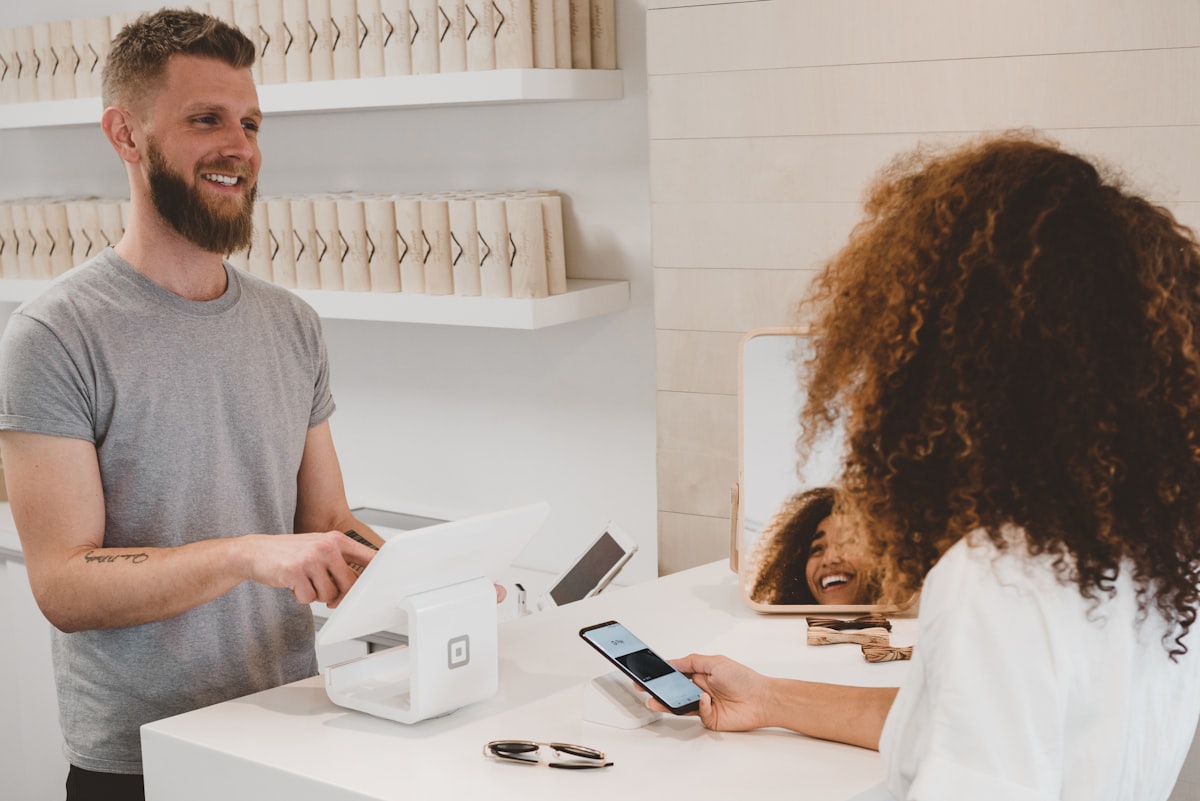
A connected POS system handles the bookkeeping automatically — so you can focus on running your business.
Manual vs Automated Retail Bookkeeping: A Side-by-Side Look
| Area | Manual Bookkeeping | Automated (SwiftPOS) |
|---|---|---|
| Sales recording | ❌ Manual at end of day | ✅ Automatic per transaction |
| Inventory tracking | ❌ Periodic manual count | ✅ Real-time, per sale |
| P&L visibility | ❌ Weeks after month-end | ✅ On demand, any time |
| Staff accountability | ❌ Difficult to trace | ✅ Per-staff audit logs |
| Customer credit | ❌ Notebook-based, prone to disputes | ✅ Per-customer credit records |
| Multi-branch reporting | ❌ Almost impossible | ✅ Centralized dashboard |
| Monthly cost | ₦0 direct, high hidden cost | From ₦3,000/month |
How SwiftPOS Replaces Manual Bookkeeping for Retail Businesses
SwiftPOS is a cloud-based POS and retail management system built specifically for businesses in Nigeria — including supermarkets, pharmacies, mini-marts, electronics shops, and multi-branch retail operations.
It replaces the notebook-and-calculator approach with a connected system that handles the recording, tracking, and reporting automatically, so you're never working from outdated or incomplete information again.
Key features that directly replace manual bookkeeping tasks:
- 📊 Full P&L Reports — Know your profit and loss at any time, without waiting for month-end
- 📦 Real-Time Inventory Management — Every sale automatically updates stock levels
- 👤 Customer Credit System — Track credit issued per customer, with full outstanding balance visibility
- 🔍 Audit Logs — Every transaction tied to a staff member, timestamped and traceable
- 🚨 Suspicious Activity Detection — Get alerted to unusual patterns before they become major losses
- 📤 Data Export — Pull reports into Excel or CSV for your accountant, bank, or tax filing
- 🏪 Multi-Branch Support — One dashboard for all your locations

With automated reporting, business owners can make confident decisions based on real numbers.
What Does It Cost to Switch?
Moving to an automated retail management system is more affordable than most business owners expect. SwiftPOS offers three plans designed to match where your business is right now:
- Starter — ₦3,000/month: POS terminal, inventory management, customer credit system, and basic sales reports. Perfect for small shops getting started with proper tracking.
- Standard — ₦6,000/month: Adds barcode POS, full P&L reports, audit logs, bulk product import, and data export — ideal for growing retailers who need deeper financial visibility.
- Pro — ₦12,000/month: Unlimited orders, multi-branch support, advanced audit logs, suspicious activity detection, and custom branding — built for serious retail operations.
All plans come with 1 month free when you subscribe annually. Compare that against the cost of inventory losses, credit disputes, and financial errors that manual bookkeeping silently causes — and the decision becomes clear. See the full breakdown at swiftpos.ng/pricing.
Frequently Asked Questions
Is manual bookkeeping illegal for retail businesses in Nigeria?
Manual bookkeeping is not illegal, but the Federal Inland Revenue Service (FIRS) and the Corporate Affairs Commission (CAC) require that businesses maintain accurate, auditable financial records. Manual systems are more prone to errors and harder to audit — which creates compliance risk as your business grows.
Can I switch to an automated system without losing my existing records?
Yes. With SwiftPOS, you can import your existing product catalogue and customer data in bulk, and begin tracking going forward without needing to recreate historical records from day one.
Do I need an accountant if I use retail management software?
Software handles day-to-day transaction recording and reporting. An accountant is still valuable for tax planning, compliance, and strategic financial advice — but with automated data exports, their job (and your bill) becomes significantly lighter.
What happens to my data if there's no internet?
SwiftPOS supports offline order processing, so your POS continues to record transactions during internet outages. Data syncs automatically once connectivity is restored — a critical feature for Nigerian businesses where connectivity can be unreliable.
How long does it take to set up SwiftPOS?
Most businesses can get started within a day. You can import your products in bulk, set up your staff accounts, and begin processing sales immediately. The SwiftPOS team is available via WhatsApp to walk you through the setup.
The Notebook Is Costing You More Than You Think
Manual bookkeeping isn't just inefficient — it's a quiet drain on every part of your retail business. The time it consumes, the errors it introduces, the losses it fails to catch, and the decisions it leaves you making blind all add up to a real financial cost that most business owners have simply never measured.
Modern retail management tools exist specifically to solve this problem — and at less than the cost of a staff member's daily wage, they're accessible to businesses of every size.
Ready to move beyond manual bookkeeping?
SwiftPOS gives growing retail businesses in Nigeria a complete system for sales, inventory, customer credit, staff management, and financial reporting — all in one place, starting from ₦3,000/month.
- 🔗 See plans: swiftpos.ng/pricing
- 💬 WhatsApp: +2349164601810
- 🎁 1 month free on any annual subscription
