
Why Your Shop Is Always Busy But Your Account Is Always Empty — And How to Fix It in 2026

There is a specific kind of frustration that only retail shop owners understand. You open early. You close late. Customers are coming and going all day. The shop feels alive. And then you sit down at the end of the month, look at your bank account, and wonder — where did all the money go?
You're not alone in this. It might be the single most common complaint among Nigerian retail business owners in 2026. Busy shops. Empty accounts. Revenue that never seems to translate into real, lasting profit. And the maddening part is that most of these business owners are working harder than ever.
The problem is almost never the amount of work. It's almost always the same three things: money is leaving in ways you can't see, you're making decisions without the right information, and the gap between what your business earns and what stays in your pocket is wider than it should be. This post breaks down exactly why this happens — and, more importantly, how to close that gap.

Revenue without clarity is just noise. The businesses that grow are the ones that understand exactly where their money goes.
The Myth of "Busy Means Profitable"
In retail, activity and profitability are not the same thing. A shop can process a hundred transactions a day and still be running at a loss — or barely breaking even. This happens because "being busy" measures volume of activity, not quality of financial outcome.
According to Moniepoint's report on Nigerian small business statistics, over 50% of Nigerian SMEs fail within their first year — and a significant percentage of those that survive are operating with very thin or negative profit margins without even knowing it. The business looks alive from the outside. The cash flow tells a different story.
There are four main ways Nigerian retail shops lose money silently, and most owners are experiencing at least two of them right now.
Reason 1: You're Selling Without Knowing Your Real Margins
If you don't know the exact cost of each product you sell — including the transport cost, any shrinkage, and supplier fees — you genuinely don't know if you're making money on it. Many Nigerian shop owners set prices based on gut feeling or what the competitor down the road charges. That approach works until it doesn't.
Inflation and naira volatility have made this especially dangerous in 2026. A Leadership Nigeria SME analysis for 2026 noted that businesses without clear financial records and structured cost tracking are the ones getting squeezed hardest by rising input costs — because they simply don't know what their break-even price is until it's too late to adjust.
A proper P&L report — one you can generate at any time, not just at year-end — shows you exactly which products are making you money and which are quietly costing you. This is one of the most underused features available on modern POS platforms, and one of the most valuable. We've written about this in detail here: Your Shop Is Bleeding Money and You Don't Even Know It.
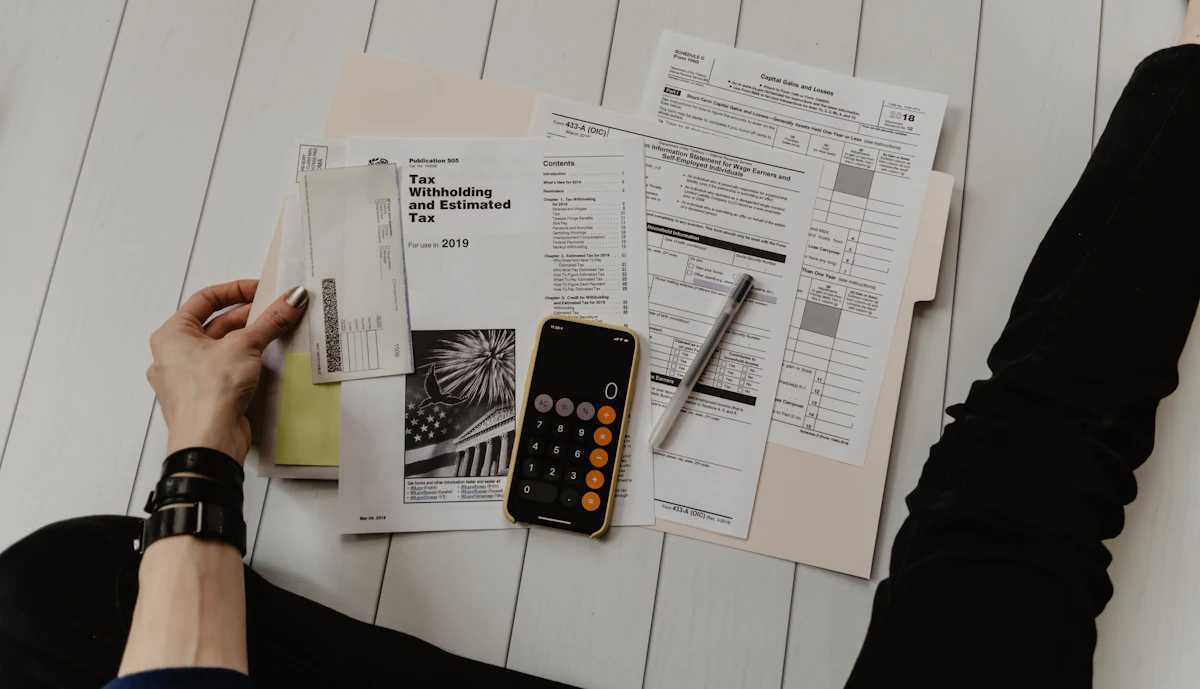
Knowing your real margins — not just your revenue — is what separates shops that grow from shops that just stay busy.
Reason 2: Money Is Leaving Through Your Staff
This is the uncomfortable one — but it's too important to skip. A large proportion of the "missing money" in Nigerian retail shops is not going to bad luck or market conditions. It's being taken. By staff running unrecorded sales. By cashiers giving unauthorised discounts. By stock being moved without documentation.
The reason this is so common is simple: most Nigerian retail shops operate without any real audit trail. There's no record of who sold what, when, at what price, and whether the cash actually made it to the till. In that kind of environment, dishonesty is easy and almost undetectable.
The fix isn't about trust or culture — it's about systems. When every transaction is logged automatically, when every discount requires a recorded reason, and when suspicious patterns get flagged by the system itself, the environment changes entirely. Honest staff work with more confidence. Dishonest ones find it impossible to operate quietly. Read our deep-dive on this: Your Shop Is Bleeding Money and Your Staff Might Be Holding the Knife.
Reason 3: Your Customer Credit System Is a Slow Drain
Almost every Nigerian retail shop owner runs some version of a credit system. Customers buy on trust, promising to pay later. In many communities, it's not just common — it's expected. And it works, until it doesn't.
The problem is the tracking. When credit is managed in a notebook — or worse, from memory — balances get forgotten, disputes happen, and some customers exploit the informality to simply never pay. That credit you extended last month is essentially cash that left your shop and may never return.
A digital customer management system with a built-in credit tracker changes this completely. Every customer has a profile. Every credit transaction is recorded. Balances are visible at a glance. You know exactly who owes what — and when to stop extending credit before the amount becomes unrecoverable. The best Nigerian retailers already know this — and it's one of the biggest operational differences between shops that retain cash and those that don't.

Every naira of untracked credit is a potential loss. A digital system makes the difference between a manageable ledger and a financial headache.
Reason 4: You're Making Business Decisions Without Business Data
What did you sell most last Tuesday? Which product category had the highest margin last month? How does this week compare to the same week three months ago? If you can't answer those questions confidently, you're running your business on instinct — and instinct, at scale, is expensive.
The Lagos Business School's latest retail trends analysis for Africa in 2026 confirms that Nigerian consumers are becoming significantly more value-conscious and deliberate in their spending. That means retail competition is intensifying — and the businesses winning are the ones that understand their customers and their own operations better than their competitors do. That understanding comes from data, not gut feeling.
Transaction history, category performance reports, daily sales comparisons, and exportable data summaries are not fancy extras — they are the basic tools of a modern retail business. They exist precisely so you don't have to guess. If your current system doesn't give you these, it's time for one that does.
What Fixing These Problems Actually Looks Like
SwiftPOS was built specifically to address all four of these problems for Nigerian retail businesses. Not as separate modules you have to piece together — as a single, integrated system that handles sales, inventory, staff accountability, customer credit, and financial reporting from one screen.
Here's what that means practically. Every sale made through the POS is recorded automatically — who sold it, what was sold, at what price, and when. Your P&L report is available any time you want it, not just at month end. Suspicious activity gets flagged. Customer credit balances are always visible. And all of it syncs to the cloud, so you can check your business from your phone whether you're in the shop or not.

SwiftPOS's P&L report gives you a clear view of revenue, costs, and real profit — available on demand, not just at year-end.
That P&L report above isn't something you need an accountant to read. It's designed for business owners — giving you a clean, honest picture of what your shop actually earned versus what it spent. See the full feature set at swiftpos.ng/features.
If you're not yet sure whether a cloud-based POS is the right direction or want to understand what hardware you'd actually need to get started, these guides are worth reading before you make any decision: Cloud POS vs Traditional Cash Registers in 2026 and our POS Hardware Buying Guide for Nigerian Retailers.
The 2026 Opportunity: Systems Now or Struggle Later
The business environment for Nigerian retailers in 2026 is genuinely offering more breathing room than the past two years — naira volatility has eased slightly, fuel costs are stabilising, and credit access is slowly improving. But that opportunity only benefits businesses that are structured enough to take advantage of it.
As the Leadership Nigeria analysis puts it: banks and lenders are beginning to re-engage with SMEs — but only those with clear financial records and structured cash flow data. That means the shops that know their numbers get access to capital. The shops that don't, stay stuck.
Putting a proper system in place today isn't just about stopping losses — it's about being in a position to grow when the opportunity is there. And according to Mordor Intelligence's Nigeria e-commerce and retail market forecast, Nigeria's retail sector is projected to grow from $9.35 billion in 2025 to over $10.49 billion in 2026. The market is expanding. The question is whether your business is set up to capture any of it.

2026 is a year of real opportunity for Nigerian retailers — but only the ones who put systems in place will actually capture it.
SwiftPOS Pricing — What It Costs to Fix Your Business
One of the most common reasons Nigerian shop owners delay getting proper systems is cost. So let's be direct about what SwiftPOS actually costs — and what you get.
Starter
₦3,000/mo
- POS terminal
- Inventory management
- Customer credit system
- 100 orders/day
- Basic sales reports
Standard
₦6,000/mo
- Full P&L reports
- Barcode POS + scanner
- Audit logs
- Data export
- 5 staff accounts
Pro
₦12,000/mo
- Multi-branch support
- Suspicious activity detection
- Advanced audit logs
- Unlimited orders
- 15 staff accounts
- Custom branding
All plans include 1 month free when you subscribe annually. See everything at swiftpos.ng/pricing. If you want to compare SwiftPOS against other options available in the Nigerian market, we've done that work for you: The 7 Best POS Systems for Small Businesses in Nigeria in 2026. And if you're just starting to evaluate your options, this is the most practical place to begin: How to Find the Best POS System in Nigeria.
Frequently Asked Questions
Can a POS system really help with profitability — not just sales processing?
Yes, significantly. The profitability improvements come from multiple directions: catching staff theft through audit logs, reducing stockouts through better inventory tracking, recovering customer credit through digital records, and making smarter buying decisions through sales data. Each of those improves your bottom line directly.
How quickly can I see results after switching to SwiftPOS?
Most shop owners notice changes within the first two to four weeks. You start seeing clear daily sales reports. Low stock alerts prevent you from losing sales. Staff behaviour often improves simply because the system is now tracking everything. Financial clarity follows quickly after that.
Is SwiftPOS suitable for pharmacies and supermarkets — not just general shops?
Yes. SwiftPOS works across retail formats — supermarkets, pharmacies, mini-marts, electronics shops, and general retail. For a comparison specifically tailored to those sectors, read: Top 5 Inventory Management Software for Supermarkets and Pharmacies in Nigeria 2026.
Does it work if my internet connection is unreliable?
Yes. SwiftPOS supports offline order processing — your shop keeps running during network downtime and everything syncs automatically once connectivity returns. This was designed specifically for Nigerian business realities.
Profit Is Not an Accident
The shops that are consistently profitable in Nigeria aren't just lucky. They're not busier than everyone else. They know their margins. They track their stock. They manage their staff with accountability built into their systems. And they make decisions based on real data, not memory or instinct.
All of that is available to any retail business in Nigeria right now — at a price point that makes sense even for small shops. The gap between "always busy, always broke" and "growing with real profit" is usually not a marketing problem or a product problem. It's a systems problem. And systems problems have clear solutions. Browse more practical business guides for Nigerian retailers on the SwiftPOS blog, or explore everything the platform can do at swiftpos.ng. Want to see it in action? Read our full walkthrough: How SwiftPOS Works: A Complete Guide to Managing Your Retail Business Smarter.
Ready to Finally See Where Your Money Is Going?
SwiftPOS gives Nigerian retailers the financial clarity, stock control, and staff accountability they need to turn a busy shop into a genuinely profitable one. Plans from ₦3,000/month — with 1 month free on annual plans.
No long-term contracts. Start today and see the difference within a week.
