How to Start a Supermarket in Nigeria with Low Capital (Step-by-Step Guide 2026)
SwiftPOS Team
Published July 15, 2026
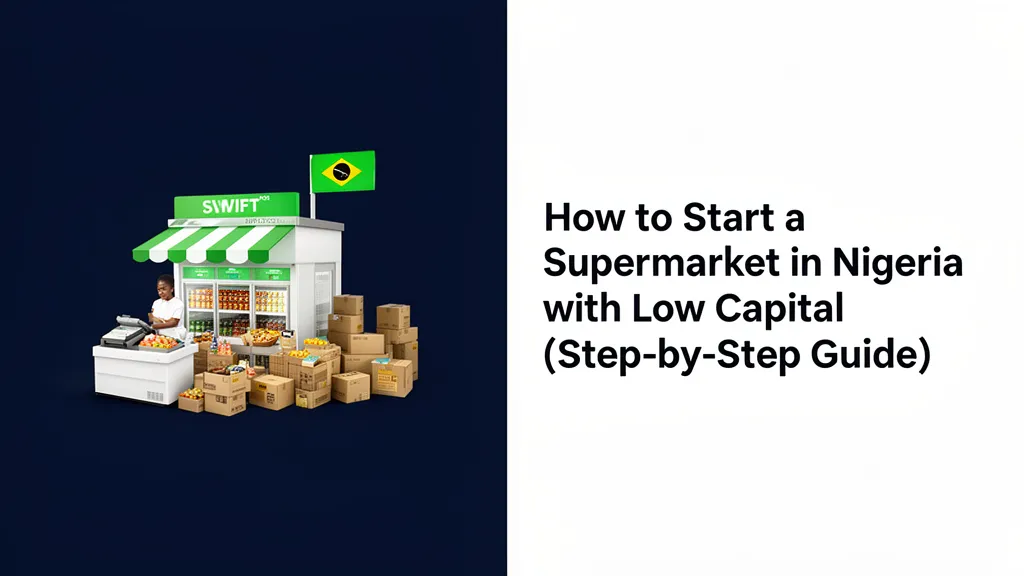
Many aspiring entrepreneurs in Nigeria dream of owning a supermarket or mini-mart, but the perceived high capital requirement often acts as a significant barrier. Yet, with strategic planning and smart execution, launching a profitable provision store in Nigeria is achievable even with limited funds. This guide breaks down the essential steps to turn that dream into a reality.
Why This Matters in 2026
The retail sector in Nigeria is experiencing robust growth, driven by a burgeoning population and increasing urbanization. According to a recent report by Statista, the Nigerian retail market revenue is projected to reach US$142.30 billion in 2024, with an annual growth rate of 10.43% from 2024-2028, resulting in a projected market volume of US$212.40 billion by 2028. This presents a massive opportunity for small and medium-sized businesses, especially those that can cater to everyday household needs like a mini mart or provision shop. However, the informal nature of many small provision stores means that many businesses operate without proper systems, leading to inefficiencies and missed growth opportunities. Understanding how to navigate this landscape efficiently is crucial for success.
What You Need Before You Start
Before diving into the steps, ensure you have these foundational elements in place:
- A Clear Business Plan: Even for a small provision store, a concise plan outlining your vision, target market, product offerings, marketing strategy, and financial projections is essential. This doesn't need to be a complex document but a guiding framework.
- Initial Capital: While we're focusing on low capital, some funds are still necessary for rent, initial stock, and basic setup. Aim for at least NGN 500,000 to NGN 2,000,000 for a small-scale mini-mart, depending on your location and inventory choices.
- Market Research: Understand the needs of your prospective customers. What products are in high demand? What are competitors lacking?
- Legal Documents: Business registration with the Corporate Affairs Commission (CAC) and obtaining necessary local government permits are non-negotiable.
- Reliable Suppliers: Identify wholesalers or distributors for your product categories. Building good relationships here is key for favorable pricing and credit terms.
Step-by-Step: How to Start a Supermarket in Nigeria with Low Capital
Step 1: Conduct Thorough Market Research and Niche Down
Starting a provision business in Nigeria requires more than just stocking goods. You need to understand your potential customers. Walk around your target neighborhoods. What kind of provision shops already exist? Are they always busy? What items run out quickly? Observe the demographics – are there many families, singles, or students? This will inform your product selection.
For example, a mini mart near a university campus might focus on snacks, instant noodles, toiletries, and small stationery, while one in a family-dense residential area would prioritize cooking ingredients, baby products, and household cleaning supplies. Don't try to be everything to everyone, especially with low capital. Niche down to a specific set of products that meet a clear demand in your chosen area. This focused approach reduces initial stock investment and minimizes waste.
Step 2: Secure a Strategic Location and Minimalist Setup
Location is paramount for any retail business, especially a provision shop in Nigeria. Look for high-traffic areas with good visibility, but don't overspend on prime real estate initially. Consider renting a small space in a bustling market, a busy residential street, or near commercial hubs. Negotiate rent terms carefully; quarterly or semi-annual payments might be more manageable than annual upfront payments.
For setup, prioritize functionality over aesthetics. You don't need elaborate shelving or fancy décor. Used shelves, display racks, and a simple counter can suffice. Focus on cleanliness, good lighting, and organized product placement. A small generator for power stability is almost a necessity in Nigeria.
A Nigerian shopkeeper arranging products on shelves in a modern mini-martStep 3: Source Inventory Smartly and Build Supplier Relationships
This is where "low capital" truly comes into play. Instead of buying large quantities, start with a limited but high-demand inventory. Focus on fast-moving consumer goods (FMCGs) that people buy regularly.
- Direct from Wholesalers/Distributors: Bypass middlemen where possible. Visit major markets like Idumota in Lagos, Onitsha Main Market, or Ariaria International Market in Aba. Compare prices and build relationships. Many distributors offer better rates for consistent buyers.
- Start Small, Scale Up: Buy in smaller quantities initially, even if it means slightly higher per-unit costs. The goal is to test the market and conserve cash flow. As certain products prove popular, you can increase your order volume.
- Negotiate Credit Terms: Once you establish a relationship and trust, some suppliers might offer short-term credit, allowing you to pay for goods after they've been sold.
Step 4: Register Your Business and Obtain Necessary Permits
Operating legally protects your business and builds trust with customers and suppliers.
- Business Name Registration: Register your business name with the Corporate Affairs Commission (CAC). This can cost between NGN 10,000 to NGN 20,000, depending on whether you do it yourself or use an agent.
- Tax Identification Number (TIN): Obtain a TIN from the Federal Inland Revenue Service (FIRS). This is free but essential for tax compliance.
- Local Government Permits: Visit your local government office to inquire about and obtain necessary permits for operating a provision store or mini mart in your area. These vary by state and local government but typically include shop permits, environmental health permits, and possibly signage permits. Fees can range from NGN 5,000 to NGN 50,000 annually.
- NAFDAC/SON Registration (if applicable): If you plan to sell certain food items, drugs, or manufactured goods, you might need approvals from the National Agency for Food and Drug Administration and Control (NAFDAC) or the Standards Organisation of Nigeria (SON). Research this based on your specific product range.
Step 5: Implement an Efficient Point-of-Sale (POS) and Inventory System
Manual tracking with pen and paper or basic spreadsheets can quickly become overwhelming as your provision store grows. Mismanagement of inventory leads to losses from expired goods, theft, or simply not knowing what to restock. An efficient POS system is crucial, even for a small provision store in Nigeria.
Look for a system that allows you to:
- Track sales accurately: Record every transaction, including payment methods.
- Manage inventory in real-time: Know exactly what you have in stock and when to reorder.
- Monitor product performance: Identify your best-selling items and those that don't move.
A system like SwiftPOS NG offers robust features for managing your retail operations from end-to-end. It allows you to ring up sales quickly using its classic or smart grid POS interface, manage product inventory with detailed tracking, and generate essential reports. This helps you avoid stockouts of popular items and reduces overstocking of slow-moving products, directly impacting your bottom line.
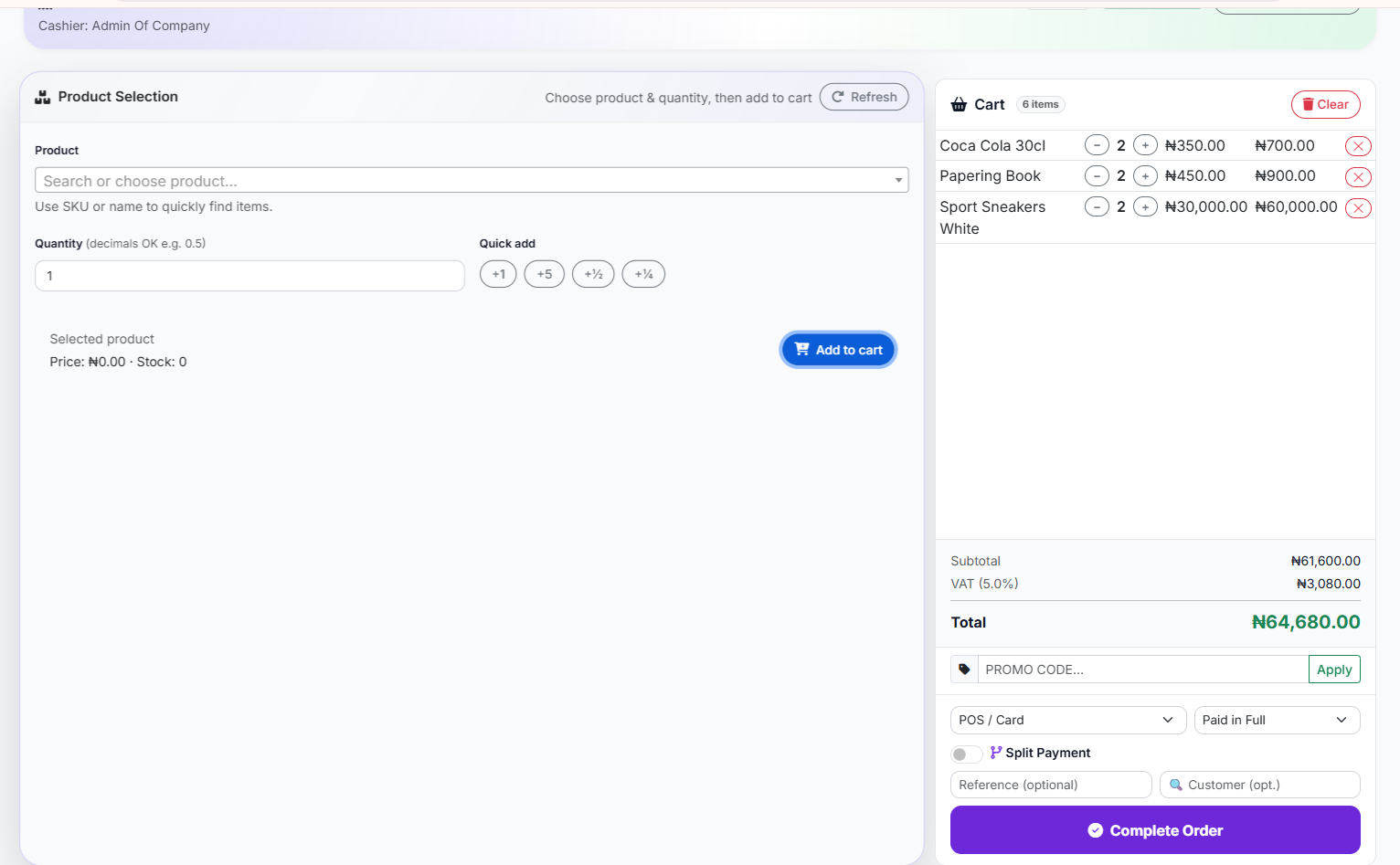 Classic POS Interface (List select)
Step 6: Hire and Train Reliable Staff
As your business grows, you'll likely need to hire staff. For a small provision store, one or two sales assistants might suffice. Look for individuals who are trustworthy, polite, and have basic numeracy skills.
- Clear Job Roles: Define responsibilities clearly to prevent confusion.
- Training: Train them on product knowledge, customer service, and how to use your POS system effectively.
- Compensation: Offer fair wages and incentives to motivate them.
- Trust and Oversight: Implement systems to monitor sales and inventory to prevent internal theft, which can be a significant challenge for small businesses.
Step 7: Market Your Mini Mart Locally
Even with low capital, effective marketing is possible.
- Word-of-Mouth: Encourage satisfied customers to spread the word. Offer small discounts or loyalty programs.
- Local Flyers/Posters: Distribute flyers in your immediate neighborhood.
- Community Engagement: Sponsor a local event or participate in community activities.
- Social Media: Create a simple social media page (WhatsApp Business, Facebook) to announce new arrivals, promotions, and interact with customers.
- Promotions: Offer introductory discounts, bundle deals, or loyalty cards.
Common Mistakes to Avoid
- Ignoring Inventory Management: This is perhaps the biggest pitfall. Without proper tracking, you'll face stockouts, expired goods, and potential theft.
- Over-reliance on Credit: While credit from suppliers can be helpful, don't overextend yourself. Manage your cash flow diligently.
- Poor Customer Service: Rude staff, dirty premises, or inconsistent stock can drive customers away quickly.
- Neglecting Legal Compliance: Operating without proper registration and permits can lead to fines, closures, and legal issues.
- Lack of Financial Tracking: Failing to separate business finances from personal finances, or not tracking expenses and revenue, makes it impossible to know if you're truly profitable.
- Inadequate Security: Mini marts are often targets for petty theft. Invest in basic security measures like locks, CCTV, and secure cash handling.
How to Track and Grow After Launch
Once your provision store is up and running, continuous monitoring and strategic growth are key.
- Daily Sales Analysis: Review your daily sales figures. What products sold well? What didn't? This informs your restocking decisions.
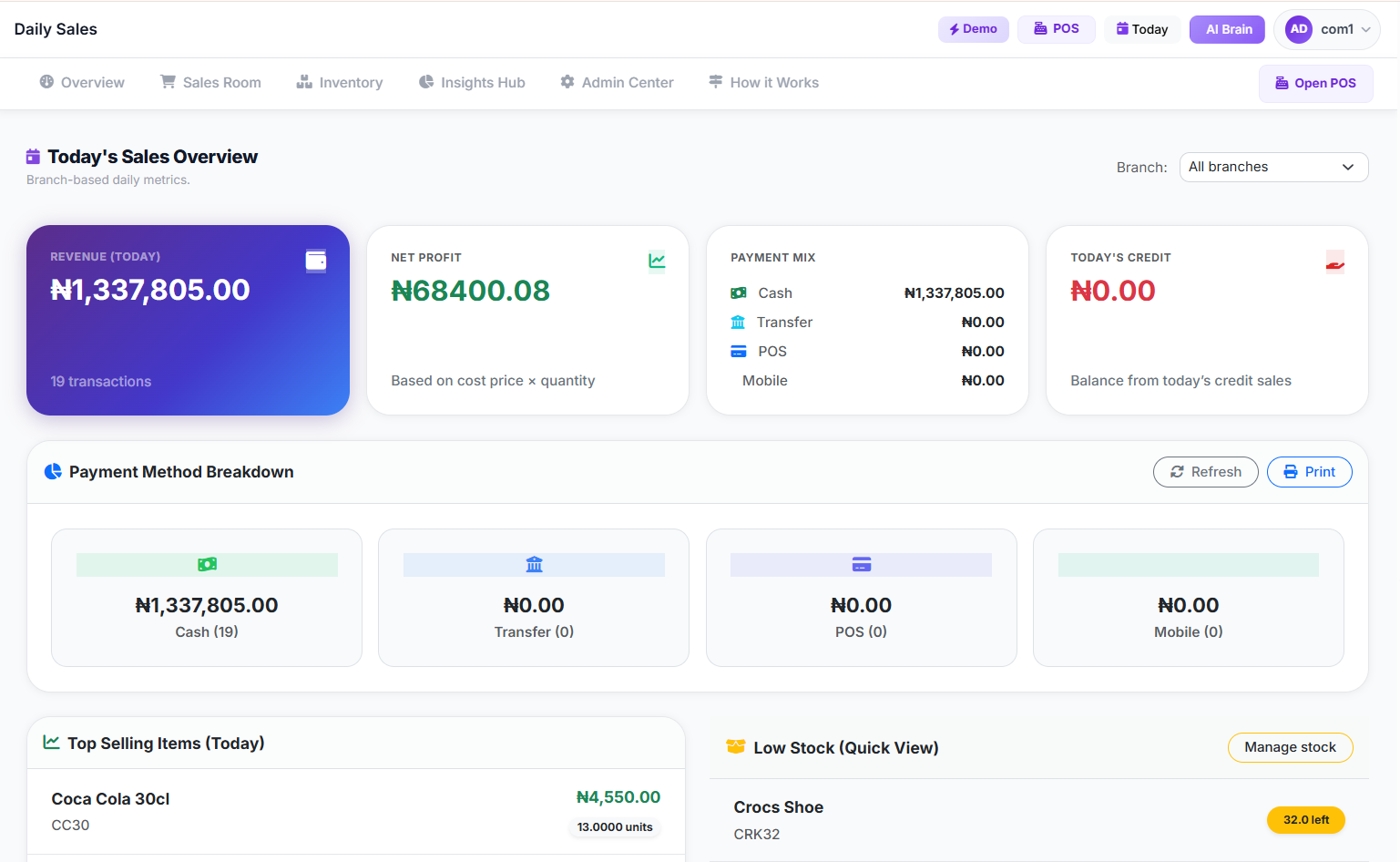 Today's Dashboard
- Inventory Turnover: Calculate how quickly your inventory sells. High turnover means good cash flow.
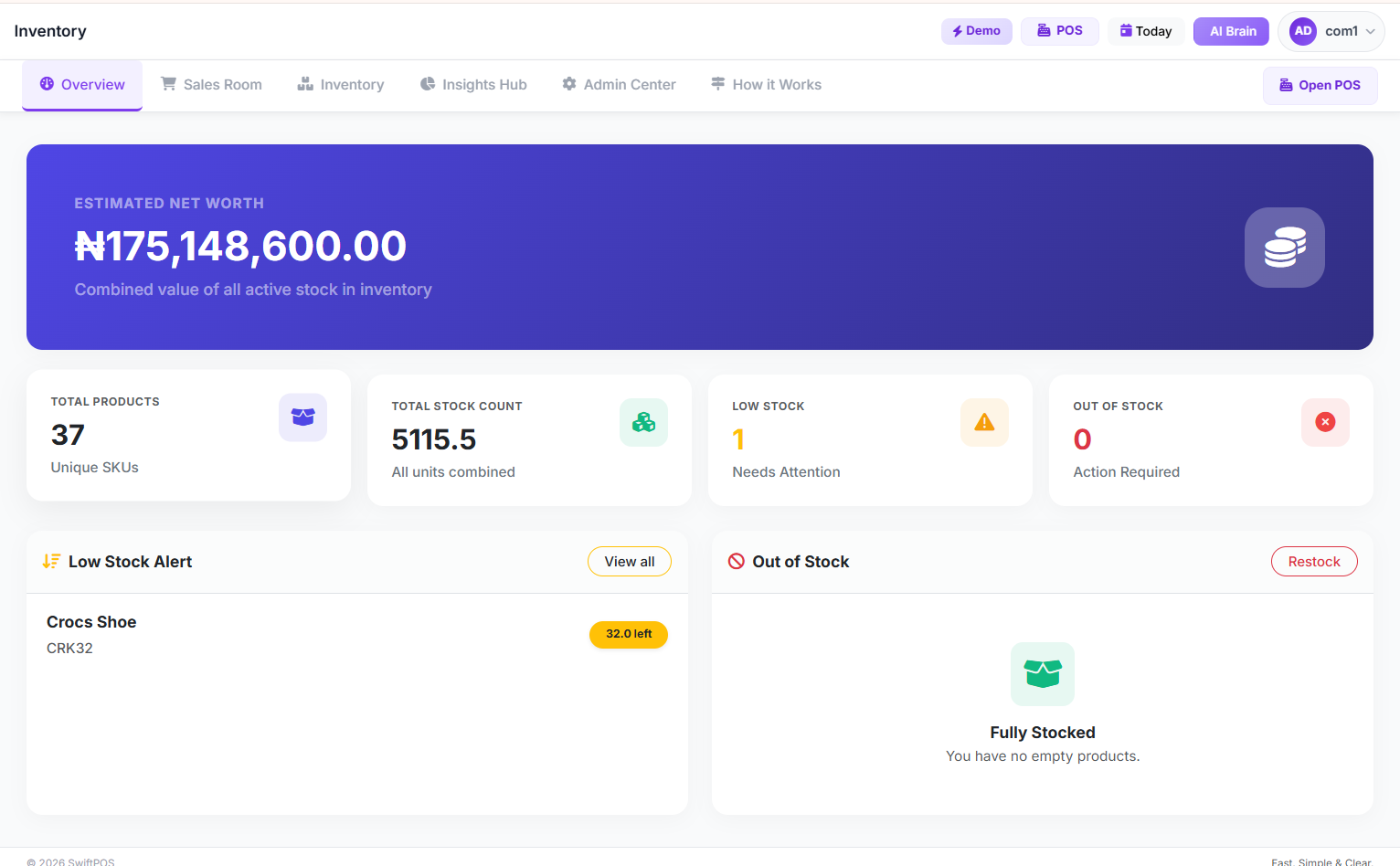 Inventory Dashboard
- Customer Feedback: Actively solicit feedback from your customers. What do they want to see in your store? What can you improve?
- Expand Product Range Gradually: Based on sales data and customer requests, slowly introduce new product lines.
- Supplier Diversification: Don't rely on just one supplier for critical items. Have alternatives to ensure continuity.
- Leverage Technology for Insights: Tools like SwiftPOS NG provide AI-powered business insights that analyze your sales, inventory, and customer data to identify trends and suggest actionable strategies. This can help you make informed decisions about pricing, promotions, and stock levels, driving sustainable growth.
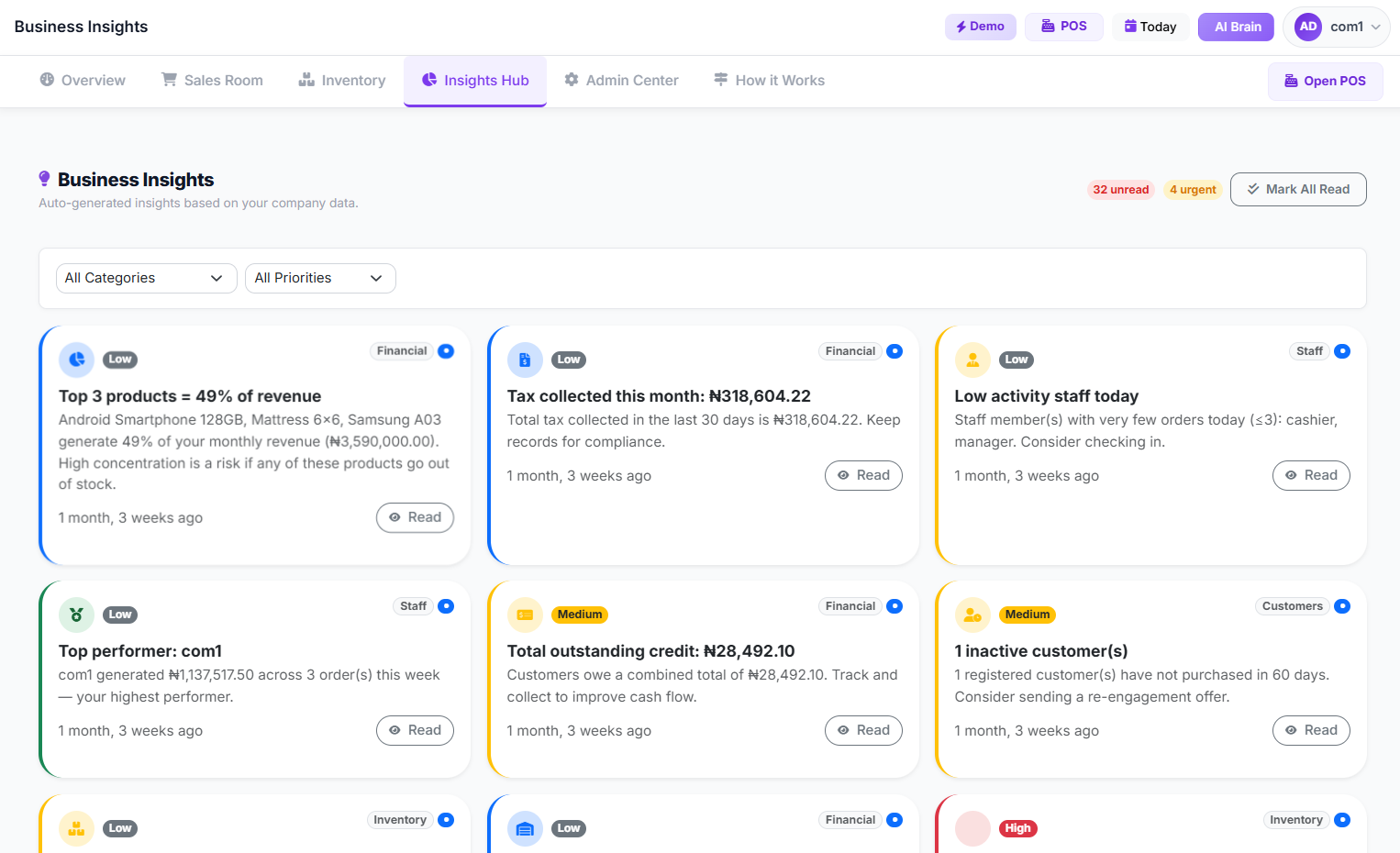 Business Insights Page
> "The difference between a successful small business and one that struggles often comes down to the quality of its financial and operational data. You can't improve what you don't measure."
- Consider Credit Sales: For trusted customers, offering credit can boost sales, but manage it carefully. A system that tracks outstanding balances, like SwiftPOS NG's credit sales feature, is vital for this.
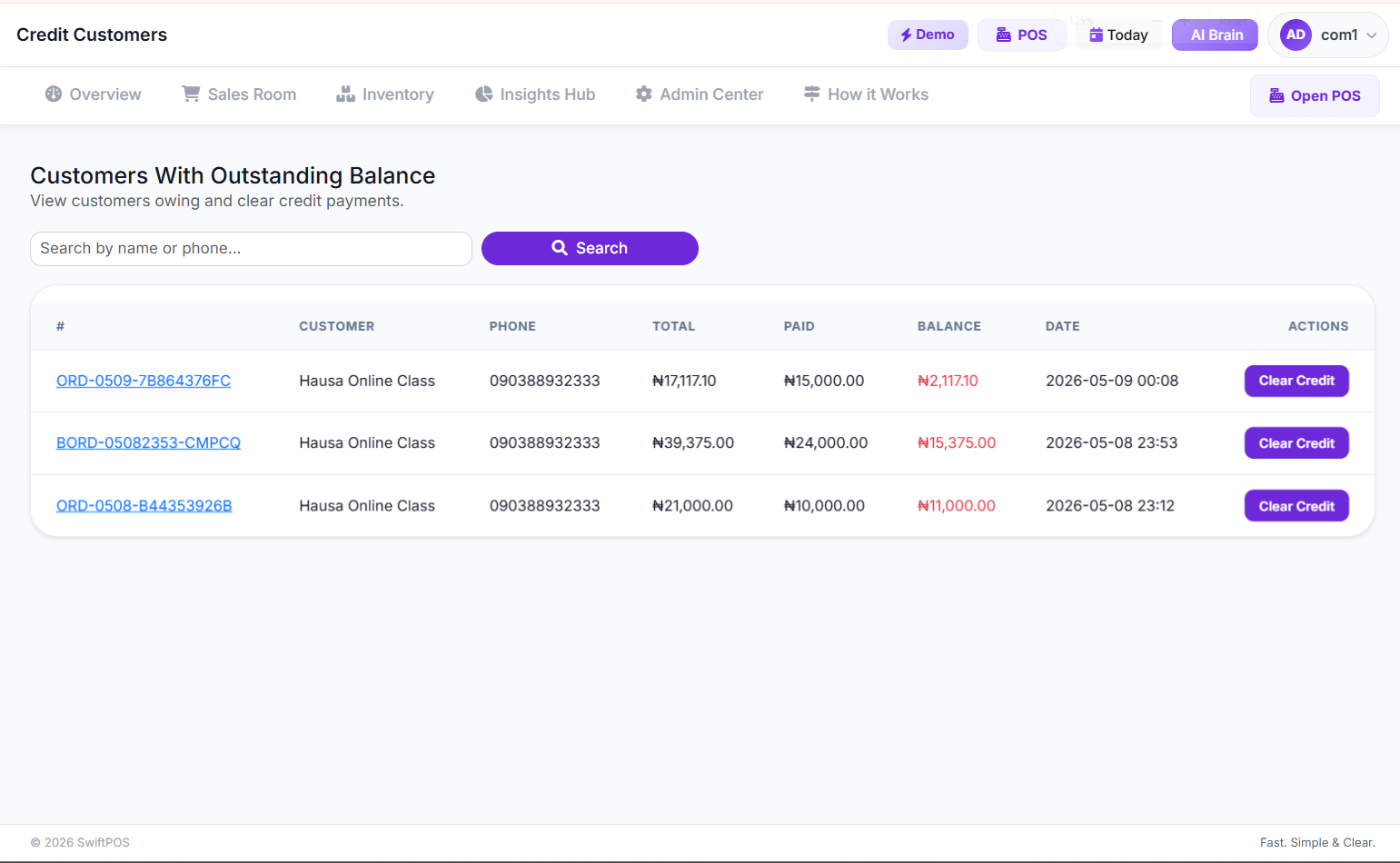 Credit Customers List Page
- Explore Multi-Branch Potential: If your first provision store is successful, consider opening another. A robust POS system can easily manage multiple branches, allowing you to centralize operations and reporting. You can learn more about how a comprehensive system can support your business growth by exploring its features or checking out its benefits.
 A Nigerian entrepreneur reviewing sales data on a tablet in a well-lit mini-mart
Frequently Asked Questions
Q1: How much capital do I really need to start a provision store in Nigeria?
While you can start a very basic provision store with as little as NGN 500,000, a more comfortable low-capital range would be NGN 1,000,000 to NGN 2,000,000. This covers initial rent, basic fixtures, a diverse but limited stock, and essential permits. The exact amount depends heavily on your location and the scale of your initial inventory.
Q2: What are the most profitable items to sell in a mini mart or provision shop in Nigeria?
Fast-moving consumer goods (FMCGs) are generally the most profitable. These include provisions like cooking oil, sugar, rice, pasta, beverages (soft drinks, bottled water), toiletries (soap, toothpaste), detergents, and snacks. Focus on everyday necessities that people repurchase frequently.
Q3: How do I get good suppliers for my provision store?
Visit major wholesale markets in your city (e.g., Balogun Market in Lagos, Main Market in Onitsha). Talk to other shop owners, ask for recommendations, and negotiate directly with distributors. Building a relationship with a few reliable suppliers is more beneficial than constantly searching for the absolute cheapest price. Many offer credit terms to trusted buyers.
Q4: Is it better to buy or rent a shop space for a small provision store?
For a low-capital startup, renting is almost always the better option. It significantly reduces your upfront investment and allows for flexibility. Once your business is established and profitable, you can consider purchasing a property.
Q5: How can I manage inventory effectively without expensive software?
While dedicated software like SwiftPOS NG is highly recommended for efficiency, if your budget is extremely tight, you can start with a simple ledger for tracking incoming and outgoing stock. However, this method is prone to errors and becomes unsustainable as your inventory grows. Consider exploring the pricing for modern solutions, as their benefits often outweigh the costs, especially for growth-oriented businesses. You can also check out various free business tools that might help with other aspects of your business.
Q6: What are the biggest risks for a provision business in Nigeria?
Key risks include inconsistent power supply, fluctuating product prices, competition from larger supermarkets, theft (internal and external), and poor inventory management leading to losses. Mitigating these risks requires careful planning, robust systems, and continuous adaptation.
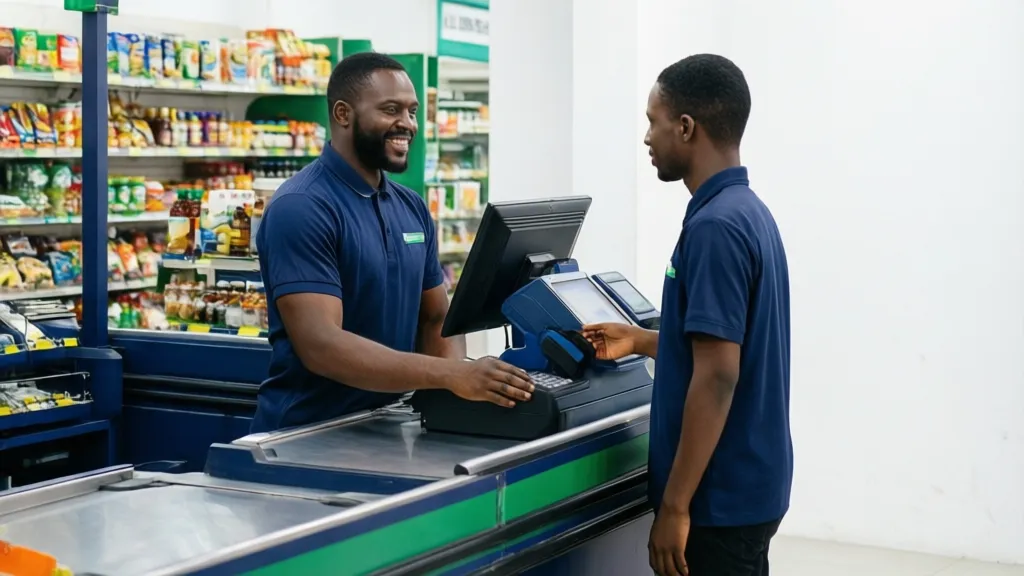 A busy Nigerian mini-mart with a clean and efficient checkout counter
Ready to Start Your Mini Mart Journey?
Starting a small provision store or mini mart in Nigeria with low capital is a challenging but rewarding venture. With careful planning, smart resource management, and the right tools, you can build a thriving business. Don't let the fear of high costs deter you. Focus on value, efficiency, and excellent customer service. To streamline your operations and gain valuable business insights, consider leveraging a modern POS and inventory management system like SwiftPOS NG. It's designed to help Nigerian businesses just like yours grow efficiently.
For more insights and helpful guides, explore our blog or learn more about us. If you have any questions or need assistance, don't hesitate to contact us.
Contact Details:
WhatsApp: +2349164601810

Restaurant Startup Cost in Nigeria: Your Complete Guide
Oct 16, 2026
How Much Profit Do Restaurants Make in Nigeria? (2024 …
Oct 16, 2026
How to Manage Multiple Cashiers in a Single Store: A C…
Oct 16, 2026