How to Manage Inventory Across Multiple Branches in Nigeria — Complete 2026 Guide for Retail Business Owners
SwiftPOS Team
Published May 12, 2026
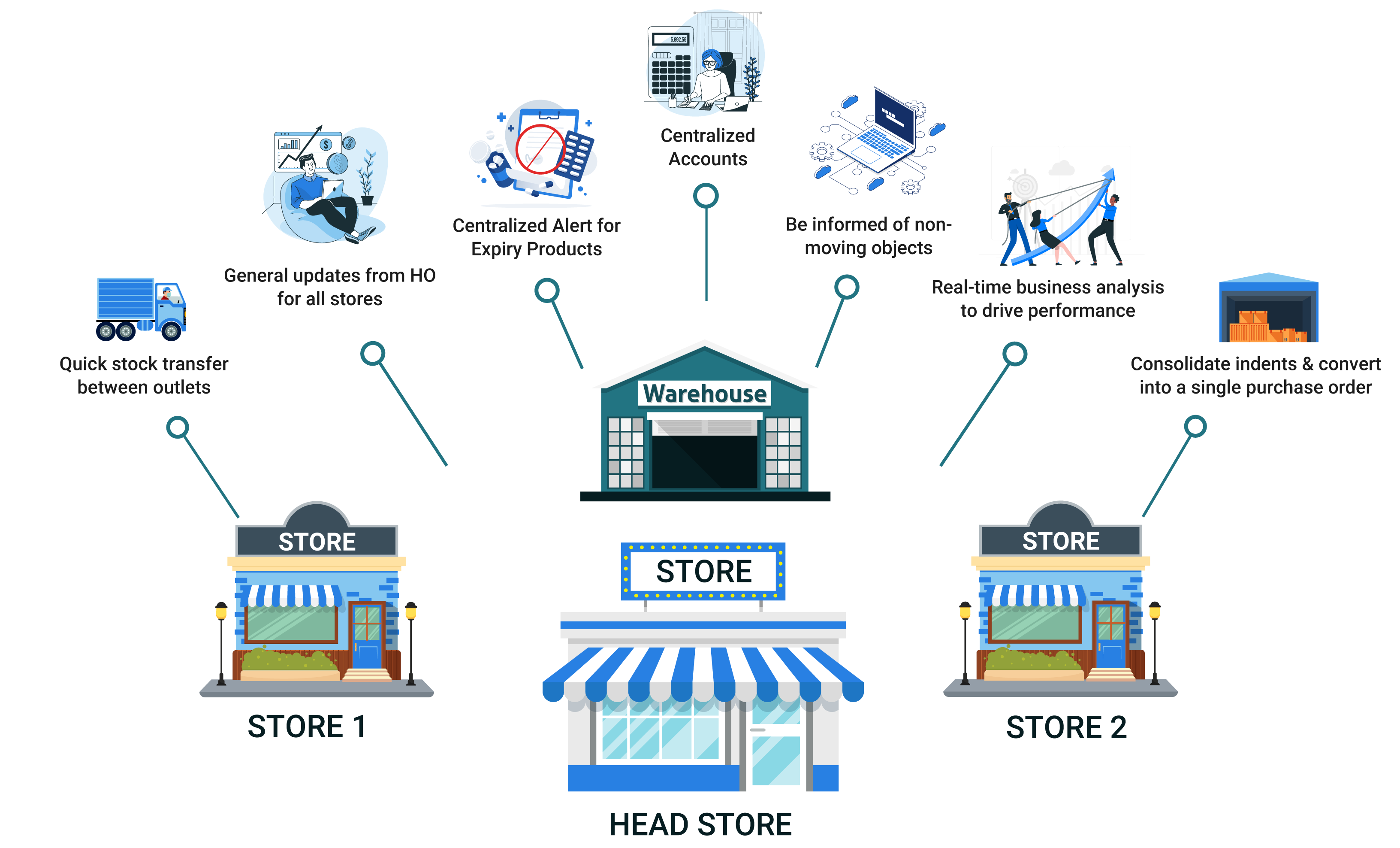
You opened your first shop. It did well. So you opened a second. Maybe a third. And somewhere between the excitement of growth and the reality of running multiple locations, you discovered a problem nobody warned you about: managing inventory across multiple branches in Nigeria is genuinely hard — and most business owners are doing it the wrong way.
How do you know which branch is running low on stock before it runs out? How do you stop a branch manager from selling products off the books? How do you tell, at 9 PM on a Tuesday, whether your Lekki branch has more Peak Milk than your Surulere branch — without calling anyone? These are the questions that define whether your multi-branch business grows profitably or slowly bleeds cash through invisible leaks.
This guide answers all of them. By the end, you will know exactly how to manage inventory across multiple branches in Nigeria, what systems to put in place, and how tools like SwiftPOS make it possible to run five branches as confidently as you run one.
Why Multi-Branch Inventory Is One of the Biggest Hidden Losses in Nigerian Retail
Most Nigerian business owners expand their operations without expanding their management systems. They go from one branch to two — still using WhatsApp messages, handwritten stock books, and monthly phone calls to check stock levels. And then a third branch opens, and suddenly the entire operation feels like it is spinning out of control.
Here is what the data says: according to retail operations research, inventory shrinkage — the gap between what you think you have and what you actually have — typically ranges from 1% to 3% of annual revenue. For a multi-branch supermarket doing ₦15 million monthly across all locations, that is between ₦150,000 and ₦450,000 disappearing every month. Not from robbery. Not from fire. From poor inventory visibility.
In the Nigerian context, the problem is even more acute because of specific realities on the ground:
- Branch managers operate with too much autonomy. Without a system watching every transaction, a manager can receive 200 cartons from a supplier and only record 180. The 20-carton difference becomes personal income.
- Supplier invoices are not always cross-checked. When deliveries happen at multiple locations, it is nearly impossible to verify that every branch received exactly what was ordered — unless a system is capturing it in real time.
- Stock transfers between branches create blind spots. If Branch A sends 50 units to Branch B, but neither branch records it properly, both branches have wrong stock figures. Reports become meaningless.
- Pricing inconsistencies develop over time. Without a central product catalogue, different branches sell the same product at different prices — leading to customer confusion and unequal margins.
- Restocking decisions are reactive, not proactive. Most multi-branch owners only discover a branch has run out of a product when a customer complains or a staff member calls. By then, sales are already lost.
None of these problems are caused by dishonest staff or bad luck. They are caused by a fundamental lack of real-time inventory visibility across branches. And the solution is systematic, not motivational.
The Core Challenge: Visibility, Control, and Speed
When you examine what multi-branch inventory management actually requires, it comes down to three things:
1. Visibility
You need to see the stock level at every branch, at any time, without calling anyone. Not yesterday's figures. Not last week's figures. Right now — what is in stock at each location, what is moving fast, and what is about to run out.
2. Control
You need rules and records. Every product that enters a branch should be recorded. Every product that leaves — whether through a sale, a transfer, or a return — should be recorded. And every person who touches that stock should be accountable for their actions.
3. Speed
Multi-branch decisions move fast. A supplier is offering you a bulk deal on rice. Do you take it? You need to know immediately which branches need rice and how much, so you can place the right order and distribute it correctly. Waiting three days for a manual stock count is not an option.
The businesses that scale their retail operations successfully in Nigeria are not the ones with the most capital or the most branches. They are the ones who solved visibility, control, and speed — usually by moving to a cloud-based POS system with multi-branch support.
How to Manage Inventory Across Multiple Branches in Nigeria — Step by Step
Whether you have two branches or ten, this framework gives you a structured approach to taking control of your multi-branch inventory.
Step 1: Build One Centralised Product Catalogue
The foundation of every successful multi-branch inventory system is a single, shared product catalogue. Every product you sell — across every branch — should come from one master list with standardised names, SKUs, prices, and categories.
Without this, your branches will develop their own naming conventions. Your Abuja branch calls it "Dettol 500ml" while your Lagos branch records it as "Dettol Antiseptic Liquid." These are the same product, but your system treats them as two different items — making consolidated reports impossible.
Set up your centralised catalogue once, correctly. Use bulk product import to upload your entire range at once rather than entering products branch by branch. Then ensure every branch uses the same catalogue — not local variations of it.
Step 2: Track Stock Independently Per Branch
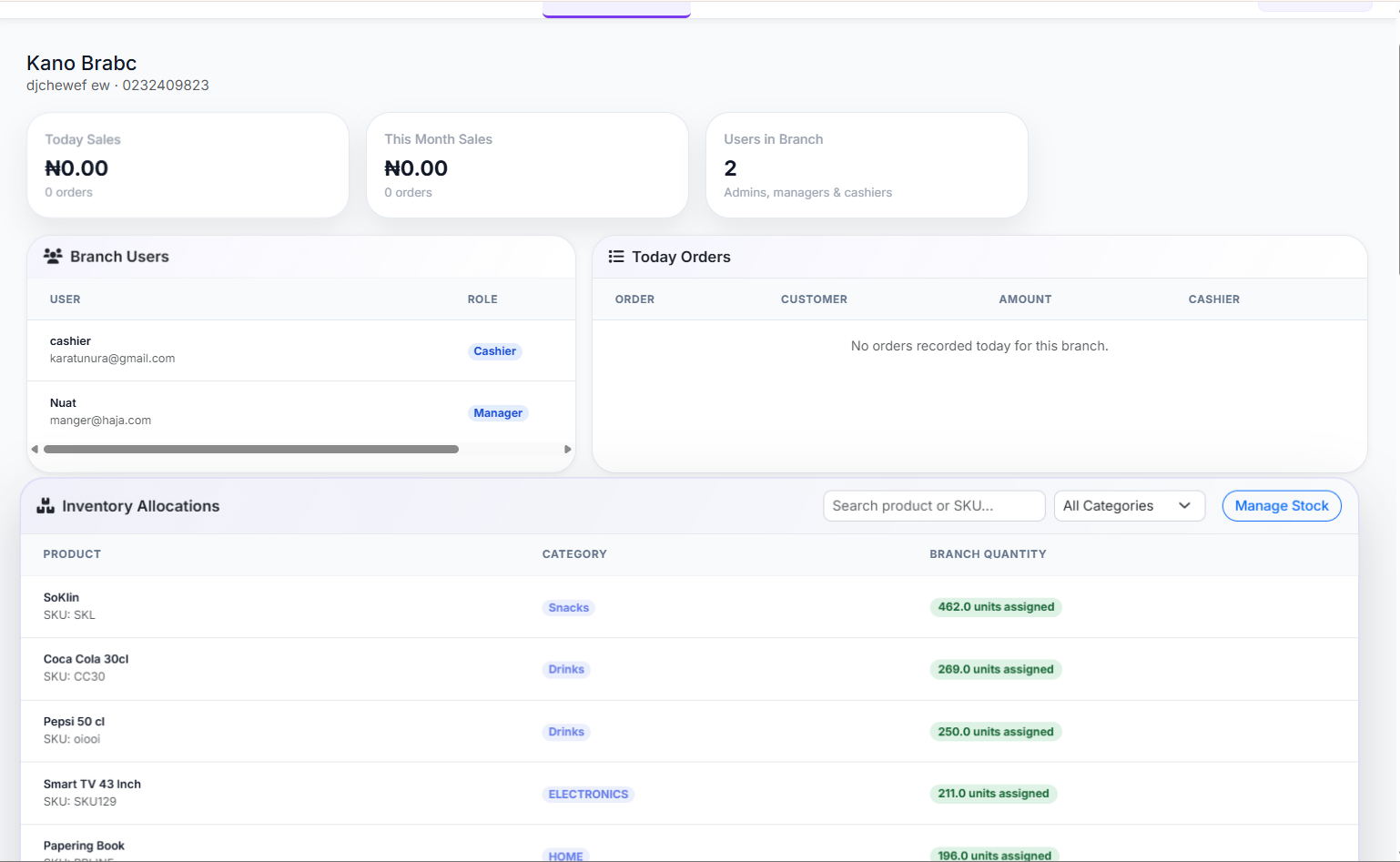
While the product catalogue is shared, stock levels must be tracked independently at each branch. Branch A and Branch B both sell "Ariel 500g Powder" — but Branch A has 120 units and Branch B has 30 units. Your system needs to maintain these as separate counts.
This means every sale at Branch A reduces Branch A's stock, not Branch B's. Every delivery to Branch B increases Branch B's stock. When you view your consolidated dashboard, you should see both figures clearly — and be able to drill into each branch's individual position.
Step 3: Create a Formal Stock Transfer Process
One of the most dangerous moments in multi-branch operations is when stock moves between branches. A branch manager calls another branch and says "send me 50 units of Indomie, we're out." The units move physically — but if neither branch records the transfer in the system, both branches now have wrong stock figures.
Establish a non-negotiable rule: no stock moves without a system record. The sending branch creates a transfer-out record. The receiving branch confirms a transfer-in. Only when both sides are recorded does the system update the stock levels. This process should be supported by your POS software — not managed through WhatsApp messages and handwritten notes.
Step 4: Set Minimum Stock Levels Per Branch
Every branch should have defined minimum stock levels for its top-selling products. When a branch's stock of a product falls below that threshold, the system should alert you automatically — not after the product has already run out.
These thresholds are not one-size-fits-all. Your branch in a busy market area might need a minimum of 200 units of a fast-moving product, while your quieter branch might set the minimum at 50. The important thing is that the numbers are set, monitored automatically, and acted on before stockouts happen.
Step 5: Review Cross-Branch Performance Reports Regularly
Every week, review a consolidated report that shows you the sales, stock levels, and profit margins at each branch side by side. This comparison is one of the most powerful management tools available to a multi-branch owner.
When Branch A is outselling Branch B on certain products, ask why. Is it a location advantage? A staffing difference? A pricing issue? The data tells you what to investigate. Without consolidated cross-branch reports, you are managing by feeling — and feelings are expensive in retail.
How SwiftPOS Makes Multi-Branch Inventory Management Effortless
Understanding the framework is one thing. Having a tool that actually implements it is another. SwiftPOS was built specifically for businesses like yours — growing Nigerian retail operations that need enterprise-grade branch management at an accessible price point.
Here is how SwiftPOS addresses each part of the multi-branch inventory challenge:
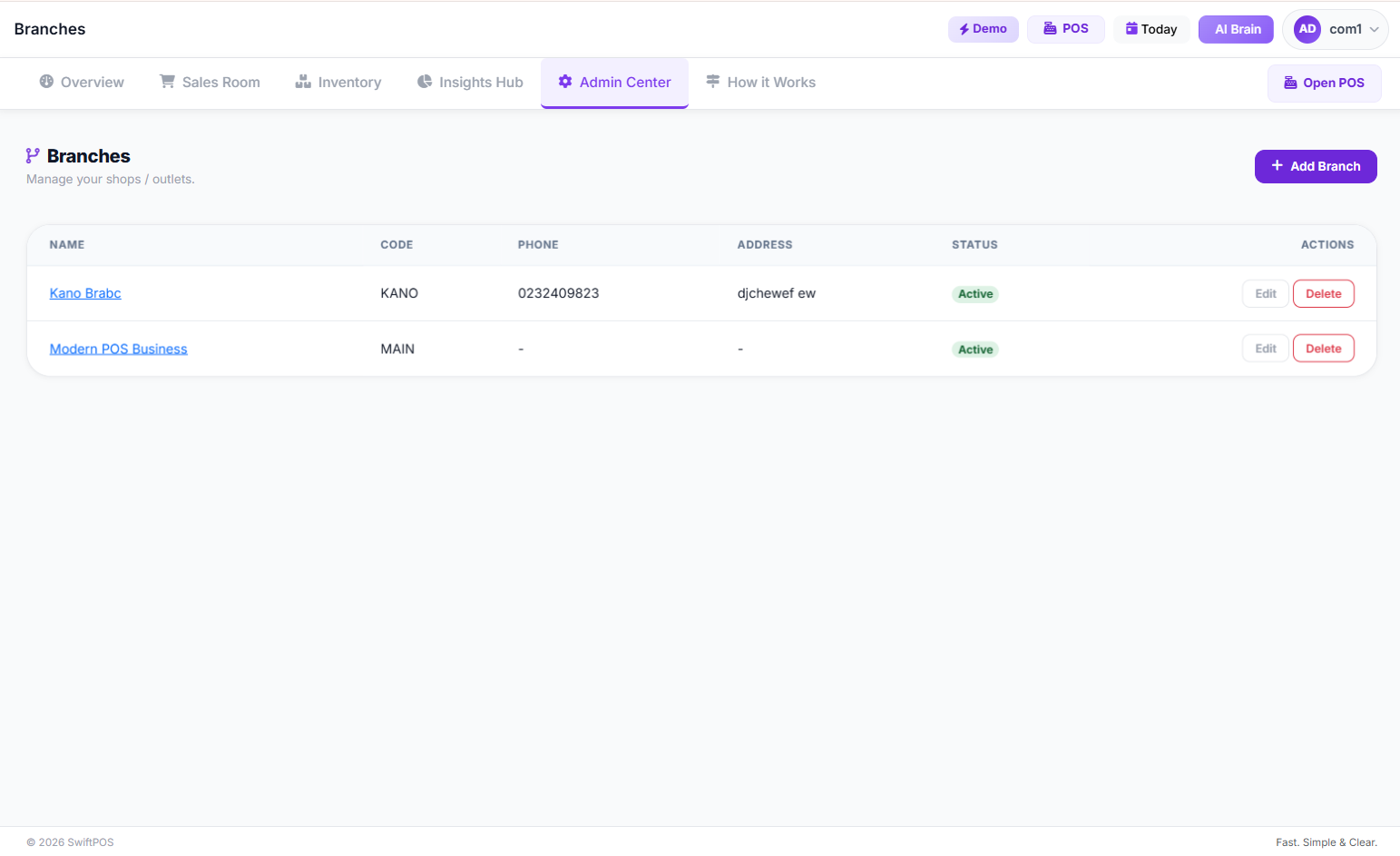
One Dashboard. Every Branch. Real-Time.
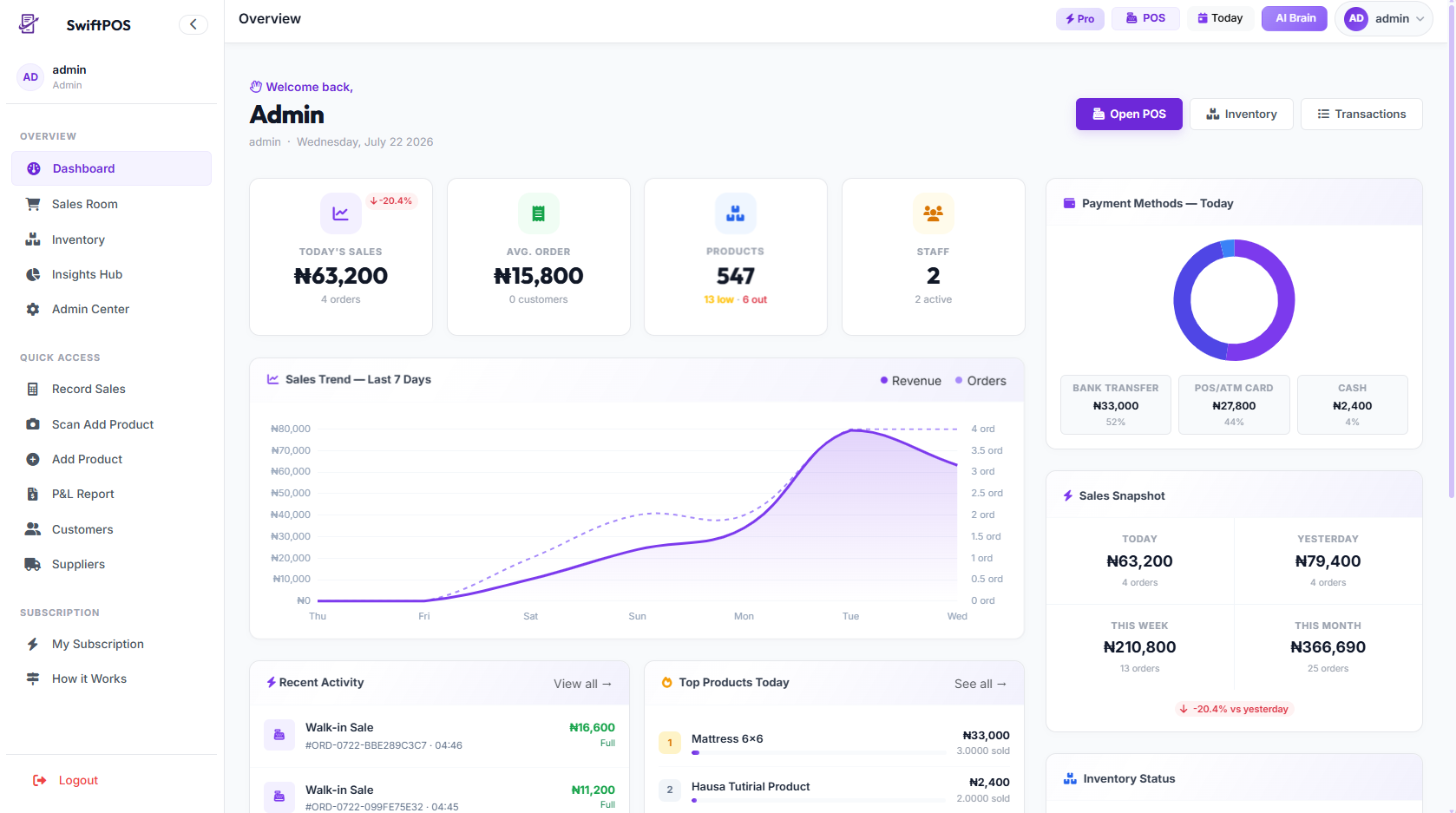
With SwiftPOS, you log in once and see every branch from a single dashboard. Total sales today. Stock levels at each location. Which branch is performing and which is underperforming. You do not need to call anyone, travel anywhere, or wait for a report to be compiled. The data is live, and it is always accurate because every sale and stock update at every branch is recorded automatically as it happens.
Independent Branch Inventory Tracking
SwiftPOS maintains separate, accurate stock counts for each branch — all drawing from your shared product catalogue. A sale at your Ikeja branch reduces Ikeja's stock only. A delivery to your Port Harcourt branch updates Port Harcourt's count only. Yet you can view them all together or filter by any single branch in seconds.
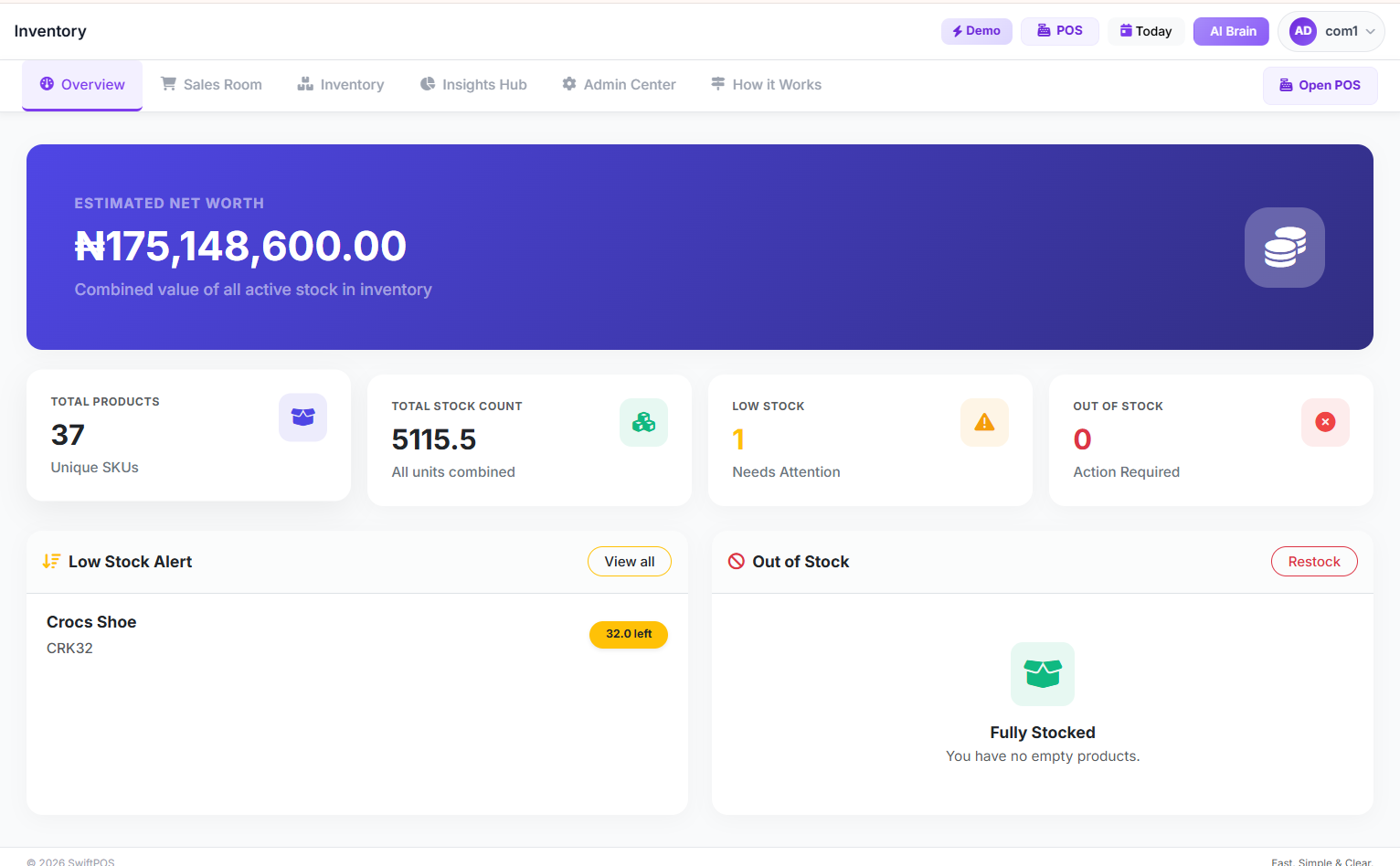
Low Stock Alerts That Actually Prevent Stockouts
Set minimum stock thresholds for each product at each branch. When any branch falls below its threshold, SwiftPOS sends you an alert before the product runs out. This turns restocking from a reactive scramble into a proactive, scheduled process — and it dramatically reduces the number of times a customer hears "we don't have it in stock."
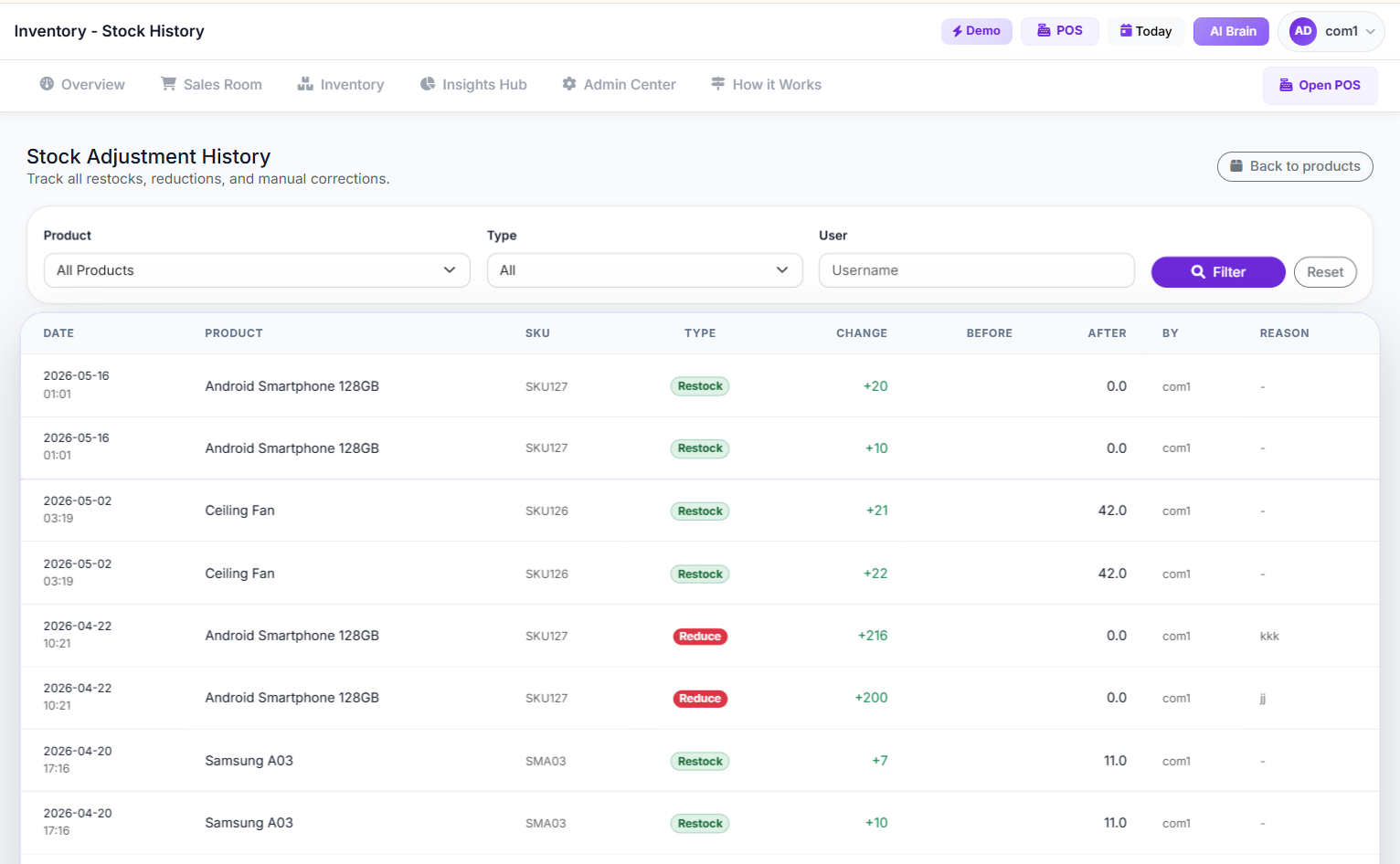
Full Audit Trail at Every Branch
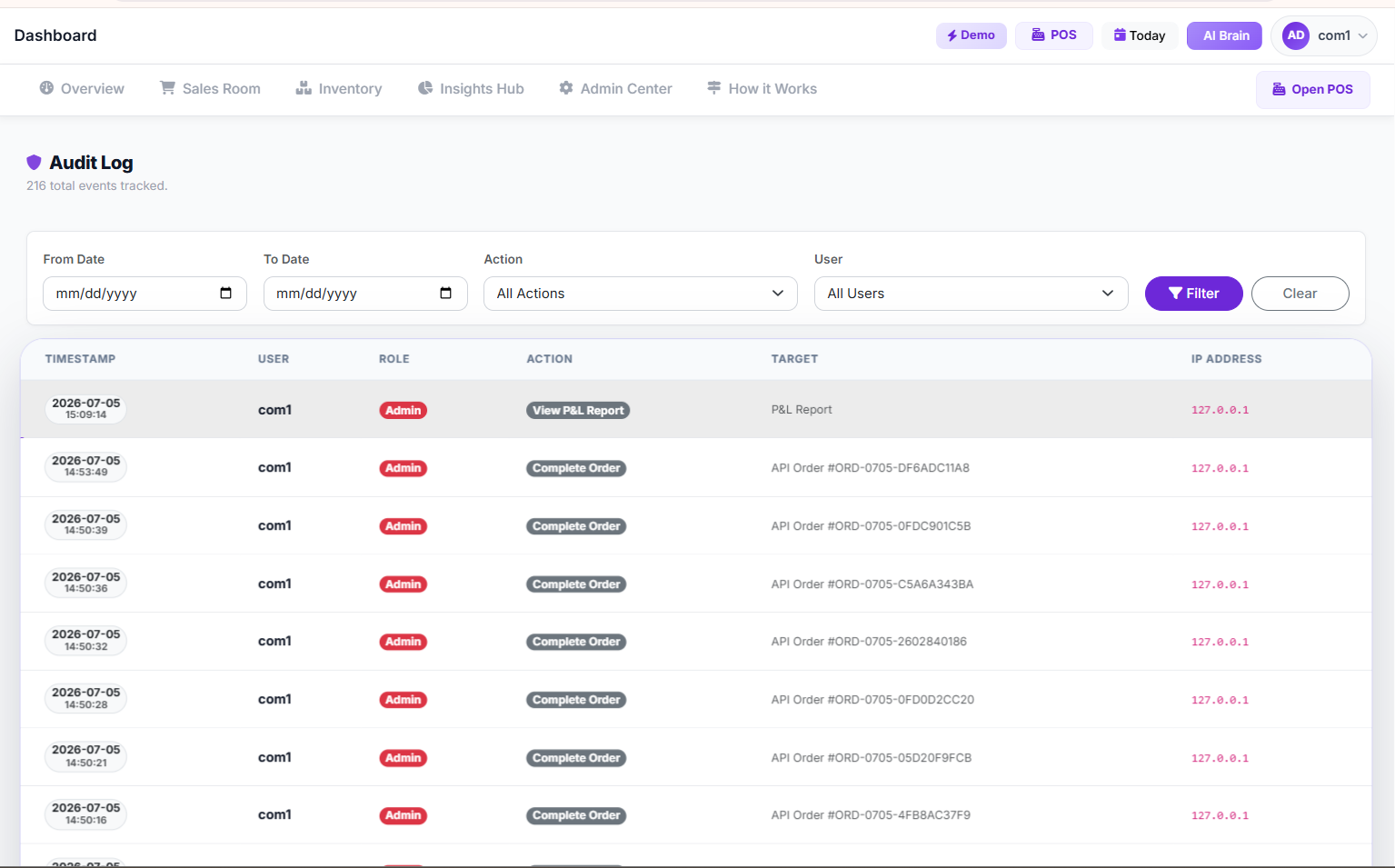
Every action taken at any branch — every sale, every stock update, every price change, every login — is recorded in the SwiftPOS audit log. If a branch manager claims stock was received but figures do not add up, you have a complete record to investigate. This accountability layer is one of the most powerful features of SwiftPOS for multi-branch owners who cannot be physically present at all locations simultaneously.
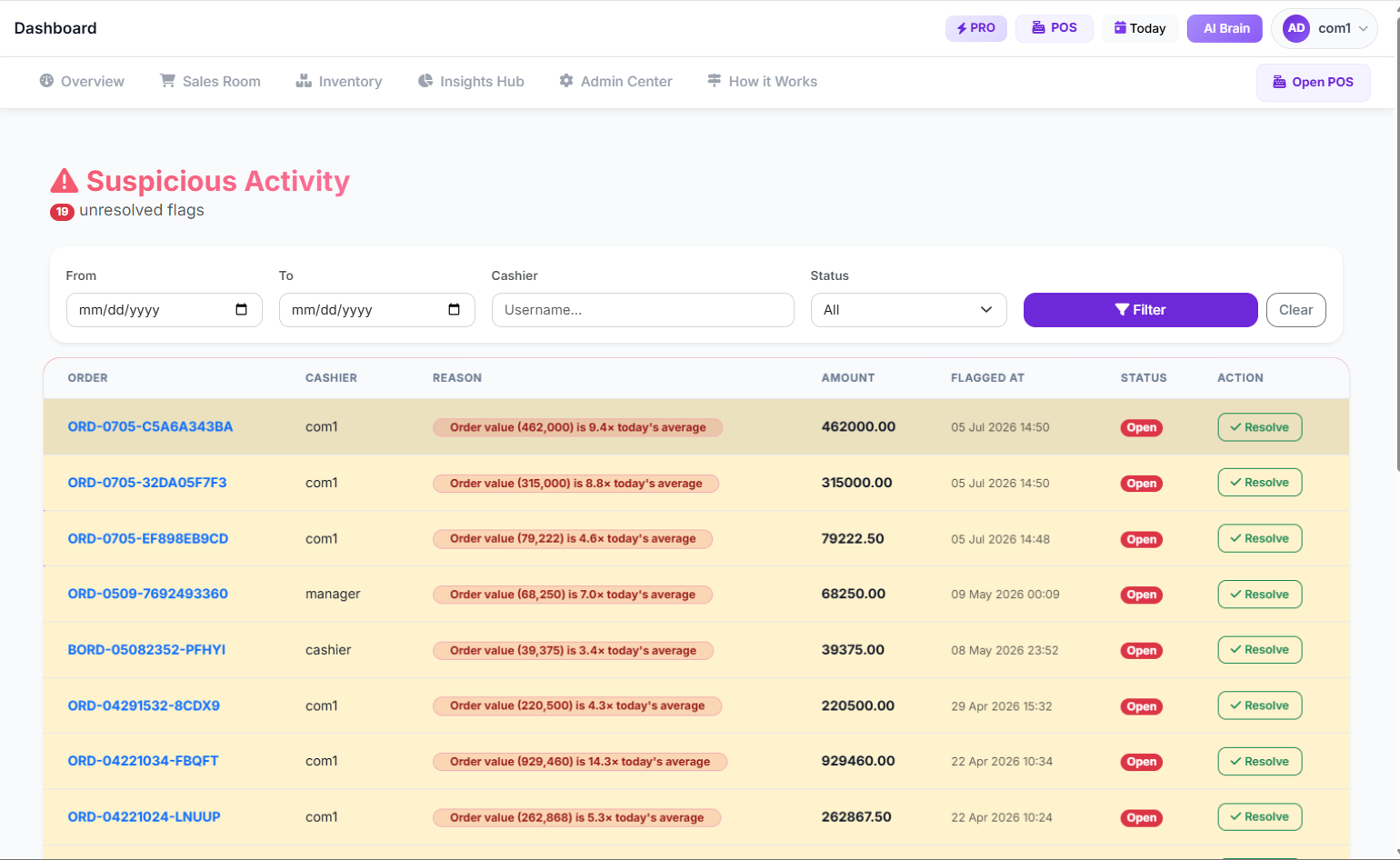
Suspicious Activity Detection
Beyond the standard audit log, SwiftPOS includes suspicious activity monitoring that flags unusual patterns — unusually large discounts, transactions voided repeatedly, sales without corresponding stock changes, or activity outside of business hours. For multi-branch owners managing staff across locations they do not visit daily, this feature is not optional. It is essential.
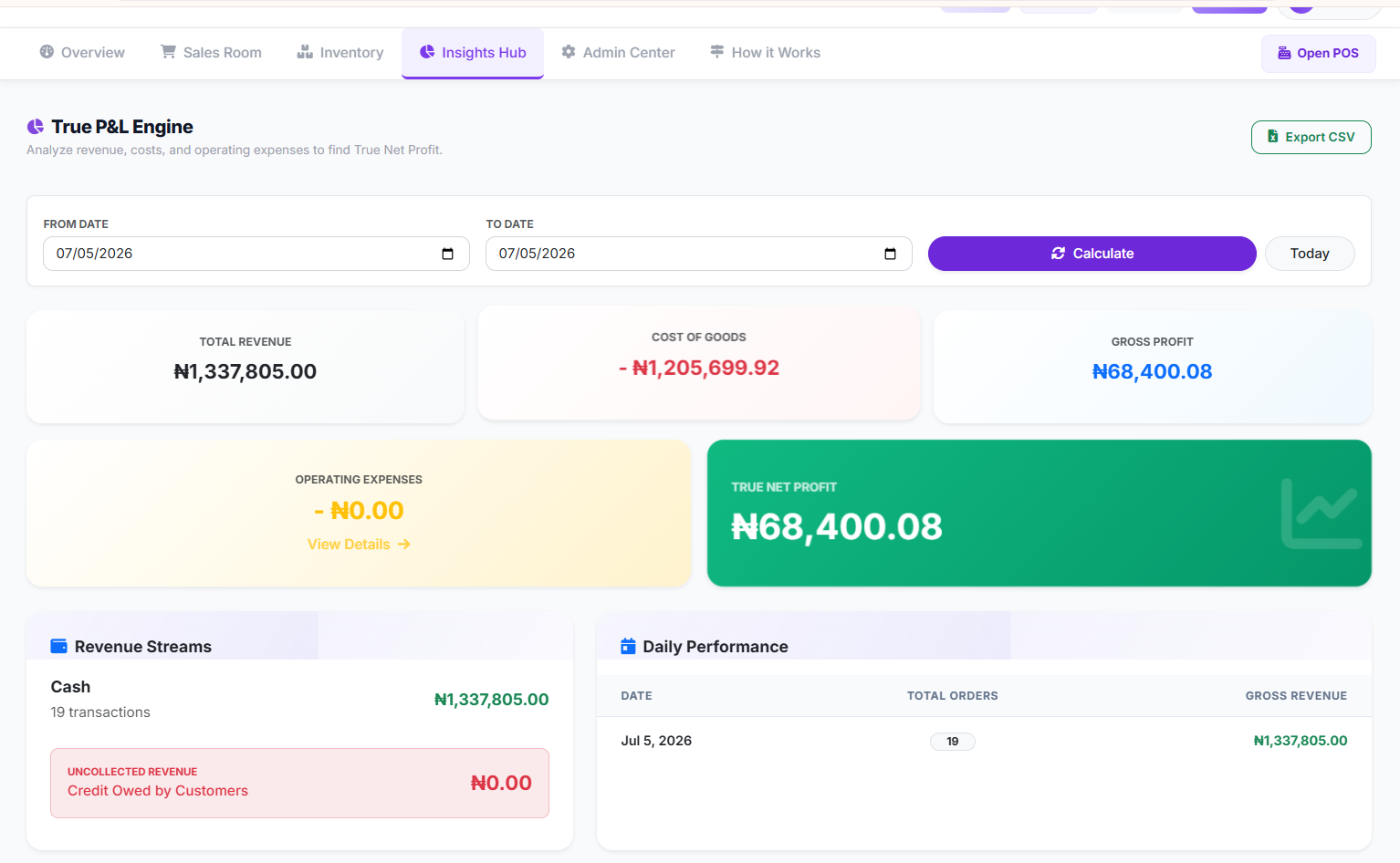
Consolidated P&L Reporting Across All Branches
At the end of every month, you should be able to see one clear profit and loss report that tells you — across your entire operation — what you bought, what you sold, and what you actually made. SwiftPOS generates this automatically. No spreadsheet consolidation. No manual calculations. Just the truth about your business performance, at every branch, in one report.
All of these features are available on the SwiftPOS Pro Plan, which is designed specifically for multi-branch retail businesses. You can review the full plan details at swiftpos.ng/pricing.
Staff Management Across Branches: The Often-Forgotten Half of Inventory Control
Inventory management and staff management are inseparable in a multi-branch business. Your stock does not walk out of the door by itself. When inventory figures do not match, a person is always involved — whether through negligence or intent.
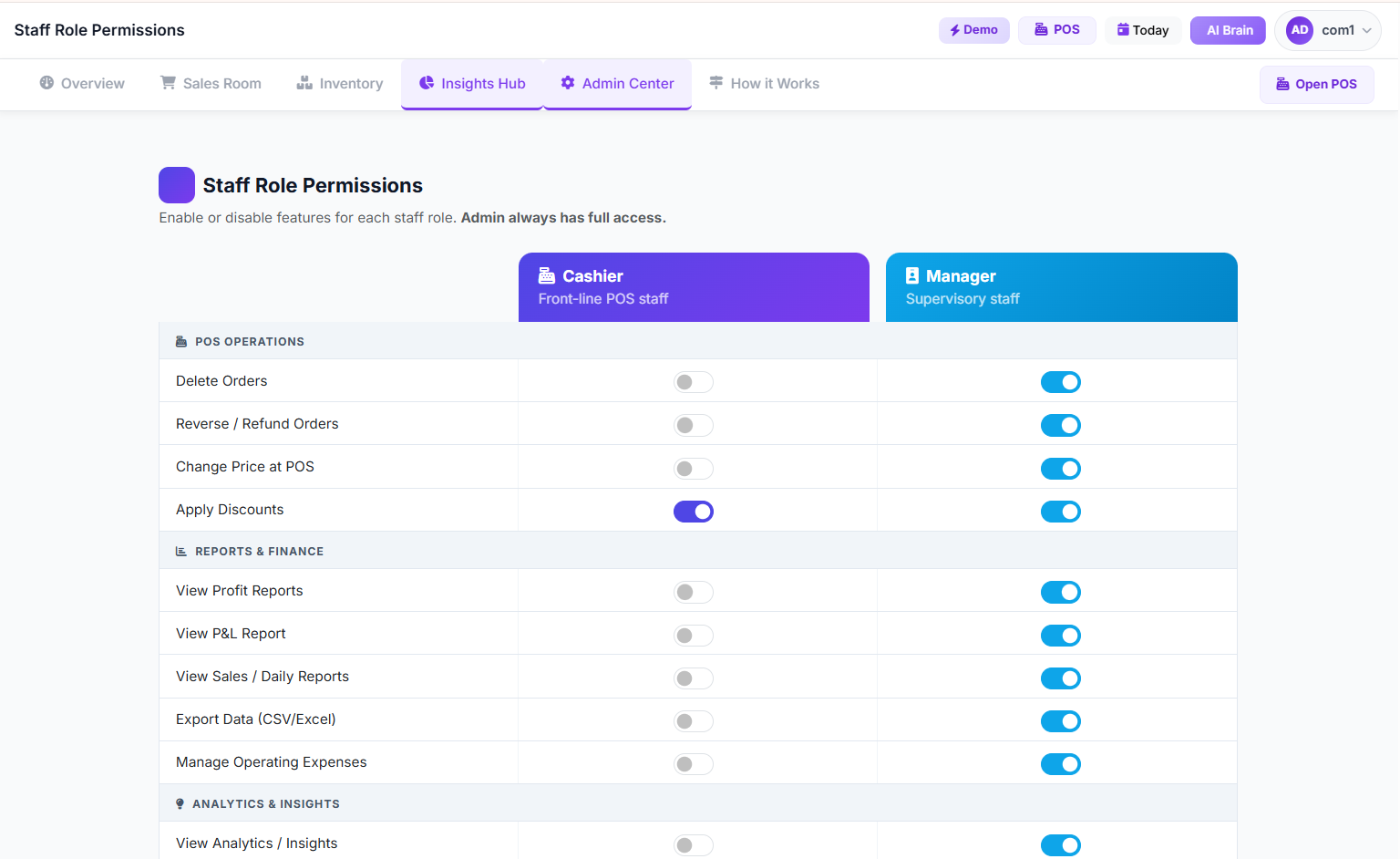
SwiftPOS gives you granular control over staff access at every branch. You decide what each staff member can see and do. A cashier at Branch A should not be able to access Branch B's records. A branch manager should not be able to delete transactions without leaving a trace. The owner — and only the owner — should have visibility of every branch simultaneously.
This role-based access control is not just a security feature. It is the mechanism that makes your branches manageable. When staff know that every action is logged and visible to the owner, behaviour changes. Read more about how to approach this in our detailed guide on how to stop staff theft in your retail store.
Pro Tips for Multi-Branch Inventory Management in Nigeria
Tip 1: Do Monthly Physical Stock Counts Per Branch — And Compare to the System
Even with the best software, a monthly physical count at each branch keeps everyone honest. The goal is not to catch every discrepancy — it is to create a culture of accountability. When branch staff know a physical count is coming every month, the incentive to manipulate records decreases significantly. Any variance between your system and your physical count is a conversation worth having.
Tip 2: Set Branch-Specific Reorder Points Based on Sales Velocity
A branch in a high-traffic area sells three times faster than a quieter location. Setting the same reorder point for both branches means you will constantly stockout at the busy branch while overstocking the quiet one. Use your sales data — available directly in SwiftPOS — to set reorder points that reflect each branch's actual demand, not a generic number applied across the board.
Tip 3: Appoint a Stock Controller Who Is Accountable Across All Branches
As your operation grows, consider designating one person — not the branch managers themselves — as the inventory controller with oversight across all locations. This person cross-checks deliveries, validates transfers, reviews stock discrepancies, and works with the data your POS system provides. Separating the custody of stock (branch managers) from the control of stock records (inventory controller) is one of the most effective internal controls you can implement in a growing multi-branch retail business.
Tip 4: Standardise Your Supplier Delivery Process Across All Branches
Every delivery to every branch should follow the same process: the staff member receiving the delivery counts the units, compares to the supplier invoice, and records it in the system immediately. Not the next day. Not when they remember. Immediately. Create a delivery checklist that every branch follows, and enforce it as a non-negotiable policy.
What Multi-Branch Inventory Management Looks Like When It Works
Imagine this scenario. You are at home at 8 PM. Your branch manager in Abuja sends you a WhatsApp message: "Oga, we are almost out of Hollandia yoghurt." In the old model, you either trust the message or you do not. You call the supplier, arrange a delivery, and hope the situation is resolved before the shop opens tomorrow.
With SwiftPOS multi-branch inventory management, the scenario plays out differently. Your system already alerted you at 2 PM — before the branch manager even noticed — that Abuja's Hollandia yoghurt stock had dropped below your set threshold of 40 units. You log into the dashboard on your phone, confirm the figure is 28 units, check that your Lagos branch has surplus stock from this week's delivery (85 units), and authorize an inter-branch transfer of 40 units. The transfer is recorded in the system immediately. By tomorrow morning, the Abuja branch is restocked and every record is accurate.
That is not a fantasy. That is what proper multi-branch inventory management looks like — and it is available to any Nigerian retail business willing to use the right tools. For a broader look at running a multi-branch operation, read our complete guide on how to manage multiple shop branches in Nigeria without losing control.
SwiftPOS Pro Plan — Built for Multi-Branch Retail Businesses
The SwiftPOS Pro Plan is the tier designed for businesses managing more than one location. Here is a summary of what it includes:
| Feature | Starter ₦3,000/mo |
Standard ₦6,000/mo |
Pro ₦12,000/mo |
|---|---|---|---|
| Multi-Branch Support | ❌ | ❌ | ✅ |
| Unlimited Products & Categories | ❌ | ❌ | ✅ |
| Up to 15 Staff Accounts | 2 | 5 | 15 |
| Advanced Audit Logs | ❌ | Basic | ✅ Advanced |
| Suspicious Activity Detection | ❌ | ❌ | ✅ |
| Unlimited Orders Per Day | 100/day | 500/day | ✅ Unlimited |
| Custom Branding | ❌ | ❌ | ✅ |
All plans include a 1 month free bonus when you subscribe annually. For multi-branch businesses, the Pro Plan at ₦12,000 per month — roughly the price of one small delivery transport — is the most cost-effective tool you can invest in to protect and grow your operation.
Frequently Asked Questions About Managing Inventory Across Multiple Branches in Nigeria
What is the biggest mistake multi-branch shop owners make with inventory?
The most common and costly mistake is continuing to manage multi-branch inventory manually — through WhatsApp messages, phone calls, and handwritten stock books — after a business has grown beyond one or two locations. At that scale, manual management creates blind spots that allow stock losses, pricing inconsistencies, and performance gaps to go undetected for months. The fix is a cloud-based POS system with true multi-branch support.
Can SwiftPOS manage inventory separately for each branch?
Yes. SwiftPOS Pro tracks stock levels independently at each branch, all drawing from a shared, centralised product catalogue. A sale at Branch A only affects Branch A's inventory. A delivery to Branch B only updates Branch B's stock. You can view each branch individually or see a consolidated total across all locations — whichever you need at any given moment.
How does SwiftPOS handle stock transfers between branches?
SwiftPOS records stock transfers as a formal transaction — reducing inventory at the sending branch and increasing it at the receiving branch, with a full audit trail attached. This ensures your stock figures remain accurate even when products move between locations, and gives you a clear history of every inter-branch transfer for accountability and reconciliation purposes.
Can I see a consolidated profit and loss report across all my branches?
Yes. SwiftPOS generates consolidated P&L reports that aggregate revenue, cost of goods, and profit data across all your branches. You can view the total business picture or filter down to any individual branch. This makes end-of-month reporting and business review meetings far more informed and far less stressful.
Is SwiftPOS Pro affordable for a business with two or three branches in Nigeria?
At ₦12,000 per month — or roughly ₦10,000 per month when you subscribe annually and claim your free month — SwiftPOS Pro is one of the most affordable multi-branch retail management solutions available in Nigeria. For a business turning over several million naira monthly across its branches, the cost of the software is a fraction of the losses it prevents.
Can I restrict what each branch manager can see and do in SwiftPOS?
Yes. SwiftPOS includes role-based access control that lets you define exactly what each staff member can access. A branch manager at your Abuja location should only see Abuja's data. A cashier should not be able to edit prices or delete transactions. The owner has full visibility across everything. These permissions are set in the staff management section and applied instantly.
Conclusion: Growing to Multiple Branches Is an Achievement. Controlling Them Is a System.
Every Nigerian business owner who has successfully grown from one branch to many will tell you the same thing: the second location is where most people stumble. Not because they lack the capital or the customer base — but because they try to manage a multi-location business with single-location habits.
Managing inventory across multiple branches in Nigeria is a solvable problem. It requires a centralised product catalogue, independent per-branch stock tracking, a formal transfer process, automatic low stock alerts, and consolidated reporting you can trust. These are not complicated requirements. They are the foundation of professional retail management — and SwiftPOS was built to deliver all of them in one system, at a price that makes sense for Nigerian business realities.
You can also explore our related guides on how poor inventory management is costing your supermarket and the ultimate guide to retail inventory management to build on everything covered here.
Ready to Take Full Control of Every Branch?
SwiftPOS gives you real-time inventory visibility, staff accountability, suspicious activity alerts, and consolidated reporting — across every branch, from one dashboard.
View Pricing Plans →Prefer to talk first? Message us on WhatsApp: +2349164601810
🎁 Get 1 month free when you subscribe to any annual plan.

7 Key Retail Metrics Nigerian Businesses Must Track fo…
Aug 23, 2026
How to Set Up Your SwiftPOS Account: A Step-by-Step On…
Aug 22, 2026
Build Unbreakable Habits: The Ultimate Guide to Lastin…
Aug 19, 2026