How Much Money Do I Need to Open a Mini Supermarket in Nigeria? (2026 Complete Guide)
SwiftPOS Team
Published June 14, 2026
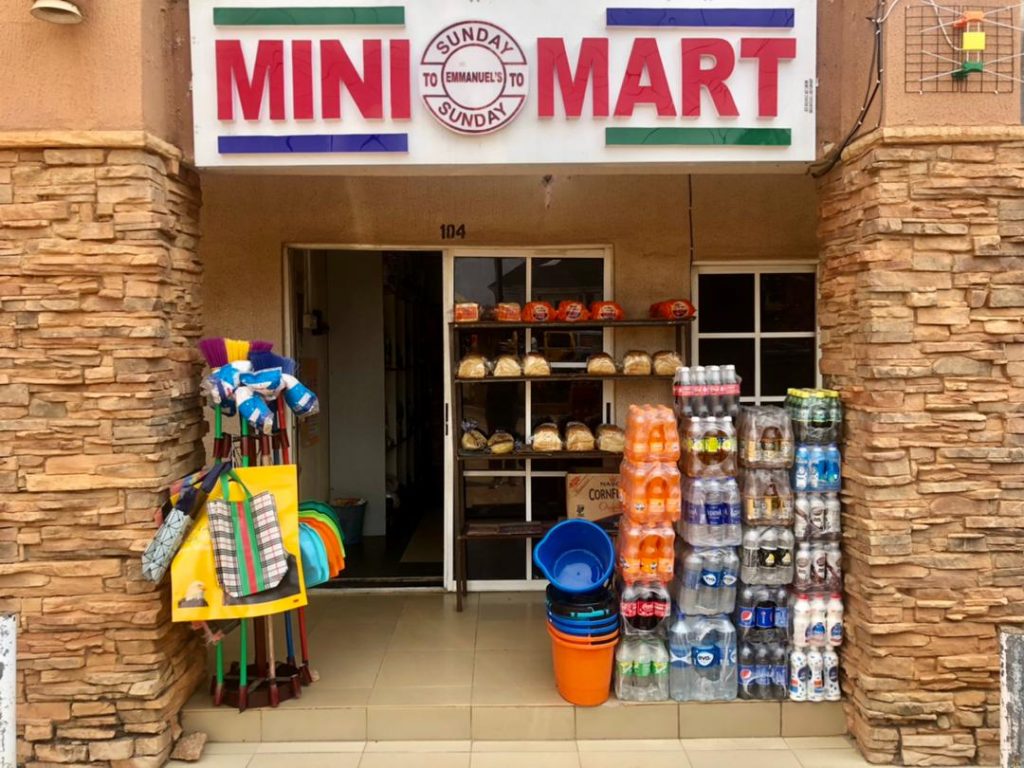
Every week, hundreds of Nigerians type this exact question into Google: "how much money do I need to open a mini supermarket in Nigeria?" And it makes complete sense. The supermarket business is one of the most attractive retail opportunities in the country — steady daily income, growing middle-class demand, and a product category (food, household goods, personal care) that never goes out of style.
But between the excitement and the actual launch, there's a financial gap most people don't plan for carefully enough. They budget for rent and stock, then get blindsided by fit-out costs, equipment, staffing, and the slow first weeks before profit kicks in.
This guide gives you a realistic, detailed answer. By the end, you'll know exactly how much capital you need, how to allocate it wisely, and what tools — including the right POS system — will help you protect every naira from day one.
Whether you're opening a small neighbourhood mini mart or a proper self-service supermarket, the framework here applies. Let's break it all down.
What Counts as a "Mini Supermarket" in Nigeria?
Before we talk numbers, it's important to define what we mean. In the Nigerian context, a mini supermarket typically falls into one of these categories:
- Neighbourhood provision store (upgraded): 1–2 rooms, 50–200 product lines, walk-in customers, usually in a residential area. Capital range: ₦500,000 – ₦2 million.
- Mini mart / convenience store: 200–500sqft, self-service layout, 200–500 SKUs, small shopping baskets, often located near offices, estates, or schools. Capital range: ₦2 million – ₦6 million.
- Small supermarket: 500–1,500sqft, full shelving, trolleys, barcode scanners, 500–2,000 product lines, possibly with a cold room. Capital range: ₦6 million – ₦20 million+.
For this guide, we'll focus primarily on the mini mart / convenience store tier (₦2M–₦8M range) as this is what most first-time owners are realistically targeting in 2026.
The Real Costs of Opening a Mini Supermarket in Nigeria (2026 Breakdown)
Here is an honest, category-by-category breakdown of what you'll actually spend. These figures reflect market realities in major cities like Lagos, Abuja, Port Harcourt, and Ibadan in 2026. Costs in smaller towns may be 20–40% lower.
1. Shop Space — Rent and Caution
Location is the single biggest variable in your budget. A busy roadside shop in Lagos Island or Abuja Wuse 2 can cost ₦800,000 to ₦3 million per year. A residential estate shop in Abuja or Lekki might run ₦400,000 to ₦1.5 million. In Ibadan, Enugu, or Kaduna, quality commercial spaces start from ₦150,000 annually.
Most Nigerian landlords demand 1–2 years upfront. This means your first payment is often double or triple the annual rate. Factor this carefully.
Estimated cost: ₦300,000 – ₦2,500,000 (first payment)
2. Shop Fitting and Interior Setup
A supermarket needs shelving, display racks, flooring, lighting, signage, and sometimes a checkout counter. Carpenters and metalwork fabricators in Nigeria charge between ₦150,000 and ₦800,000 depending on size and material quality.
Don't underestimate this line item. A clean, well-lit, well-organised shop directly affects how much customers spend per visit.
Estimated cost: ₦200,000 – ₦1,000,000
3. Opening Inventory (Stock)
This is your largest single expense and the most important to get right. Your opening stock should cover your most reliable product categories — staples like rice, pasta, oil, beverages, personal care, and household cleaning. Don't over-invest in slow-moving goods at launch.
A mini mart with 300–500 product lines can open with ₦1.5 million to ₦4 million in stock. Go smaller to start, test what sells in your location, then restock aggressively on your winners.
Estimated cost: ₦1,500,000 – ₦4,000,000
4. Equipment
Depending on your product range, you'll need some or all of the following:
- Display freezer / chest freezer (drinks, dairy): ₦150,000 – ₦500,000
- Generator (NEPA is unreliable): ₦200,000 – ₦600,000
- Weighing scale: ₦15,000 – ₦50,000
- Security camera (CCTV): ₦60,000 – ₦200,000
- Air conditioning (if in a hot location): ₦150,000 – ₦400,000
Estimated cost: ₦400,000 – ₦1,500,000
5. POS System and Technology
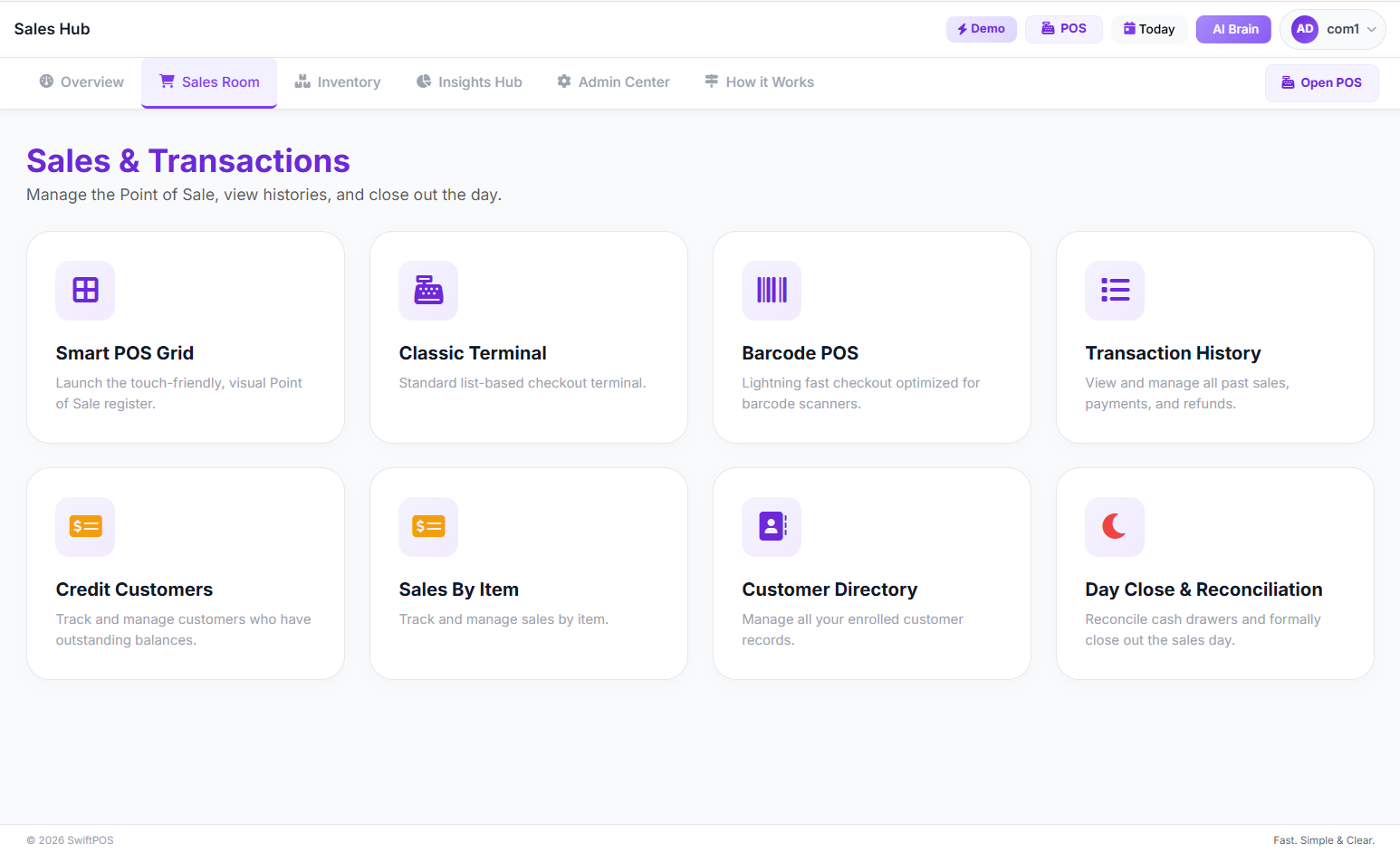
This is where many new owners underestimate or completely overlook a critical investment. A proper POS system isn't just a receipt printer — it's the foundation of how you track sales, manage inventory, monitor staff, and understand your profit.
Hardware (tablet, receipt printer, barcode scanner, cash drawer) typically costs ₦80,000 – ₦250,000 as a one-time purchase. Software subscription is a separate monthly cost.
SwiftPOS is a cloud-based POS and retail management system built specifically for Nigerian retail businesses. Plans start at just ₦3,000/month on the Starter plan and go up to ₦12,000/month on the Pro plan — which includes multi-branch support, unlimited products, barcode scanning, staff performance tracking, audit logs, and suspicious activity detection.
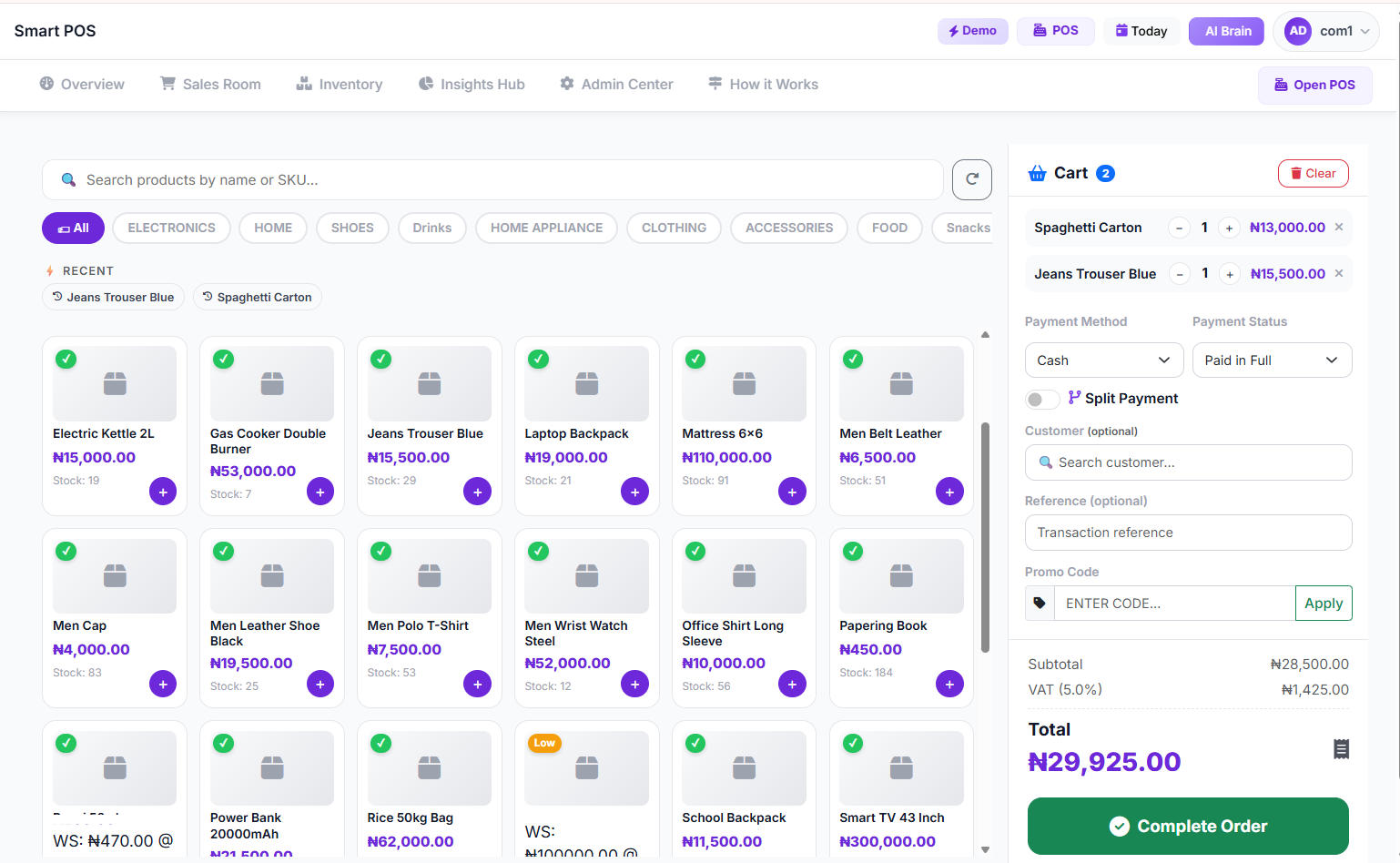
For a new supermarket, the Standard plan (₦6,000/month) is ideal — it covers up to 500 orders per day, 5 staff accounts, barcode POS, bulk product import, full P&L reports, audit logs, and data export.
Estimated cost: ₦80,000 – ₦250,000 (hardware) + ₦3,000 – ₦12,000/month (software)
6. Staffing (First 3 Months)
A small mini mart can run with 1–3 staff. Budget for 3 months of salaries before your revenue becomes consistent enough to self-fund operations.
- Cashier / sales attendant: ₦35,000 – ₦70,000/month
- Store keeper / inventory manager: ₦40,000 – ₦80,000/month
- Security (if needed): ₦25,000 – ₦45,000/month
Estimated cost (3 months, 2 staff): ₦200,000 – ₦450,000
7. Business Registration and Licenses
To operate legally in Nigeria, you'll need CAC registration (Corporate Affairs Commission) and potentially a local government trading permit. CAC Business Name registration costs ₦10,000 – ₦30,000. Local permits vary by LGA but typically range from ₦10,000 – ₦80,000 per year.
Estimated cost: ₦20,000 – ₦110,000
8. Working Capital Buffer
This is money you must set aside and NOT touch for stock or fitting. Working capital covers your restock cycles, supplier payments, utility bills, and unexpected expenses in your first 3 months of trading before cash flow stabilises.
Most experienced retail operators recommend keeping 15–25% of your total setup budget as a liquid buffer.
Estimated buffer: ₦300,000 – ₦1,000,000
Total Capital Summary: How Much Do You Actually Need?
| Category | Low Estimate | High Estimate |
|---|---|---|
| Shop Rent (first payment) | ₦300,000 | ₦2,500,000 |
| Shop Fitting & Interior | ₦200,000 | ₦1,000,000 |
| Opening Stock | ₦1,500,000 | ₦4,000,000 |
| Equipment | ₦400,000 | ₦1,500,000 |
| POS Hardware | ₦80,000 | ₦250,000 |
| Staff (3 months) | ₦200,000 | ₦450,000 |
| Registration & Permits | ₦20,000 | ₦110,000 |
| Working Capital Buffer | ₦300,000 | ₦1,000,000 |
| TOTAL | ₦3,000,000 | ₦10,810,000 |
The honest answer: To open a proper mini supermarket in Nigeria in 2026, you need between ₦3 million and ₦11 million depending on your location, size, and the quality of your setup. A lean but functional mini mart in a mid-tier city can launch for ₦2.5 million – ₦4 million. A well-fitted mini supermarket in Lagos or Abuja targeting middle-class customers needs ₦6 million – ₦10 million+.
Why Many Mini Supermarkets Fail in the First Year (And How to Avoid It)
Capital alone doesn't guarantee success. Many shops open with adequate funding but collapse within 12 months due to operational mistakes that are entirely preventable.
1. No System for Inventory — Stock Just "Disappears"
This is the number one profit killer in Nigerian retail. Without a proper system, owners don't know what's been sold, what's been stolen, what's expired, or what's running low. A bag of rice goes missing. A carton of drinks is sold without being recorded. Staff pocket the cash. Over time, these small losses accumulate into massive shrinkage.
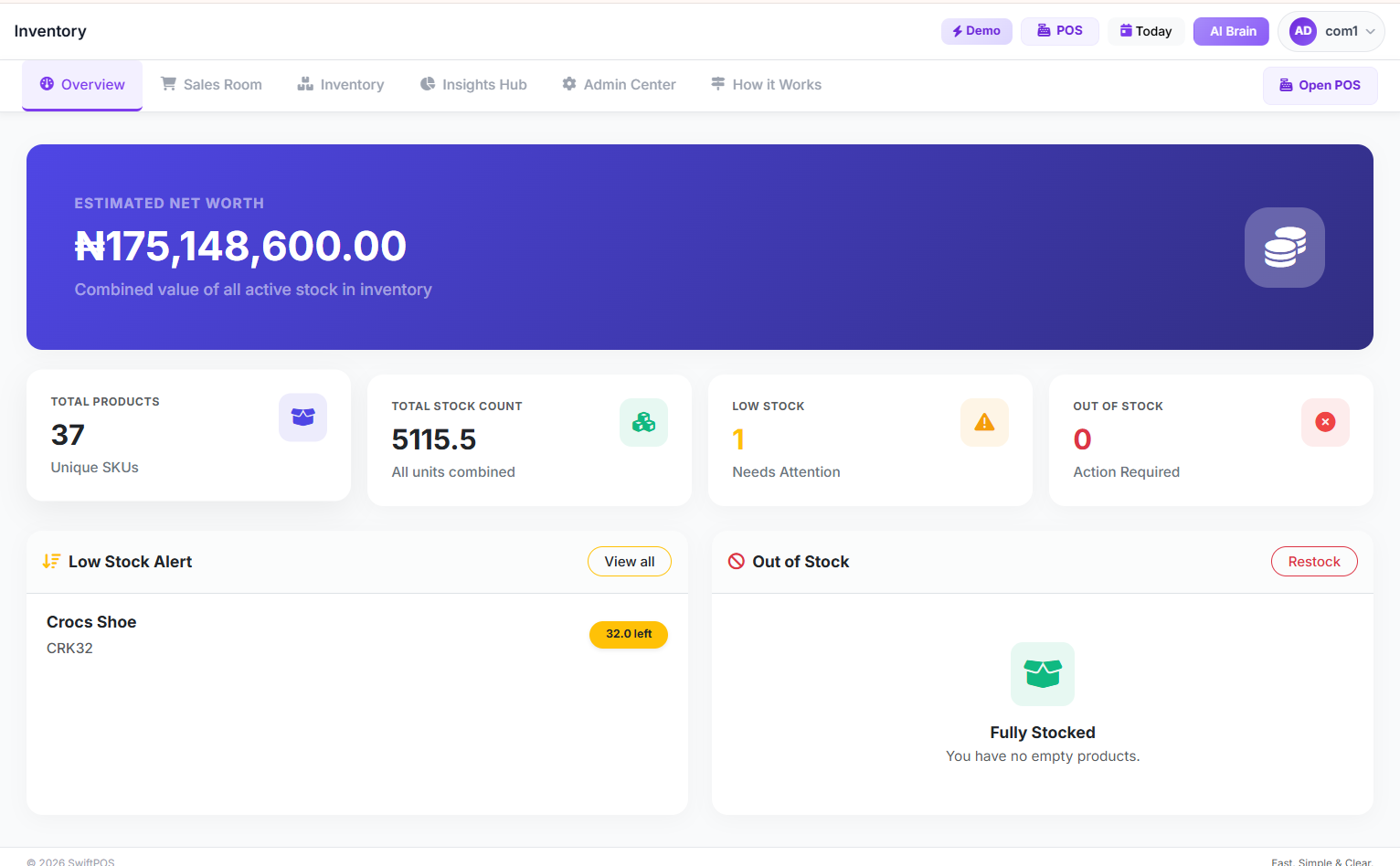
SwiftPOS gives you a real-time inventory dashboard that tracks every product, flags low stock automatically, and records every movement from receiving to sale. Nothing can disappear without a trace. Learn more about how this works in our guide on how poor inventory management is costing your supermarket.
2. No Way to Track Staff Activity
When you're not physically in your shop, how do you know what's happening? Staff theft — giving discounts to friends, processing fake returns, skimming cash — is responsible for a significant portion of retail losses in Nigeria. A survey by the Retail Industry Leaders Association found that internal theft accounts for over 28% of retail shrinkage globally, and the numbers are worse in markets with minimal oversight systems.
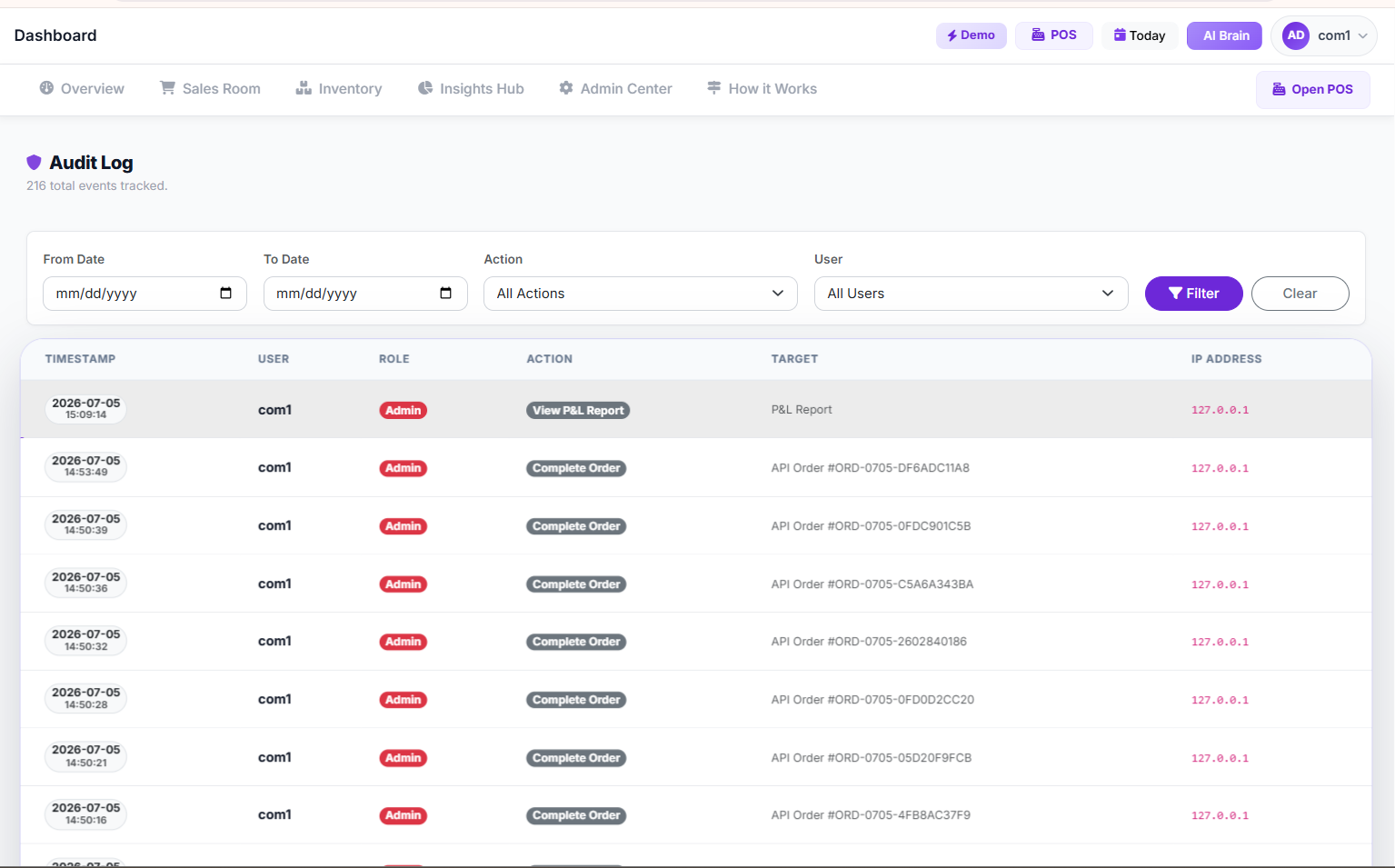
SwiftPOS's audit logs record every action taken in the system — every sale, every void, every login — so you can review staff activity even when you're not on-site. The Suspicious Activity Detection feature (available on the Pro plan) automatically flags unusual behaviour like excessive refunds or unusually large discounts. Read more: Your Shop Is Bleeding Money and Your Staff Might Be Holding the Knife.
3. No Real Financial Visibility
Many shop owners at the end of the month genuinely don't know if they made a profit. Cash is coming in, cash is going out, stock is being bought and sold — but without a proper P&L report, you're running blind. This is especially dangerous in the early months when cash flow management is critical.
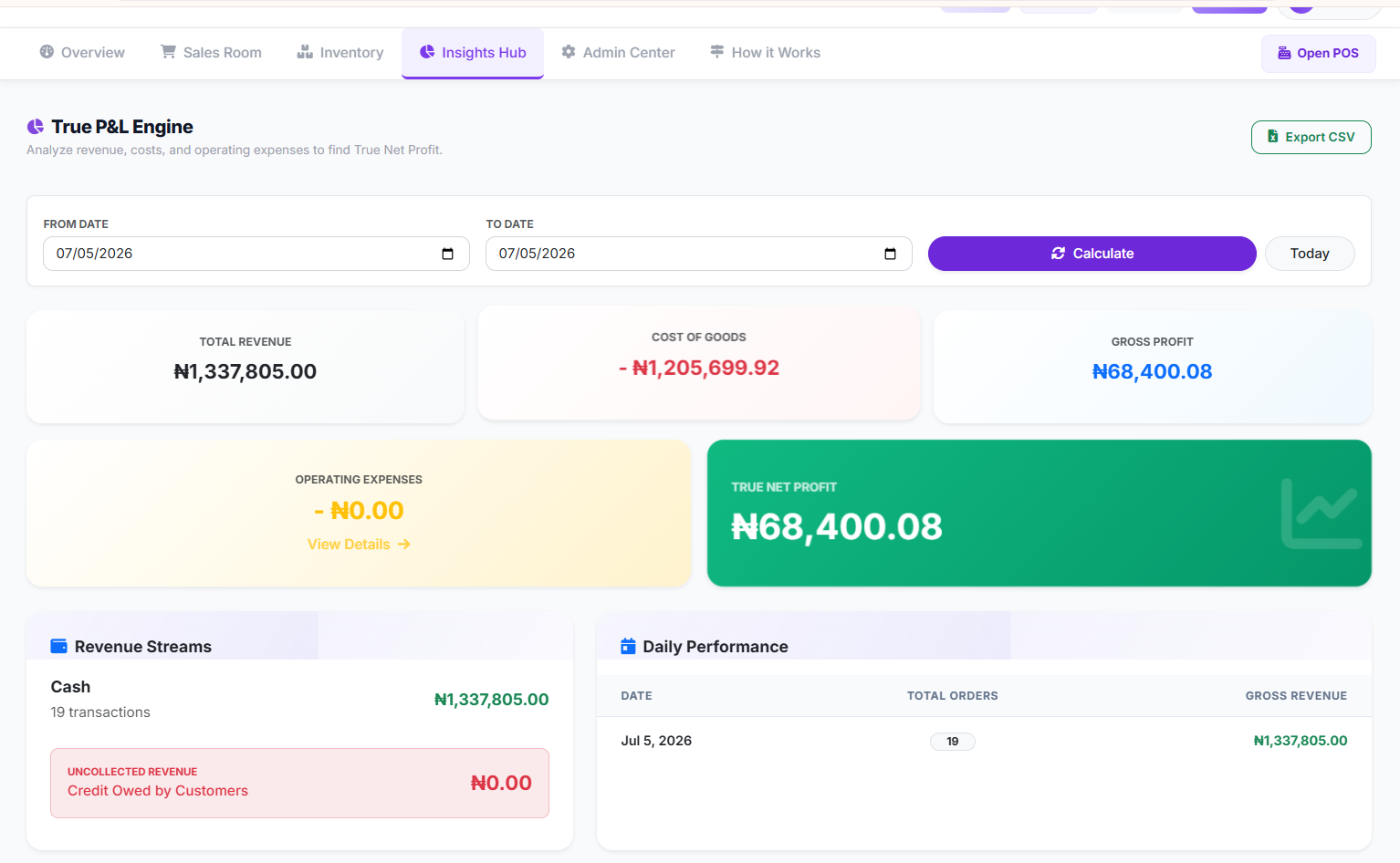
SwiftPOS generates automatic Profit & Loss reports so you always know your gross revenue, cost of goods sold, and net profit — updated in real time. No spreadsheets. No guessing.
Pro Tips for First-Time Mini Supermarket Owners in Nigeria
- Start with 200–300 products, not 1,000. Master your bestsellers first, then expand. Over-buying slow-moving stock is how cash gets locked in dead inventory.
- Negotiate with at least 3 suppliers per category. This gives you pricing leverage and protects you from single-supplier stockouts.
- Get your POS system before you open. You want to load your products, set up staff accounts, and run test sales before your first real customer walks in. Trying to set up systems while your shop is busy is a recipe for errors and losses.
- Price for margin, not just competition. Calculate your cost price, add your overhead allocation, then set your selling price. Don't just undercut the nearest competitor without knowing if you're still profitable.
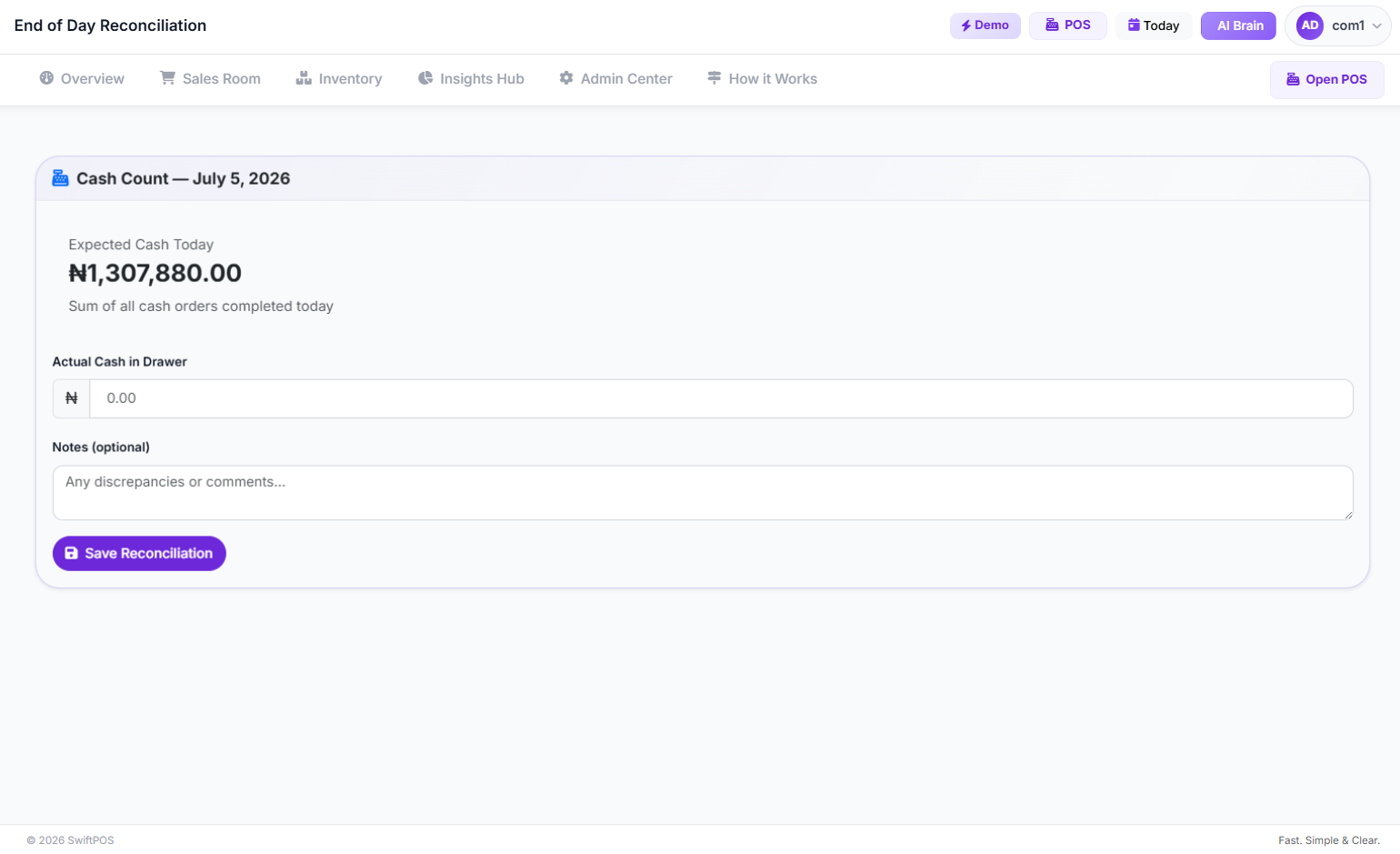
- Track your end-of-day reconciliation religiously. Every single day, close out your POS, compare cash in the drawer to what the system recorded, and investigate any gaps immediately. Don't let discrepancies pile up. SwiftPOS makes this effortless with the built-in end-of-day reconciliation module.
How to Choose the Right Location for Your Mini Supermarket
No amount of capital or operational excellence can fully overcome a bad location. Before you sign any lease, validate these key factors:
- Foot traffic: Stand outside the proposed shop for 2 hours on a weekday and a weekend. Count the number of people walking past and entering nearby shops.
- Proximity to your target customer: Are there residential estates, offices, schools, or markets nearby? These are your demand generators.
- Competition audit: How many similar shops are within 500 metres? High competition in a proven market is okay. Low foot traffic with many competitors is a warning sign.
- Parking and accessibility: If you want bigger basket sizes, customers need to be able to get in, shop, and leave easily. A shop that's hard to park near will lose customers who want to stock up.
Frequently Asked Questions
How much does it cost to open a small provision store in Nigeria?
A basic provision store with limited product lines (50–100 items) can be opened for ₦300,000 – ₦800,000, primarily covering rent, initial stock, and minimal shelving. This is the entry-level tier below a full mini supermarket.
Can I start a supermarket with ₦1 million in Nigeria?
₦1 million is very tight for a proper mini supermarket but possible for a very small provision store in a low-rent location. You'd need to be strategic about stock selection and may need to start with a much smaller product range. Adding a POS system from day one is still strongly recommended even at this budget tier — SwiftPOS Starter plan is only ₦3,000/month.
What is the profit margin for a mini supermarket in Nigeria?
Gross profit margins in Nigerian retail grocery typically range between 15% and 35% depending on the product category. Fast-moving consumer goods (FMCG) like food staples carry lower margins (8–15%) while personal care, beverages, and household goods can yield 20–40%. A well-run mini supermarket with good stock management should achieve a net profit margin of 8–18% after overheads.
Does SwiftPOS work for a new mini supermarket?
Yes — SwiftPOS is designed specifically for retail shops at every stage. The Starter plan (₦3,000/month) is suitable for a new mini mart getting started, while the Standard plan (₦6,000/month) adds barcode scanning, bulk product import, full P&L reports, and up to 5 staff accounts — making it ideal for a proper mini supermarket. Explore SwiftPOS pricing plans here.
How long does it take for a mini supermarket to become profitable in Nigeria?
Most well-managed mini supermarkets in good locations begin breaking even within 3–6 months of opening. Full profitability (recovering setup costs) typically takes 12–24 months. Shops that use proper POS and inventory systems from day one typically reach profitability faster because they avoid the early losses that come from untracked stock and cash handling errors.
What POS system is best for a mini supermarket in Nigeria?
A cloud-based POS system with inventory management, staff tracking, barcode support, and reporting is ideal for a mini supermarket. SwiftPOS was built specifically for Nigerian retail businesses and covers all of these needs. You can learn more about SwiftPOS here or compare options in our guide: The 7 Best POS Systems for Small Businesses in Nigeria (2026 Guide).
Final Word: Plan Your Capital, Protect Your Operations
Opening a mini supermarket in Nigeria is a genuinely rewarding business opportunity — but it's also one where poor financial planning and weak operational systems turn a promising venture into a loss-making headache. The two most important investments you can make, beyond your stock and your location, are your people and your systems.
A POS and retail management platform like SwiftPOS costs a fraction of what you'll lose to untracked inventory, staff mismanagement, or cash discrepancies in your first year of operation. It's not an optional expense — it's the infrastructure that protects everything else you've built.
To explore how SwiftPOS can support your new supermarket from launch day, read our full guide: How to Start a Supermarket Business in Nigeria — Step-by-Step Guide for Beginners.
Ready to Run Your Mini Supermarket the Smart Way?
SwiftPOS helps you track every sale, manage all your stock, monitor your staff, and see your real profit — all from one dashboard.
📦 Plans start at just ₦3,000/month
🎁 Get 1 month free when you subscribe annually on any plan
Or message us on WhatsApp: +2349164601810
How to Start a Mini Supermarket in Nigeria With ₦1 Mil…
Sep 11, 2026
How to Start a Mini Supermarket in Nigeria With ₦1 Mil…
Sep 11, 2026
Supermarket vs. Provision Store: Which Business Is Mor…
Sep 09, 2026
![1D 2D QR Desktop Barcode Scanner | Coupon price[₦27,489]](/media/sponsored_ads/d65a37d9-3450-4cc6-b13d-147a65d80096.png)