How Much Money Do You Need to Open a Mini Supermarket in Nigeria? (2026 Full Cost Breakdown)
SwiftPOS Team
Published July 27, 2026
Every week, someone in Lagos, Abuja, or Port Harcourt asks the same question in a WhatsApp group: "How much do I actually need to open a mini supermarket?" The answers they get are usually guesses — ₦500,000 from one person, ₦5 million from another. Nobody agrees, and most new shop owners end up either underfunding their launch or overspending on things that don't move the needle.
This guide breaks down how to start a mini supermarket in Nigeria with real cost categories, realistic 2026 price ranges, and the operational systems that determine whether your capital actually turns into profit — or quietly disappears into stock losses and untracked sales. By the end, you'll have a working budget range and a clear list of what to prioritize first.
Start your free SwiftPOS trial → if you want to see how the systems below work before you even open your doors.
Why "How Much To Open A Grocery Store" Is the Wrong First Question
Here's the uncomfortable truth: capital isn't usually what sinks a new mini supermarket. Poor tracking is. A shop owner who opens with ₦1.5 million but has no system to monitor stock, sales, and staff will often be worse off in six months than one who opened with ₦800,000 and controlled every naira.
Consider this scenario: you buy a carton of indomie at ₦4,500 and sell each pack at a margin that should net you ₦1,200 per carton. If you don't track sales by item, you won't notice when a staff member starts selling at the wrong price, giving "discounts" to friends, or when three or four packs quietly go missing every week. Multiply that across 200 products and the gap between what you should have made and what actually lands in your account can be enormous — often 15-30% of gross revenue, according to informal industry estimates from Nigerian retail associations.
So before we talk about naira figures, understand this: your budget needs to include not just stock and rent, but the tools that protect your margin from day one.
How Much It Actually Costs: A Realistic 2026 Breakdown
Costs vary heavily by location (a shop in Lekki costs more to launch than one in a smaller town), but here is a realistic range for a genuine mini supermarket — not a small provision store, but a shop with shelving, multiple product categories, and at least one till.
- Shop rent (1 year, small-to-mid size space): ₦400,000 – ₦2,000,000+ depending on city and location
- Shop renovation, shelving, lighting, signage: ₦150,000 – ₦600,000
- Initial stock (this is usually your biggest line item): ₦800,000 – ₦3,000,000
- Freezers/chillers (if selling frozen items or drinks): ₦250,000 – ₦700,000 per unit
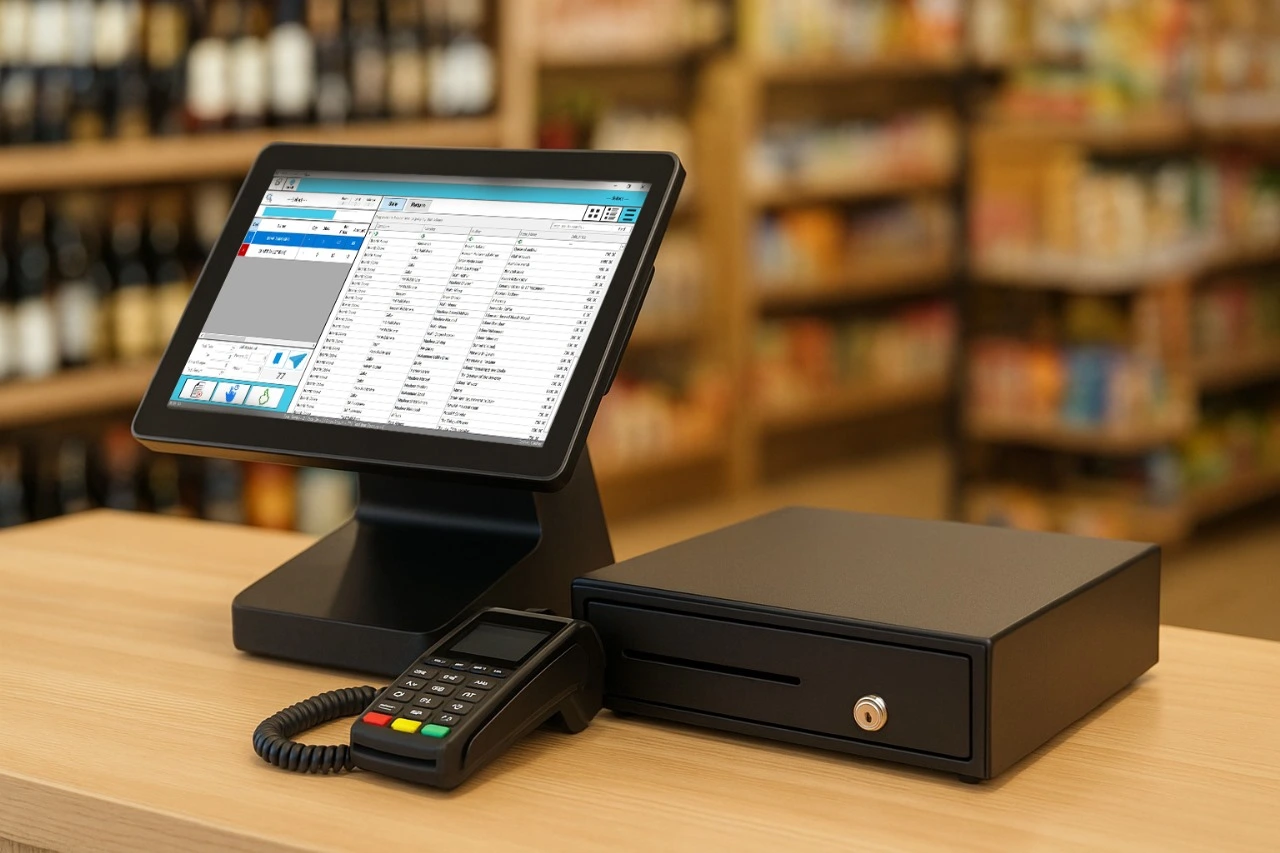
- POS hardware (barcode scanner, printer, cash drawer): ₦60,000 – ₦250,000
- POS software subscription: from ₦3,000/month
- Staff salaries (1–2 staff, first month buffer): ₦80,000 – ₦200,000
- Business registration (CAC): ₦15,000 – ₦50,000
- Working capital buffer (essential — don't skip this): ₦200,000 – ₦500,000
Adding this up, a realistic total for launching a proper mini supermarket in Nigeria in 2026 sits somewhere between ₦1.9 million and ₦7 million, with most first-time owners in mid-sized towns landing around ₦2.5–3.5 million. Provision stores and smaller kiosks can launch for significantly less — often under ₦1 million — but with a narrower product range.
If you want a narrower, store-type-specific breakdown, our related guide on provision store startup costs in Nigeria covers the smaller end of this range in more detail.
How to Handle Your Grocery Store Budget Effectively
Knowing the numbers is only half the job. Here's how experienced Nigerian retailers actually allocate and protect that capital:
- Don't spend more than 50-60% of your budget on opening-day stock. Many first-time owners blow their entire budget filling shelves, then have no buffer when rent or unexpected costs hit in month two. Keep at least 15-20% of total capital untouched as a cash buffer.
- Negotiate rent terms before renovation spend. A shop in Ikeja might quote ₦1.2 million a year but drop to ₦900,000 with a 2-year commitment. Always negotiate before signing.
- Buy fast-moving items in bulk, slow movers in small quantities. A provision store owner in Lagos who stocks 50 cartons of a slow-selling biscuit brand ties up capital that should be rotating through faster categories like beverages, toiletries, and staples.
- Set up your POS system before you open, not after. Many shop owners open first and plan to "add a system later." By then, bad habits (guessing prices, no receipts, cash-only records) are already baked into daily operations and are much harder to fix.
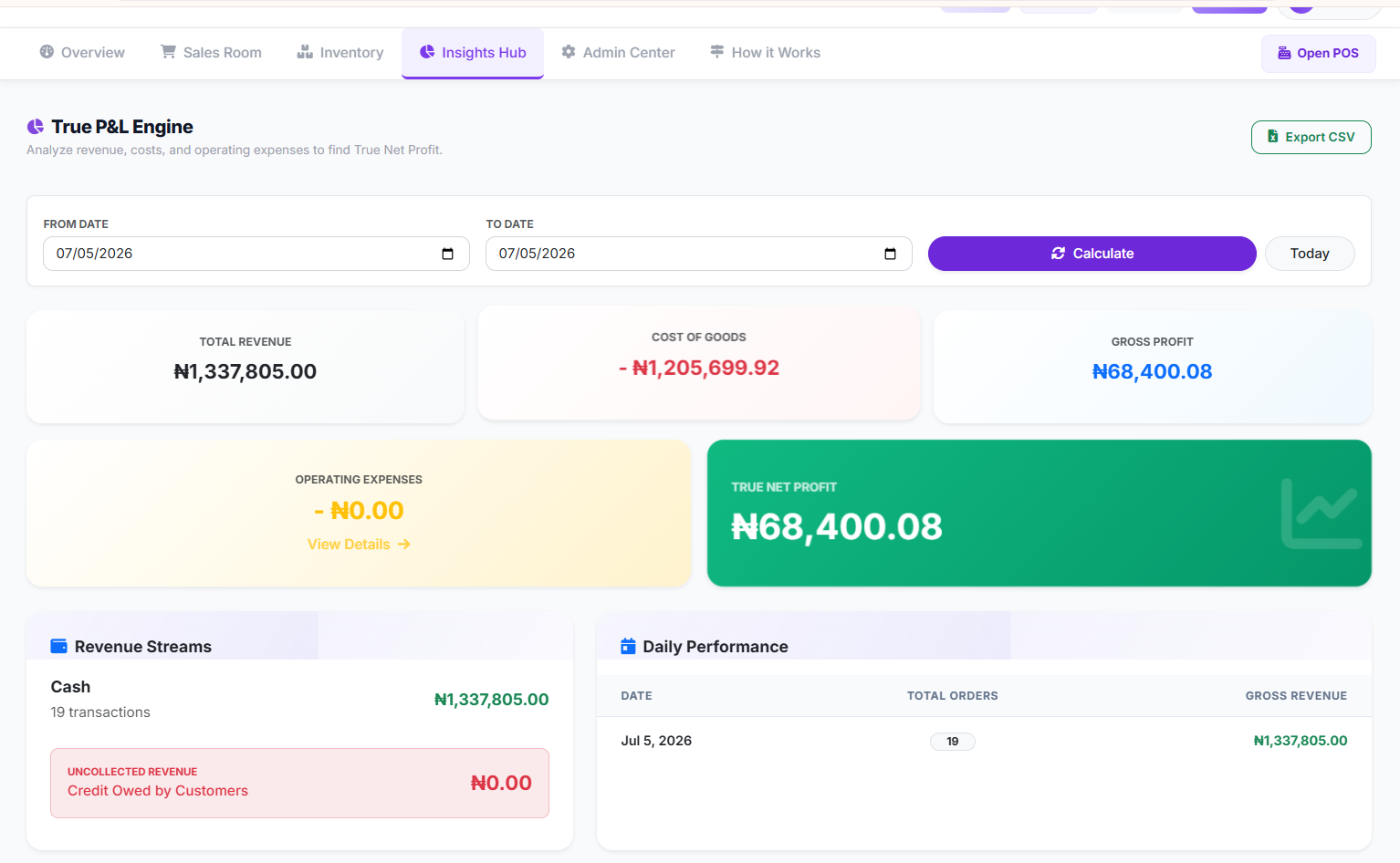
- Track your true profit and loss from week one, not just your bank balance. A shop can look busy and still be losing money once you factor in shrinkage, unrecorded credit sales, and staff errors.
How SwiftPOS Makes Managing Your Grocery Store Budget Effortless
Every pain point above has a direct fix inside a proper retail management system. This is where SwiftPOS features map directly onto the real risks new shop owners face:
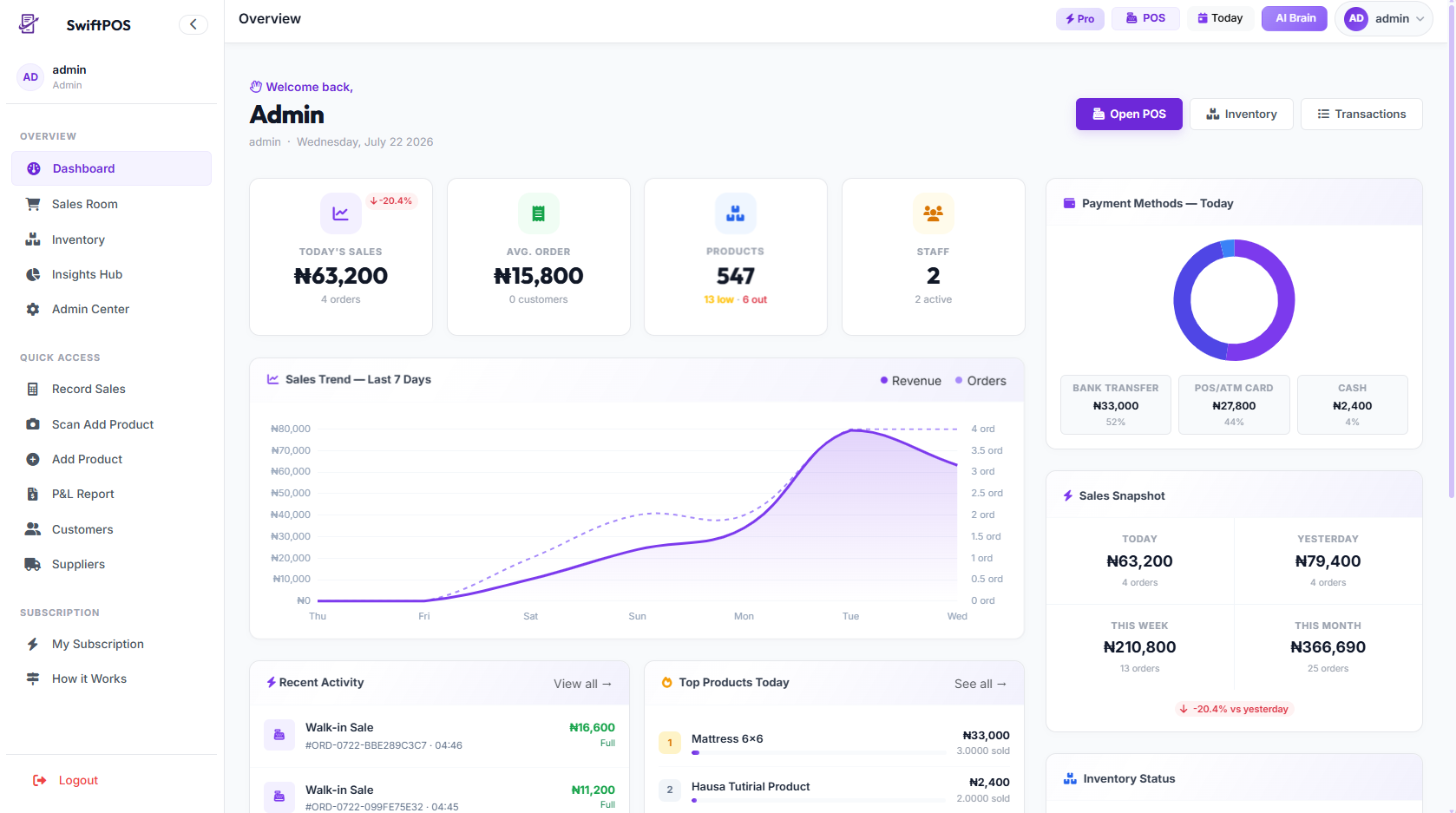
- Inventory management — know exactly what's in stock, what's running low, and what's not moving, so your capital isn't sitting idle on shelves.
- Customer credit system — track who owes you what, so "I'll pay later" doesn't quietly eat into your working capital.
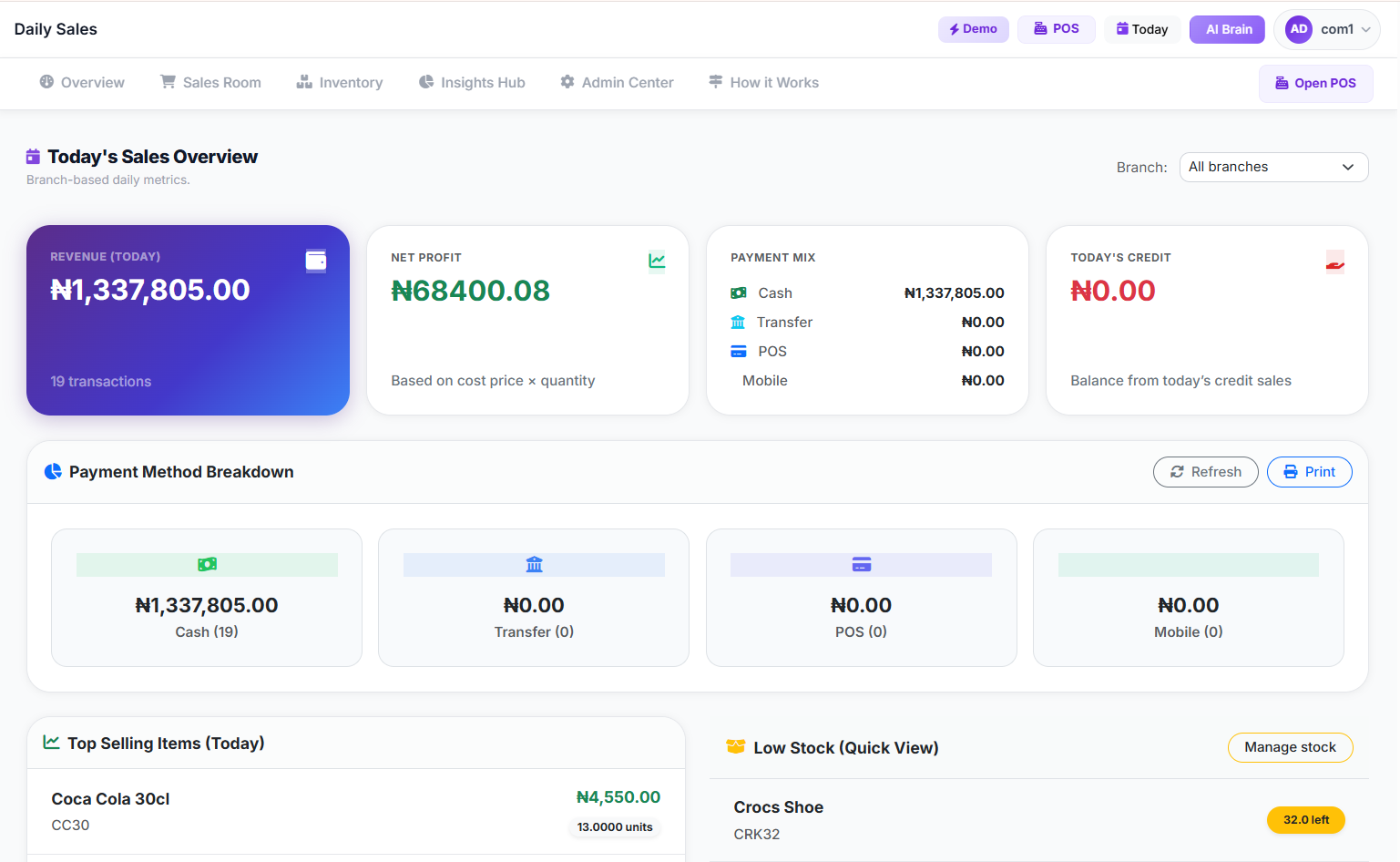
- Full P&L reports — see your true profit after costs, not just your cash-in-hand, so you catch problems before they become serious.
- Staff performance tracking and audit logs — see who sold what, at what price, and when — closing the gap where stock quietly disappears.
- AI Quick Product Add — scan a new product and let the AI extract the name and suggest a category automatically, saving hours during your initial stock setup.
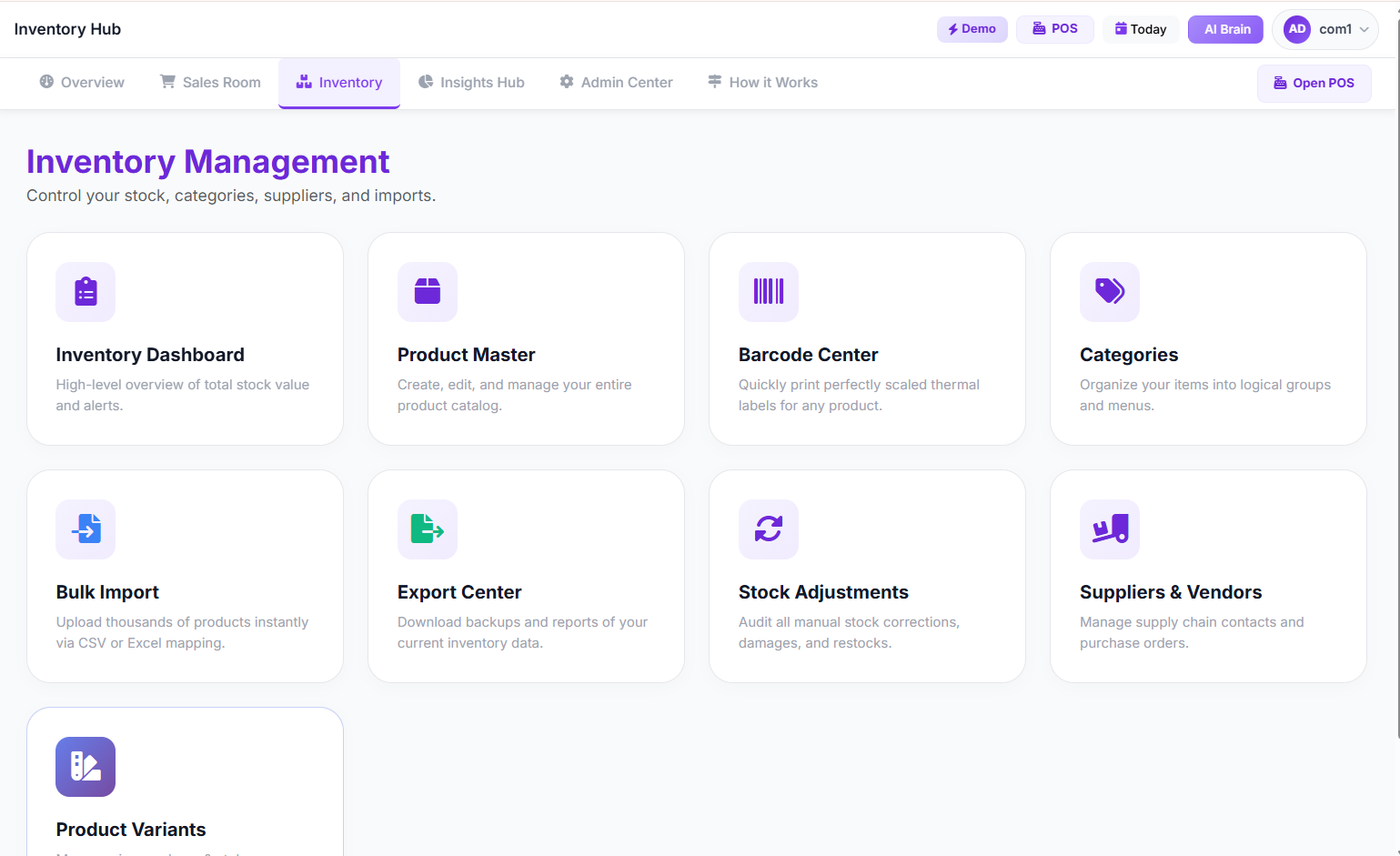
For a shop with a tight opening budget, the Starter Plan at ₦3,000/month already includes inventory management, a customer credit system, and basic sales reports — everything a new mini supermarket needs to launch with control from day one. As the shop grows, the Standard and Pro plans add barcode scanning, full P&L reports, multi-branch support, and audit logs.
Try SwiftPOS free for 14 days →
Pro Tips for Nigerian Business Owners
- Start smaller than you think you need to. A tightly stocked shop that sells through quickly and reorders smart beats a fully-stocked shop that ties up capital in slow movers.
- Track daily sales by item, not just total revenue. Total revenue can hide a lot — you might be busy all day and still barely breaking even if your best-selling item has a thin margin.
- Plan for power and internet realities. Choose POS hardware and software that can keep recording sales even when NEPA takes light or your internet drops, so you're never stuck without a working till.
Frequently Asked Questions
What is a good retail profit margin in Nigeria?
Margins vary by category, but many Nigerian retailers target 15-30% gross margin on general provisions, with higher margins possible on fast-moving convenience items and lower margins on staples where price competition is fierce.
How do wholesalers calculate prices for retailers?
Wholesalers typically price based on bulk cost plus a smaller margin than retail, expecting retailers to add their own markup for individual sale. Always compare at least two or three wholesale sources before committing to a supplier.
Does SwiftPOS help with planning how much to open a grocery store?
SwiftPOS won't calculate your rent or renovation costs, but once you're operating, it gives you the real sales and profit data needed to plan smart reordering and avoid overspending on slow-moving stock.
Can I manage a grocery store budget across multiple branches?
Yes. SwiftPOS's Pro plan includes multi-branch support, letting you track inventory, sales, and staff performance separately for each location from one account.
Is SwiftPOS affordable for small shops in Nigeria?
Yes. The Starter Plan begins at ₦3,000/month, and subscribing annually gets you one month free on any plan.
Conclusion
Opening a mini supermarket in Nigeria in 2026 realistically costs between ₦1.9 million and ₦7 million depending on location and scale — but the number that matters most isn't your opening budget, it's how well you protect that capital once the shop is running. Stock losses, untracked credit, and staff errors can quietly erase a healthy margin within months.
If you're also weighing whether the supermarket business is worth the investment at all, our guide on whether supermarket business is profitable in Nigeria breaks down the real numbers behind long-term profitability.
Ready to manage your shop more efficiently?
SwiftPOS helps businesses track sales, inventory, staff activities, and customer credit in one system.
Check the pricing plans at swiftpos.ng/pricing or message SwiftPOS on WhatsApp at +2349164601810 to get started.
Remember: you get 1 month free when you subscribe annually on any plan.