How to Predict When Products Will Run Out of Stock in Nigeria: A Practical Guide for Shop Owners
SwiftPOS Team
Published July 27, 2026
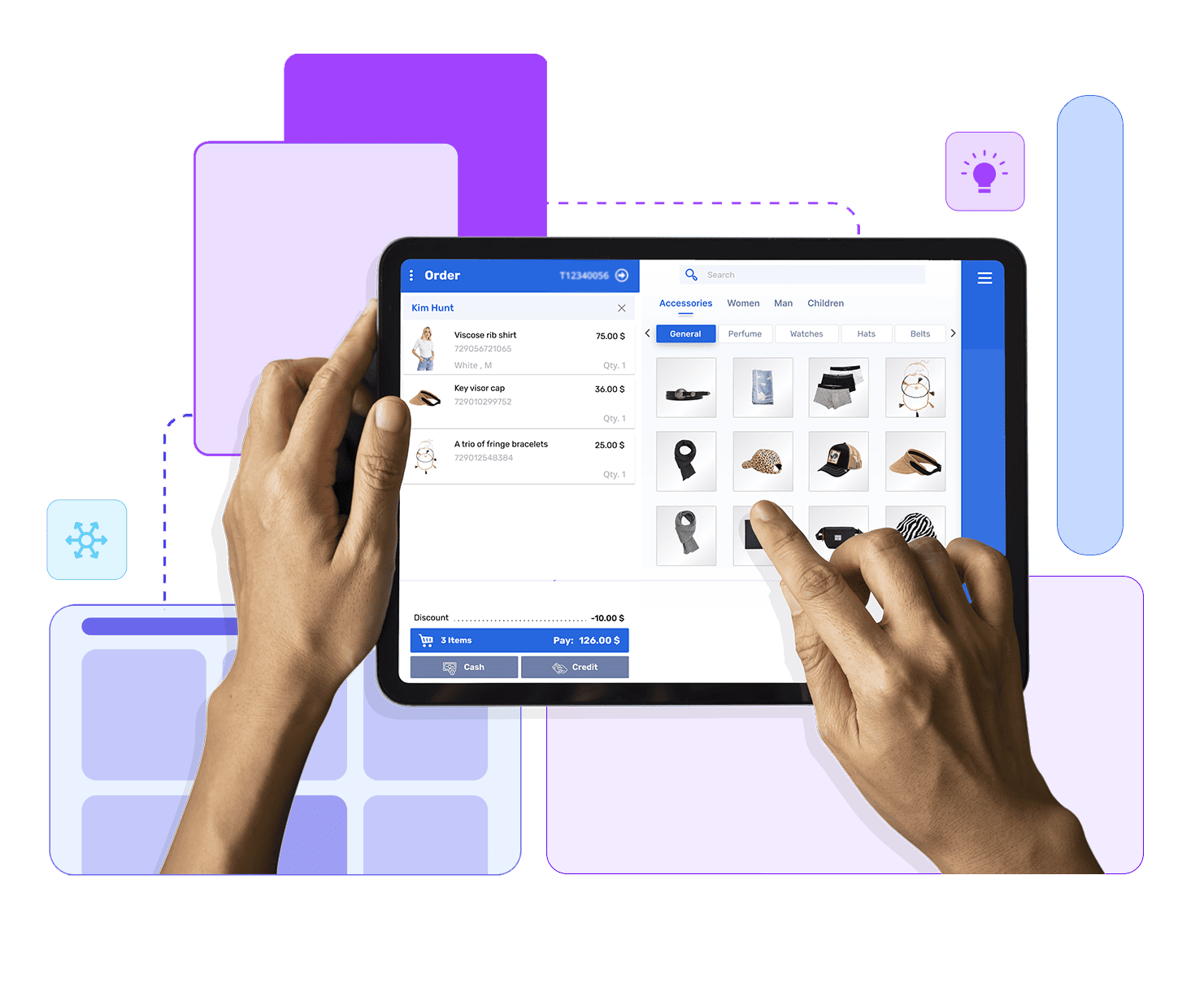
Picture this: it's a Friday evening in Ikeja, and your provision store is packed with customers. Then someone asks for a carton of your best-selling noodles brand — and you're out. They walk next door. That one stockout just cost you a sale, a customer's trust, and possibly a repeat visit that never happens. This is the story of thousands of Nigerian shop owners every single week, and it all comes down to one skill: knowing how to predict when products will run out of stock before it actually happens.
If you've ever restocked too late, over-ordered items that sat for months, or simply guessed your way through inventory decisions, this guide is for you. By the end, you'll know exactly how stock forecasting works, the practical steps to start doing it in your own shop this week, and how tools like SwiftPOS can turn this from a stressful guessing game into an automatic, data-backed process. Start your free SwiftPOS trial →
Quick summary: Stock forecasting means predicting when each product will run out based on how fast it sells, so you can reorder before you're empty. The formula most retailers use is Reorder Point = (Average Daily Sales × Supplier Lead Time) + Safety Stock. Doing this by hand works for a handful of products, but it breaks down fast once you're managing hundreds of SKUs or several branches — which is where a system like SwiftPOS takes over the calculations automatically.
Why Poor Stock Forecasting Is Costing Nigerian Shops Money
Most Nigerian retailers still run inventory "by feel." You glance at a shelf, notice it looks a little empty, and place an order — often too late. The math on this is brutal. Say you sell a product that costs you ₦500 and retails for ₦750. That's a ₦250 profit per unit. If you run out of stock for just five days and would normally sell 10 units a day, that's 50 units you didn't sell — a lost profit of ₦12,500, not counting the customers who simply don't come back.
Now multiply that across dozens of products in a supermarket or pharmacy, and the losses compound quickly. On the flip side, over-ordering ties up cash in slow-moving stock, which is just as damaging — especially for perishables or seasonal items that can expire or go out of fashion before they sell.
The core problem is usually one (or more) of these:
- Sales records are kept on paper or in a notebook, making patterns hard to spot
- There's no clear view of which products move fastest versus which sit for weeks
- Reordering decisions depend on one person's memory, and that person isn't always around
- Multiple branches make it even harder to track stock levels in real time
- Unreliable internet makes cloud tools feel risky, so many shops avoid digital systems altogether
None of these problems are unique to any one type of business — supermarkets, pharmacies, electronics shops, and fashion boutiques all face the same forecasting blind spots. A pharmacy running out of a common antimalarial drug loses more than a sale; it loses a customer who needed it urgently and won't wait around. A supermarket that over-orders perishables ends up writing off spoiled stock as pure loss. An electronics shop that misjudges demand for a popular phone accessory watches customers walk to a competitor down the road.
There's also a hidden cost that's easy to overlook: staff time. When restocking decisions are based on physically checking shelves and "asking around," you're burning hours every week that could go into actually serving customers or growing the business. And in shops with more than one attendant, inconsistent restocking judgment between staff members often leads to disputes about who is responsible when a popular item runs out.
| Approach | Manual / Notebook Tracking | Digital Forecasting (e.g. SwiftPOS) |
|---|---|---|
| Sales visibility | Estimated from memory or receipts | Automatic, product-level, real-time |
| Reorder timing | Based on how empty a shelf looks | Based on calculated reorder points and alerts |
| Multi-branch view | Requires visiting each branch | Single dashboard for all branches |
| Time required weekly | Several hours of manual checking | Minutes, via dashboard or AI assistant |
How to Handle Stock Forecasting Effectively
Here's a practical, step-by-step approach any shop owner can start using immediately — no complicated spreadsheets required.
1. Track your daily sales per product, not just total revenue
Imagine you run a provision store in Lagos. Knowing you made ₦150,000 today tells you almost nothing about restocking. What matters is knowing that you sold 40 sachets of a particular detergent, 15 tins of tomato paste, and only 2 bottles of a slow-moving drink. Product-level sales data is the foundation of any forecasting decision.
2. Calculate your average daily sales rate for each product
Once you have a few weeks of data, work out how many units of each item you typically sell per day. A product moving 10 units a day needs a very different reorder schedule from one moving 1 unit a day.
3. Know your supplier lead time
If it takes your supplier 3 days to deliver after you place an order, you need to reorder before you hit zero stock — ideally with enough buffer to cover those 3 days plus a safety margin for unexpectedly busy periods (like end-of-month salary week).
4. Set a reorder point for each product
A simple formula many retailers use: Reorder Point = (Average Daily Sales × Lead Time in Days) + Safety Stock. Once stock for a product hits this number, it's time to order — not when the shelf already looks empty.
5. Review slow-moving stock regularly
Just as important as knowing what to restock is knowing what to stop restocking. Set aside time monthly to review products that haven't sold in weeks and consider discounting or discontinuing them to free up cash and shelf space.
6. Adjust for events you already know about
If you know a school is resuming nearby next week, or that a public holiday is coming up, factor that into your forecast rather than waiting for the data to catch up after the fact. A supermarket near a school gate, for instance, can reasonably expect higher demand for snacks and drinks in the days before resumption — planning for it ahead of time avoids a scramble.
Doing this manually across dozens or hundreds of products is exhausting — which is exactly the gap that a proper POS and inventory system is built to close.
How SwiftPOS Makes Stock Forecasting Effortless
SwiftPOS is a cloud-based POS and retail management platform built specifically for Nigerian businesses, and stock forecasting is one of the areas where it removes the guesswork entirely. Instead of manually tallying sales at the end of the day, every sale made at the till is automatically logged against the product, giving you a real-time, accurate picture of what's moving and what isn't.
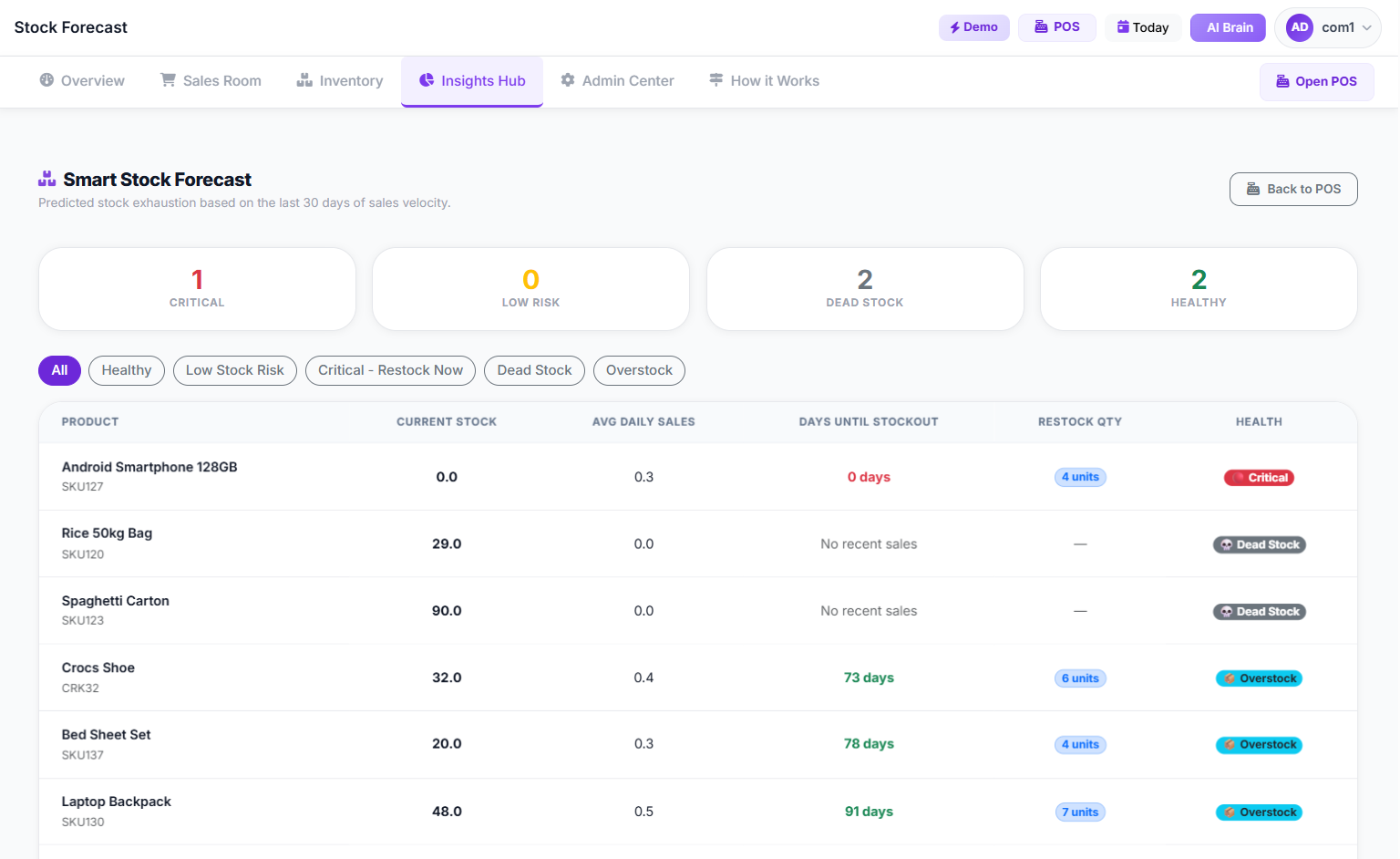
The Smart Stock Forecast feature analyzes your sales history and flags products that are approaching their reorder point, so you know in advance — not after the shelf is already empty. Paired with low stock alerts, this means you can plan supplier orders around actual demand instead of instinct.
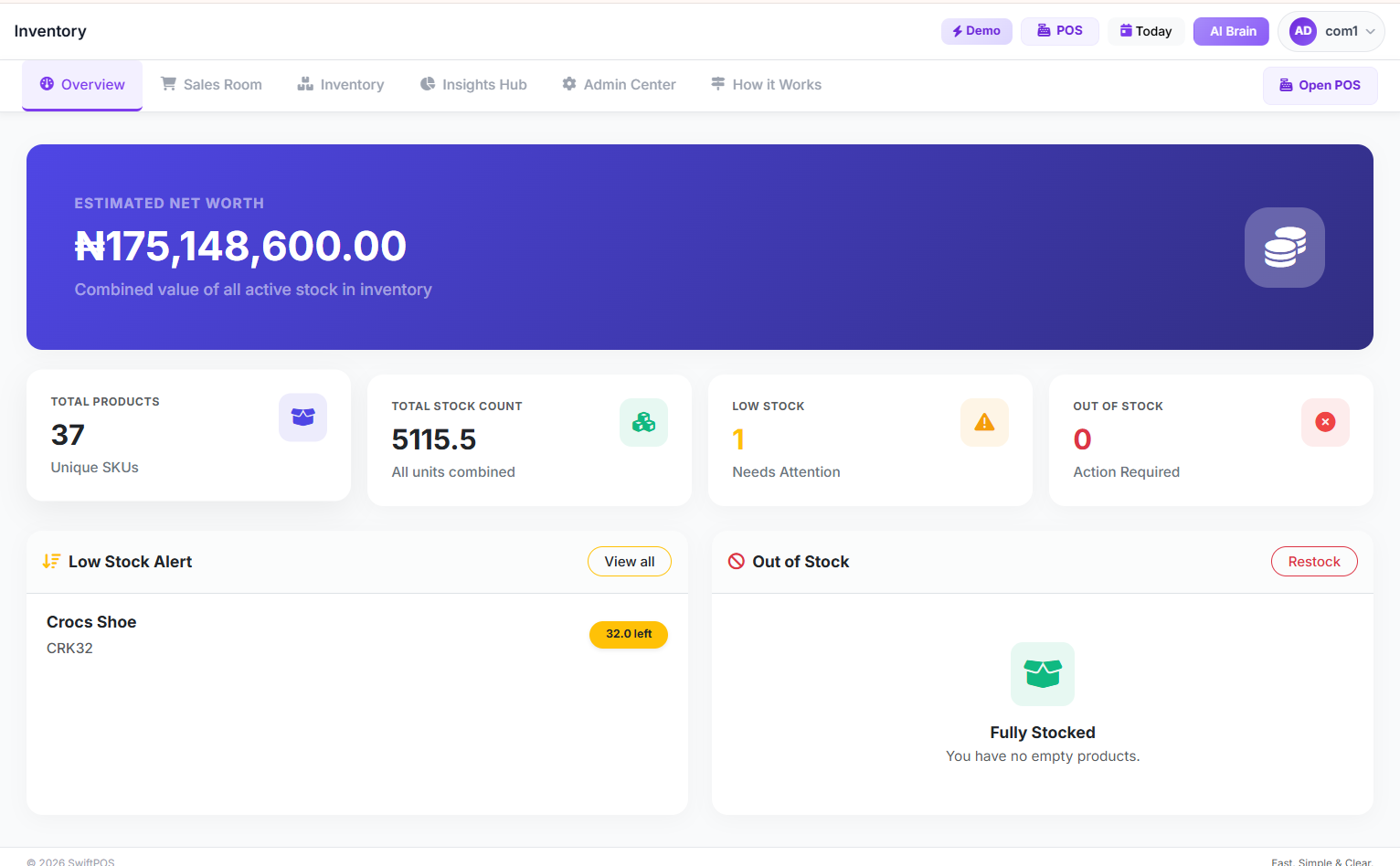
The Inventory Dashboard gives you a single view of stock levels, fastest and slowest-moving items, and categories that need attention — whether you're running one shop or managing multiple branches. For businesses juggling several locations, this is especially valuable since it removes the need to physically visit every branch to know what's low on stock.
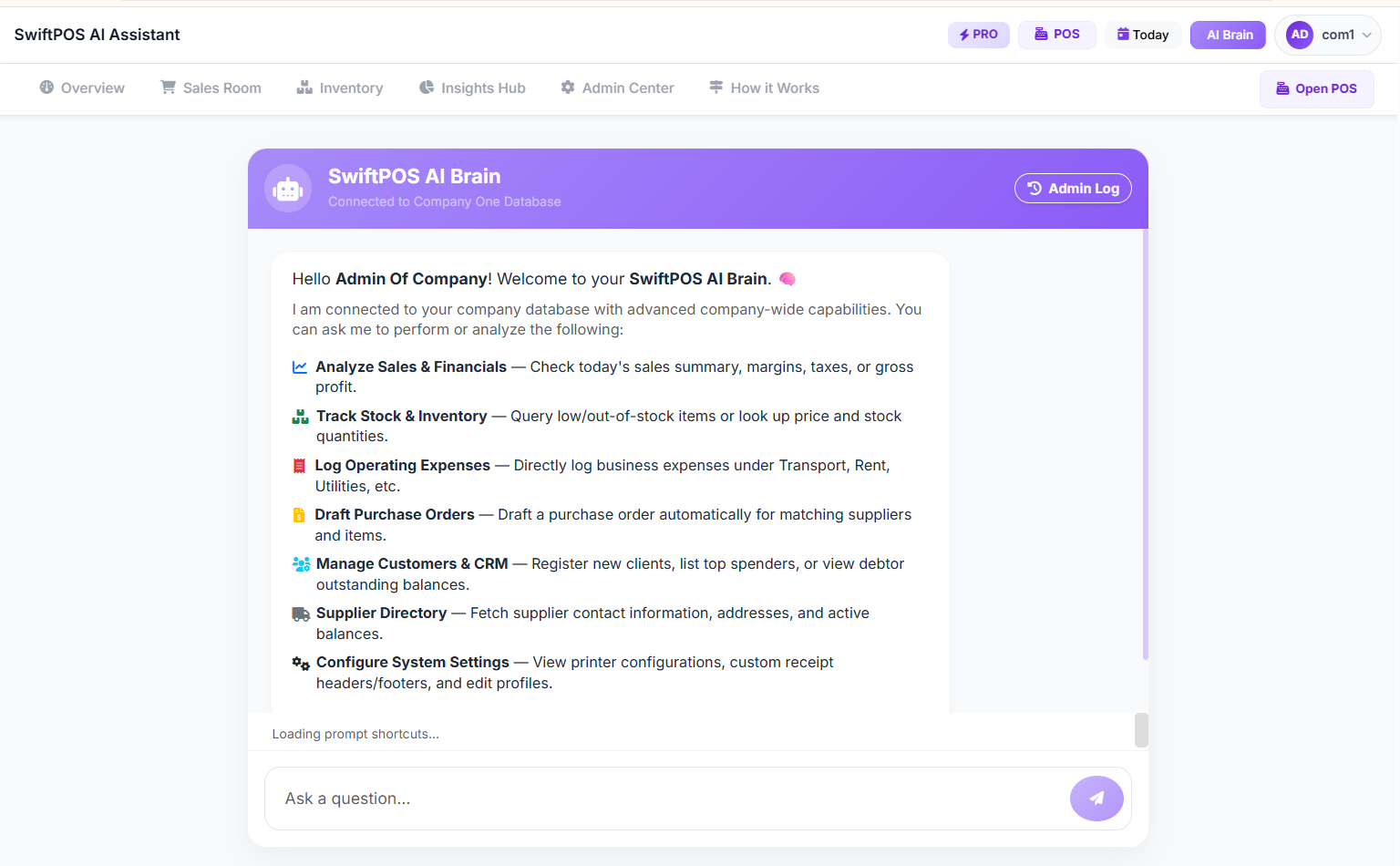
SwiftPOS also includes an AI assistant you can literally ask questions like "which products are close to running out this week?" or "show me my slowest-moving items this month" — turning forecasting from a spreadsheet chore into a quick conversation.
And because SwiftPOS is built with Nigerian retail realities in mind, it supports offline order capture so unstable internet doesn't stop sales from being recorded — everything syncs once you're back online. You can explore the full list of capabilities on the SwiftPOS features page.
If cash flow is a concern, it's worth noting that SwiftPOS is priced for small and growing Nigerian businesses, with plans starting from ₦3,000 per month. You can compare what's included in each tier on the SwiftPOS pricing page, and there's an added benefit of one month free when you subscribe annually on any plan.
Pro Tips for Nigerian Business Owners
- Account for seasonality: Sales patterns shift around festive periods, salary weeks, and school resumption dates. Adjust your reorder points around these known spikes instead of using a flat average all year.
- Watch for supplier disruptions: Fuel scarcity, forex swings, or transport strikes can extend lead times without warning. Keep a slightly higher safety stock on your best sellers to absorb these shocks.
- Review reports weekly, not just monthly: Waiting a full month to check your sales-by-item report means you catch problems too late. A quick weekly glance at fast movers keeps your forecasting sharp.
- Separate forecasting for each branch, but compare across them: A product that flies off the shelf at your Lagos branch might barely move at your Abuja location. Forecast per branch first, then look for lessons you can apply across your whole business.
Frequently Asked Questions
What is a good retail profit margin in Nigeria?
Margins vary widely by product category, but many Nigerian retailers work with gross margins between 15% and 40%, with fast-moving consumer goods typically on the lower end and specialty or imported items on the higher end.
How do wholesalers calculate prices?
Wholesalers typically build their prices from the landed cost of goods (purchase price plus transport and clearing costs), then add a margin that reflects bulk-order economics, which is usually thinner than retail margins since volumes are higher.
Does SwiftPOS help with stock forecasting?
Yes. SwiftPOS tracks every sale automatically and uses that data to power its Smart Stock Forecast feature, alerting you when products are approaching their reorder point so you can restock ahead of a stockout.
Can I manage stock forecasting across multiple branches?
Yes, SwiftPOS supports multi-branch management, letting you view stock levels and sales patterns for each location from one central dashboard rather than checking each shop individually.
Is SwiftPOS affordable for small shops in Nigeria?
SwiftPOS offers plans starting at ₦3,000 per month for small shops, scaling up to plans built for supermarkets and multi-branch businesses, with a full breakdown available on the pricing page.
Conclusion
Stock forecasting doesn't have to be complicated or reserved for big businesses with data analysts. With consistent sales tracking, a clear reorder point for each product, and the right tools to automate the heavy lifting, any Nigerian shop owner can stop guessing and start restocking with confidence. If you're ready to move from paper notebooks to real-time forecasting, it's worth reading more on how to stop losing money to dead stock and how to automate your reordering process.
Ready to stop guessing and start forecasting?
SwiftPOS helps businesses track sales, inventory, staff activities, and customer credit in one system — including automatic stock forecasting so you never get caught off guard by a stockout.
Check the pricing plans at swiftpos.ng/pricing or message SwiftPOS on WhatsApp at +2349164601810 to get started.
Remember: you get 1 month free when you subscribe annually on any plan.