How To Monitor Staff Sales In A Retail Shop Nigeria — The Complete 2026 Guide
SwiftPOS Team
Published May 05, 2026
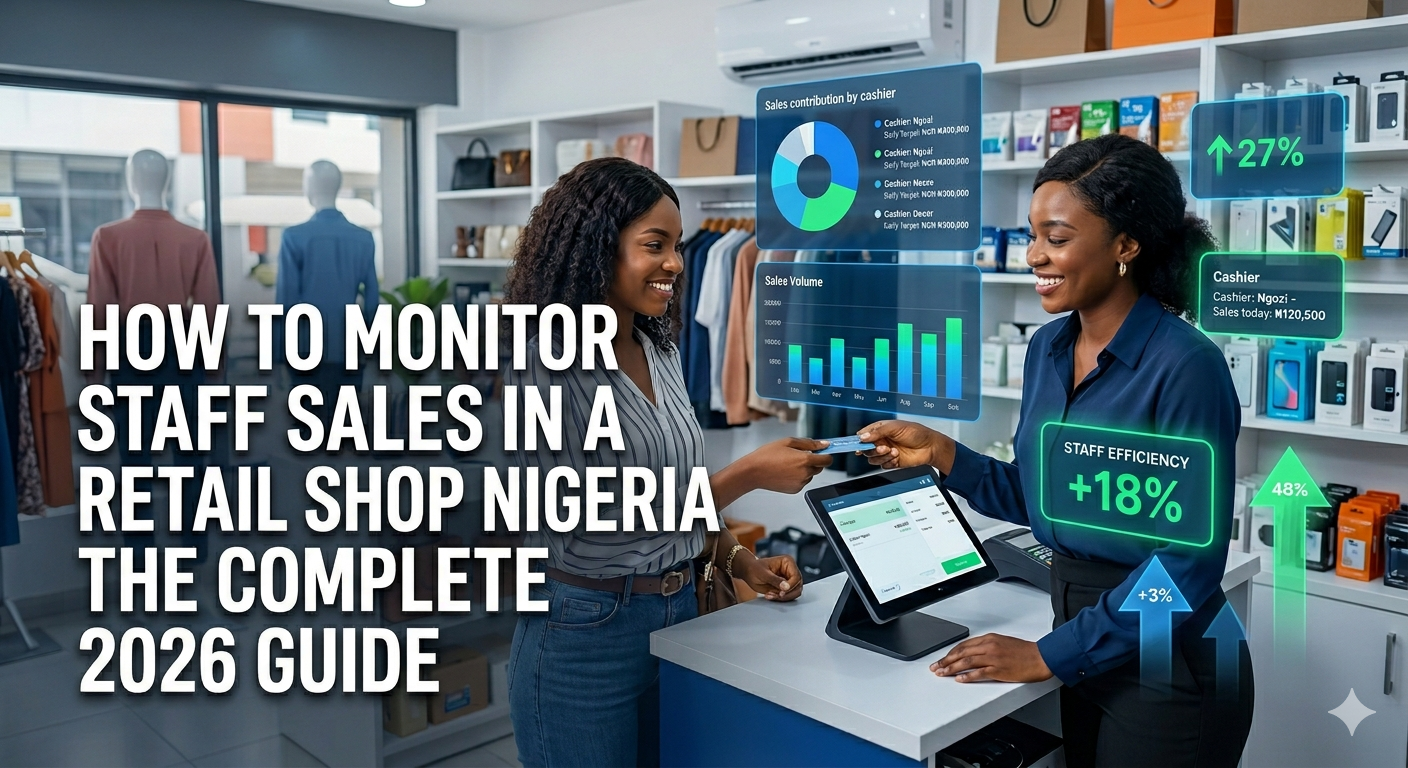
You close the shop on Friday night, count the cash, and something doesn't add up. The sales register says ₦187,000 — but you're holding ₦161,000. That's ₦26,000 missing. You have three cashiers, two shifts, and zero way to tell what went wrong or who was responsible.
If that scenario sounds familiar, you're not alone. Learning how to monitor staff sales in a retail shop Nigeria is one of the most pressing challenges for Nigerian shop owners — and one of the most expensive problems to ignore. This guide gives you a clear, practical system you can start using immediately.
Start Your Free SwiftPOS Trial →
Why Unmonitored Staff Sales Are Draining Nigerian Retail Shops
Most Nigerian shop owners focus on buying well — sourcing at the right price, managing suppliers, watching margins. But the bigger leak is often happening at the point of sale, during every transaction your staff handles without you watching.
Here are the five most common ways unmonitored staff sales cost Nigerian shop owners money every week:
- The Unrecorded Sale: A customer pays ₦4,500. The cashier collects the cash, hands over the item, but never enters the sale into the register. Without a mandatory receipt system, there is no trace.
- The Phantom Discount: A staff member gives a 20% discount to a friend without manager approval. That's ₦900 lost on one transaction. Multiply that by ten transactions a week across three staff and you are losing over ₦100,000 monthly without knowing it.
- The Altered Paper Record: Sales recorded in a book are easy to change. A cashier writes ₦3,800 instead of ₦4,500. The difference disappears. The book looks balanced. You never know.
- The Night Shift Blind Spot: Many owners are present during the day but hand over to a trusted staff member for evening shifts. Without remote visibility, that shift is your most vulnerable window.
- The Shared Till Problem: When two or three cashiers share the same register, accountability vanishes. No one can be held responsible for a shortage because anyone could have caused it.
Shops with no cashier-level sales tracking lose an average of 8–12% of gross revenue to undetected staff leakages annually. For a shop turning over ₦5 million a year, that is up to ₦600,000 gone — not to suppliers or overheads, but to a gap in your monitoring system.
How To Monitor Staff Sales In A Retail Shop Nigeria: A 5-Step System
Fixing this does not require becoming a technology expert. It requires a clear system and the right tool to enforce it consistently. Here is the framework:
Step 1: Give Every Cashier Their Own Login
The foundation of cashier accountability is individual identity. The moment two staff members share a single account, you lose the ability to trace any transaction to a specific person. Every cashier must have their own unique login. This means every sale, void, discount, and refund is tagged to one person — not "the morning shift."
Step 2: Enable Sales-By-Cashier Reporting
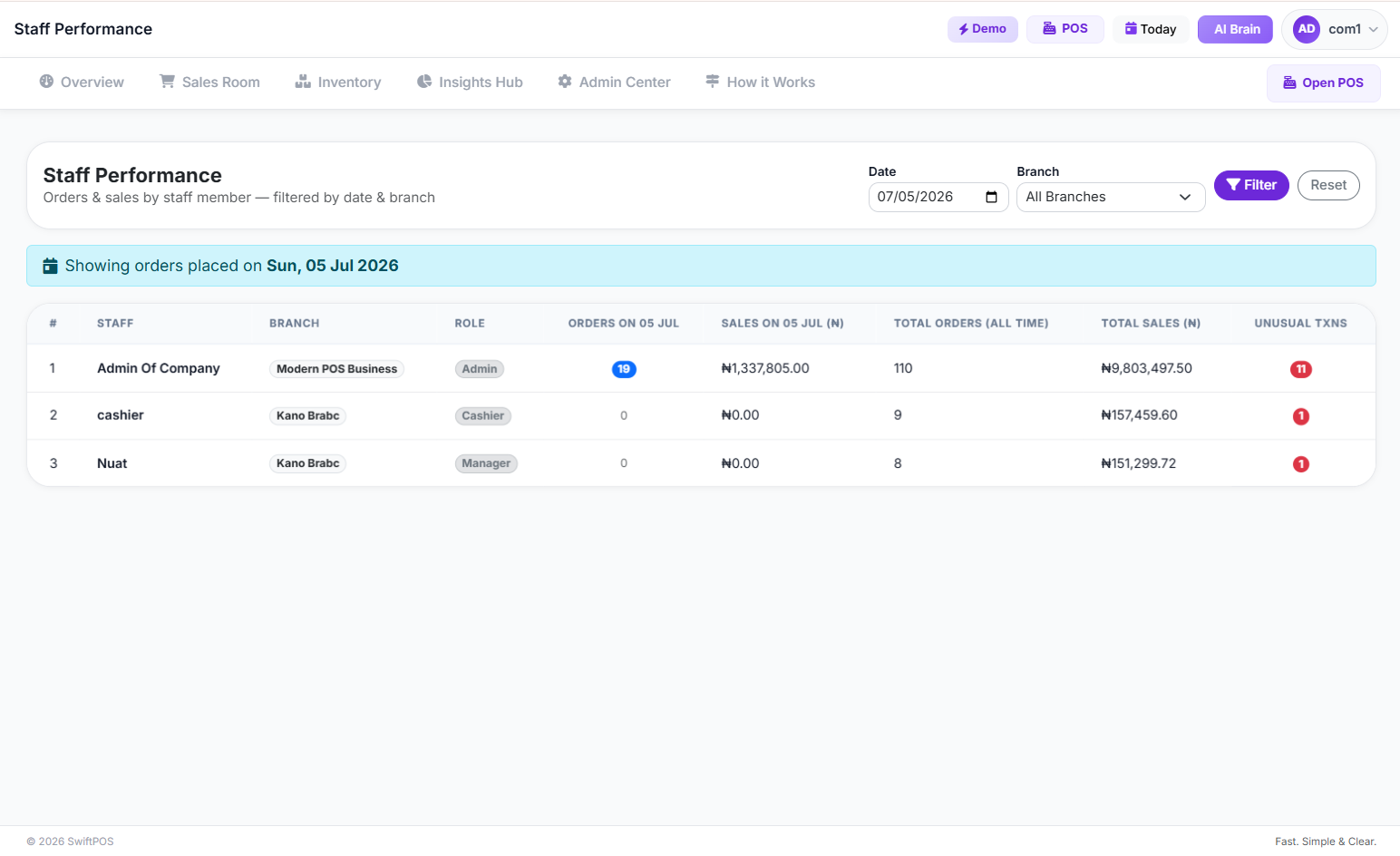
Once every cashier has their own login, your POS system can generate a sales-by-cashier report — a breakdown showing exactly how much each staff member sold, how many transactions they processed, what discounts were applied, and what the average transaction value was.
If Chioma processes 45 transactions at an average of ₦3,200 but Emeka processes 45 transactions at an average of ₦2,100 for the same products — that is a conversation worth having. The report does not accuse anyone. It shows patterns, and patterns tell the truth.
Step 3: Enforce Shift Reconciliation
Shift reconciliation means that before a cashier hands over to the next person, the cash in the till must match the total sales recorded for their shift. If the system says ₦87,400 was sold and there is only ₦81,000 in the till, the cashier must account for the ₦6,400 difference before leaving.
This single habit eliminates the "I don't know when it went missing" conversation. It pins responsibility to the right shift, the right person, and the right timeframe — and means shortages are caught daily, not discovered in a painful month-end audit.
Step 4: Restrict Discount Permissions to Managers Only
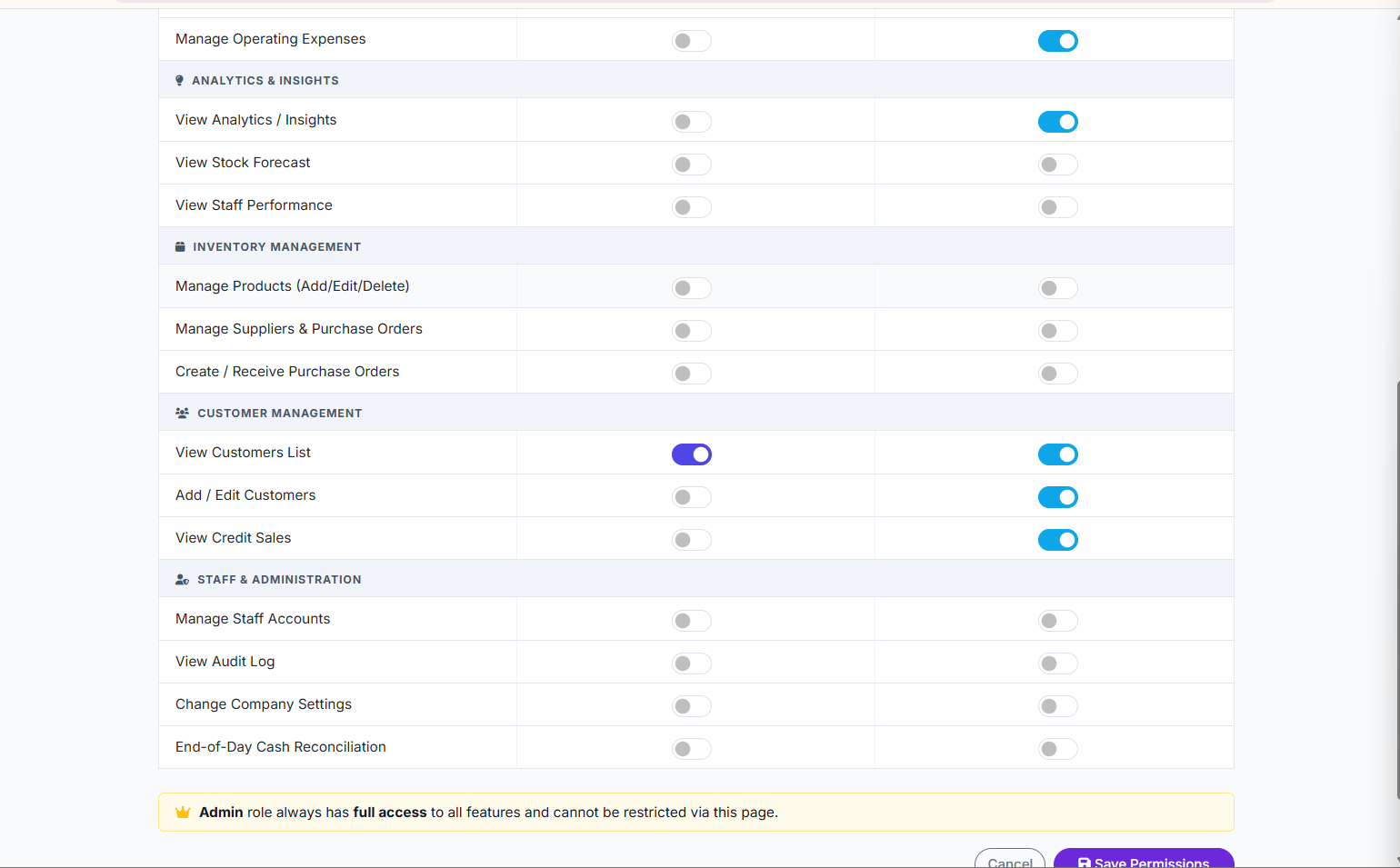
Your POS system should be configured so cashiers cannot apply a discount without a manager-level override code. This creates an automatic audit trail for every discount given. If a customer received 15% off, the system records which manager approved it, at what time, and on which product. You can review all discounts given in a week in under five minutes.
Step 5: Monitor Sales Remotely From Your Phone
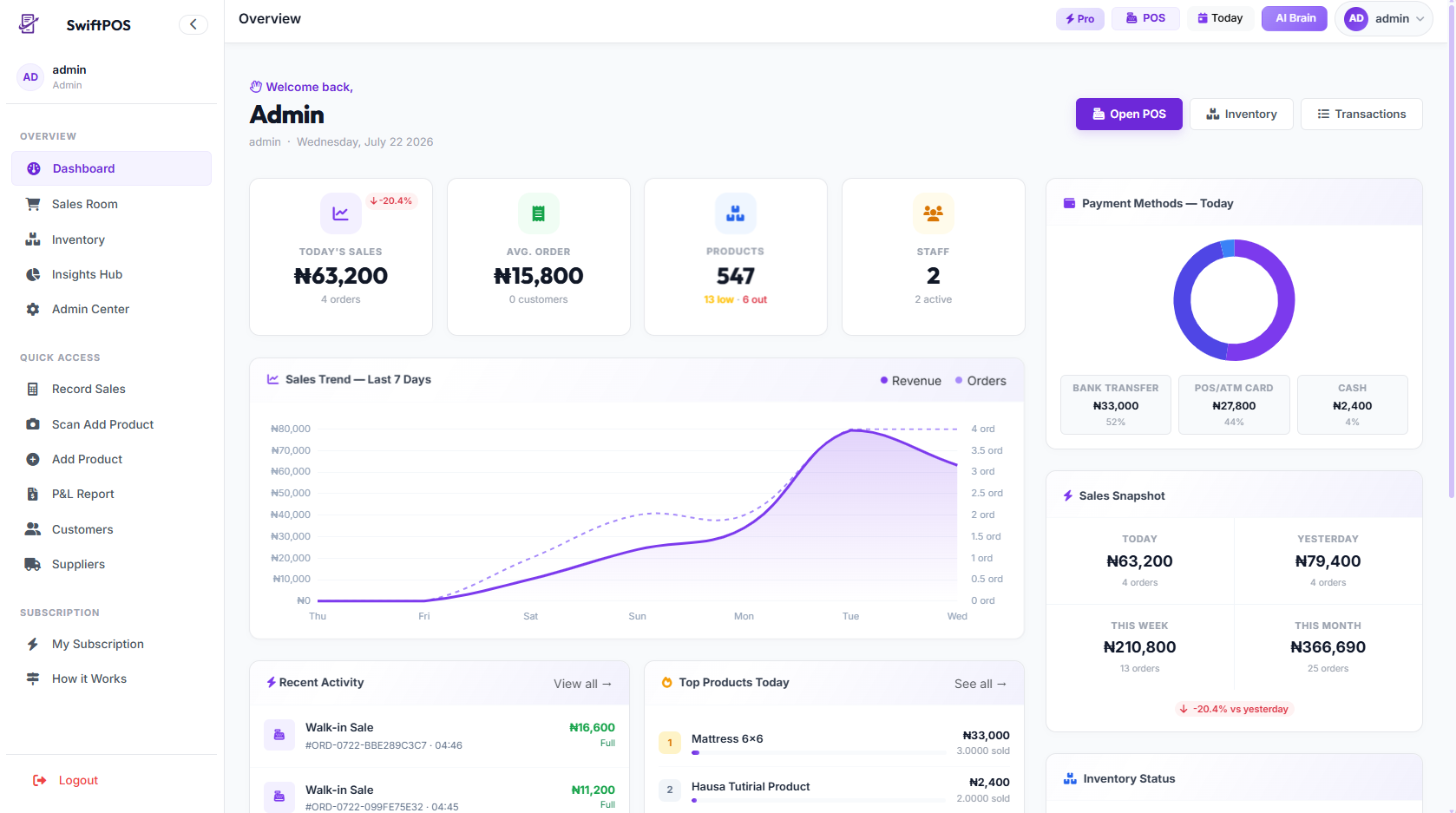
A cloud-based POS gives you a live dashboard on your phone — showing real-time sales, current cash in till, which cashier is active, and how today compares to yesterday. This is critical for shop owners who manage multiple locations, have evening shifts, or travel for buying trips. Your shop runs. You watch. Accountability never sleeps.
How SwiftPOS Makes Staff Sales Monitoring Effortless for Nigerian Shops
SwiftPOS is a cloud-based POS built specifically for Nigerian retail businesses — from provision stores in Ibadan to multi-branch supermarkets in Lagos. Every feature is designed with Nigerian retail realities in mind: cash-heavy transactions, inconsistent internet, power cuts, and the need for remote owner visibility.
- Individual Cashier Logins: Set up unlimited staff profiles in minutes. Every transaction is tied to a specific cashier automatically.
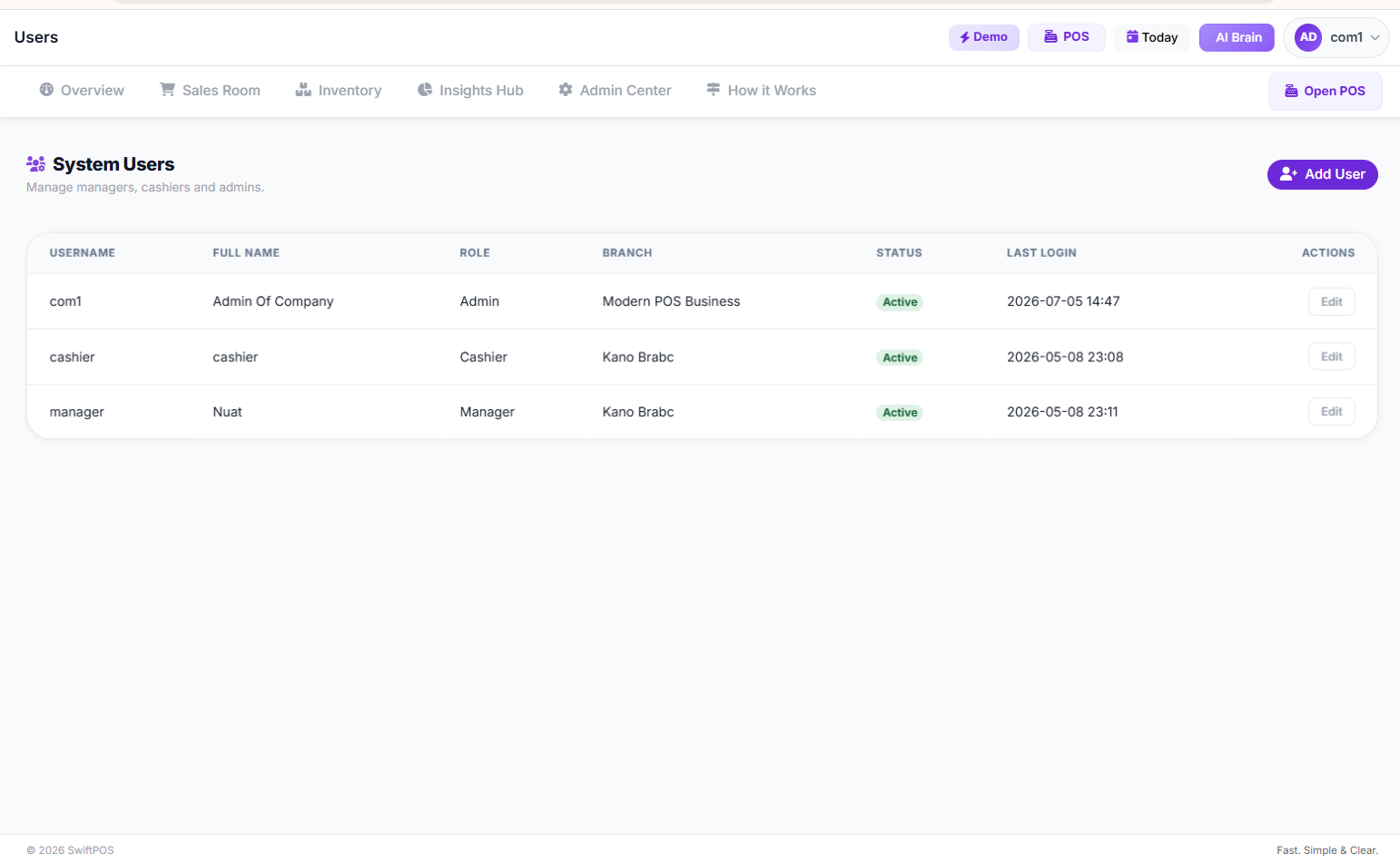
- Sales-By-Cashier Reports: Full cashier performance breakdown for any time period — today, this week, this month — in one click.
- Shift Reconciliation: The system prompts cashiers to reconcile cash at shift handover and flags discrepancies immediately.
- Manager-Only Discount Approval: Set discount limits per cashier role. Any discount above the threshold requires a manager override code.
- Live Mobile Dashboard: See your sales in real time from anywhere. Works on slow 3G connections with full offline sync when connectivity drops.
Explore all SwiftPOS features →
Pro Tips for Nigerian Shop Owners
- Do weekly cashier reviews, not monthly ones. Monthly reviews mean a problem can run for 30 days undetected. Weekly reviews keep everyone sharp and make it clear you are watching consistently.
- Announce the system openly to your staff. Tell your team clearly: "From now on, every cashier has their own login and we review sales reports weekly." Honest staff will respect the structure. Those with something to hide will either correct their behaviour or reveal themselves quickly.
- Compare same-shift performance across weeks. If a cashier consistently moves 30% less cash on evening shifts than they did three months ago, that pattern deserves investigation — even if daily totals look reasonable in isolation.
Frequently Asked Questions
How do I know if my cashier is stealing sales in my Nigerian shop?
The clearest signs are recurring cash shortages at shift end, a significant gap between customers served and sales recorded, unusually low average transaction values compared to other cashiers, and frequent voided transactions with no explanation. A POS system with cashier-level reporting surfaces all of these patterns automatically.
Can I monitor staff sales remotely from my phone in Nigeria?
Yes. With a cloud-based POS like SwiftPOS, you can view real-time sales data, see which cashier is active, and check till balances from your phone anywhere with internet access. The mobile dashboard works on 3G and syncs automatically when connectivity restores after an outage.
What is the best way to track sales per cashier in a small Nigerian shop?
Assign every cashier a unique POS login and generate daily sales-by-cashier reports. Even for a shop with just two staff members, this creates accountability and eliminates guesswork from end-of-day reconciliation.
How should I handle cash reconciliation at end of shift?
At the end of every shift, the outgoing cashier counts the cash in the till and compares it against the POS system total for their shift. Any difference must be logged and signed off before the next cashier takes over. This creates a clean handover and makes shortages impossible to deny or defer.
Does SwiftPOS work without stable internet in Nigeria?
Yes. SwiftPOS works in offline mode during internet outages and syncs all transactions automatically once connectivity is restored. Sales are never lost, and cashier-level records remain accurate regardless of network interruptions.
Conclusion
Monitoring staff sales in your Nigerian retail shop is not about distrust — it is about building a business that runs on facts, not guesswork. The five-step system in this guide closes the most common leaks that drain retail profits silently every day: individual logins, cashier reports, shift reconciliation, controlled discounts, and remote monitoring.
The right POS system makes all of this automatic. You spend less time chasing numbers and more time growing your business.
Want to go deeper? Read our guides on How to Prevent Staff Theft in Nigerian Retail and How to Manage Inventory for a Supermarket in Nigeria.
Ready to Take Full Control of Your Shop's Sales?
Join thousands of Nigerian retail owners who use SwiftPOS to monitor cashier performance, prevent leakages, and grow confidently — from their phone, anywhere.
Start Your Free 3-Day Trial →No credit card required. Setup takes under 10 minutes.

7 Key Retail Metrics Nigerian Businesses Must Track fo…
Aug 23, 2026
How to Set Up Your SwiftPOS Account: A Step-by-Step On…
Aug 22, 2026
Build Unbreakable Habits: The Ultimate Guide to Lastin…
Aug 19, 2026