Build Unbreakable Habits: The Ultimate Guide to Lasting Self-Improvement
SwiftPOS Team
Published August 19, 2026

For many retail business owners, the dream of effortless growth often collides with the chaotic reality of daily operations. Juggling inventory, managing sales, tracking staff, and trying to make sense of financial records can feel like an endless battle, leaving little room for strategic thinking or personal development. This constant struggle isn't just about business; it's about the erosion of time, energy, and the potential to truly thrive.
The Modern Retail Landscape: Challenges and Opportunities in 2026
The retail sector in 2026 is a dynamic environment, presenting both significant challenges and unprecedented opportunities, particularly for small-to-medium enterprises (SMEs) in Nigeria. According to a recent report by the National Bureau of Statistics, the retail trade sector contributed over 15% to Nigeria's GDP in the first quarter of 2026, highlighting its immense economic importance. However, this growth comes with increased competition and evolving consumer expectations. Businesses are grappling with rising operational costs, fluctuating supply chains, and the imperative to digitalize. A study by Accenture in 2026 revealed that 70% of Nigerian consumers now expect seamless digital interactions with businesses, from online browsing to in-store payment, pushing traditional retailers to adapt or risk being left behind.
The shift from manual record-keeping to digital solutions is no longer a luxury but a necessity. Manual errors, time-consuming reconciliation, and a lack of real-time insights can severely hinder growth. Businesses that embrace technology to streamline operations are better positioned to capitalize on market trends, optimize inventory, and enhance customer experiences. For instance, businesses leveraging data analytics saw a 12% increase in sales efficiency in 2025, as reported by the Retail Analytics Council. Understanding these market realities is the first step toward building the "unbreakable habits" that lead to lasting business improvement. Explore more about the benefits of modernizing your retail operations on our benefits page.
What You Need Before You Start
Before embarking on the journey of building robust business habits, gather these essential elements:
- A Clear Vision: Define what "lasting self-improvement" means for your business. Is it increased profit margins, reduced stockouts, better customer retention, or improved staff efficiency?
- Commitment to Change: Be prepared to invest time and effort into learning new processes and adopting new tools.
- Access to Basic Technology: A smartphone, tablet, or computer with internet access is crucial for digital transformation.
- Willingness to Delegate: Empower your staff by providing them with the right tools and training.
- An Open Mind: Be ready to embrace new ways of managing your retail operations, even if they differ from traditional methods.
Sleek 3D illustration of a retail business owner reviewing growth charts on a tablet, surrounded by digital representations of inventory and sales data.Step-by-Step: Building Unbreakable Retail Habits
Building unbreakable habits for your retail business involves a systematic approach to integrating efficiency, data-driven decisions, and streamlined operations.
Step 1: Digitalize Your Sales Process
The foundation of any modern retail business is an efficient point-of-sale system. Moving away from manual sales logs or basic calculators eliminates errors and provides immediate transaction data. This isn't just about ringing up sales; it's about capturing every piece of sales information accurately and instantly.
Begin by selecting a robust POS system that can handle your daily transactions, manage different payment methods, and integrate with other aspects of your business. Look for features like classic list-style POS, smart grid interfaces for faster transactions, and barcode scanning capabilities. The goal is to make every sale quick, accurate, and data-rich.
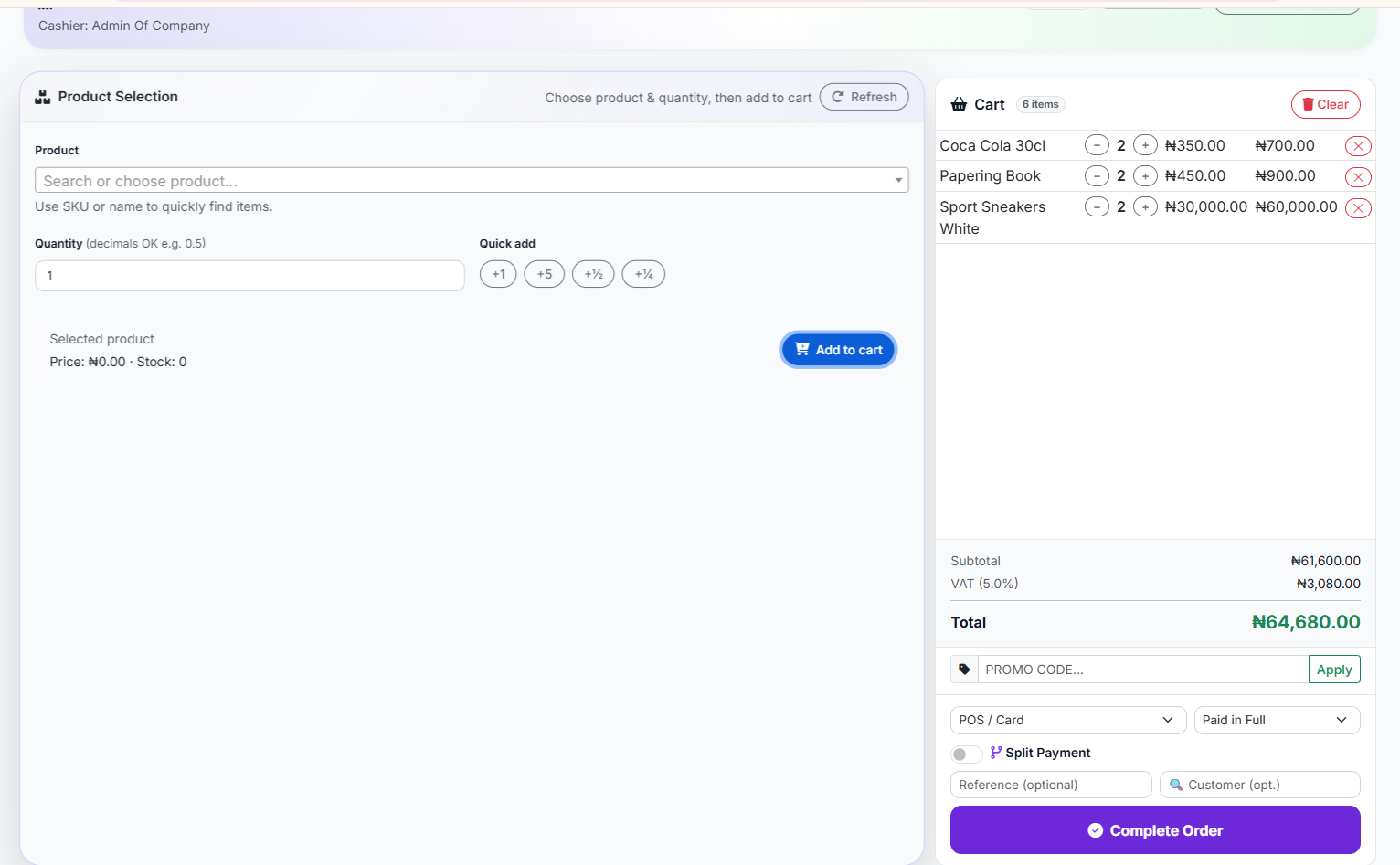 Classic POS Interface (List select)
A system that supports multiple payment methods, including cash, bank transfer, and mobile money, caters to diverse customer preferences, while features like split payments and credit sales tracking ensure flexibility. For a comprehensive overview of POS functionalities, check out our features page.
Step 2: Implement Robust Inventory Management
One of the biggest drains on retail profitability is poor inventory management. Stockouts lead to lost sales, while overstocking ties up capital and can result in waste. Building the habit of precise inventory control transforms these challenges into opportunities.
Start by accurately cataloging all your products. Each item should have a name, SKU, barcode, category, price, cost, current stock level, and minimum stock threshold. This detailed record forms the backbone of your inventory system. Use tools that allow for easy product addition and editing, and support product variants like different sizes or colors.
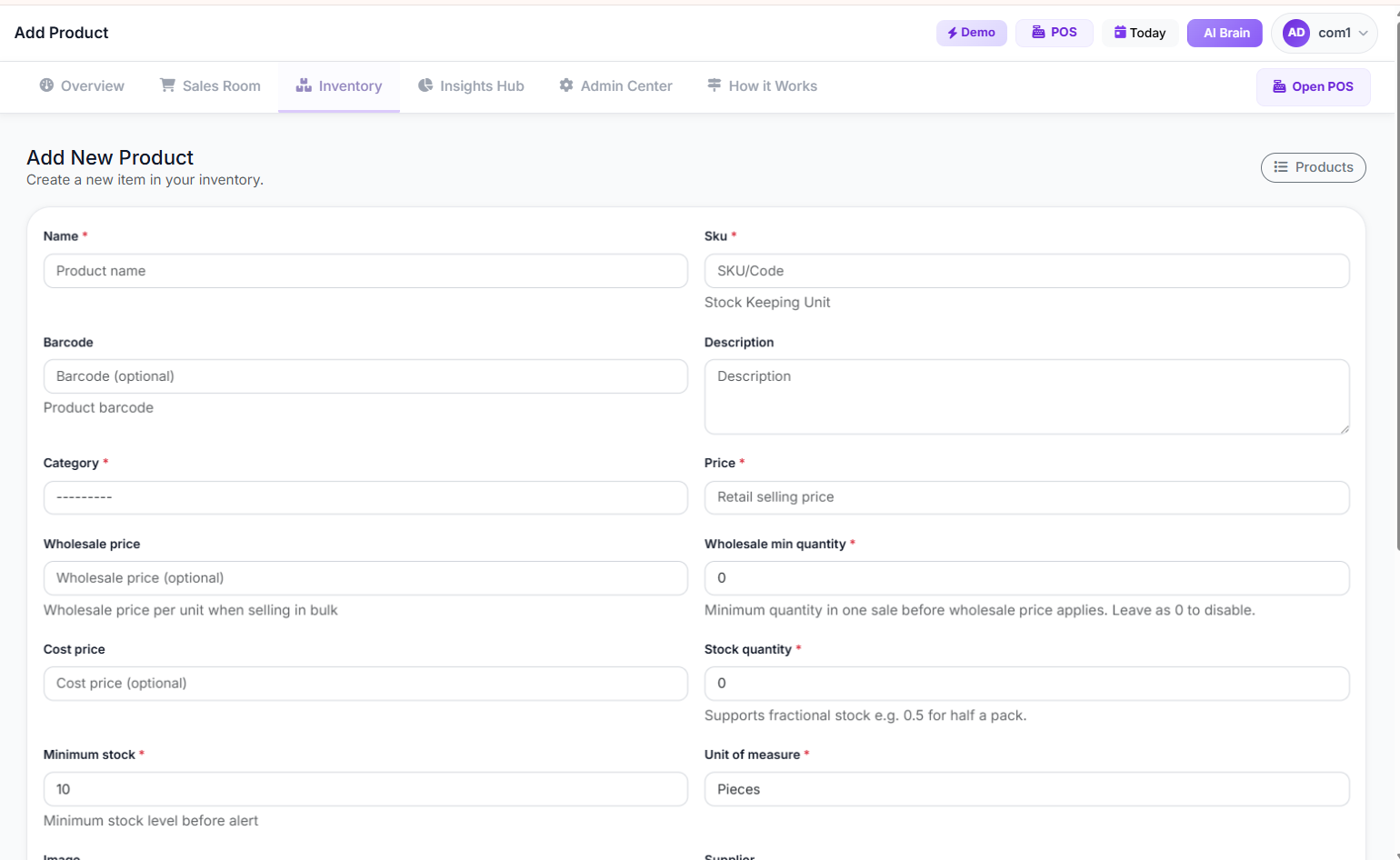 Add/Edit Product Page
Regular stock adjustments are crucial. Whether you're restocking, reducing damaged goods, or managing returns, every movement of goods in and out of your store needs to be logged. This creates an inventory transaction log that provides a clear history of your stock movements. For businesses with many products, bulk import features can save immense time during initial setup.
Step 3: Streamline Supplier and Purchase Order Processes
Inefficient supplier management can disrupt your supply chain and impact your cash flow. Building a habit of structured purchasing ensures you always have the right products at the right time, at the best prices.
Maintain a digital registry of all your suppliers, including contact information and payment history. When placing orders, use a system that allows you to create and track purchase orders (POs). This formalizes the ordering process, helps you monitor expected deliveries, and ensures accuracy.
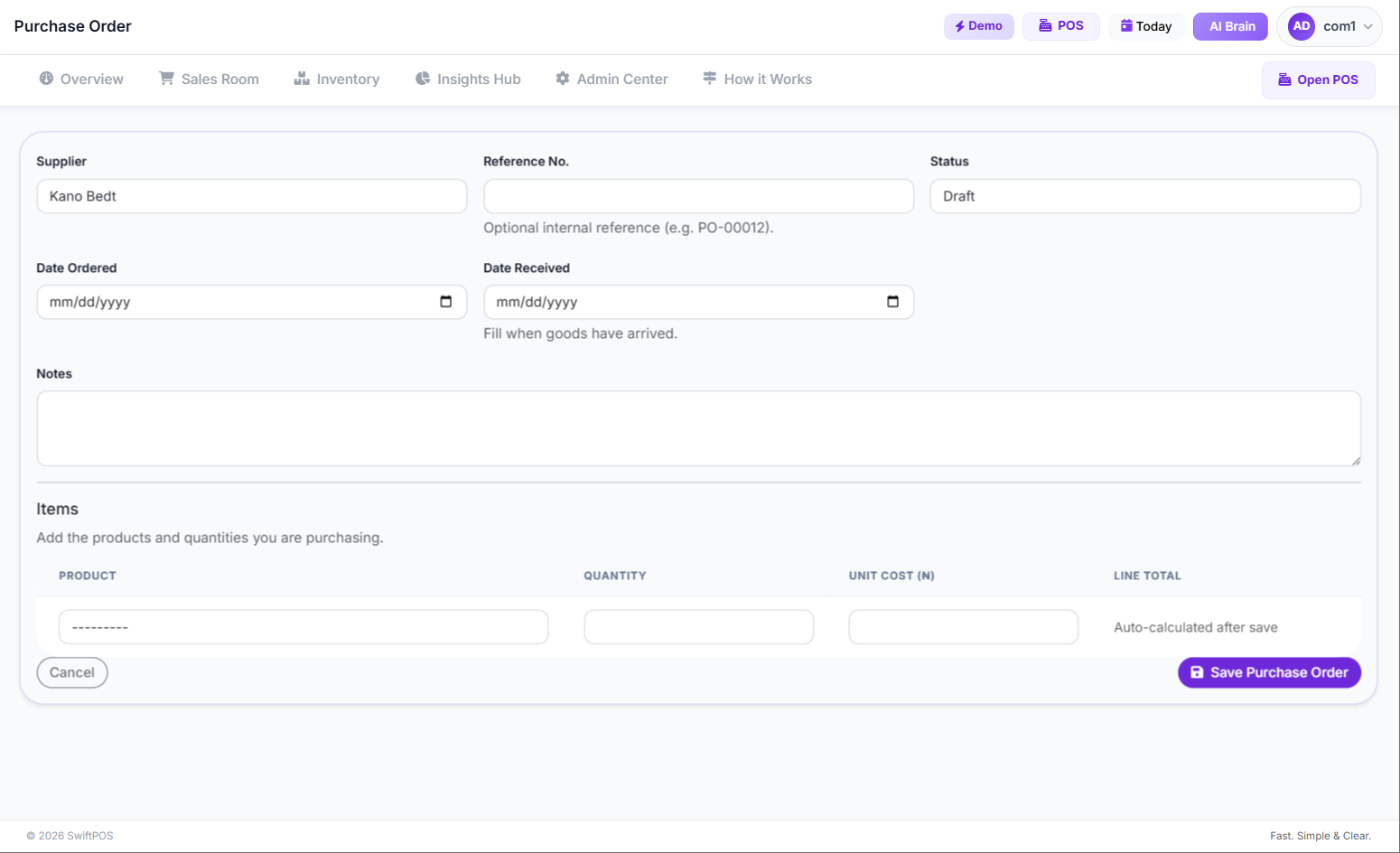 Supplier Puchse Order Page
Once goods are received, the system should automatically update your stock levels and cost prices. This integration prevents manual data entry errors and ensures your inventory records are always current. For businesses with multiple branches, managing inter-branch stock transfers efficiently is also a critical habit to develop to prevent stock imbalances.
Step 4: Embrace Data-Driven Sales Reporting
Guesswork has no place in a thriving retail business. The habit of regularly reviewing sales data provides invaluable insights into what's working, what's not, and where opportunities lie.
Your POS system should provide immediate access to daily sales dashboards, summarizing revenue, transactions, and top-selling products. Beyond daily summaries, delve into detailed transaction histories, payment summaries by method, and sales-by-item reports. These reports help you identify trends, understand customer preferences, and make informed decisions about purchasing and promotions.
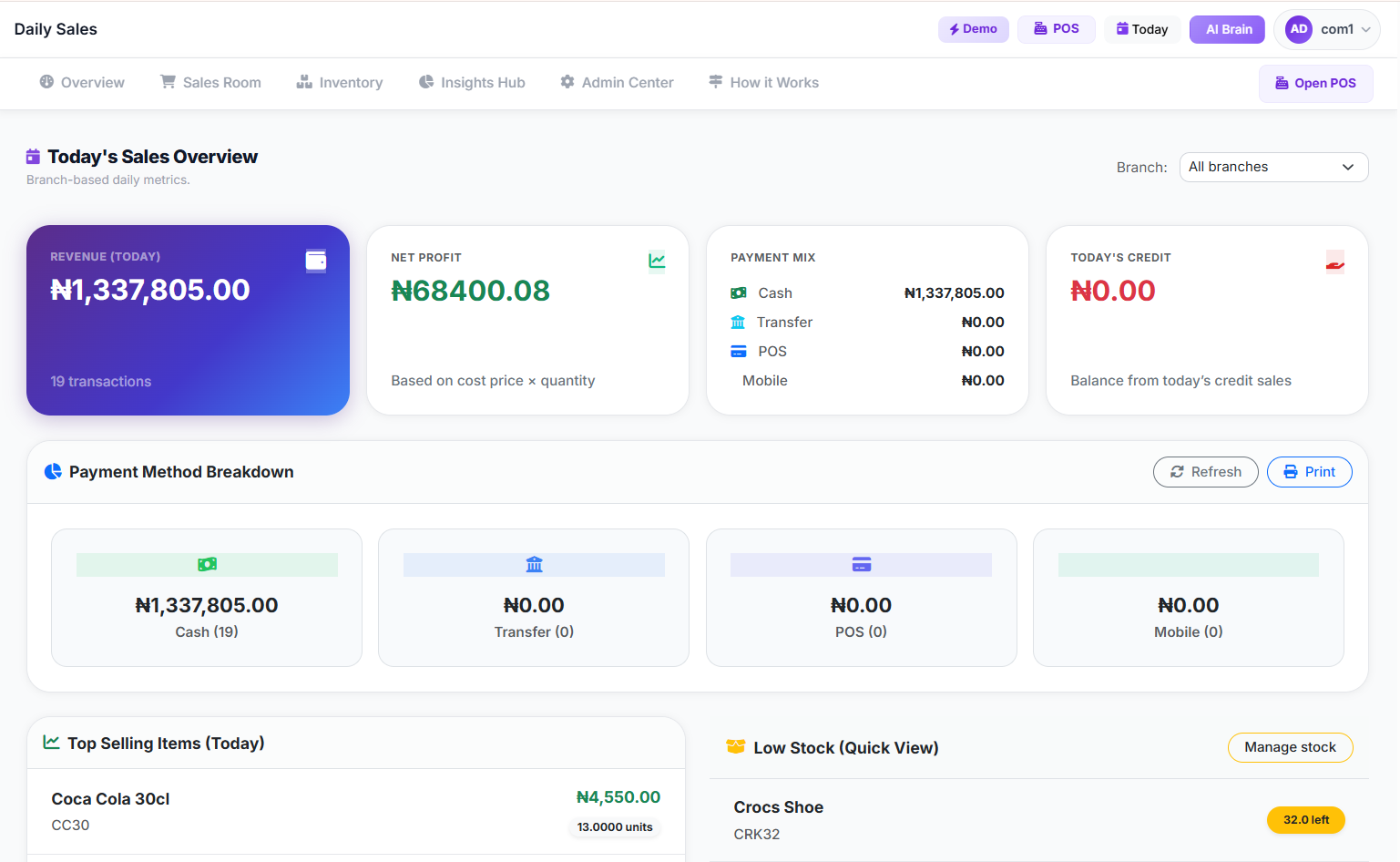 Today's Dashboard
A comprehensive reporting suite, including a profit and loss report, is essential for understanding your business's financial health. This helps you track revenue, cost of goods sold (COGS), gross profit, and operating expenses to determine your net profit. This level of financial visibility is crucial for sustainable growth.
Step 5: Leverage AI for Business Insights
In 2026, artificial intelligence is no longer a futuristic concept; it's a practical tool for small businesses. Cultivating the habit of using AI-powered insights can give you a significant competitive edge.
Look for a system that offers an AI Insights Dashboard. This feature can analyze your sales, inventory, and customer data to automatically generate actionable recommendations. For example, it might highlight products that are selling fast, suggest optimal restock quantities, or identify potential customer churn.
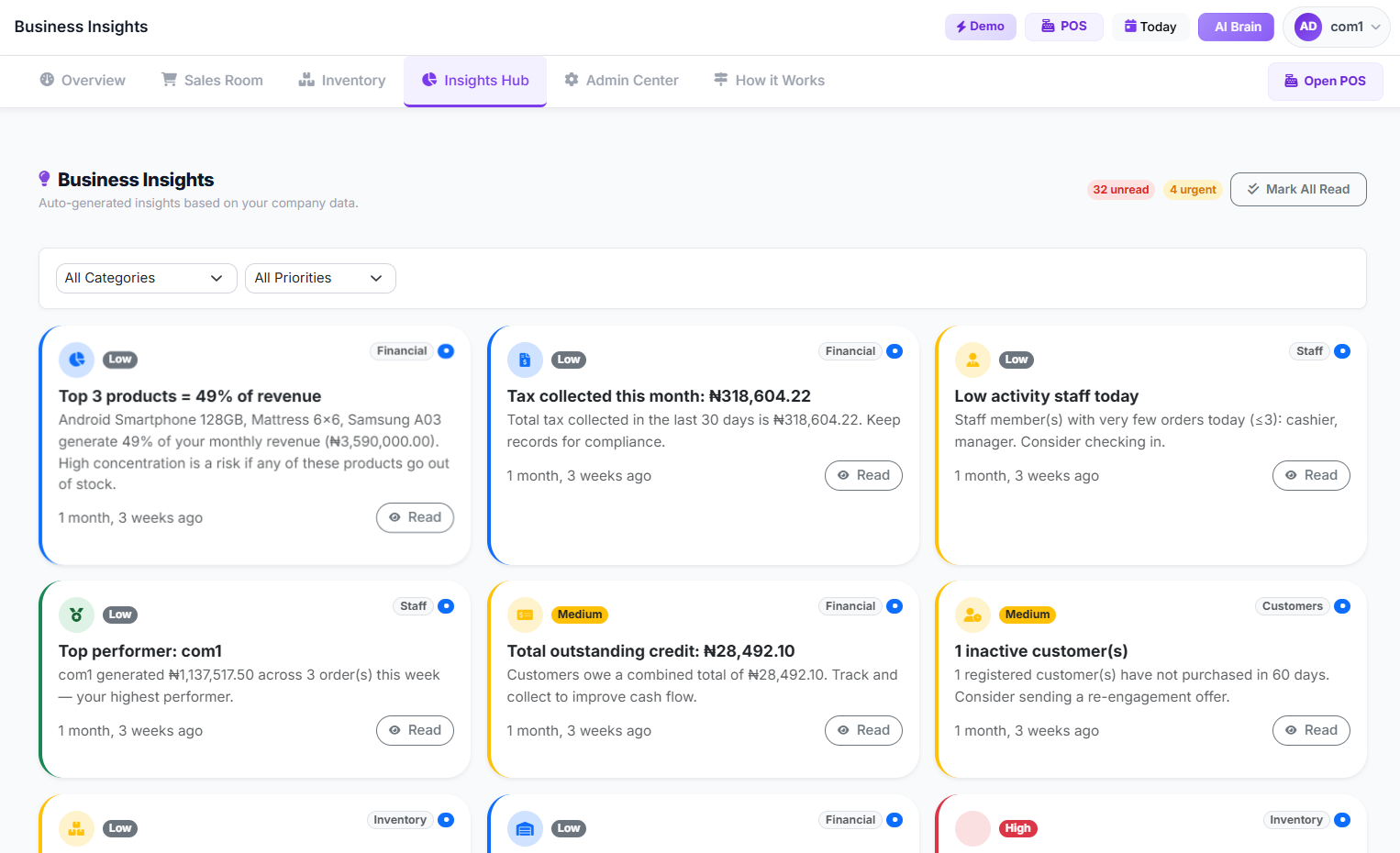 Business Insights Page
AI can also provide stock forecasts, predicting when you might run out of popular items based on average daily sales. This proactive approach helps you avoid stockouts and maintain consistent product availability. Integrating an AI assistant for conversational queries about your business data can further empower you and your staff to make smarter decisions.
Step 6: Optimize Customer Relationship Management
Building customer loyalty is a habit that pays dividends. Understanding your customers and catering to their needs fosters repeat business and positive word-of-mouth.
Maintain a digital customer registry with profiles including name, phone, email, and purchase history. This allows you to personalize interactions and track customer spending patterns. When a customer makes a purchase, quickly linking it to their profile helps build a rich history.
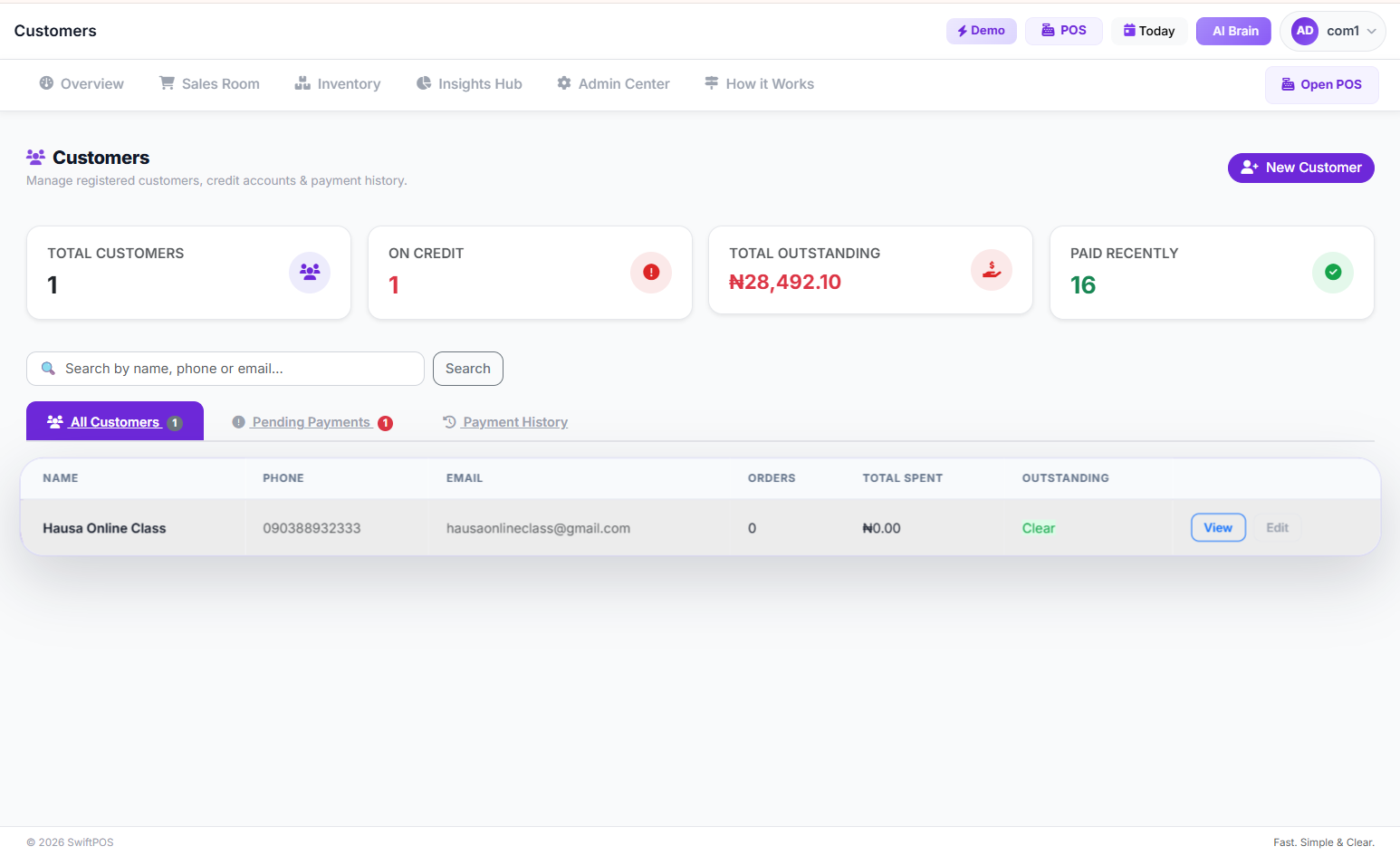 Customers List Directory
For businesses that offer credit, effectively managing customer credit sales and tracking outstanding balances is a critical habit. A system that provides a clear dashboard of credit customers and allows for easy recording of partial or full payments ensures financial accountability and strong customer relationships.
Step 7: Empower Your Team with Granular Controls
Your staff are on the front lines, and their efficiency directly impacts your business's success. Building habits around clear roles and responsibilities, backed by appropriate system access, is vital.
Implement a user management system that allows you to create distinct roles for your staff, such as cashiers, managers, and administrators. Each role should have specific permissions, ensuring employees only access the functions necessary for their job. This not only enhances security but also streamlines workflows.
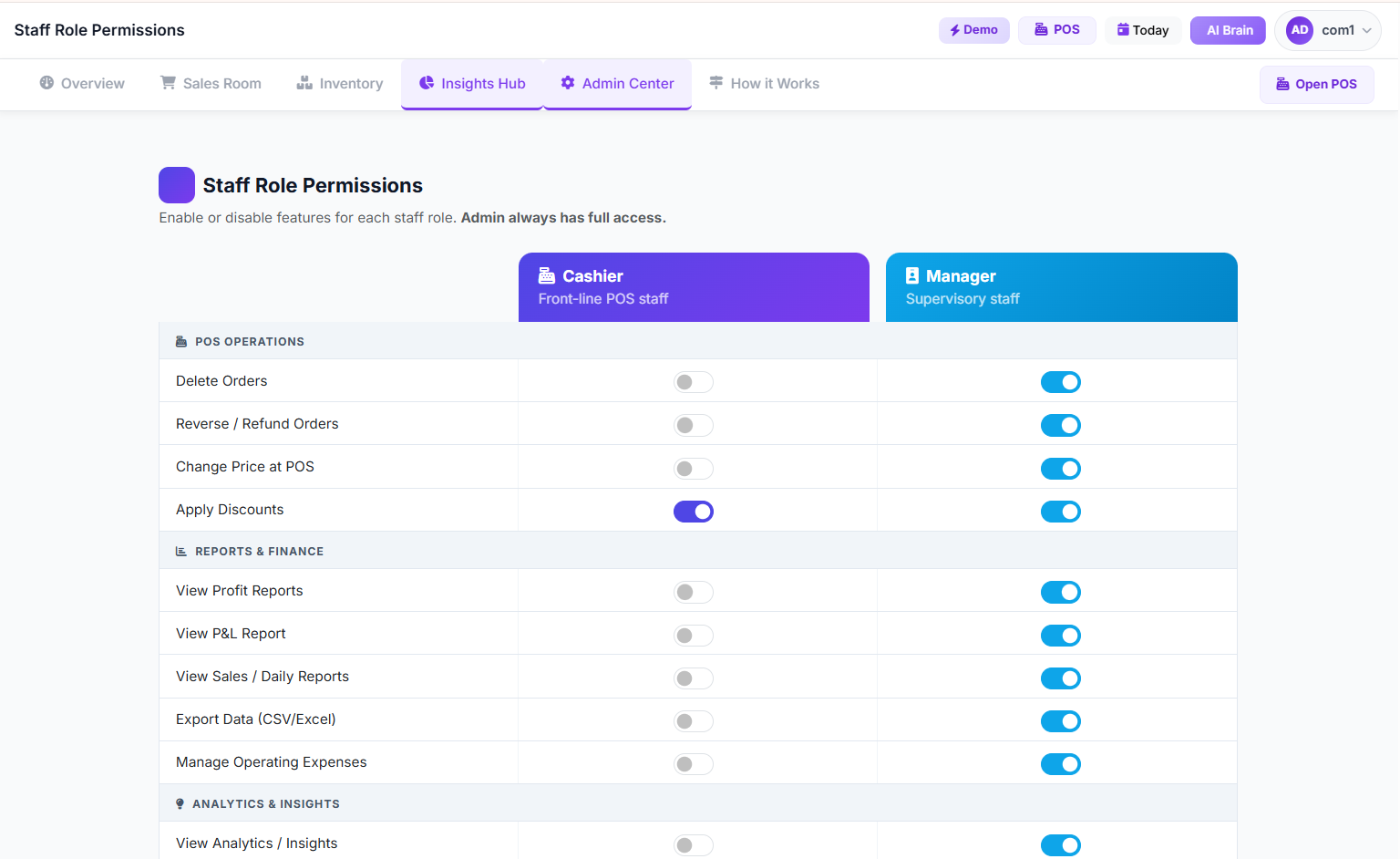 Staff Roler Permissions Page
For sensitive operations like refunds or stock adjustments, requiring a secondary PIN verification adds an extra layer of security. This habit of controlled access and accountability minimizes errors and prevents unauthorized actions, fostering a more trustworthy and efficient work environment.
Step 8: Establish Multi-Branch Management (If Applicable)
If your business operates across multiple locations, developing habits for centralized management is essential for consistency and control.
Set up each branch within your system, detailing its name, address, and contact information. Ensure that stock levels are tracked at a branch level, providing a clear picture of inventory at each location. This allows for efficient inter-branch transfers and prevents stock imbalances.
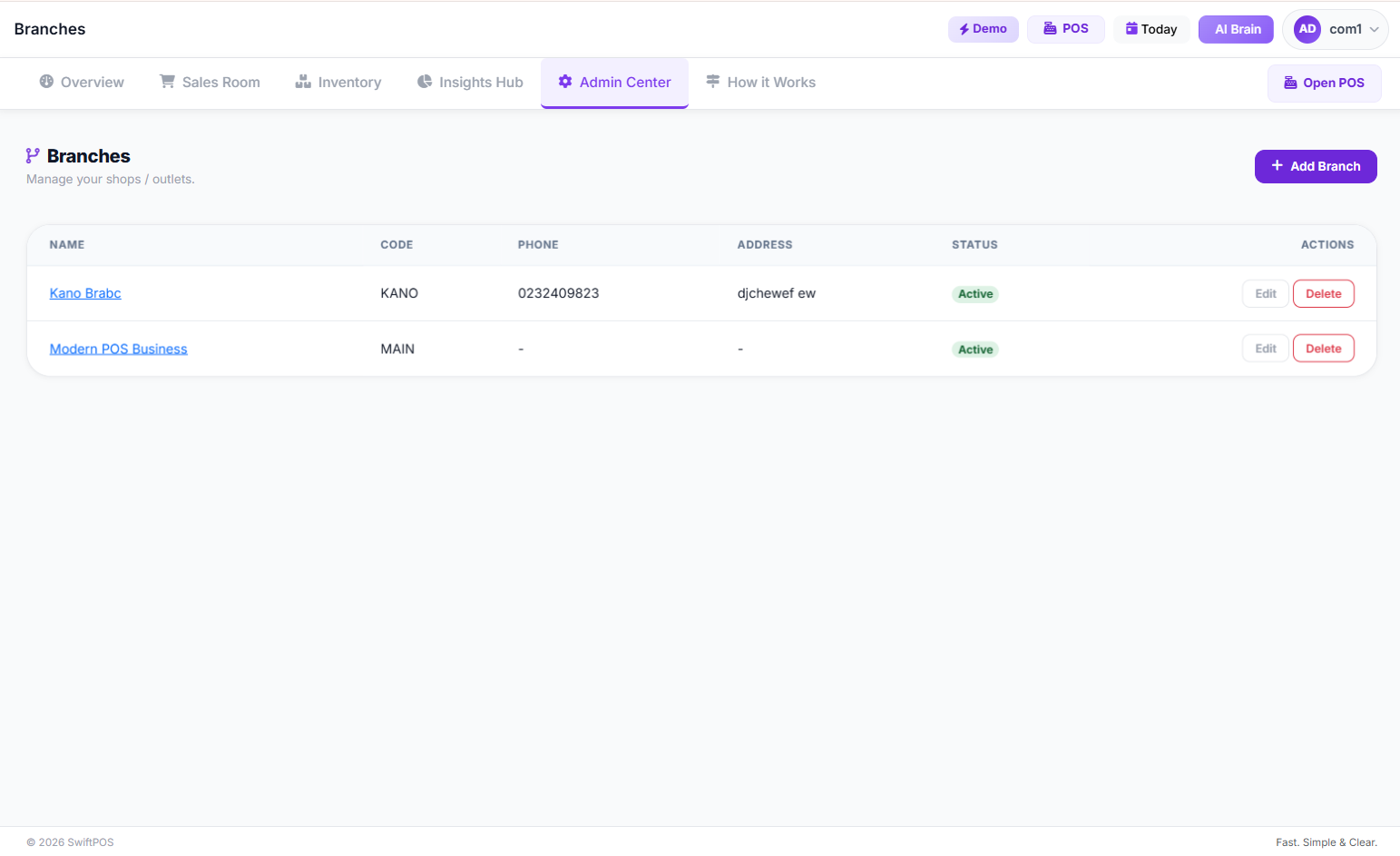 Branch Managemnet List Page
The habit of generating branch-specific reports for sales and inventory helps you understand the performance of each outlet independently. This localized data allows for tailored strategies and resource allocation, optimizing overall business performance.
Common Mistakes to Avoid
- Trying to Implement Everything at Once: Overwhelm is the enemy of habit formation. Start with one or two key areas, master them, and then gradually expand.
- Neglecting Staff Training: Even the most intuitive system requires proper training. Invest time in ensuring your team understands how to use new tools effectively.
- Ignoring Data: Simply collecting data isn't enough. The habit of analyzing and acting on insights is what drives improvement.
- Resisting Automation: Clinging to manual processes out of habit, even when automated solutions are available, will hold your business back. Embrace tools that simplify repetitive tasks.
- Lack of Regular Review: Habits need reinforcement. Regularly review your new processes and their impact to ensure they are serving your business goals.
- Failing to Adapt: The retail landscape is constantly changing. What works today might need adjustment tomorrow. Be flexible and willing to evolve your habits.
 Photorealistic editorial photography of a diverse team of small business owners collaboratively reviewing a digital dashboard on a large screen in a modern, well-lit office.
How to Track and Grow After Launch
After implementing your new habits and digital systems, the next crucial step is to continuously track your progress and identify opportunities for further growth.
Key Performance Indicators (KPIs) to Watch:
- Sales Revenue Growth: Track daily, weekly, and monthly sales figures to identify trends and measure the impact of new strategies.
- Average Transaction Value (ATV): Monitor if customers are buying more per visit.
- Inventory Turnover Rate: A healthy rate indicates efficient stock management. Too low, and you're overstocked; too high, and you might be missing sales.
- Stockout Rate: Aim to minimize instances where popular products are unavailable.
- Customer Retention Rate: How many customers return? Loyal customers are your most valuable asset.
- Profit Margins: Keep a close eye on your gross and net profit to ensure your business is financially healthy.
- Staff Performance Metrics: Track individual cashier sales and transaction counts to identify top performers and areas for additional training.
- Utilize AI Insights: Continuously consult your AI insights dashboard for automated recommendations on sales, inventory, and customer behavior. This proactive approach allows you to adjust quickly to market changes.
- Promotional Campaigns: Use data from your sales reports to identify slow-moving items or create targeted promotions for specific customer segments. Manage promo codes efficiently through your system.
- Customer Feedback: Actively solicit and respond to customer feedback to improve service and product offerings.
- Expand Product Offerings: Use sales data to identify gaps in your inventory or popular product categories to expand into.
- Optimize Pricing: Analyze sales data and competitor pricing to ensure your products are competitively priced while maintaining healthy margins.
- Employee Engagement: Recognize and reward staff who consistently adhere to new, efficient habits. Offer ongoing training and opportunities for skill development.
- Leverage Multi-Branch Data: If you have multiple locations, compare performance across branches to identify best practices and areas needing improvement.
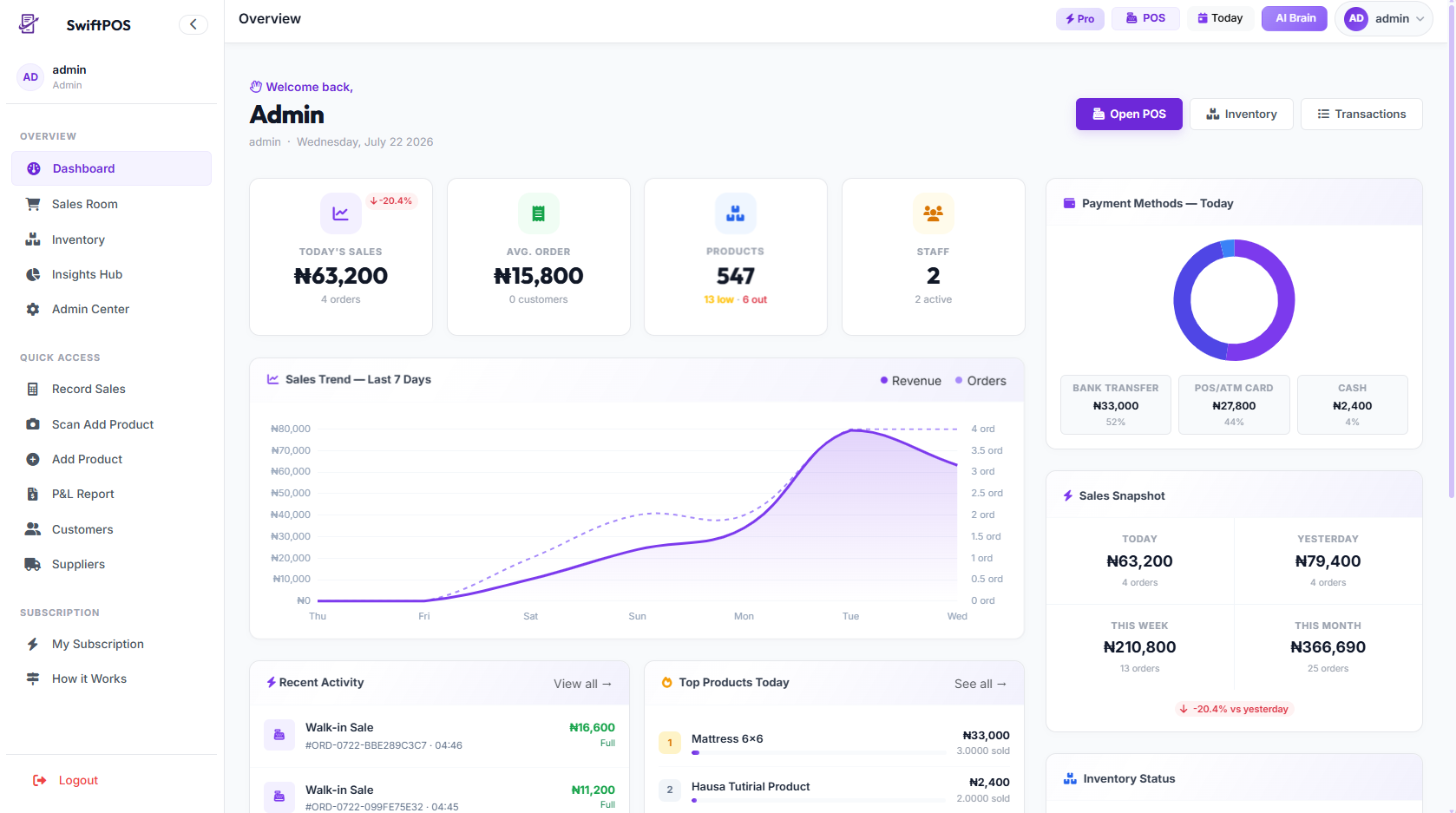 Dashboard Overciew 1:
 Many of these tracking and growth activities are significantly simplified by a comprehensive retail management system. For instance, the analytics and reporting features within SwiftPOS NG provide detailed dashboards, profit and loss reports, staff performance metrics, and even AI-powered insights to guide your growth strategy. You can explore how these tools work by checking out our tutorials.
Frequently Asked Questions
Q1: How long does it take to see results from implementing new business habits?
A1: The timeframe for seeing results varies depending on the habit and your business's starting point. Minor improvements, like faster transaction times with a new POS, can be immediate. More significant changes, such as improved inventory turnover or increased profit margins, might take several weeks to a few months to become evident as they involve broader operational shifts and data accumulation. Consistency is key.
Q2: Is it difficult to switch from manual record-keeping to a digital system?
A2: While any change requires an adjustment period, modern retail management systems are designed to be user-friendly. The initial setup, which might involve importing existing product data (often via Excel), can take some time. However, the long-term benefits of accuracy, efficiency, and real-time insights far outweigh the initial effort. Many platforms offer onboarding guides and customer support to ease the transition.
Q3: What if my staff are resistant to adopting new technology?
A3: Staff resistance is common. Overcome this by clearly communicating the benefits (e.g., easier work, fewer errors, better customer service), providing thorough training, and involving them in the transition process. Start with simple features and gradually introduce more complex ones. Demonstrating how the new system makes their jobs easier often helps. Granular user permissions also ensure they only see what's relevant to their role, reducing complexity.
Q4: How can I ensure data security with a cloud-based system?
A4: Reputable cloud-based retail management systems employ robust security measures, including data encryption, regular backups, secure servers, and multi-factor authentication for user logins. Always choose a provider with a strong track record in data security and compliance. Review their security policies, and ensure your staff also follow best practices for password management.
Q5: Can these habits also apply to online retail?
A5: Absolutely. While this guide focuses on brick-and-mortar retail, many principles, such as efficient inventory management, data-driven sales analysis, and customer relationship management, are equally vital for online businesses. A comprehensive system can often integrate both online and offline sales channels, providing a unified view of your entire operation.
Ready to Transform Your Retail Business?
Building unbreakable habits is the cornerstone of lasting self-improvement, not just for individuals, but for businesses too. By systematically implementing digital solutions and data-driven practices, you can move beyond manual chaos to a streamlined, profitable, and insight-led retail operation. If you're ready to empower your business with AI and useful insights, start your journey today.
You can download the SwiftPOS Android application here or visit the main SwiftPOS App for Companies here.
Contact us on WhatsApp: +2349164601810

How to Start a Food Business with Low Capital: A Step-…
Oct 01, 2026
Cost to Open a Mini Supermarket in Nigeria: A Detailed…
Sep 28, 2026
5 Best POS Systems for Small Businesses in Nigeria (20…
Sep 28, 2026