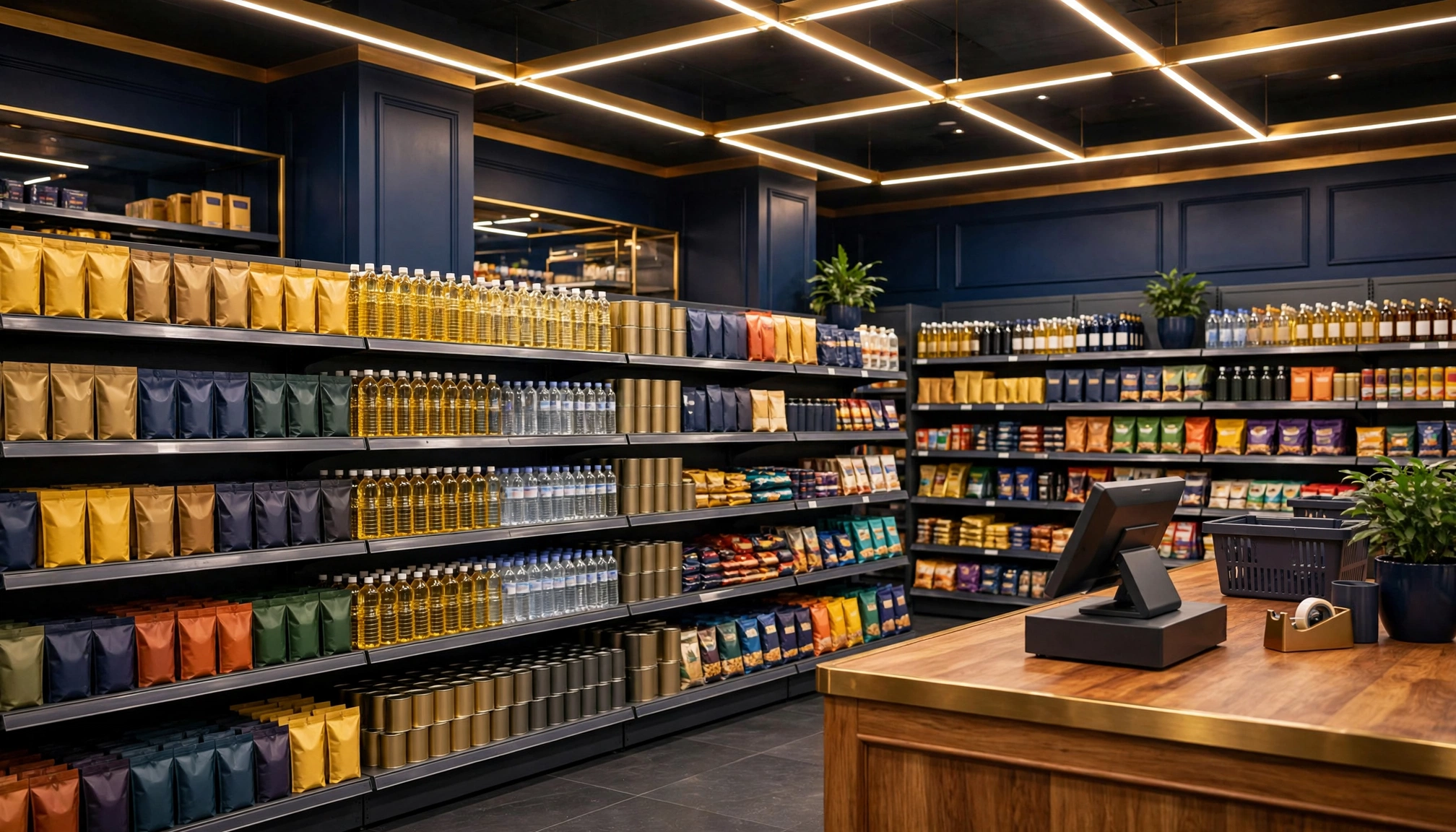
7 Key Retail Metrics Nigerian Businesses Must Track for Profit Growth
SwiftPOS Team
Published August 23, 2026

Are you constantly wondering why your retail business isn't as profitable as it could be, despite high sales volumes? Do you feel like you're working harder, not smarter, with endless manual records that offer little clarity? Many Nigerian retailers find themselves in this exact predicament, struggling to pinpoint the root causes of financial leaks and missed opportunities.
The Hidden Costs of Guesswork in Retail
Operating a retail business in Nigeria without precise data is like navigating a busy Lagos road blindfolded. You might get by for a while, but eventually, you'll hit a wall. In 2026, the retail landscape is more competitive than ever, with consumers expecting value and efficiency. Relying on intuition or basic pen-and-paper records means you're missing out on critical insights that could transform your bottom line.
Consider the ripple effects of not tracking key metrics. Overstocking slow-moving items ties up capital, while understocking popular products leads to lost sales and frustrated customers. Inaccurate sales data can lead to poor marketing decisions, and without understanding your profit margins per product, you might be pushing items that barely break even. A recent report by the Nigerian Bureau of Statistics indicated that small and medium enterprises (SMEs) contribute 48% of the national GDP, yet a significant number struggle with sustainability due to inadequate financial management and data utilization. This highlights a critical gap where better data tracking could make all the difference.
Sleek 3D illustration of interconnected data points forming a growth curve over a silhouette of NigeriaThe consequences extend beyond just money. Poor inventory management can damage supplier relationships and lead to expired goods. Inefficient staff deployment, due to a lack of performance data, can lower productivity and customer satisfaction. Ultimately, a lack of clear metrics means you're making decisions based on assumptions, not facts, leaving significant profit on the table.
The Smarter Approach: Data-Driven Retail Management
The solution lies in adopting a data-driven approach to retail management. Instead of merely recording transactions, you need to analyze them. This involves identifying and consistently tracking specific key performance indicators (KPIs) that provide a clear picture of your business's health and highlight areas for improvement. By understanding these metrics, you can make informed decisions about pricing, inventory, staffing, and marketing, ultimately driving sustainable growth and profitability.
This approach isn't just for large corporations; it's essential for small and medium-sized Nigerian businesses too. The beauty of modern retail technology is its accessibility and scalability. By focusing on essential metrics, retailers can move from reactive problem-solving to proactive strategic planning, anticipating market changes and optimizing operations before issues arise.
How SwiftPOS NG Helps You Master Your Retail Metrics
This is where a robust Point-of-Sale (POS) and retail management system becomes indispensable. SwiftPOS NG is designed to transform how Nigerian retailers manage their operations, providing the tools to effortlessly track the critical metrics discussed. From the moment a sale is made on its intuitive POS terminal, every piece of data is captured and integrated, offering a comprehensive view of your business.
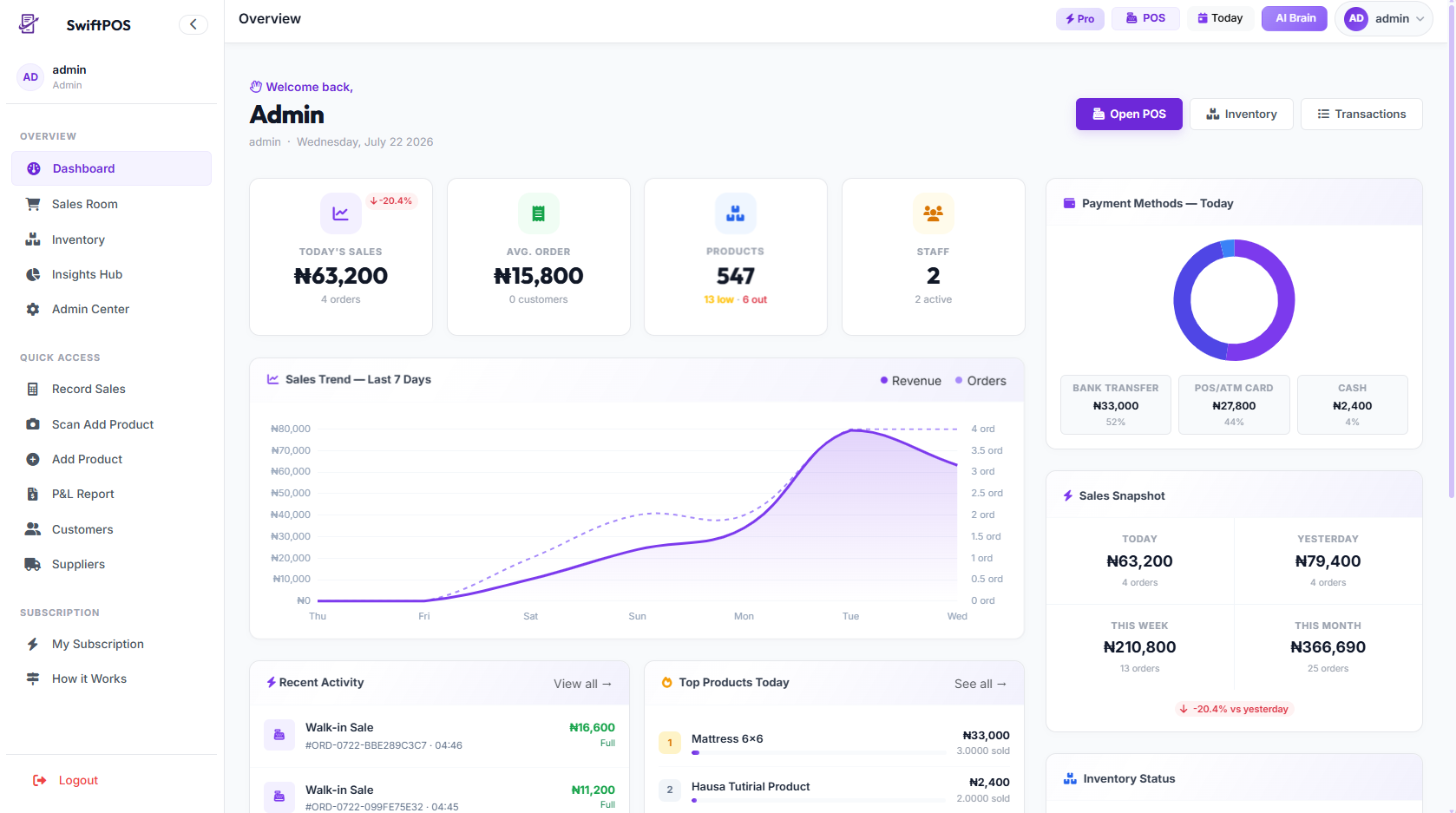 Dashboard Overciew 1:
 SwiftPOS NG streamlines inventory management, ensuring you know exactly what’s in stock, what’s selling, and what needs reordering. Its reporting features go beyond basic sales figures, providing detailed insights into product performance, customer behavior, and profit margins. With AI-powered business insights, SwiftPOS NG doesn't just present data; it helps you understand what that data means for your business, suggesting actionable steps to optimize operations and boost profitability. You can explore the full range of features designed to help your business thrive on the SwiftPOS NG features page.
 Sleek 3D illustration of a retail store owner confidently looking at a tablet displaying growth charts and data analytics, with products neatly organized in the background
The system also offers granular control over user roles, meaning managers can access detailed reports, while cashiers focus on efficient sales processing. This multi-tenant design ensures your data is isolated and secure, offering peace of mind while providing powerful insights. Managing your business end-to-end, from sales to
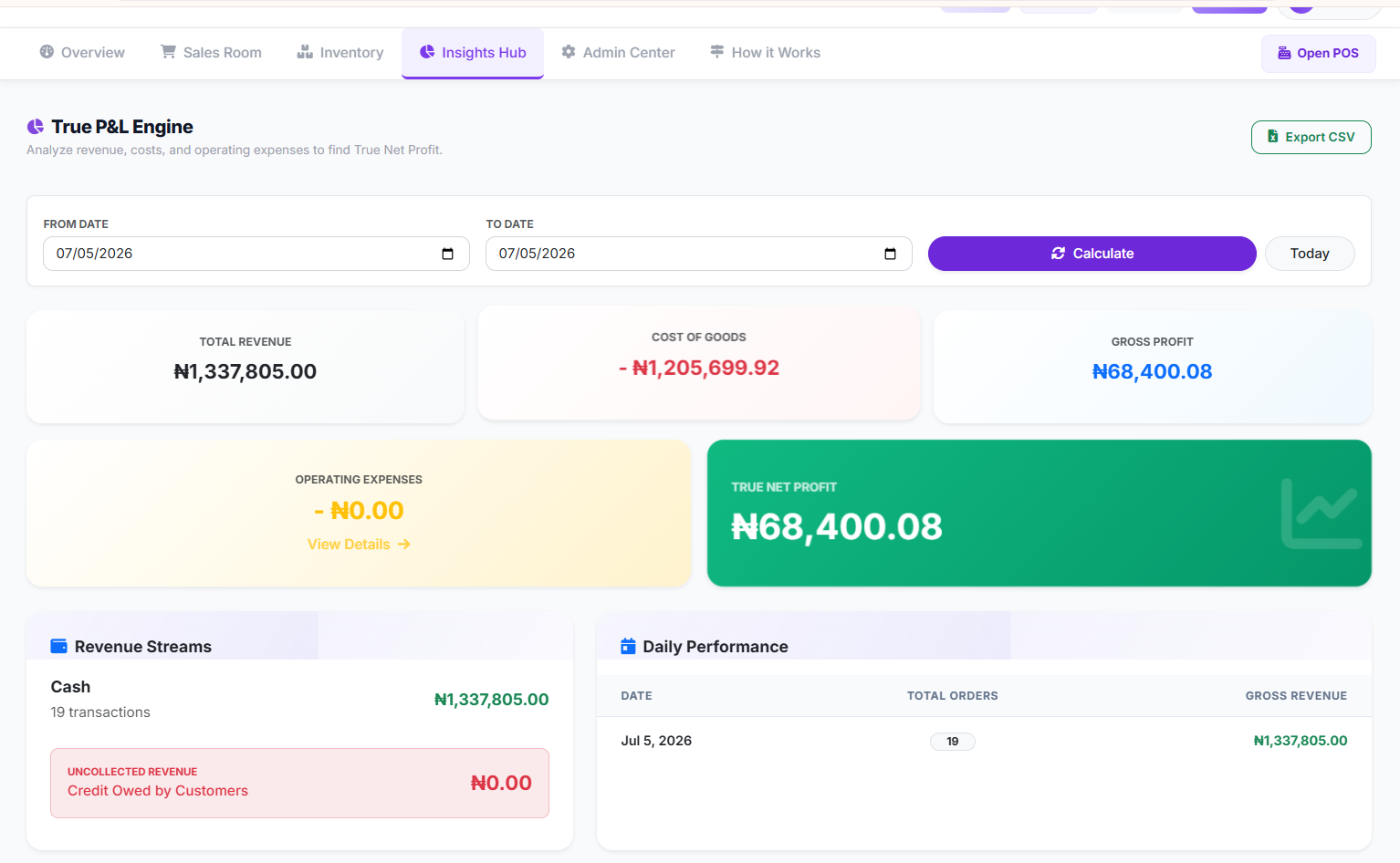 profit-and-loss reports
1. Sales Revenue and Growth Rate
What it is: The total income generated from sales over a specific period, and the percentage change in that revenue from one period to another.
Why it matters: This is your business's lifeline. Tracking it helps you understand overall performance and identify trends. A consistent growth rate indicates a healthy business.
How to track: Sum all sales transactions. Calculate growth as ((Current Period Revenue - Previous Period Revenue) / Previous Period Revenue) * 100.
Actionable insight: If revenue is stagnant, evaluate marketing strategies, product offerings, or pricing. If it's growing, identify what's working and scale it.
2. Gross Profit Margin
What it is: The percentage of revenue remaining after deducting the cost of goods sold (COGS). Formula: ((Revenue - COGS) / Revenue) * 100.
Why it matters: This metric reveals how efficiently you're converting sales into profit before operating expenses. A low margin means you're selling products for too little or buying them for too much.
How to track: Ensure accurate recording of product costs and selling prices.
Actionable insight: If your gross profit margin is declining, re-evaluate supplier costs, implement dynamic pricing strategies, or focus on selling higher-margin products.
Profit and Loss Page3. Inventory Turnover Rate
What it is: How many times your entire inventory is sold and replaced over a period. Formula: Cost of Goods Sold / Average Inventory Value.
Why it matters: A high turnover indicates efficient sales and less capital tied up in stock. A low turnover suggests slow-moving items, potential obsolescence, or overstocking.
How to track: Requires diligent inventory tracking, including cost and quantity.
Actionable insight: Optimize purchasing based on sales velocity. Run promotions on slow-moving items to clear stock. For more on managing inventory, check out the
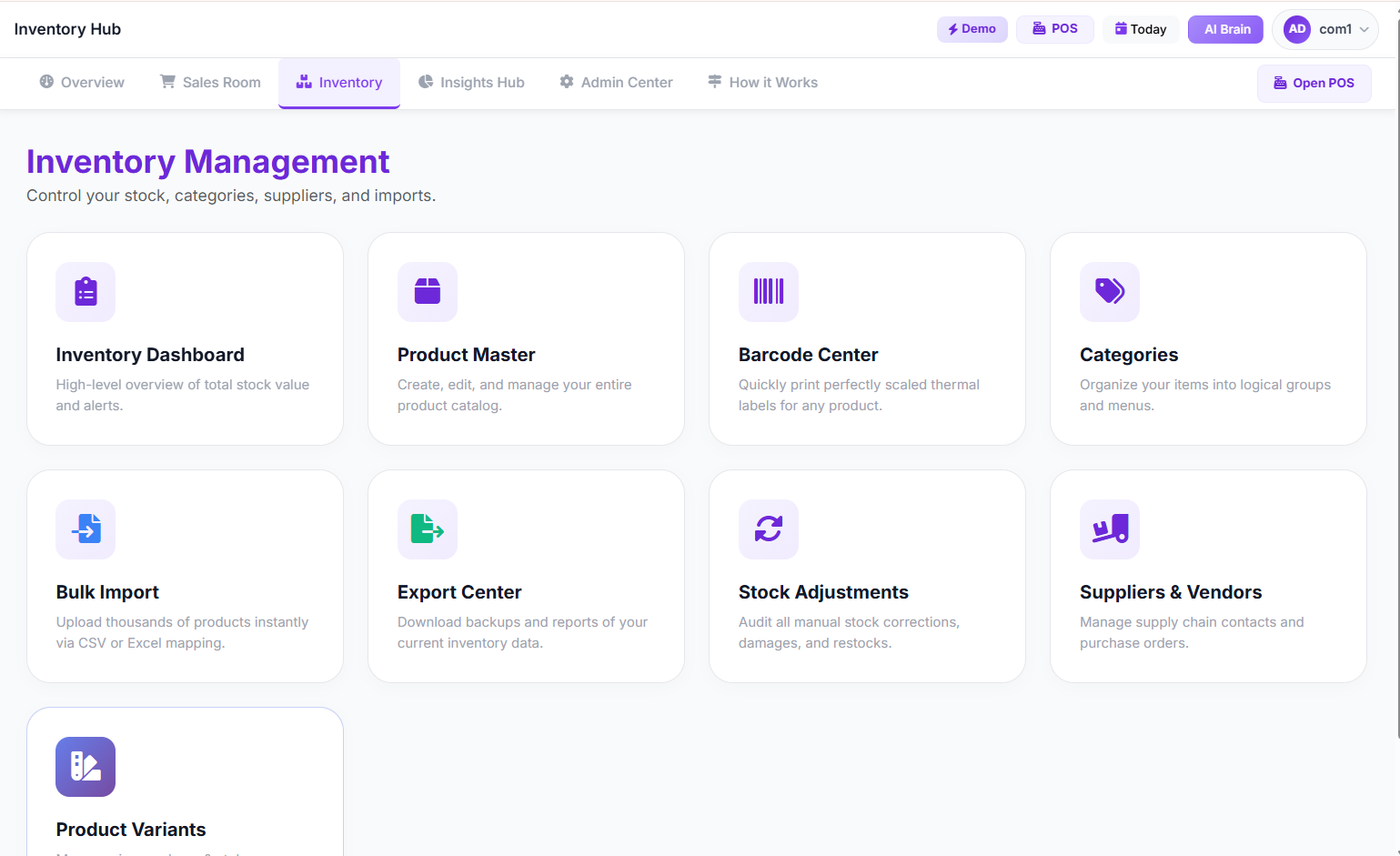 SwiftPOS NG inventory management hub
4. Average Transaction Value (ATV)
What it is: The average amount spent by a customer per transaction. Formula: Total Revenue / Number of Transactions.
Why it matters: Increasing ATV directly boosts revenue without necessarily increasing foot traffic.
How to track: Easily calculated from your total sales and transaction count.
Actionable insight: Implement upselling and cross-selling techniques. Offer bundle deals or loyalty programs that encourage larger purchases.
5. Customer Retention Rate
What it is: The percentage of customers who return to make repeat purchases over a specific period.
Why it matters: Acquiring new customers is often more expensive than retaining existing ones. Loyal customers are also more likely to refer others.
How to track: Requires a system to identify and track individual customer purchases over time.
Actionable insight: Enhance customer service, implement loyalty programs, and personalize marketing efforts to encourage repeat business.
6. Sell-Through Rate
What it is: The percentage of inventory received from a supplier that has been sold to customers. Formula: (Units Sold / Units Received) * 100.
Why it matters: Crucial for understanding product popularity and managing inventory efficiently. A high sell-through rate means you're accurately forecasting demand.
How to track: Compare sales data against stock received from purchase orders.
Actionable insight: Use this to inform future buying decisions, identify bestsellers, and mark down underperforming products.
7. Employee Performance (Sales Per Employee)
What it is: The average revenue generated by each employee over a period. Formula: Total Sales Revenue / Number of Employees.
Why it matters: Helps assess staff efficiency, identify top performers, and pinpoint training needs.
How to track: Requires assigning sales transactions to specific employees.
Actionable insight: Reward high performers, provide additional training for those struggling, or adjust staffing levels based on sales patterns. The
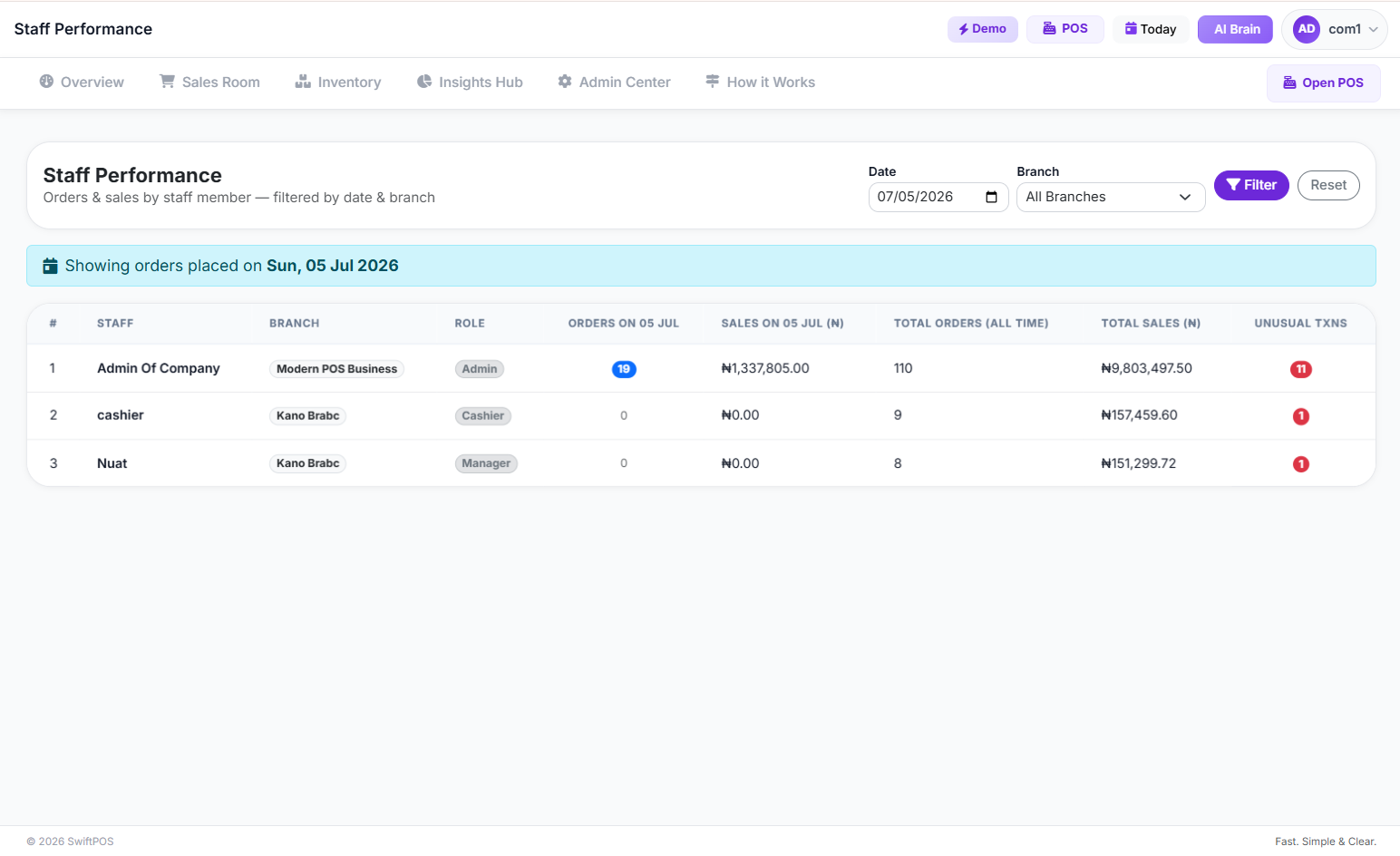 staff performance dashboard
 Photorealistic editorial photography of a diverse group of Nigerian retail staff collaborating effectively in a modern store, looking at a digital dashboard
> "What gets measured gets managed. What gets managed gets improved."
Proof: The Data-Driven Advantage
Understanding these metrics is one thing; effectively tracking and acting on them is another. Here’s how a modern POS system like SwiftPOS NG fundamentally changes the game compared to traditional, manual methods.
| Feature | Traditional Methods (Paper/Excel) | Modern POS System (e.g., SwiftPOS NG) |
|---|---|---|
| Data Collection | Manual entry, prone to errors, time-consuming | Automatic capture at point of sale, real-time |
| Sales Reporting | Basic totals, difficult to segment | Detailed reports by product, category, payment, cashier, time of day |
| Inventory | Physical counts, estimates, frequent discrepancies | Real-time stock levels, automated alerts, stock adjustments, barcode tracking |
| Profit Analysis | Requires manual calculations, often delayed | Automated P&L reports, gross margin per product, expense tracking |
| Customer Data | Limited records, difficult to analyze loyalty | Customer profiles, purchase history, loyalty tracking, credit management |
| Staff Insights | Subjective observation, rough estimates | Performance dashboards, sales per employee, transaction counts |
| Decision Making | Based on intuition or incomplete data | Data-driven insights, AI-powered recommendations, predictive analytics |
| Scalability | Challenging to expand, more errors with growth | Easily scales with multiple branches, centralized data |
| Time Efficiency | High administrative overhead | Significant time savings, staff focus on sales and service |
Frequently Asked Questions
Q1: I currently use pen and paper for everything. Is a POS system too complex for my business?
A1: Not at all. Modern POS systems like SwiftPOS NG are designed with user-friendliness in mind, even for those new to technology. They often feature intuitive interfaces and comprehensive tutorials to guide you through setup and daily operations. The goal is to simplify, not complicate, your business management.
Q2: How much does a good POS system cost, and is it affordable for small businesses in Nigeria?
A2: The cost varies depending on features and subscription plans. Many systems offer tiered pricing, making them accessible for businesses of all sizes. SwiftPOS NG, for example, provides flexible subscription options to suit different business needs and budgets. You can check out our pricing page for more details.
Q3: Can a POS system help me manage multiple branches?
A3: Absolutely. One of the significant advantages of cloud-based POS systems is their ability to centralize data from multiple branches. This allows you to monitor sales, inventory, and staff performance across all your locations from a single dashboard, giving you a unified view of your entire operation.
Q4: What if I don't have constant internet access in my shop?
A4: Many modern POS systems, including SwiftPOS NG, offer offline capabilities. This means you can continue to process sales even without an internet connection, and the data will sync automatically once connectivity is restored, ensuring no sales are lost and your records remain accurate.
Q5: How can a POS system help me prevent theft or fraud in my business?
A5: POS systems offer several security features. They track every transaction, allowing you to identify discrepancies, voids, or unusual activities. Features like user permissions restrict access to sensitive functions, and audit logs provide a detailed record of all actions taken within the system. SwiftPOS NG includes
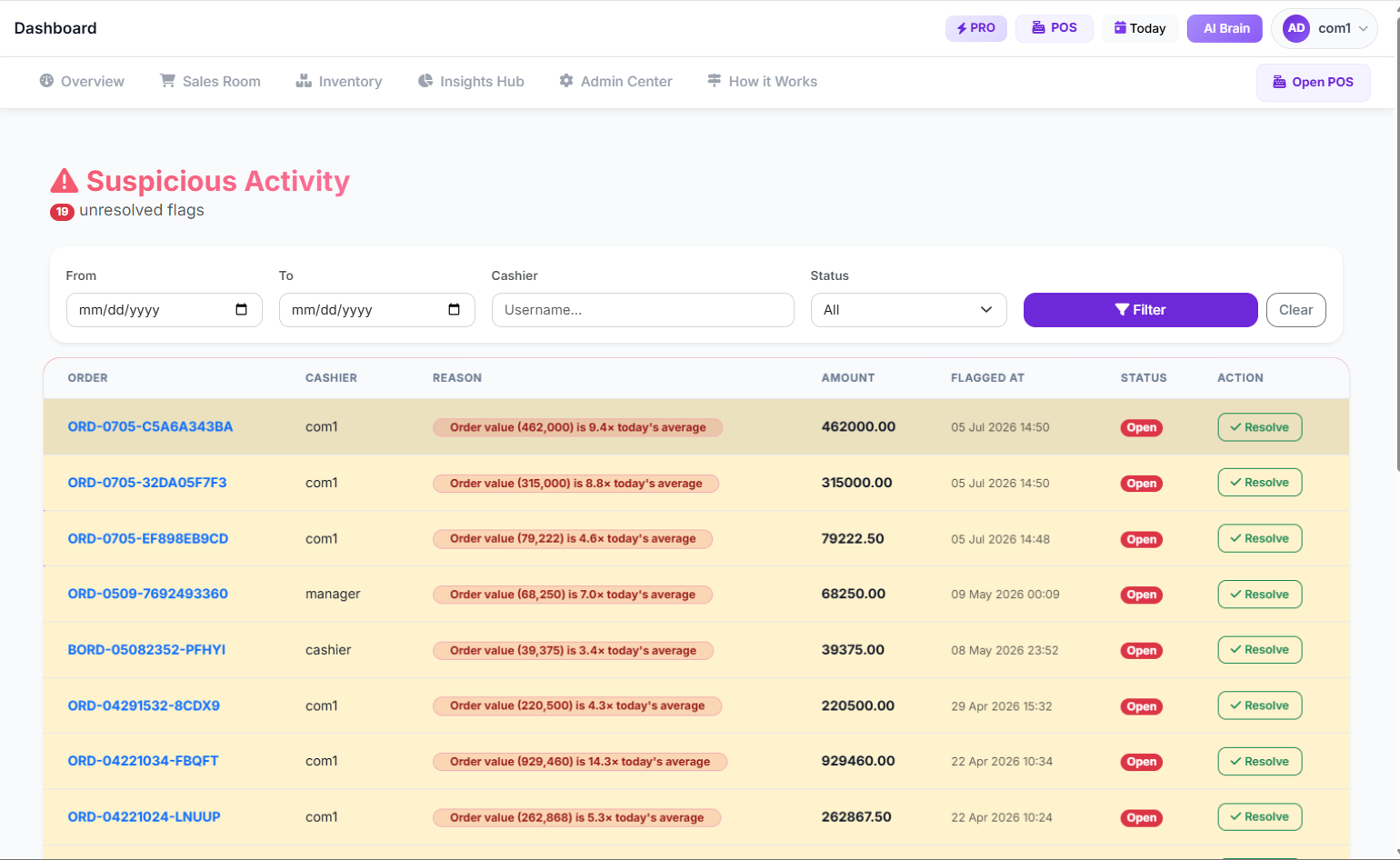 suspicious activity detection
Ready to Transform Your Retail Business?
Stop guessing and start growing. Take control of your retail operations with data-driven insights. Discover how SwiftPOS NG can simplify your daily tasks, optimize your inventory, and boost your profitability.
Contact us for more information on how we can help your business thrive: WhatsApp: +2349164601810

How to Know If Your Business Is Actually Profitable: A…
Oct 08, 2026
How to Stop Cash Leakage in Your Business: A Comprehen…
Oct 04, 2026
How to Start a Food Business with Low Capital: A Step-…
Oct 01, 2026