Multi-Branch Retail: Guide to Seamless Operations & Profitability
SwiftPOS Team
Published September 02, 2026
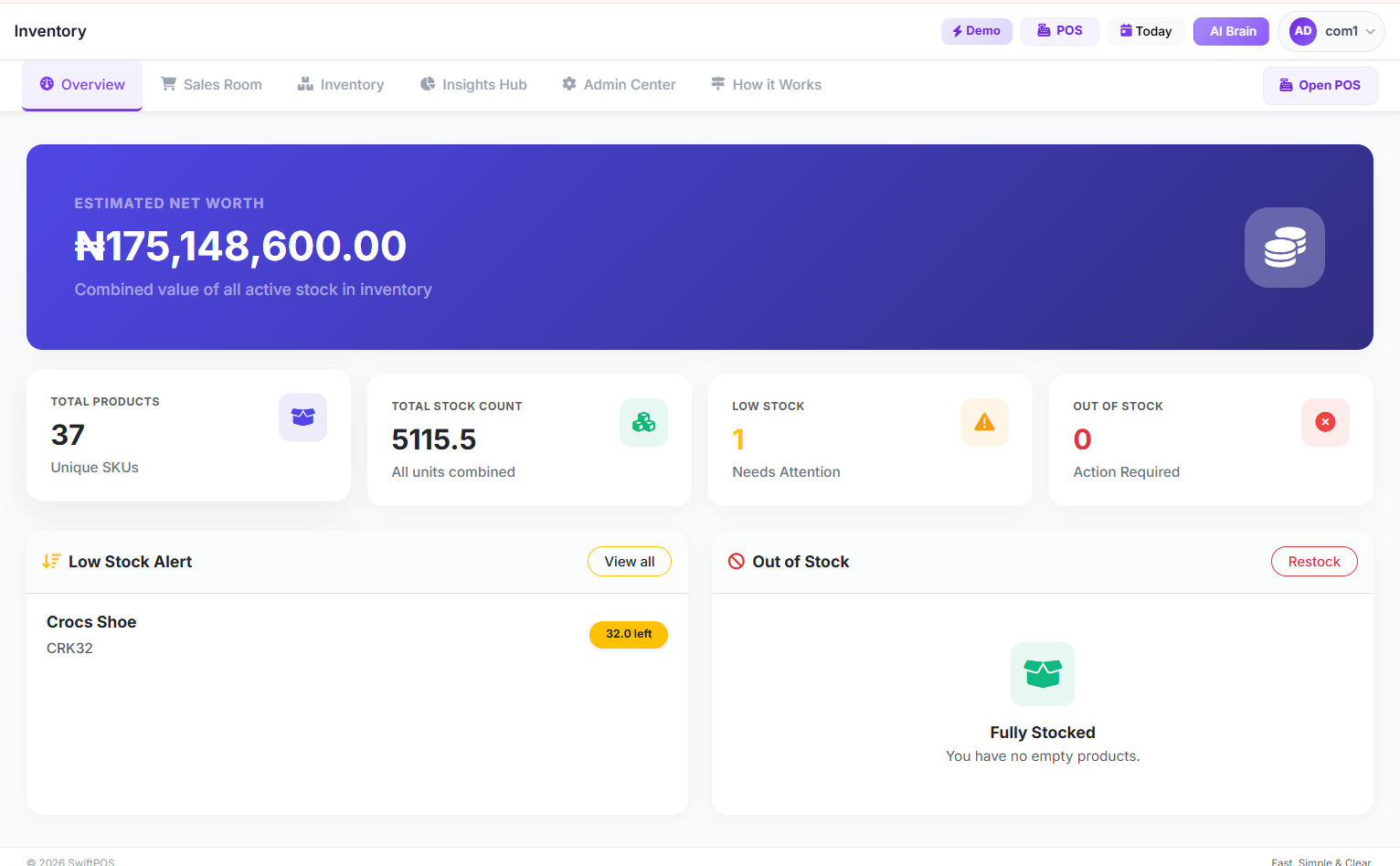
Managing a single retail store is challenging enough, but scaling to multiple branches often multiplies those complexities, leading to inconsistent inventory, disjointed sales data, and a constant struggle to maintain brand standards across locations. Without a unified system, growth can quickly turn into chaos.
The Evolving Landscape of Multi-Branch Retail in 2026
The retail sector in Nigeria and globally is experiencing rapid transformation in 2026. Data from the National Bureau of Statistics (NBS) indicates a steady increase in consumer spending, driving many small-to-medium enterprises (SMEs) to expand their footprint. However, this expansion comes with its own set of challenges. A recent report by Accenture found that 72% of multi-branch retailers struggle with inventory accuracy across locations, directly impacting profitability and customer satisfaction. Furthermore, maintaining consistent pricing, promotions, and staff training across disparate branches without centralized oversight can dilute a brand's value and operational efficiency. The market demands agility, real-time insights, and seamless integration to thrive, making manual record-keeping or basic spreadsheets obsolete for businesses aiming for sustainable growth.
What You Need Before You Start
Embarking on a multi-branch retail journey requires careful preparation. Before expanding or optimizing your existing branches, ensure you have the following in place:
- Clear Business Objectives: Define what you aim to achieve with each new branch or optimization effort. Is it market penetration, increased revenue, or improved customer reach?
- Adequate Capital: Expansion requires significant investment in rent, inventory, staffing, and technology. Ensure your financial projections are realistic.
- Standardized Operating Procedures (SOPs): Document every aspect of your daily operations, from opening and closing procedures to customer service protocols and inventory handling. This is crucial for consistency across branches.
- Reliable Internet Connectivity: For modern POS and inventory systems, stable internet is non-negotiable at every location.
- Trained Staff: Invest in training your managers and staff on your products, customer service standards, and any new systems you implement.
- A Centralized Retail Management System: A robust platform that can connect all your branches, providing real-time data and control.
Step-by-Step: Multi-Branch Retail: Guide to Seamless Operations & Profitability
Step 1: Centralize Your Product and Inventory Management
The cornerstone of successful multi-branch retail is a single, accurate view of your entire product catalog and inventory levels. Without this, you risk stockouts at one branch while another is overstocked, leading to lost sales and increased holding costs.
Start by creating a master product list that includes all essential details: name, SKU, barcode, category, cost, selling price, and minimum stock levels. For businesses with product variations like size or color, ensure these are meticulously tracked. Implement a system for managing product categories effectively, which can be colour-coded and icon-labelled for easy identification across all stores.
Inventory DashboardCrucially, you need a system that offers branch-level stock tracking, where each product's stock is recorded per branch, and the global stock is the sum of all branch holdings. This allows for precise inventory visibility. Tools like SwiftPOS offer robust inventory management features, including product variants, bundles, and comprehensive stock adjustment capabilities, ensuring that every item is accounted for, regardless of its location.
Step 2: Implement a Unified Point-of-Sale (POS) System
A fragmented POS system across branches is a recipe for operational headaches. Each branch needs a consistent, efficient way to process sales, handle payments, and manage customer interactions. This includes support for various payment methods (cash, bank transfer, card, mobile money), credit sales, and the ability to apply discounts or promo codes uniformly.
Choose a POS system that offers multiple interfaces, such as a classic list-style POS or a smart grid POS for faster transactions, adaptable to different store environments. Barcode scanner compatibility is also essential for speeding up checkout and reducing errors. The system should also support offline order processing to prevent disruptions during internet outages. A unified POS system ensures that all sales data flows into a central database, giving you a holistic view of your business performance.
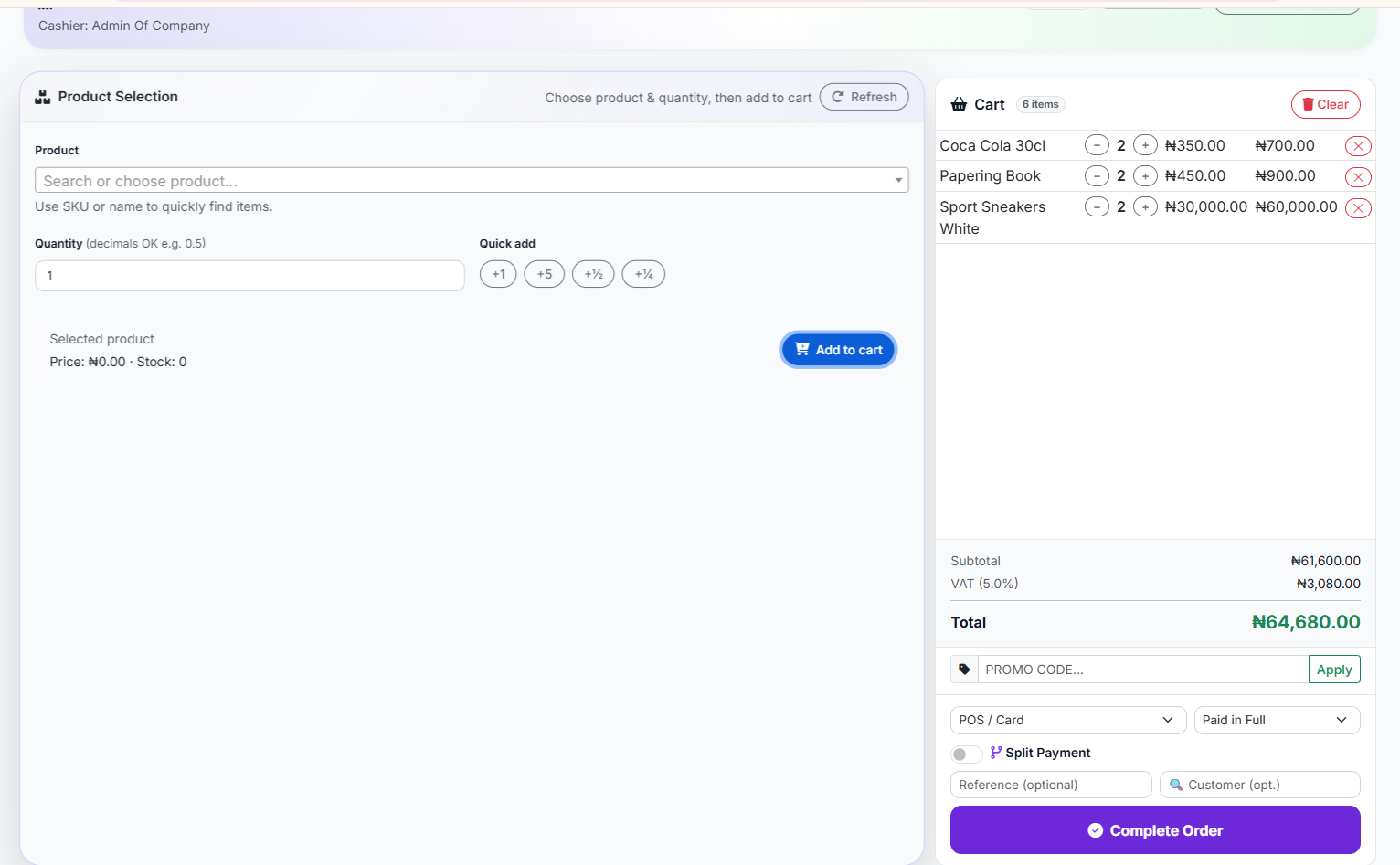 Classic POS Interface (List select)
Step 3: Streamline Inter-Branch Stock Transfers
Efficient movement of goods between branches is vital for optimizing inventory and fulfilling customer demand. This process should be transparent and trackable. Establish clear procedures for initiating, approving, and receiving stock transfers.
Your chosen retail management system should facilitate this by allowing you to create purchase orders (POs) for internal transfers, mark them as "ordered" and then "received," with stock levels automatically updating at both the sending and receiving branches. This atomic debit/credit system prevents discrepancies and provides an audit trail for all stock movements. This capability is critical for maintaining healthy stock levels across your entire network.
Step 4: Centralize Customer Relationship Management
Understanding your customers across all branches is powerful. A centralized customer registry allows you to track customer profiles, purchase history, and outstanding balances from any location. This means a customer who shops at Branch A can have their loyalty points or credit sales recognized at Branch B.
Implement a system where customer profiles include name, phone, email, address, and notes, with the ability to link customers to sales at the POS. This not only enhances the customer experience but also provides valuable data for targeted marketing and loyalty programs.
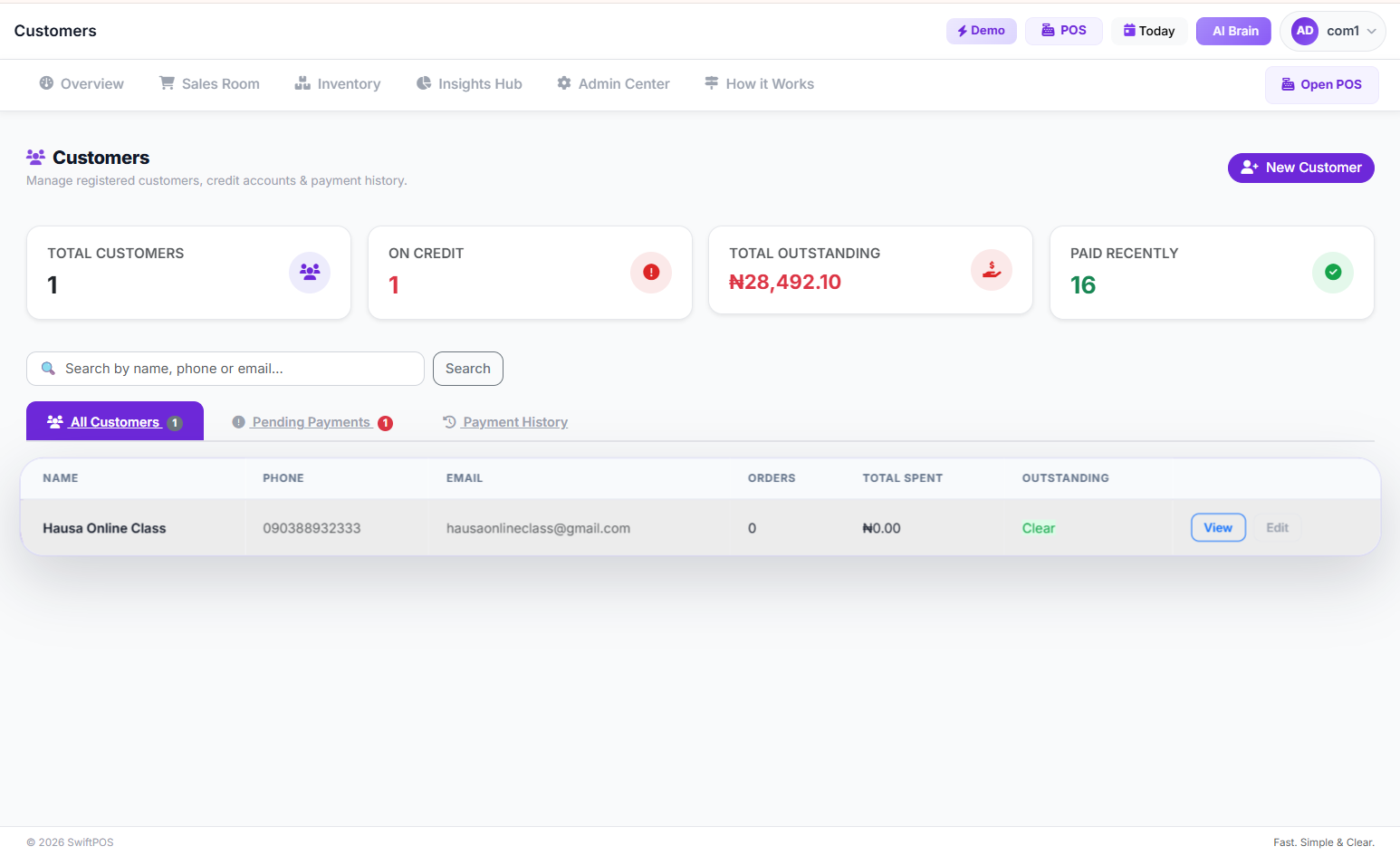 Customers List Directory
Step 5: Leverage Data for Smarter Decision-Making
Collecting data is only half the battle; leveraging it for actionable insights is where true profitability lies. With multiple branches, the volume of data can be overwhelming. You need a system that consolidates sales, inventory, and customer data into intuitive reports and dashboards.
Look for features like daily sales dashboards, profit and loss reports, sales by item, and staff performance metrics. Advanced systems can even provide AI-powered business insights, automatically highlighting trends, potential issues, and growth opportunities. This allows you to identify top-performing products, underperforming branches, and optimize staffing schedules, all from a single interface. Access to such comprehensive reporting and analytics is a key benefit of modern retail management platforms.
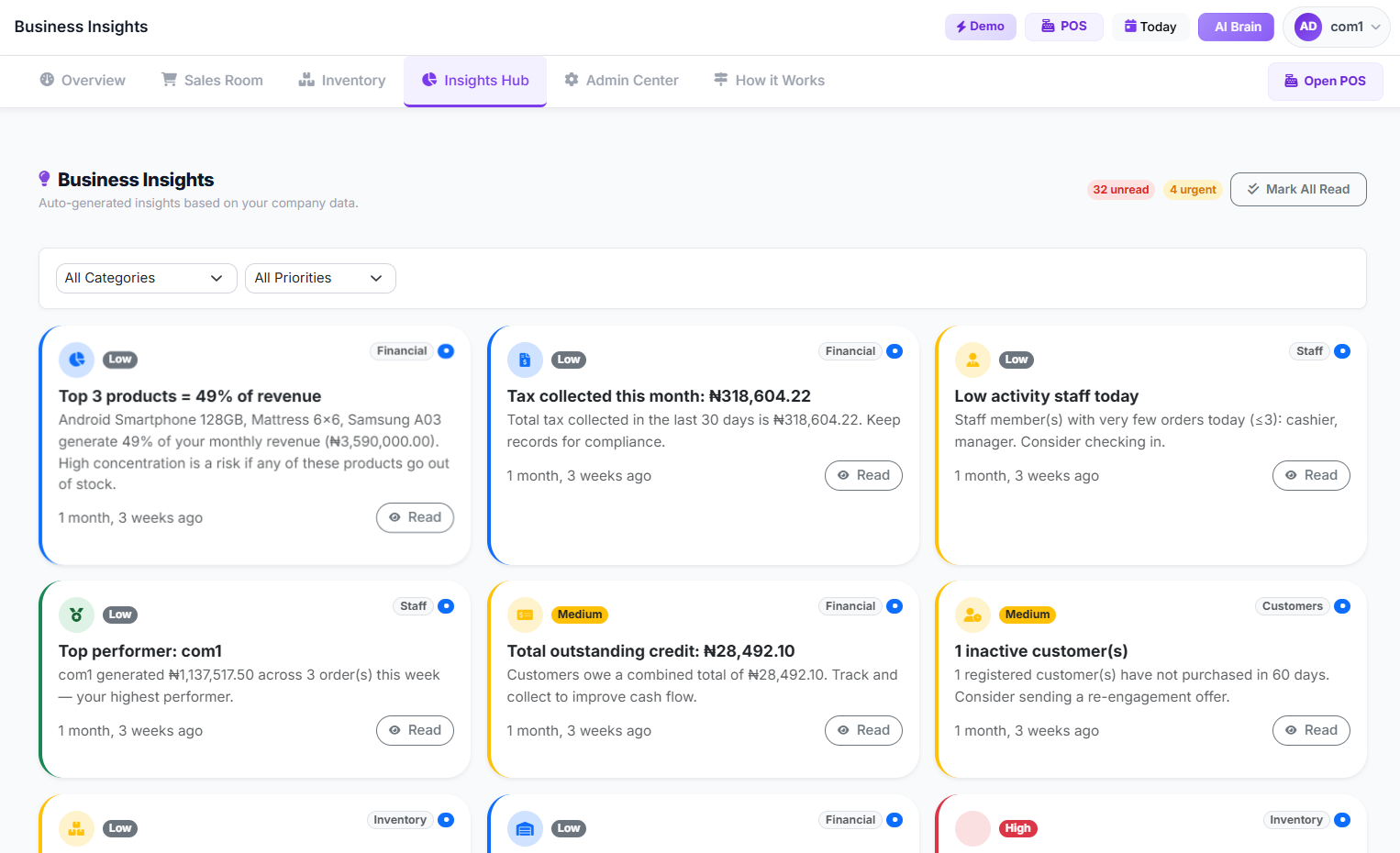 Business Insights Page
Step 6: Define and Manage Staff Roles and Permissions
With multiple branches and various staff members, controlling access to sensitive data and functions is paramount. Implement a robust user management system that allows you to create staff accounts, assign specific roles (e.g., cashier, manager, admin), and define granular permissions for each role.
For instance, a cashier at one branch might only be able to process sales and view their own transactions, while a manager could access reports and manage products within their assigned branch. An administrator, on the other hand, would have full oversight across all branches. This ensures accountability, prevents unauthorized access, and maintains operational integrity.
Step 7: Implement Robust Security and Audit Trails
Protecting your business assets and data across multiple locations is critical. Your retail management system should include features like an audit log that tracks all user actions with timestamps and IP addresses, providing a clear trail for accountability and troubleshooting. PIN verification for sensitive operations like refunds or stock adjustments adds an extra layer of security.
Furthermore, ensure your system supports secure login protocols, such as two-factor authentication (2FA) for higher-level roles, to safeguard against unauthorized access. This comprehensive approach to security is crucial for maintaining trust and preventing losses in a multi-branch setup.
Step 8: Standardize Settings and Customization Across Branches
Maintaining a consistent brand experience and operational efficiency across all your branches means standardizing key settings and customizations. This includes currency, tax configurations, POS mode, receipt text, and even theme colors. A centralized system allows you to manage these settings from one place, pushing updates to all branches simultaneously.
This ensures that regardless of which branch a customer visits, they receive the same professional service and branding. It also simplifies management for you, eliminating the need to configure each branch individually.
 Descriptive Alt Text
Common Mistakes to Avoid
- Lack of Centralized Data: Relying on separate spreadsheets or disconnected systems for each branch creates data silos, leading to inconsistencies and hindering overall business intelligence.
- Inconsistent Pricing and Promotions: Failing to standardize pricing or promotional offers across branches can confuse customers and damage your brand's reputation.
- Poor Inventory Management: Without real-time visibility into stock levels across all locations, you risk overstocking slow-moving items and running out of popular products.
- Neglecting Staff Training: Inadequate training on new systems or operational procedures can lead to errors, inefficiencies, and poor customer service.
- Ignoring Data Insights: Simply collecting data without analyzing it and acting on the insights means missing crucial opportunities for optimization and growth.
- Underestimating Security Needs: With more access points, multi-branch operations are more vulnerable. Neglecting robust security measures can lead to significant losses.
How to Track and Grow After Launch
After successfully implementing your multi-branch strategy, continuous monitoring and adaptation are key to sustained growth. Focus on key performance indicators (KPIs) to gauge success and identify areas for improvement.
- Sales Performance per Branch: Compare revenue, transaction volume, and average transaction value across all locations. Identify top performers and investigate underperforming branches to understand underlying issues.
- Inventory Turnover Rate: Monitor how quickly products are sold and replaced at each branch. High turnover is generally good, but consistently low turnover might indicate overstocking or slow-moving items.
- Profit Margins: Track gross and net profit margins per branch and for the entire business. This helps in understanding the true profitability of each location.
- Customer Satisfaction: Gather feedback from customers across all branches to ensure consistency in service and product quality.
- Staff Productivity: Monitor individual staff performance, such as sales per cashier, to identify training needs or reward top performers.
- Operating Expenses: Keep a close eye on expenses for each branch to ensure they remain within budget and identify opportunities for cost reduction.
 Descriptive Alt Text
Frequently Asked Questions
Q1: How can I ensure consistent pricing across all my branches?
A1: A centralized retail management system allows you to manage all product pricing from a single dashboard. Any price changes made centrally are automatically updated across all connected branches, ensuring uniformity and eliminating manual errors.
Q2: What if one of my branches loses internet connection? Will sales stop?
A2: Modern POS systems are designed with offline capabilities. Transactions can typically be processed and stored locally, then automatically synced to the central system once the internet connection is restored. This ensures business continuity.
Q3: How do I manage inventory levels effectively across multiple locations?
A3: Implement a system that provides real-time, branch-level stock visibility. This allows you to track inventory at each store, identify overstock or understock situations, and facilitate inter-branch transfers efficiently to balance stock levels. Features like stock forecast tools can also predict demand and suggest optimal restock quantities.
Q4: Can I monitor staff performance at individual branches remotely?
A4: Yes, a robust retail management system includes staff performance dashboards. These allow you to view sales data, transaction counts, and average order values for each cashier and manager across all branches, enabling remote oversight and performance evaluation.
Q5: Is it possible to integrate loyalty programs for customers who shop at different branches?
A5: Absolutely. With a centralized customer management system, customer profiles and their purchase history are accessible across all branches. This enables you to implement unified loyalty programs, allowing customers to earn and redeem rewards regardless of which store they visit.
Ready to Streamline Your Multi-Branch Operations?
Taking your retail business to the next level with multiple branches demands a powerful, integrated solution. Explore how a comprehensive retail management system can transform your operations, boost profitability, and provide the insights you need to grow. Learn more about the benefits and consider signing up for a free trial to experience seamless multi-branch management firsthand.
Contact: 2349164601810

How Much Does It Cost to Start a Clothing Business in …
Oct 17, 2026
How Much Does It Cost to Open a Cosmetics Shop in Nige…
Oct 17, 2026
How to Start a Cosmetics Business in Nigeria: A Step-b…
Oct 17, 2026