
How to Manage Your Retail Store Remotely (Even When You're Not There)

Your shop is losing money when you're not there, and you probably don't even know it. This isn't just about theft, though that's a huge part of it; it's about subtle inefficiencies, missed sales opportunities, and staff accountability issues that erode your profits day by day. Learning how to manage your retail store remotely (even when you're not there) isn't a luxury in 2026, it's a necessity for any Nigerian business owner serious about growth.
A busy nigerian female shop owner reviewing salesThe Reality Check: What Nobody Tells You About Remote Shop Management
Most guides out there will tell you to just "trust your staff" or "make surprise visits." Honestly, that's like telling a farmer to pray for rain instead of digging a borehole. It's simply not enough to truly manage shop remotely, especially here in Nigeria where opportunities for leakage are, let's be frank, abundant. The real challenge isn't just seeing what's happening; it's about knowing what's happening, understanding the numbers, and having systems that enforce good practices even when you're miles away, perhaps stuck in Lagos traffic or attending to family matters.
Think about it: a small provision store in Ojota might be losing ₦5,000 to ₦15,000 every single week due to unrecorded sales, expired goods not pulled from shelves, or "staff discounts" that were never approved. Over a year, that's easily ₦260,000 to ₦780,000 gone! That's money that could be reinvested, used for rent, or even pay for a child's school fees. These aren't just hypotheticals; I've seen businesses in Balogun Market and Onitsha Main Market hemorrhage profits because the owner couldn't effectively oversee daily operations. The hidden costs of manual retail operations in Nigeria are far more significant than most business owners realize.
Even with a trusted manager, human error is real. They might forget to log an expense, miscount inventory, or not notice a popular item is about to run out. It's not always malicious; sometimes it's just the pressure of a busy day. But these small errors compound, leading to inaccurate financial reports and poor business decisions. What you need are tools that give you eyes and ears in your shop, backed by data.
What You Actually Need to Get Started
Before we dive into the how-to, let's talk about the essentials. This isn't about throwing money at every gadget; it's about strategic investment.
Non-Negotiables (Foundation for Remote Management):
- Reliable Smartphone/Tablet: This is your control center. You'll need a device capable of running management apps and viewing live feeds. Expect to spend between ₦60,000 for a decent Android to ₦250,000 for a higher-end iPhone.
- Consistent Internet Data Plan: Without data, "remote" becomes "disconnected." Budget ₦5,000 to ₦15,000 monthly for a plan that gives you steady access. Glo, MTN, Airtel – compare their coverage in your shop and home areas.
- Point-of-Sale (POS) System with Inventory Management: This is the absolute bedrock of modern retail management. Forget paper ledgers and clumsy Excel sheets. A good POS system tracks every sale, every item, every kobo. Hardware and software can range from ₦150,000 for a basic tablet-based setup to ₦500,000 for a full terminal with robust inventory features. You also need to factor in a monthly software subscription, typically ₦5,000 to ₦20,000.
- Backup Power Solution: NEPA is still NEPA, even in 2026. A power bank or small inverter (₦30,000 - ₦100,000) for your critical devices is essential. If your entire shop relies on a generator, factor in ₦15,000 to ₦50,000 monthly for fuel. Don't let power outages cut off your remote visibility.
- CCTV Camera System: This gives you visual confirmation. A 4-6 camera system can cost ₦80,000 to ₦350,000, with installation running ₦20,000 to ₦70,000. For cloud storage of footage (highly recommended), add ₦15,000 to ₦50,000 annually.
- Smart Lock/Access Control: For higher security, a smart lock (₦70,000 - ₦200,000) lets you manage door access remotely.
- Dedicated Shop Assistant/Manager: Even with technology, human oversight is vital. A good staff member can earn ₦40,000 to ₦120,000 monthly, depending on experience and location. They are your hands on the ground.
The Complete Step-by-Step Breakdown
Now that you know what you need, let's walk through how to actually set this up. This isn't just theory; this is what I advise my clients, from pharmacies on Ago-Palace Way to boutiques in Lekki.
Step 1: Embrace a Modern Point-of-Sale (POS) System
This is where everything begins. If you're still using manual record-keeping or basic spreadsheets, you're essentially flying blind. A robust POS system doesn't just process sales; it's your central nervous system for retail management. It provides real-time data on every transaction, every product movement, and every payment.
You need a system that offers more than just a cash register functionality. It should connect sales, inventory, customers, staff, expenses, and profit all in one place. For Nigerian businesses, finding a system that understands the local context – handling split payments, customer credit, and even operating offline when internet fails – is paramount. This is where a solution like SwiftPOS NG comes in. It's designed to give you a complete overview, helping you manage products, track stock across branches, and even identify suspicious activity.
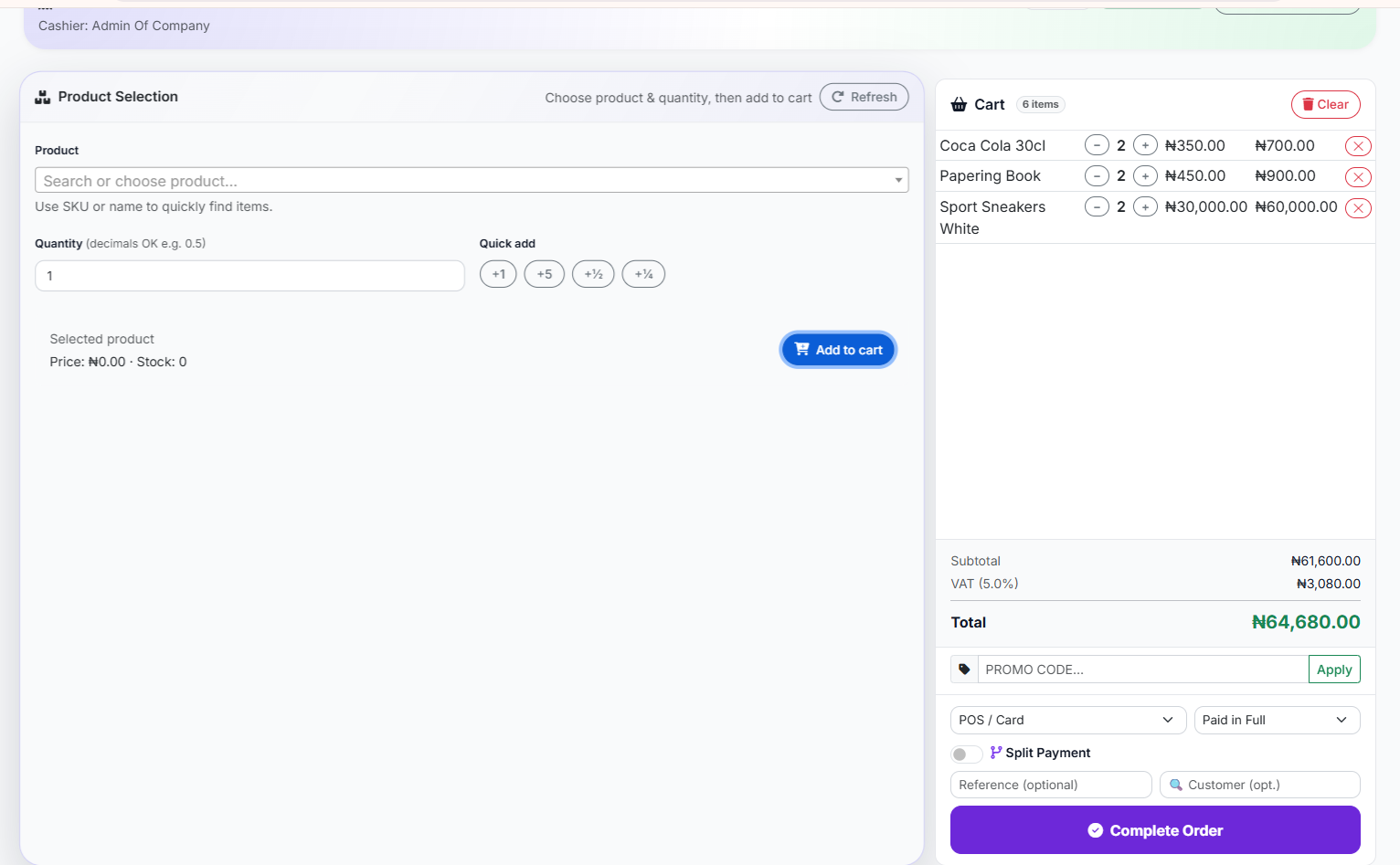 Classic POS Interface (List select)
Actionable Tip: Start by listing out your current pain points with sales and inventory. Are you constantly running out of popular items? Do you suspect unrecorded sales? This will help you identify the key features you need in a POS system. Many systems offer free trials; use them to test thoroughly. You can learn more about the true value of a POS system for Nigerian retailers by reading this article on POS System ROI.
Step 2: Implement Comprehensive Inventory Management
Once your POS is in place, the next crucial step is to get your inventory in order. This isn't just about counting items; it's about understanding what you have, where it is, and how quickly it's moving. Without accurate inventory, all your sales data is half-baked.
Your POS system should allow you to manage your product catalogue with details like cost prices, selling prices, and expiration dates. For businesses dealing with perishable goods or pharmaceuticals, expiration tracking is a lifesaver. Imagine getting an alert that certain products in your Aba shoe store are about to expire or go out of season, giving you time to run a clearance sale instead of facing total loss. For businesses with multiple locations, like a chain of pharmacies, you need to track stock separately by branch, and even manage a central warehouse if you have one.
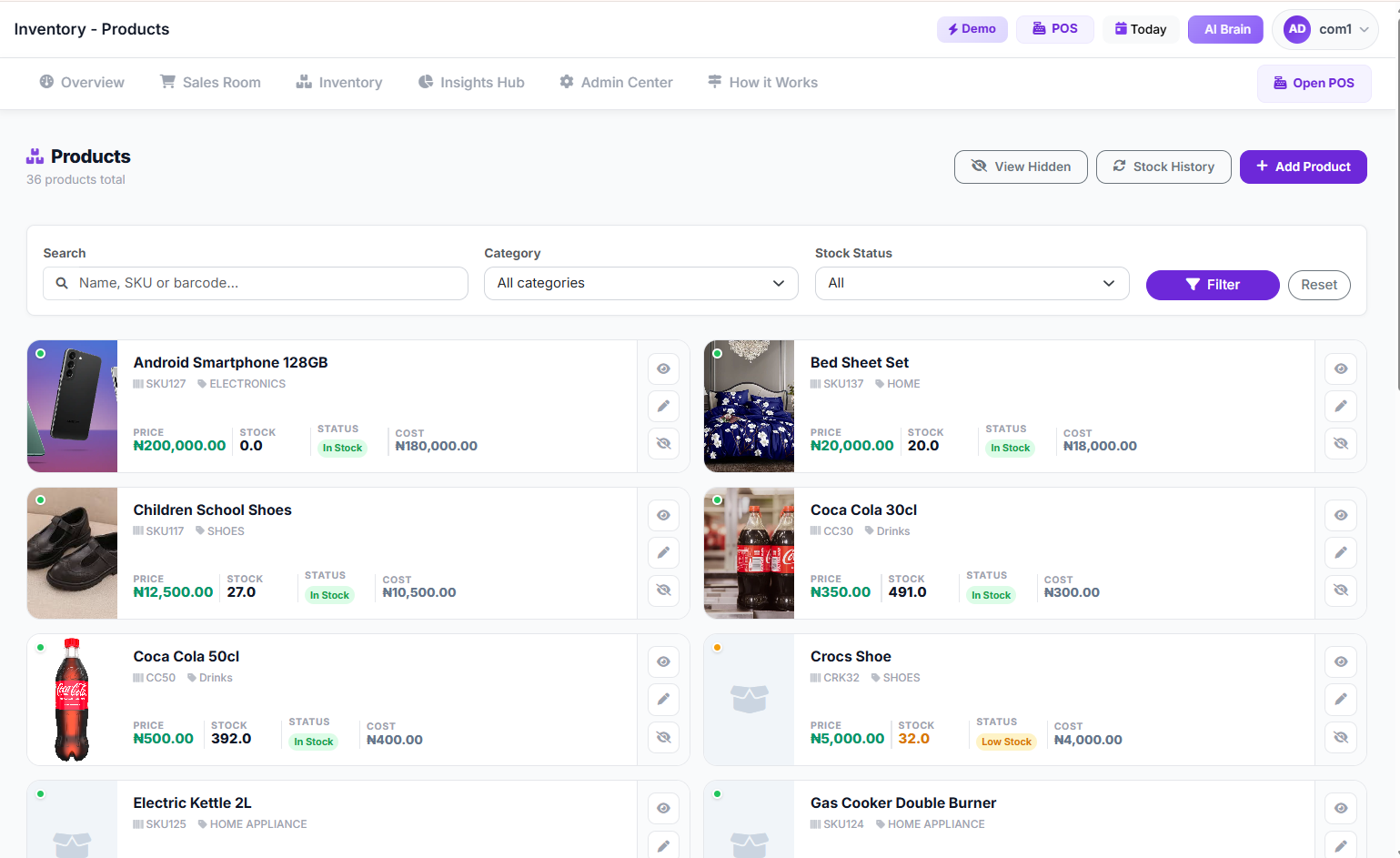 Products List Page
Actionable Tip: Conduct an initial, thorough stocktake to get accurate baseline figures into your new system. This will be tedious, but it's non-negotiable. Then, set up minimum stock alerts for your fast-moving items. This helps you restock before you run out, preventing lost sales. You can find a step-by-step guide to efficient stock adjustments here: Retail Inventory Management: Step-by-Step Guide to Efficient Stock Adjustments.
Step 3: Set Up Staff Accountability and Permissions
This is where the rubber meets the road for remote management. Your staff are your representatives, but without proper controls, you're leaving a lot to chance. You need systems that empower them to do their job while protecting your business.
A good retail management system allows you to define different staff roles – owner, manager, cashier, storekeeper – and assign specific permissions to each. This means a cashier can process sales but can't change product prices or access sensitive financial reports without manager approval. For instance, if a cashier tries to give an unauthorized discount at your electronics store in Computer Village, the system should flag it or require your manager's PIN. This level of control significantly reduces the risk of internal theft and errors, boosting staff accountability.
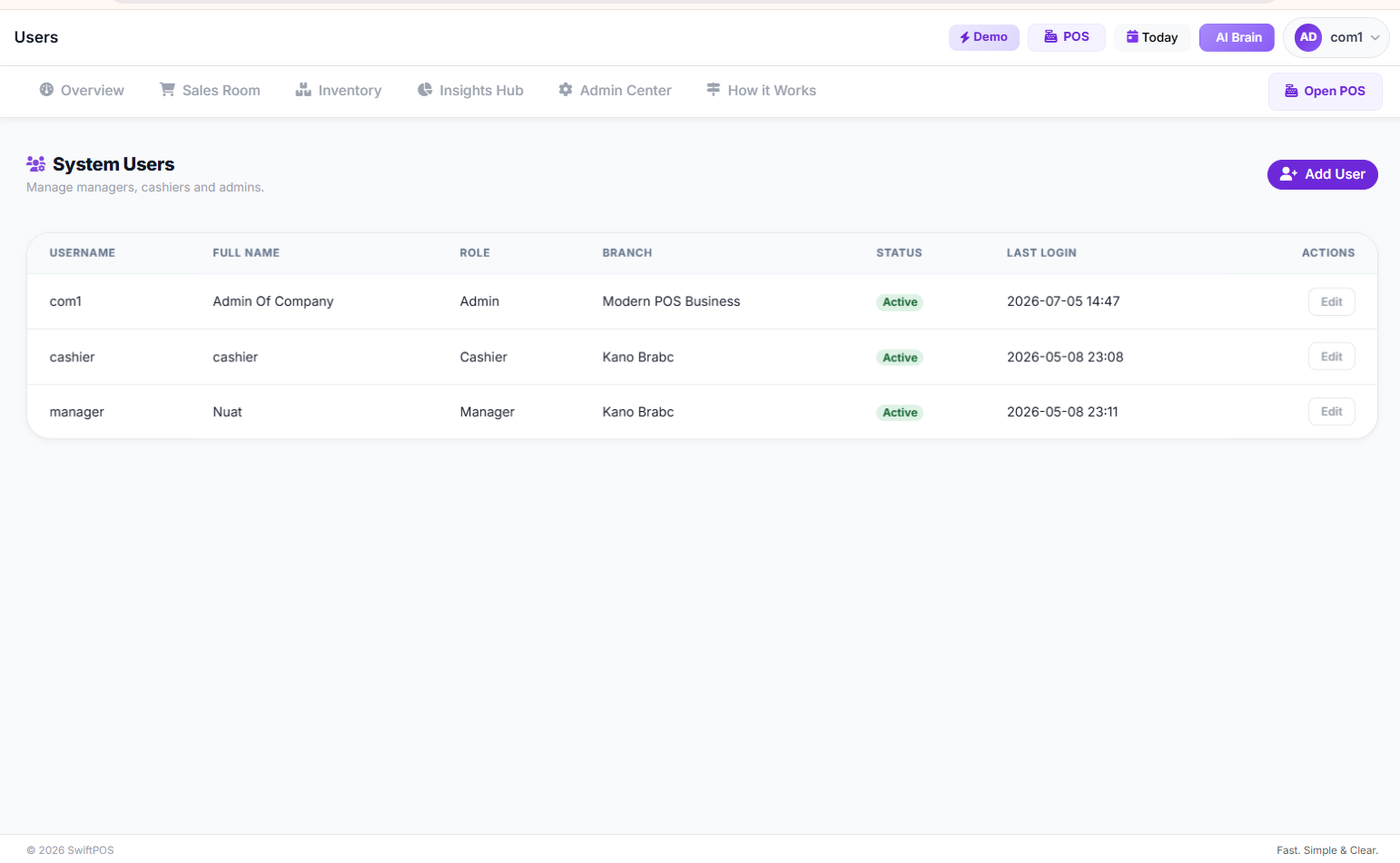 Staff Users Managemnet Page
Actionable Tip: Clearly define job descriptions and corresponding system permissions for each staff member. Regularly review audit logs to spot unusual activity. If you notice a pattern of excessive voids or discounts, it’s a red flag you need to investigate. This article provides a detailed guide on How to Set Staff Access Permissions in Retail Software.
Step 4: Install a CCTV System (with Remote Access)
While a POS system gives you data, CCTV gives you eyes. It's about having visual confirmation of what's happening on your shop floor. This isn't just for catching thieves; it's also for monitoring customer service, identifying busy periods, and ensuring your staff are following procedures.
Modern CCTV systems allow you to view live feeds from your smartphone or laptop, no matter where you are. Imagine you're at home in Abuja, and you can pull up the feed from your boutique in Kano. You can see how many customers are in the store, if your staff are actively engaging them, and if the shelves are well-organized. For a small shop, a basic analog system with 4-6 cameras might cost around ₦80,000. If you want higher quality and cloud storage (which I highly recommend for off-site backup), an IP camera system could go up to ₦350,000 plus an annual cloud storage fee of ₦15,000 to ₦50,000.
Actionable Tip: Position cameras strategically to cover entry points, cash registers, and high-value product displays. Make sure staff are aware of the cameras. This creates a deterrent and encourages adherence to rules. Also, ensure your internet connection can handle the video streaming without excessive buffering.
Step 5: Leverage Business Intelligence and Reporting
Having all this data is great, but it's useless if you can't understand it. This is where business insights and reporting come into play. You need to move beyond just raw numbers to actionable intelligence.
Your retail management software should provide dashboards and reports that show you everything from daily sales performance and gross profit to staff performance and stock forecasting. You should be able to see trends, identify your best-selling products, and understand your true net profit after all expenses, including rent and generator fuel. For example, a good system can predict when popular items will run out of stock based on sales velocity, giving you ample time to reorder.
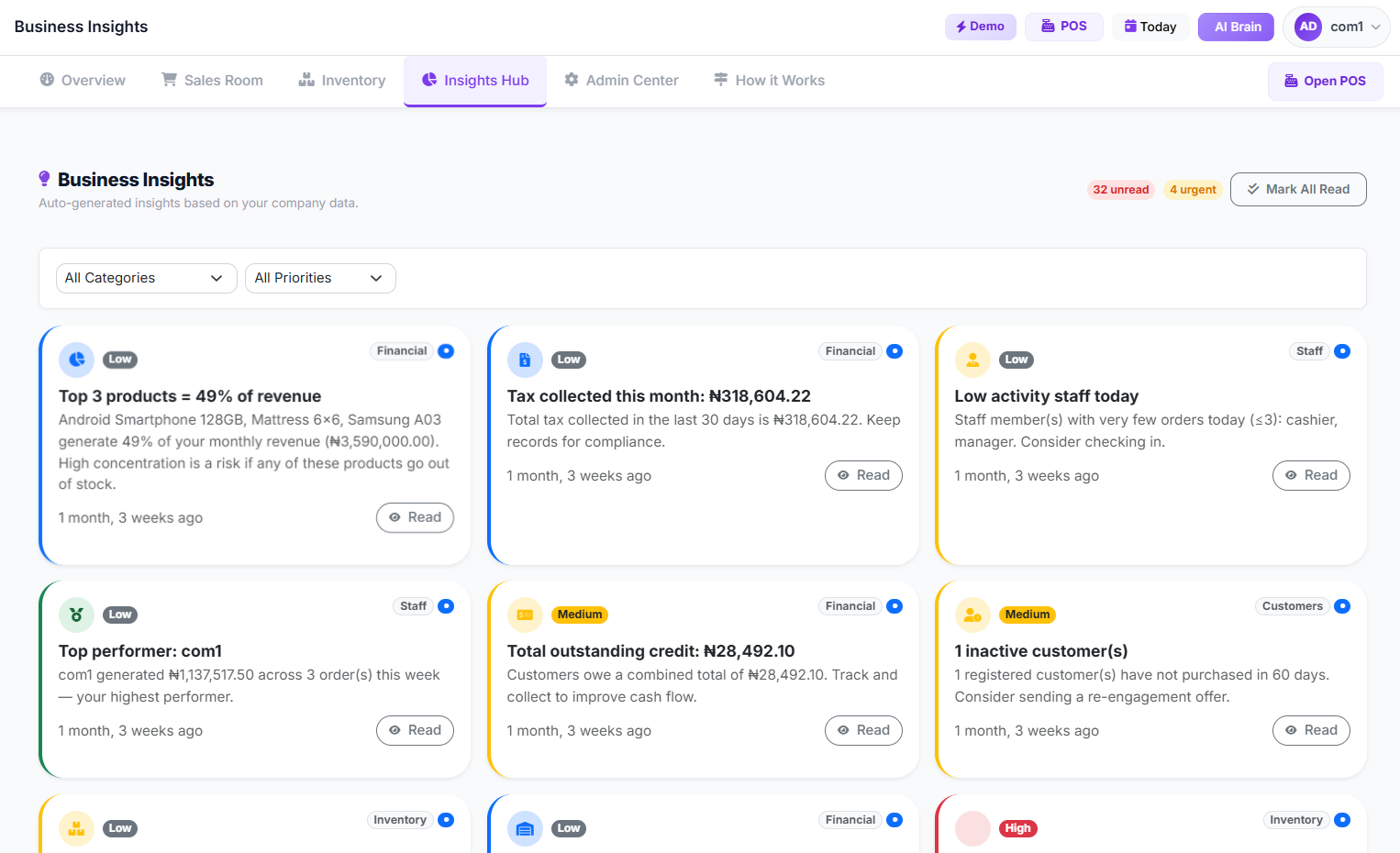 Business Insights Page
Actionable Tip: Dedicate at least 30 minutes each week to reviewing your business reports. Look for anomalies – a sudden drop in sales on a particular day, an unexpected increase in returns, or items moving slower than usual. These insights are gold. You can start by understanding the 7 Key Retail Metrics Nigerian Businesses Must Track.
Step 6: Automate What You Can
In 2026, technology allows us to automate many routine tasks, freeing up your time and reducing human error. This is especially vital when you can't be physically present.
Think about automated low-stock alerts, customer notifications for special offers, or even automatic reconciliation of daily sales. Some systems can even help you with basic accounting by categorizing expenses. Imagine your system automatically sending a WhatsApp message to customers about their outstanding credit or when a new product shipment arrives. This kind of automation saves time and ensures consistency.
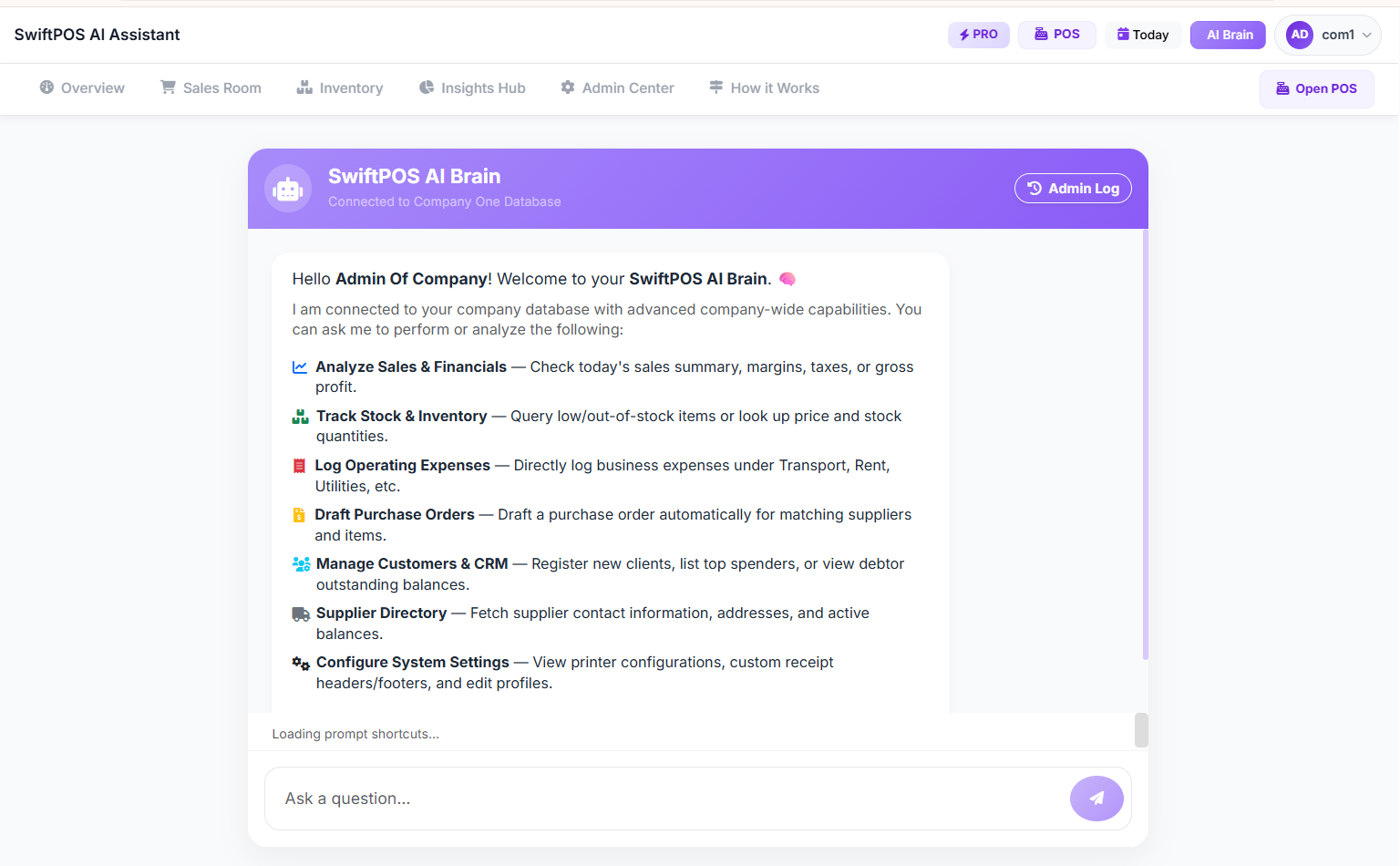 SwiftPOS AI Assistant 1
Actionable Tip: Identify repetitive tasks in your business that don't require complex human judgment. Explore if your POS system or other integrated tools offer automation for these. For instance, setting up automatic purchase order generation when stock hits a certain minimum can save you from constantly checking inventory. Read more about WhatsApp Automation for Customer Notifications.
5 Mistakes That Cost Nigerian Business Owners the Most
Even with the best intentions, I’ve seen Nigerian business owners make common mistakes that severely undermine their efforts to manage shop remotely. Avoid these pitfalls:
- Underestimating the Power of a Good POS System: Many owners see a POS as just a cash register. It's far more. It's the central nervous system of your remote operation. Relying on manual books or spreadsheets for anything beyond tiny, temporary kiosks in 2026 is a recipe for disaster. This leads to inaccurate inventory, unrecorded sales, and zero visibility when you're not there.
- Ignoring Staff Training and Buy-in: You can install the best systems, but if your staff aren't properly trained or don't understand why these systems are important, they'll bypass them. I once worked with a client in Port Harcourt whose staff would intentionally process sales manually to avoid using the POS, because they found it "too slow" or "complicated." This completely defeated the purpose of remote monitoring. Invest in thorough training and explain the benefits to them, too.
- Neglecting Regular Data Review: Installing a POS and CCTV isn't a magic bullet. You have to actively review the data and footage. Many owners set up systems, then only check them when there's a problem. Proactive monitoring helps you spot issues before they become crises.
- Failing to Set Clear Policies and Procedures: Technology supports good processes; it doesn't create them. You need clear, written policies for everything: how sales are processed, how returns are handled, who approves discounts, and what to do during a power outage. Then, enforce these policies using your remote management tools.
- Skipping Backup Power: This sounds basic, but it's a huge oversight. What good is a remote monitoring system if your shop's power goes out and everything shuts down? You lose sales, security, and data. Always have a reliable power bank for essential devices and a generator plan for your main systems.
How to Know If You're on Track (Success Metrics)
So, how do you measure if your remote retail management strategy is actually working? You need clear key performance indicators (KPIs) and benchmarks.
- Reduced Inventory Shrinkage: This is the difference between your recorded inventory and your actual physical inventory. If your shrinkage percentage drops from, say, 5% to 1.5% within six months of implementing your new systems, you're doing great.
- Increased Average Transaction Value (ATV): Are your staff upselling or cross-selling effectively? Monitoring ATV can give you insights into their performance and customer engagement.
- Improved Stock Turnover Rate: How quickly are your products selling and being replaced? A higher turnover rate means less dead stock and more efficient use of capital.
- Lowered "Suspicious Activity" Flags: If your system, like SwiftPOS NG, flags unusual discounts or excessive voids, a decrease in these alerts indicates improved staff accountability and adherence to policies.
- Consistent Profit Margins: Are your gross and net profit margins stable or increasing? Your POS system should give you clear insights into this, allowing you to track your monthly profit margins. This is the ultimate indicator of business health.
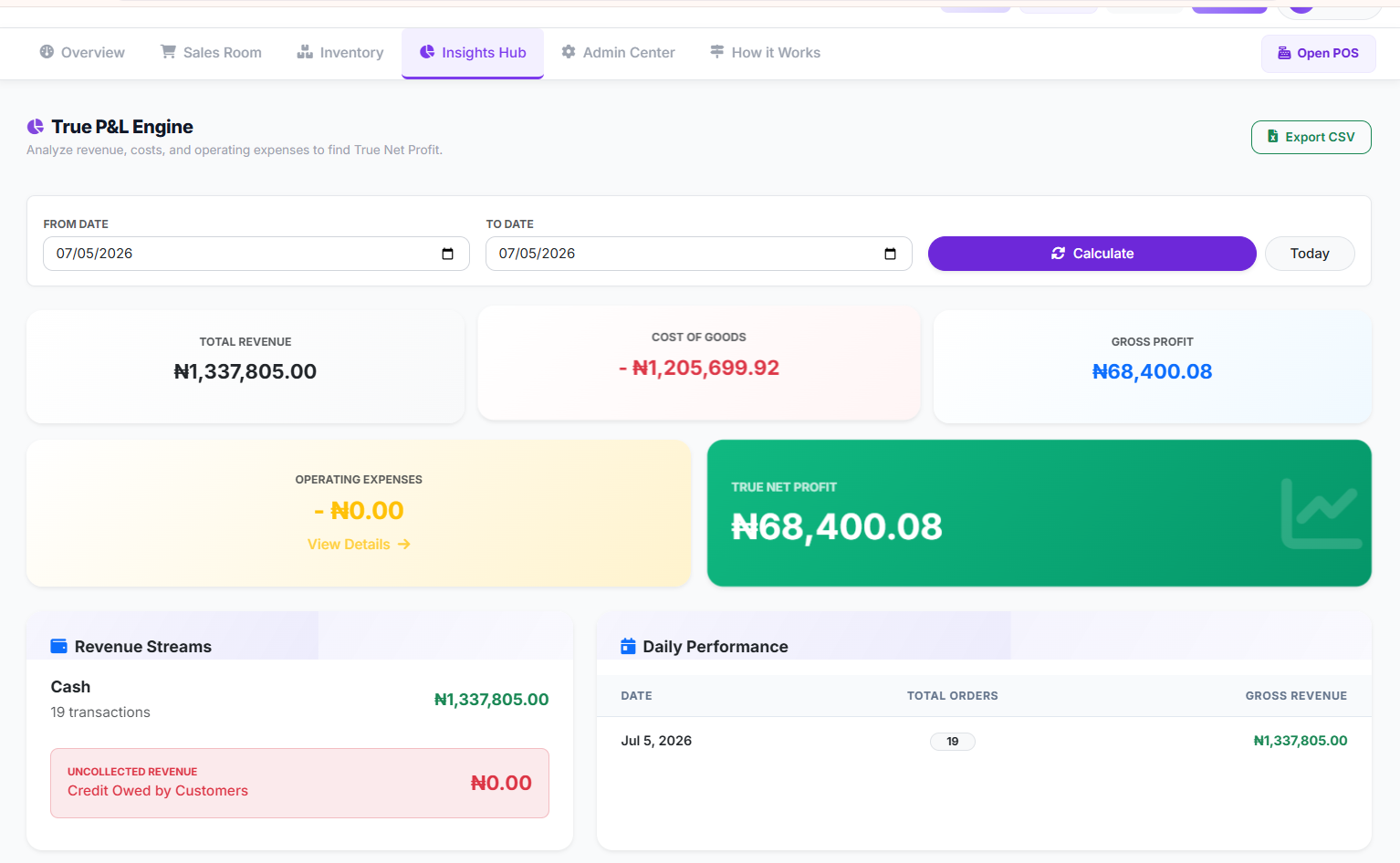 Profit and Loss Page
Actionable Tip: Set realistic targets for these metrics. For example, aim to reduce inventory discrepancies by 1% each quarter. Regularly review your
profit and loss statementsReal Questions People Ask (FAQ)
Q1: Can I really manage my shop remotely without being physically present for weeks?
Absolutely, yes. With the right combination of technology – a robust POS system, remote CCTV, and clear staff protocols – you can effectively manage a shop remotely for extended periods. You'll have real-time sales data, inventory updates, and visual oversight, allowing you to make informed decisions and address issues from anywhere. Many business owners travel for sourcing or other ventures, relying entirely on these systems.
Q2: What's the biggest challenge for Nigerian business owners trying to manage shop remotely?
The biggest challenge is often the initial investment in technology and getting staff to adapt. Many small business owners are used to manual processes and might be hesitant to spend on systems like a POS or CCTV. Also, training staff to consistently use new tools and adhere to digital procedures can take time and effort. However, the long-term benefits in terms of efficiency, reduced losses, and peace of mind far outweigh these initial hurdles.
Q3: How much does it cost to set up a basic remote management system?
For a foundational setup to manage your retail store remotely, you're looking at an initial investment of roughly ₦250,000 to ₦700,000. This typically covers a reliable smartphone/tablet (₦60,000-₦250,000), a basic POS system (hardware + one-time software license, ₦150,000-₦500,000), and a decent monthly internet data plan (₦5,000-₦15,000). If you add a basic 4-camera CCTV system, that's another ₦80,000-₦150,000 including installation. Remember, these are investments that pay for themselves by reducing losses and improving efficiency. You can explore different pricing tiers on our pricing page.
Q4: What if my internet connection is unreliable? Can a POS system still work?
This is a valid concern in Nigeria. Many modern POS systems, including SwiftPOS NG, are designed with offline capabilities. This means sales transactions can still be recorded even when there's no internet connection. Once connectivity is restored, all data automatically syncs to the cloud. This ensures your business operations don't grind to a halt due to network issues. You can learn more about POS systems working without internet.
Q5: How do I ensure staff accountability when I'm not around?
Beyond CCTV, a good POS system is your most powerful tool for staff accountability. It tracks every sale, every void, every discount, and attributes it to a specific staff member. You can set permissions so sensitive actions require manager approval, and review audit logs to spot unusual activity. Regularly communicating expectations and providing incentives for good performance also plays a huge role. Transparency and clear consequences for policy breaches are key.
Your Next Move
Managing your retail store remotely isn't a dream; it's a strategic shift that puts you in control, no matter where you are. Stop leaving your profits to chance or relying solely on manual methods that are prone to error and abuse.
Ready to take control of your business? Explore the features of SwiftPOS NG and see how it can transform your retail operations. Start your journey towards true remote retail management today.
Learn more about SwiftPOS NG and start your free trial
Written by SwiftPOS Team
Practical guides from the retail specialists at Nura Mustapha Technologies Limited, for modern Nigerian merchants.