How to Spot Cashier Mistakes: A Business Owner's Guide

The smell of hot akara and exhaust fumes hung heavy in the air as Mama Chika, owner of a bustling provision store in Ojodu, watched her cashier, Tope, count the day's earnings. Tope's brows were furrowed, a slight frown on his face. He recounted the crisp notes, then the crumpled ones, again and again. "Mama, the sales record says ₦87,500, but this cash... it's only ₦85,200." A familiar knot tightened in Mama Chika's stomach. Another shortage. This wasn't the first time, and she knew if she didn't figure out how to spot cashier mistakes, these small trickles would become a flood, washing away her profits.
Busy nigerian provision store interiorThe Reality Check: What Nobody Tells You About Cashier Mistakes
Look, you're a business owner in Nigeria, right? You're juggling suppliers, staff, rent, generator fuel, and the constant dance with inflation. You hire cashiers to help you manage sales, to be your hands and eyes at the counter. But here's the kicker: nobody tells you how much those "small" errors can actually cost you. It's not just about deliberate theft, which is a whole other conversation. We're talking about genuine mistakes – miscounting change, forgetting to scan an item, mixing up payment types, or even simple data entry errors when you're using manual ledgers.
These little slips, they add up. Fast.
Think about it. If your small shop in Agege is targeting daily sales of ₦15,000, and you have a daily shortage of just ₦750, that's ₦22,500 gone in a month! For a medium-sized retail store in Lekki aiming for ₦150,000 daily, a ₦1,500 daily error means you're losing ₦45,000 every single month. That's almost a cashier's salary, isn't it? A cashier in a busy supermarket in Abuja might earn ₦80,000 monthly, but if they're costing you ₦2,000 daily in discrepancies, that's ₦60,000 vanished. You could be effectively paying two people for the price of one, without even realizing it. The hidden costs of manual retail operations in Nigeria are far more significant than most people realize.
It’s not just cash reconciliation either. It’s about inventory discrepancies, inaccurate sales data, and ultimately, a skewed view of your actual profit. You might think you're doing well, only to find out your books are telling a different story than your bank account. And that's a dangerous place to be in 2026, with the economy as it is.
What You Actually Need to Get Started
Before you start pointing fingers or installing hidden cameras everywhere, you need a system. A reliable one. This isn't just about trust; it's about good business practice. You can't manage what you don't measure.
Here’s what you actually need, broken down:
Non-Negotiables (Must-Haves):
- A Clear Cash Reconciliation Process: This means every single kobo in and out is accounted for. No "eyeballing" it. You need a daily ritual where cash is counted, compared to sales records, and any discrepancies are noted. This could be as simple as a notebook and calculator, but that quickly becomes prone to human error.
- A Dedicated Cash Float: Give your cashier a specific amount of money for change each day, say ₦5,000 to ₦20,000, depending on your daily sales volume. This helps isolate the day's transactions from the initial capital.
- Staff Training and Clear Expectations: Your cashiers need to know exactly what their responsibilities are, how to handle different payment methods, and what to do if there's a problem. Regular training can make a huge difference.
- A Modern POS System: This is where you move beyond guessing. A good Point-of-Sale (POS) system can automate sales tracking, inventory updates, and cash reconciliation. A basic POS terminal might cost you between ₦80,000 and ₦150,000 as a one-time purchase, plus monthly transaction fees ranging from ₦2,000 to ₦10,000. It's an investment, but the return on investment for a POS system for Nigerian retailers is often significant.
- Inventory Management Software: If you're tracking sales, you should be tracking stock. This software, often integrated with POS, helps you know what you have, what's selling, and what's missing. A basic subscription might be ₦5,000 to ₦15,000 monthly. You can learn more about how to avoid common inventory management mistakes crushing your profits.
- CCTV Cameras: This isn't just for cashier mistakes; it's for overall security. Two to four cameras can cost ₦120,000 to ₦300,000 for installation. It's a visual deterrent and a record-keeper.
- Reliable Internet Data: If you're using a modern POS or CCTV for remote monitoring, you'll need steady internet, which can cost ₦5,000 to ₦15,000 monthly.
The Complete Step-by-Step Breakdown
Alright, let's break this down into actionable steps. This is what I'd tell you if you walked into my office in Lagos.
Step 1: Standardize Your Cash Handling Procedures
This is the foundation. Every single transaction, every single day, must follow the same rules. No exceptions.
First, establish a clear opening and closing float. The cashier starts with a specific amount of cash for change, let's say ₦10,000. At the end of the day, that ₦10,000 is separated, and the rest of the cash is counted. The difference should match your sales. You need to document this, literally. A simple ledger book, if you must, where the cashier writes down the opening float, total cash sales, total POS/transfer sales, and closing cash balance. You also need to consider how you handle split payments or customer credit.
Secondly, train your staff rigorously on these procedures. Don't assume they know. Show them. Walk them through scenarios. Emphasize the importance of accuracy and the process for reporting any issues immediately. This consistency helps everyone, including you, identify exactly where and when an error might have occurred.
Step 2: Implement Daily Cash Reconciliation
This is where you catch discrepancies early. Every day, without fail, you need to reconcile the cash.
At closing, the cashier counts all the physical cash in the drawer. They then subtract the initial float. This net cash amount should match the total cash sales recorded for the day. For card payments, bank transfers, or mobile money, you cross-reference with your bank alerts or POS terminal reports. Any difference, whether a shortage or an overage, needs to be recorded. An acceptable daily shortage or overage for a small business might be ₦500 to ₦2,000, but anything beyond that needs immediate investigation. Printing daily sales reports, even if handwritten, can cost ₦500 to ₦2,000 monthly in paper and ink.
I've seen business owners in Balogun Market who just eyeball the cash, "ah, it looks about right." That's a recipe for disaster. You need a clear, documented process. This daily ritual isn't just about catching mistakes; it builds discipline and accountability.
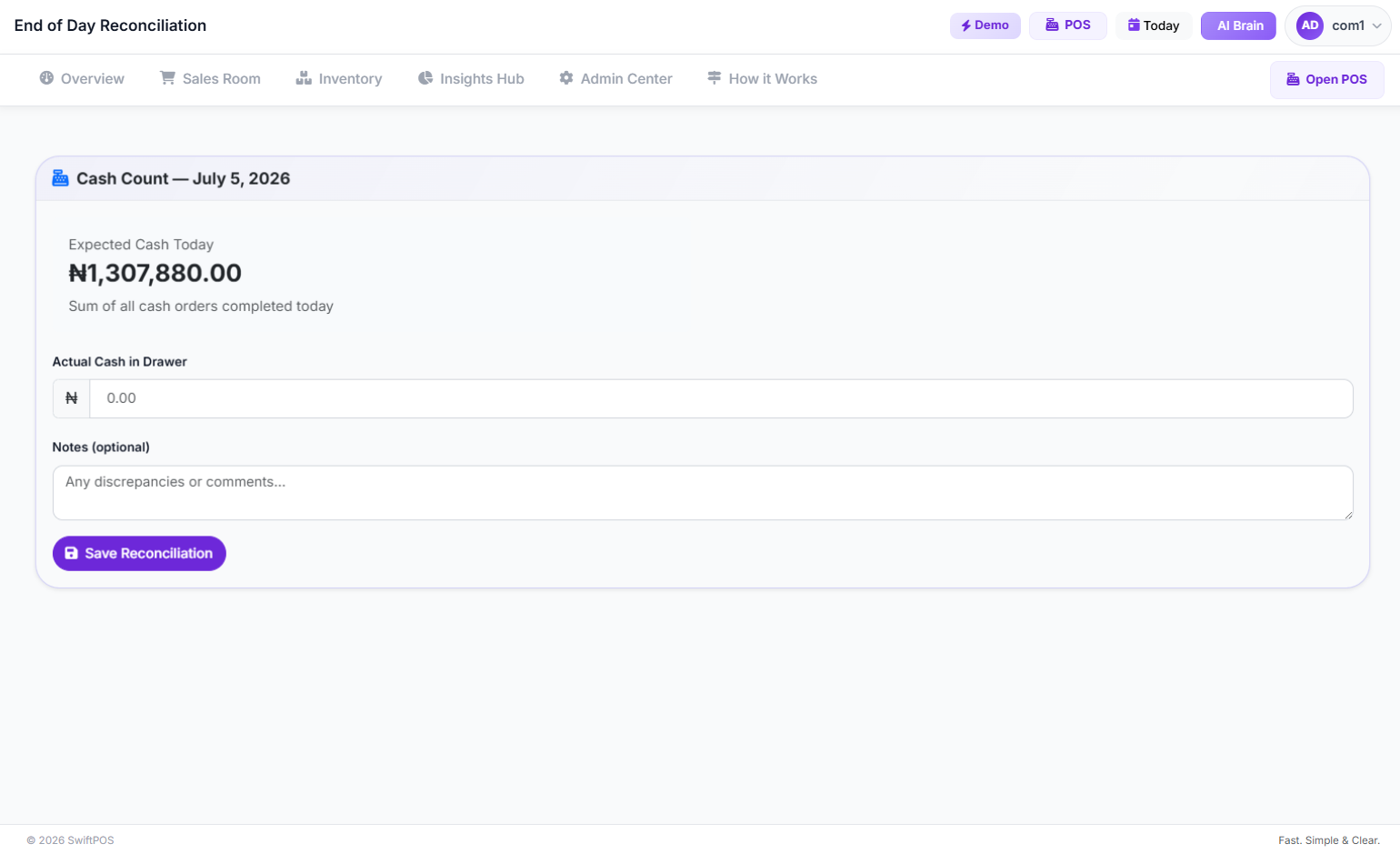 End Of Day reconciliation page
Step 3: Track All Sales Electronically (Even Basic)
Manual record-keeping is slow, prone to errors, and makes it nearly impossible to spot trends or specific cashier mistakes. This is where technology becomes your best friend.
Even if you can't afford a full-blown system yet, start with a basic electronic cash register that prints receipts and keeps a daily total. It's better than nothing. But honestly, for serious retail management, you need more. You need a system that tracks what sold, not just how much. This allows you to track individual items and quantities, making inventory management a breeze.
This is exactly where a system like SwiftPOS NG comes in. It's a business management and Point-of-Sale platform that helps you sell products quickly, track different payment methods, and print receipts. It handles everything from cash to bank transfers and even split payments. It’s built for Nigerian businesses, so it understands how we operate. With SwiftPOS, every sale is recorded digitally, linking directly to your inventory and giving you a clear, unalterable record. This is key for effective cashier accountability.
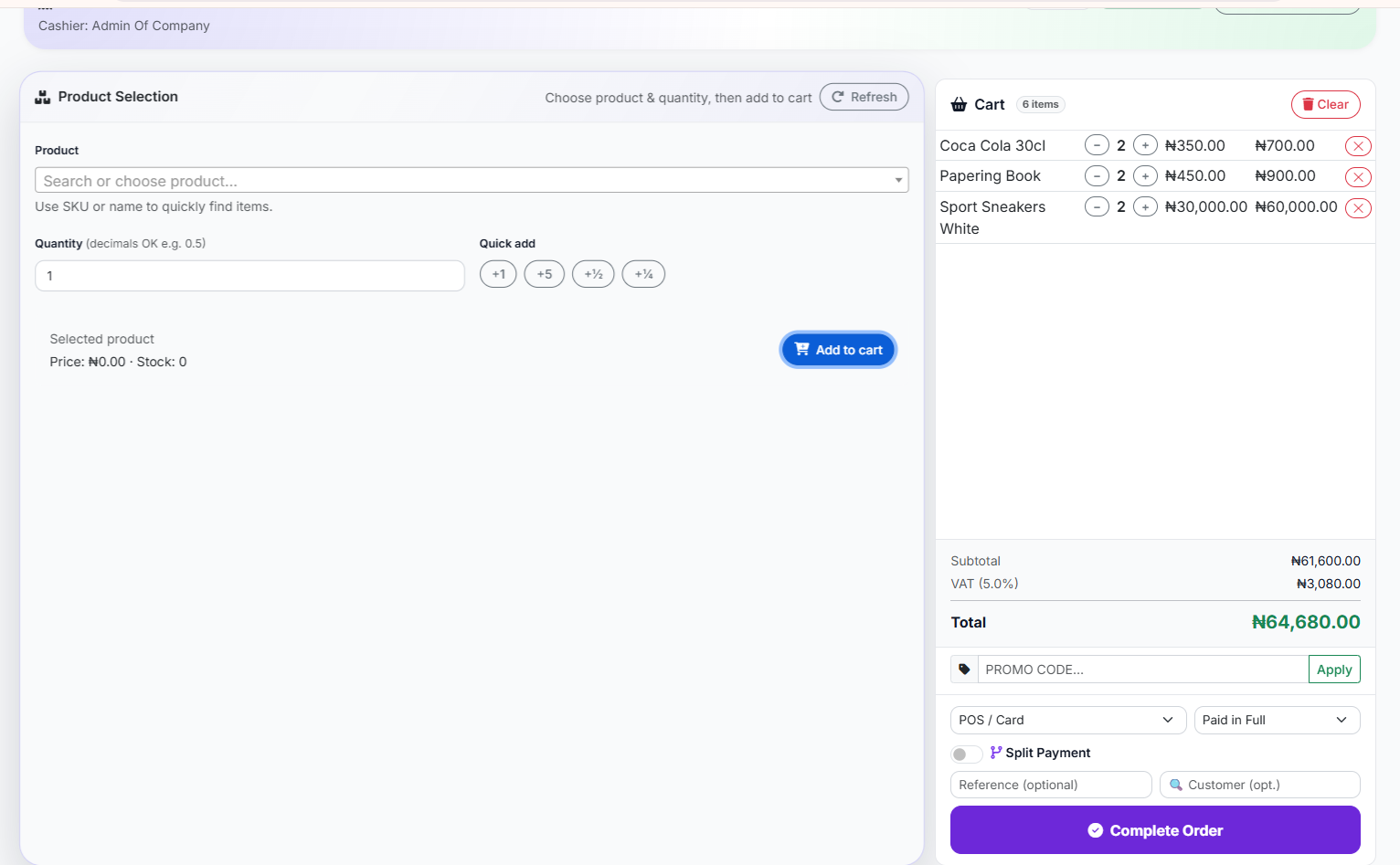 Classic POS Interface (List select)
Step 4: Monitor Inventory Levels Closely
Cashier mistakes aren't just about cash. They're also about products disappearing without a trace. This is where inventory management becomes critical.
If your stock levels don't match your sales records, something is wrong. A good inventory management system, often integrated with your POS, automatically updates stock as sales happen. This means if you sold 5 bags of rice, your system should immediately show 5 bags less. If your physical count shows 7 bags less, but your sales only reflect 5, you have a problem. This could be anything from unrecorded sales to theft. This is why a system that offers robust inventory management software for supermarkets in Nigeria is so vital.
Regular stock takes – even quick spot checks – are essential. Don't wait until the end of the month. Pick a few high-value items and count them daily or weekly, then compare that to what your system says you should have. You'd be surprised what you find.
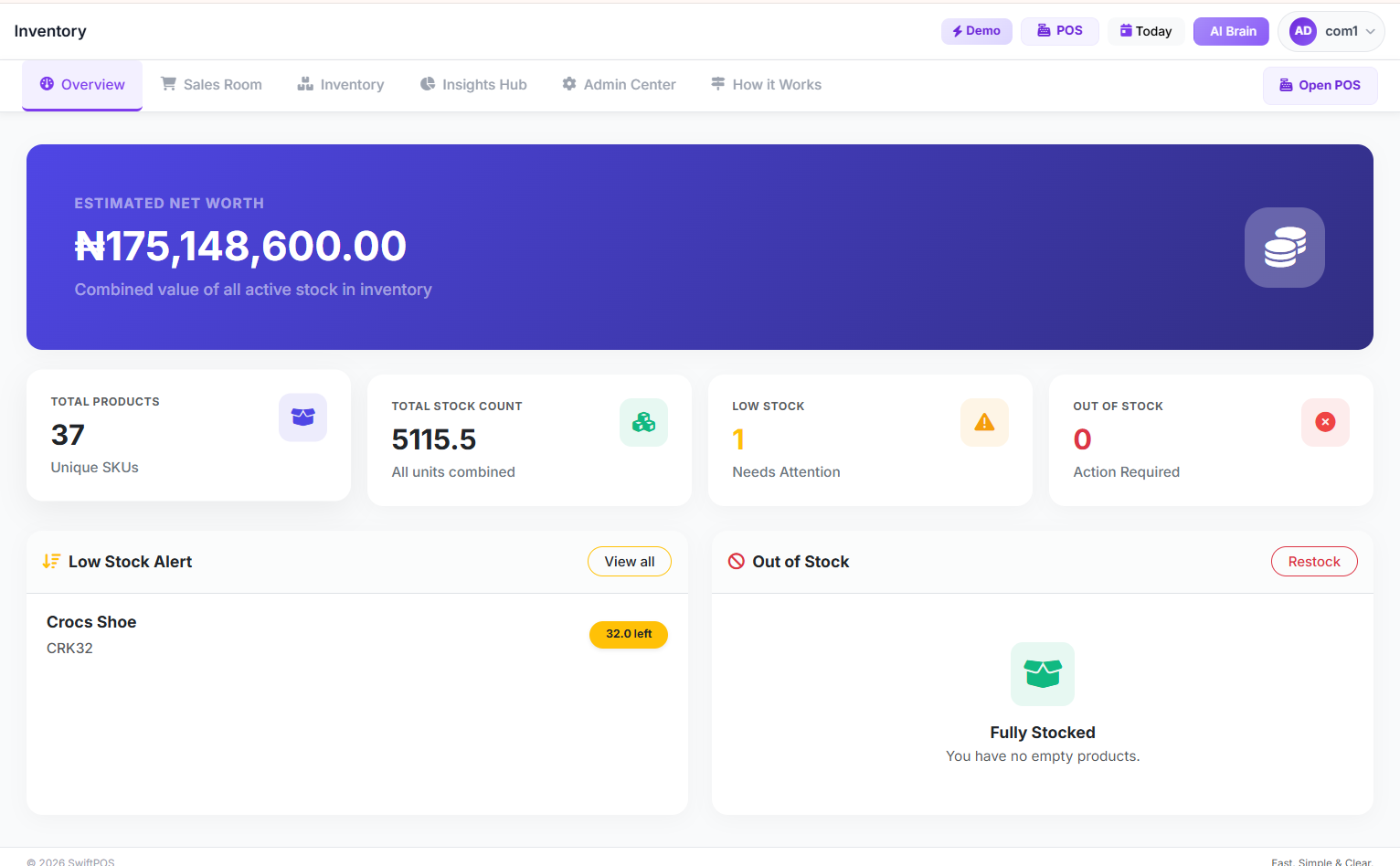 Inventory Dashboard
Step 5: Leverage Staff Activity Tracking and Permissions
Trust is good, but control is better. You need to know what your staff are doing on your system.
A comprehensive POS system will offer staff management features. This means you can create different roles – owner, manager, cashier, storekeeper – and assign specific permissions to each. For instance, a cashier might be able to make sales and print receipts, but they shouldn't be able to void transactions without a manager's approval, change product prices, or access sensitive financial reports. This significantly reduces the opportunities for both deliberate misconduct and accidental errors.
SwiftPOS NG allows you to set detailed staff permissions and tracks every action. Did a cashier void a sale? The system records it. Did they give an unauthorized discount? It's logged. This audit trail is invaluable for investigating discrepancies and maintaining cashier accountability. You can even set manager approval for sensitive actions like price overrides or cancelling orders. Check out how to set staff access permissions in retail software in Nigeria.
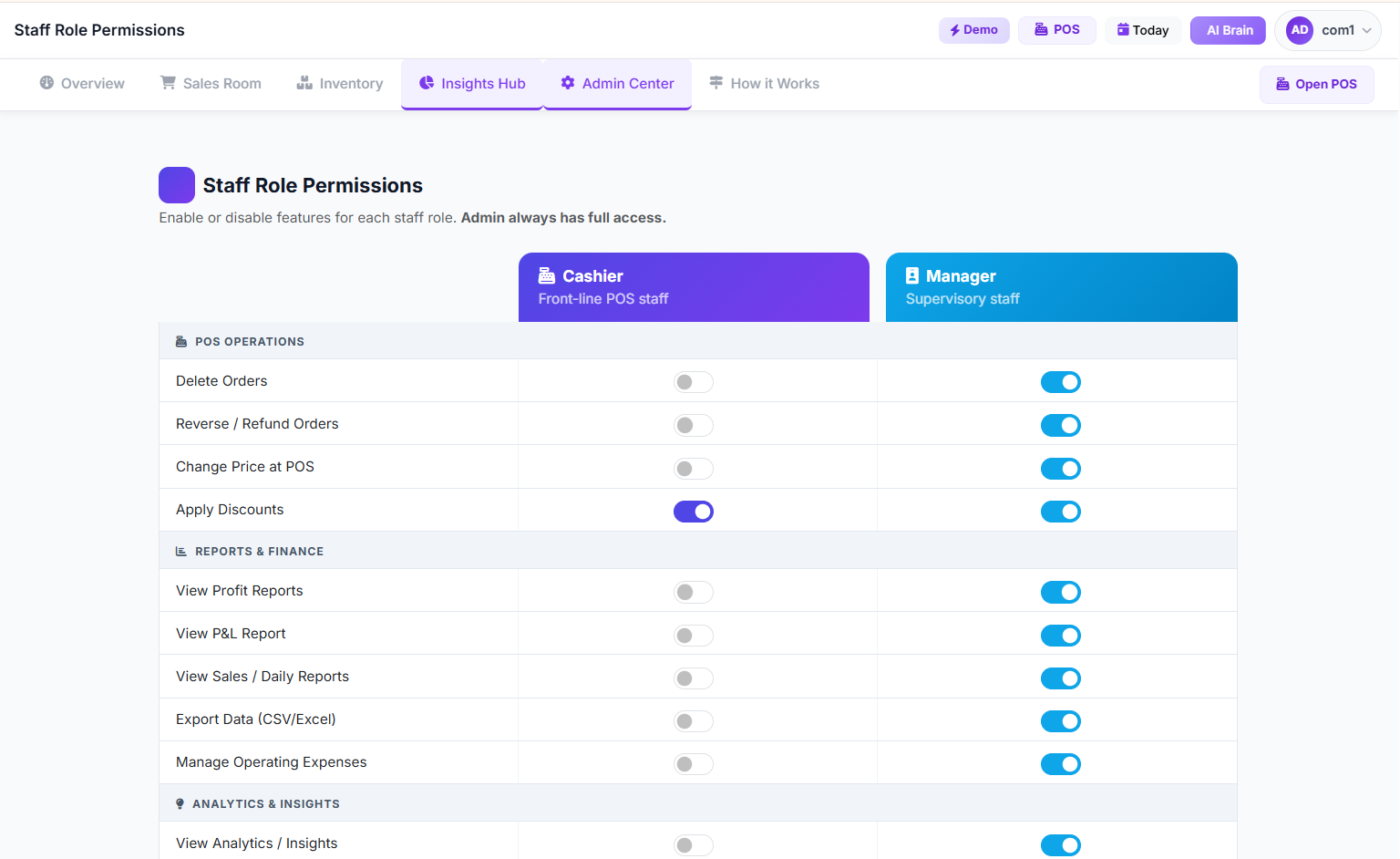 Staff Roler Permissions Page
Step 6: Regular Audits and Reviews
Even with the best systems, you still need human oversight. Think of yourself as the quality control.
Periodically, review your sales reports, cash reconciliation sheets, and inventory records. Look for patterns:
- Are there consistent shortages on certain shifts?
- Are specific products always showing discrepancies?
- Are there an unusual number of voids or refunds?
A good POS system will generate detailed reports that make this easier. You can review sales by item, by cashier, by shift, and even track your monthly profit margins. This kind of data is gold.
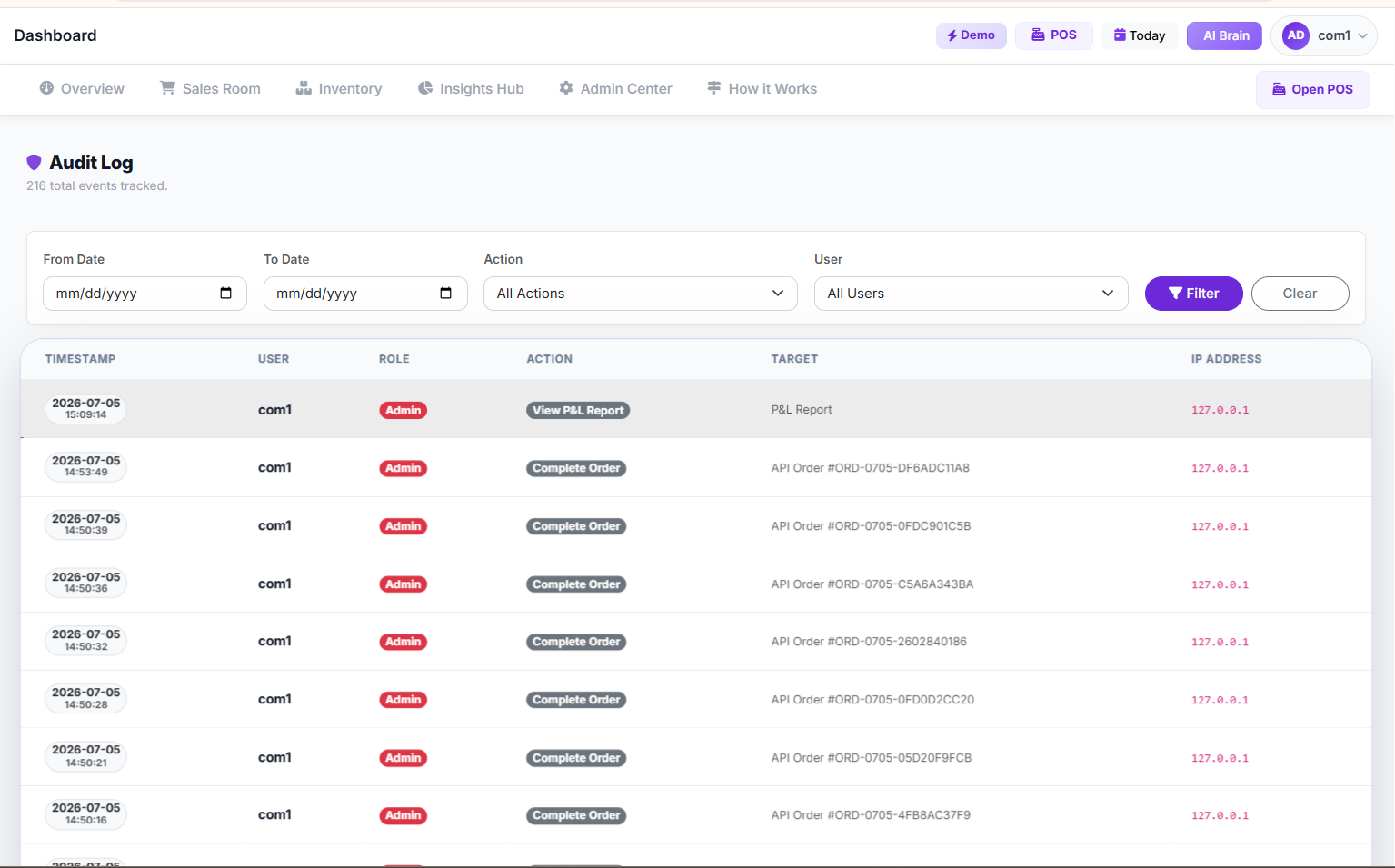 Audit Log Page
5 Mistakes That Cost Nigerian Business Owners the Most
I've seen it all in my 12 years managing retail shops. These are the top five blunders that drain profits faster than a leaky bucket in a downpour.
- Relying Solely on Manual Records: This is the biggest killer. Mama Chika's issue with Tope? It’s a classic. Paper ledgers get lost, entries are misread, calculations are wrong. It's not a matter of if mistakes happen, but when. The hidden costs of manual retail operations in Nigeria are far greater than you imagine.
- Skipping Daily Reconciliation: "I'll do it later," you say. Then later becomes tomorrow, then next week, and suddenly you have a massive problem on your hands with no idea where to start looking. Daily is non-negotiable.
- No Clear Policies for Returns/Voids: If a cashier can just "cancel" a sale or process a "return" without proper documentation or approval, you're opening the door to abuse. Every void, every return, needs a reason and a manager's sign-off.
- Ignoring Small Discrepancies: "Ah, it's just ₦500 today, no big deal." That ₦500 becomes ₦1,000 tomorrow, then ₦2,000 next week. These small, consistent losses accumulate rapidly. They signal a systemic issue that needs addressing, whether it's an honest mistake or something more sinister.
- Lack of Inventory Control: If you don't know what you have, you won't know what's missing. Discrepancies between physical stock and sales records are a huge red flag for cashier mistakes or worse. This is why many Nigerian retailers are losing money with outdated inventory management.
"In retail, every kobo counts. Ignoring small discrepancies is like putting a tiny hole in your profit pocket – it might not seem like much at first, but eventually, everything falls out."
</blockquote>
How to Know If You're on Track (Success Metrics)
You need benchmarks, right? How do you know if your efforts to spot cashier mistakes are actually working? Here are a few key performance indicators (KPIs) to track.
- Daily Cash Shortage/Overage Percentage: Calculate this by dividing the daily discrepancy by your total daily cash sales, then multiply by 100. You want this number to be as close to 0% as possible. A healthy range for a small business is typically under 1% of cash sales, which for a ₦30,000 daily cash sale, means less than ₦300. If you're consistently seeing ₦500 - ₦2,000, you need to tighten things up.
- Inventory Shrinkage Rate: This measures the percentage of inventory lost due to theft, damage, or administrative errors (including cashier mistakes). (Beginning Inventory + Purchases – Ending Inventory – Sales) / Beginning Inventory * 100. Aim for under 1-2%. A higher rate suggests significant issues.
- Void/Return Rate: The number of voids or returns divided by your total transactions. A high rate might indicate cashiers making frequent errors, or worse, manipulating the system.
- Sales by Cashier: If one cashier consistently has higher discrepancies or void rates compared to others, that's a data point you can't ignore. A good retail management system will show you this. SwiftPOS NG provides detailed reporting on staff performance, allowing you to easily identify such trends.
- Customer Complaint Rate (Pricing/Change): If customers are frequently complaining about wrong change or incorrect pricing, it's a direct sign of cashier errors. Track these complaints.
Real Questions People Ask (FAQ)
Q1: How do I handle a cashier who consistently has shortages, even after training?
First, ensure your systems are foolproof. Are they using a reliable POS? Is your cash reconciliation process clear? If the answer is yes, then it becomes a performance issue. Have a direct conversation. Document everything. Explain the financial impact on the business. Sometimes, it's just a lack of attention to detail, but sometimes, it's a sign they're not a good fit for the role. If it continues, you might need to consider reassigning them or, as a last resort, letting them go.
Q2: Is it better to use a manual cash register or a full POS system for a small shop in Nigeria?
For a truly small shop with very low daily transactions (think under ₦10,000), a basic manual cash register (₦30,000 - ₦70,000) might seem sufficient, but it's a false economy. You lose out on inventory tracking, detailed sales data, and crucial cashier accountability features. A full POS system, even a basic one like SwiftPOS NG, offers immense benefits in terms of accuracy, control, and insights, far outweighing the initial cost. It helps you avoid the pitfalls of traditional bookkeeping vs. POS software.
Q3: How much daily shortage is acceptable before I should worry?
Generally, a typical daily shortage or overage for a small business should be very low, maybe ₦500 at most, and ideally, you want it to balance out over time. If you're consistently seeing daily discrepancies of ₦1,000 to ₦2,000 or more, especially for a business with daily sales of ₦15,000 - ₦50,000, that's a red flag. Anything above 1% of your cash sales warrants immediate investigation.
Q4: Can CCTV cameras really help with cashier mistakes?
Absolutely. CCTV cameras serve multiple purposes. Firstly, they act as a deterrent, making staff less likely to engage in questionable activities. Secondly, they provide visual evidence. If there's a discrepancy, you can review footage to see how a transaction was handled, whether an item was scanned, or if correct change was given. It's a key part of a comprehensive security and accountability strategy. Just remember to factor in the cost of CCTV installation and monthly internet data for monitoring.
Q5: What if my internet is unreliable? Can a POS system still work?
This is a common concern in Nigeria, and it's why many modern POS systems, including SwiftPOS NG, are designed for offline operation. They allow your cashiers to continue making sales even when the internet is down. Transactions are stored locally and then synchronized to the cloud once connectivity is restored. This ensures your business keeps running without interruption and all your sales data is eventually captured.
Your Next Move
You've read this far because you know, deep down, that your business is losing money to cashier mistakes. Whether it's innocent errors or something more, the solution lies in a robust system and clear processes.
Don't let those small daily shortages become the reason your business struggles. Take control of your retail management today. Start by exploring how SwiftPOS NG can help you automate your sales, track your inventory, and ensure cashier accountability. Visit app.swiftpos.ng to see how it works and get started.
Written by SwiftPOS Team
Practical guides from the retail specialists at Nura Mustapha Technologies Limited, for modern Nigerian merchants.