How to Monitor Your Business Remotely From Your Phone

Everyone tells you that to truly manage your retail business, you need to be physically present. They say your eyes are the best security, your feet the best inventory tracker, and your voice the only way to motivate staff. Well, let me tell you, in 2026, that advice is outdated, inefficient, and frankly, it's costing you money. You can learn how to monitor your business remotely from your phone, and in this guide, I'll show you exactly how to do it without losing control or compromising your bottom line.
A woman in a vibrant ankara print dressThe Reality Check: What Nobody Tells You About Remote Business Monitoring
Here’s the thing: while the idea of managing your shop from your phone sounds like pure freedom, most people overlook the foundational investments and the very real challenges that come with it. It’s not just about downloading an app; it’s about setting up an ecosystem.
First, let's talk about power. In Nigeria, erratic electricity supply means you can't rely solely on NEPA. A small provision store in Ojuelegba trying to run a few smart devices needs a reliable power backup. A basic solar inverter system, enough to power your essential tech and lights for a few hours, could set you back anywhere from ₦250,000 to ₦1,500,000 for a more robust setup for a larger store. Without it, your "remote monitoring" quickly becomes "no monitoring" when the lights go out.
Then there's data. You're going to need consistent internet access. For yourself, that's a monthly data plan ranging from ₦3,000 for a basic 5GB to ₦15,000 for unlimited usage if you're constantly streaming live CCTV. But what about your staff? If your team needs to update sales or inventory in real-time, you might need to factor in a staff data allowance of ₦2,000 to ₦5,000 per person monthly. These little costs add up, and if you haven't budgeted for them, your grand plan for remote shop management will fall flat.
Many business owners also forget about the human element. You can have the best tech in the world, but if your staff isn't trained or isn't on board, it's useless. I’ve seen countless businesses spend fortunes on systems only for their staff to revert to manual methods because "it's too complicated." So, when we talk about remote business monitoring, we're also talking about training, trust, and setting clear expectations. It's not just about what technology can do, but what your team will do with it.
What You Actually Need to Get Started
Before you even think about checking sales from your village or approving discounts from the comfort of your home, you need to lay some groundwork. This isn't just about convenience; it's about protecting your investment and ensuring your business runs smoothly, even when you're not physically there.
Non-Negotiables:
- A Reliable Smartphone: This is your command center. It doesn't have to be the latest iPhone, but it needs to be functional, with good battery life and enough storage. A decent basic Android smartphone can cost you between ₦45,000 and ₦120,000, while a higher-end device could be up to ₦250,000.
- Stable Internet Connectivity: For your shop and for yourself. You need a consistent monthly data plan, ideally a dedicated Wi-Fi solution for your business. Expect to spend ₦3,000 - ₦15,000 monthly for data alone.
- A Point-of-Sale (POS) System with Mobile Access: This is the heart of your remote shop management. Forget spreadsheets; they are a nightmare for real-time tracking. You need a system that processes sales, manages inventory, and offers mobile reporting. A basic POS terminal can cost ₦60,000 - ₦180,000, plus a monthly software subscription of ₦4,000 - ₦15,000.
- Basic Security Camera System (CCTV): Not just for catching thieves, but for monitoring staff activity and customer flow. A 4-channel CCTV system, including installation, typically costs ₦80,000 - ₦350,000. Add a monthly cloud storage subscription for ₦1,500 - ₦7,000 if you want to access footage remotely.
- Power Backup: As I mentioned, NEPA is unreliable. A small generator for critical hours can cost ₦1,500 - ₦5,000 daily in fuel, or invest in a solar inverter system for a one-time cost of ₦250,000 - ₦1,500,000. This ensures your systems stay online.
Nice-to-Haves (But Highly Recommended for Growth):
- Smart Lock System: For enhanced security and remote access control. You can get a basic keypad lock for ₦70,000 or a biometric/app-controlled system for up to ₦200,000. Imagine being able to unlock your shop for a trusted staff member from your phone, even if you're stuck in Lagos traffic.
- Staff Data Allowance: If your staff relies on their phones for work-related tasks, providing a data allowance (₦2,000 - ₦5,000 per staff member monthly) can boost productivity and ensure they're always connected when needed.
- Remote Access Software: If you have a dedicated office PC with specific files or applications you need to access, an annual subscription for remote access software (₦10,000 - ₦40,000) can be invaluable.
The Complete Step-by-Step Breakdown: How to Monitor Your Business Remotely From Your Phone
Now that you know what you need, let's break down the actual process. This isn't just theory; these are the practical steps I've seen successful Nigerian retailers implement.
### Step 1: Set Up Your Foundational Tech Infrastructure
Before you can monitor anything, you need the right tools in place. Think of it like building a house; you need a strong foundation.
First, invest in a reliable internet connection for your shop. Fibre optics or a strong 4G/5G router with a good data plan is essential. Don't skimp here; a slow connection will frustrate you and your staff. Next, install your CCTV system. Position cameras strategically to cover the entrance, sales counter, stockroom, and any high-value areas. Make sure the system allows for remote viewing via a mobile app. Many modern CCTV systems offer this feature, often with cloud storage options. This way, you can check in on your business from anywhere, whether you're at Balogun Market or relaxing at home.
Lastly, and this is crucial, secure your power. A provision store in Kano that relies on a generator for 6 hours a day knows the cost of fuel. Investing in a solar inverter system, while a larger upfront cost, can save you money in the long run and provide consistent power for your monitoring systems. You can read more about the hidden costs of manual retail operations in Nigeria to understand why these investments are non-negotiable.
### Step 2: Implement a Robust Point-of-Sale (POS) System
This is where the magic of remote business monitoring truly happens. A good POS system isn't just a cash register; it's your entire business brain, accessible from your pocket.
You need a system that integrates sales, inventory, customer management, and staff activity. When a customer buys a carton of spaghetti at your mini-mart in Port Harcourt, that sale needs to be recorded instantly, inventory updated, and the transaction logged against the cashier. This real-time data is what allows you to monitor remotely. Look for a system like SwiftPOS that offers a comprehensive mobile system for business owners. It provides product information, sales synchronization, customer debt details, low-stock warnings, stock adjustment capabilities, and revenue dashboards, all on your phone.
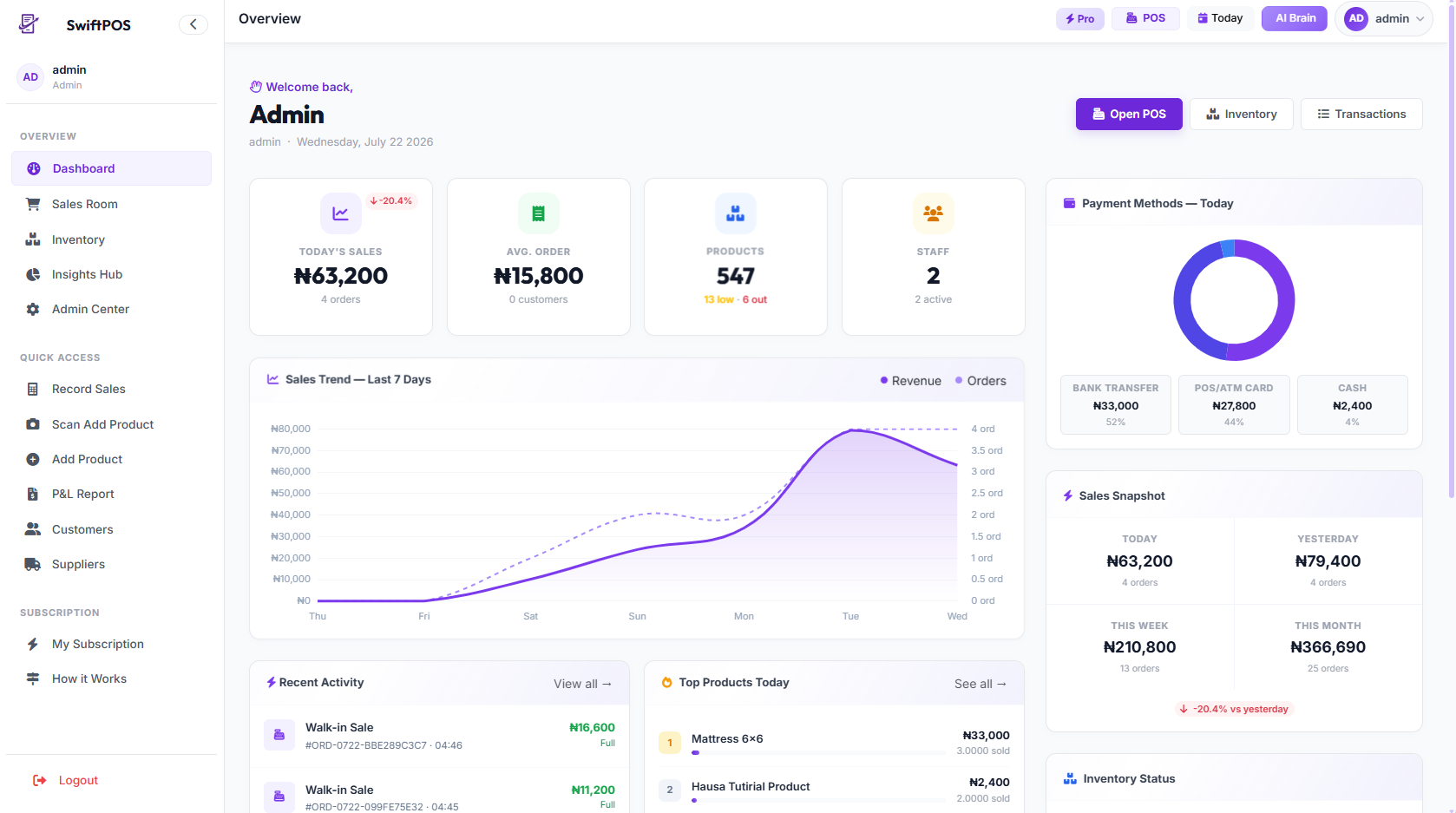 Dashboard Overciew 1
This means you can be at a family gathering in Enugu and still know exactly how many crates of soft drinks were sold, your current stock levels, and what your daily revenue looks like. This level of transparency is what gives you peace of mind and control.
### Step 3: Configure Staff Roles and Permissions
Trust is good, but control is better. When you're not physically present, you need to ensure your staff can perform their duties without having access to sensitive information or the ability to make unauthorized changes.
Your chosen POS system should allow you to define specific roles for your staff—cashiers, storekeepers, managers—and assign granular permissions to each. For example, a cashier should be able to process sales, but perhaps not view profit margins or issue large discounts without manager approval. SwiftPOS allows you to set up different staff roles and permissions, even requiring manager authorization for sensitive actions like price overrides or voiding orders. This helps prevent internal fraud and ensures accountability, which is a major concern for many business owners I work with. You can learn more about how to set staff access permissions in retail software in Nigeria for a detailed walkthrough.
### Step 4: Automate Reporting and Alerts
The beauty of technology is that it can do the heavy lifting for you. You shouldn't have to constantly log in to check every single metric. Your system should alert you when something needs your attention.
Set up automated daily, weekly, and monthly reports that are sent directly to your phone. These reports should cover key metrics like total sales, best-selling products, inventory levels, and even staff performance. More importantly, configure alerts for critical events:
- Low stock levels for popular items.
- Unusual discounts or voided transactions.
- Large sales that might require your immediate attention.
- When a staff member opens or closes a shift.
### Step 5: Train Your Staff and Foster a Culture of Accountability
No system, however advanced, works without proper human input. This is often the most overlooked step, but it's absolutely vital for successful remote business monitoring.
Invest time in training your staff on how to use the new POS system, how to conduct stock adjustments, and how to handle customer interactions through the system. Make sure they understand why these systems are being implemented—not just to monitor them, but to make their jobs easier and the business more efficient. A provision store owner in Surulere once told me his staff initially resisted the new POS, but once they saw how it simplified end-of-day reconciliation, they became its biggest advocates.
Regularly review staff activity records and provide feedback. SwiftPOS, for instance, keeps detailed audit logs of staff logins, sales, cancellations, and stock adjustments. This transparency fosters accountability and helps identify any training gaps or suspicious activities early on. Remember, you're building a team that can run the business successfully even when you're not physically there.
### Step 6: Regularly Review and Optimize Your Remote Monitoring Strategy
Remote monitoring isn't a one-time setup; it's an ongoing process. The market changes, your business grows, and new technologies emerge.
Dedicate time each month to review your business dashboard, analyze reports, and check your CCTV footage. Look for patterns, identify areas for improvement, and adjust your strategies. Perhaps a certain product isn't selling as well as it used to, or a particular shift is consistently underperforming. Your mobile reporting and business dashboard should give you the insights you need to make informed decisions.
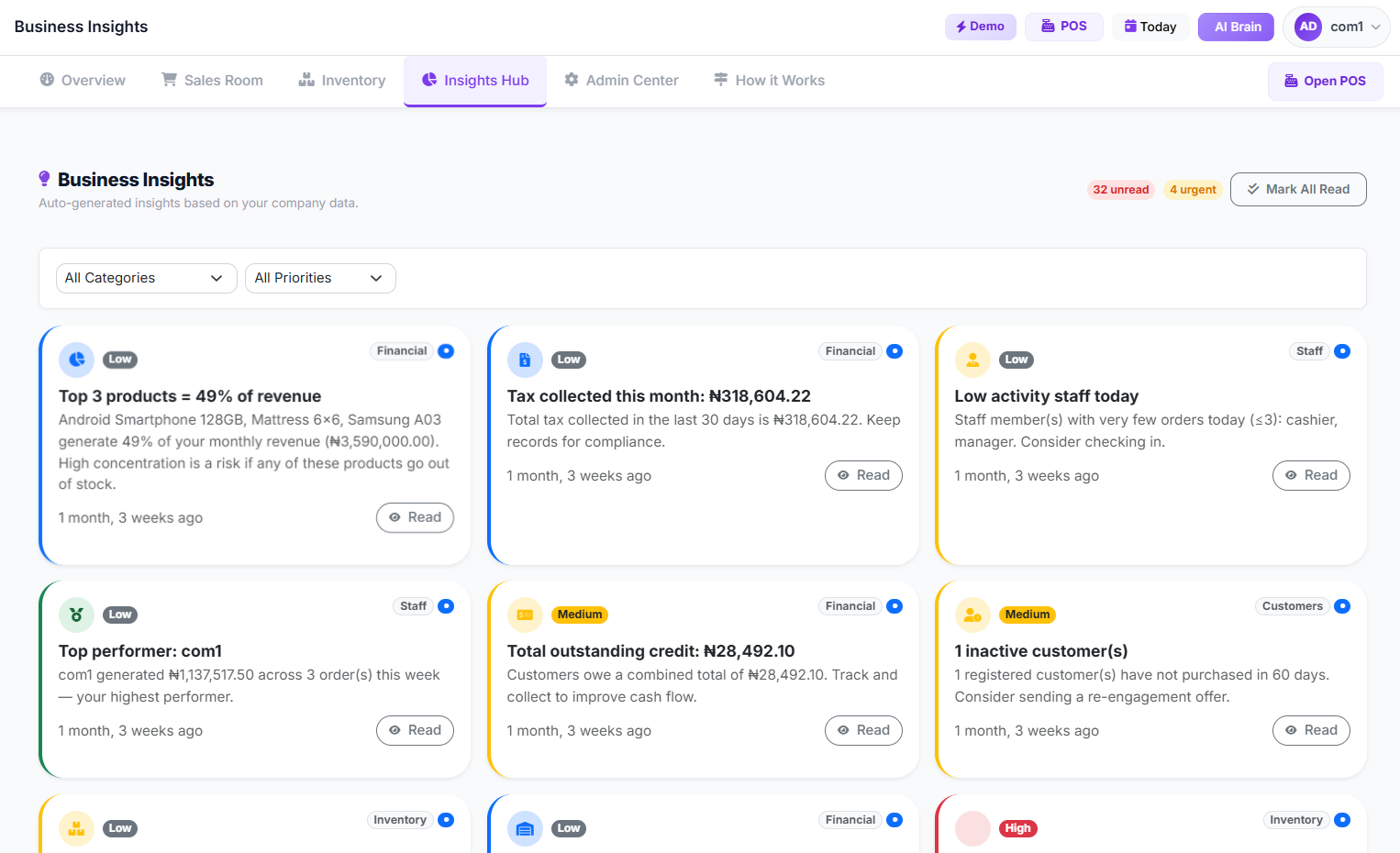 Business Insights Page
This continuous optimization ensures that your business remains agile and profitable. Don't be afraid to try new things, like using AI insights for stock forecasting if your system offers it. You can learn more about AI vs. traditional inventory for real-time profit.
5 Mistakes That Cost Nigerian Business Owners the Most
Even with the best intentions, I've seen countless Nigerian business owners make common mistakes that derail their remote monitoring efforts. Avoid these pitfalls:
- Underestimating Internet Costs & Reliability: Thinking your personal phone's hotspot is enough for a busy retail shop is a recipe for disaster. Downtime means lost sales and inaccurate data. A dedicated internet plan for your shop, even a basic 4G router with a 15GB monthly plan for ₦8,000-₦10,000, is far more reliable than relying on a shared connection.
- Neglecting Staff Training: Handing over a fancy new POS terminal without proper training is like giving someone a car without driving lessons. They'll either break it or refuse to use it. This leads to inaccurate data, frustrated staff, and a system that doesn't deliver on its promises.
- Ignoring Power Backup: Relying solely on public power means your systems go offline during outages. If your CCTV is down, your sales aren't syncing, and your staff can't process payments, what exactly are you monitoring remotely? Nothing. The cost of a small generator running on ₦1,500 of fuel daily for a few hours is far less than the cost of a day's lost sales.
- Not Setting Clear Permissions: Giving every staff member full access to your POS system is a huge security risk. I once saw a boutique owner in Computer Village lose nearly ₦187,500 over a few months because a cashier was voiding sales and pocketing cash, all because she had full admin access. Restrict access to only what each role needs.
- Failing to Act on Data: Having a business dashboard on your phone is great, but if you don't do anything with the insights it provides, it's just a fancy screen. See a dip in sales for a specific product? Investigate. Notice unusual staff activity? Address it. Data is only powerful if you use it to make decisions.
How to Know If You're on Track (Success Metrics)
So, you've set up your remote monitoring system. How do you know it's actually working and providing value? You need to track key metrics, or KPIs (Key Performance Indicators), that tell you the health of your business and the effectiveness of your remote strategy.
- Daily Sales Revenue: This is the most basic, but crucial. Are your daily sales consistent with expectations? Is there a noticeable drop when you're not physically present? A good system like SwiftPOS will give you real-time sales dashboards, allowing you to compare today's performance against yesterday's or last week's.
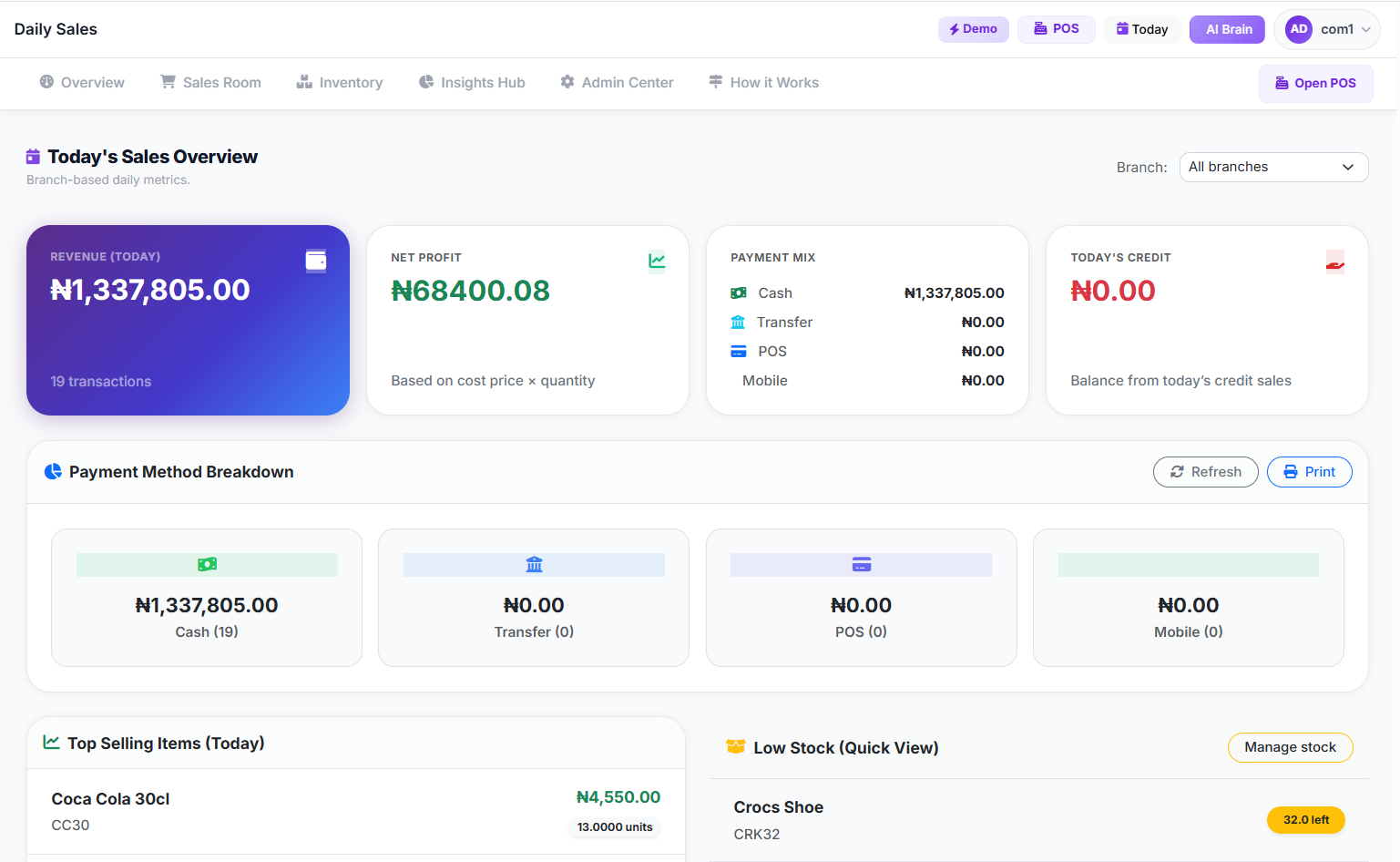 Today's Dashboard
- Average Transaction Value (ATV): This tells you how much customers are spending per visit. If your ATV is dropping, it might indicate issues with upselling, product availability, or even staff performance.
- Inventory Accuracy: If your remote stock counts consistently match your physical stock checks, your system and staff are doing well. Discrepancies point to theft, errors in recording, or issues with stock adjustments. Aim for at least 95% accuracy.
- Employee Activity Logs: Regularly review the audit logs for suspicious patterns. Are there frequent voids, returns, or price overrides? Is a particular staff member logging in or out at unusual times? SwiftPOS provides detailed and flags
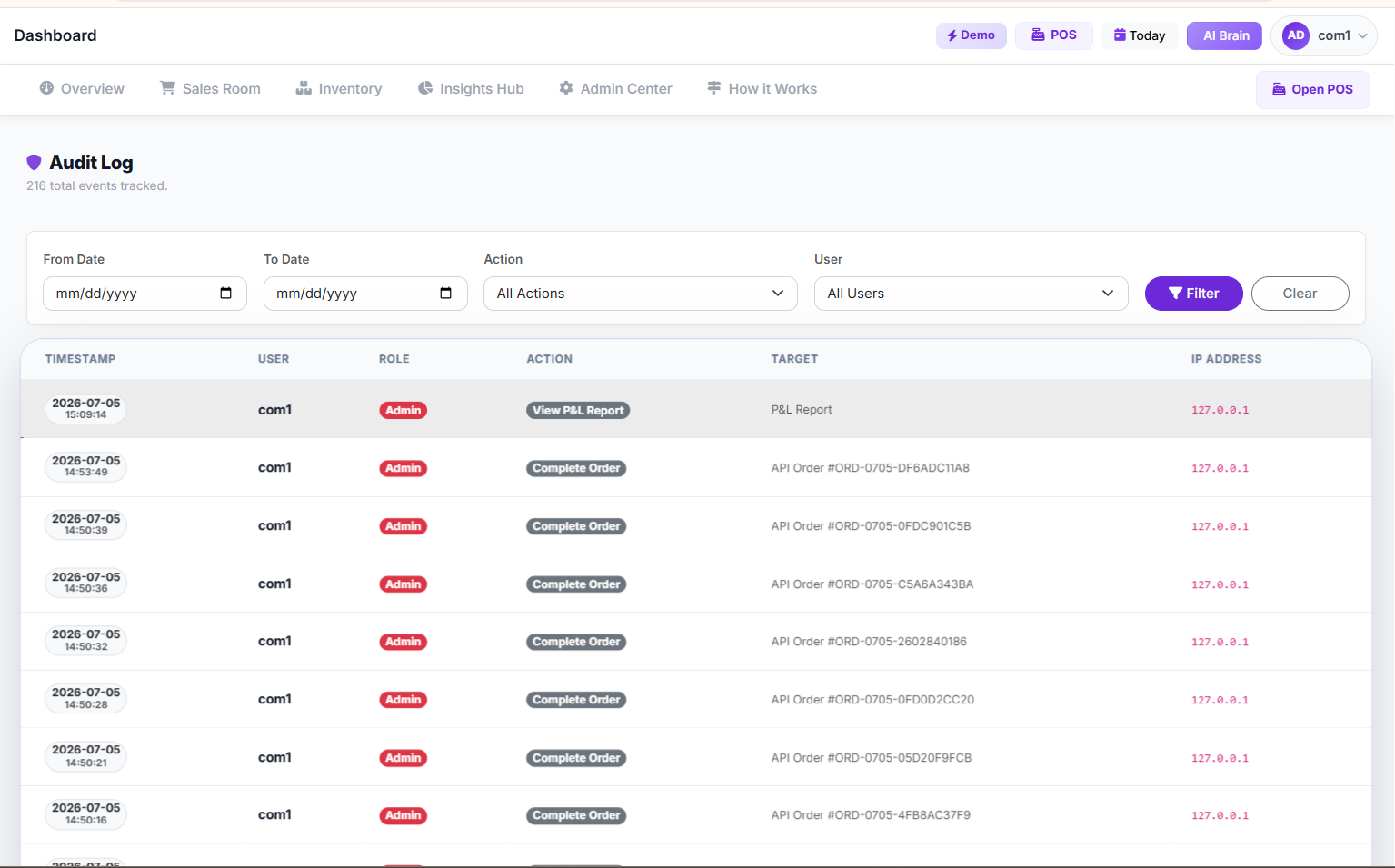 audit logsto help you catch problems early.
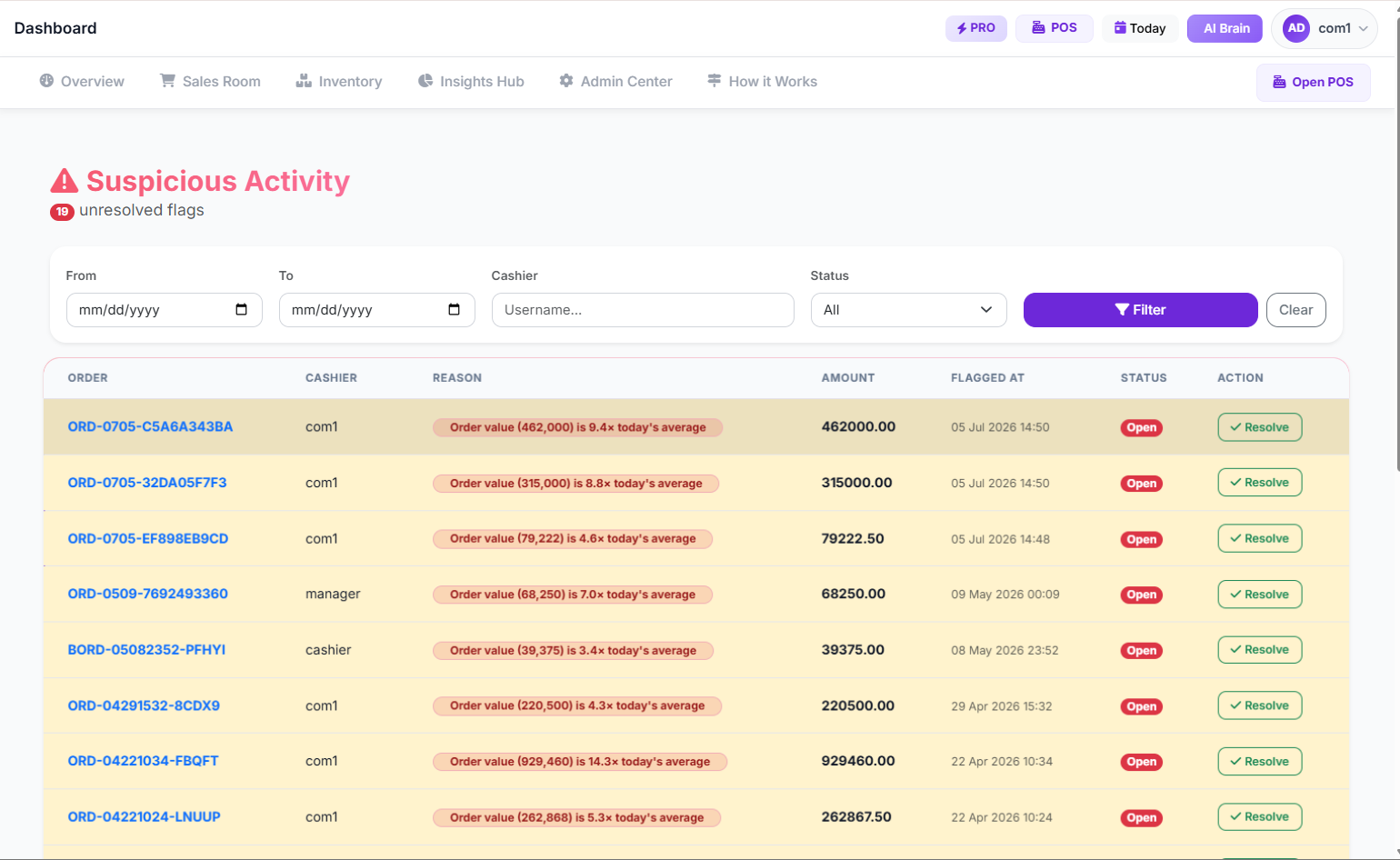 suspicious activity
- Customer Debt Status: If you offer credit, your mobile dashboard should give you an up-to-the-minute view of outstanding debts. Are customers paying on time? Are debts accumulating beyond acceptable limits? This is especially critical for provision stores in residential areas.
- Profit Margins: Ultimately, it's about profit. Your system should allow you to track your (gross and net) from your phone. If you're seeing healthy sales but declining profit, it signals issues with cost of goods, expenses, or pricing strategies.
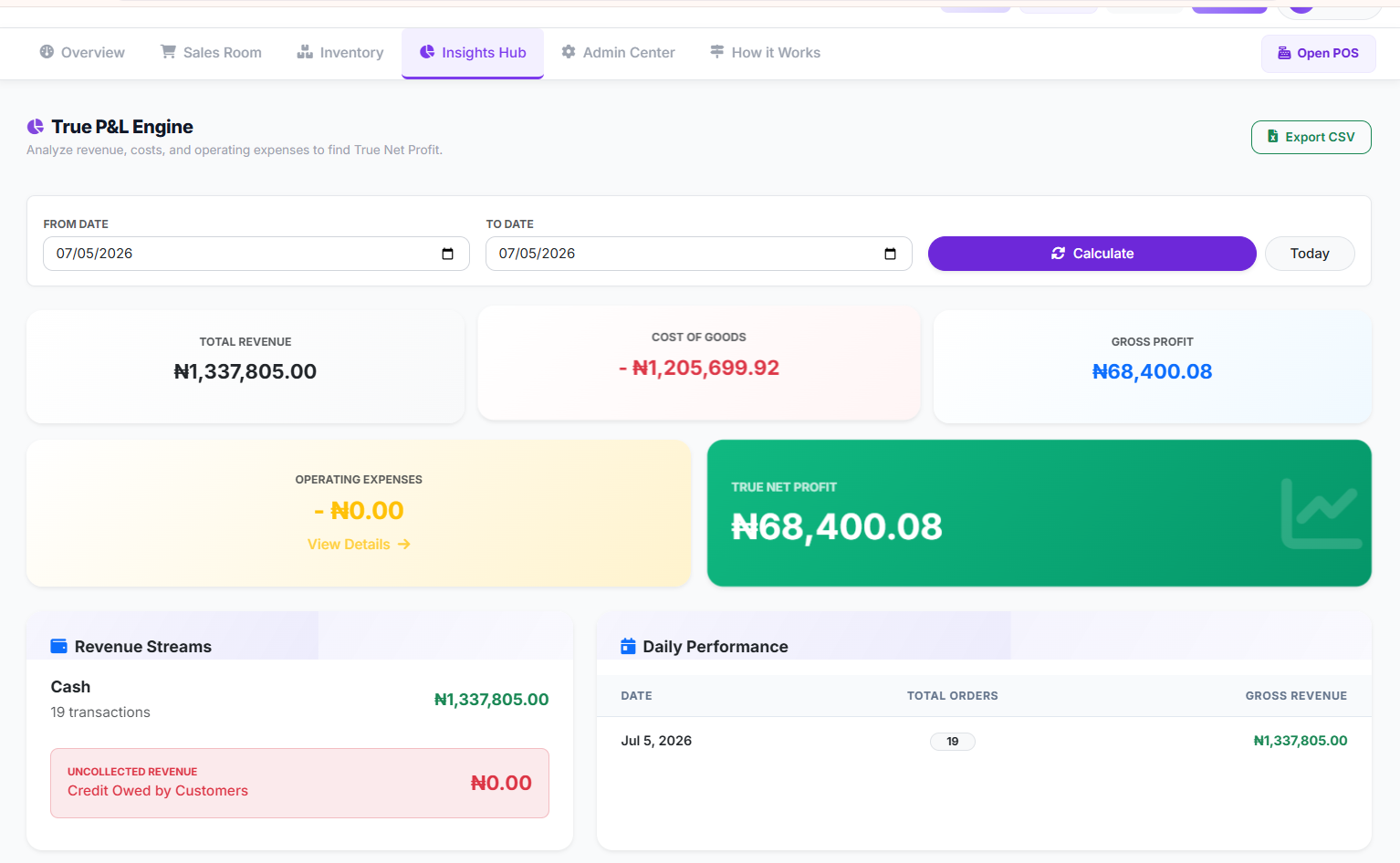 monthly profit margins
Real Questions People Ask (FAQ)
Q1: Is it really possible to manage a shop in Nigeria entirely from my phone?
A1: Yes, it absolutely is, but it requires the right tools and systems. You can't just rely on phone calls and WhatsApp messages. You need a robust POS system that offers mobile reporting and management capabilities, integrated with reliable internet and power backup at your shop. It means you can view sales, check inventory, and monitor staff activity from anywhere.
Q2: What's the biggest challenge with remote business monitoring in Nigeria?
A2: The biggest challenge is often the inconsistent power supply and internet connectivity. That's why investing in a good solar inverter system (₦250,000 - ₦1,500,000) and a stable internet plan (₦3,000 - ₦15,000 monthly) for your shop is not an optional extra, but a fundamental requirement. Without these, your remote monitoring system becomes useless during outages.
Q3: How do I prevent my staff from stealing or making mistakes if I'm not there?
A3: This is a valid concern for many Nigerian business owners. The key is a modern POS system that offers granular staff permissions and detailed activity logs. You can set up roles where cashiers only have access to process sales, while managers have more oversight. Systems like SwiftPOS track every action—sales, voids, discounts, stock adjustments—and can even flag suspicious activity. Combine this with CCTV, and you have a strong accountability framework.
Q4: What kind of phone do I need for effective mobile shop management?
A4: You don't need the most expensive phone. A reliable smartphone, preferably an Android device, with good battery life, sufficient storage, and stable internet access is enough. A basic Android phone for ₦45,000 - ₦120,000 will do the job perfectly for accessing your business dashboard and receiving alerts. The critical part is the software you run on it, not just the phone itself.
Q5: Is remote business monitoring expensive to set up for a small business?
A5: It's an investment, yes, but one with significant returns. The initial costs include a smartphone (₦45,000 - ₦250,000), a POS terminal (₦60,000 - ₦180,000), POS software subscription (₦4,000 - ₦15,000 monthly), CCTV (₦80,000 - ₦350,000), and power backup (₦250,000 - ₦1,500,000 one-time). However, consider the money you save from reduced theft, improved inventory management, and increased efficiency. Many business owners find that the POS system ROI quickly outweighs the initial outlay, especially when you factor in the 7 revenue leaks that remote monitoring can help you plug.
Your Next Move
You've seen that managing your business remotely from your phone isn't just a fantasy; it's a strategic move for any Nigerian retailer looking to grow and gain control in 2026. The information is out there, the tools are available, and the benefits are clear.
Your next step is to explore the possibilities. Take a deep dive into the features of a system that can truly empower you. Check out SwiftPOS NG to see how a comprehensive POS and business management system can put your entire operation in your pocket, giving you the freedom and control you deserve. You can even try it for free for 14 days to see the difference yourself. Don't let old advice hold your business back.
Written by SwiftPOS Team
Practical guides from the retail specialists at Nura Mustapha Technologies Limited, for modern Nigerian merchants.