AI vs. Traditional Inventory: Real-Time Profit for Nigerian Businesses
SwiftPOS Team
Published August 14, 2026
Are you constantly battling stockouts that frustrate customers, or conversely, holding onto excess inventory that ties up valuable capital? For many Nigerian retail businesses, the struggle to maintain optimal stock levels feels like a never-ending cycle, directly impacting your bottom line. It's a delicate balance, and getting it wrong means lost sales or wasted resources.
The Hidden Costs of Guesswork in Inventory Management
For years, traditional inventory counting methods—like periodic manual stocktakes or relying on basic spreadsheets—have been the backbone of retail operations. While seemingly straightforward, these approaches are riddled with inefficiencies and inaccuracies that silently erode profits. In 2026, relying solely on these methods means operating at a significant disadvantage.
Consider the time investment: manual stocktaking can shut down operations for hours or even days, diverting staff from sales or customer service. This downtime alone represents a substantial opportunity cost. Furthermore, human error in counting, recording, and data entry is almost inevitable. A recent study by Retail Dive in 2024 (the most recent comprehensive data available) highlighted that inventory distortion—a combination of out-of-stocks and overstocks—costs retailers globally an estimated $1.8 trillion. For small and medium-sized businesses in Nigeria, where margins can be tight, even a fraction of this inefficiency can mean the difference between thriving and merely surviving.
Beyond direct financial losses, inaccurate inventory leads to:
- Lost Sales: Customers walk away when an item they want isn't on the shelf, often turning to competitors.
- Spoilage and Obsolescence: Perishable goods expire, and fashion items go out of season, rendering them unsellable.
- Inefficient Capital Allocation: Money tied up in slow-moving stock could be invested in high-demand products or other growth initiatives.
- Increased Labor Costs: The constant need for manual checks, recounts, and adjustments drains staff productivity.
- Poor Customer Experience: Repeated stockouts or incorrect information about product availability damage your brand reputation.
Photorealistic editorial photography of a frustrated small business owner looking at a messy stack of paper inventory records on a cluttered desk. Professional harmonious color palette, modern, trustworthy, rule of thirds, clean background, ample negative space.The challenge is particularly acute for businesses with multiple branches or a wide range of products, making manual oversight practically impossible. Without a clear, real-time picture of what's selling and what's not, strategic decisions become mere guesses.
The Evolution: From Reactive Counting to Proactive Forecasting
The traditional approach to inventory management is inherently reactive. You count what you have, and then you react to shortages or surpluses. This method, while fundamental, struggles to keep pace with the dynamic nature of modern retail, especially in a bustling market like Nigeria. The shift towards a more proactive strategy is not just about efficiency; it's about competitive advantage and sustained profitability.
The smarter approach lies in leveraging data to predict future demand rather than just recording past transactions. This is where the power of advanced analytics and Artificial Intelligence (AI) comes into play. Instead of simply knowing how many items you have, you gain insights into how many items you will need, and when. This predictive capability transforms inventory from a static asset into a dynamic, profit-generating engine.
This methodology involves:
- Continuous Data Collection: Every sale, return, and stock adjustment is instantly recorded.
- Pattern Recognition: AI algorithms analyze historical sales data, seasonal trends, promotions, and even external factors (like holidays or local events) to identify purchasing patterns.
- Demand Forecasting: Based on these patterns, the system predicts future demand for each product with a high degree of accuracy.
- Optimized Restocking: Recommendations for optimal reorder points and quantities are generated, minimizing both stockouts and overstock.
- Performance Monitoring: Constant tracking of inventory health, identifying slow-moving items and fast sellers.
How SwiftPOS NG Transforms Your Inventory Strategy
Implementing an AI-powered inventory forecasting system might sound complex, but it doesn't have to be. SwiftPOS NG provides a comprehensive solution designed specifically for Nigerian small-to-medium retail businesses, seamlessly integrating advanced inventory management with AI-driven insights. It bridges the gap between your daily sales operations and strategic stock planning.
With SwiftPOS NG, every transaction recorded through the Point-of-Sale (POS) terminal instantly updates your inventory, providing a real-time view of stock levels across all your products and branches. This eliminates the need for tedious manual counts and drastically reduces human error.
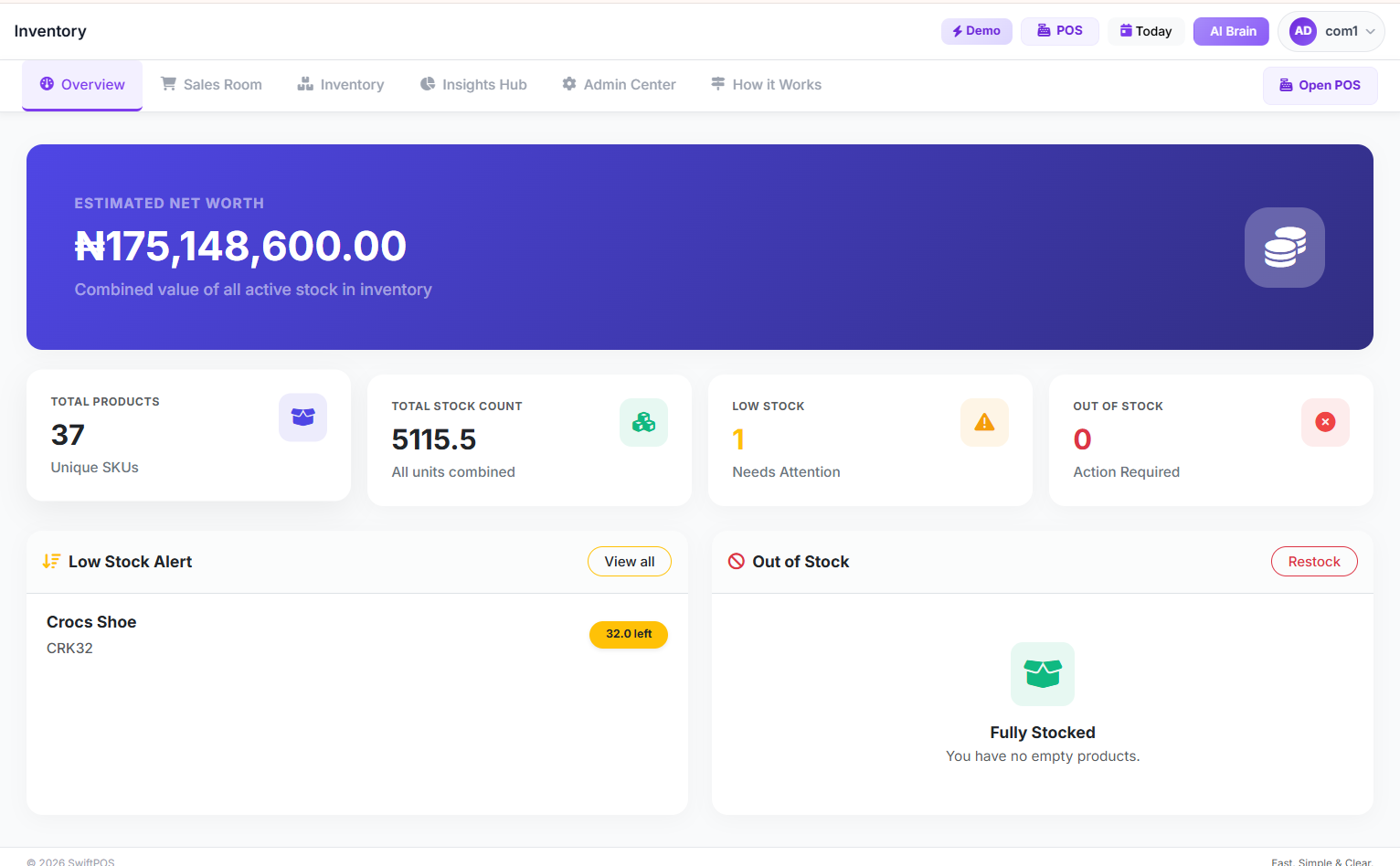 Inventory Dashboard
The platform's AI-powered Stock Forecast feature (F53) is a game-changer. It analyzes your sales data, calculates average daily sales, and predicts "days to stockout," giving you clear, actionable recommendations on when and how much to restock. This proactive insight helps you maintain optimal stock levels, ensuring popular items are always available while preventing capital from being tied up in slow-moving inventory. You can explore more of its comprehensive features on our features page.
For example, when you need to add new products or restock existing ones, the process is streamlined.
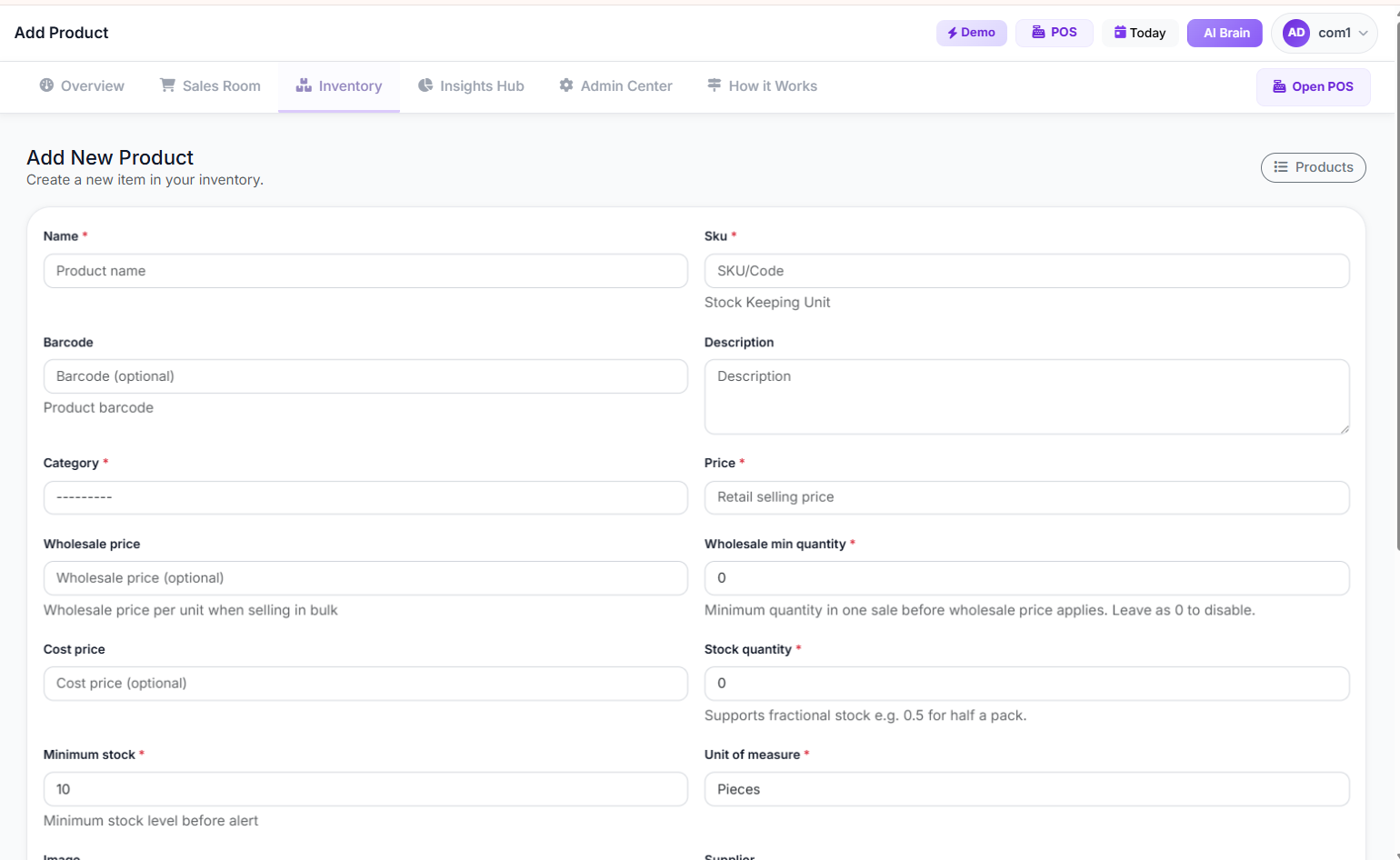 Add/Edit Product Page
The system also allows for easy stock adjustments (F19) for restocks, reductions, damage, or returns, all meticulously logged for full transparency. For businesses with multiple locations, the inter-branch stock transfer (F27) functionality ensures efficient movement of goods, optimizing stock distribution and reducing waste. These tools collectively empower you to make data-driven decisions that directly boost your profitability.
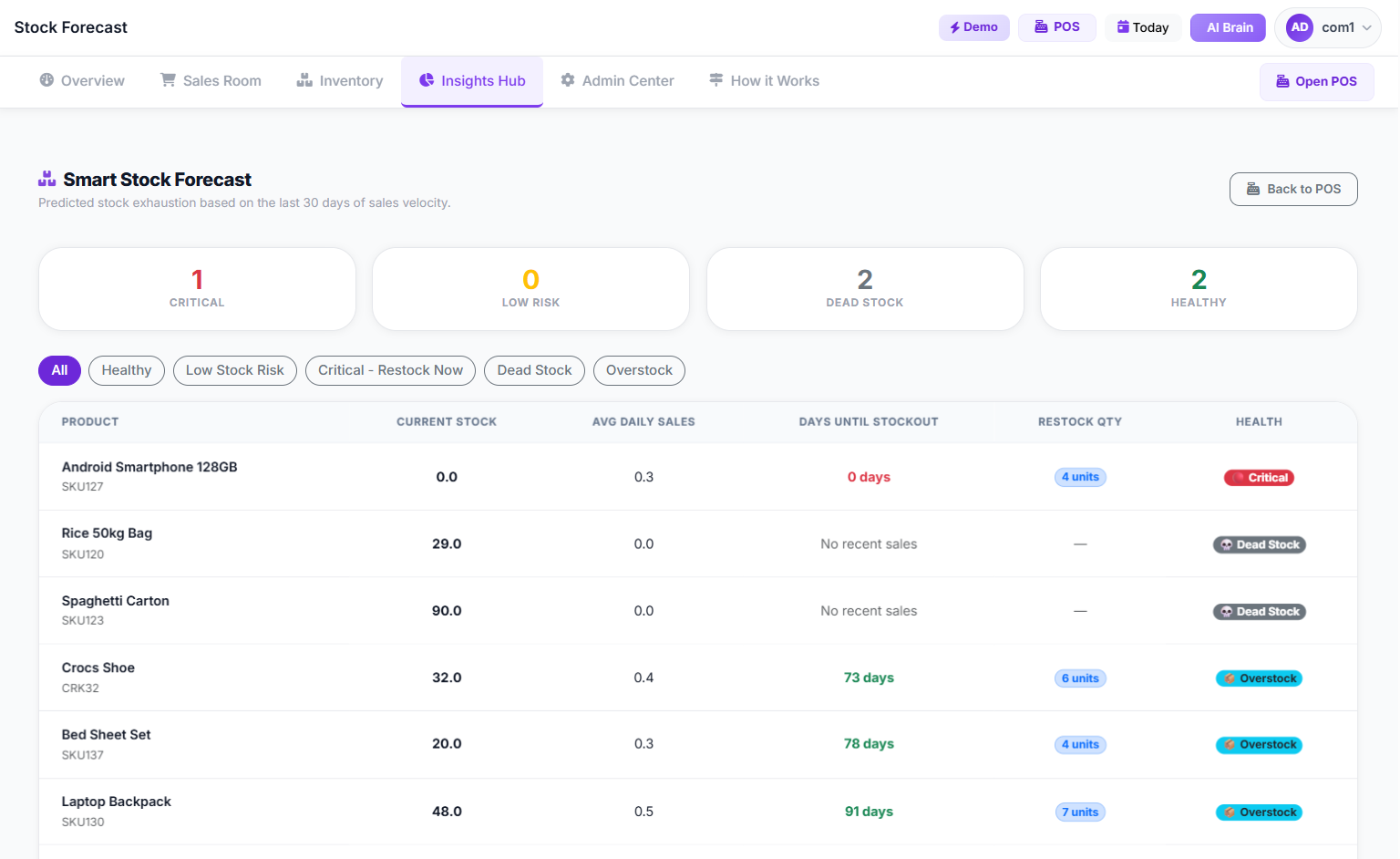 Smart Store Forcast Page
Proof: Side-by-Side Comparison
Let's look at how the traditional, manual approach stacks up against an AI-driven system in the context of inventory management.
| Feature / Aspect | Traditional Methods (Manual/Basic Excel) | AI-Powered Forecasting (e.g., SwiftPOS NG) |
|---|---|---|
| Data Collection | Manual counting, handwritten logs, basic spreadsheet entry. Prone to errors. | Automated via POS, barcode scanning, and digital records. High accuracy, real-time updates. |
| Accuracy of Stock Levels | Often outdated, inconsistent, and inaccurate due to human error and delays. | Highly accurate, real-time reflection of stock across all locations. |
| Demand Prediction | Based on intuition, experience, or simple averages of past sales. Guesswork. | Predictive algorithms analyze trends, seasonality, promotions, and external factors for precise forecasts. |
| Restock Decisions | Reactive; ordering when stock runs low or during periodic reviews. | Proactive; automated alerts and recommendations for optimal reorder points and quantities. |
| Identifying Slow/Fast Movers | Labor-intensive manual analysis of sales reports, often delayed. | Automated dashboards highlight top-selling, slow-moving, and dead stock instantly. |
| Capital Utilization | High risk of overstocking (tied-up capital) or understocking (lost sales). | Optimized inventory levels, minimizing holding costs and maximizing sales opportunities. |
| Labor Efficiency | Significant staff time spent on counting, reconciliation, and data entry. | Staff time freed from manual tasks, allowing focus on sales, customer service, and strategic operations. |
| Multi-Branch Visibility | Extremely challenging to get a consolidated, real-time view. | Centralized system provides a unified, real-time view of inventory across all branches. |
| Profit Margin Impact | Reduced due to stockouts, overstocks, and operational inefficiencies. | Enhanced through optimized stock, reduced waste, improved sales, and efficient capital use. |
"In the competitive retail landscape of 2026, businesses that fail to embrace intelligent inventory solutions are essentially leaving money on the table, struggling to keep up with customer demand and market fluctuations."
 Sleek 3D illustration of a retail store dashboard displaying various inventory metrics, charts, and product images. Professional harmonious color palette, modern, trustworthy, rule of thirds, clean background, ample negative space.
Frequently Asked Questions
Q1: What is AI-powered stock forecasting and how does it differ from traditional inventory management?
AI-powered stock forecasting uses advanced algorithms to analyze historical sales data, market trends, seasonality, and other factors to predict future demand for products. This differs significantly from traditional methods, which typically rely on manual counts, basic averages, or human intuition to manage stock. AI provides precise, data-driven predictions, minimizing guesswork and improving accuracy.
Q2: Is AI inventory management only for large businesses?
Not at all. While large enterprises have adopted AI for years, solutions like SwiftPOS NG are specifically designed for small-to-medium retail businesses in Nigeria. They offer accessible, user-friendly interfaces that bring the power of AI to businesses that previously couldn't afford or implement such technology, making it easier to manage everything from
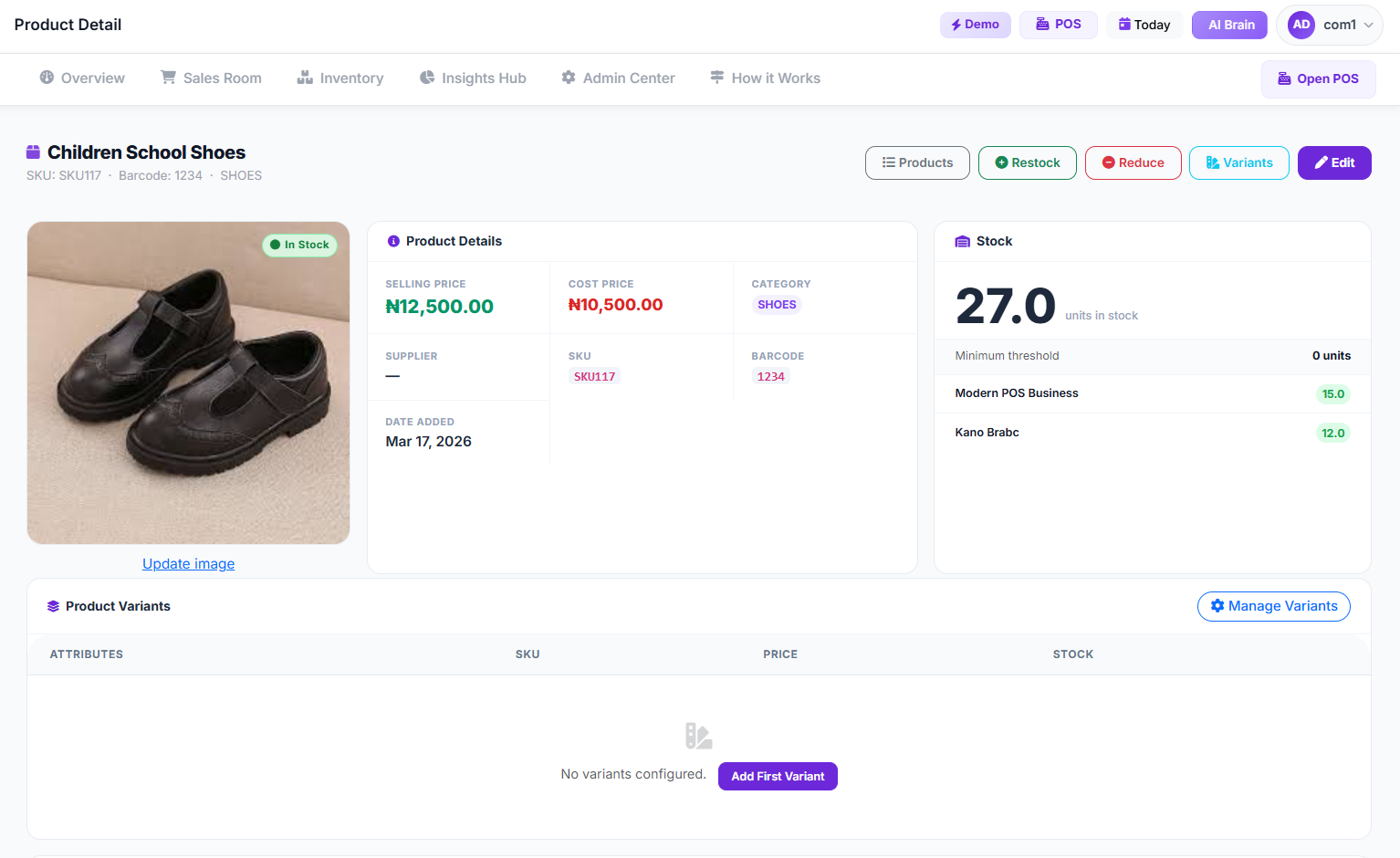 product details
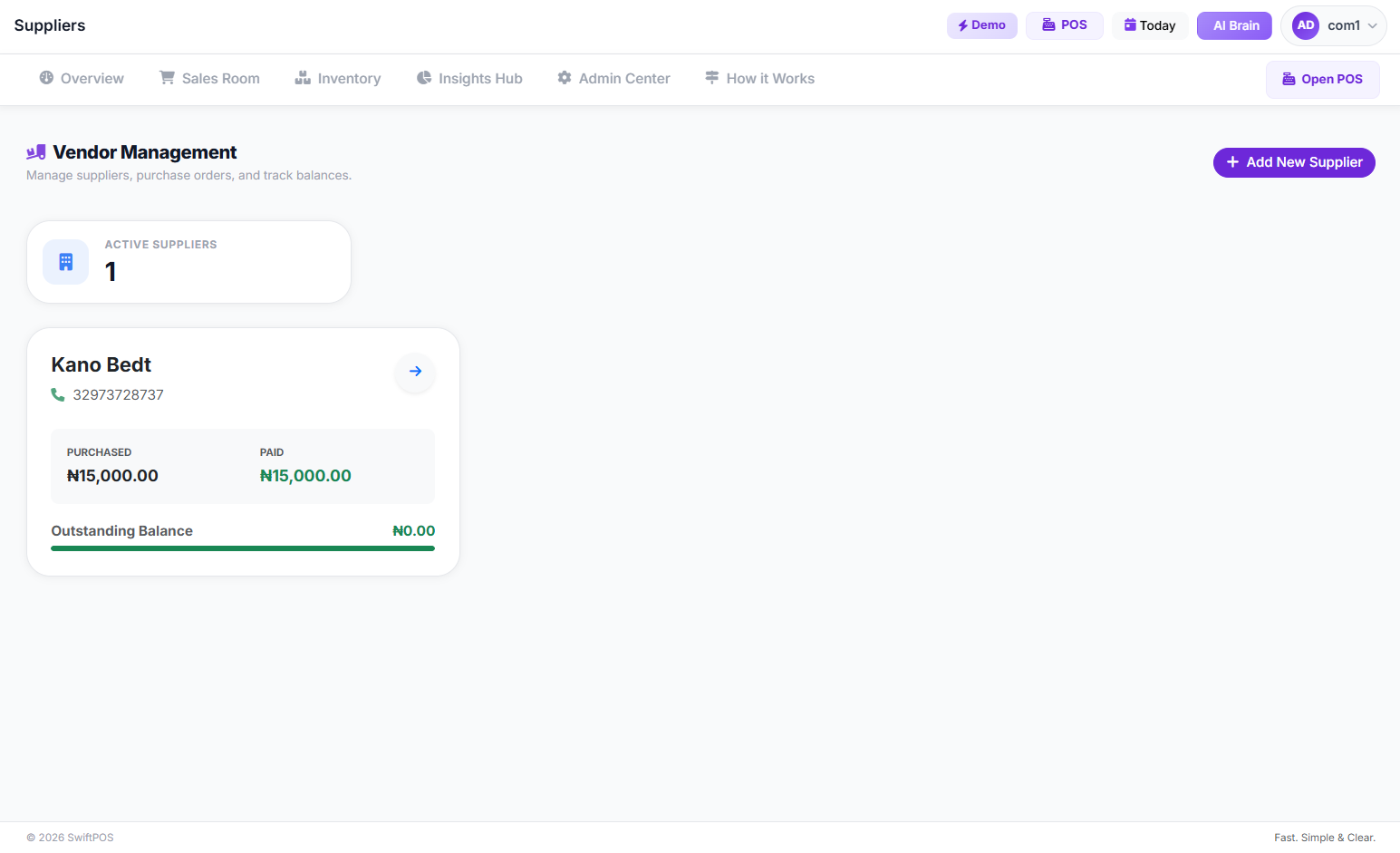 supplier relationships
Q3: How quickly can I see results after implementing AI inventory forecasting?
The speed of results can vary, but most businesses begin to see improvements in stock accuracy and reduced stockouts within weeks or a few months. The AI system learns and refines its predictions over time as it gathers more data, leading to increasingly optimized inventory levels and better cash flow.
Q4: What kind of data does AI use for forecasting, and is it secure?
AI uses a variety of data points, including past sales records, product categories, promotional data, supplier lead times, and even external factors like public holidays or local events. Reputable systems prioritize data security through encryption and robust access controls, ensuring your business information remains protected. For more on how our system works, visit our About Us page.
Q5: Will an AI inventory system replace my staff?
No, an AI inventory system is a tool designed to empower your staff, not replace them. It automates tedious tasks, provides valuable insights, and frees up your team to focus on customer service, sales, and strategic business growth. Your staff will spend less time counting and more time adding value, leading to a more efficient and profitable operation.
 Minimalist graphic design showing a stylized upward trend arrow over a collection of retail product icons, symbolizing growth and efficiency. Professional harmonious color palette, modern, trustworthy, rule of thirds, clean background, ample negative space.
Ready to transform your retail operations and unlock real-time profit? Explore the power of AI-driven inventory management and see how SwiftPOS NG can elevate your business.
Sign up for a free trial today and experience the difference: Get Started with SwiftPOS NG
Contact us for a personalized demo or more information:
WhatsApp: +2349164601810

10 Best Retail POS Systems for 2026: Unbiased Reviews …
Sep 27, 2026
7 Best Retail POS Systems for Small Businesses in 2026…
Sep 27, 2026
How to Start a Clothing Business in Nigeria: A Step-by…
Sep 26, 2026