How Much Does It Cost to Open a Supermarket in Nigeria? [2026 Guide]
SwiftPOS Team
Published September 05, 2026
![How Much Does It Cost to Open a Supermarket in Nigeria? [2026 Guide]](/media/blog_images/gen1f0defcc795e4d05957a8af0cab3cdd5.webp)
In Nigeria, the dream of owning a successful retail business often clashes with the harsh reality of startup costs. Many aspiring entrepreneurs underestimate the capital required, leading to financial strain or even business failure within the first year. Understanding the true financial landscape before you begin is not just smart planning; it's essential for survival and growth.
Nigerian market stall with fresh produceThe Evolving Landscape of Nigerian Retail in 2026
The Nigerian retail sector in 2026 is a dynamic environment, marked by both immense opportunity and significant challenges. Fuelled by a rapidly growing population and increasing urbanization, demand for consumer goods remains high. However, businesses face hurdles like fluctuating exchange rates, infrastructure deficits, and intense competition from both traditional markets and emerging e-commerce platforms. Despite these, the provision store and mini-supermarket model continues to thrive, serving as a crucial everyday touchpoint for millions of Nigerians.
A key trend this year is the increasing adoption of technology by small and medium-sized businesses. Retailers are moving away from manual record-keeping, recognizing the "hidden costs of manual retail operations" that impact their bottom line. Data from industry reports suggests that businesses leveraging digital tools for inventory, sales, and customer management are seeing up to a 15-20% improvement in efficiency and profitability compared to those still relying on paper or basic spreadsheets. This shift highlights a growing understanding that initial technology investments, like a robust POS system, offer a significant return on investment (ROI) for Nigerian retailers.
What You Need Before You Start
Before diving into the financial breakdown, ensure you have these foundational elements in place:
- Clear Business Plan: A detailed plan outlining your concept, target market, product selection, marketing strategy, and financial projections.
- Market Research: Understand local demand, competition, pricing strategies, and preferred supplier channels in your chosen location.
- Legal Counsel: Engage with a legal professional to navigate business registration and compliance requirements.
- Financial Literacy: A basic understanding of business finance, cash flow, and profit margins is crucial.
- Resilience: The Nigerian business environment demands perseverance and adaptability.
Step-by-Step: How Much Does It Cost to Open a Provision Store/Mini Supermarket in Nigeria?
Starting a provision store or mini-supermarket in Nigeria involves several critical investments. Here’s a comprehensive breakdown of the provision store startup cost, ranging from a modest suburban outlet to a more substantial urban establishment in 2026. This detailed provision store investment guide aims to give you a realistic picture of the shop capital required.
Step 1: Business Registration and Legal Compliance
The very first step is to formalize your business. This involves registering your company with the Corporate Affairs Commission (CAC).
- Cost: Expect to spend between ₦25,000 and ₦70,000. The lower end is for a basic business name registration, while the higher end covers a limited liability company, which offers more protection and credibility as you scale.
- Why it matters: Proper registration grants your business legal standing, allows you to open a corporate bank account, and builds trust with suppliers and customers. Neglecting this step can lead to penalties and operational hurdles down the line. You'll also need to consider other permits, depending on your state and local government, which might add another ₦10,000 - ₦50,000 annually.
Step 2: Securing Your Business Location (Rent & Deposit)
Location is paramount for a retail business. A good spot with high foot traffic can make or break your sales. Shop rent in Nigeria is typically paid annually, often with an upfront security deposit.
- Cost: Annual rent can range from ₦300,000 for a small space in a less commercial area or smaller town, up to ₦5,000,000 or more for a prime location in a bustling city like Lagos or Abuja.
- Security Deposit: Factor in an additional ₦150,000 to ₦2,500,000 for the security deposit, which is usually 3-6 months' rent.
- Why it matters: Your location determines your customer base. High visibility and accessibility are worth the investment. Consider proximity to residential areas, offices, and transport hubs.
Step 3: Shop Renovation and Fit-Out
Once you have the space, you need to make it functional and appealing to customers. This includes painting, flooring, lighting, and any structural modifications.
- Cost: A basic setup might cost ₦500,000, covering essential painting and minor repairs. A modern, well-lit, and air-conditioned store with quality flooring and ceiling work could cost upwards of ₦10,000,000.
- Why it matters: A clean, organized, and attractive store enhances the customer experience, encourages impulse purchases, and builds your brand image.
Step 4: Shelving and Display Units
Effective product display is crucial for a provision store. Shelving, racks, and counter units help organize your products and present them neatly.
- Cost: Basic metal shelving units can start from ₦200,000. For custom-built wooden shelves, glass display cases, and checkout counters, you might spend up to ₦2,000,000.
- Why it matters: Good display units optimize space, make products easy to find, and prevent clutter, contributing to a pleasant shopping environment.
Step 5: Essential Equipment (Refrigeration, Generator, POS System)
These are critical operational assets that ensure your products are preserved, your business runs smoothly, and transactions are efficient.
- Refrigeration Units (Freezers/Chillers): If you plan to sell cold drinks, dairy, or frozen foods, these are indispensable. A used unit might cost ₦400,000, while new industrial-grade freezers can be ₦3,000,000 or more per unit.
- Generator (Backup Power): Given Nigeria's power situation, a reliable generator is a must. A small petrol generator for basic lighting and a few appliances could be ₦300,000, while a larger diesel generator for consistent power to all operations, including refrigeration, might cost up to ₦2,500,000.
- POS System (Hardware & Software): Moving beyond manual ledgers is vital for accuracy and efficiency. A basic tablet POS system can start from ₦150,000, including basic hardware. A multi-terminal system with scanners, receipt printers, and advanced software could go up to ₦700,000. For comprehensive business management, a system like SwiftPOS NG offers robust features for sales, inventory, customer management, and reporting, helping you manage your retail shop using AI and useful insights. You can learn more about the complete POS hardware setup for supermarkets.
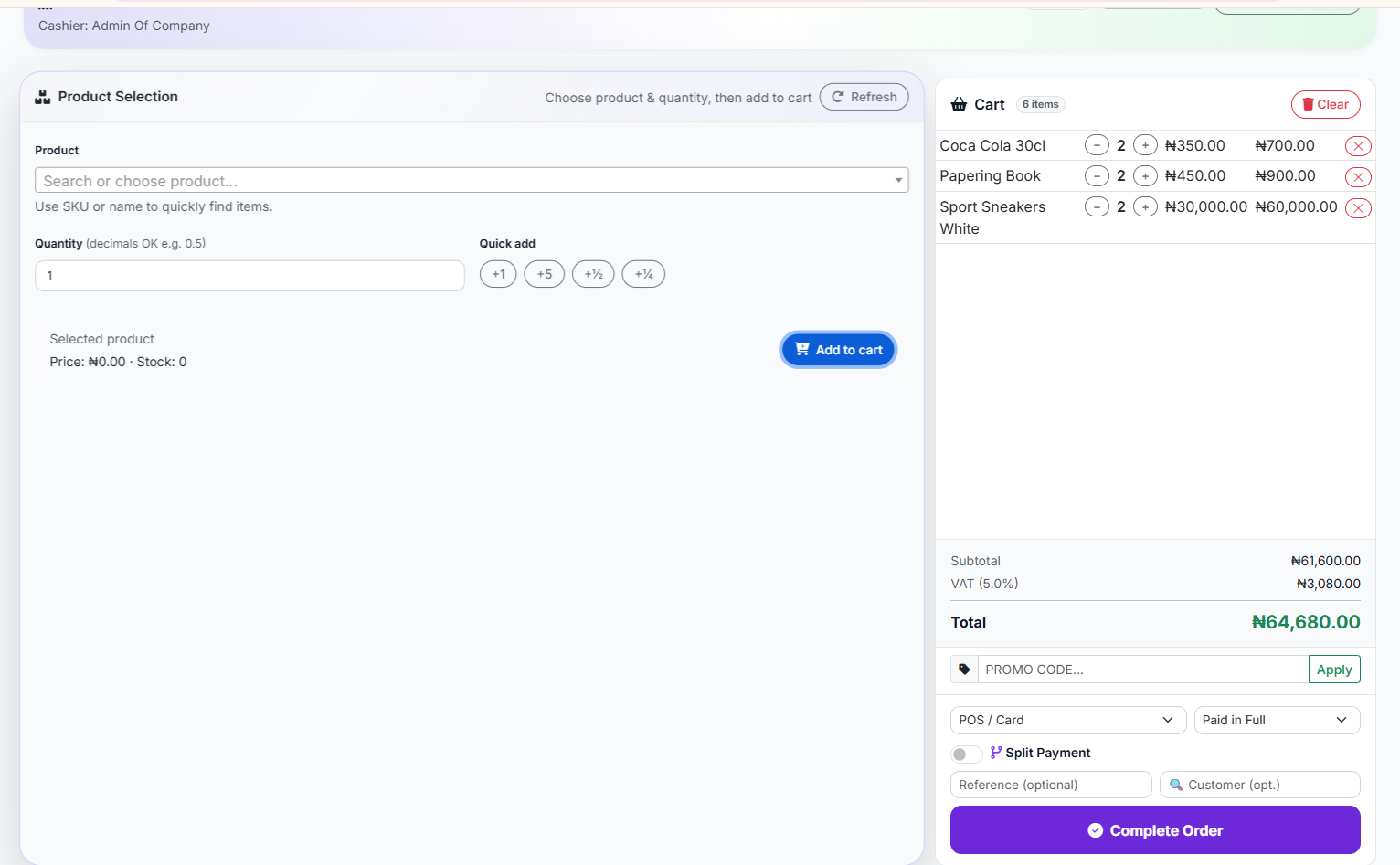 Classic POS Interface (List select)
- Why it matters: These investments prevent spoilage, ensure uninterrupted service, and streamline sales, inventory tracking, and financial reporting. A good POS system provides crucial data for decision-making.
Step 6: Initial Stock Purchase
This is often the largest single expenditure for a provision store. The amount depends heavily on the size of your store and the variety of products you intend to carry.
- Cost: For a small convenience store with essential items, expect to spend ₦1,500,000. A medium-sized supermarket with a wider range of products, including groceries, toiletries, and household items, could require ₦25,000,000 or more.
- Why it matters: A well-stocked store attracts customers and ensures you can meet demand. Strategic inventory management is key to minimizing waste and maximizing sales. Read more on how to manage your retail store using AI in Nigeria.
Step 7: Staffing and Salaries
You'll need reliable staff to manage daily operations, assist customers, and handle sales.
- Cost: A sales assistant in a small town might earn ₦45,000 - ₦60,000 monthly. A manager or experienced staff member in a city could command ₦80,000 - ₦120,000 per month. Budget for at least 2-3 staff members initially.
- Why it matters: Your staff are the face of your business. Well-trained and motivated employees provide excellent customer service, which leads to repeat business. Setting staff access permissions in retail software can also enhance security and efficiency.
Step 8: Marketing and Grand Opening
Getting the word out about your new store is crucial for attracting initial customers.
- Cost: A basic local flyer distribution and social media announcement might cost ₦50,000. A more extensive grand opening event with promotions, local advertising, and a targeted social media campaign could reach ₦500,000.
- Why it matters: A strong launch can create buzz, drive initial sales, and establish your presence in the community.
Step 9: Working Capital
Beyond the initial setup costs, you need a buffer to cover operational expenses before your business generates consistent revenue. This is your provision store capital for day-to-day running.
- Cost: Allocate ₦1,000,000 - ₦10,000,000 to cover 3-6 months of operating costs, including salaries, utility bills, rent, and restocking.
- Utility Bills (Monthly): These can range from ₦50,000 for a small store to ₦500,000 for a large store with heavy refrigeration and air conditioning.
- Why it matters: This financial cushion prevents cash flow crises during slow periods and allows you to reinvest in stock or absorb unexpected costs.
Total Estimated Provision Store Startup Cost / Supermarket Capital Investment in Nigeria (2026):
Combining these estimates, the total provision store investment can range significantly:
- Small Provision Store (Suburban/Rural): ₦2,500,000 - ₦6,000,000
- Medium-Sized Mini Supermarket (Urban/Commercial): ₦10,000,000 - ₦40,000,000+
This range highlights that while starting small is feasible, scaling up requires substantial capital. For a deeper dive into the profitability and cost breakdown for a mini supermarket, check out our article: Is Supermarket Business Profitable in Nigeria?
Common Mistakes to Avoid
- Underestimating Working Capital: Many businesses fail not because they don't make sales, but because they run out of money to cover day-to-day operations. Always have a sufficient working capital buffer.
- Ignoring Market Research: Opening a store without understanding local demand, competitor pricing, and preferred products is a recipe for disaster.
- Neglecting Inventory Management: Poor stock control leads to dead stock, expired goods, and lost sales from popular items being out of stock. This is one of the key inventory management mistakes crushing profits.
- Poor Customer Service: In a competitive market, customer experience is king. Disregard for customer satisfaction will quickly drive patrons to competitors.
- Failing to Adopt Technology: Sticking to manual processes in 2026 is a significant disadvantage. It leads to errors, wasted time, and a lack of critical insights. Learn why traditional bookkeeping vs. POS software is a critical choice for Nigerian retailers.
- Lack of Financial Tracking: Without proper records of sales, expenses, and profits, you can't make informed decisions or understand your business's true health.
How to Track and Grow After Launch
Launching your provision store is just the beginning. Continuous monitoring and strategic growth are essential.
- Key Performance Indicators (KPIs): Track metrics like daily sales, average transaction value, inventory turnover rate, customer retention, and gross profit margin. These 7 key retail metrics Nigerian businesses must track for profit growth will guide your decisions.
- Leverage Technology for Insights: A robust POS system, like SwiftPOS NG, does more than just process sales. It provides valuable business insights, allowing you to identify best-selling products, understand peak hours, and track staff performance. The system can even help you predict when products will run out of stock, ensuring you always have popular items available.
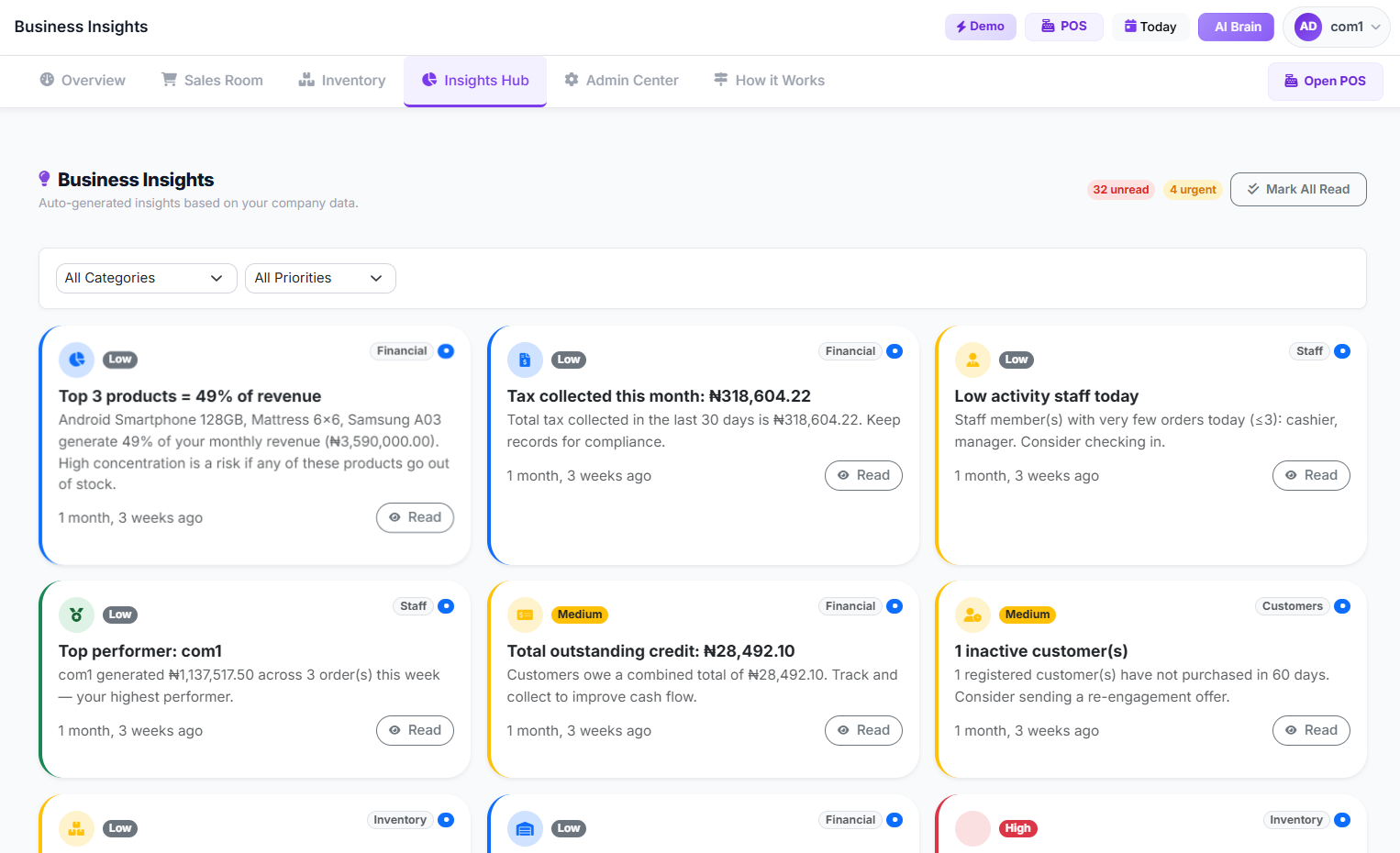 Business Insights Page
- Customer Relationship Management: Build loyalty programs, collect customer feedback, and offer personalized promotions. Tools like WhatsApp automation for customer notifications can be highly effective in the Nigerian context.
- Supplier Relationships: Maintain strong relationships with your suppliers to negotiate better prices and ensure consistent stock availability.
- Marketing & Promotions: Continuously engage with your community through local promotions, social media, and seasonal campaigns.
- Expand Your Offerings: Based on customer demand and market trends, consider gradually introducing new product lines or services.
- Consider Multi-Branch Expansion: If your first store is successful, explore opening additional branches. A system like SwiftPOS NG is designed to manage multi-branch retail operations seamlessly, allowing you to track inventory, sales, and staff across all locations from a central hub.
Frequently Asked Questions
Q1: Is a provision store profitable in Nigeria in 2026?
Yes, a provision store can be highly profitable in Nigeria, especially with effective management and strategic location. The key is to control costs, manage inventory efficiently, and provide excellent customer service. Many successful provision stores operate with good margins, especially those that cater to daily needs and offer a diverse product range.
Q2: What is the biggest challenge for new provision store owners?
The biggest challenge is often managing initial capital and working capital effectively. Many new businesses underestimate the provision store startup cost and the ongoing need for funds to cover expenses before consistent revenue is achieved. Poor inventory management and lack of proper financial tracking are also significant hurdles.
Q3: How important is location for a provision store?
Location is extremely important. A store in a high-traffic area, easily accessible to residential communities or busy commercial hubs, will naturally attract more customers. Conversely, a poorly located store, even with excellent products, will struggle to gain visibility and sales.
Q4: Should I use manual records or a POS system for my provision store?
In 2026, using manual records is a significant disadvantage. A POS system offers numerous benefits, including faster transactions, accurate inventory tracking, detailed sales reports, better customer management, and reduced errors. It helps you understand your business performance in real-time, which is crucial for growth and profitability. You can explore the benefits of a modern POS system for your business.
Q5: How can I secure funding for my provision store?
Funding options include personal savings, loans from family and friends, microfinance loans, commercial bank loans, and grants from government or private sector initiatives aimed at supporting small businesses. Developing a solid business plan is essential when seeking external funding.
Q6: What kind of products should I stock in my provision store?
Start with high-demand, fast-moving consumer goods (FMCGs) like beverages, snacks, toiletries, basic groceries (rice, oil, sugar), and household essentials. Over time, you can expand your inventory based on customer feedback and local demand.
Ready to Streamline Your Provision Store Operations?
Starting a provision store or mini-supermarket in Nigeria is a significant undertaking, but with careful planning and the right tools, it can be a highly rewarding venture. Understanding the financial commitment upfront is the first step towards building a sustainable and profitable business. If you're ready to move beyond manual processes and empower your retail business with smart technology, explore how SwiftPOS NG can help you manage your sales, inventory, and customers efficiently. Learn more about our features and pricing plans today.