How Much Profit Do Convenience Stores Make Monthly?
SwiftPOS Team
Published September 06, 2026

Navigating the unpredictable currents of the Nigerian retail market can feel like sailing without a compass. You’re working tirelessly, the shop is busy, but at the end of the month, the actual profit often feels like a mystery, leaving you wondering if all the effort is truly paying off. Understanding your true profitability, especially for a provision store or convenience store, is crucial for survival and growth in 2026.
Shop owner reviewing ledger with calculatorThe Real Numbers: Unpacking Convenience Store Profitability in Nigeria
Many provision store owners in Nigeria operate on a gut feeling, estimating their monthly shop profit rather than knowing it precisely. This lack of clear financial insight is one of the biggest silent killers of small businesses. In 2026, with inflation and shifting consumer habits, a clear understanding of your retail profit in Nigeria is more critical than ever.
Let's break down the typical financial landscape for a Nigerian convenience store or provision store. These figures represent realistic ranges across different locations, from a small neighborhood shop to a bustling urban mini-mart.
Initial Setup Costs (One-Time)
Setting up a provision store requires an initial capital outlay. These costs can vary significantly:
- Initial Stock Purchase: ₦300,000 - ₦1,500,000 (depending on scale and location).
- Shop Fittings/Shelving: ₦80,000 - ₦400,000 (from basic wooden shelves to modern metal racks and display units).
- Generator: ₦150,000 - ₦600,000 (essential for power stability, from a small 'I-better-pass-my-neighbour' to a larger inverter model).
Ongoing Monthly Operating Expenses
These are the costs that eat into your revenue every single month, directly impacting your provision store profit margin:
- Shop Rent (Annualized Monthly): ₦7,000 - ₦170,000 (this is the monthly equivalent of annual rent, which can range from a rural kiosk to a prime Lagos Island location).
- Staff Salary (per staff): ₦35,000 - ₦70,000 (for a shop assistant in a small town versus an experienced cashier in a city). Many shops employ at least one assistant.
- Electricity/Fuel for Generator: ₦15,000 - ₦80,000 (depending on grid stability and generator reliance).
- Transportation/Logistics: ₦10,000 - ₦50,000 (for sourcing goods, from local markets to major distributors).
- Miscellaneous Expenses: ₦5,000 - ₦25,000 (airtime, cleaning supplies, minor repairs, etc.).
Revenue and Profit Potential
Now, let's look at what a provision store can realistically bring in:
- Average Monthly Revenue: ₦300,000 - ₦2,500,000 (ranging from a small community shop to a high-traffic urban convenience store).
- Gross Profit Margin (on goods): 10% - 25% (fast-moving staples like bread and drinks have lower margins, while specialty items or snacks offer higher margins).
- Net Monthly Profit: ₦40,000 - ₦450,000 (this is what's left after all expenses, for a well-managed small shop versus a successful urban store).
These figures highlight a wide range, underscoring that while potential exists, profitability is not guaranteed. It requires diligent management and a keen eye on every naira. You can explore more about these costs in our detailed guide on How Much Money Do You Need to Open a Mini Supermarket in Nigeria in 2026?.
The Hidden Costs of Guesswork: Why Manual Systems Undermine Your Profit
Many Nigerian retailers, especially provision store owners, still rely on manual ledgers or basic spreadsheets to track sales and inventory. While seemingly cost-free, this approach is riddled with hidden expenses and inefficiencies that directly erode your monthly shop profit.
Consider these common pitfalls:
- Inaccurate Stock Counts: Manual tracking often leads to discrepancies, resulting in either overstocking (tying up capital) or understocking (missing out on sales). A 2026 industry report indicates that Nigerian retailers can lose up to 10% of potential revenue due to poor inventory management. Read more about avoiding these issues in Nigerian Retailers: Inventory Management Mistakes Crushing Your Profits.
- Shrinkage and Theft: Without proper sales records and inventory checks, it's difficult to identify product losses due to theft (internal or external) or damage. This directly impacts your provision store profit.
- Pricing Errors: Manually updating prices or applying discounts can lead to mistakes at the point of sale, either short-changing the business or overcharging customers, damaging trust.
- Slow Customer Service: Hand-calculating totals or searching for prices manually slows down checkout lines, frustrating customers and potentially driving them to competitors.
- Time Drain: Owners spend countless hours reconciling books, counting stock, and trying to make sense of scattered data – time that could be spent on growth strategies or customer engagement. This is a significant hidden cost. Dive deeper into these issues in Why Manual Retail Management Is Costing Nigerian Shops Money.
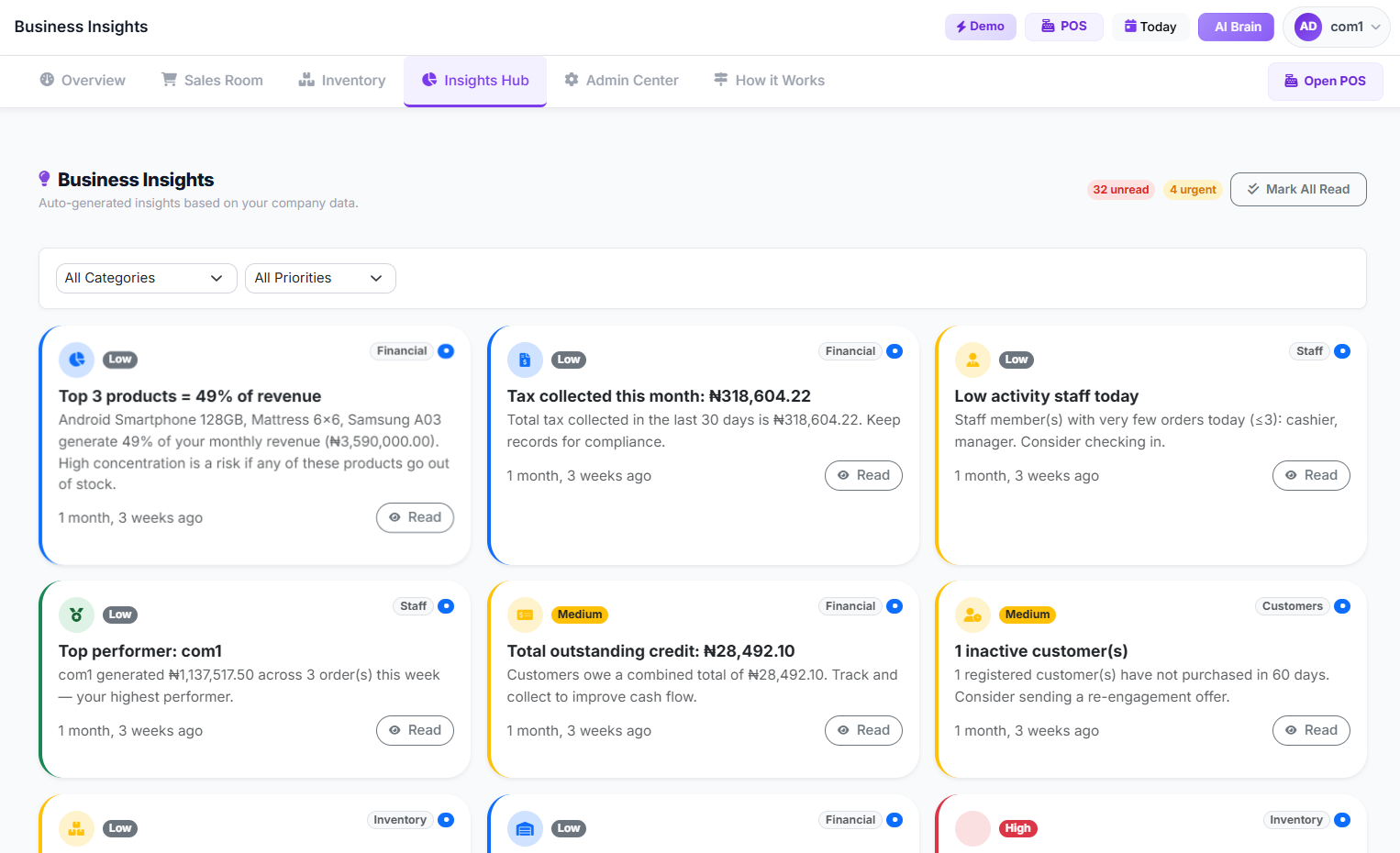 Business Insights Page
The Smarter Approach: Data-Driven Retail Management
The path to maximizing your retail profit in Nigeria lies in adopting a data-driven approach. This means moving beyond guesswork and leveraging technology to gain clear, actionable insights into every aspect of your business.
A smart retail management strategy involves:
- Automated Sales Tracking: Every transaction is recorded instantly, accurately, and categorised. This eliminates manual errors, speeds up checkout, and provides a real-time view of your revenue.
- Real-Time Inventory Management: Knowing exactly what you have in stock, what's selling, and what's running low. This prevents stockouts of popular items and reduces capital tied up in slow-moving inventory. It also helps in identifying expired goods before they become a total loss, crucial for provision store profit.
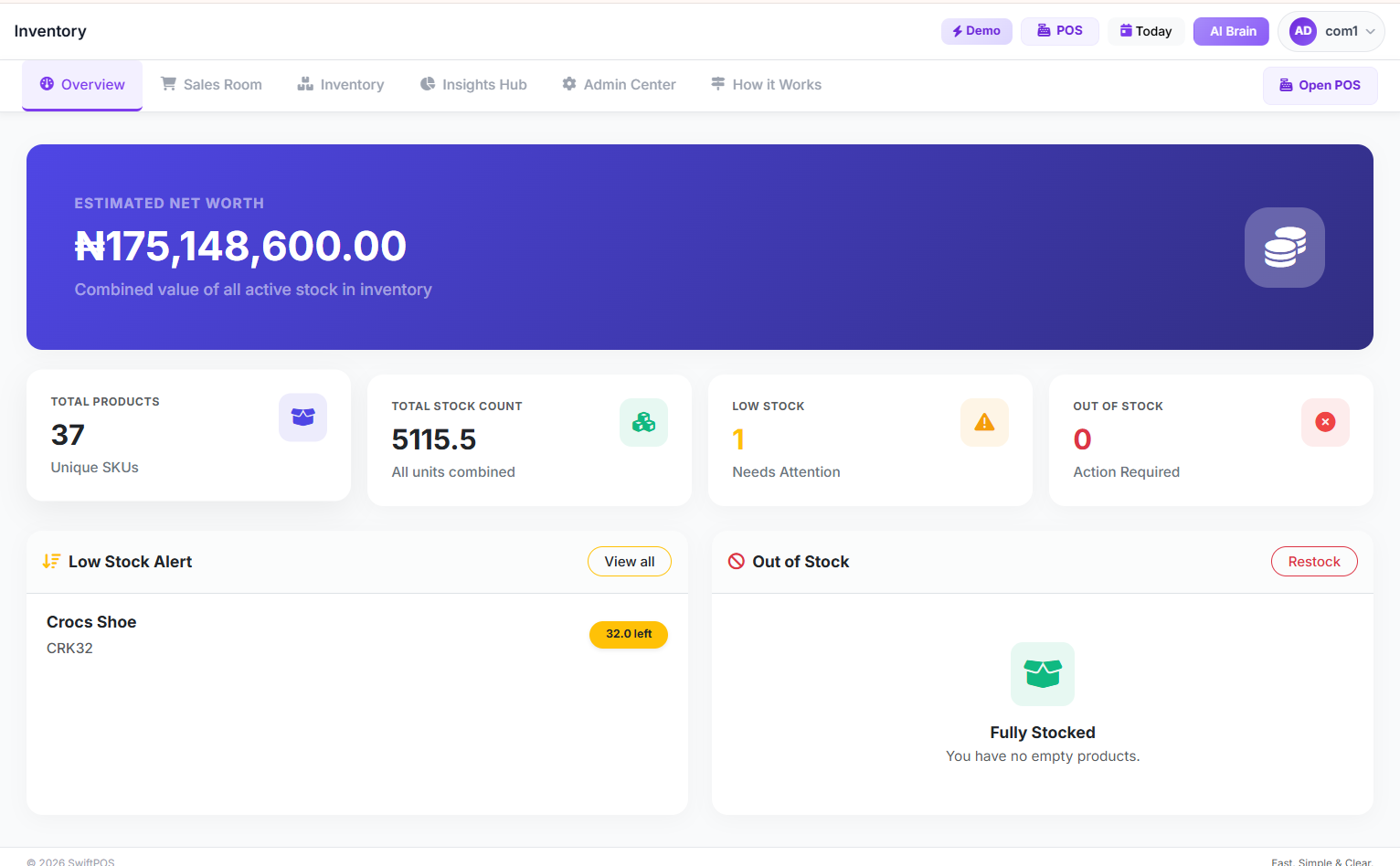 Inventory Dashboard
- Expense Tracking: Digitally recording all operational expenses (rent, salaries, electricity, transport) allows you to see exactly where your money is going, helping you identify areas for cost reduction.
- Customer Relationship Management: Keeping track of customer purchases, preferences, and credit balances. This enables personalized service, targeted promotions, and efficient management of customer debts.
- Performance Reporting: Generating clear reports on sales trends, profit margins per product, staff performance, and overall business health. This allows you to make informed decisions, rather than relying on intuition.
- Staff Accountability: Monitoring staff activities, sales performance, and identifying any suspicious transactions helps reduce internal theft and improve overall productivity.
How SwiftPOS NG Helps You Boost Your Monthly Shop Profit
This is where a robust business management platform like SwiftPOS NG becomes invaluable. Designed specifically for Nigerian businesses, it integrates all the critical functions of your provision store into one easy-to-use system, providing the clarity and control you need to maximize your retail profit in Nigeria.
Here’s how SwiftPOS NG empowers you:
- Effortless Sales & Payments: Whether you prefer a classic list-based POS, a visual smart grid, or fast barcode scanning, SwiftPOS NG handles sales quickly and accurately. It supports all common payment methods (cash, POS/card, bank transfer, mobile money, and split payments), ensuring smooth transactions and detailed records.
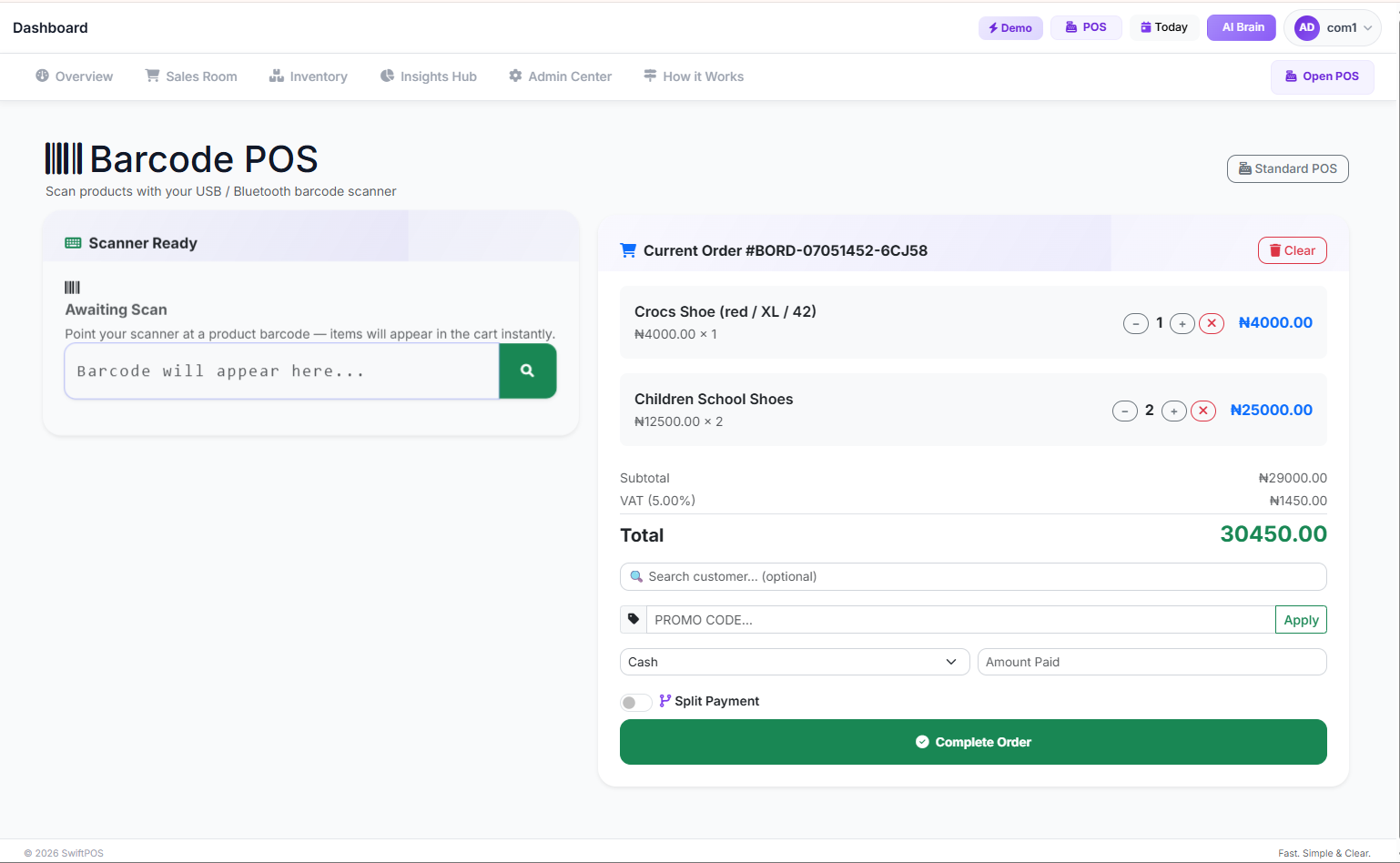 Barcode POS Interface
- Intelligent Inventory Control: Say goodbye to stockouts and overstocking. SwiftPOS NG allows you to manage products with ease, track stock levels in real-time, set expiration dates, handle product variants, and even manage wholesale pricing. You can receive low-stock alerts and forecast demand, ensuring you always have popular items available.
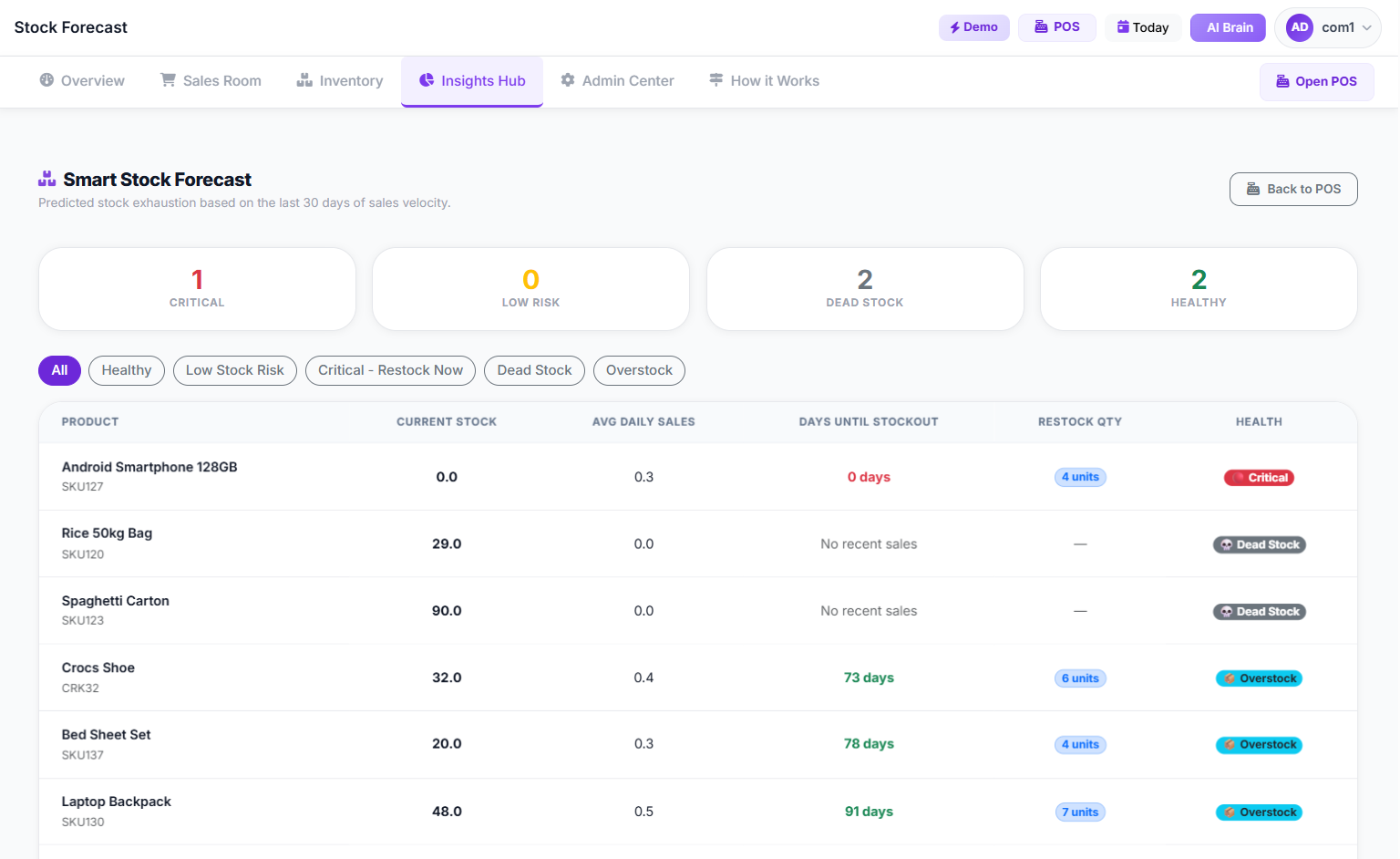 Smart Store Forcast Page
- Clear Profit & Loss Tracking: Beyond just sales, SwiftPOS NG helps you understand your true financial health. It tracks both gross profit (sales minus cost of goods) and net profit (after all operating expenses are factored in). You can easily record rent, salaries, utility bills, and other expenses, giving you a complete picture of your provision store profit.
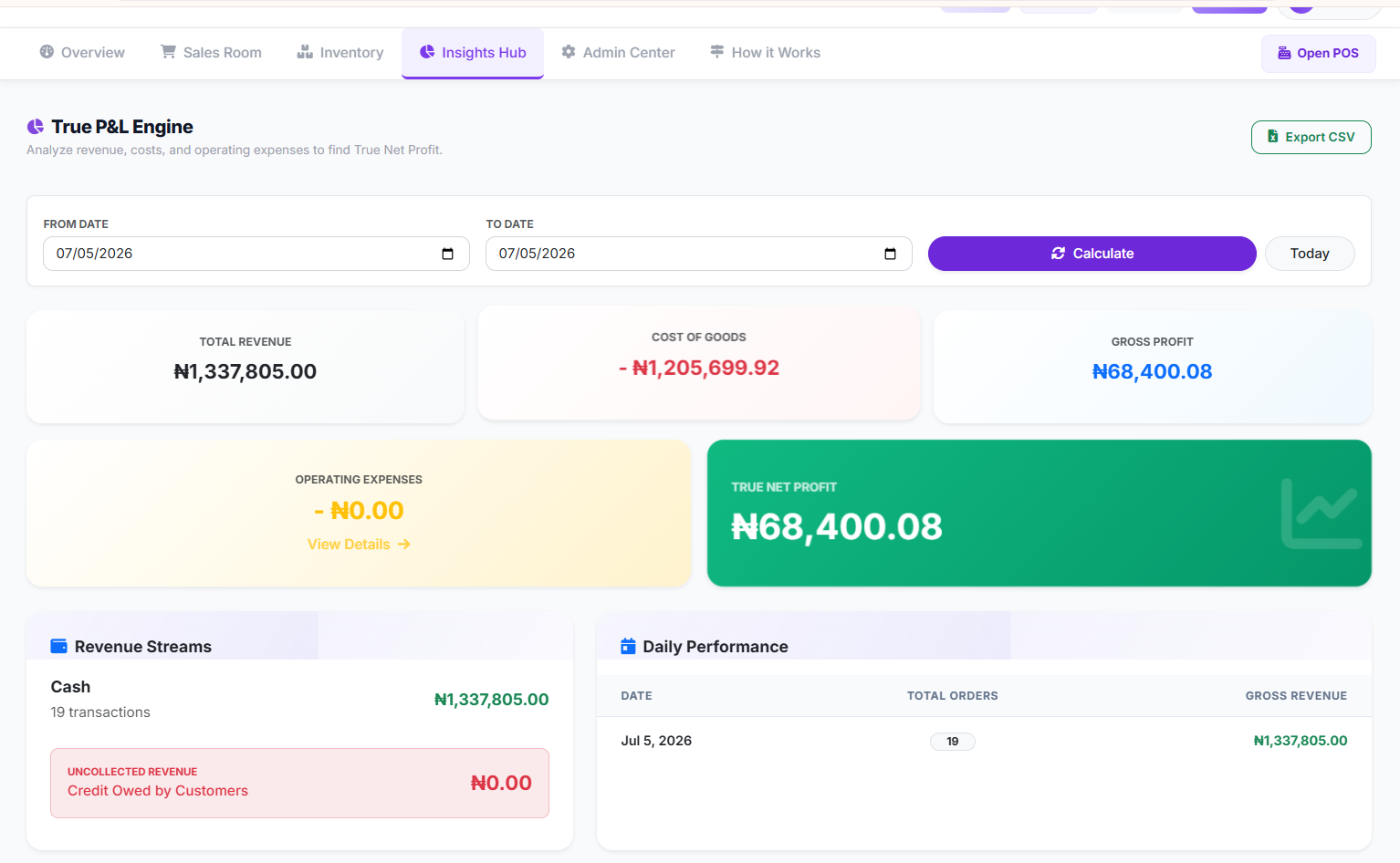 Profit and Loss Page
- Customer & Supplier Management: Keep a detailed customer directory, track credit sales, manage debts, and record payment histories. On the supplier side, manage purchase orders, track deliveries, and keep tabs on what you owe, streamlining your supply chain and improving cash flow.
- Staff Performance & Security: Assign different roles and permissions to your staff, ensuring they only access what they need. SwiftPOS NG logs all staff activities, flags suspicious actions like excessive discounts or voids, and provides performance reports, increasing accountability and reducing loss.
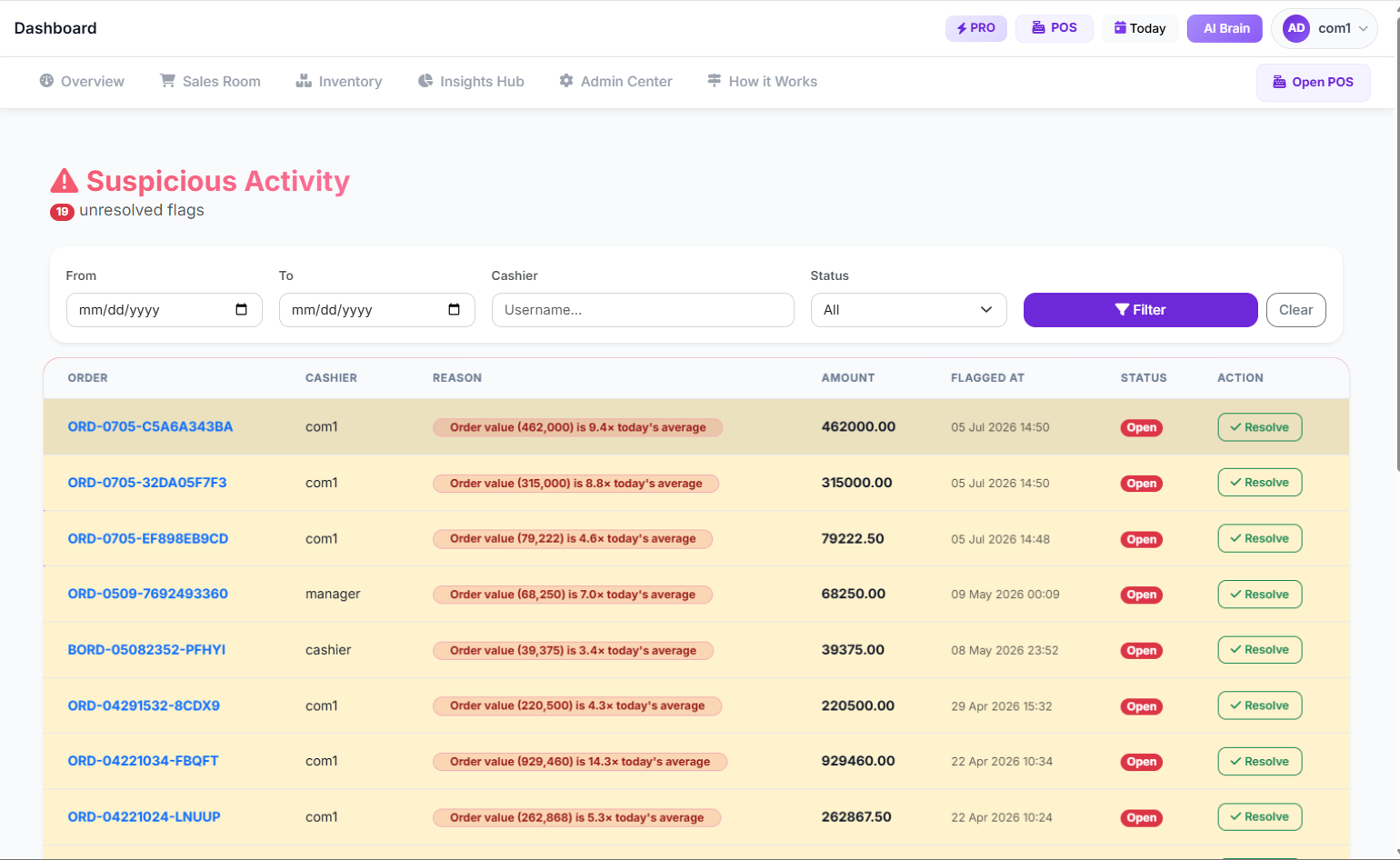 Suspicious Activity Page
- Multi-Branch & Warehouse Support: For growing businesses, SwiftPOS NG seamlessly manages multiple branches and a central warehouse, allowing for stock transfers and separate inventory tracking across all locations.
- Business Insights & Forecasting: Get valuable insights into your sales trends, top-selling products, and potential inventory issues. The system can even help forecast when products might run out, enabling proactive restocking.
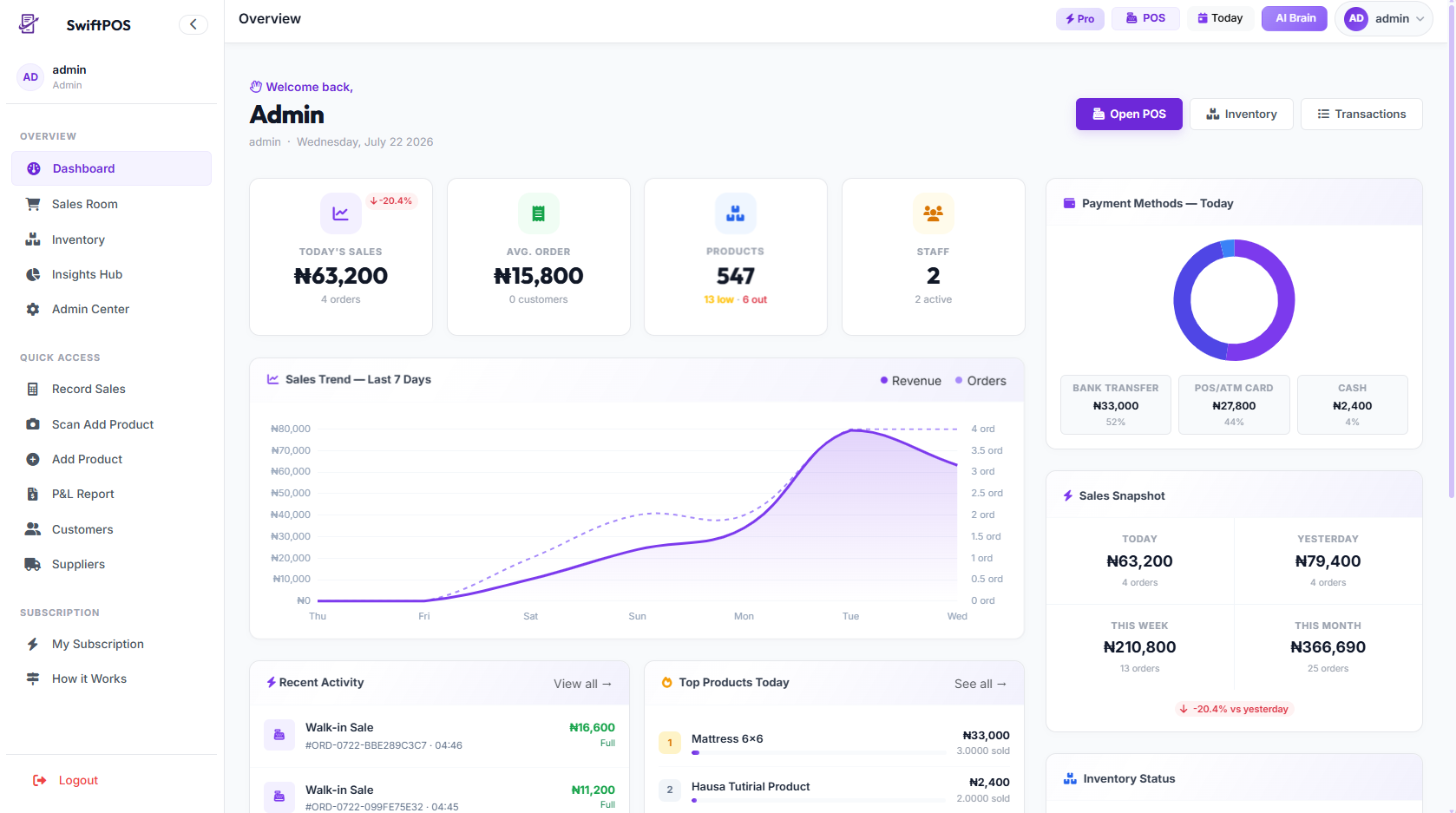 Dashboard Overciew 1:
With SwiftPOS NG, you're not just getting a cash register; you're gaining a complete business management partner that provides the tools and insights to significantly boost your monthly shop profit. You can learn more about its extensive features and benefits for Nigerian retailers.
Proof: Side-by-Side Comparison
Let's look at how modern retail management stacks up against traditional methods for a typical provision store in Nigeria.
| Feature / Aspect | Traditional Manual Methods (Ledger/Excel) | Modern POS System (e.g., SwiftPOS NG) |
|---|---|---|
| Sales Tracking | Manual entry, prone to errors, time-consuming reconciliation. | Automated, real-time, accurate, instant transaction records. |
| Inventory Management | Periodic physical counts, frequent discrepancies, stockouts/overstocking. | Real-time stock levels, low-stock alerts, expiry date tracking, demand forecasting. |
| Profit & Loss Visibility | Difficult to calculate true net profit, often relies on estimates. | Clear gross and net profit reports, detailed expense tracking, actionable insights. |
| Customer Management | Basic ledger for credit, no purchase history, limited personalization. | Customer directory, credit management, purchase history, targeted promotions. |
| Staff Accountability | Hard to monitor performance or detect theft, manual shift reconciliation. | Role-based permissions, activity logs, suspicious activity alerts, performance reports. |
| Reporting & Insights | Minimal data, no trends, difficult to make informed decisions. | Comprehensive sales reports, product performance, business trends, actionable insights. |
| Time Efficiency | Significant time spent on manual data entry and reconciliation. | Automates routine tasks, frees up owner's time for strategic growth. |
| Scalability | Becomes unmanageable with growth, especially for multiple branches. | Easily scales with your business, supports multiple branches and warehouses. |
| Data Security | Vulnerable to loss (fire, theft, damage), no backups. | Cloud-based, secure data storage, regular backups, accessible from anywhere. |
Frequently Asked Questions
Q1: What is a realistic monthly profit for a small provision store in Nigeria?
A1: A small, well-managed provision store in a decent location can realistically expect a net monthly profit ranging from ₦40,000 to ₦150,000 after all operating expenses are covered. This figure can be higher in very busy urban locations or for larger mini-marts. Factors like location, product mix, operational efficiency, and management skill significantly influence this.
Q2: How can I increase my provision store profit margin in Nigeria?
A2: To increase your profit margin, focus on:
- Optimizing Inventory: Reduce waste, prevent stockouts of popular items, and avoid overstocking slow-moving goods.
- Strategic Pricing: Balance competitive pricing with ensuring healthy margins, especially on high-demand items.
- Expense Control: Regularly review and reduce unnecessary operational costs (e.g., electricity usage, transportation).
- Customer Loyalty: Build a loyal customer base through excellent service and targeted promotions.
- Data-Driven Decisions: Use sales data to identify best-selling products, optimize your stock, and target promotions effectively. Using a POS system can greatly assist with this.
Q3: What are the biggest expenses for a convenience store in Nigeria?
A3: The biggest expenses for a Nigerian convenience store typically include:
- Rent: Often paid annually, but its monthly equivalent can be substantial, especially in prime commercial areas.
- Initial Stock Purchase: A significant upfront cost that needs careful management.
- Staff Salaries: A recurring major expense, especially if you have multiple employees.
- Electricity/Fuel for Generator: A critical and often high operational cost due to inconsistent power supply.
- Transportation/Logistics: For sourcing and restocking goods.
Q4: Is a provision store business profitable in Nigeria in 2026?
A4: Yes, a provision store business can be very profitable in Nigeria in 2026, given the consistent demand for everyday necessities. However, profitability is directly linked to effective management, strategic location, efficient inventory control, and excellent customer service. Businesses that leverage technology to track sales, manage inventory, and understand their finances are significantly more likely to succeed. You can read more in our detailed guide: Is Supermarket Business Profitable in Nigeria? The Real Cost-to-Profit Breakdown for a Mini Supermarket (2026).
Q5: How does a POS system help increase retail profit in Nigeria?
A5: A POS system like SwiftPOS NG increases retail profit by:
- Reducing errors: Accurate sales and inventory tracking.
- Preventing losses: Minimizing theft and waste through better inventory control and staff monitoring.
- Improving efficiency: Faster checkouts and automated stock management save time and improve customer satisfaction.
- Providing insights: Data on sales trends, best-selling products, and profit margins enables better purchasing and marketing decisions.
- Controlling expenses: Clear visibility into operational costs helps identify areas for savings.
These benefits directly contribute to a healthier provision store profit margin.
Take Control of Your Profit Today
Stop guessing and start knowing. Understanding your true monthly shop profit is the first step towards sustainable growth and success for your provision store or convenience store in Nigeria.
Ready to transform your business with clear insights and efficient management? Start your free trial with SwiftPOS NG today and gain the clarity you need to thrive.