Best-Selling Products for a Nigerian Provision Store
SwiftPOS Team
Published September 07, 2026
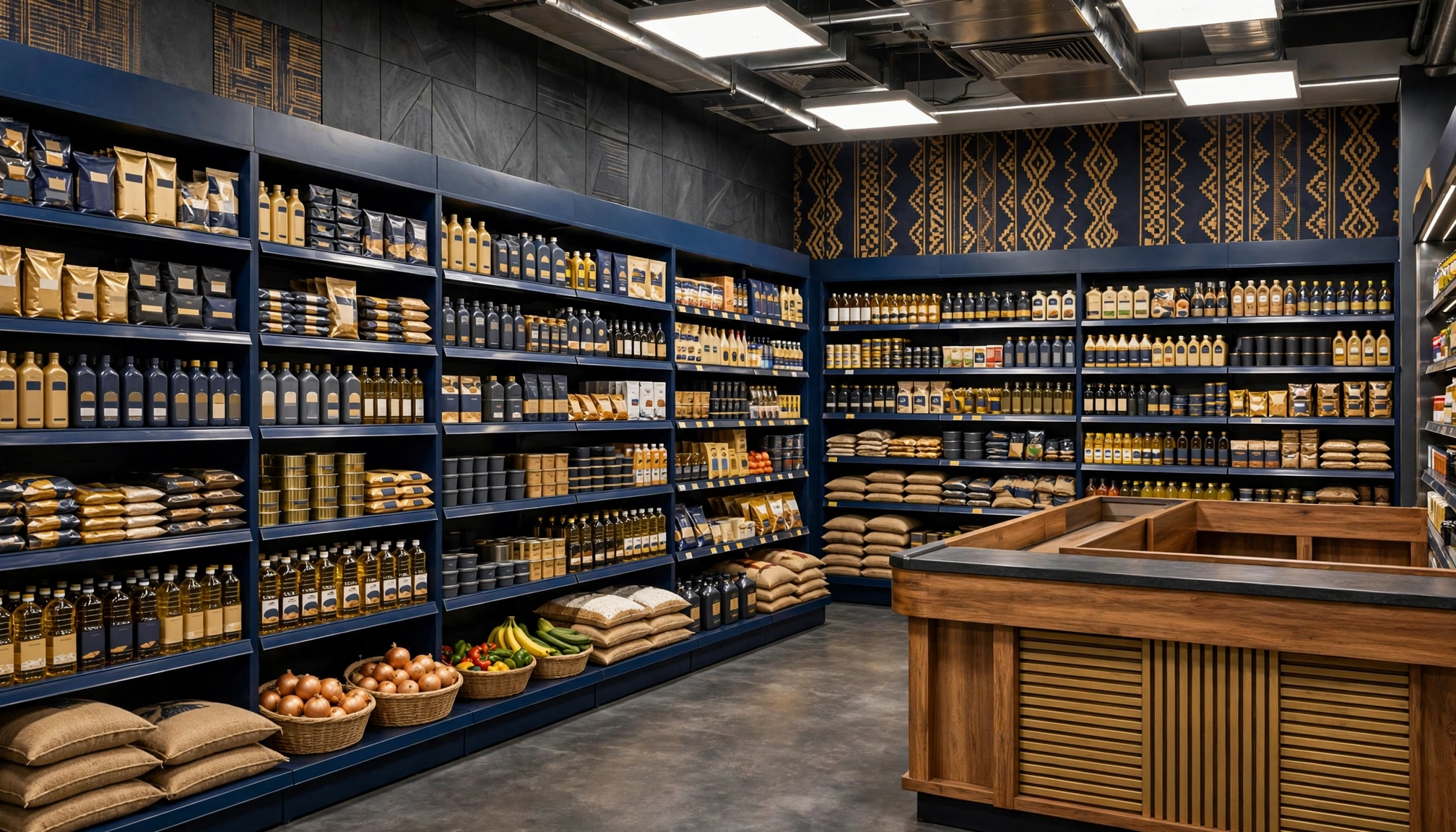
Running a provision store in Nigeria is a daily hustle, a constant dance between stocking shelves and meeting customer demand. But what if you're pouring your energy into products that barely move, while your competitors thrive on items you overlooked? The difference between just surviving and truly succeeding often lies in understanding what your customers actually want to buy.
Nigerian market stall with various fast moving consumerThe High Cost of Guesswork in Provision Store Inventory
Many Nigerian provision store owners rely on instinct, anecdotal evidence, or simply stocking what their suppliers push. While this might get products on your shelves, it rarely leads to optimal sales or profit. The problem with guesswork is that it creates several costly inefficiencies:
Dead Stock and Capital Lock-Up
Imagine investing ₦100,000 in a batch of a certain product, only for it to sit on your shelf for months, gathering dust. That’s ₦100,000 of your hard-earned capital that could have been used to purchase fast-moving products or cover operational costs like rent, which can range from ₦80,000 in a local area to over ₦1,500,000 per year in prime commercial zones. Dead stock isn't just wasted space; it's capital locked away, unable to generate revenue. This significantly impacts your cash flow and reduces your ability to react to market changes.
Missed Sales Opportunities
On the flip side, what happens when a customer asks for a popular item you don't have? They might go to your competitor, and you've not only lost that sale but potentially a loyal customer. In a market where monthly revenue for a small store can be between ₦200,000 and ₦600,000, every missed sale chips away at your potential. Without clear data on best-selling products, you're constantly playing catch-up, often restocking too late or not at all.
Inefficient Replenishment and Supplier Management
Without knowing your true best-selling products, your reordering process becomes reactive and chaotic. You might place small, frequent orders for popular items, missing out on potential bulk discounts from suppliers. Or, you might over-order slow-moving items, leading back to the dead stock problem. Efficient supplier management and purchase orders are crucial for maintaining healthy profit margins, which typically range from 10% to 25% for fast-moving consumer goods (FMCG). Understanding your sales data helps you negotiate better deals and optimize your purchasing strategy.
> "In retail, what you don't sell costs you far more than what you do. Every unsold item is a silent drain on your business's lifeblood."
Identifying Your Best-Selling Products for Maximum Profit
To truly thrive, a Nigerian provision store needs a data-driven approach to inventory. This means moving beyond guesswork and understanding the specific fast-selling products that resonate with your customer base.
1. Analyze Sales Data
The most reliable way to identify best-sellers is to look at what's actually leaving your shelves. This involves tracking every sale meticulously. Which products are sold most frequently? Which generate the highest revenue? Which have the best profit margins? Understanding these metrics is fundamental. You can't improve what you don't measure. For a deeper dive into crucial metrics, explore 7 Key Retail Metrics Nigerian Businesses Must Track for Profit Growth.
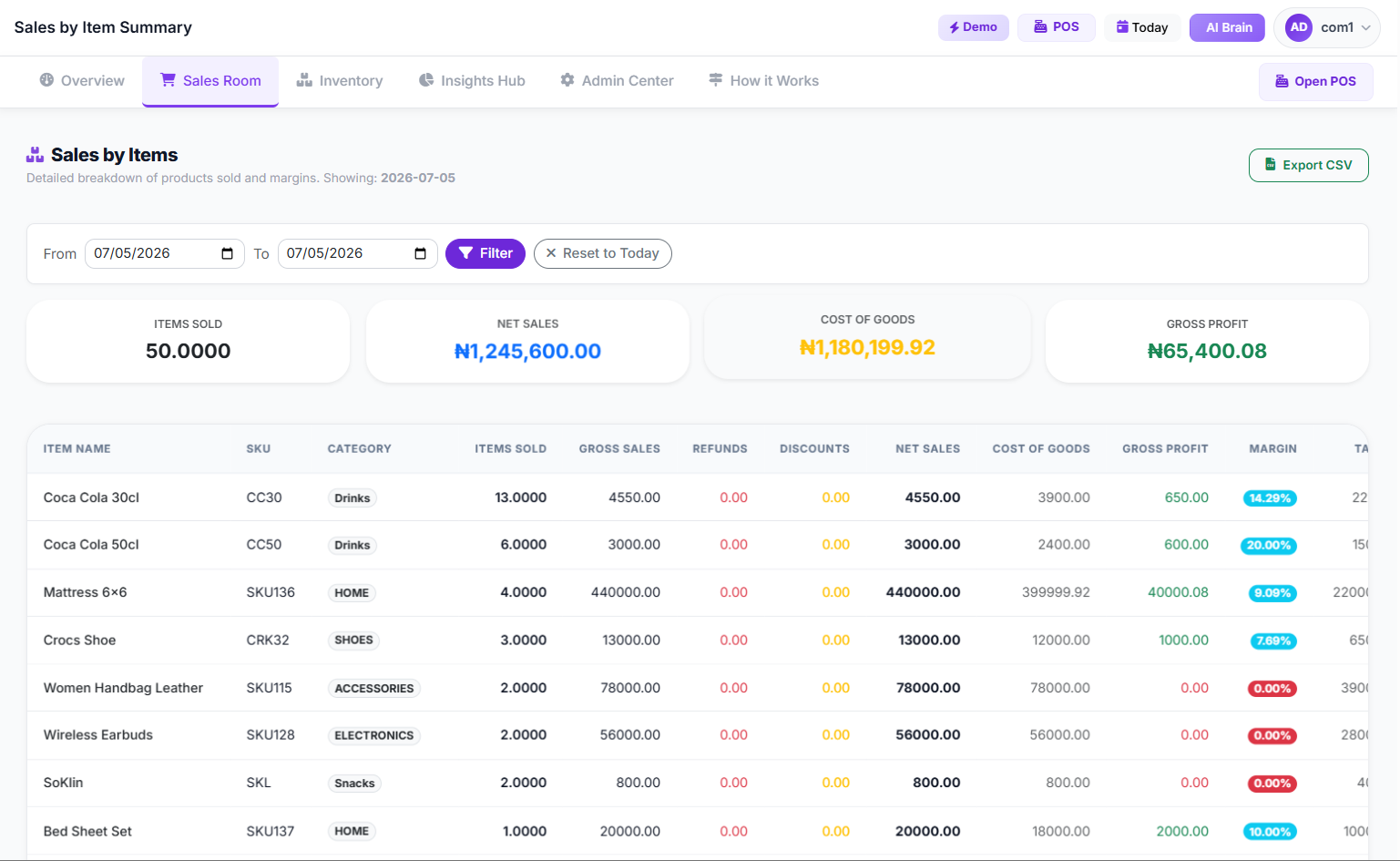 Sales By Item Page
2. Understand Product Categories
Beyond individual items, categorize your products. Are beverages selling better than snacks? Are toiletries outperforming cleaning supplies? This helps you allocate shelf space and marketing efforts more effectively. Common categories in Nigerian provision stores include:
- Food Items: Rice, beans, garri, noodles, spaghetti, cooking oil, sugar, salt, seasonings, flour.
- Beverages: Soft drinks, bottled water, juices, malt drinks, energy drinks.
- Dairy & Refrigerated: Milk (powdered and evaporated), yogurt, butter, eggs.
- Snacks & Confectionery: Biscuits, sweets, chocolates, chips, local snacks (e.g., Gala, Chin Chin).
- Toiletries & Personal Care: Soaps, toothpastes, deodorants, body lotions, sanitary pads, diapers.
- Cleaning Supplies: Detergents, disinfectants, brooms, sponges.
- Household Essentials: Matches, candles, batteries, air fresheners, light bulbs.
3. Monitor Trends and Seasonality
Consumer preferences are not static. Observe local events, holidays, and even weather patterns. For example, during rainy season, instant noodles and hot beverages might see a spike. During festive periods, special ingredients or celebratory drinks could become fast-selling products. Staying attuned to these shifts allows you to stock strategically.
4. Engage with Customers
Your customers are a goldmine of information. Ask them what they're looking for but can't find. Pay attention to frequently asked-for items. Their direct feedback can uncover hidden demand for certain retail products.
5. Evaluate Profit Margins
A high-selling product isn't necessarily a high-profit product. Always consider your gross profit margin (selling price minus cost price). Some items might sell quickly but offer very thin margins, while others sell moderately but contribute significantly more to your overall profit. Calculating your POS System ROI involves understanding these nuances.
The Smarter Approach: Data-Driven Inventory Management
The most effective way to manage your provision store inventory and identify best-selling products is through a robust, integrated system. This means moving away from manual ledgers or basic spreadsheets, which are prone to errors and offer limited insights. A modern approach involves:
- Automated Sales Tracking: Every sale is recorded digitally, instantly updating inventory levels and providing real-time data.
- Detailed Product Catalogs: Comprehensive information on every item, including cost, selling price, categories, and even expiration dates.
- Inventory Forecasting: Using sales data to predict future demand, helping you know when to restock and how much to order.
- Performance Analytics: Generating reports on sales trends, best-selling items, slow-moving stock, and overall profitability.
- Supplier Integration: Streamlining the purchasing process by having supplier information readily available and tracking purchase orders.
How SwiftPOS NG Helps Identify Your Best-Selling Products
This is where a powerful tool like SwiftPOS NG comes into play. It's designed specifically for Nigerian retailers to replace manual guesswork with intelligent data, making it easier to pinpoint your best-selling products and manage your entire business.
SwiftPOS NG centralizes all your sales, inventory, and financial data. Its robust features allow you to:
- Track Every Sale: Whether you use the ,
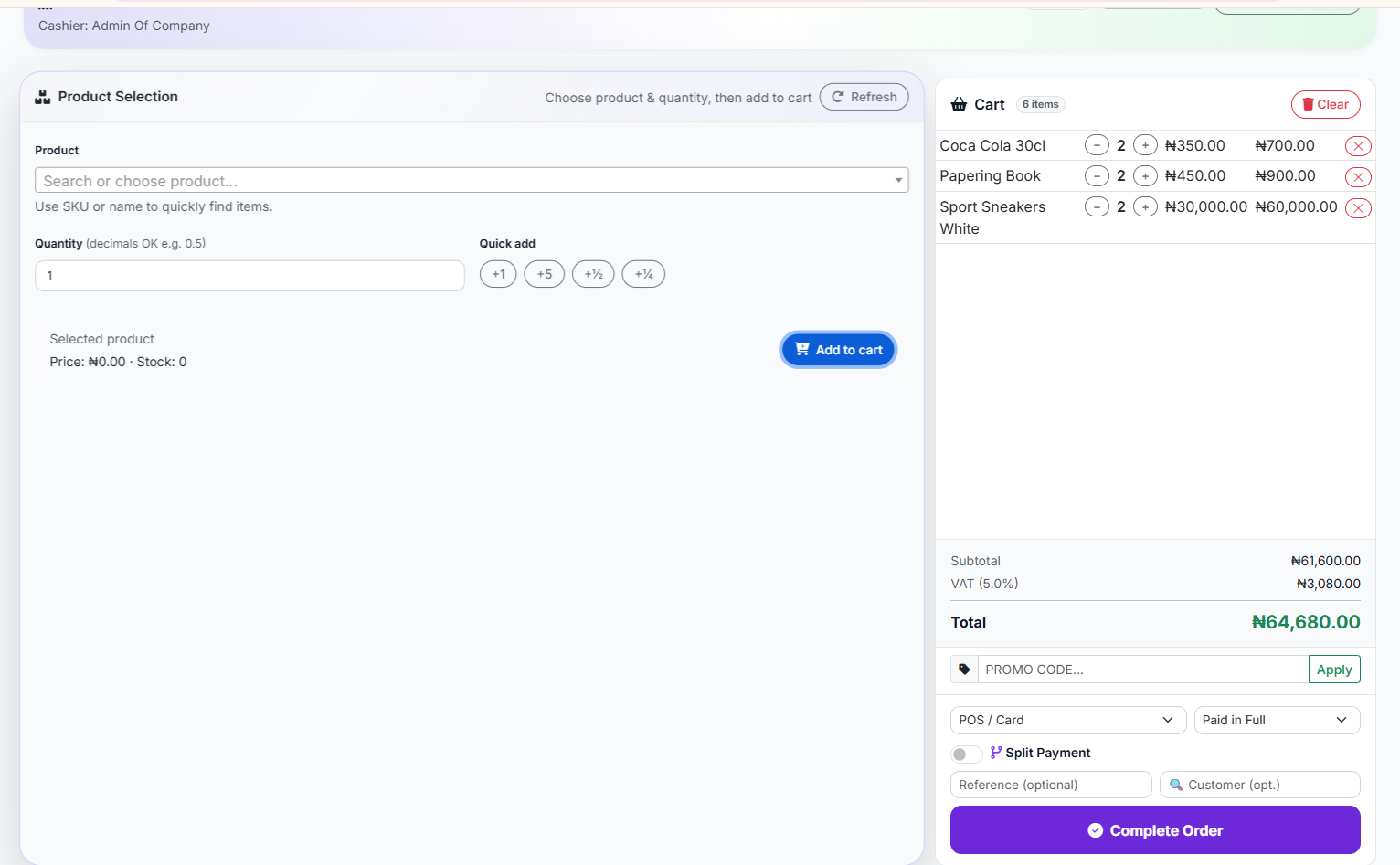 Classic POS Interfacefor speed, or the
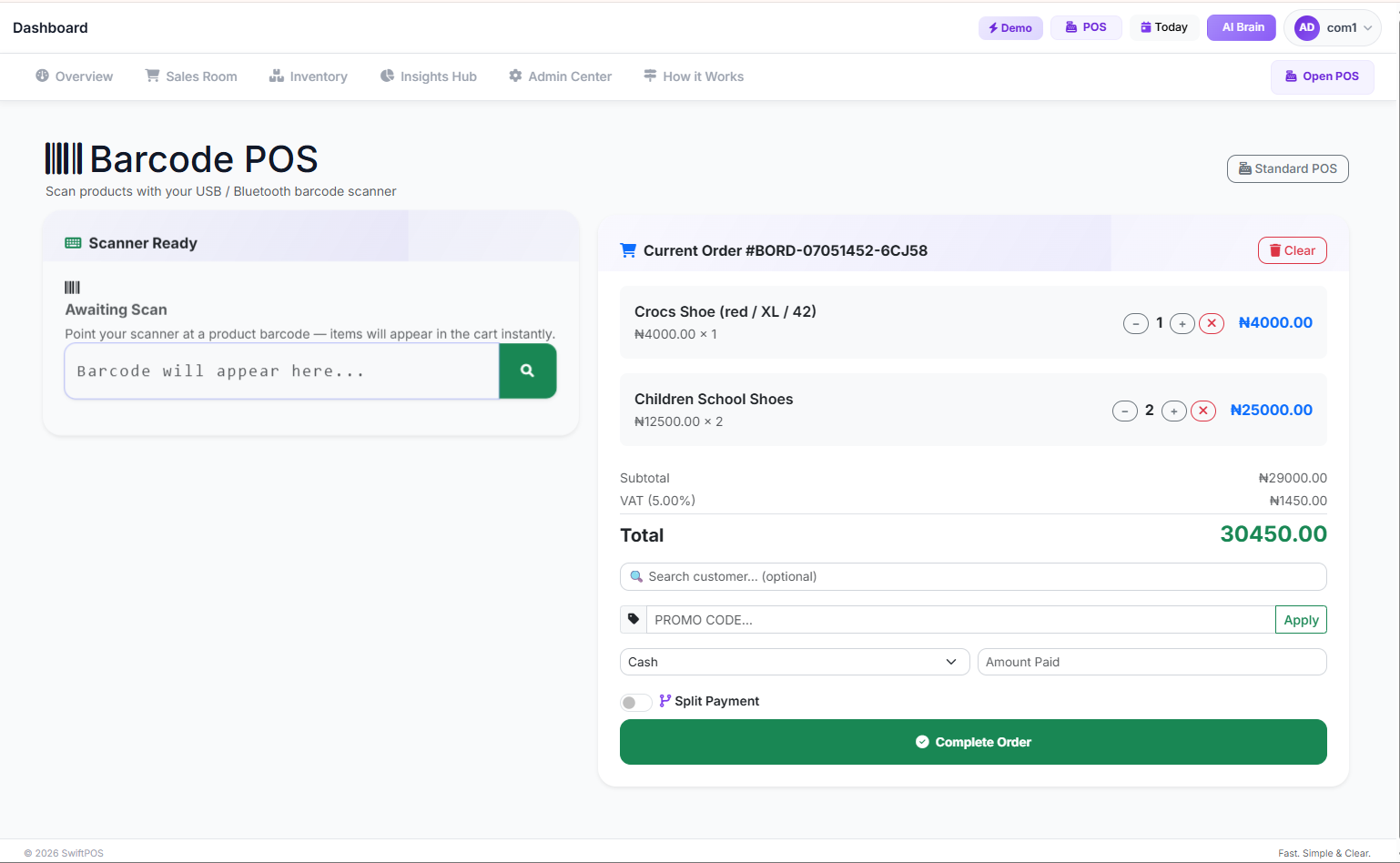 Barcode POS Interfacefor visual selection, every transaction is recorded, providing accurate sales history.
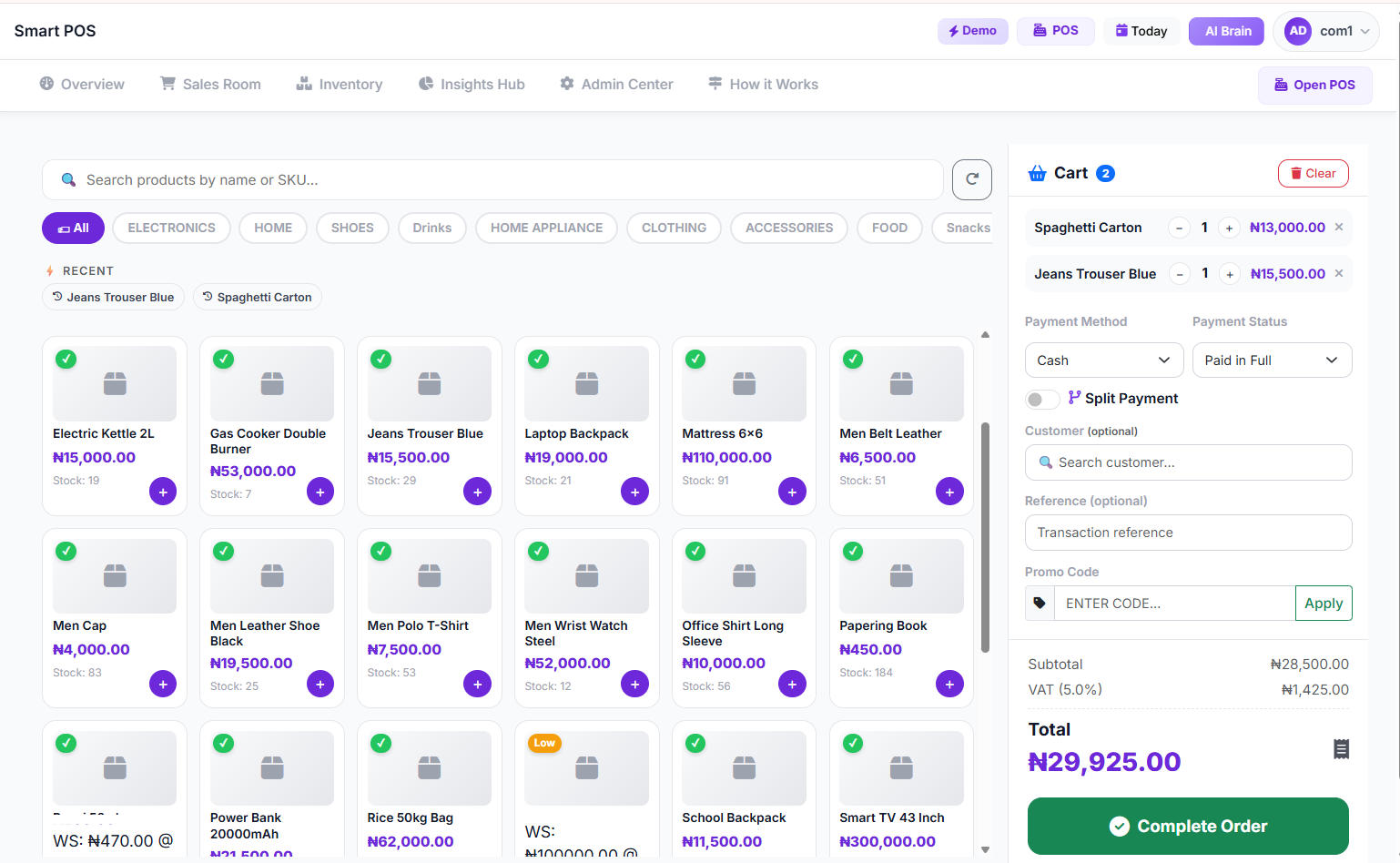 Grid POS Interface
 - Comprehensive Inventory Management: Easily add and manage all your retail products with detailed information on cost, selling price, categories, and stock quantities using the . You can even track expiration dates – crucial for provision stores.
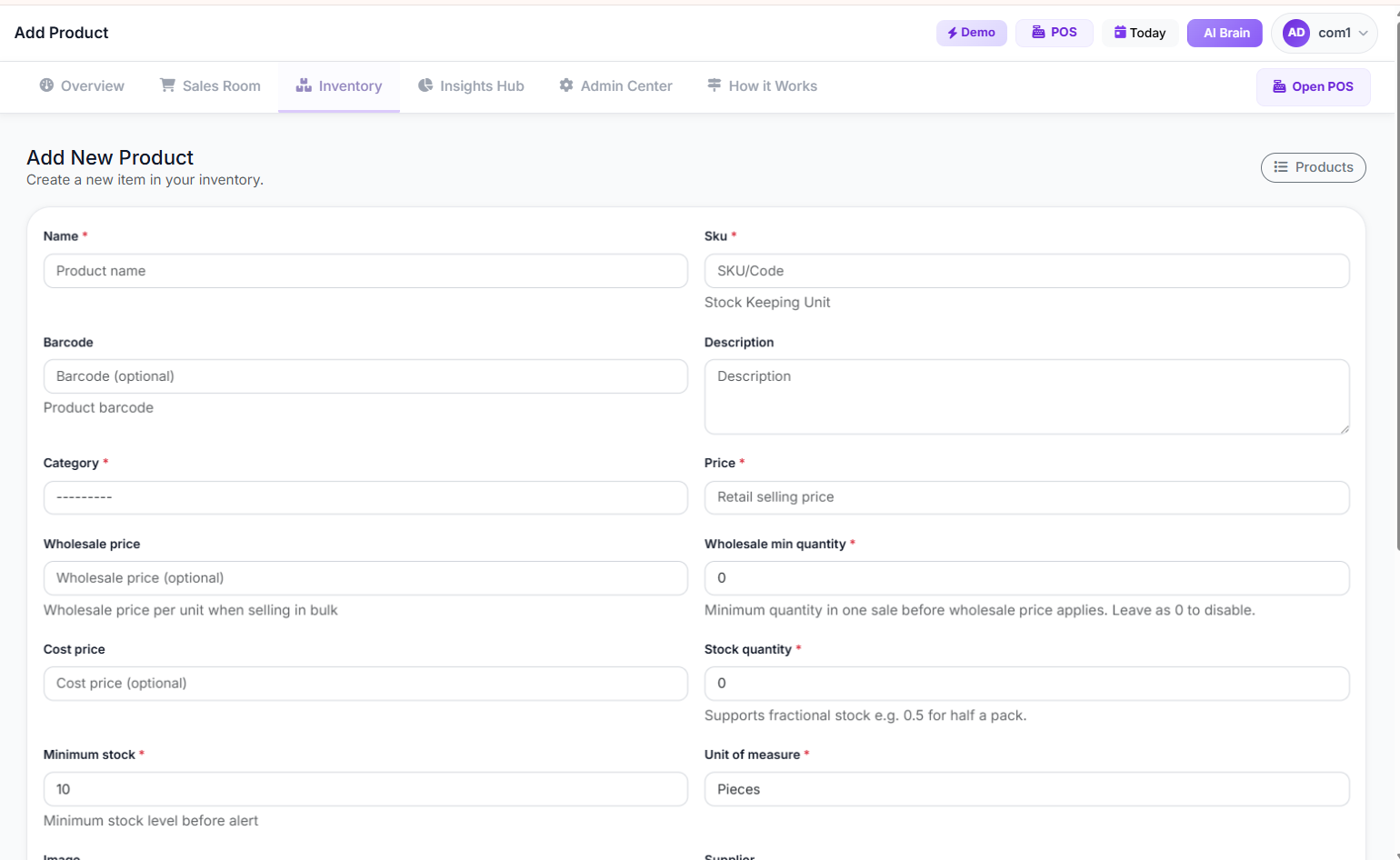 Add/Edit Product Page
 - Powerful Business Insights: The provides a clear overview of your business performance, highlighting which items are your best-sellers and which are lagging. You can view
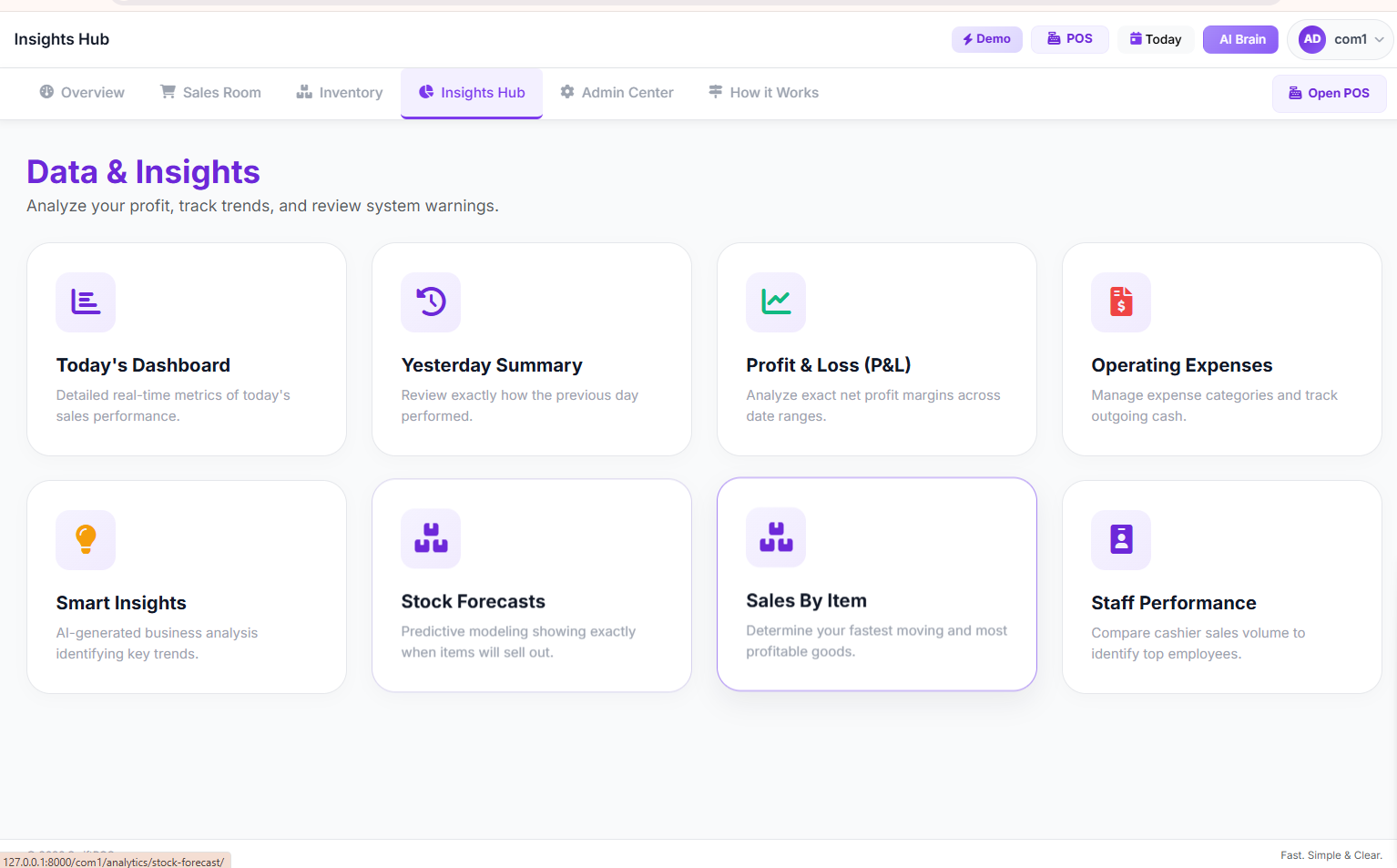 Insights Hubor even
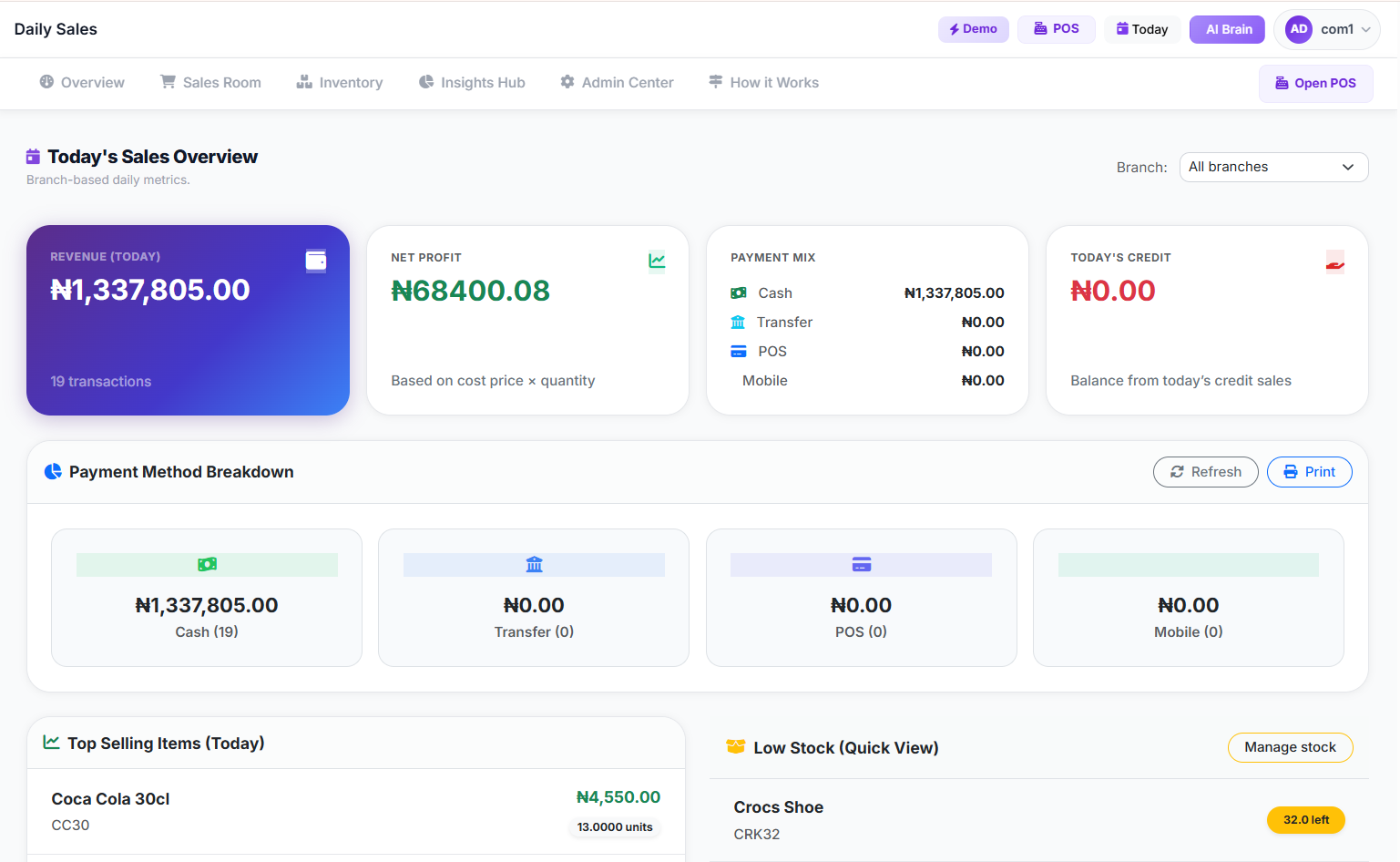 Today's Dashboardfor quick comparisons.
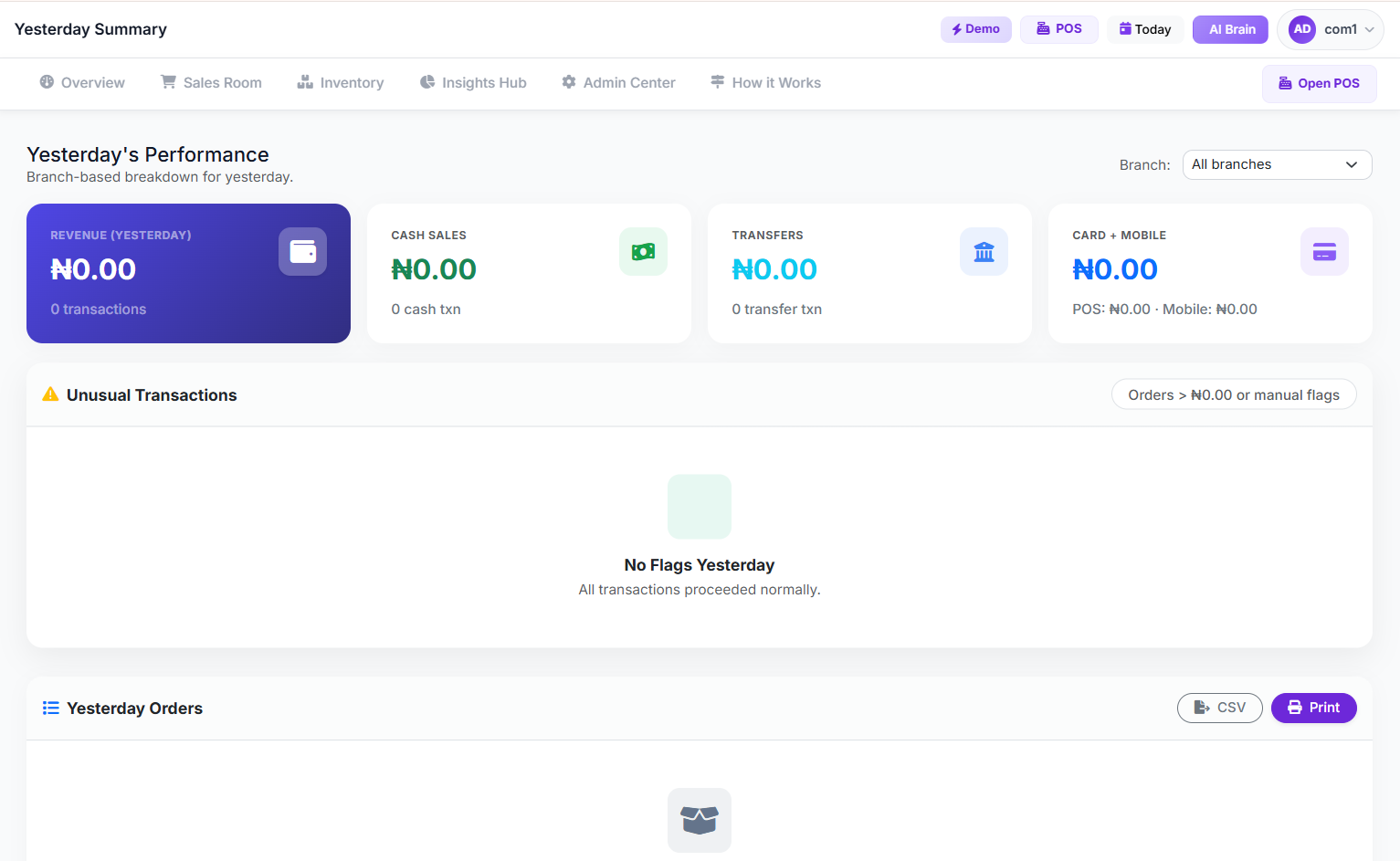 Yesterday's Dashboard
 - Smart Stock Forecasting: Leverage features like to predict when popular items will run out, ensuring you never miss a sale due to an empty shelf. This helps you avoid the common inventory management mistakes that crush profits, as discussed in Nigerian Retailers: Inventory Management Mistakes Crushing Your Profits.
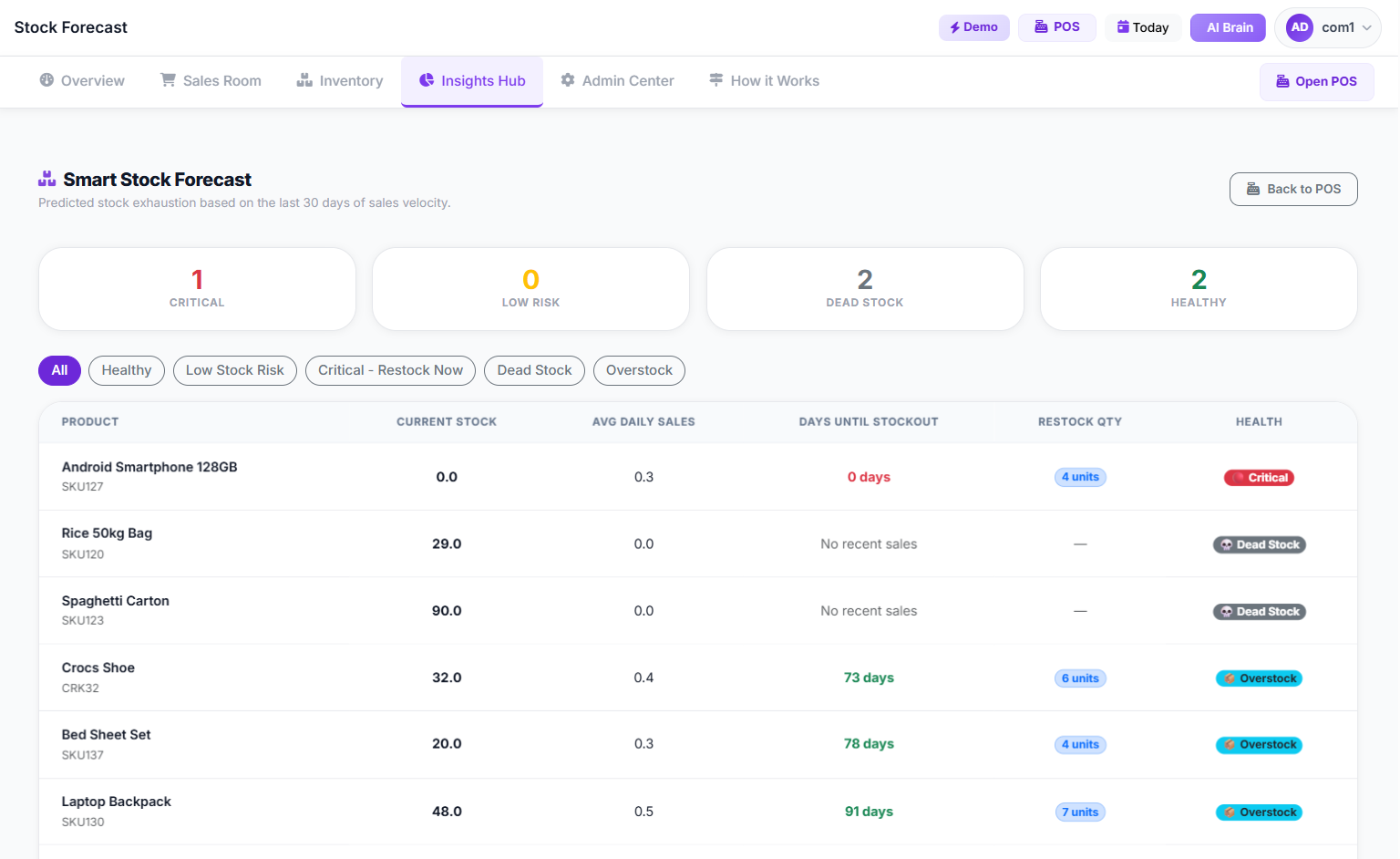 Smart Stock Forecast Page
 - Multi-Branch Capabilities: For growing businesses with several locations, SwiftPOS NG allows you to track stock and sales separately across branches, giving you a clear picture of best-sellers in each location. This is vital for Multi-Branch Retail: Seamless Operations & Profitability.
 Business owner analyzing sales data on a modern
Proof: Side-by-Side Comparison
Let's look at how a data-driven approach stacks up against traditional manual methods for identifying best-selling products.
| Feature / Aspect | Traditional Manual Methods | Data-Driven System (e.g., SwiftPOS NG) |
|---|---|---|
| Sales Data Tracking | Paper ledgers, memory, basic spreadsheets; prone to errors. | Automated, real-time recording of every sale. |
| Best-Seller Identification | Guesswork, "what feels right," occasional physical stock counts. | Automatic reports on top-selling items by quantity, revenue, and profit. |
| Inventory Accuracy | Low, frequent discrepancies, stock-outs, or overstocking. | High, real-time updates, reduced errors, precise stock levels. |
| Capital Efficiency | High risk of capital tied up in dead stock. | Optimized stock levels, reduced dead stock, improved cash flow. |
| Replenishment Strategy | Reactive, based on visual checks or urgent customer requests. | Proactive, based on sales trends and smart forecasting. |
| Time Investment | Significant time spent on manual counting and record-keeping. | Minimal manual effort, more time for strategic decisions. |
| Profit Margin Analysis | Difficult to calculate accurately per product. | Clear gross and net profit analysis per product and overall. |
| Growth Potential | Limited, difficult to scale, prone to inefficiencies. | High, scalable, provides insights for expansion. |
Frequently Asked Questions
What are the absolute fastest-selling products in a Nigerian provision store?
The fastest-selling products often fall into daily consumables: instant noodles, popular soft drinks, bottled water, bread, biscuits, cooking oil (small sachets), sugar, salt, milk (powdered and evaporated), and basic toiletries like soap and toothpaste. These are items consumers buy almost daily or weekly.
How much initial stock do I need for a small provision store in Nigeria?
For a small neighborhood provision store, an initial stock purchase could range from ₦150,000 to ₦500,000. This focuses on essential, fast-moving consumer goods. For a medium-sized store, it could be ₦700,000 to ₦2,500,000. This is a critical investment, so understanding How Much Money Do You Need to Open a Mini Supermarket in Nigeria? (2026 Complete Guide) is essential.
How can I manage inventory for products with expiration dates effectively?
Manually tracking expiration dates is nearly impossible for a busy provision store. A system that allows you to input expiration dates for each product and then alerts you as products approach their expiry is crucial. This helps you prioritize selling those items or return them to suppliers before they become unsellable. SwiftPOS NG provides this critical expiration tracking capability.
Is it really worth investing in retail management software for a small provision store?
Absolutely. The "cost" of not investing often far outweighs the subscription fees. Manual systems lead to hidden costs like dead stock, missed sales, theft, and wasted time. A good retail management system pays for itself by optimizing inventory, preventing losses, and providing insights that drive sales and profitability. Consider the detailed breakdown in Traditional Bookkeeping vs. POS Software: Real Costs for Nigerian Retailers.
How can I identify products that are selling slowly (dead stock) and what should I do with them?
A robust inventory system will generate reports on slow-moving or non-selling items. Once identified, strategies include discounting, bundling with best-selling products, or offering them as promotions to clear shelf space and recover capital. SwiftPOS NG's
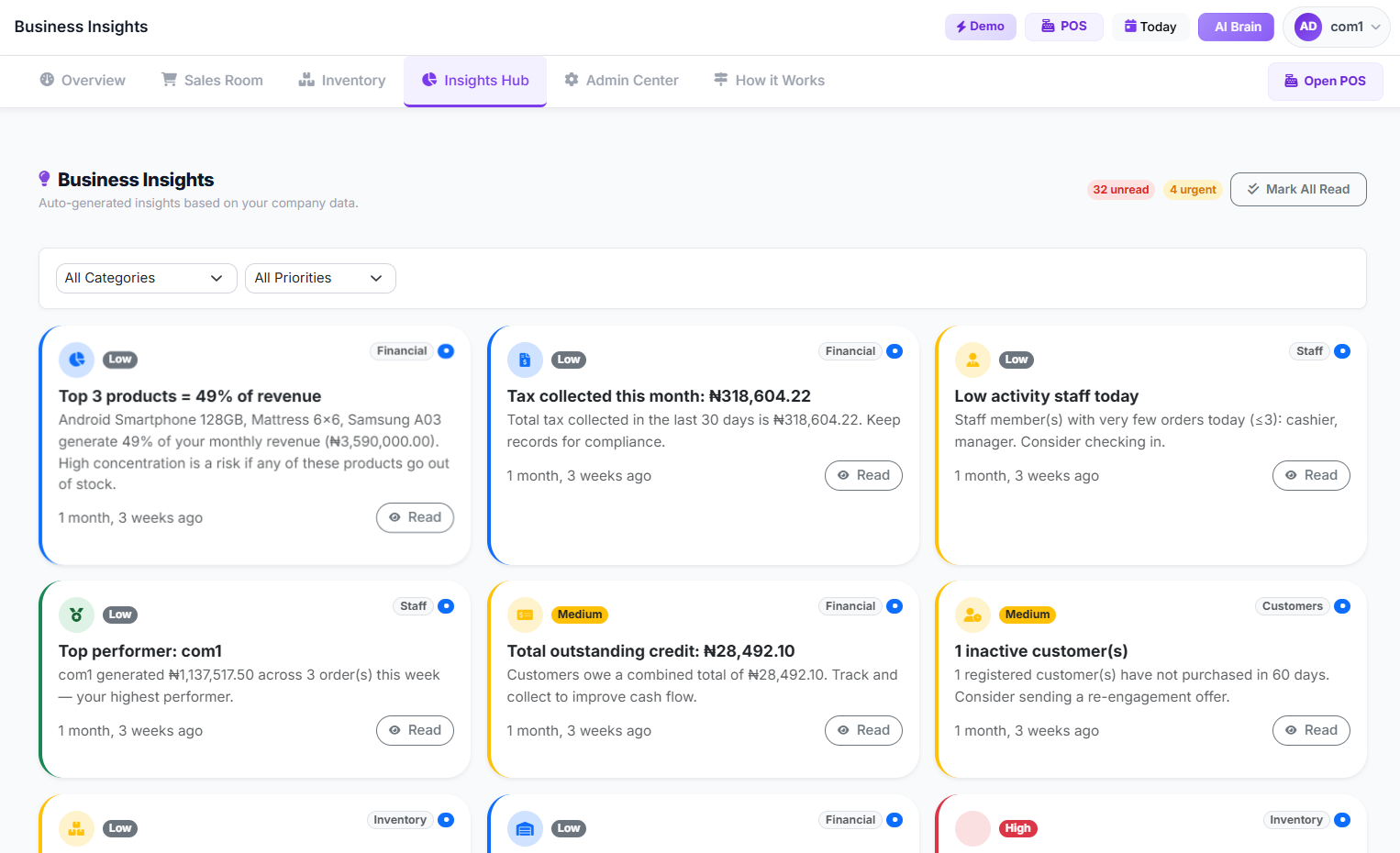 Business Insights Page
Can I track customer credit and debts with a modern system?
Yes, a comprehensive system should include customer management features. This allows you to maintain a customer directory, record credit sales, track outstanding debts, and manage partial payments. This is a common feature in many Nigerian retail businesses and helps foster customer loyalty while maintaining financial control. SwiftPOS NG has a dedicated
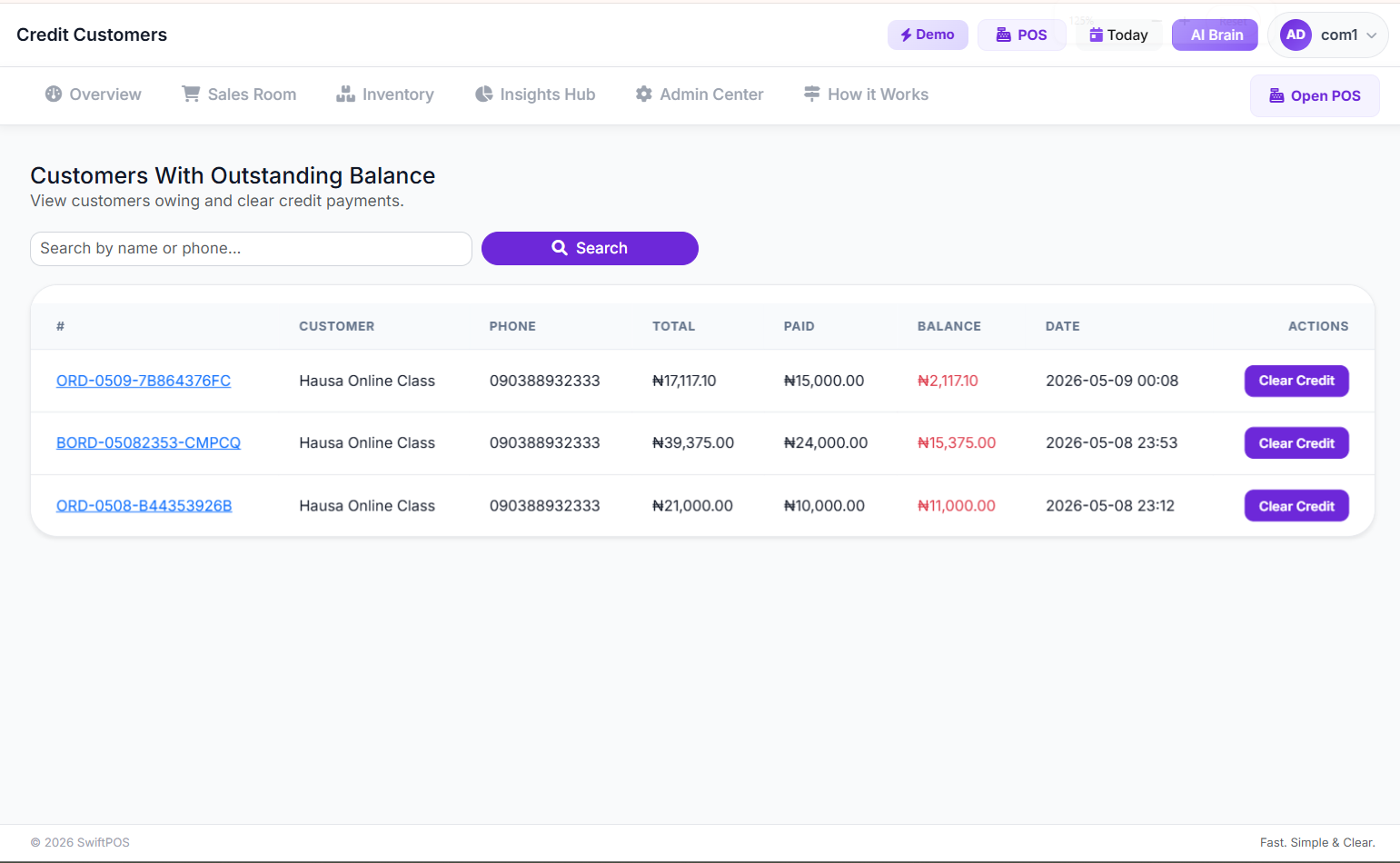 Customer Credit and Debt
---
Ready to transform your provision store from guesswork to guaranteed growth? Stop letting valuable insights slip through your fingers.