
How to Keep Accurate Sales Records for Your Small Business

A staggering 63% of small businesses in Nigeria fail within their first five years, and a significant chunk of that failure? It often boils down to poor financial management, with inaccurate sales records leading the charge. If you're running a shop in Lagos, Kano, or Port Harcourt, you know every kobo counts, and knowing exactly where your money comes from and where it goes is not just good practice – it’s survival. This guide will show you how to keep accurate sales records for your small business without the headache, setting you up for growth and long-term success in 2026 and beyond.
Young woman reviewing sales records on a tabletThe Reality Check: What Nobody Tells You About Sales Records
Look, most people think sales records are just about knowing how much money came in. That's the surface level. The real truth? Accurate retail records tell you a story. They tell you which products are flying off the shelves in Balogun Market, which ones are gathering dust, who your most loyal customers are, and even when you're likely to experience a cash crunch. Without this detailed story, you're essentially driving blind, relying on guesswork in a market that's already tough enough.
Think about it: many small shop owners still rely on a basic exercise book. You know the type – a ₦300–₦800 book bought from the local stationery vendor. They scribble down sales, maybe a few expenses, and at the end of the month, they try to add it all up. This manual approach is a recipe for errors, lost pages, and ultimately, lost money. It's not just about the cost of the book; it's about the hidden costs of manual retail operations in Nigeria, from wasted time to missed opportunities.
A recent study showed that businesses using manual record-keeping are 4 times more likely to miscalculate their inventory or cash flow compared to those using digital tools. That's a huge margin for error. We're talking about businesses in Alaba International Market or Onitsha Main Market, dealing with hundreds of transactions daily, trying to keep track with pen and paper. It's simply unsustainable in 2026. You might save a few thousand naira on software, but you could be losing tens, even hundreds of thousands, in unnoticed shrinkage, expired stock, or uncollected debts. This isn't just about recording what you sold; it's about understanding the pulse of your entire shop bookkeeping.
What You Actually Need to Get Started
Let's be brutally honest about this. You don't need a fancy office or a dedicated accountant to start keeping proper sales records. But you do need a few things, and some are more critical than others.
Non-Negotiables:
- Commitment to Consistency: This is number one. Whether you use a book or a tablet, if you're not consistent, it's useless. Daily, even hourly, recording is key. You can't just do it when you feel like it.
- Basic Numeracy Skills: You need to be able to add, subtract, and understand percentages. If this isn't your strong suit, you might need a simple calculator or, better yet, a system that does the math for you.
- Time: Carve out at least 15-30 minutes daily, usually at the end of the business day, to reconcile your sales.
- A Reliable Smartphone: With a basic smartphone (₦35,000–₦80,000), you can access digital record-keeping apps, communicate with suppliers, and even process payments. It’s an investment that pays for itself quickly.
- Monthly Data Subscription: If you're thinking digital, you'll need data. Budget around ₦2,000–₦5,000 monthly for this. Cloud-based apps need internet to sync.
- Basic Accounting/POS App: Forget complex software that costs millions. There are affordable, user-friendly apps designed for Nigerian businesses. Subscriptions typically range from ₦3,000–₦15,000 per month. This is where you move beyond simple sales records into proper business accounting.
- Thermal Receipt Printer: If you want to issue professional receipts, a basic USB thermal printer (₦25,000–₦60,000) is a good idea. Don't forget rolls of thermal paper – about ₦8,000–₦15,000 for 50-100 rolls. This helps build trust with customers and provides them with proof of purchase.
- Training: A short course or workshop on basic record keeping (₦10,000–₦40,000) can give you a solid foundation. You don't need an accounting degree, just the fundamentals.
The Complete Step-by-Step Breakdown
Now, let's get into the nitty-gritty. This isn't just theory; this is how successful businesses in Nigeria actually manage their sales.
Step 1: Choose Your Recording Method (And Stick To It!)
This is the foundational decision. Your choice impacts everything else.
For many small vendors, especially those just starting with very low transaction volumes, a simple sales record book or a customized ledger might seem sufficient. You'd log each sale, date, item, quantity, price, and payment method. While affordable, remember that this method is prone to human error, can be easily lost or damaged, and makes analysis incredibly difficult. Imagine trying to figure out your best-selling product over six months from hundreds of handwritten entries!
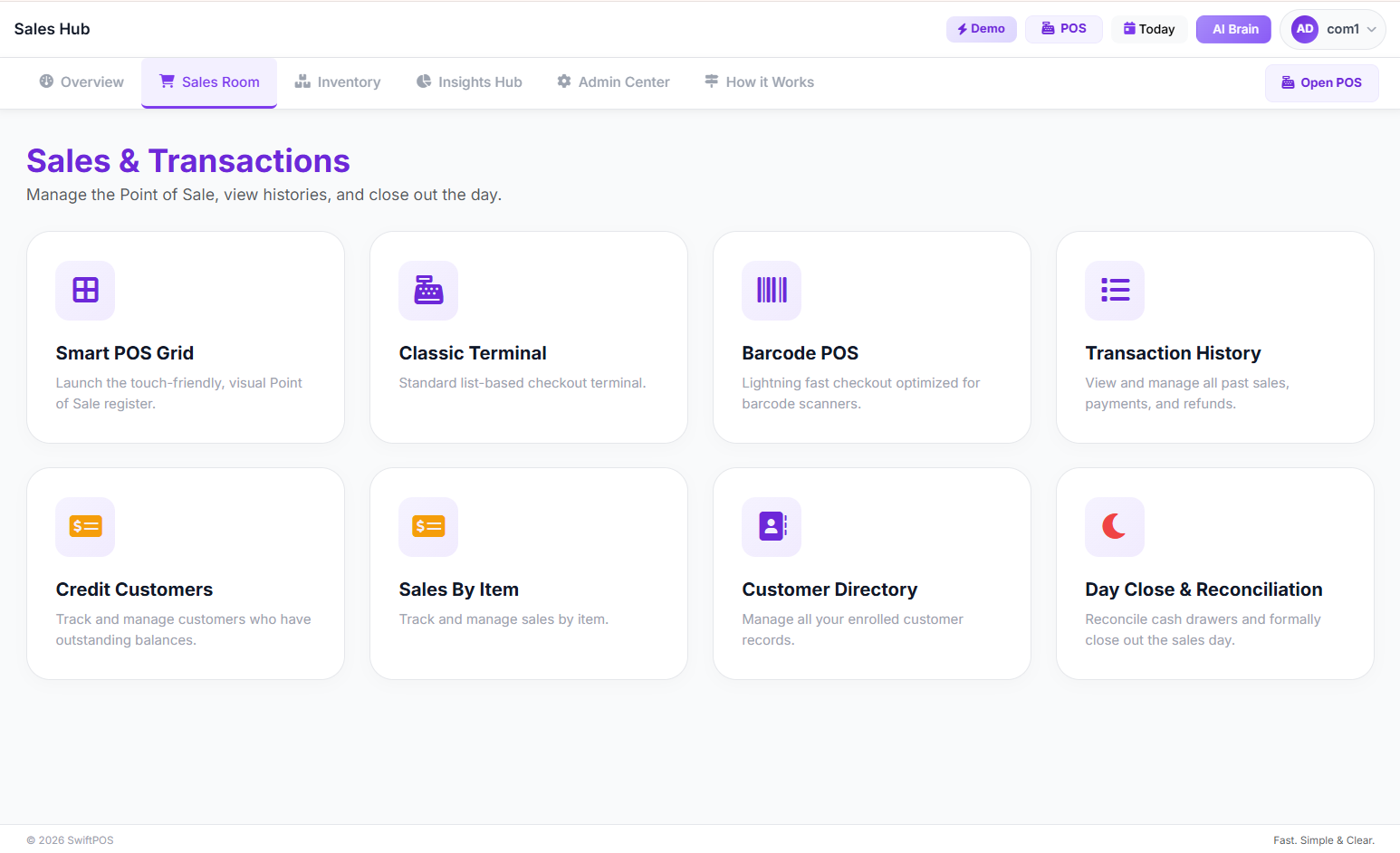
As your business grows, or if you already handle more than 10-15 transactions a day, you absolutely need to upgrade. This is where a digital solution becomes non-negotiable. A dedicated POS (Point-of-Sale) system designed for Nigerian businesses, like SwiftPOS NG, can automate much of this. It's not just about recording; it's about processing the sale, managing stock, and giving you insights all at once. You can use it on a basic smartphone or tablet, making it accessible even if you don't have a large capital for fancy equipment.
 SwiftPOS Sales Hub Page
Step 2: Record Every Single Sale, No Exceptions
I mean every single sale. Whether it's a ₦100 sachet of water or a ₦50,000 electronics item, it must be recorded. This is where many businesses slip up, especially with small cash sales. "Ah, it's just small change," they'll say. That small change adds up, and if it's not recorded, your cash balance will never match your records. This creates discrepancies, makes it impossible to track shrinkage, and opens the door for internal theft.
For cash sales, note the amount received and any change given. For digital payments (POS, bank transfer, mobile money), record the transaction ID or reference number if available. This is crucial for reconciliation later. If you're running a boutique in Lekki, and a customer buys an item with a bank transfer, you need that reference. It protects you and the customer.
Actionable Tip: Implement a "no sale goes unrecorded" policy with your staff. If they can't record it, they can't sell it. This might sound strict, but it builds discipline.
Step 3: Track Your Inventory Alongside Sales
Your sales records are incomplete if they don't connect to your inventory. Every item sold means one less item in your stock. If you're manually tracking, this means constantly updating stock levels after each sale. It's tedious, time-consuming, and highly prone to errors. This is often where retail inventory management becomes a nightmare.
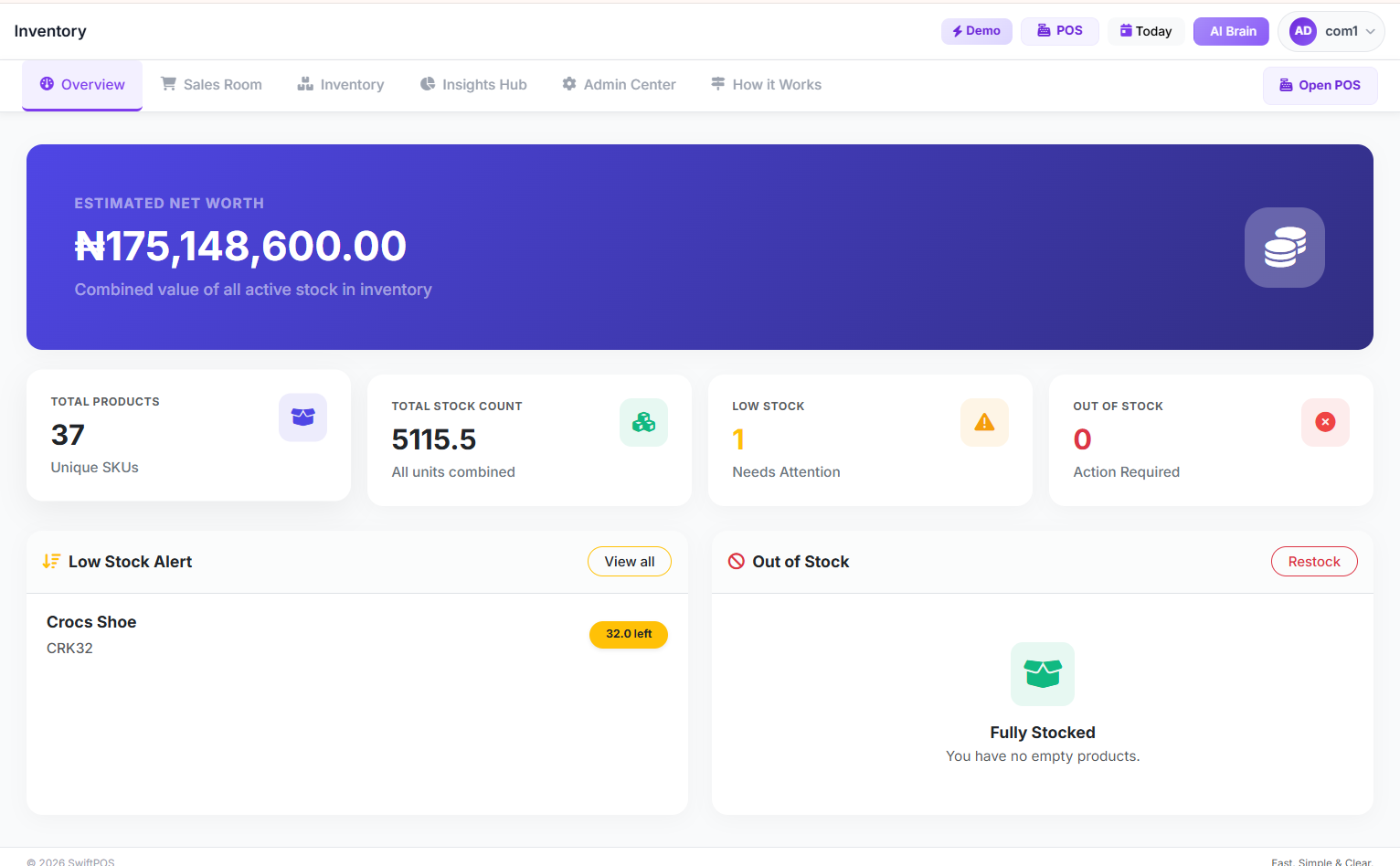
A good system, like SwiftPOS NG, automatically deducts items from your inventory as they are sold. This gives you a real-time picture of what you have in stock, preventing you from selling items you don't have or running out of popular products unexpectedly. Imagine a pharmacy in Yaba selling a specific medication. If they don't track it properly, they might run out, losing sales and potentially impacting customer health. This is why connecting sales to inventory is so fundamental.
 SwiftPOS Inventory Dashboard
Actionable Tip: Even with manual methods, dedicate a separate column or page in your ledger for "Stock Out" linked to your sales. It’s extra work, but it's vital for knowing what you have.
Step 4: Reconcile Daily (Yes, Daily!)
This is probably the most overlooked step, and it's where most businesses lose money. Reconciliation means comparing your recorded sales against the actual cash, card payments, and transfers received.
At the end of each day, add up all your recorded sales. Then, count your physical cash, check your POS terminal reports, and confirm bank transfers. Do the numbers match? If not, investigate immediately. Don't wait until the end of the week or month. The longer you wait, the harder it is to find the discrepancy. Was there a calculation error? Was money misplaced? Was a sale not recorded? Daily reconciliation helps you catch these issues quickly. This practice is essential for robust business accounting.
> "The true measure of a business's health isn't just its sales, but how tightly it controls its cash. Without daily reconciliation, you're leaving money on the table, or worse, inviting it to walk away."
Actionable Tip: Create a simple daily reconciliation sheet. List expected cash, expected POS, expected transfers. Then list actual cash, actual POS, actual transfers. Note any differences.
Step 5: Categorize Your Sales and Payments
Don't just record "Sale - ₦5,000." Be specific. What was sold? How was it paid for?
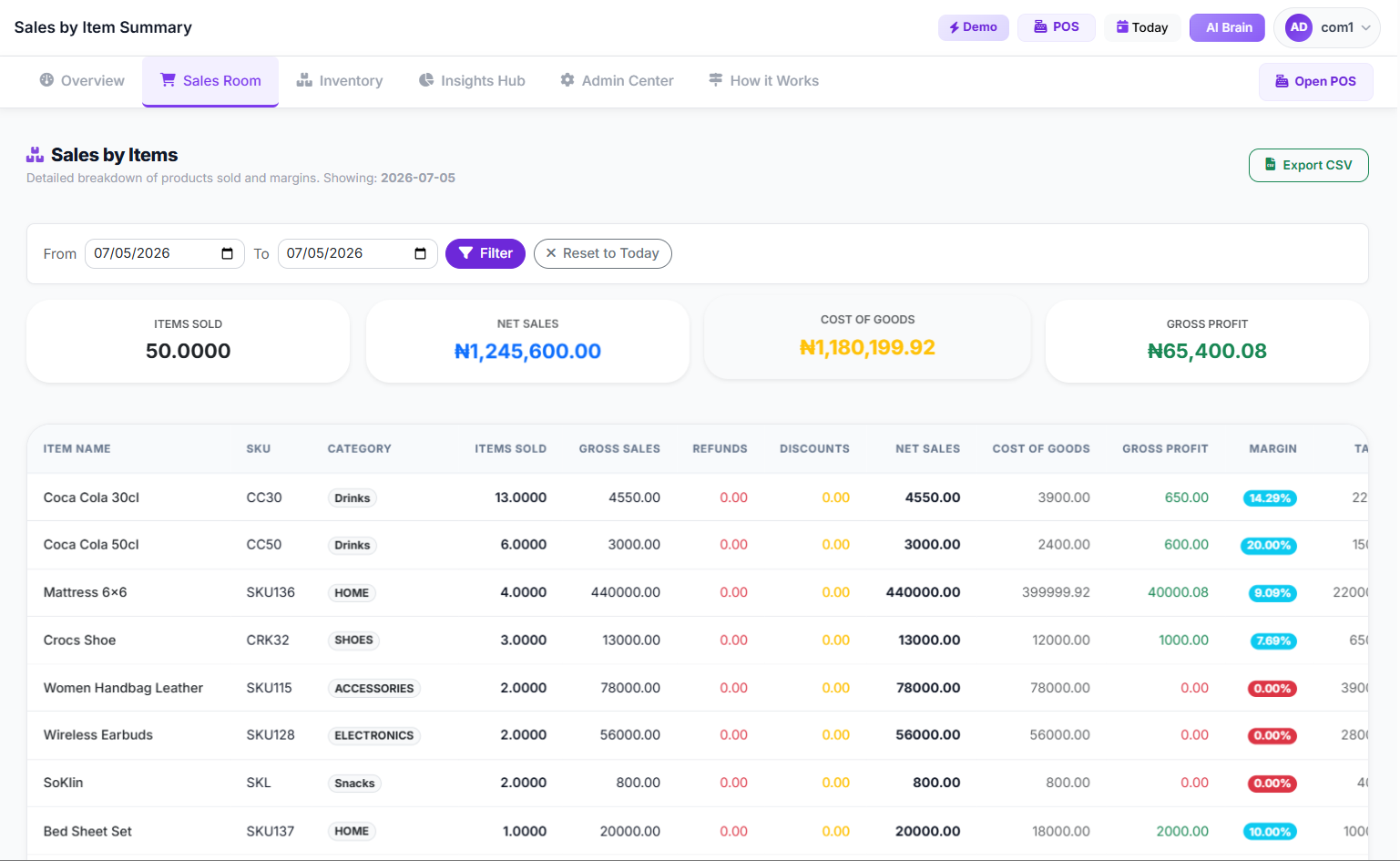
Categorizing sales by product type (e.g., "Provisions," "Toiletries," "Drinks" for a mini-mart) helps you understand what's selling best. Categorizing payments (Cash, POS, Transfer, Credit) helps you track cash flow and identify potential issues with specific payment channels. For instance, if your POS machine consistently under-reports, you'll spot it. A comprehensive system like SwiftPOS NG automatically handles this, providing detailed reports on sales by item and payment method. This data is invaluable for making smart business decisions.
 SwiftPOS Sales by Item Page
Actionable Tip: If using a manual book, create separate columns or even separate pages for different product categories and payment types. It takes more effort but yields better insights.
Step 6: Keep Digital Backups
Whether you're using a paper ledger or a basic Excel sheet, always have a backup. For paper, photocopy important pages regularly or take clear photos with your phone. For Excel, save it to a cloud service like Google Drive or Dropbox.
If you're using a cloud-based POS system, this step is largely automated. Your data is stored securely off-site, protected from fire, theft, or accidental deletion. This peace of mind is priceless. Losing your sales records to a fire in your shop or a stolen phone can set your business back months, if not permanently.
Actionable Tip: Schedule a weekly or bi-weekly backup for any manual or local digital records. Make it a routine.
5 Mistakes That Cost Nigerian Business Owners the Most
I've worked with hundreds of businesses across Nigeria, from small kiosks in Aba to booming supermarkets in Abuja. And I've seen the same mistakes pop up again and again when it comes to sales records. These aren't just minor oversights; they are revenue leaks that can silently drain your profits.
- Not Recording Small Sales: "It's just ₦200, no need to write it down." This is a killer. Those small, unrecorded sales accumulate. By the end of the month, you could be looking at a deficit of ₦10,000-₦50,000 that you can't account for. This isn't just lost income; it's a hole in your cash flow that can make you wonder where all your money went.
- Delaying Reconciliation: Waiting days or weeks to reconcile your cash and sales records is like trying to find a needle in a haystack. If there's a discrepancy, you won't remember the details of a transaction from three days ago. This leads to frustration, unresolved issues, and ultimately, a lack of trust in your own numbers.
- Ignoring Inventory Linkage: Selling items without updating your stock is a recipe for disaster. You'll over-order, under-order, or worse, sell products you don't actually have. This leads to angry customers, wasted capital on slow-moving stock, and missed sales opportunities. It's one of the biggest inventory management mistakes crushing profits.
- Relying Solely on Memory: Your brain is for brilliant ideas, not for storing every sales transaction. Especially when you're busy, things get forgotten. That credit sale to Mama Chinedu? If it's not written down immediately, you might forget, and that's money lost. Human memory is fallible, and your business can't afford that kind of risk.
- Not Training Staff Properly: If you have staff, they are handling your money and your products. If they don't know how to record sales accurately or why it's important, errors will happen. And sometimes, those "errors" are intentional. Clear processes and proper training on your sales records system are paramount. Setting staff access permissions in retail software, for instance, can prevent many issues.
How to Know If You're on Track (Success Metrics)
So, you're diligently keeping your sales records. How do you know if you're actually doing it right and if it's making a difference? You need to look at a few key metrics. These are your compass points.
- Daily Cash/Sales Reconciliation Rate: Ideally, this should be 100%. If your actual cash and digital payments consistently match your recorded sales, you're doing great. If you're frequently off by more than ₦500-₦1,000, you have a problem that needs immediate attention.
- Inventory Accuracy: This means your physical count of products matches what your records say you have. A good target is 95% or higher. If you're constantly finding discrepancies, your sales recording or inventory management needs tightening.
- Gross Profit Margin: This is your revenue minus the cost of goods sold. Your sales records, when linked to your purchasing data, allow you to calculate this. A healthy gross profit margin shows you're pricing your products correctly and managing your costs. You can track your monthly profit margins to see trends.
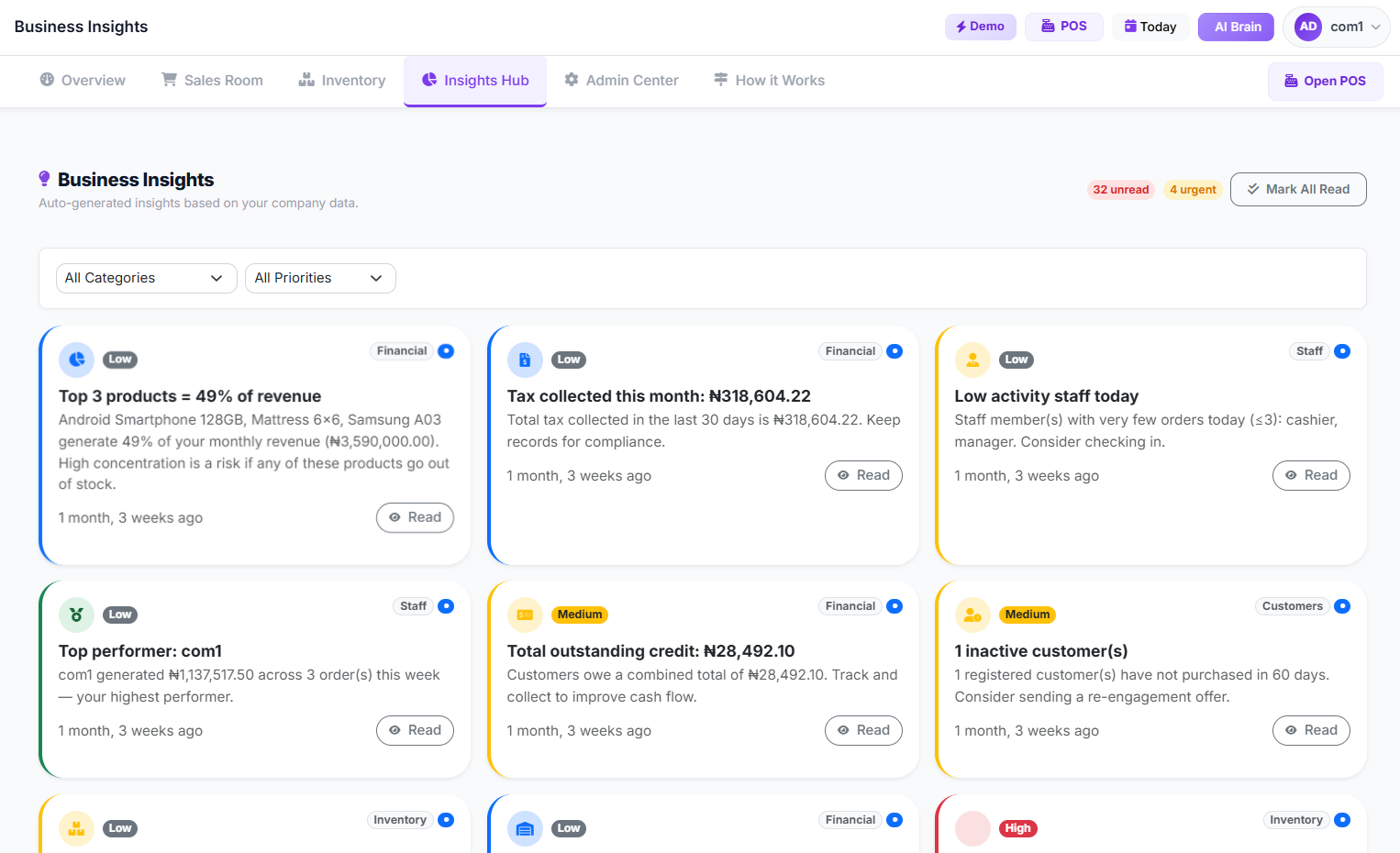
- Best-Selling Products: You should be able to easily identify your top 3-5 best-selling products. This helps you know what to restock, what to promote, and what your customers truly want. SwiftPOS NG provides clear reports on product performance, making this easy.
- Sales Trends: Are your sales increasing week-on-week? Month-on-month? Are there specific days or times when sales are higher? Understanding these trends helps you with staffing, promotions, and inventory forecasting. For example, if you know Fridays are your busiest days, you can plan accordingly.
 SwiftPOS Business Insights Page
If you're consistently hitting these benchmarks, congratulations! You're not just keeping records; you're using them to actively manage and grow your business. You're leveraging the power of data, which is something many larger businesses still struggle with. To dive deeper into what you should be tracking, check out these 7 key retail metrics Nigerian businesses must track for profit growth.
Real Questions People Ask
Q1: Is it really worth investing in a POS system for a small shop when I can use a book?
Honestly, for a very tiny roadside kiosk with minimal daily transactions, a book might suffice initially. But for any small business looking to grow beyond that, even a provision store, a POS system is an investment, not an expense. The hidden costs of manual retail operations in Nigeria, like errors, lost sales, and uncollected debt, far outweigh the subscription cost of a good POS system. It saves time, reduces errors, helps manage inventory, and gives you crucial insights you simply can't get from a book. It's the difference between guessing your profit and knowing it. You can learn more about the real costs in this article: Traditional Bookkeeping vs. POS Software: Real Costs for Nigerian Retailers.
Q2: What if I don't have constant electricity or internet for a digital system?
This is a valid concern in Nigeria, but modern POS systems are designed with this in mind. Many, including SwiftPOS NG, offer offline capabilities. This means you can continue to process sales even when the internet is down. Once connectivity is restored, your sales data automatically syncs. For electricity, a fully charged smartphone or tablet can last for hours, and a small power bank is a cheap backup. Don't let power issues be an excuse to stick with outdated methods. Can your POS system work without internet? Here's what every shop owner in Nigeria needs to know.
Q3: How do I train my staff to use a new sales record system without it disrupting my business?
Start with clear, simple instructions and hands-on practice. Don't overwhelm them with all features at once. Focus on the core sales process first. Many modern POS systems are intuitive, designed to be user-friendly. SwiftPOS NG, for example, has a straightforward interface that cashiers can quickly learn. You can also set different staff roles and permissions, so each staff member only sees what they need to. Offer incentives for accurate record-keeping and provide ongoing support. There are also tutorials available to guide you.
Q4: What about managing credit sales and customer debts? My customers often buy on credit.
This is a common challenge for Nigerian businesses. Manual credit books are easily lost or tampered with. A good digital sales record system will have a dedicated customer credit management feature. You can record credit sales, track outstanding balances, apply partial payments, and see a full payment history for each customer. This makes it much easier to manage customer debts and follow up on outstanding payments, reducing your risk of losses.
Q5: I have multiple branches. Can one system manage all of them?
Absolutely! If you're managing multiple branches with manual records, you're practically inviting chaos. A robust POS and business management system is designed for multi-branch operations. It allows you to track sales, inventory, and staff across all your locations from a single dashboard. You can transfer stock between branches, see which branch is performing best, and maintain consistent pricing. This is critical for scaling your retail business with technology in Nigeria.
Your Next Move
You've made it this far, which tells me you're serious about your business. You understand that accurate sales records aren't just about compliance; they're about control, insight, and growth. Don't let another day go by relying on guesswork or outdated methods.
Take the next step. Explore how a system like SwiftPOS NG can transform your operations. It’s designed specifically for Nigerian retailers, connecting your sales, inventory, customers, and expenses in one easy-to-use platform. Start your 14-day free trial today and experience the difference.
Written by SwiftPOS Team
Practical guides from the retail specialists at Nura Mustapha Technologies Limited, for modern Nigerian merchants.