How to Start a Mini Supermarket in Nigeria With ₦1 Million
SwiftPOS Team
Published September 11, 2026
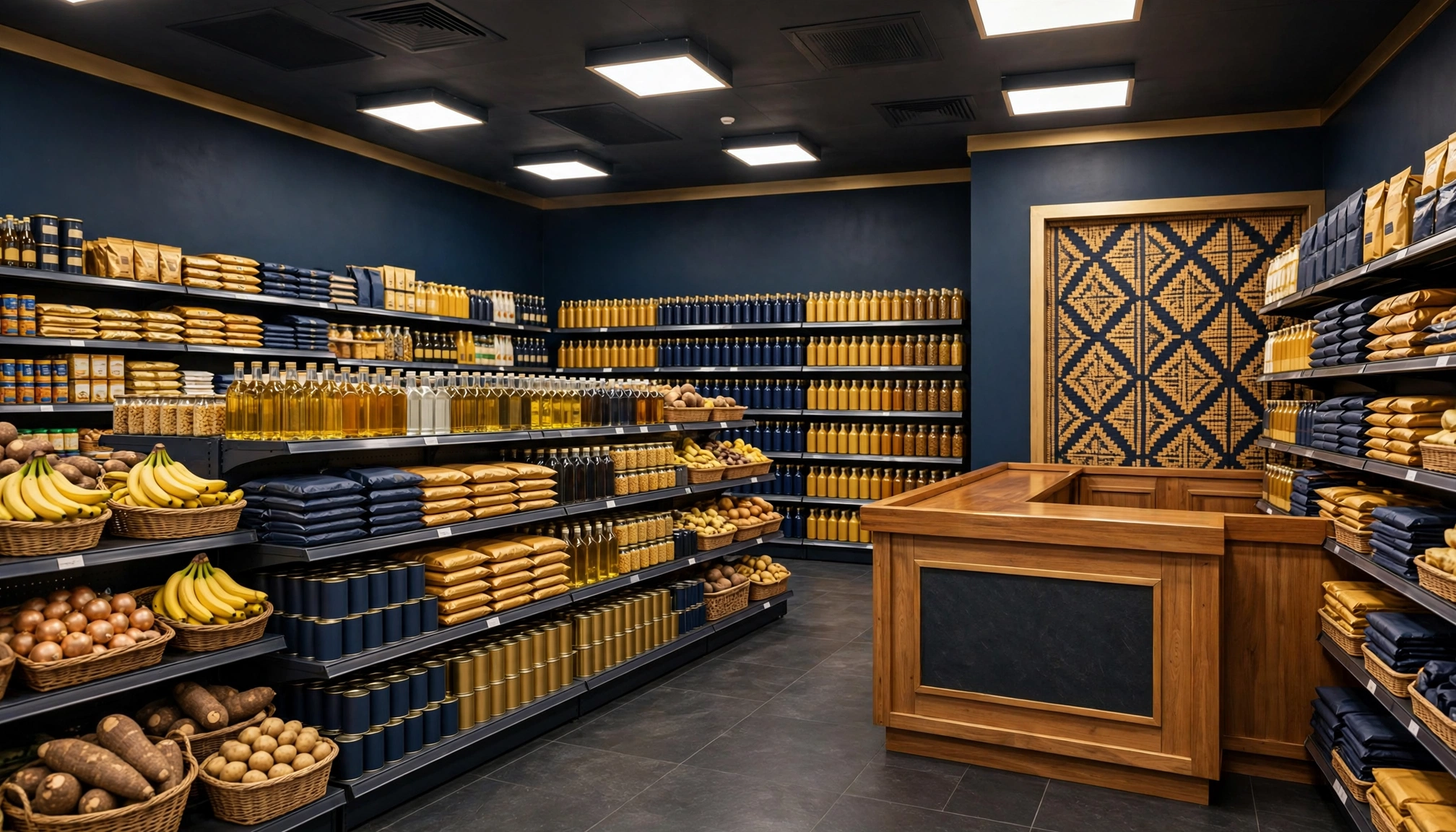
Many Nigerians dream of owning a thriving business, but the thought of high startup costs often stops them. What if you could launch a profitable mini supermarket with a capital of just ₦1 million in 2026? It's a challenging but achievable goal that requires smart planning, resourcefulness, and a deep understanding of the local market.
Nigerian market woman arranging fresh produceThe Evolving Landscape of Mini Supermarkets in Nigeria (2026)
The Nigerian retail sector is dynamic, with mini supermarkets and provision stores playing a crucial role in local economies. In 2026, consumers are increasingly seeking convenience, variety, and competitive pricing closer to home. This trend creates significant opportunities for small-scale entrepreneurs. However, success isn't guaranteed; it hinges on meticulous planning and efficient operations. According to recent market analysis, the informal retail sector, where mini supermarkets thrive, still accounts for over 90% of all retail transactions in Nigeria, highlighting its immense potential.
Despite this potential, many small businesses struggle due to poor inventory management, lack of proper sales tracking, and inefficient staff oversight. Manual record-keeping, while seemingly cost-effective initially, often leads to significant revenue leaks and profit loss. Understanding these challenges is the first step towards building a resilient and profitable business. For insights into common pitfalls, explore why manual retail management is costing Nigerian shops money.
What You Need Before You Start
Launching a mini supermarket requires more than just capital. Here's a quick checklist of essential prerequisites:
- Market Research: Understand your target customers, their needs, and local competition.
- Business Plan: A clear roadmap detailing your vision, strategy, and financial projections.
- Legal Registration: Business name registration with the Corporate Affairs Commission (CAC).
- Supplier Network: Identify reliable wholesalers for your initial stock.
- Location Strategy: A visible, accessible, and secure shop location.
- Basic Financial Literacy: Ability to manage cash flow, track expenses, and understand profit margins.
- Operational Mindset: Readiness to handle day-to-day tasks, from stocking to customer service.
Step-by-Step: How to Start a Mini Supermarket in Nigeria With ₦1 Million
Starting a mini supermarket with a limited budget requires a strategic approach. Each step below is designed to maximise your ₦1 million capital.
Step 1: Strategic Location and Minimal Renovation (Estimated: ₦230,000 - 900,000)
Your location is paramount. For a budget of ₦1 million, you'll need to be very selective.
Look for a space in a high-traffic residential area or a busy local market street, where rent is more affordable than prime commercial hubs. Consider suburban areas or smaller towns where annual rent might be as low as ₦80,000. In cities like Ibadan or Port Harcourt, you might find decent spots for around ₦500,000 annually. Remember, you'll also need to factor in a security deposit, which can be ₦40,000 to ₦250,000. Aim for a total rent and deposit allocation of ₦120,000 - 750,000.
For renovation, think basic but functional. A fresh coat of paint, simple shelving, and a sturdy counter are sufficient. Avoid elaborate fittings. You can achieve this for ₦150,000 - 400,000. Focus on cleanliness and good lighting to make your space inviting. Your goal is to create a presentable shop without overspending on aesthetics initially.
Step 2: Business Registration and Essential Licenses (Estimated: ₦20,000 - 40,000)
Formalising your business adds credibility and opens doors to better supplier deals. Registering your business name with the Corporate Affairs Commission (CAC) typically costs between ₦20,000 and ₦40,000. You may also need local government permits or health certificates, depending on your state and the nature of your goods. These fees are usually minimal but crucial for avoiding future disruptions. Ensure you comply with all local regulations from the outset.
Step 3: Initial Stock Purchase – The Lifeblood of Your Business (Estimated: ₦400,000 - 800,000)
This is where a significant portion of your capital will go. With ₦1 million, you need to be extremely strategic about your initial inventory. Focus on fast-moving consumer goods (FMCGs) that have high demand and good profit margins. Think essential groceries, popular beverages, toiletries, and common household items.
Start with smaller quantities of a wider variety rather than large quantities of a few items. This allows you to test the market without tying up too much capital in slow-moving stock. Build relationships with wholesalers who offer competitive prices and perhaps even credit terms as you grow. A budget of ₦400,000 - 800,000 should give you a decent starting inventory for a small space. For more on avoiding inventory pitfalls, read about Nigerian retailers: inventory management mistakes crushing your profits.
Step 4: Essential Equipment Procurement (Estimated: ₦155,000 - 380,000)
Power is unreliable in Nigeria, so a generator is non-negotiable. A small "I-Pass-My-Neighbour" type generator costs ₦60,000 - 150,000. For cold beverages and dairy, a used refrigerator or freezer is a smart investment, costing ₦70,000 - 180,000.
For your sales operations, a Point-of-Sale (POS) system is crucial for tracking sales, managing inventory, and understanding your business performance. A basic POS terminal can be purchased for ₦25,000 - 50,000 or even provided by some banks with a deposit. This investment pays for itself by preventing theft, reducing errors, and providing valuable business insights.
Step 5: Setting Up Your Operations and Management System
Once you have your physical setup, it's time to organise your operations. This includes how you manage sales, track inventory, and monitor staff. Manual methods, while seemingly free, often lead to hidden costs.
This is where a robust system like SwiftPOS becomes invaluable. It integrates sales, inventory, customer management, and even staff activity into one platform. For instance, you can use its Barcode POS interface for quick checkouts or the Classic POS interface for efficient product lookup.
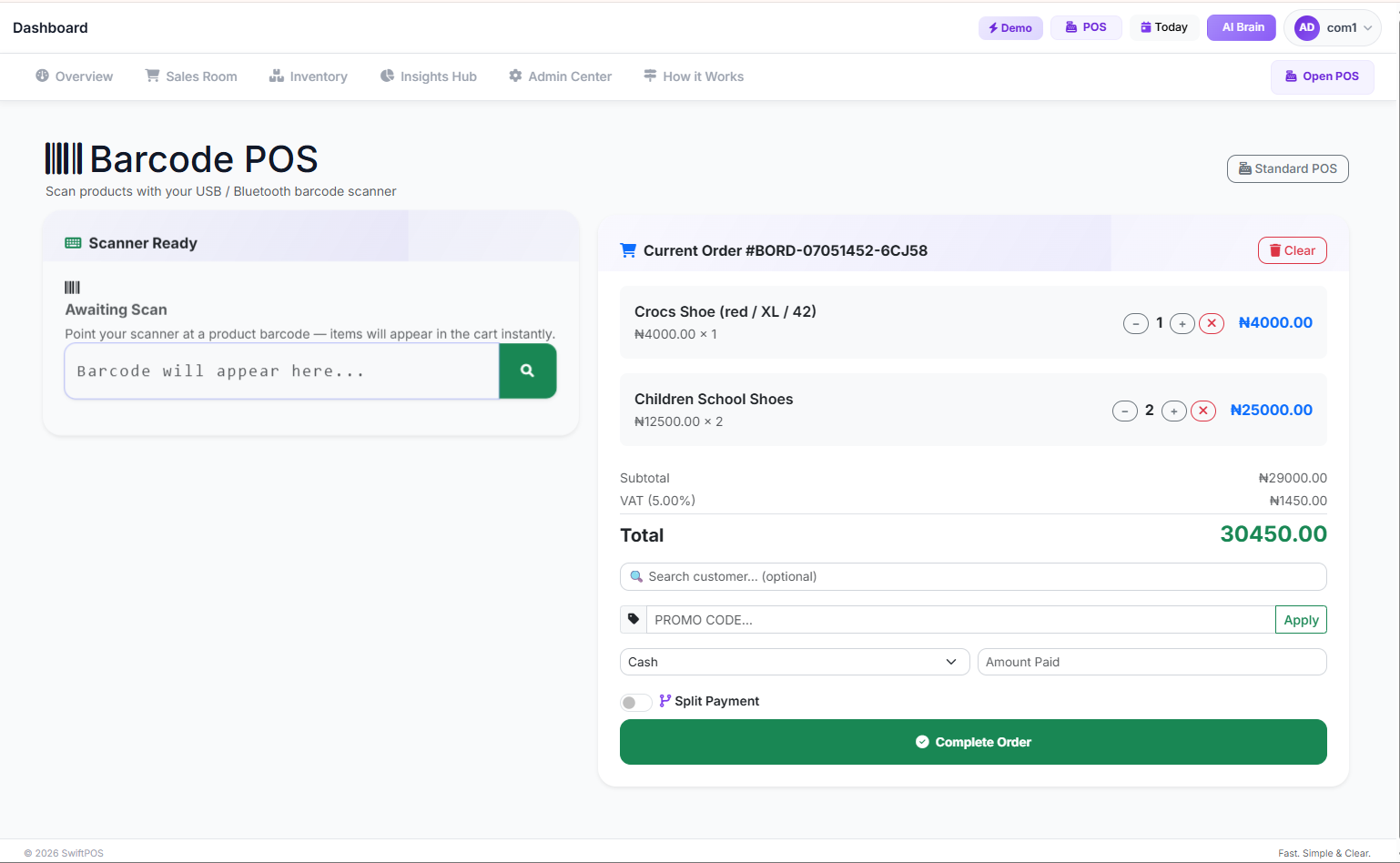 Barcode POS Interface
With SwiftPOS, you can easily add products, track stock levels, and even monitor expiration dates, which is critical for perishable goods. The system allows you to manage suppliers, record purchases, and track customer credit, reducing the risk of losses. It also offers features for managing staff permissions, ensuring that sensitive data is protected. By automating these processes, you free up time to focus on growing your business. For a step-by-step guide on getting started, check out how to set up your SwiftPOS account.
Step 6: Initial Staffing and Training (Estimated: ₦45,000 - 70,000 monthly)
With a ₦1 million budget, you might start by managing the shop yourself, or hiring just one reliable sales assistant. An entry-level sales assistant typically earns between ₦45,000 and ₦70,000 per month. Invest time in training them on customer service, product knowledge, and how to use your POS system. Clear roles and responsibilities are key to smooth operations.
Step 7: Marketing and Customer Retention
Even with a small budget, effective marketing is possible. Start with local word-of-mouth, offer small opening discounts, and ensure excellent customer service. Consider using local social media groups to announce your opening and promotions. Collecting customer contact details can help you build loyalty through targeted offers. A system that tracks customer data, like SwiftPOS, can help you understand buying patterns and tailor promotions.
Summary of Initial Capital Allocation (Estimated Ranges for ₦1 Million Budget):
| Item | Low-End Estimate (₦) | High-End Estimate (₦) |
|---|---|---|
| Shop Rent (Annual) | 80,000 | 500,000 |
| Security Deposit (Rent) | 40,000 | 250,000 |
| Shop Renovation/Fitting | 150,000 | 400,000 |
| Initial Stock Purchase | 400,000 | 800,000 |
| Refrigerator/Freezer (Used) | 70,000 | 180,000 |
| Generator (Small) | 60,000 | 150,000 |
| POS Machine/Terminal | 25,000 | 50,000 |
| Business Registration (CAC) | 20,000 | 40,000 |
| Subtotal (Initial Setup) | 845,000 | 2,370,000 |
| Contingency (10-20% of subtotal) | 84,500 | 237,000 |
| Total Estimated Initial Capital | 929,500 | 2,607,000 |
Note: The ₦1 million budget will lean heavily towards the lower end of these ranges, requiring careful negotiation and resourcefulness.
Common Mistakes to Avoid
- Underestimating Operational Costs: Beyond initial setup, factor in monthly electricity (₦15,000 - 40,000), transportation for restocking (₦10,000 - 30,000), and staff salaries.
- Poor Inventory Management: This is a silent killer. Without proper tracking, you risk stockouts of popular items and spoilage of perishables. This can lead to significant losses.
- Neglecting Customer Service: In a competitive market, excellent service is a differentiator. Unhappy customers rarely return.
- Ignoring Data: Relying on guesswork instead of sales data for purchasing decisions can lead to dead stock or missed opportunities.
- Lack of Financial Discipline: Mixing personal and business finances, or failing to track expenses, can quickly lead to cash flow problems.
- Overspending on Aesthetics: While a nice shop is good, functionality and stock quality should take precedence in the early stages.
- Not Registering Your Business: Operating informally can limit your access to loans, reputable suppliers, and growth opportunities.
"In Nigeria's retail sector, the difference between merely surviving and truly thriving often lies in the invisible efficiencies – how well you manage your stock, track your sales, and understand your customers, rather than just how much you sell."
>
How to Track and Grow After Launch
Once your mini supermarket is up and running, consistent tracking and strategic growth are essential.
- Monitor Key Metrics: Keep a close eye on your daily sales, popular products, average transaction value, and profit margins. Tools that provide insights into these metrics are invaluable.
- Inventory Turnover: Understand how quickly your products are selling. This helps you optimise restocking and reduce holding costs.
- Customer Feedback: Actively seek and respond to customer feedback to improve your offerings and service.
- Expense Tracking: Regularly review your operating expenses. Identify areas where you can cut costs without compromising quality or service.
- Supplier Relationships: Nurture strong relationships with suppliers to secure better pricing and terms.
- Leverage Technology: A system like SwiftPOS can provide detailed reports on sales, inventory, and staff performance, helping you make informed decisions. Its Insights Hub and Smart Store Forecast features can predict when products might run out, helping you restock proactively and avoid lost sales.
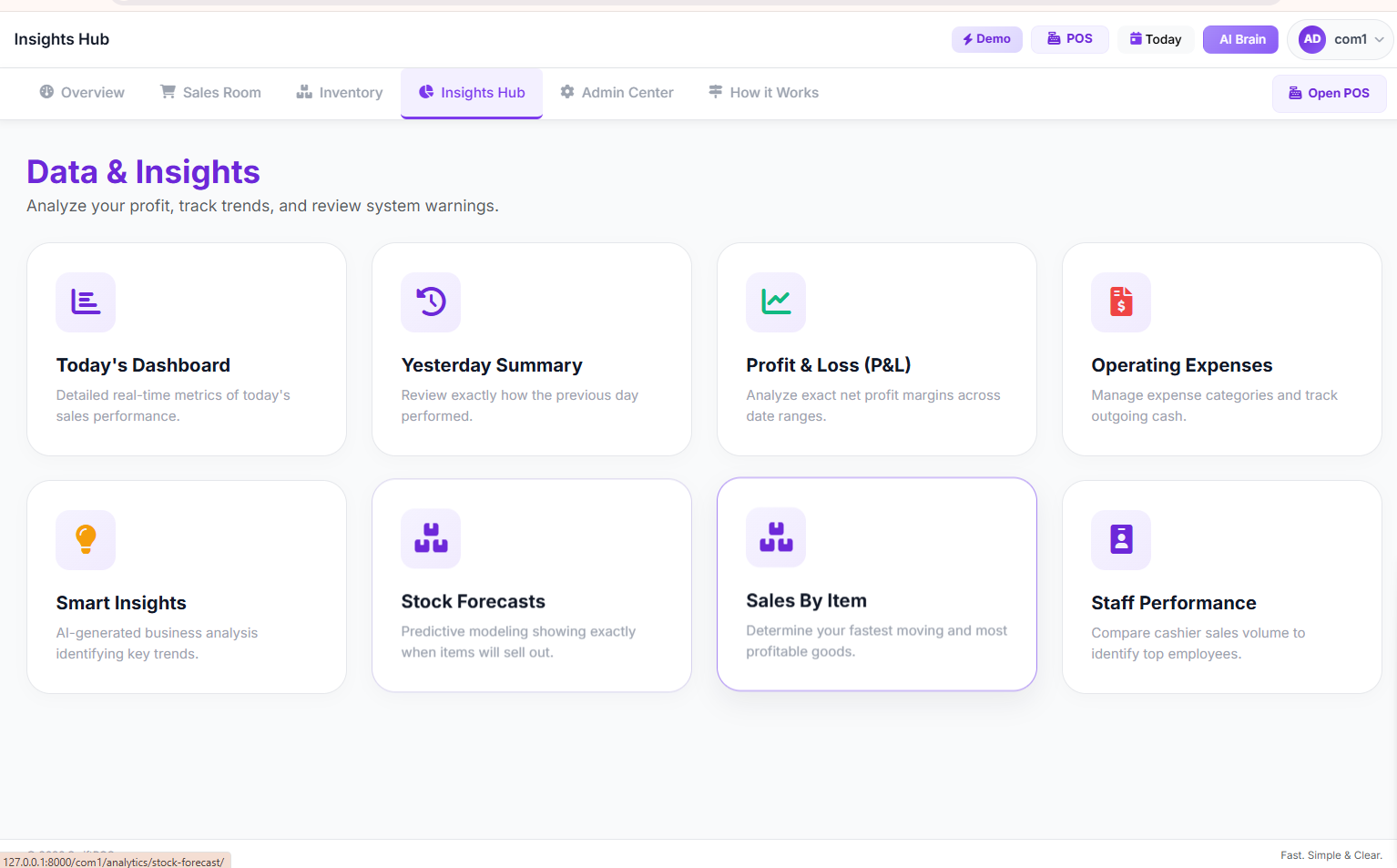 Insights Hub
As your business grows, consider expanding your product range, offering value-added services like mobile money, or even exploring a second branch. For more on scaling, read our guide on how to scale your retail business with technology in Nigeria.
Frequently Asked Questions
Q1: Is ₦1 million enough to start a mini supermarket in Nigeria?
A1: Yes, it is possible, but it requires extremely careful planning, negotiating for lower rent, buying used equipment, and focusing on high-demand, fast-moving consumer goods for initial stock. You will need to be hands-on and resourceful.
Q2: What are the most profitable items to sell in a mini supermarket?
A2: Focus on daily essentials and fast-moving consumer goods (FMCGs) such as popular beverages, packaged snacks, toiletries (soap, detergent), basic food items (rice, pasta, sugar), and essential household goods. Items with consistent demand and good profit margins are key.
Q3: How do I manage inventory effectively on a small budget?
A3: Start with a lean inventory of essential, high-demand products. Implement a simple inventory management system, even if it's initially a spreadsheet, to track stock levels. As you grow, consider a POS system that automates inventory tracking to prevent stockouts and spoilage. For a practical guide, see our article on retail inventory management.
Q4: Should I hire staff immediately or manage the shop myself?
A4: With a ₦1 million budget, it's often best to manage the shop yourself initially to save on salary costs. Once sales stabilise and cash flow improves, you can consider hiring one sales assistant. Ensure any staff you hire are trustworthy and well-trained.
Q5: How can I compete with larger supermarkets?
A5: Focus on convenience, excellent customer service, building strong community ties, and offering unique local products that larger stores might overlook. Competitive pricing on everyday essentials is also crucial. A strong understanding of your local customer base is your biggest asset.
Ready to Transform Your Retail Business?
Starting a mini supermarket in Nigeria with ₦1 million is an ambitious but achievable business idea. With careful planning, strategic investment, and efficient management, you can build a profitable venture. Don't let manual processes hold you back. Explore how modern tools can empower your business. Visit SwiftPOS NG to learn more about how our platform can help you manage sales, inventory, staff, and gain valuable insights into your operations. Take the first step towards a smarter, more profitable retail future today.

Top 10 Profitable Businesses to Start in Nigeria With …
Oct 27, 2026
How to Start a Retail Business in Nigeria With ₦500,00…
Oct 27, 2026
10 Best Small Businesses to Start in Nigeria With ₦1 M…
Oct 27, 2026