How to Start a Provision Store Business in Nigeria: POS Software Guide
SwiftPOS Team
Published July 22, 2026
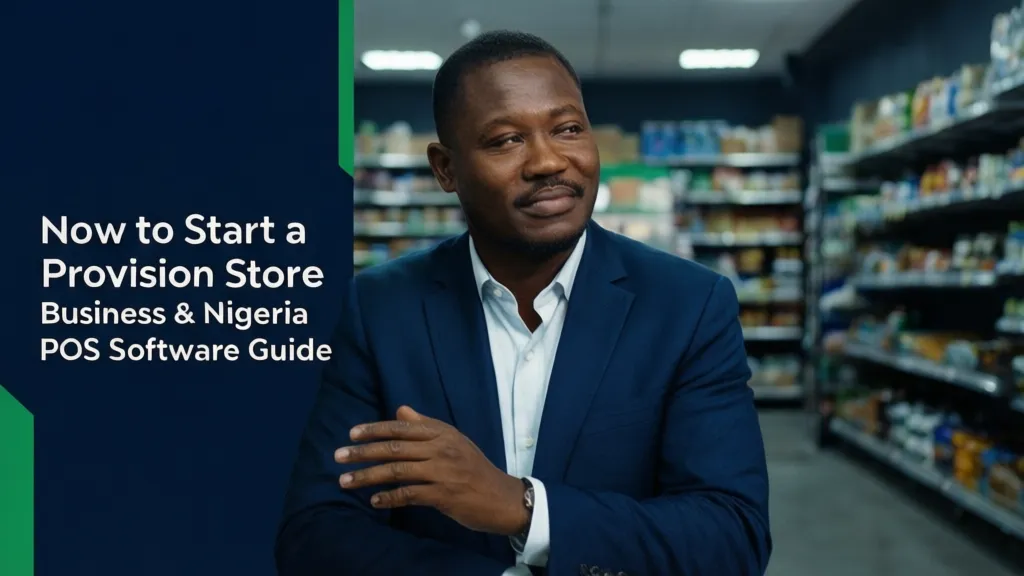
Manual record-keeping in retail is a silent killer of profits, costing Nigerian businesses an estimated 15-20% in lost revenue annually due to errors, theft, and inefficient stock management. Many small supermarket owners grapple with stockouts, confusing sales figures, and the constant worry of mismanaged funds, hindering their growth and potential.
What You Need Before You Start
Starting a provision store, or mini supermarket, requires careful planning and a solid foundation. Here's a checklist of prerequisites:
- Capital Investment: This includes funds for inventory, rent/lease of premises, store setup (shelving, lighting, refrigeration), initial marketing, and operational expenses for at least 3-6 months. A realistic budget for a small provision store can range from ₦1,500,000 to ₦5,000,000, depending on location and scale.
- Business Registration: Register your business name with the Corporate Affairs Commission (CAC) and obtain all necessary permits and licenses from your local government authority. This is crucial for legal operation and accessing financial services.
- Strategic Location: Identify a high-traffic area with good visibility and accessibility, ideally in a residential community, near offices, or along a busy street. Conduct a thorough market survey to understand local demand and competition.
- Reliable Suppliers: Establish relationships with wholesalers and distributors for various product categories (groceries, toiletries, beverages, household items). Negotiate favorable credit terms and consistent supply.
- Basic Infrastructure: Secure a shop space with adequate power supply, water, and security measures. Consider a backup power source (generator or inverter) given Nigeria's power challenges.
- Initial Inventory: Based on your market research, procure a diverse range of fast-moving consumer goods (FMCGs) that cater to your target customers' needs.
- Staffing Plan (Optional initially): Decide if you'll manage the store alone or hire staff. If hiring, consider roles like sales assistant or cashier.
- Business Plan: A detailed business plan outlining your vision, mission, market analysis, marketing strategy, operational plan, and financial projections.
Step-by-Step: How to Manage Your Mini Supermarket
Successfully managing a provision store in Nigeria involves more than just stocking shelves. It requires a strategic approach to operations, sales, and customer satisfaction.
Step 1: Market Research and Niche Identification
Before you even think about products, understand your potential customers. What do they buy? What are their income levels? What are their pain points with existing stores? For instance, a store in a student-dominated area might focus on snacks, instant noodles, and affordable toiletries, while one in a more affluent estate might stock imported goods and premium brands. Identifying a niche, such as organic produce or a specific ethnic food range, can help you stand out. Conduct surveys, observe competitor pricing, and analyze local demographics.
Step 2: Secure Your Location and Set Up Your Store
The right location is paramount. Look for visibility, foot traffic, and accessibility for both customers and suppliers. Once secured, design your store layout for optimal customer flow and product visibility. Use clear signage, proper lighting, and well-organized shelving. Ensure your refrigeration units are efficient for perishable goods. Consider security measures like CCTV cameras and a strong locking system.
Step 3: Source and Stock Your Inventory Strategically
Building relationships with reliable suppliers is key to consistent stock and good margins. Look for distributors offering competitive prices and efficient delivery. Diversify your supplier base to mitigate risks. When stocking, prioritize fast-moving consumer goods (FMCGs) that have high demand. Implement a "first-in, first-out" (FIFO) system to manage perishable goods and minimize waste.
A Nigerian shopkeeper arranging products on shelves in a modern mini-martStep 4: Implement a Robust Inventory Management System
This is where the difference between struggling and thriving often lies. Manual tracking with notebooks or complex spreadsheets is prone to errors, leading to stockouts, expired goods, and lost sales. You need a system that tracks every item from when it enters your store to when it leaves. This includes monitoring stock levels, tracking expiry dates, and managing supplier orders.
For efficient retail management, consider a dedicated POS software. A system like SwiftPOS allows you to digitally record every product detail – from SKU and barcode to category, price, cost, and minimum stock levels. When you receive goods, you simply update the system, and when a sale occurs, the stock automatically deducts. This gives you a real-time view of your inventory, helping you make informed decisions about when and what to reorder. You can even generate and print barcodes for products that don't have them, streamlining your checkout process.
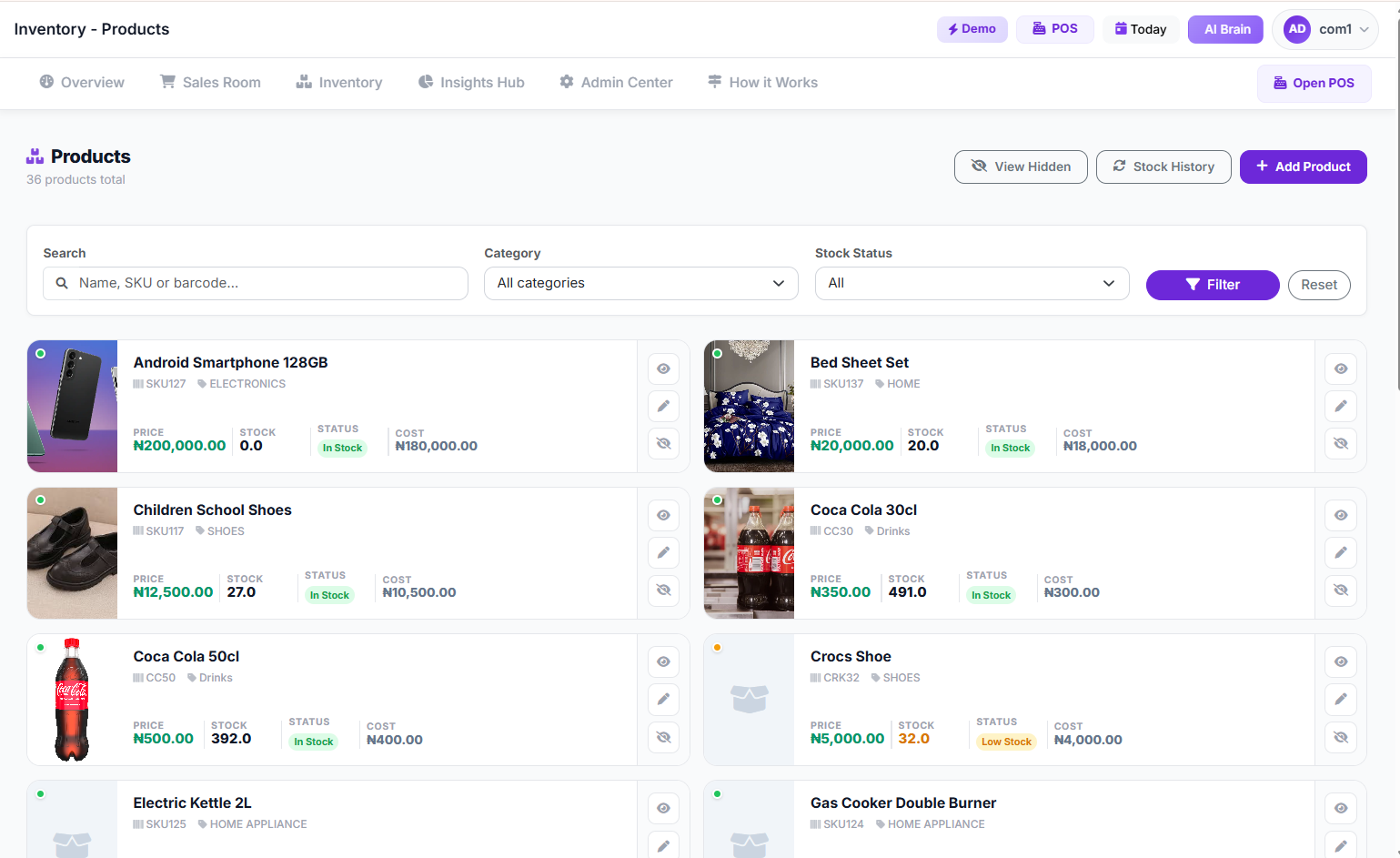 Products List Page
Step 5: Master Your Point-of-Sale (POS) Operations
The POS is the heart of your sales operation. It's where transactions happen, and customer interactions are finalized. A modern POS system simplifies this process significantly. It should be intuitive for your cashiers and support various payment methods common in Nigeria, including cash, bank transfers, POS/ATM cards, and mobile money. The ability to handle credit sales and partial payments is also crucial for many Nigerian customers.
A comprehensive POS solution like SwiftPOS provides different interfaces, from a classic list-style POS to a smart grid layout or a barcode scanner optimized interface. This flexibility ensures quick and accurate transactions, reduces queues, and enhances the customer experience. It also handles discounts, promo codes, and even tracks customer-specific pricing.
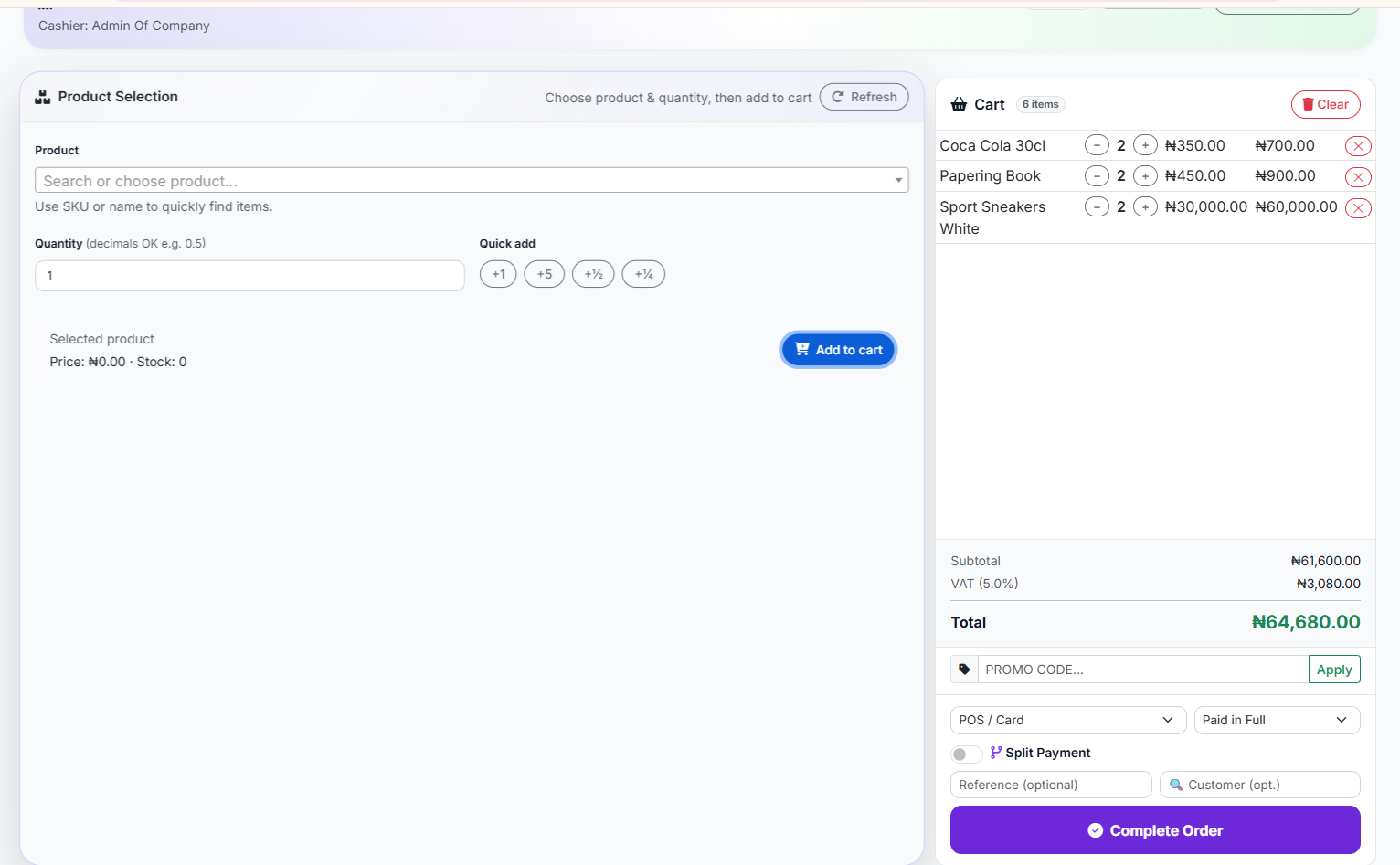 Classic POS Interface (List select)
Step 6: Customer Relationship Management
Building customer loyalty is vital. Collect customer information (name, phone number) to understand their purchasing habits. Offer loyalty programs, discounts, or special promotions for repeat customers. Personalizing the shopping experience can significantly increase repeat business. A good retail management system will allow you to link sales to specific customers, giving you insights into their preferences and total spending. This helps you tailor marketing efforts and improve service.
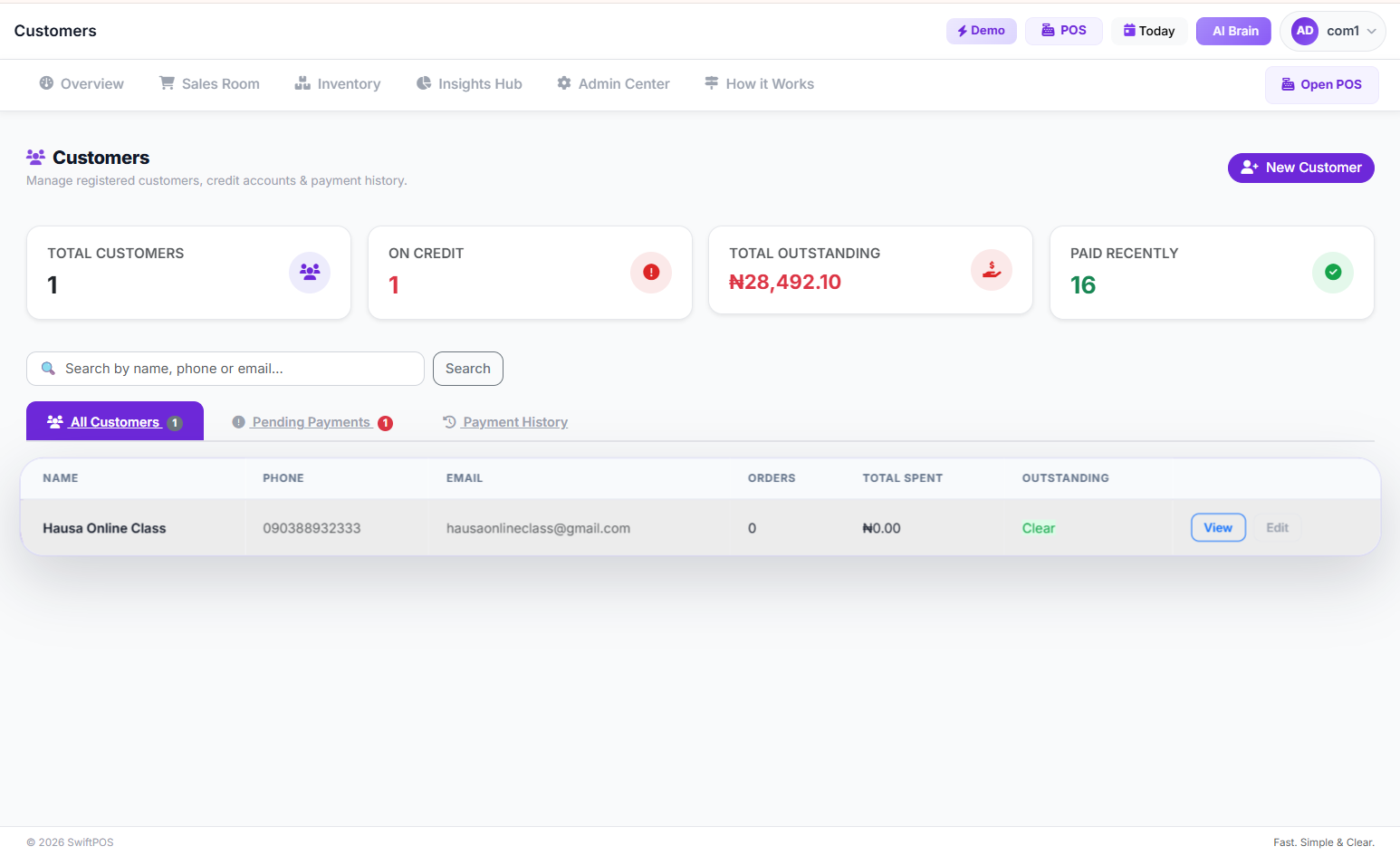 Customers List Directory
Step 7: Financial Tracking and Reporting
Understanding your store's financial health is non-negotiable. You need to track all income and expenses meticulously. This includes daily sales, cost of goods sold (COGS), operating expenses (rent, salaries, utilities), and profit margins. Regular reporting helps you identify trends, pinpoint areas of waste, and make data-driven decisions.
Look for a system that automates your financial reporting. A robust POS system should provide daily sales dashboards, profit and loss statements, and allow you to track expenses. This eliminates manual calculation errors and provides immediate insights into your store's performance. For example, SwiftPOS offers detailed sales reports that break down revenue by product, payment method, and even staff performance, empowering you with actionable data.
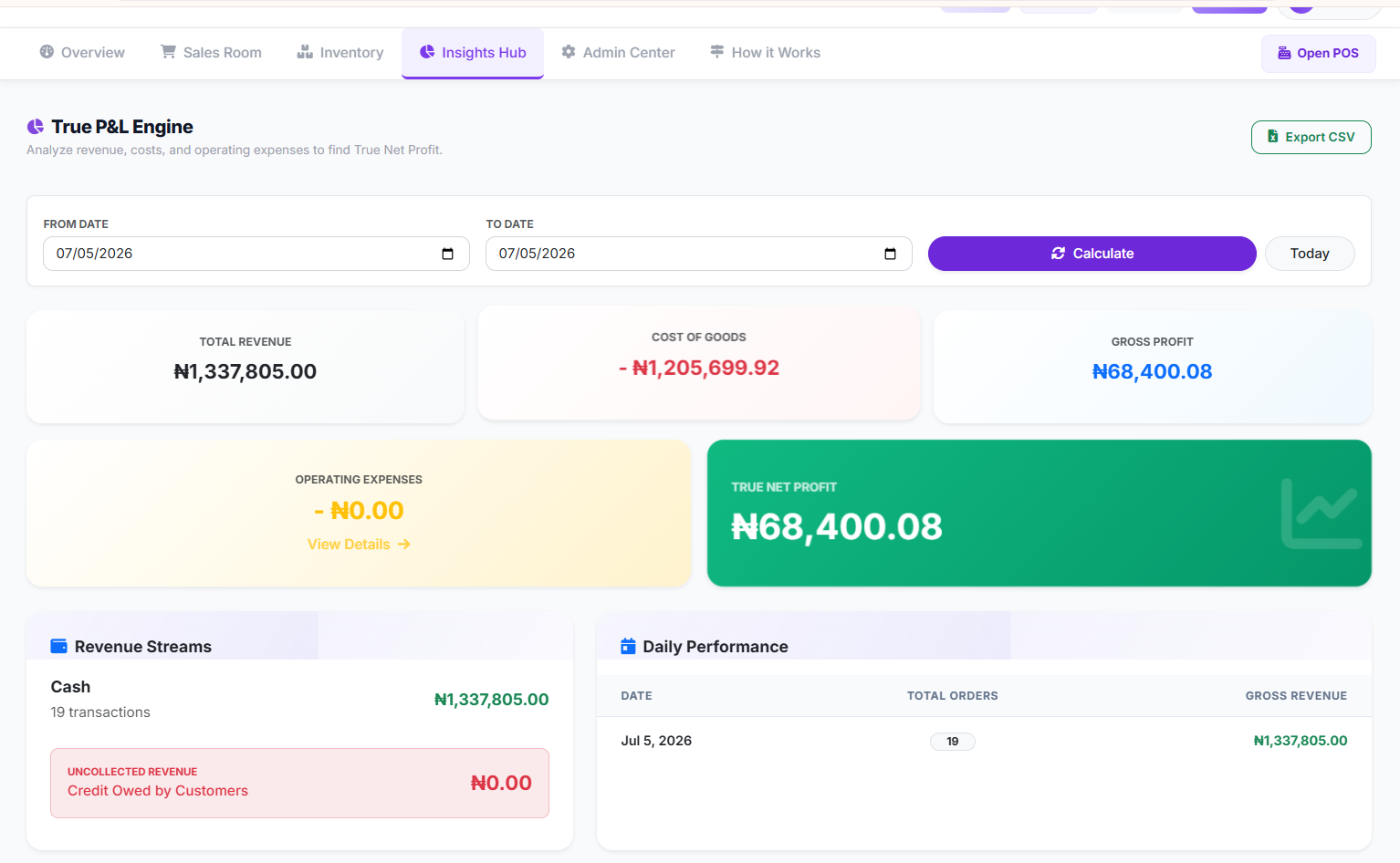 Profit and Loss Page
Step 8: Marketing and Promotion
Even a small provision store needs to market itself. Engage with your local community. Offer opening discounts, run seasonal promotions, or partner with local businesses. Social media can be a low-cost, high-impact tool for promoting new arrivals, special offers, and engaging with customers. Consider using WhatsApp for business to send out daily deals or communicate with your loyal customers.
Step 9: Staff Training and Management
If you have employees, proper training is crucial. Train them not just on how to operate the POS system, but also on customer service, product knowledge, and store policies. Empower them to handle minor issues and reward good performance. A POS system with user management features allows you to assign different roles and permissions to your staff, ensuring they only access what's necessary for their duties, and tracks their sales performance.
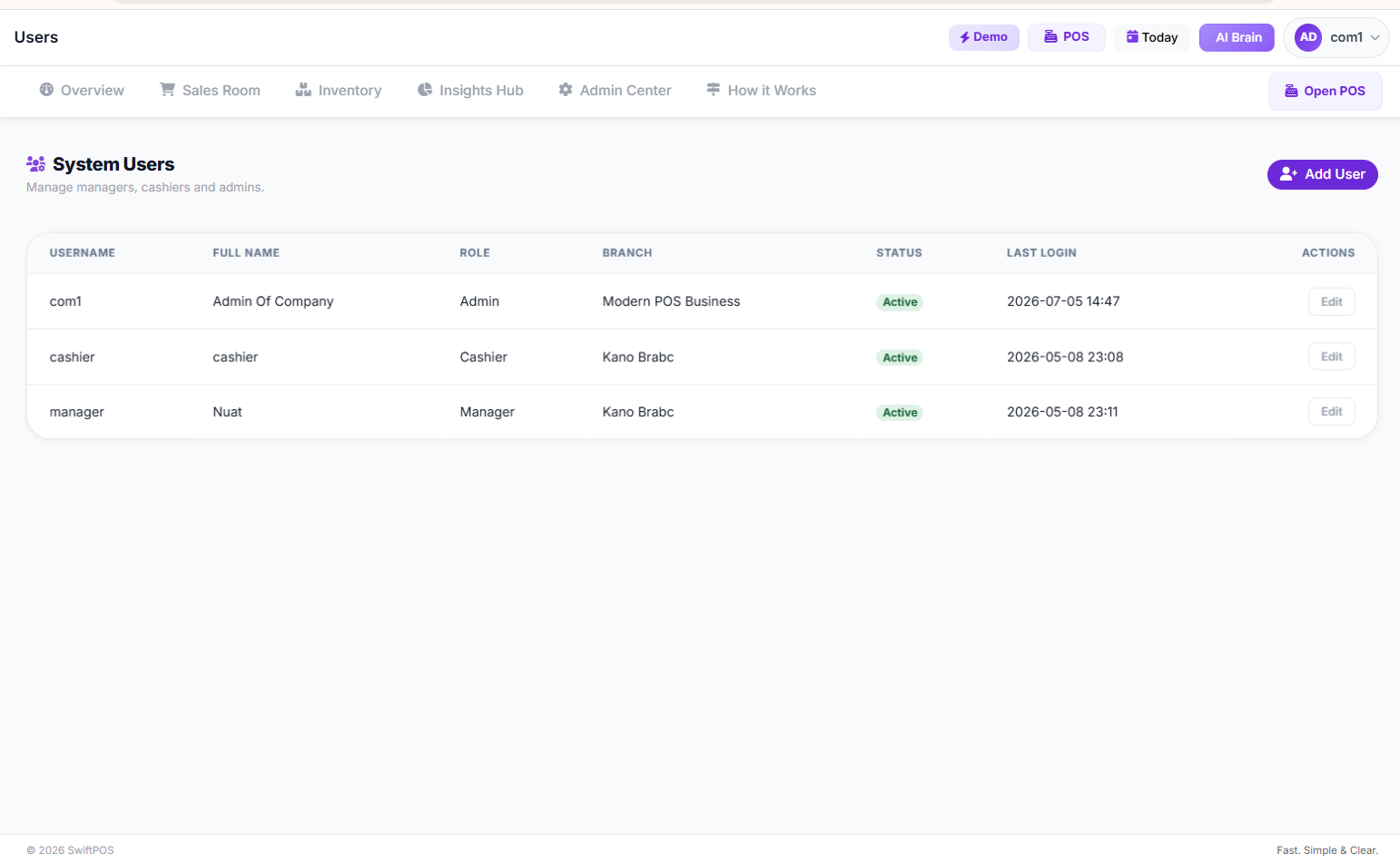 Staff Users Managemnet Page
Common Mistakes to Avoid
Starting a provision store is exciting, but pitfalls can quickly derail your efforts. Be aware of these common mistakes:
- Underestimating Capital Requirements: Many new businesses fail because they run out of cash. Always have a contingency fund for unexpected expenses.
- Poor Inventory Management: This is arguably the biggest challenge for mini supermarkets. Without accurate stock tracking, you'll suffer from stockouts of popular items and spoilage of perishable goods, leading to lost sales and wasted money.
- Ignoring Competitor Analysis: Failing to understand what your competitors offer, their pricing, and their customer service can lead to being outmaneuvered in the market.
- Neglecting Customer Service: In a competitive environment, excellent customer service is a key differentiator. Unfriendly staff, slow service, or unresolved complaints can drive customers away permanently.
- Lack of Digital Adoption: Relying solely on manual methods in 2026 is a recipe for inefficiency. Modern tools, especially POS software, are essential for streamlining operations and gaining insights.
- Inadequate Financial Tracking: Not knowing your true profit margins, your best-selling products, or your operational costs makes it impossible to make sound business decisions.
 A Nigerian retail business owner looking stressed while reviewing stacks of paper invoices in a cluttered office
How to Track and Grow After Launch
Launching your provision store is just the beginning. Continuous monitoring and strategic growth are essential for long-term success.
- Monitor Key Performance Indicators (KPIs): Regularly track metrics such as daily sales volume, average transaction value, inventory turnover rate, gross profit margin, and customer retention rate. These KPIs provide a clear picture of your business health.
- Analyze Sales Data: Use your POS system's reporting features to identify your best-selling and slowest-moving products. This helps you optimize your inventory, promotions, and purchasing decisions. For instance, SwiftPOS offers an
that provides auto-generated insights on sales, inventory, and customers, helping you understand complex data at a glance.
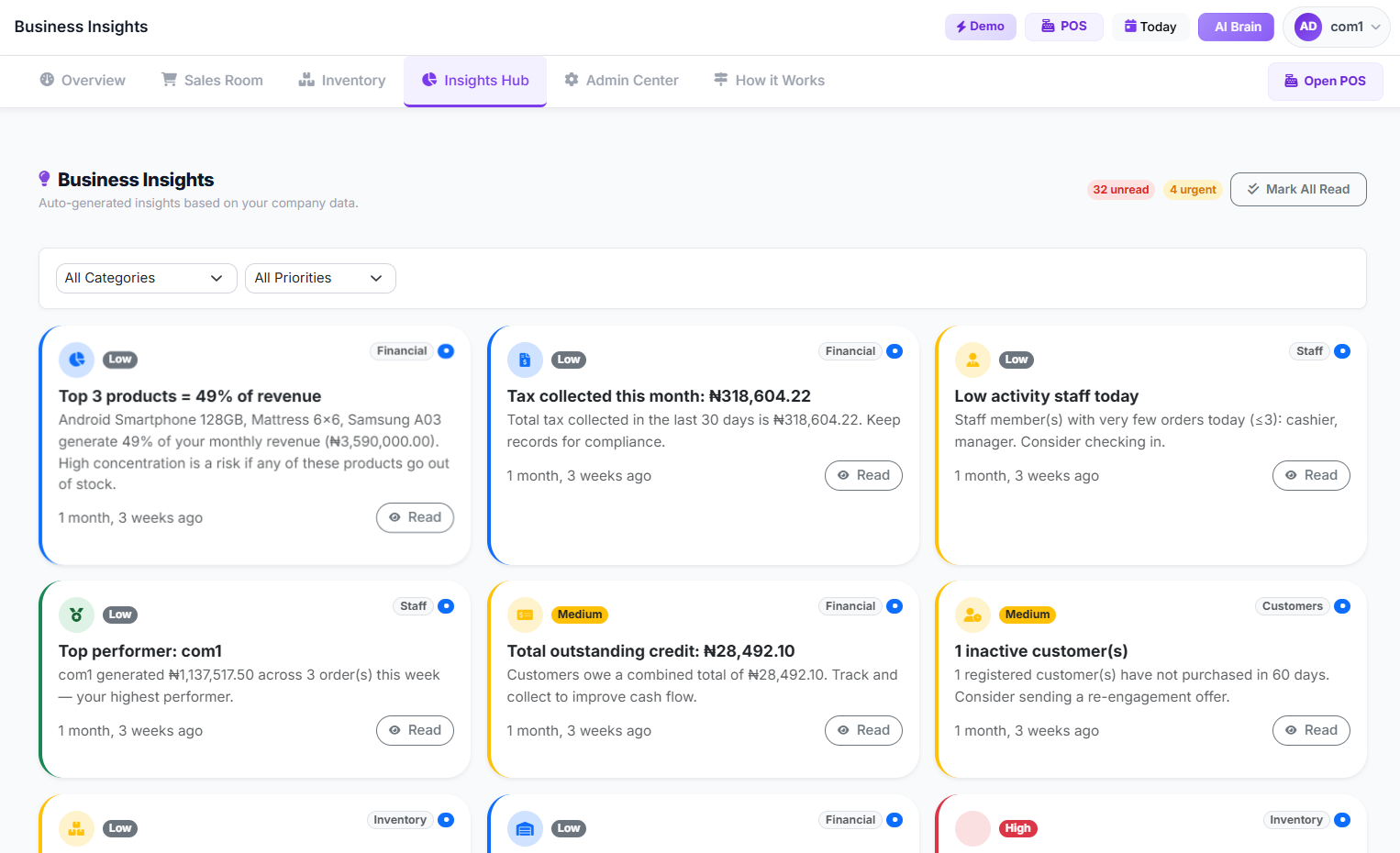 AI Insights Dashboard
 - Manage Inventory Proactively: Beyond just tracking, use sales data to forecast demand. Implement a system for reordering popular items before they run out and for clearing slow-moving stock through discounts. SwiftPOS's
feature can predict when you'll run out of stock based on average daily sales, helping you avoid stockouts.
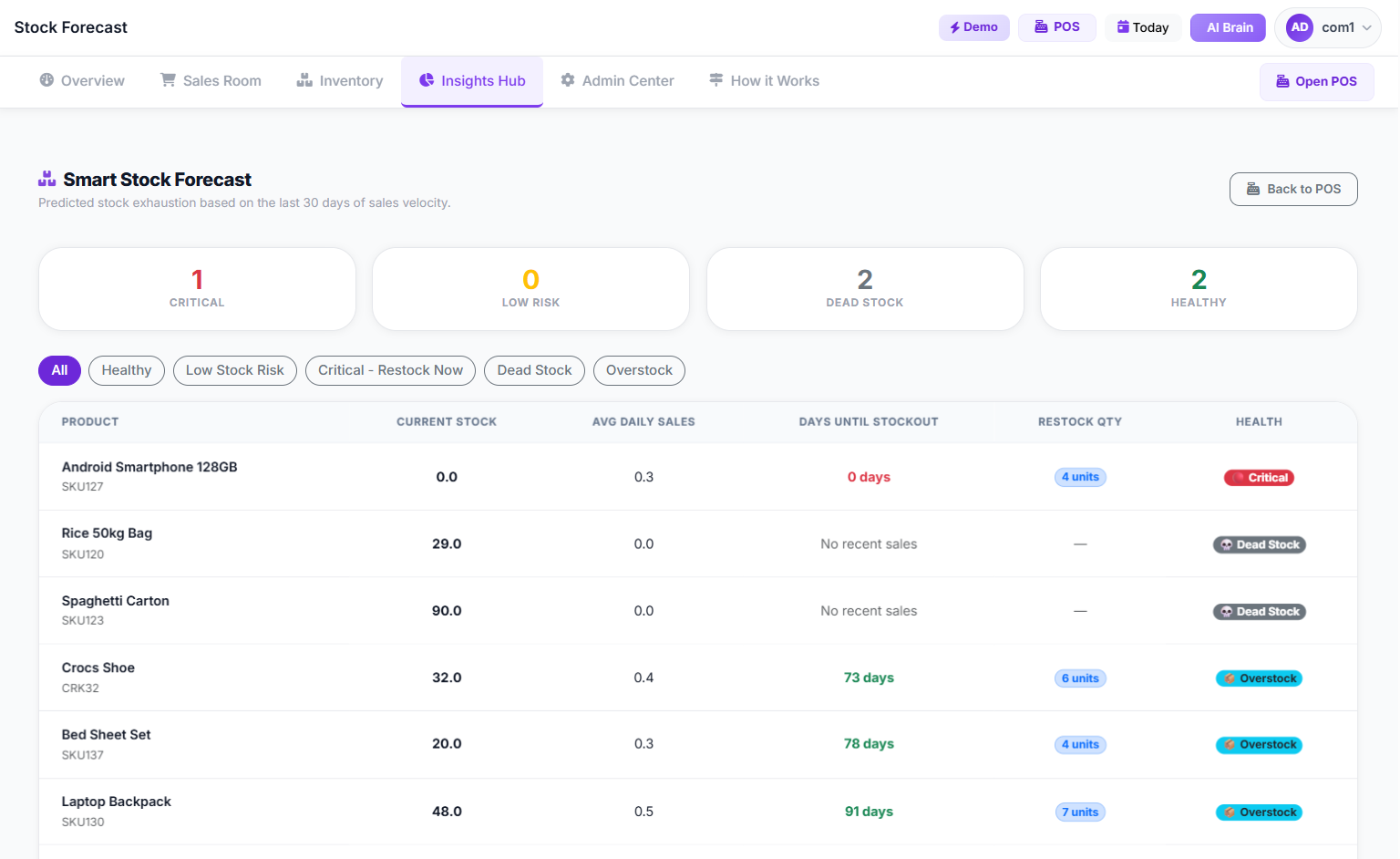 Stock Forecast
 - Gather Customer Feedback: Encourage customers to provide feedback, both positive and negative. This can be through suggestion boxes, quick surveys, or direct conversations. Use this feedback to improve your product offering, service, and overall store experience.
- Explore Expansion Opportunities: Once your first store is stable and profitable, consider opening additional branches or diversifying your product range. Multi-branch management features in a POS system can greatly simplify this expansion.
- Leverage Technology for Efficiency: Continue to explore other digital tools that can enhance your operations, such as online ordering platforms, digital marketing tools, and advanced analytics. The goal is to automate repetitive tasks and free up your time to focus on strategic growth.
- Staff Performance Review: Regularly review your staff's performance, especially cashiers, using metrics like average transaction value and sales per shift. Provide ongoing training and incentives. A system that tracks
can be invaluable here.
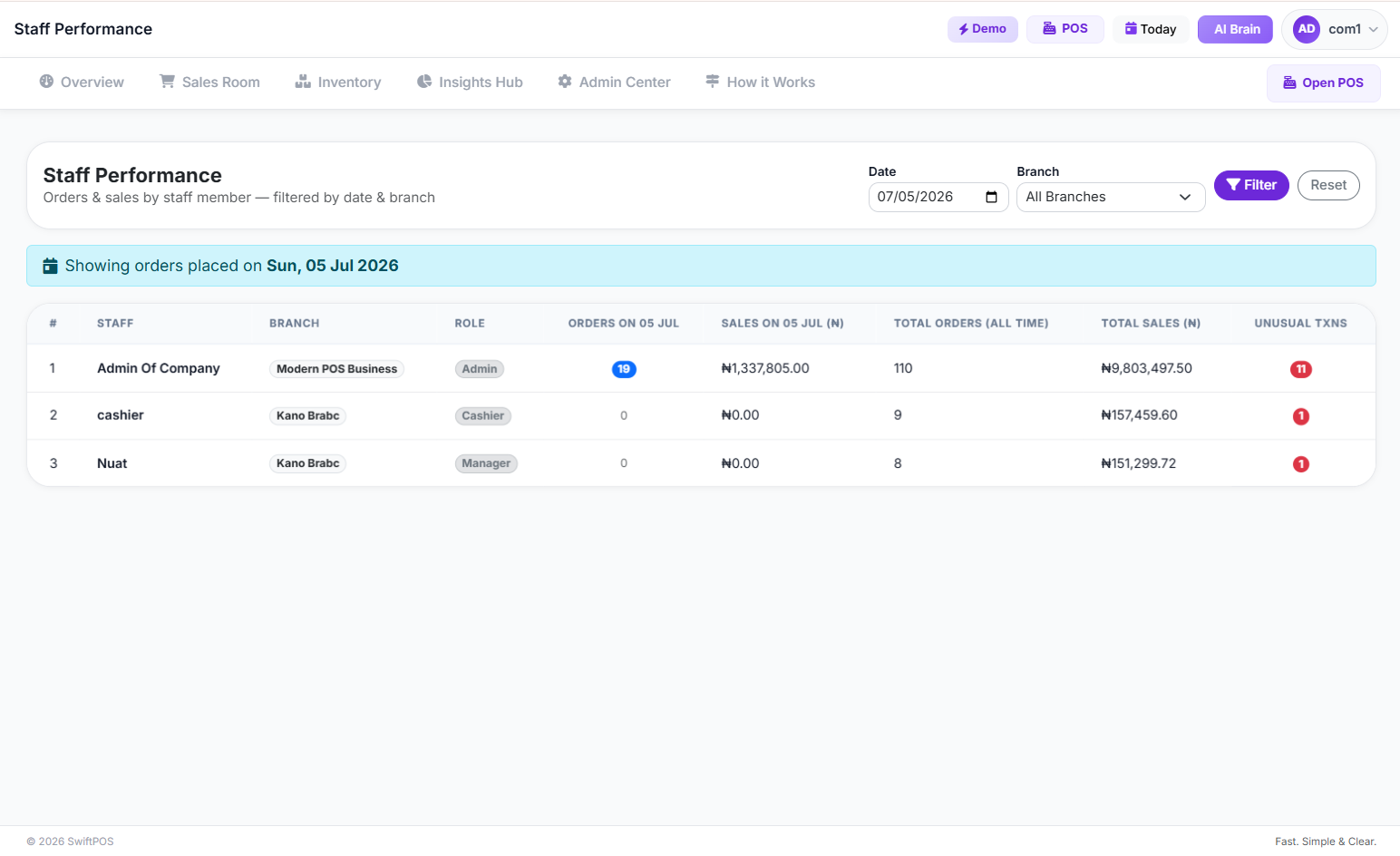 staff performance
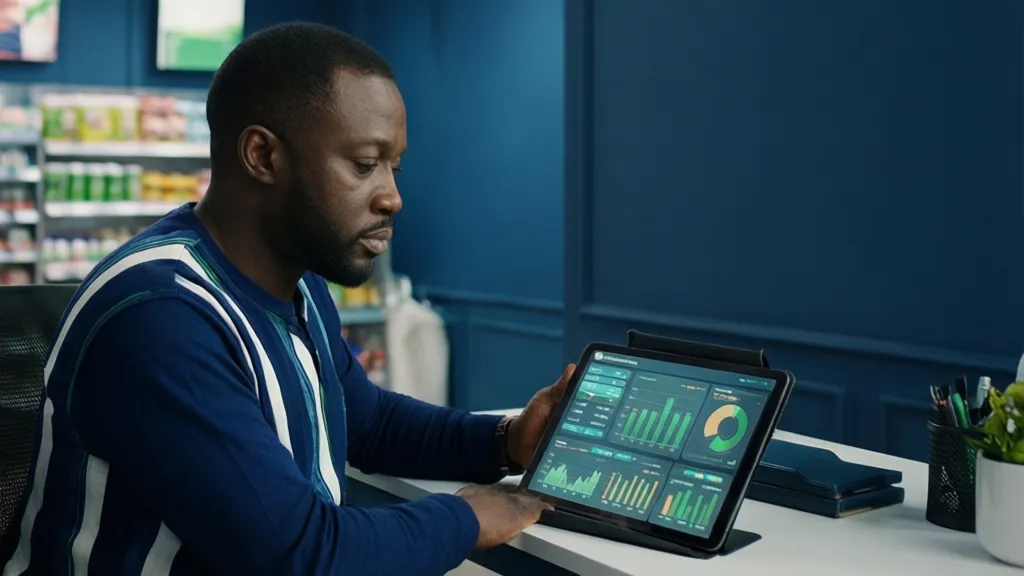 A Nigerian business owner reviewing a digital dashboard on a tablet, showing sales charts and inventory data.
Frequently Asked Questions
Q1: How much capital do I need to start a mini supermarket in Nigeria?
A1: The initial capital can vary widely based on location, size, and inventory. Generally, you should budget between ₦1,500,000 to ₦5,000,000 for rent, inventory, store setup, permits, and initial operating costs. It's crucial to have a detailed business plan to accurately estimate your specific needs.
Q2: What are the most important licenses and permits for a provision store in Nigeria?
A2: You'll need to register your business with the Corporate Affairs Commission (CAC). Additionally, obtain a business premises permit from your local government, a fire safety certificate, and potentially a food handler's permit if you sell fresh produce or unpackaged food items. Always check with your local government council for specific requirements in your area.
Q3: How can I manage inventory effectively to avoid stockouts and waste?
A3: The most effective way is to use a robust inventory management system. This allows you to track products in real-time, set minimum stock alerts, monitor expiry dates, and automate reordering. Manual methods are highly prone to errors and inefficiencies. Tools like SwiftPOS provide comprehensive inventory features, from product management to detailed stock adjustment history.
Q4: Is a POS system really necessary for a small provision store?
A4: Absolutely. In 2026, a POS system is no longer a luxury but a necessity for any retail business aiming for efficiency and growth. It automates sales, manages inventory, tracks customer data, and generates critical financial reports. This saves time, reduces errors, prevents theft, and provides valuable insights that manual systems simply cannot. You can explore the various benefits of using such a system.
Q5: How do I choose the right location for my provision store?
A5: Look for areas with high foot traffic, good visibility, and easy access for both pedestrians and vehicles. Consider residential areas, proximity to schools or offices, and areas with limited competition. Conduct a thorough demographic analysis to ensure the local population matches your target customer base.
Q6: What kind of products should I stock initially?
A6: Start with fast-moving consumer goods (FMCGs) that have broad appeal, such as basic groceries (rice, oil, sugar, beverages), toiletries, cleaning supplies, and common household items. As you understand your customer base better, you can gradually diversify your product offerings.
Ready to Streamline Your Retail Operations?
Starting and managing a successful provision store in Nigeria demands efficiency, precision, and smart decision-making. If you're tired of manual record-keeping holding your business back, it's time to embrace modern retail management. Discover how comprehensive POS software can transform your provision store into a thriving, data-driven enterprise.
Explore our pricing plans or learn more about our powerful features designed for Nigerian businesses.
Contact us today to learn more:
WhatsApp: +2349164601810