Nigerian Retailers: Inventory Management Mistakes Crushing Your Profits
SwiftPOS Team
Published August 30, 2026
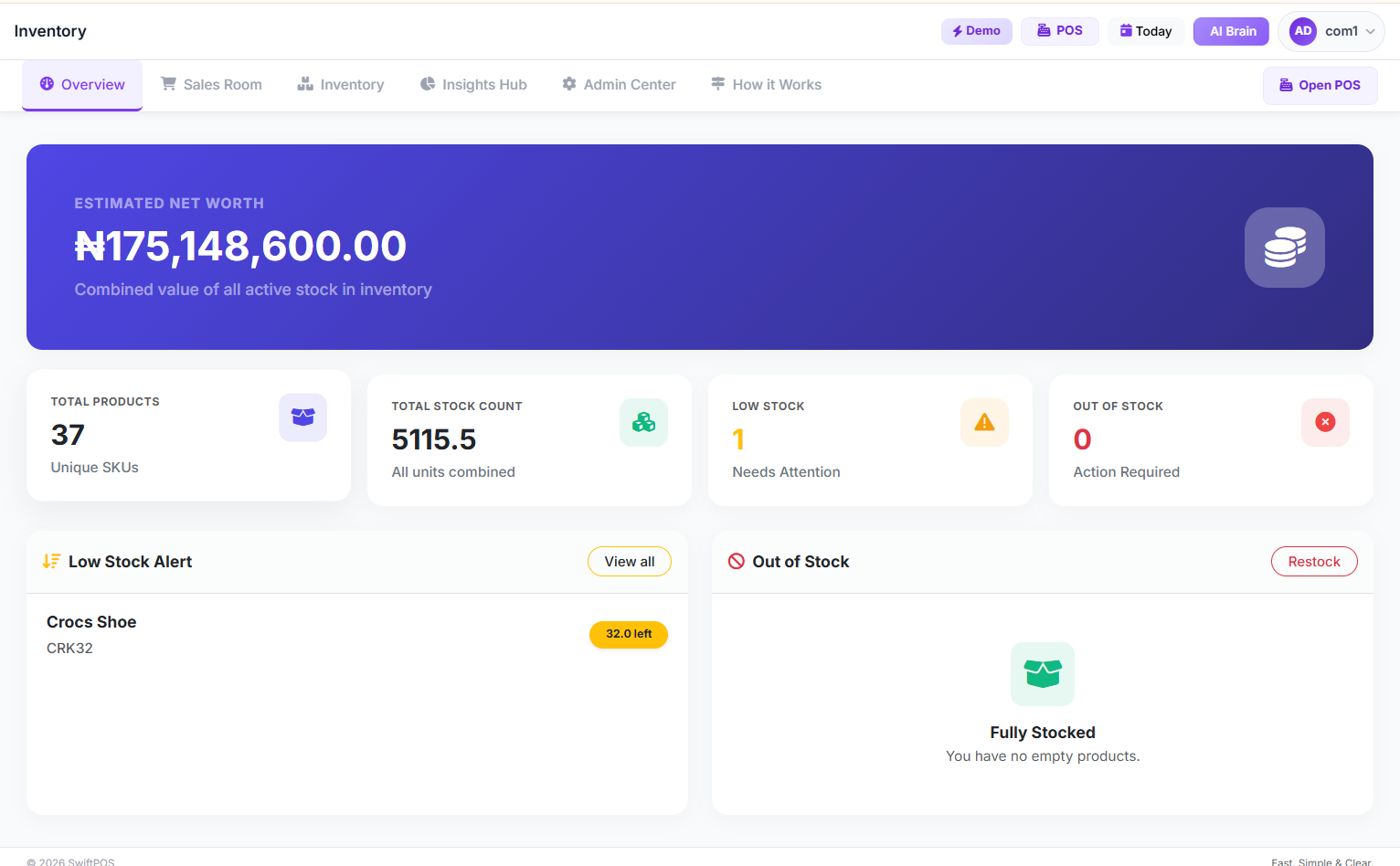
Are you constantly battling with stockouts, overstocking, or mysterious inventory discrepancies that eat into your profits? Do you spend countless hours trying to reconcile physical stock with sales records, only to find more questions than answers? You're not alone; many Nigerian retailers face these daily frustrations, and these hidden inefficiencies are silently eroding their hard-earned revenue.
The Silent Profit Killers: How Poor Inventory Management Undermines Your Retail Business
For small-to-medium retail businesses in Nigeria, effective inventory management isn't just about counting products; it's the bedrock of profitability. Without a clear, real-time understanding of what's in stock, what's selling, and what's gathering dust, businesses are vulnerable to a cascade of costly problems.
One of the most insidious issues is stockouts, where popular items are unavailable when customers want to buy them. This doesn't just mean a lost sale; it often means a lost customer who might turn to a competitor. A 2026 retail study indicated that nearly 30% of Nigerian consumers would switch brands or stores if their preferred product was out of stock, highlighting the direct link between inventory availability and customer loyalty. Beyond immediate sales, frequent stockouts damage your brand's reputation for reliability.
Inventory DashboardConversely, overstocking ties up valuable capital that could be used for other critical business needs, like marketing or expansion. Products sitting too long on shelves can expire, become obsolete, or get damaged, leading to write-offs and reduced profit margins. This is particularly critical in sectors like pharmacies and food retail where expiry dates are a major concern. The financial impact of holding excess inventory can be significant, with carrying costs (storage, insurance, spoilage, opportunity cost) often reaching 20-30% of the inventory's value annually. Imagine 25% of your capital simply evaporating because goods aren't moving!
Another major drain is manual record-keeping errors. Relying on paper ledgers or basic spreadsheets for inventory tracking is prone to human mistakes – miscounts, incorrect entries, or lost data. These errors create a distorted view of your stock levels, leading to poor purchasing decisions and making it nearly impossible to identify shrinkage due to theft or damage. A recent survey found that businesses relying on manual inventory processes reported an average of 15% discrepancy between recorded and actual stock, a gap large enough to sink many small enterprises. This lack of accurate data also makes it harder to manage suppliers effectively or negotiate better terms, as you don't have concrete sales data to back up your purchasing power.
Lastly, lack of insights into sales trends means you're flying blind. Without knowing which products are your best sellers, which are seasonal, or which are underperforming, you can't optimize your purchasing or marketing strategies. This leads to missed opportunities for profit growth and continued investment in slow-moving inventory.
> "In retail, what you don't know about your inventory can cost you everything."
The Old Way vs. The Cost of Inaction: Why Traditional Methods Fall Short
Many Nigerian retailers, especially those just starting or operating on tight budgets, default to manual inventory systems. While seemingly cost-effective upfront, these methods carry significant hidden costs and limitations.
Manual Stock Counts: Imagine a busy supermarket in Lagos trying to count thousands of products by hand every week. This is incredibly time-consuming, pulls staff away from sales, and is highly susceptible to errors. If a business has multiple branches, this complexity multiplies, making accurate, consolidated reporting a nightmare.
Spreadsheet Management: While an improvement over paper, spreadsheets like Excel still require manual data entry for every sale, return, and stock adjustment. This is tedious, prone to copy-paste errors, and offers no real-time updates. If multiple staff members are updating different sheets, data integrity quickly collapses. Furthermore, extracting meaningful trends or generating complex reports from raw spreadsheet data demands advanced skills and significant time.
Reactive Ordering: Without automated alerts or sales trend analysis, ordering often becomes a reactive process. You only reorder when stock is visibly low, by which point popular items might already be out. This leads to rushed, often more expensive, orders and missed sales. For more insights into optimizing your retail operations, explore our collection of tutorials.
These traditional methods create a cycle of inefficiency: errors lead to misinformed decisions, which lead to lost sales and wasted capital, further stressing the business. The time spent correcting these issues is time not spent on customer engagement, strategic planning, or growth initiatives.
 Photorealistic editorial photography of a frustrated small business owner in a chaotic stockroom, surrounded by overflowing shelves and paperwork, with a worried expression. Professional harmonious color palette, trustworthy mood, rule of thirds composition, clean background, ample negative space, 16:9 aspect ratio.
Embracing a Smarter Approach: Data-Driven Inventory Optimization
The solution to these inventory challenges lies in adopting a data-driven approach, powered by modern technology. This means moving beyond guesswork and manual counting to a system that provides real-time visibility, automates processes, and offers intelligent insights.
Real-time Tracking: The core of this smarter approach is knowing exactly what you have, where it is, and its status at any given moment. This requires a system that updates inventory levels automatically with every sale, return, and stock movement. This eliminates manual errors and provides an accurate, up-to-the-minute picture of your stock.
Automated Alerts and Reordering: Instead of reacting to empty shelves, a smart system can proactively notify you when stock levels hit predefined minimums. Some advanced systems can even suggest reorder quantities based on sales velocity and lead times, ensuring you're always stocked with popular items without over-ordering.
Sales Trend Analysis: Understanding your sales patterns is crucial. A data-driven system can analyze historical sales data to identify best-selling products, slow-movers, seasonal trends, and even predict future demand. This allows for optimized purchasing, targeted promotions, and better allocation of resources. You can learn more about the numerous benefits of modern retail solutions.
Centralized Management: For multi-branch businesses, a centralized system is indispensable. It allows you to manage inventory across all your locations from a single dashboard, facilitating inter-branch transfers, consolidated reporting, and consistent stock levels.
 Sleek 3D illustration of interconnected data points flowing from a warehouse to a retail store and then to a customer, symbolizing efficient inventory management. Professional harmonious color palette, modern mood, clean background, ample negative space, 16:9 aspect ratio.
How SwiftPOS NG Transforms Your Inventory Management
Implementing a data-driven approach might sound complex, but with the right tools, it's accessible for any small-to-medium retailer. SwiftPOS NG is designed precisely for businesses in Nigeria looking to overcome these inventory management hurdles and boost their profitability.
With SwiftPOS NG, you get a powerful, yet easy-to-use, system that brings real-time inventory tracking directly to your fingertips. From the moment products arrive, you can efficiently manage them, assigning SKUs, setting prices, and tracking stock levels with precision. The platform's comprehensive product management features allow you to monitor everything from individual items to product variants and bundles, ensuring accuracy across your entire catalog.
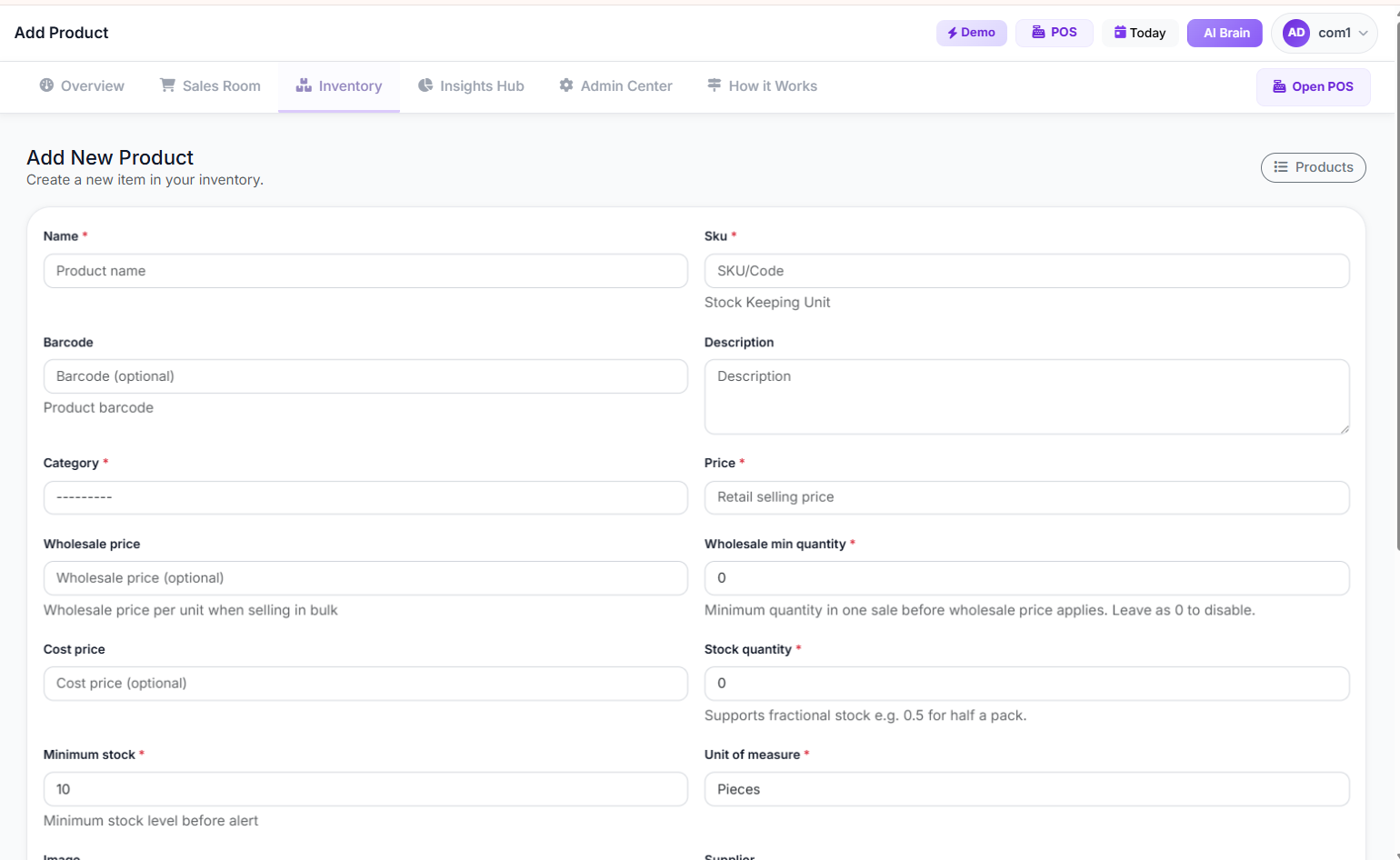 Add/Edit Product Page
The system automatically updates inventory with every sale made through its intuitive Point-of-Sale (POS) terminal, eliminating manual errors and providing an accurate, live view of your stock. You can also perform quick stock adjustments for restocks, reductions, or returns, all meticulously logged for audit purposes. For businesses with multiple locations, SwiftPOS NG offers robust multi-branch management capabilities, allowing you to track inventory across all your stores from a single dashboard and facilitate inter-branch transfers seamlessly.
Beyond mere tracking, SwiftPOS NG leverages AI-powered business insights to provide intelligent stock forecasts. This means you'll receive recommendations on average daily sales, days to stockout, and optimal restock quantities, transforming reactive ordering into proactive, data-informed decisions. This foresight helps prevent stockouts of popular items while minimizing capital tied up in slow-moving inventory.
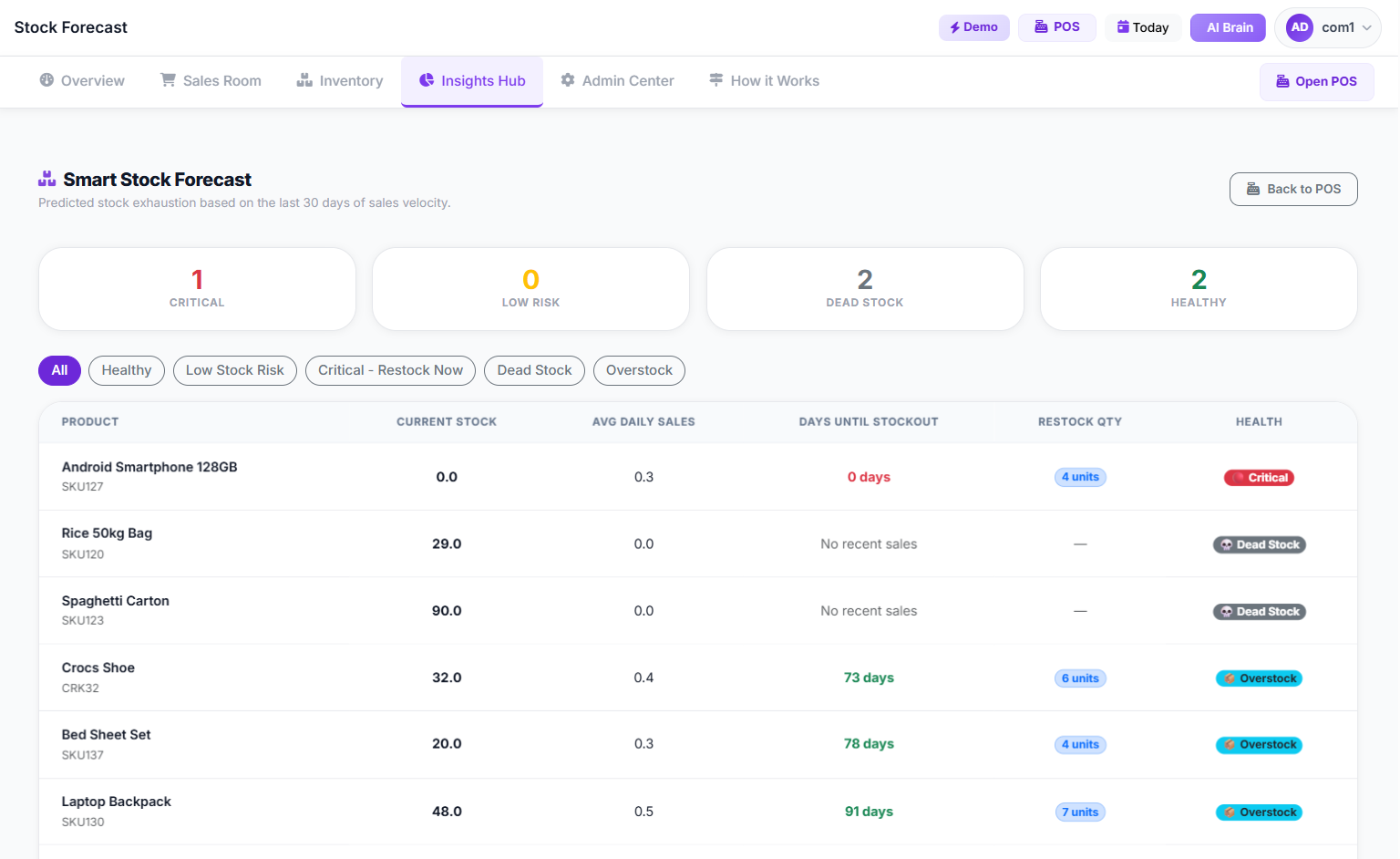 Smart Store Forcast Page
For a deeper dive into how this system can streamline your operations, consider exploring the various features available.
Proof: Side-by-Side Comparison
Let's look at how a modern inventory management system stacks up against traditional methods:
| Feature/Aspect | Traditional Methods (Manual/Spreadsheet) | Modern Inventory Management (e.g., SwiftPOS NG) |
|---|---|---|
| Stock Tracking | Manual counts, error-prone spreadsheets, delayed updates. | Real-time, automatic updates with every transaction, accurate stock levels. |
| Ordering Decisions | Based on visible stock levels, guesswork, or historical notes; often reactive. | Data-driven forecasts, automated low-stock alerts, optimized reorder suggestions. |
| Capital Utilization | High risk of overstocking (tied-up cash) or stockouts (lost sales). | Minimized overstocking, reduced stockouts, efficient capital allocation. |
| Error Rate | High due to human data entry, miscounts, and reconciliation challenges. | Significantly reduced by automation, barcode scanning, and system validation. |
| Reporting & Insights | Time-consuming, basic reports; difficult to identify trends or profit margins. | Instant, comprehensive reports (P&L, sales by item), AI-powered insights. |
| Multi-Branch Mgmt. | Extremely complex, disjointed, prone to discrepancies across locations. | Centralized control, easy inter-branch transfers, consolidated reporting. |
| Time Investment | Significant time spent on counting, data entry, and error correction. | Time saved through automation, allowing focus on growth and customer service. |
| Shrinkage Control | Difficult to pinpoint sources of loss or theft due to inaccurate records. | Detailed audit logs and accurate stock records help identify discrepancies. |
 Minimalist graphic design of two gears interlocking, one labeled "Manual Process" with cracks and rust, the other labeled "Automated System" glowing and smooth. Professional harmonious color palette, modern mood, clean background, ample negative space, 16:9 aspect ratio.
Frequently Asked Questions
What is inventory management and why is it important for my retail business in Nigeria?
Inventory management is the process of tracking and controlling your store's stock, from purchasing to storage and sale. For Nigerian retailers, it's crucial because it directly impacts cash flow, prevents lost sales from stockouts, reduces waste from overstocking, and helps identify theft or damage. Effective inventory management ensures you have the right products at the right time, maximizing profitability and customer satisfaction.
How can I stop losing money due to inventory errors?
The most effective way is to move away from manual tracking. Implementing a robust Point-of-Sale (POS) and inventory management system that automates stock updates with every sale, return, or adjustment drastically reduces human error. Using barcode scanners for receiving and selling products further enhances accuracy.
What are the signs that my current inventory system is failing?
Common signs include frequent stockouts of popular items, an abundance of slow-moving or expired products, difficulty reconciling physical stock with records, unexplained inventory shrinkage, and spending excessive time on manual stock counts. If you can't quickly generate accurate reports on your best-selling items or profit margins, your system is likely inadequate.
Can inventory management really help me understand what my customers want?
Absolutely. A good inventory system tracks sales data for every product. By analyzing this data, you can identify trends, popular items, seasonal demands, and even customer preferences. This insight allows you to optimize your purchasing, tailor promotions, and ensure your shelves are always stocked with what your customers are looking for.
Is inventory management software too expensive or complicated for a small business?
Many modern inventory management solutions are designed specifically for small and medium-sized businesses, offering scalable plans and user-friendly interfaces. The initial investment is often quickly recouped through reduced losses from errors, optimized stock levels, and increased sales. There are also many free business tools available to help you get started.
What if I have multiple retail branches? Can one system manage all of them?
Yes, a multi-tenant inventory management system is ideal for businesses with several branches. It allows you to centralize stock tracking, manage transfers between locations, and get a consolidated view of inventory and sales across your entire operation from a single dashboard. This streamlines management and ensures consistency.
Ready to take control of your inventory and boost your retail profits?
Sign up for SwiftPOS NG today!
Contact us for more information:
WhatsApp: 2349164601810

Pharmacy Profit Margins in Nigeria: What to Expect
Oct 11, 2026
How to Start a Pharmacy Business in Nigeria: A Step-by…
Oct 11, 2026
How to Detect & Prevent Employee Theft in Retail Stores
Oct 11, 2026