How to Detect & Prevent Employee Theft in Retail Stores
SwiftPOS Team
Published October 11, 2026

The old woman, Iya Sikira, sat behind her stall at Balogun Market, her eyes fixed on the young apprentice. She’d sent him to collect ₦12,500 from a customer, but the boy returned with ₦10,000, claiming the customer haggled hard. Iya Sikira, with years of market wisdom etched into her face, knew something was off; the numbers just didn't add up, and that familiar knot of suspicion tightened in her stomach. This feeling is one that too many Nigerian retail owners know too well when trying to figure out how to detect & prevent employee theft in retail stores.
Busy nigerian provision store interiorWhy Most People Get This Wrong from Day One
Look, it's not a comfortable topic, right? Nobody wants to believe their staff, the people they trust with their livelihood, might be stealing. But here's the thing: ignoring it won't make it go away. In fact, it'll make it worse. Many small business owners in Nigeria, especially those running provision stores, pharmacies, or even small electronics shops, think they can eyeball everything. They believe their "gut feeling" or a quick glance at the cash register at the end of the day is enough. That's a huge mistake.
The reality is, employee theft in retail is a silent killer for many businesses here. You're losing money, sometimes a lot of it, and you don't even know it's happening, or you can't prove it. We're talking about petty cash theft ranging from ₦5,000 to ₦50,000 per month for a small kiosk in a local market, all the way up to inventory shrinkage (theft or spoilage) that can hit ₦20,000 to ₦200,000 monthly for a medium-sized shop in a busy area like Computer Village. These aren't small change figures when you consider the average Nigerian salary is between ₦50,000 and ₦150,000 a month. That's a significant chunk of your potential profit, sometimes even more than your rent in a smaller town.
Most people get it wrong because they focus on symptoms, not the root cause. They see missing cash and blame the last person at the till without any real proof. Or they notice stock shortages and just assume it's spoilage. They don't have systems in place to track things properly, leading to endless frustration and distrust. When you rely on manual ledgers or basic Excel sheets, you're practically inviting discrepancies. It's like trying to catch a fish with your bare hands in the Lagos lagoon – possible, but you'll miss most of them.
This isn't about accusing every staff member; it's about protecting your business. It's about creating an environment where opportunities for theft are minimized, and accountability is crystal clear. This is where proper retail security and understanding shop theft prevention come into play, not just as a reactive measure, but as a proactive strategy.
Before You Do Anything: The Foundation Work
Before you even think about catching someone, you need to lay a solid groundwork. Without these steps, any attempt to detect or prevent staff theft will just be guesswork, and you'll end up frustrating yourself and potentially falsely accusing innocent people.
Here’s what you need to put in place:
- Clear Policies and Procedures: You need a staff handbook, even if it's just a few pages, outlining expectations. What are the rules for handling cash? Who is allowed to give discounts? What's the process for returns? How should damaged goods be recorded? Be specific. This isn't just about theft; it sets the tone for professionalism.
- Thorough Background Checks: Seriously, don't skip this. For a new employee, a basic police clearance can cost you ₦5,000 to ₦15,000. It's a small price compared to the potential loss from a single major employee theft incident, which could be anywhere from ₦100,000 to over ₦1,000,000 depending on your type of business, say, an electronics shop versus a small provision store. Ask for references and actually call them. Verify their previous employment. It sounds like extra work, but it's an investment in trust.
- Proper Training: Train your staff on your systems, not just how to open the shop. Show them how to use the cash register, how to process sales, how to manage inventory, and importantly, the consequences of not following procedures. When everyone knows the rules, there's less room for "mistakes" that are actually intentional.
- Initial Inventory Audit: Before implementing any new system, you need to know exactly what you have. Do a full stock count. This can be tedious, taking anywhere from a few hours for a small shop to a full day or two for a larger supermarket. This gives you a baseline. Without it, you won't know what's truly missing later.
The Step-by-Step Path (What Actually Works)
Alright, you've got your foundation. Now, let's talk about the practical steps to detect and prevent staff theft in retail. This isn't just theory; these are lessons I learned the hard way managing my own shops and watching others succeed or fail.
Step 1: Implement a Robust Point-of-Sale (POS) System
This is non-negotiable if you are serious about cashier accountability and preventing staff theft retail. Forget manual ledgers. Forget Excel. They are leaky buckets. A basic cash register costs around ₦30,000 to ₦70,000, but it only records sales. It doesn't track inventory, staff activity, or give you proper insights.
What you need is a complete POS system. This doesn't just ring up sales; it tracks every single transaction, every product movement, and every staff action. Think about it:
- When a customer buys something, it's recorded.
- When an item is returned, it's recorded.
- When stock is received, it's recorded.
- Even when a sale is voided, it's recorded.
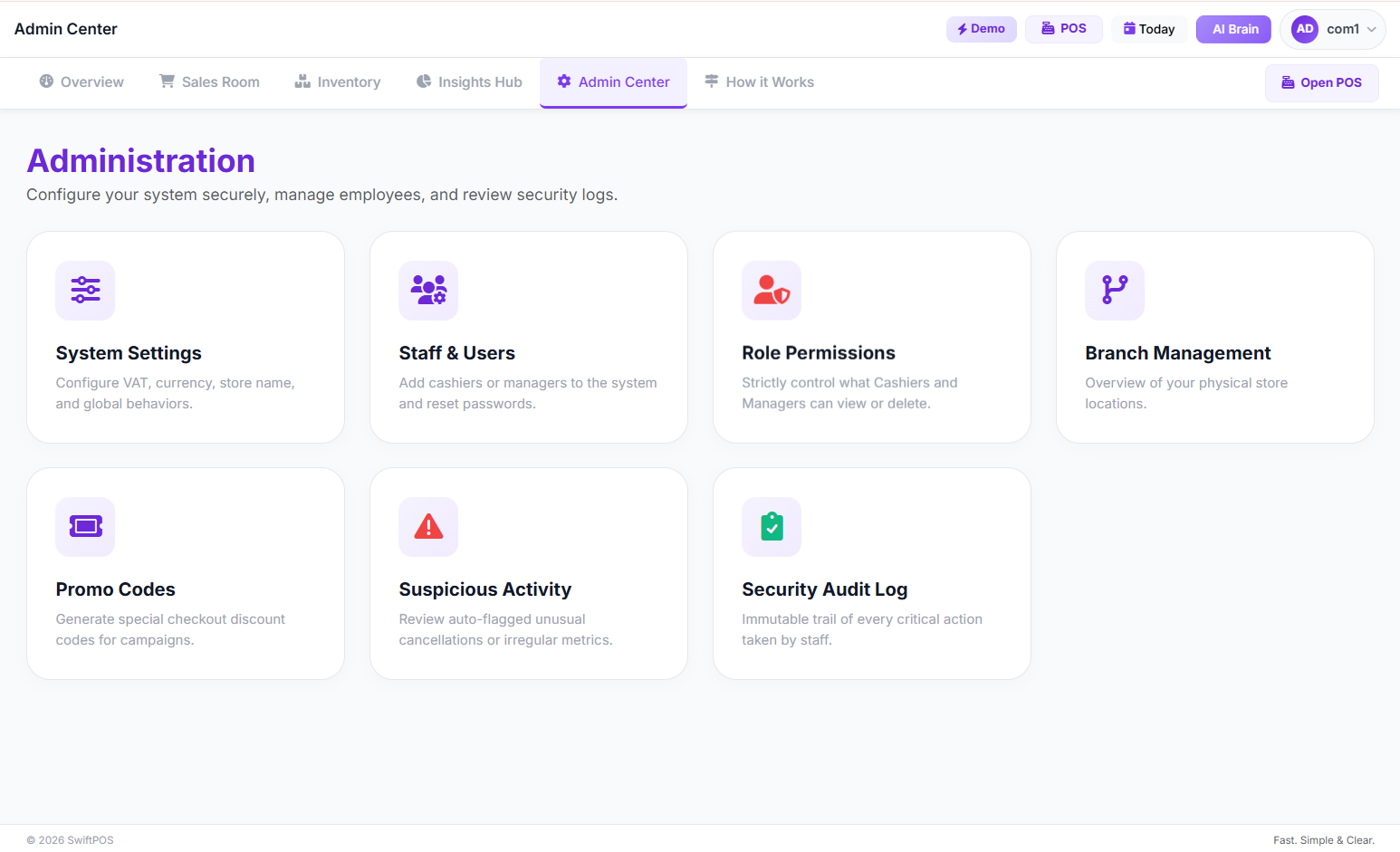 Admin Center Hub
A good POS system is your digital watchdog. It flags unusual activities, like an excessive number of voids or discounts given by a particular staff member. These are red flags that manual systems simply cannot catch. The cost of a basic POS system (hardware + software subscription) ranges from ₦150,000 to ₦400,000, including one-time hardware purchases and monthly software fees. This might seem like a lot, but consider the monthly losses from theft: ₦5,000 – ₦50,000 for petty cash, ₦20,000 – ₦200,000 for inventory shrinkage. The system often pays for itself in a few months by plugging those leaks. You can learn more about the ROI of such systems in this article on POS System ROI: Calculating True Value for Nigerian Retailers.
Step 2: Implement Strict Inventory Management Protocols
This goes hand-in-hand with your POS system. Inventory shrinkage is a massive problem. It's not just theft; it's damaged goods, expired products, and misplaced items. But theft plays a big role.
You need to:
- Track every item: From when it arrives from the supplier (say, from Alaba International Market or Onitsha Main Market) to when it leaves your shop.
- Regular stock takes: Don't wait until the end of the year. Do weekly or monthly spot checks on high-value items, and full inventory counts quarterly. Many businesses lose money because they only do one annual stock take, by which time the trail is cold.
- Receiving procedures: Every delivery must be checked against the invoice. Don't just sign off on it. Have a dedicated person (or yourself) verify quantities.
- Damage/Spoilage logs: If something is damaged or expires, it needs to be logged and removed from inventory, not just thrown away. This prevents staff from claiming items were damaged when they actually took them.
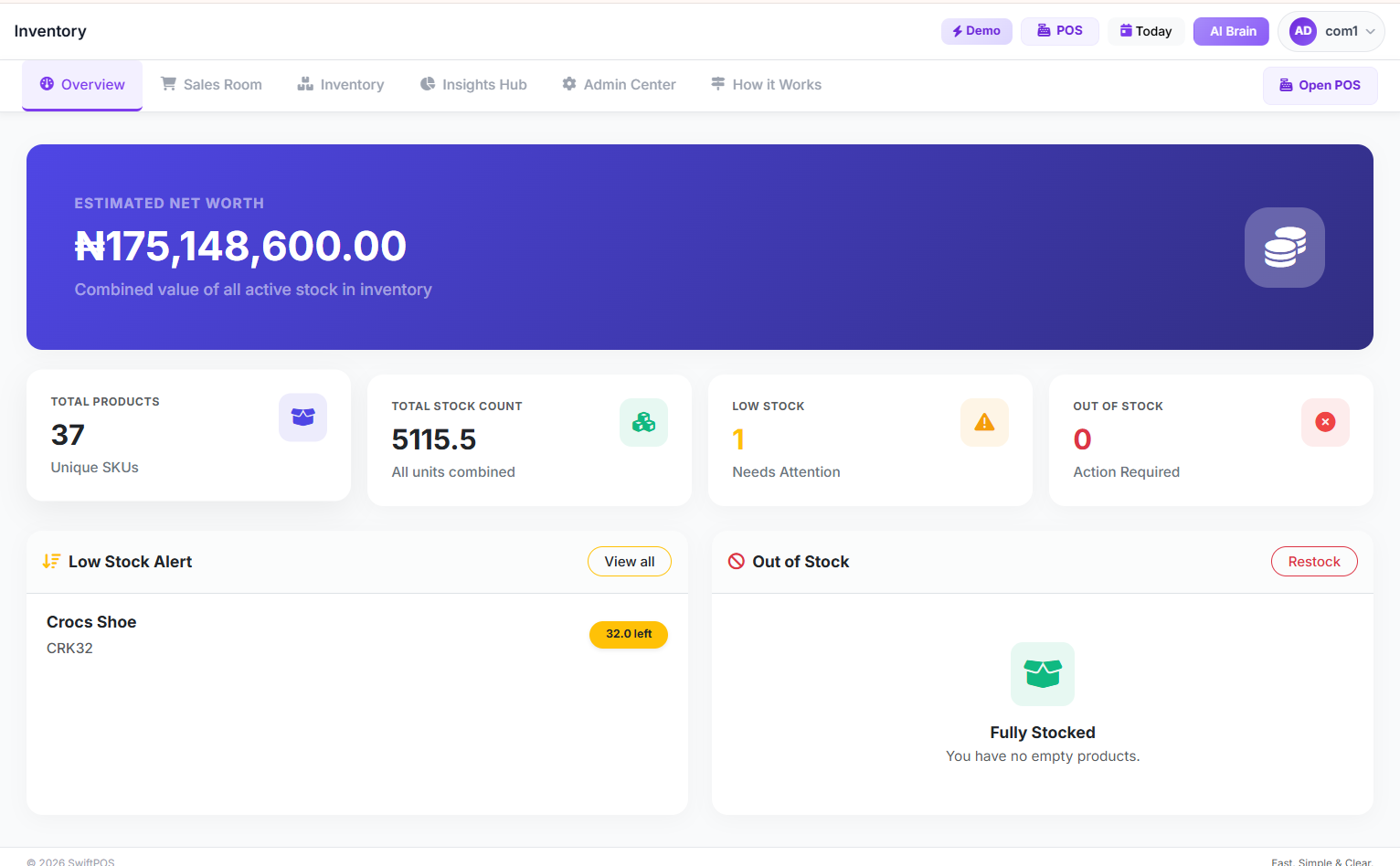 Inventory Dashboard
Step 3: Implement Strong Cash Handling Procedures
Cash is king in Nigeria, and it's also the easiest to steal.
- Daily cash reconciliation: Every single day, count the cash in the till and compare it to the sales recorded by your POS system. Any discrepancies need to be investigated immediately.
- Limited cash access: Only authorized staff should handle cash, and only during their shift.
- Bank deposits: Deposit cash regularly, ideally daily. Don't let large sums sit in your shop overnight.
- Blind drops: If you have multiple cashiers, consider a "blind drop" system where they put cash into a secure box without counting it at the till. The count happens later by a manager. This removes the temptation to "balance" the till by taking money.
Step 4: Utilize CCTV and Physical Security
While technology is great, don't underestimate physical security.
- CCTV cameras: Install cameras in key areas: the cash register, entrances, stockroom, and any blind spots. A basic 4-camera CCTV system with a DVR can cost between ₦80,000 and ₦250,000. It's a visual deterrent and provides evidence if something does happen.
- Secure storage: Keep high-value items locked up. Control access to your stockroom.
- Security guards: For larger shops or those in high-risk areas, a dedicated security guard can be useful. Their monthly salary can range from ₦45,000 to ₦80,000. This is especially true for businesses like supermarkets or electronics shops in places like Ikeja.
Step 5: Regular Audits and Reviews
Even with all these systems, you still need to be actively involved.
- Review reports: Don't just collect data; analyze it. Look at your sales reports, inventory reports, and staff activity logs. SwiftPOS, for instance, provides detailed insights and can flag suspicious activities. You can see things like excessive voids or discounts, which might indicate collusion or theft.
- Surprise checks: Occasionally, do an unannounced cash count or inventory check. This keeps everyone on their toes.
- Exit interviews: When an employee leaves, conduct an exit interview. Ask about their experience, and subtly, about any issues they observed with inventory or cash handling. You might learn something valuable.
The Numbers That Will Make or Break You
Let's talk brass tacks. What's all this going to cost you, and what are you saving? Because at the end of the day, it's about your bottom line.
Potential Losses (Monthly):
- Petty cash theft: ₦5,000 - ₦50,000 (Small kiosk vs. medium shop)
- Inventory shrinkage: ₦20,000 - ₦200,000 (Provision store vs. electronics shop)
- Single major incident: ₦100,000 - ₦1,000,000+ (Small items vs. high-value goods)
Investment in Prevention (One-time and Monthly):
- Basic CCTV system: ₦80,000 - ₦250,000 (One-time)
- Background checks: ₦5,000 - ₦15,000 per employee (One-time)
- POS system (hardware + software): ₦150,000 - ₦400,000 (One-time hardware, plus monthly software subscription typically ₦5,000 - ₦25,000).
- Security guard: ₦45,000 - ₦80,000 per month (Ongoing, if needed)
> "The true cost of employee theft isn't just the naira amount; it's the erosion of trust, the wasted time in investigation, and the distraction from growing your business."
This isn't about being paranoid; it's about being smart. You wouldn't leave your shop door unlocked at night, so why leave your profits vulnerable during the day?
Growth After Launch: The Next 90 Days
You've put in the work, implemented your systems, and trained your staff. What happens next? The next 90 days are crucial for solidifying your new theft prevention strategy and turning it into a habit.
- Monitor Consistently: Don't just set it and forget it. In the first few weeks, you need to be actively monitoring your system's reports. Look at the staff activity logs daily. Are there patterns of unusual discounts? Too many voided transactions? SwiftPOS NG, for example, has a that can highlight these very issues for you, saving you hours of manual review. This is about being proactive, not reactive.
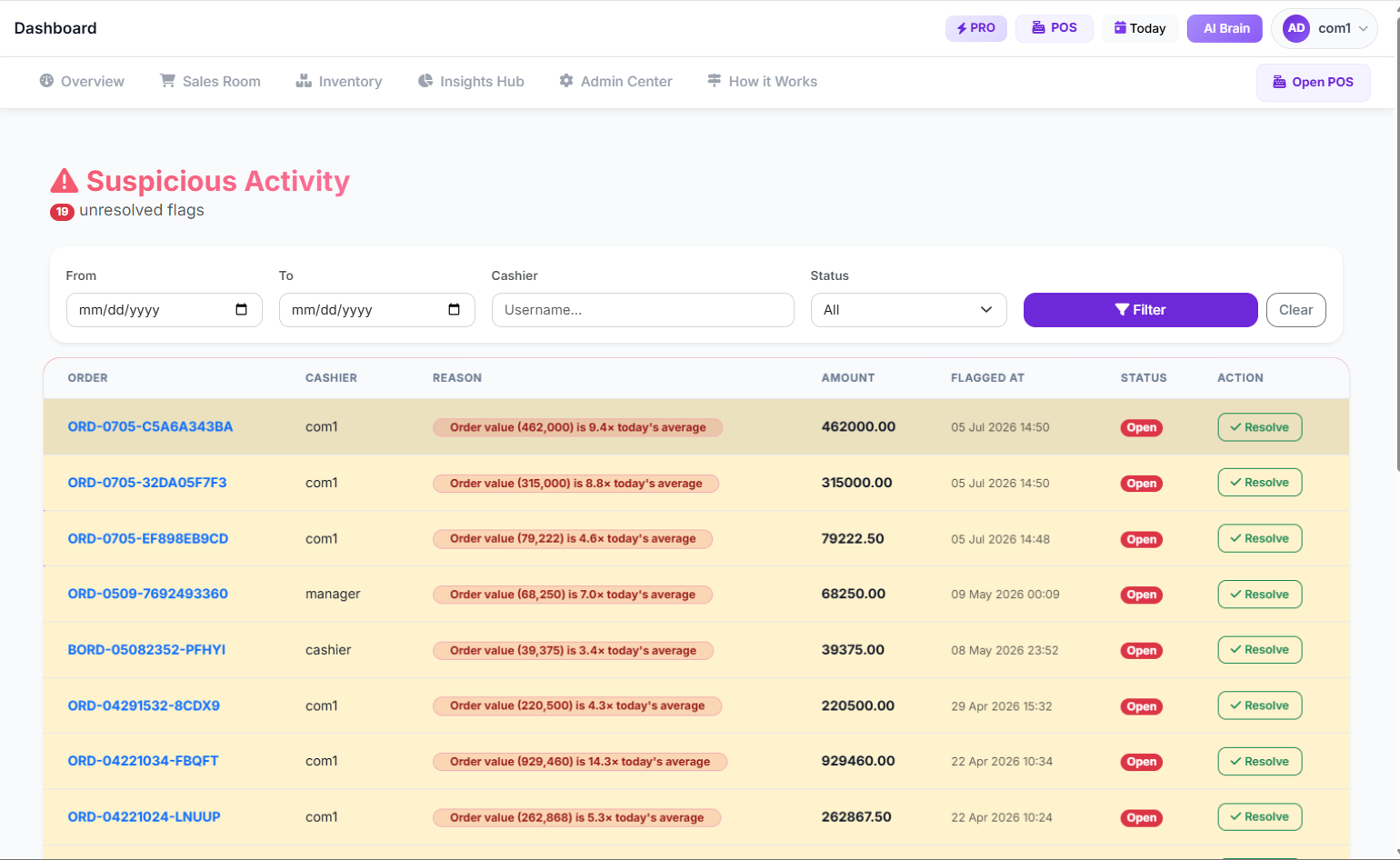 Suspicious Activity Page
 - Conduct Mini-Audits: Pick a random product category each week and do a quick physical count. Compare it to what your system says you should have. If there are discrepancies, investigate immediately. This keeps staff aware that checks are happening regularly.
- Review Staff Performance: Use the data from your POS system to review individual staff performance. Who has the highest sales? Who has the most voids? This isn't just about catching thieves; it's also about identifying top performers and those who might need additional training. You can find detailed reports on .
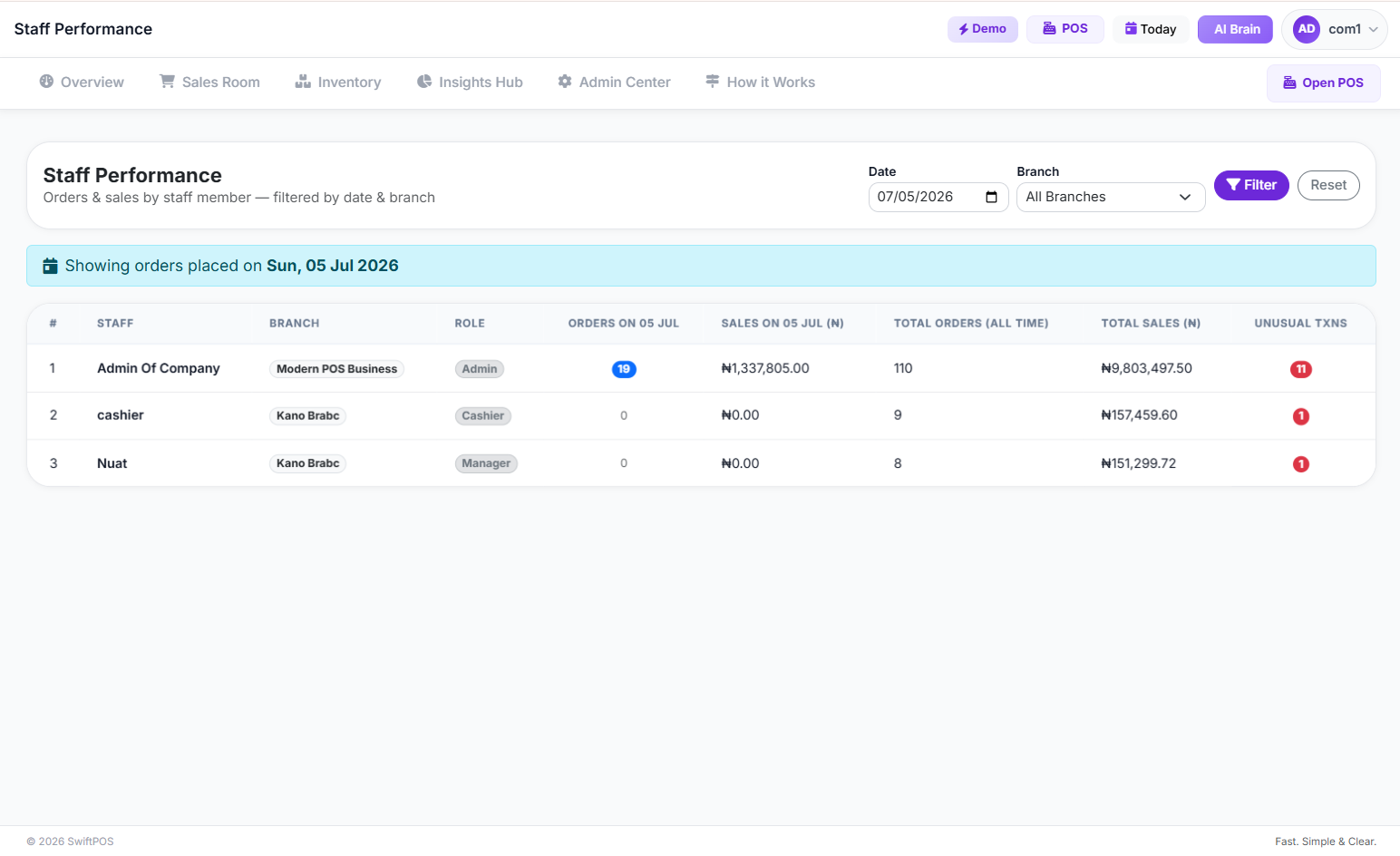 Staff Performance Page
 - Refine Your Policies: After 90 days, you'll have a better understanding of what works and what doesn't. Maybe you need to adjust your cash drop frequency, or perhaps certain types of products need stricter inventory controls. Use the data to refine your approach.
- Maintain Communication: Keep the lines of communication open with your staff. Reiterate the importance of following procedures and that the systems are there to protect everyone, not just to catch wrongdoers. A transparent environment fosters trust, even when strict controls are in place.
FAQ: Answers to What You're Actually Googling
You've probably got some questions buzzing in your head. Let's tackle some of the common ones that Nigerian business owners ask about employee theft.
Q1: How can I tell if my cashier is stealing from the till?
A common sign is consistent cash shortages at the end of shifts, especially if they are always just under a certain amount. Another red flag is an unusually high number of voids, returns, or manual discounts processed by a specific cashier. If they always seem to be "forgetting" to ring up certain items, or if sales figures don't align with observed customer traffic, that's suspicious. A robust POS system that tracks every transaction, void, and discount by employee is your best tool for cashier accountability. It creates an audit trail that's hard to dispute.
Q2: What's the most common way employees steal inventory in Nigeria?
Often, it's a combination of things. Small, high-value items like cosmetics, phone accessories, or even specific food items are easy to slip into a bag. Sometimes it's claiming items are damaged or expired when they're actually taken. In larger operations, it could be collusion with suppliers or customers, where goods are under-invoiced or simply walked out. Without proper inventory management and regular stock counts, you'll just see it as "shrinkage" without knowing the cause. This is why detailed product tracking and stock adjustments, like those offered by SwiftPOS, are critical for shop theft prevention.
Q3: Is it really worth investing in a POS system just to prevent theft?
Absolutely. Beyond theft prevention, a good POS system transforms your entire business. It helps you manage inventory, track sales, understand your best-selling products, improve customer service, and accurately calculate your profit. The cost of a basic system (say, ₦150,000 for hardware and ₦5,000-₦10,000 monthly for software) can be quickly recouped by reducing theft (which can be ₦25,000-₦250,000 monthly) and by improving overall efficiency. It's not just a cost; it's an investment in your business's future and a powerful tool for how to detect & prevent employee theft in retail stores. You can check out more on the features and benefits of a modern POS system.
Q4: What legal steps can I take if I catch an employee stealing?
First, ensure you have undeniable proof – documented discrepancies from your POS system, CCTV footage, or eyewitness accounts. Confronting the employee without solid evidence can lead to bigger problems. Your company policy should clearly outline the disciplinary actions, which typically include immediate termination. Depending on the value of the theft, you might involve the police, but often, for smaller amounts, businesses choose to terminate and recover losses if possible, to avoid lengthy legal battles. Always consult with a legal professional specializing in labor law if you're unsure.
Q5: How often should I conduct inventory checks to prevent staff theft retail?
For high-value or fast-moving items, weekly or bi-weekly spot checks are ideal. For your entire inventory, a full count quarterly or semi-annually is a good practice. The frequency depends on your business size, product type, and perceived risk. Automated inventory management systems make this much easier by providing real-time data and flagging discrepancies, reducing the need for constant manual checks. This helps you focus on prevention rather than just detection.
Ready? Here's Where to Start
You've seen the numbers, you understand the challenges, and now you have a clear path forward. The silent drain of employee theft doesn't have to be a permanent fixture in your business. It's 2026, and the tools are available to protect your hard-earned profits.
If you're still relying on manual methods or basic cash registers, it's time to upgrade. A modern POS and inventory management system is your best defense against both internal and external threats. It gives you the transparency and control you need to run a profitable business in Nigeria.
Take the first step today. Visit SwiftPOS NG to explore how a comprehensive business management system can help you tighten your operations, improve cashier accountability, and effectively detect & prevent employee theft in retail stores. You can even start with a free trial to see the difference for yourself. Your business deserves that protection.

Pharmacy Profit Margins in Nigeria: What to Expect
Oct 11, 2026
How to Start a Pharmacy Business in Nigeria: A Step-by…
Oct 11, 2026
How to Know If Your Business Is Actually Profitable: A…
Oct 08, 2026