How to Know If Your Business Is Actually Profitable: A Guide
SwiftPOS Team
Published October 08, 2026

You're making sales, customers are coming in, and the cash register is ringing – but are you truly making money? Many Nigerian retailers confuse high turnover with actual profitability, often overlooking critical expenses that eat away at their earnings. Without a clear understanding of your net profit, you might be working hard just to stay afloat, or worse, losing money without realizing it.
Nigerian market vendor counting naira notes with aThe Realities of Retail Business Finances in Nigeria (2026)
The Nigerian retail landscape in 2026 is dynamic, yet fraught with challenges that directly impact business profitability. From fluctuating currency exchange rates affecting import costs to rising fuel prices for generators, every kobo counts. Many small and medium-sized businesses operate on thin margins, where a small miscalculation in pricing or an unnoticed leak in expenses can quickly turn profit into loss. According to recent market analysis, while gross profit margins can range from 15% to 60% depending on the product, the average net profit for many retailers is significantly lower, often hovering between 5-15% after all operating costs are factored in. This makes meticulous profit tracking not just important, but essential for survival and growth.
Understanding your business profitability goes beyond simply subtracting what you bought goods for from what you sold them for. It involves a comprehensive look at all income and expenditure, offering true business insights. For instance, the hidden costs of manual retail operations in Nigeria can be substantial, as detailed in this article on Hidden Costs of Manual Retail Operations in Nigeria: What You're Missing Beyond POS. Businesses that rely on manual record-keeping often miss crucial financial details, leading to inaccurate profit assessments and misguided business decisions.
What You Need Before You Start
Before diving into the calculations, ensure you have these fundamental elements in place to accurately assess your business profitability:
- Accurate Sales Records: Every transaction, every item sold, and its corresponding price.
- Comprehensive Purchase Records: Details of all stock acquired, including cost prices and supplier information.
- Detailed Expense Logs: Records of all operating expenses, from rent and salaries to utility bills and transportation.
- Inventory Counts: Regular and accurate counts of your physical stock.
- Time and Dedication: The commitment to regularly review your finances, not just when issues arise.
Step-by-Step: How to Know If Your Business Is Actually Profitable
Understanding your actual profit involves more than just a quick glance at your bank account. It requires a systematic approach to track all financial inflows and outflows. Follow these steps to gain a clear picture of your business's financial health.
Step 1: Calculate Your Total Revenue
Your total revenue is the total amount of money your business brings in from sales before any deductions. This is your gross income from selling products or services.
To calculate this, sum up all your sales over a specific period (e.g., a month, quarter, or year). If you're currently using manual methods, this might involve going through ledgers or sales books. For businesses with higher transaction volumes, a reliable point-of-sale (POS) system can automate this process, providing instant sales reports. For example, a supermarket generating an average of ₦1,500,000 in monthly sales would have a total revenue of ₦1,500,000 for that month. Having a clear record of sales is crucial for understanding your financial performance. You can see your sales performance over time using a sales report.
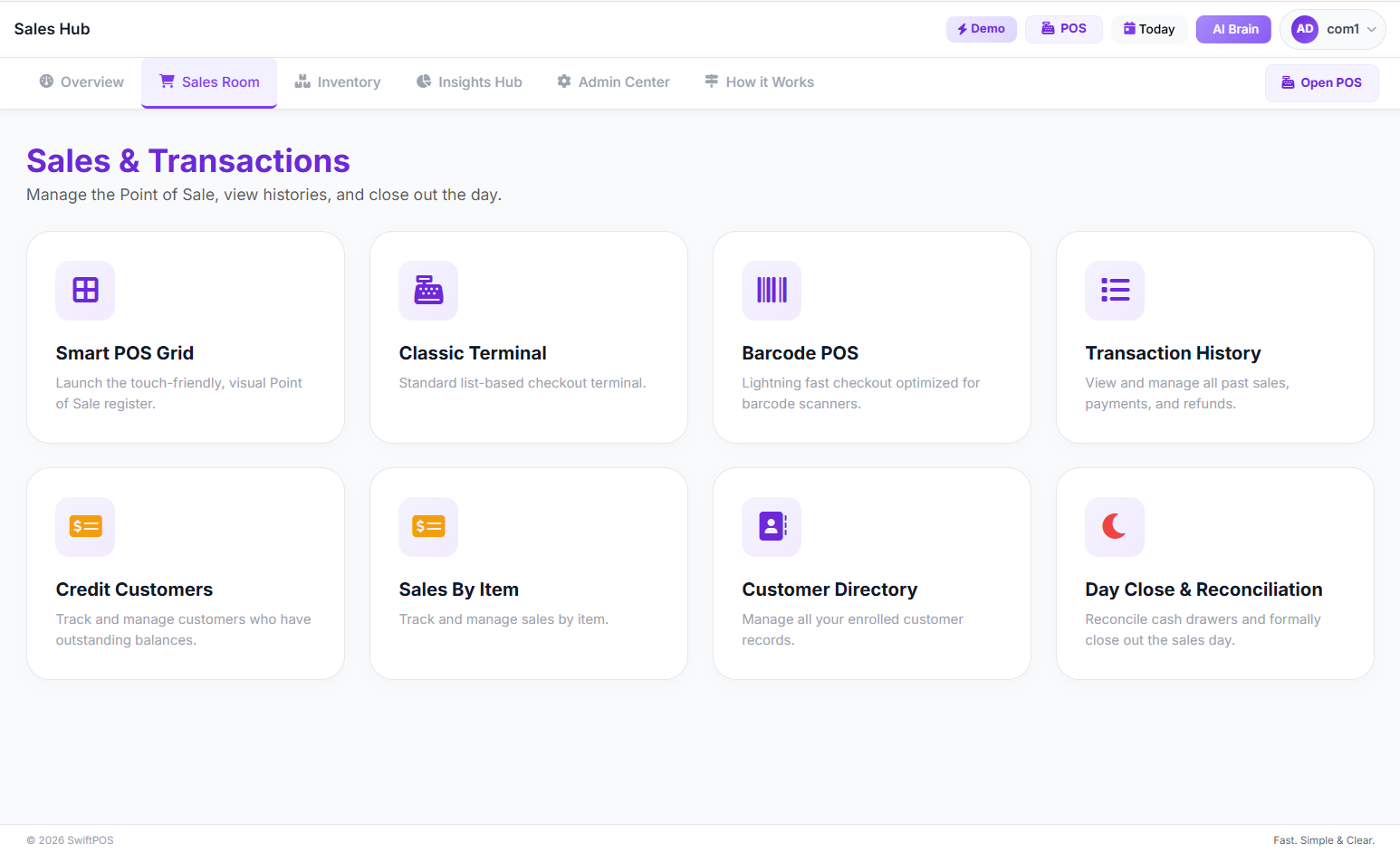 Sales Hub Page
Step 2: Determine Your Cost of Goods Sold (COGS)
The Cost of Goods Sold (COGS) is the direct cost attributable to the production of the goods sold by your business. This includes the cost of the materials and direct labour used to create the good. For a retail business, it's primarily the cost you paid to acquire the products you sold.
To calculate COGS for a period:
- Start with your Beginning Inventory: The value of all products you had at the start of the period.
- Add Purchases: The value of all new stock you bought during the period.
- Subtract Ending Inventory: The value of all products remaining at the end of the period.
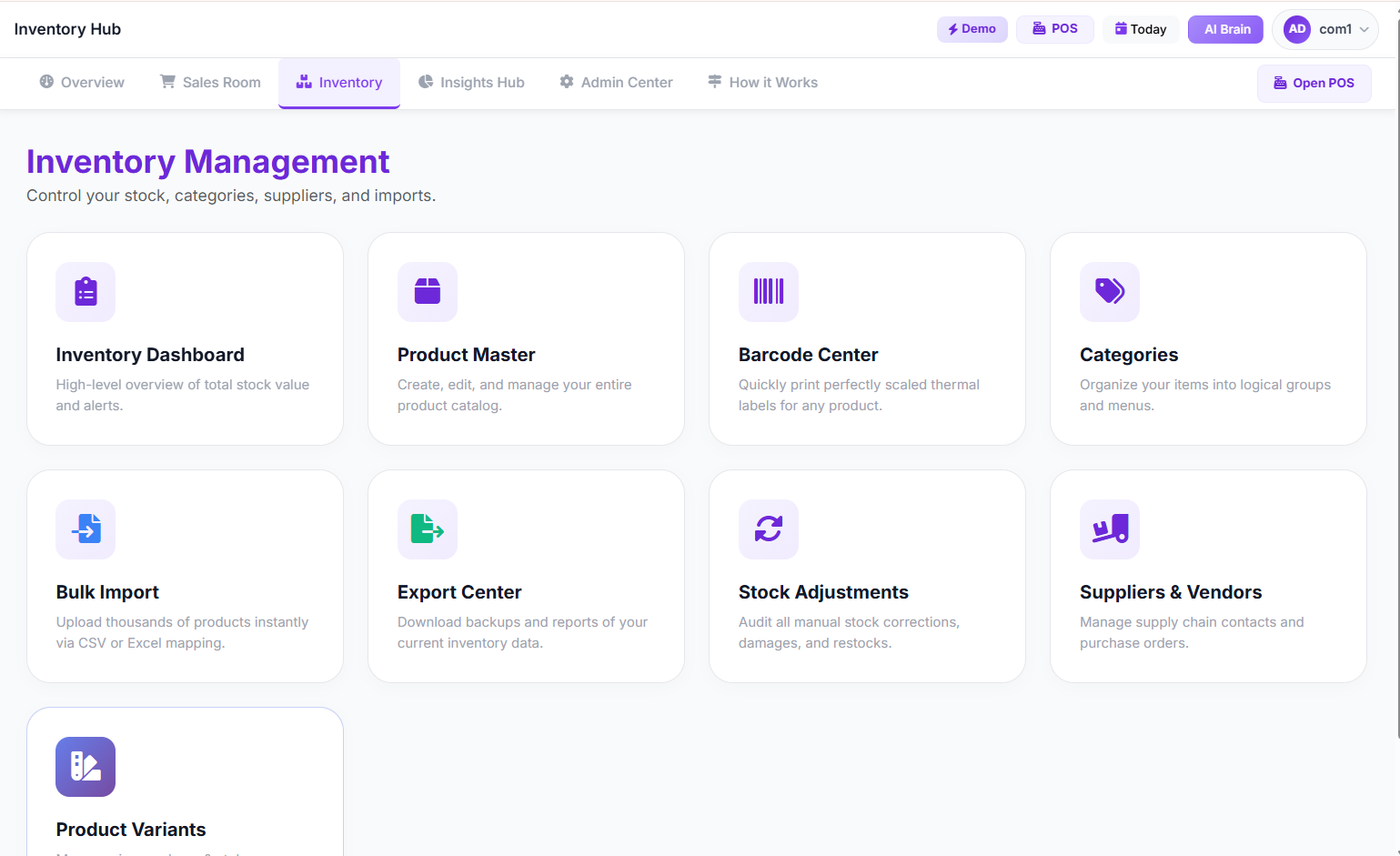 Inventory Hub
Step 3: Calculate Your Gross Profit
Gross profit is the profit a business makes after deducting the costs associated with making and selling its products, or the costs associated with providing its services. It's an indicator of how efficiently your business is managing its production or purchasing costs.
Gross Profit = Total Revenue - Cost of Goods Sold (COGS)
Using the previous example: ₦1,500,000 (Revenue) - ₦1,300,000 (COGS) = ₦200,000 (Gross Profit). A healthy gross profit margin is crucial, as it needs to cover all your operating expenses and still leave you with a net profit. A low gross profit might indicate issues with your pricing strategy or procurement costs. For more on maximizing your retail sales, explore this guide on How to Increase Sales in Your Retail Shop in Nigeria: 10 Strategies That Actually Work in 2026.
Step 4: Identify and Track All Operating Expenses
Operating expenses are the costs incurred to keep your business running, distinct from the cost of goods sold. These are often overlooked or underestimated, significantly impacting your net profit.
Common operating expenses for a Nigerian retail business include:
- Rent: Annual shop rent can range from ₦80,000 in a rural town to ₦2,500,000 for a prime Lagos Island shop.
- Staff Salaries: Monthly salaries per person can be ₦40,000 for an unskilled assistant to ₦120,000 for experienced city staff.
- Generator Fuel: Monthly costs can be ₦15,000 to ₦150,000 depending on usage.
- Utility Bills: Monthly bills (excluding fuel) can range from ₦5,000 to ₦50,000.
- Transportation/Logistics: Monthly costs from ₦10,000 to ₦100,000.
- Marketing/Advertising: Monthly expenses from ₦5,000 to ₦200,000.
- Business Permit/Levies: Annual costs from ₦5,000 to ₦50,000.
- Internet Data: Monthly costs from ₦5,000 to ₦20,000.
- Maintenance & Repairs: Unexpected costs for equipment or property.
- Bank Charges: Fees for transactions, account maintenance, etc.
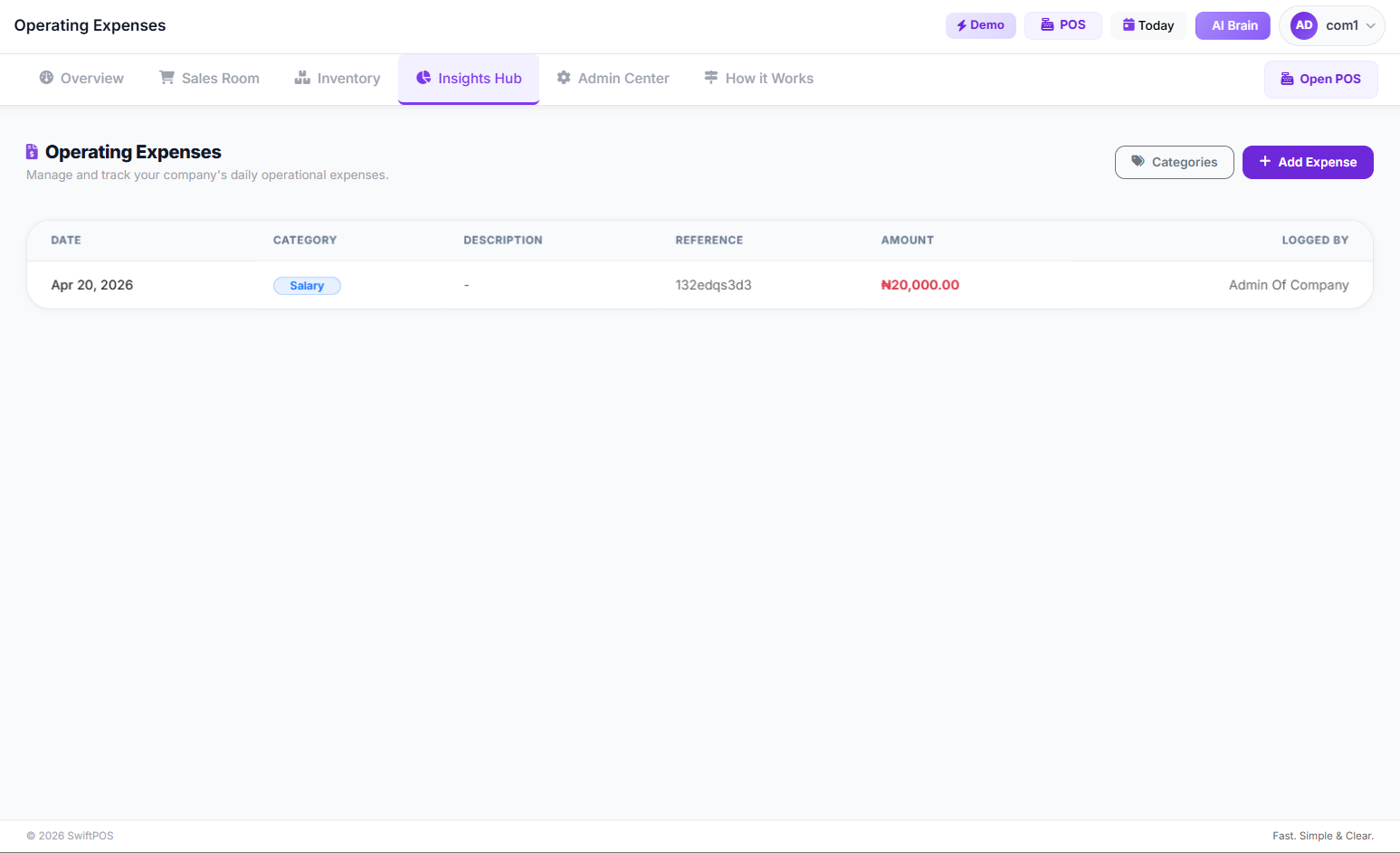 Expenses List mn=anaagement Page
Step 5: Calculate Your Net Profit
Net profit is the ultimate indicator of your business's financial success. It tells you how much money you actually keep after all costs – both COGS and operating expenses – have been paid. This is the true business profitability.
Net Profit = Gross Profit - Total Operating Expenses
Let's continue the example. If your gross profit was ₦200,000 and your total operating expenses for the month were ₦100,000 (e.g., ₦50,000 for staff, ₦20,000 for generator fuel, ₦15,000 for rent allocation, ₦15,000 for other utilities), your net profit would be ₦200,000 - ₦100,000 = ₦100,000. This ₦100,000 is your actual profit for the month. Understanding this figure is critical for making informed decisions about pricing, expansion, and cost reduction. Many entrepreneurs find that dedicated tools can provide a clear profit and loss overview.
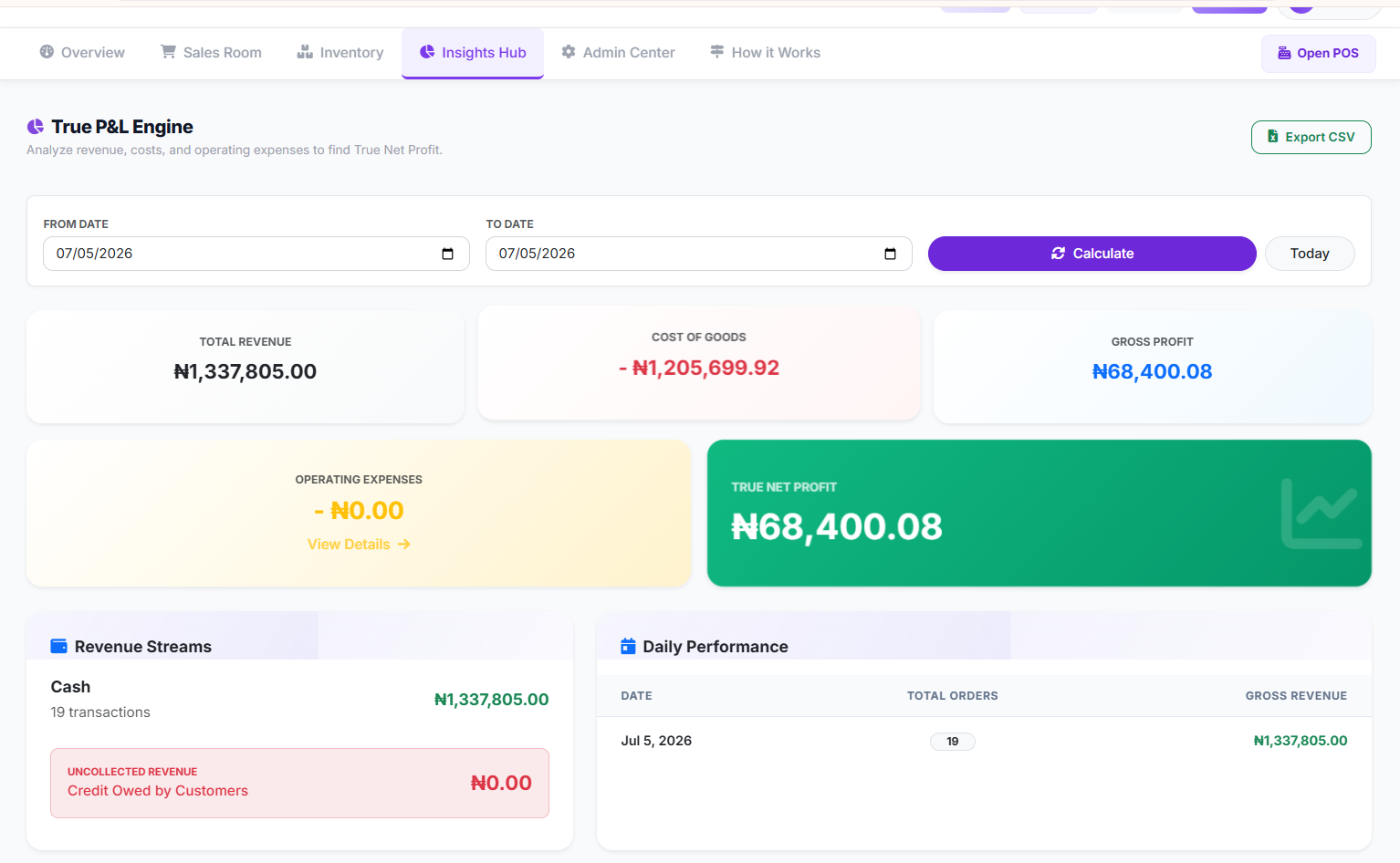 Profit and Loss Page
Step 6: Analyze Your Profit Margins
Calculating your profit margins gives you a percentage-based view of your profitability, allowing for easier comparison over time and against industry benchmarks.
- Gross Profit Margin = (Gross Profit / Total Revenue) x 100%
- In our example: (₦200,000 / ₦1,500,000) x 100% = 13.33%
- Net Profit Margin = (Net Profit / Total Revenue) x 100%
- In our example: (₦100,000 / 1,500,000) x 100% = 6.67%
Common Mistakes to Avoid
Even with the best intentions, retailers can fall into traps that obscure their true business profitability.
- Ignoring Small Expenses: Those daily generator top-ups, transport fares, and minor repairs add up quickly. Failing to record them means your profit figures are inflated.
- Mixing Personal and Business Finances: This is a major pitfall. Always keep your business accounts separate from your personal ones to avoid confusion and inaccurate profit calculations.
- Infrequent Record Keeping: Waiting until the end of the month or quarter to update records makes the task daunting and increases the chance of errors or forgotten entries. Consistent, daily updates are essential.
- Underestimating Inventory Loss: Spoilage, theft, or damage (shrinkage) directly impact your COGS. Without regular stock takes and adjustments, you're overstating your inventory and understating your true costs. Learn how to manage this better with this guide on Retail Inventory Management: Step-by-Step Guide to Efficient Stock Adjustments.
- Not Factoring in Owner's Salary: If you work in the business, you should pay yourself a reasonable salary. Without this, your reported net profit doesn't reflect the true cost of operating your business.
- Focusing Only on Revenue: High sales don't automatically mean high profits. Many businesses with impressive revenue figures struggle with poor expense management, leading to low or even negative net profit.
How to Track and Grow After Launch
Once you've established a system for tracking your business finances and understanding your net profit, the next step is to leverage this data for growth. Monitoring key retail metrics is essential for this.
- Regular Review: Set aside dedicated time each week or month to review your profit and loss statements. Look for trends, identify areas where expenses are increasing, or where sales are declining.
- Key Performance Indicators (KPIs): Beyond net profit, track other crucial metrics like average transaction value, customer retention rate, and stock turnover. These provide deeper insights into your operational efficiency and customer engagement. This article on 7 Key Retail Metrics Nigerian Businesses Must Track for Profit Growth offers excellent guidance.
- Budgeting: Based on your historical data, create realistic budgets for future periods. This helps you control spending and set achievable financial goals.
- Identify Revenue Leaks: Use your financial data to pinpoint where money might be slipping away. This could be anything from excessive discounts to unrecorded stock losses. The 7 Revenue Leaks: Mistakes Costing Nigerian Retailers Thousands (and How to Fix Them) blog post offers practical solutions.
- Technology Adoption: Modern retail management software, like SwiftPOS, can automate much of this tracking. It provides comprehensive sales reports, inventory management, expense tracking, and profit & loss statements, giving you real-time insights into your business profitability. The system's analytics and reporting tools allow you to monitor sales, identify best-selling products, and understand your true net profit without manual calculations.
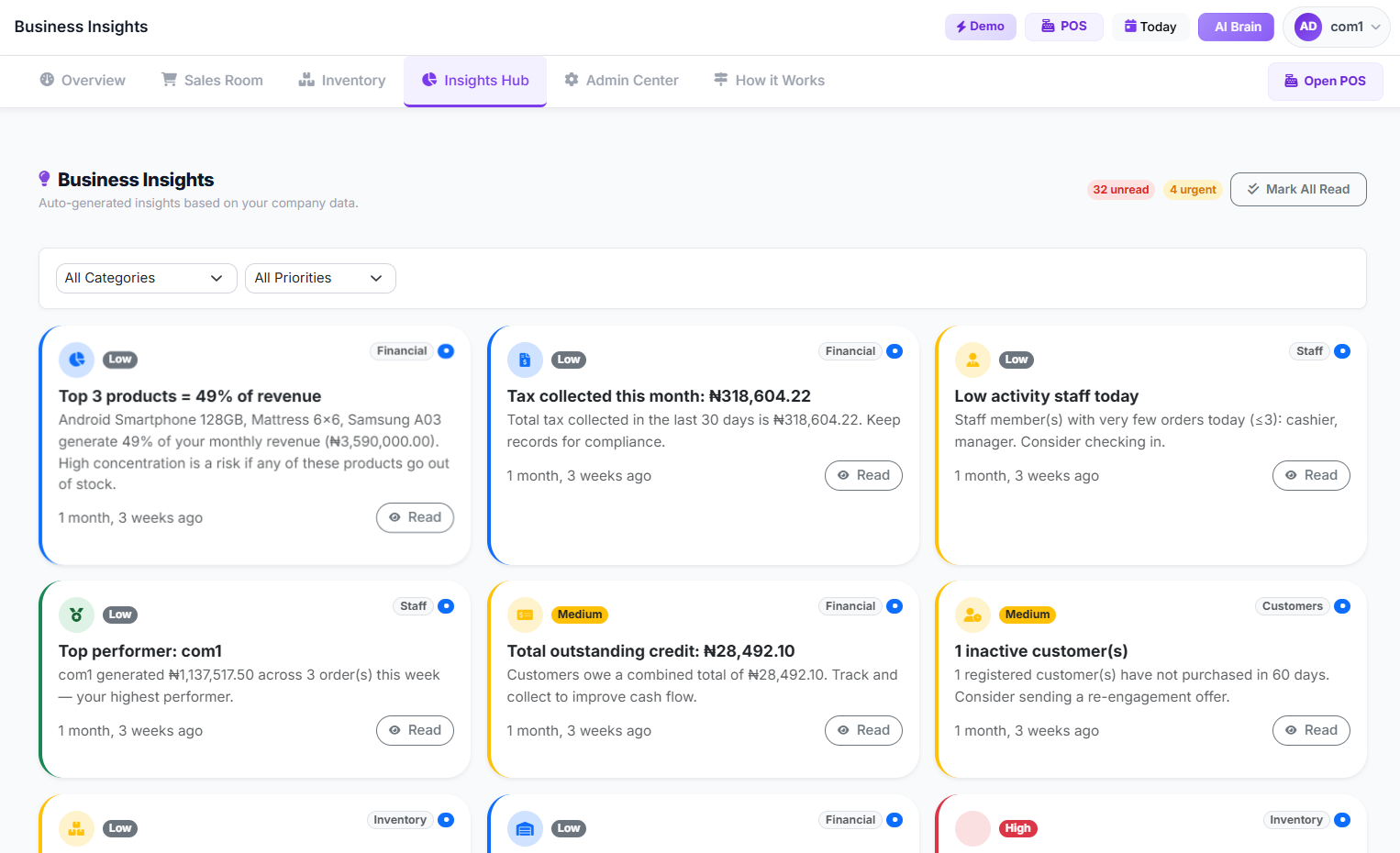 Business Insights Page
Frequently Asked Questions
Q1: What is the difference between gross profit and net profit?
Gross profit is your total revenue minus the Cost of Goods Sold (COGS). It shows how much money you make directly from selling products. Net profit is what's left after you subtract all operating expenses (like rent, salaries, utilities) from your gross profit. Net profit is the true measure of your business's financial health and overall business profitability.
Q2: How often should I calculate my business's profitability?
Ideally, you should calculate your gross profit monthly and your net profit monthly or quarterly. Consistent monitoring allows you to identify problems early and make timely adjustments. Daily tracking of sales and expenses is recommended for accuracy.
Q3: What is a good net profit margin for a retail business in Nigeria?
This varies significantly by industry. For a general retail business in Nigeria, a net profit margin of 5-15% is often considered healthy, but some specialized sectors might aim higher. It's crucial to compare your margin against industry averages for your specific type of business.
Q4: My sales are high, but my net profit is low. What could be the problem?
High sales with low net profit usually indicate high operating costs or a low gross profit margin. Review your COGS to ensure you're sourcing products efficiently and pricing them correctly. Then, meticulously examine your operating expenses for any unnecessary spending or areas where costs have increased disproportionately. This article on Why Manual Retail Management Is Costing Nigerian Shops Money highlights common issues.
Q5: Can a POS system really help me track my profitability?
Yes, a comprehensive POS system is invaluable for profit tracking. It automates sales recording, manages inventory, helps track expenses, and can generate detailed profit and loss reports. This eliminates manual errors and provides real-time data, giving you an accurate picture of your business profitability at any given moment. Explore the full range of features available to help manage your retail shop using AI and useful insights by visiting the features page.
 Business owner looking at laptop screen with financial
Ready to Take Control of Your Business Finances?
Understanding your true net profit is not just about numbers; it's about making informed decisions that drive sustainable growth for your retail business. Stop guessing and start knowing. Equip your business with the tools it needs for accurate profit tracking and comprehensive business insights. Sign up for SwiftPOS today and gain clarity on your business profitability with smart, automated financial management.

How to Stop Cash Leakage in Your Business: A Comprehen…
Oct 04, 2026
How to Start a Food Business with Low Capital: A Step-…
Oct 01, 2026
Cost to Open a Mini Supermarket in Nigeria: A Detailed…
Sep 28, 2026