Nigerian Retailers: Stop Using Spreadsheets & Boost Your Business with POS Software
SwiftPOS Team
Published August 07, 2026

Are you still drowning in stacks of paper receipts, struggling to reconcile daily sales, or constantly guessing your inventory levels? Does the thought of compiling monthly reports from scattered Excel sheets fill you with dread? Many Nigerian retailers face these daily frustrations, losing precious time and money to inefficient manual processes.
The Hidden Costs of Manual Retail Management
The reliance on manual record-keeping or basic spreadsheets, while seemingly cost-effective initially, often leads to significant hidden costs that erode profitability and hinder growth. For small to medium-sized retail businesses in Nigeria, these inefficiencies can be particularly damaging in a competitive market.
One major pain point is inaccurate inventory management. Without real-time tracking, businesses frequently face either overstocking, tying up capital in unsold goods, or understocking, leading to lost sales and disappointed customers. A recent report by Statista in 2026 revealed that poor inventory management costs retailers globally an estimated $1.77 trillion annually, a figure that disproportionately impacts smaller businesses with tighter margins. Imagine losing a sale because you thought you had an item in stock, only to discover your spreadsheet was outdated.
Photorealistic editorial photography of a frustrated shop owner looking at messy stacks of paper receipts and an open, complex spreadsheet on a laptop. Professional harmonious color palette, modern, trustworthy mood. Rule of thirds composition, clean background, ample negative space. 16:9 landscape aspect ratio.Another significant drain is time-consuming manual reporting. Compiling sales figures, calculating profits, and tracking customer purchases can take hours, even days, away from core business activities like customer service or strategic planning. This isn't just about man-hours; it's about missed opportunities. According to a 2026 survey by PwC, small business owners spend an average of 10-15 hours per week on administrative tasks that could be automated, highlighting a critical bottleneck for growth. This administrative burden also increases the likelihood of human error, which can lead to incorrect pricing, miscalculated discounts, or skewed financial statements.
Why Relying on Spreadsheets Hurts Your Bottom Line
While spreadsheets are powerful tools for data organization, they fall short in the dynamic, fast-paced environment of retail. They lack the real-time capabilities and integrated functionalities essential for modern business operations.
Consider customer management. With manual systems, tracking customer preferences, purchase history, or outstanding credits becomes a Herculean task. This makes personalised marketing, loyalty programs, or even basic follow-ups incredibly difficult. In today's market, customer experience is paramount, and businesses that can't quickly access customer data are at a distinct disadvantage. Deloitte's 2026 consumer insights report emphasized that 80% of consumers are more likely to purchase from a brand that offers personalized experiences.
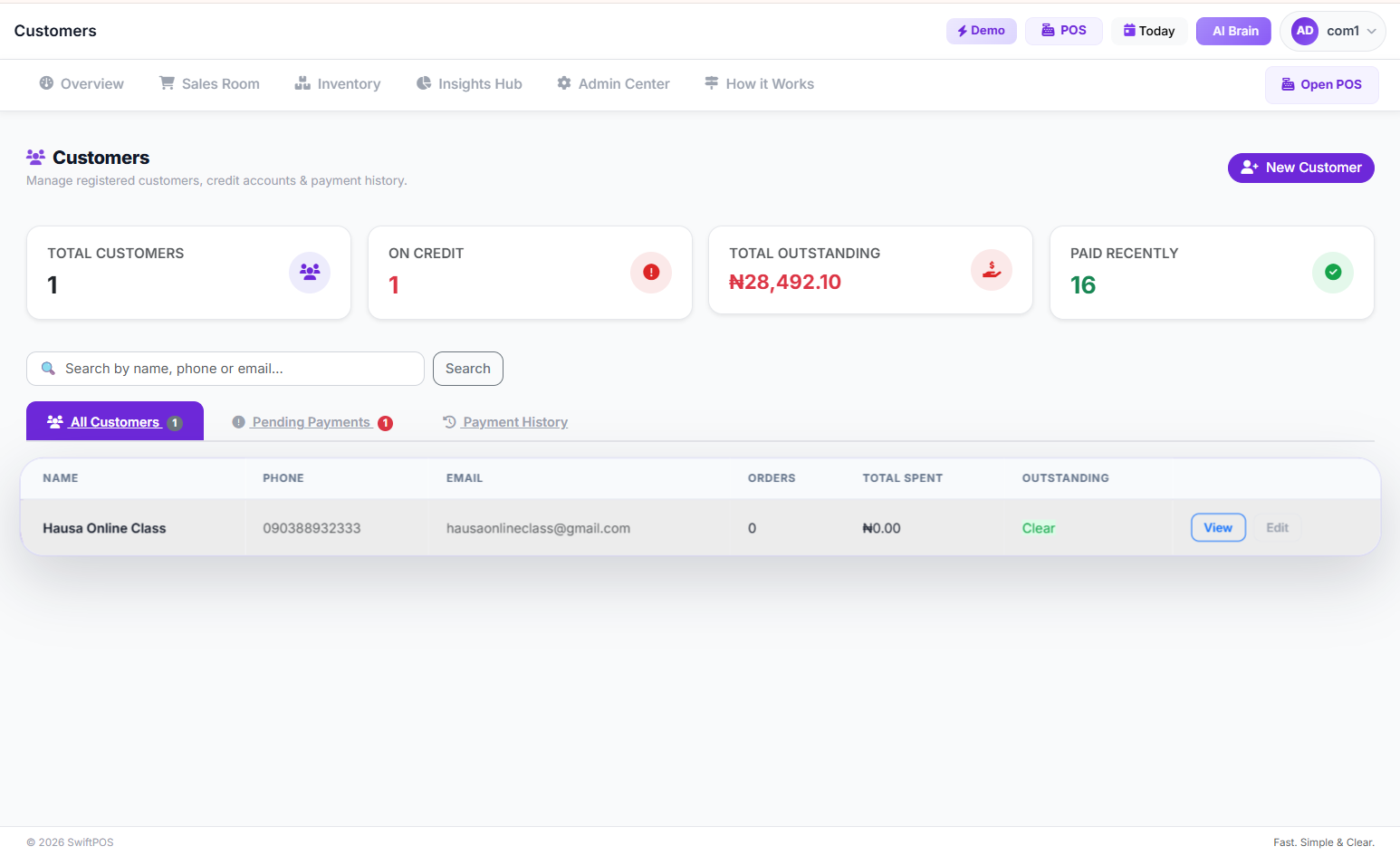 Customers List Directory
Furthermore, security and data integrity are constant concerns. Spreadsheets are prone to accidental deletions, incorrect entries, or even malicious manipulation without proper audit trails. If your business experiences a power outage or a computer crash, essential data could be lost forever if not diligently backed up. The lack of granular user permissions also means that anyone with access to the file could potentially view or alter sensitive financial information, posing a significant security risk.
The Smarter Approach: Embracing Integrated POS Software
The solution to these pervasive problems lies in adopting a modern, integrated Point-of-Sale (POS) software system. A POS system isn't just for processing sales; it's a comprehensive retail management platform that streamlines operations, automates tedious tasks, and provides invaluable insights into your business performance. Instead of disparate spreadsheets and manual calculations, a POS system centralises all your retail data, from sales to inventory to customer information, into a single, accessible platform.
This integrated approach empowers retailers to make data-driven decisions, rather than relying on guesswork. Imagine knowing your best-selling products instantly, identifying slow-moving inventory before it becomes obsolete, or understanding peak sales hours to optimise staff scheduling. A robust POS system transforms raw transactional data into actionable intelligence, giving you a competitive edge. It allows you to focus on growing your business and serving your customers better, rather than getting bogged down in administrative minutiae. You can explore a wide range of features available in modern POS systems to understand their full potential for your business here.
How SwiftPOS NG Empowers Nigerian Retailers
For Nigerian retailers looking to move beyond the limitations of manual systems, SwiftPOS NG offers a powerful, intuitive, and accessible solution. It's a fully featured, multi-tenant Software-as-a-Service (SaaS) Point-of-Sale (POS) management system designed specifically to help businesses manage their retail operations end-to-end.
With SwiftPOS NG, you can effortlessly manage everything from ringing up sales on a touchscreen POS terminal to tracking inventory across multiple branches, generating detailed profit-and-loss reports, and even leveraging AI-powered business insights. The platform is accessible via a web browser on any device, meaning no complex hardware installation is required, making it incredibly flexible for businesses of all sizes.
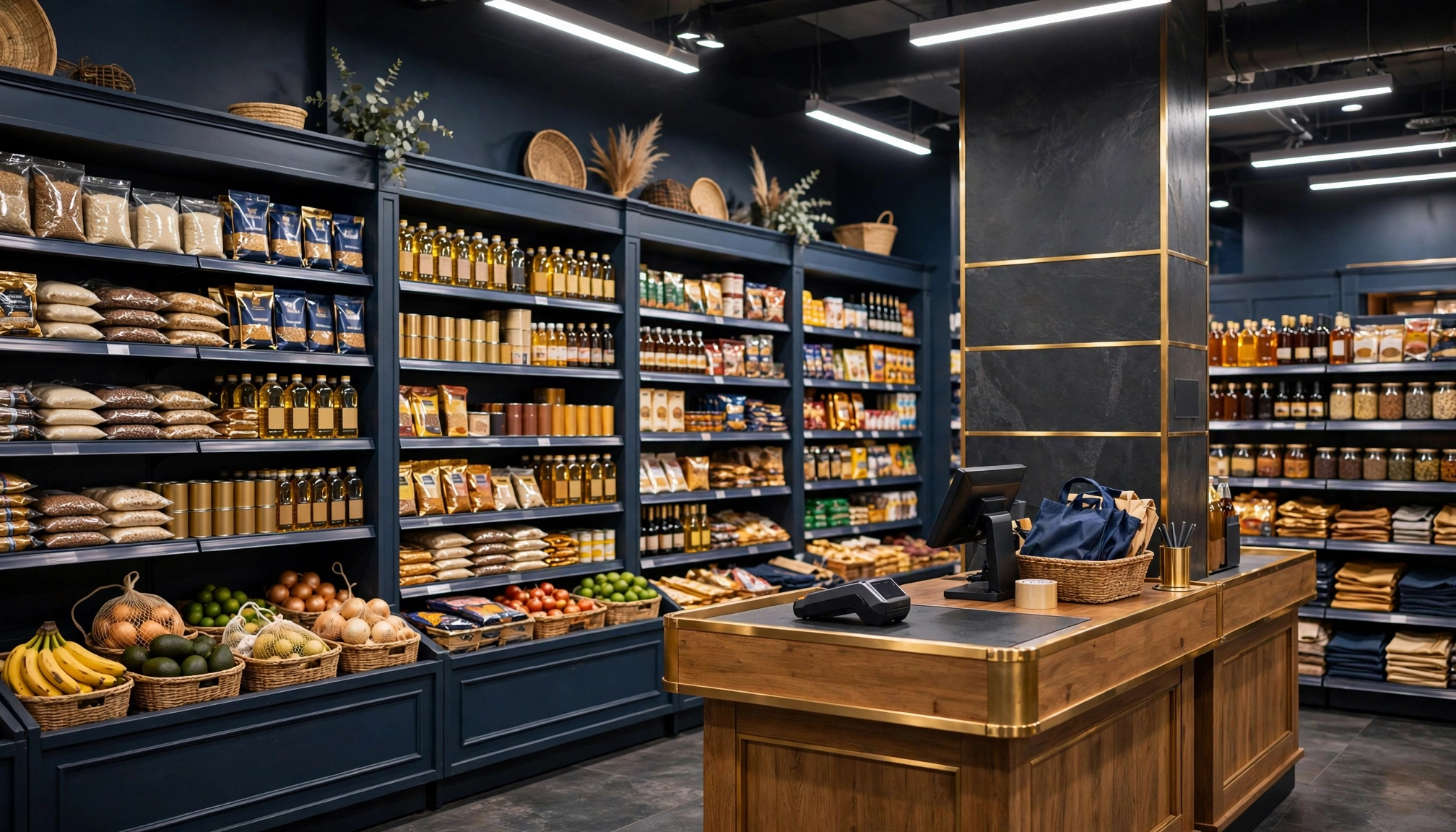
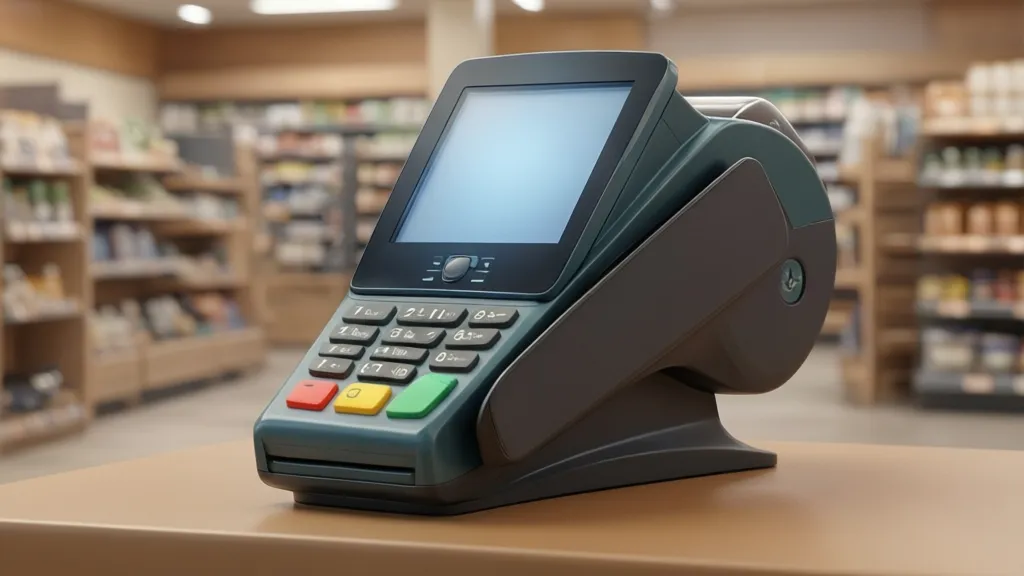 Sleek 3D illustration of a modern retail store with a clean, user-friendly POS terminal at the counter, showing a digital sales interface. Professional harmonious color palette, modern, trustworthy mood. Rule of thirds composition, clean background, ample negative space. 16:9 landscape aspect ratio.
Consider the impact on your inventory. SwiftPOS NG provides real-time product management, allowing you to track stock levels, set minimum stock alerts, and manage product variants with ease. You can even generate and print barcodes directly from the system, simplifying checkout and inventory audits. For multi-branch businesses, SwiftPOS NG enables seamless inter-branch stock transfers, ensuring optimal stock distribution and reducing instances of stockouts or overstocking. You can track inventory with precision and gain full visibility into your stock using features like the
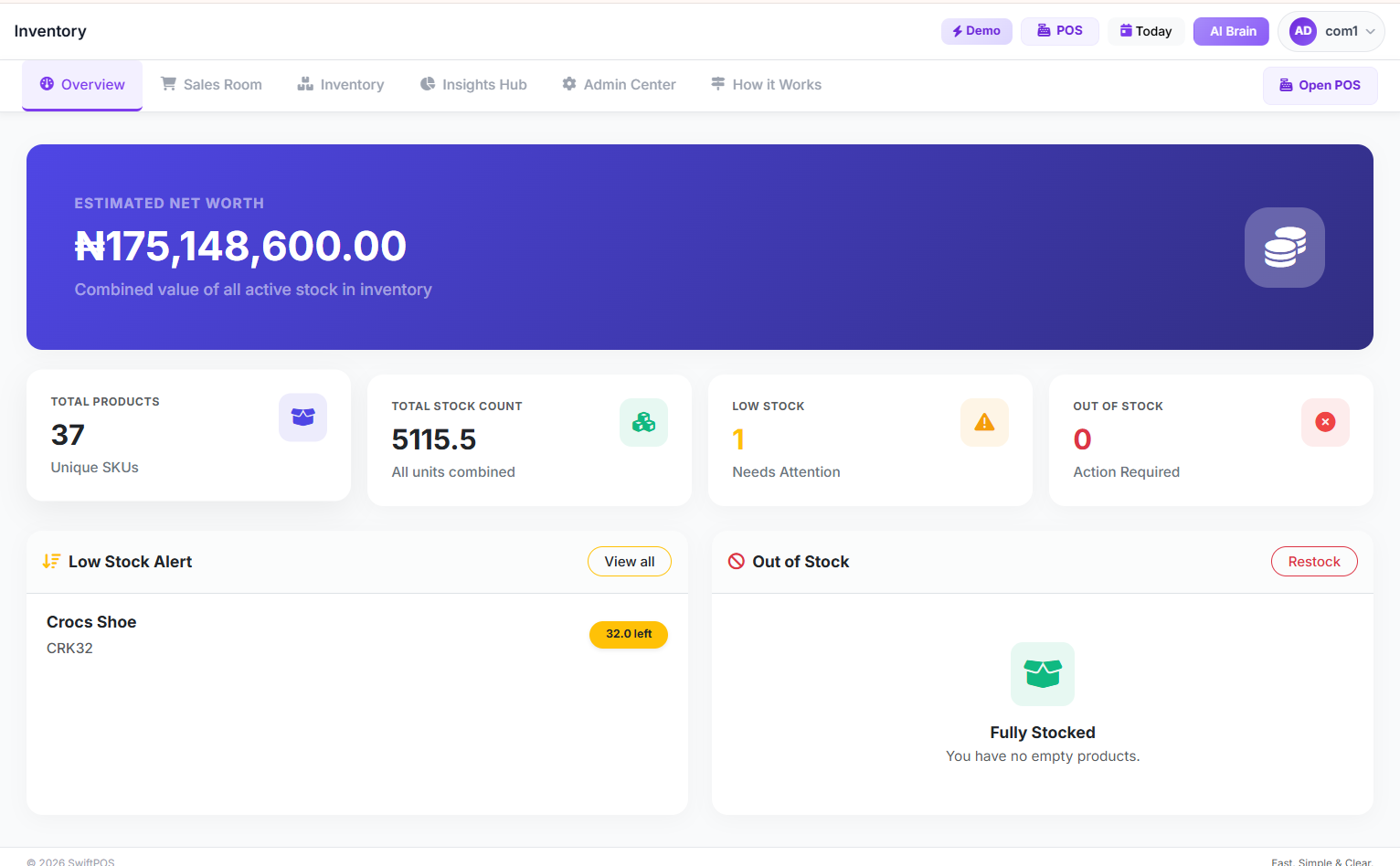 Inventory Dashboard
Beyond sales and inventory, SwiftPOS NG integrates robust reporting and analytics. Daily sales dashboards, profit and loss reports, and even staff performance metrics are readily available, transforming raw data into actionable intelligence. The AI Insights Dashboard provides auto-generated insights on sales, inventory, and customers, helping you spot trends and make informed decisions. This comprehensive suite of tools helps you understand the true health of your business and strategize for future growth. Learn more about the benefits this system offers to retail businesses here.
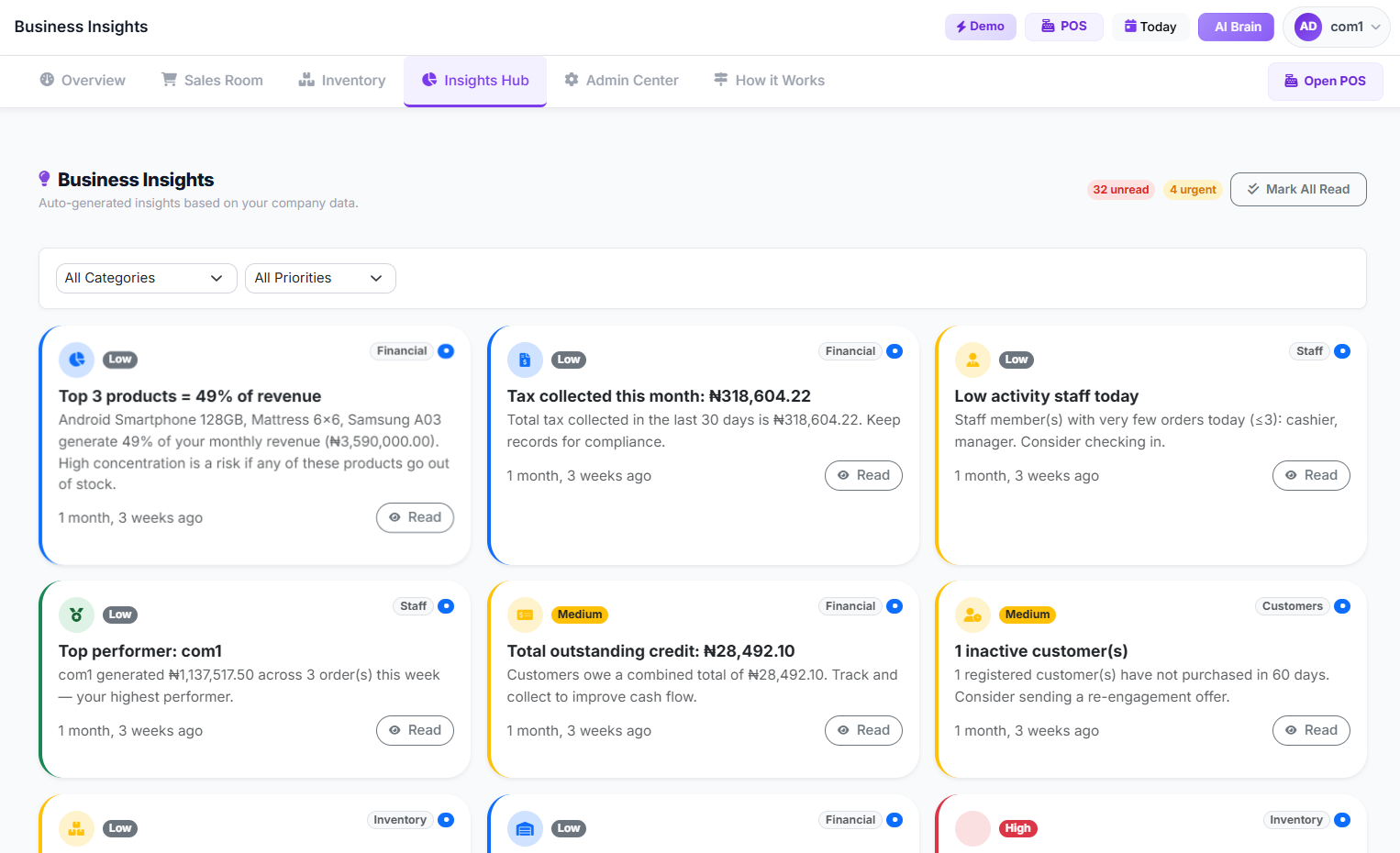 Business Insights Page
Proof: Side-by-Side Comparison
Let's look at how a modern POS system like SwiftPOS NG stacks up against traditional manual methods.
| Feature / Aspect | Traditional Methods (Paper/Spreadsheets) | Modern POS Software (e.g., SwiftPOS NG) |
|---|---|---|
| Sales Processing | Slow, prone to errors, manual price lookups, limited payment options. | Fast, accurate, barcode scanning, multiple payment methods (cash, transfer, card). |
| Inventory Tracking | Manual counts, outdated stock levels, frequent stockouts/overstocking. | Real-time updates, automated low-stock alerts, detailed product variants management. |
| Reporting & Analytics | Time-consuming manual compilation, basic insights, high error rate. | Automated, instant access to detailed sales, profit, and staff performance reports. |
| Customer Management | Scattered notes, forgotten preferences, difficult to track credit sales. | Centralized customer profiles, purchase history, loyalty programs, credit tracking. |
| Data Accuracy | High risk of human error, data loss from physical damage/computer crashes. | Automated data entry, secure cloud storage, reduced human error. |
| Operational Efficiency | Labor-intensive, slow processes, staff spend more time on admin. | Streamlined workflows, automation of routine tasks, more time for customer service. |
| Scalability | Difficult to expand to multiple branches, inconsistent data across locations. | Easily scales for multi-branch operations, centralized data management. |
| Business Insights | Limited to basic calculations, no predictive analysis. | AI-powered insights, stock forecasting, trend analysis. |
Frequently Asked Questions
What is a POS system, and how does it differ from a cash register?
A Point-of-Sale (POS) system is much more than just a cash register. While a cash register simply records transactions, a POS system is an integrated platform that manages sales, inventory, customer data, reporting, and often includes features like employee management and multi-branch capabilities. It centralises all aspects of your retail operations, providing comprehensive insights into your business performance.
Is a POS system too expensive for my small retail business in Nigeria?
The perception that POS systems are only for large enterprises is outdated. Modern SaaS POS solutions offer flexible, subscription-based pricing models that are highly affordable for small and medium-sized businesses. The efficiency gains, reduction in errors, and improved decision-making often lead to a significant return on investment, far outweighing the cost. You can check out various pricing plans to find one that suits your budget here.
How difficult is it to learn and implement a new POS system?
Many modern POS systems are designed with user-friendliness in mind, featuring intuitive interfaces that require minimal training. Cloud-based solutions mean there's no complex software to install or maintain. Most providers offer comprehensive tutorials and customer support to help you get started quickly. For example, you can find helpful guides and videos on our tutorials page.
Can a POS system help me manage multiple store locations?
Absolutely. One of the significant advantages of cloud-based POS systems is their ability to centralise data from multiple branches. This allows you to manage inventory, view sales reports, and oversee staff performance across all your locations from a single dashboard, providing a unified view of your entire business operation.
What kind of reports can I expect from a POS system?
A comprehensive POS system provides a wide array of reports, including daily, weekly, and monthly sales summaries, sales by product or category, profit and loss statements, inventory valuation reports, staff performance metrics, and customer purchase histories. These reports are crucial for understanding business trends, identifying top-selling products, and making informed strategic decisions.
What if I lose internet connectivity? Can I still process sales?
Many advanced POS systems offer an offline mode feature. This allows your sales operations to continue seamlessly even if your internet connection drops. Transactions are stored locally and then automatically synced with the cloud once connectivity is restored, ensuring no sales data is lost.
---
Ready to transform your retail operations and leave manual headaches behind? Discover how SwiftPOS NG can streamline your sales, optimize your inventory, and provide the insights you need to thrive in 2026 and beyond.
Start Your SwiftPOS NG Journey Today
Contact us directly on WhatsApp: +2349164601810
Assisted Self-Checkout for Retailers: How It Works & W…
Sep 20, 2026
10 Reasons Nigerian Retailers Lose Money (and How to F…
Sep 19, 2026
Why Your Business Makes Sales But Has No Cash (Profita…
Sep 17, 2026