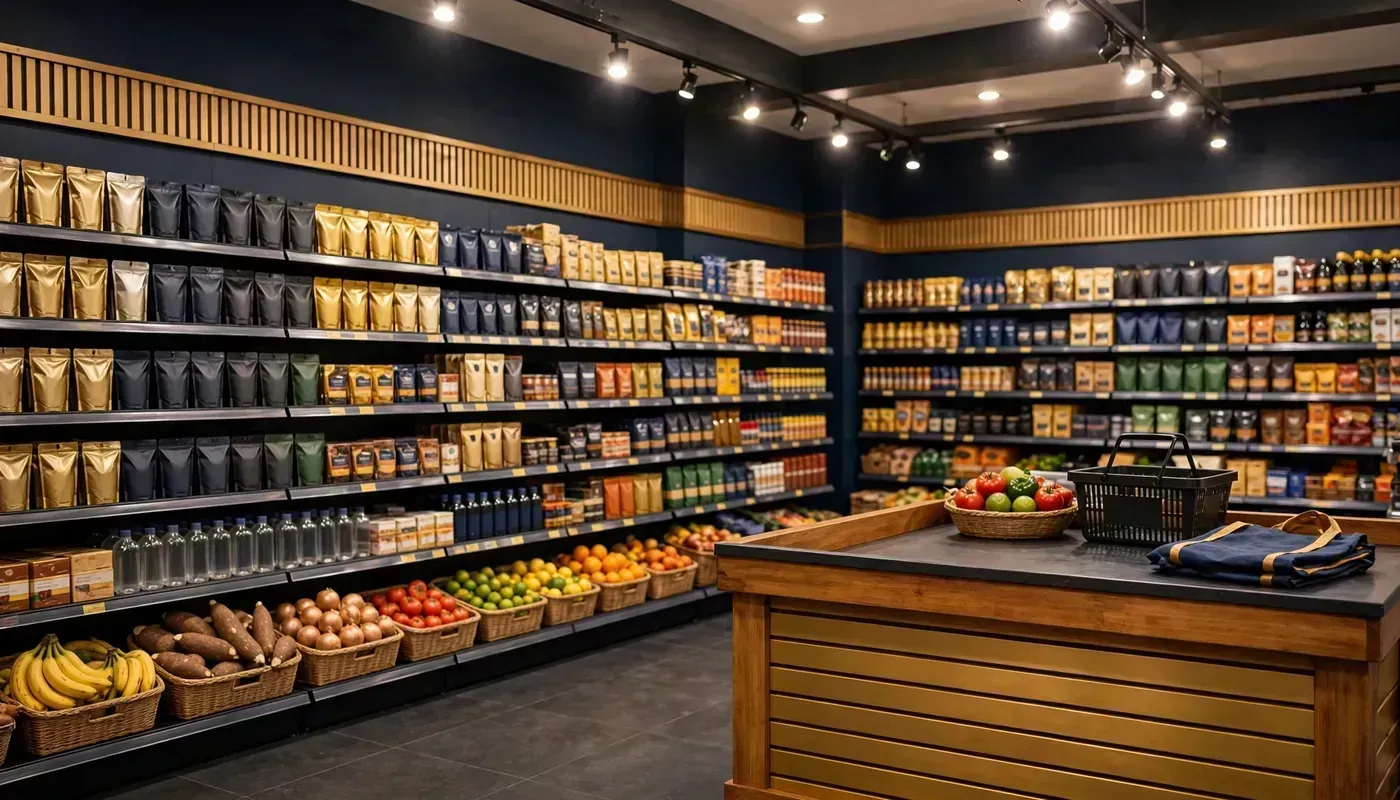
Top Businesses to Start in Kano State
SwiftPOS Team
Published November 02, 2026

A shocking 63% of small businesses in Nigeria fail within their first three years, and a significant chunk of those are right here in Kano State, despite its bustling markets and entrepreneurial spirit. That’s a tough pill to swallow, isn't it? Many hopeful entrepreneurs jump into the market with passion but without a solid map, often underestimating the real challenges. You're probably reading this because you want to avoid becoming another statistic, and you're looking for genuinely profitable business Kano opportunities.
Busy street market in kano with various stallsWhy Most People Get This Wrong from Day One
Let's be honest: most people starting a business in Kano, or anywhere in Nigeria, make the same fundamental mistakes. They see someone else succeeding with a provision store or a textile shop in Kurmi Market, and they think, "I can do that too!" They copy the what but miss the how and why.
Here’s the thing: merely identifying a "good business idea" isn't enough. The real challenge, the one that separates thriving businesses from those that close shop before their second anniversary, lies in execution and understanding the local landscape. Many jump in without proper market research, assuming demand based on anecdotal evidence. They might secure a shop for ₦120,000 annually in a decent area, but then completely misjudge their initial stock requirements, buying too much of one item and too little of another. It’s like buying a beautiful car but forgetting to fuel it regularly.
Another common pitfall is underestimating operational costs. People budget for rent and initial stock, but forget about the constant drain of generator fuel (which can easily be ₦20,000 to ₦60,000 monthly for a small generator), staff salaries, unexpected repairs, and the sheer cost of keeping the lights on. Many also neglect to properly register their business, skipping the CAC process that costs between ₦20,000 and ₦50,000, only to run into issues down the line. It's a house built on sand, ready to crumble with the first heavy rain. You need to understand the true value of proper setup and management to avoid these common revenue leaks.
Before You Do Anything: The Foundation Work
Before you even think about which of the top businesses to start in Kano State, you need to lay a rock-solid foundation. This isn't just about money; it's about preparation, knowledge, and foresight. Skipping these steps is like trying to build a skyscraper without a blueprint.
1. Market Research: Beyond "Everybody Buys This"
Don't just assume. Kano is a vast state with diverse communities, each with unique needs and purchasing power. A business thriving in Kano City's bustling commercial areas like Sabon Gari might flop in a quieter, residential area like Tarauni.
- What to do: Spend time in your target area. Observe. What are people buying? What services are lacking? Talk to potential customers. What are their pain points? What are they willing to pay for? Look at existing businesses – where are they falling short?
- Why it matters: This research helps you identify genuine demand, understand pricing sensitivities, and spot gaps in the market. It informs your product selection and marketing strategy, preventing you from sinking capital into something nobody needs.
- Common shortcut that backfires: Relying on what your uncle's friend said is profitable. That's anecdotal, not data.
- Action Item: Conduct at least 20 informal interviews with residents and small business owners in your chosen location. Document their responses.
2. Business Registration: Get Legal, Stay Safe
Many small business owners in Nigeria, especially those just starting, treat business registration as an afterthought or an unnecessary expense. This is a huge mistake.
- What to do: Decide on your business structure (sole proprietorship, partnership, or limited company) and register it with the Corporate Affairs Commission (CAC). The cost for a sole proprietorship is typically around ₦20,000, while a limited company can be up to ₦50,000. Get your Tax Identification Number (TIN) and local government permits.
- Why it matters: Legal registration protects your business name, gives you credibility, opens doors to formal financing, and helps you avoid issues with local authorities. It’s a sign that you’re serious.
- Common shortcut that backfires: Operating unregistered, using your personal name, or relying on informal permits. This exposes you to fines, harassment, and makes it impossible to scale or access formal loans.
- Action Item: Visit the nearest CAC office or a reliable agent to understand the current requirements and costs for your chosen business structure.
3. Capital Planning: Know Your Numbers, Seriously
This is where dreams often meet harsh reality. You need a clear, realistic breakdown of your startup and operating costs.
- What to do: Create a detailed budget. Account for shop rent (₦50,000 - ₦300,000 annually), initial stock (₦150,000 - ₦700,000 for retail, ₦40,000 - ₦120,000 for food vending), kiosk/container fabrication if needed (₦100,000 - ₦400,000), utility connections, generator purchase (₦80,000 - ₦150,000 for a small 2.5KVA), and at least six months of working capital (₦50,000 - ₦150,000 monthly) to cover salaries, fuel, and unforeseen expenses.
- Why it matters: Under-capitalisation is a primary reason businesses fail. Having a buffer ensures you can weather the initial lean months and unexpected expenses without panicking.
- Common shortcut that backfires: Estimating costs "off the top of your head" or only budgeting for the absolute essentials. You'll run out of money before you even hit your stride.
- Action Item: Draft a spreadsheet with every single anticipated cost for the first year. Add a 20% contingency fund.
 Detailed financial spreadsheet on a laptop
The Step-by-Step Path (What Actually Works) for Business Ideas Kano
Now that your foundation is solid, let's talk about execution. These steps are universal for many business ideas Kano offers, especially in the retail and service sectors.
Step 1: Secure Your Location and Set Up Shop
The right location can make or break your business. For any retail business, visibility and accessibility are paramount.
- What to do: Based on your market research, find a suitable shop or stall. Negotiate rent, preferably for an annual payment, which is common practice in Nigeria. If you're going for a kiosk or container, get reliable fabricators. Install shelving, counters, and basic amenities. Ensure you have a stable power source (PHCN and a generator backup).
- Why it matters: Your location determines foot traffic, customer convenience, and operating costs. A well-laid-out shop makes shopping easier for customers and managing stock simpler for you.
- Common shortcut that backfires: Rushing into the cheapest available space without considering foot traffic, security, or accessibility for your target customers. A cheap rent doesn't matter if nobody can find you.
- Action Item: Visit at least five potential locations in your target area before making a decision. Take photos, note pros and cons, and compare rent figures.
Step 2: Source Your Initial Inventory Wisely
This is crucial, especially for businesses like provision stores, fashion boutiques in Kano textile market, or electronics shops in Computer Village.
- What to do: Identify reliable suppliers. For provisions, consider wholesalers in Sabon Gari or Singer Market. For fabrics, the Kano textile market is your best bet. For electronics, look to distributors or direct importers. Always compare prices and quality. Start with a diverse but manageable stock, avoiding overstocking on untested items.
- Why it matters: Good quality stock at competitive prices allows you to offer value to your customers and maintain healthy profit margins. Reliable suppliers ensure consistent availability.
- Common shortcut that backfires: Buying everything from one supplier without comparing prices, or buying in bulk simply because it’s cheaper, without considering demand. You end up with dead stock tying up your capital.
- Action Item: Get price lists from at least three different suppliers for your core products. Negotiate for better terms and potential credit lines.
Step 3: Hire and Train Your Team (Even if it’s Just One Person)
Even if you're starting small, you might need an extra hand.
- What to do: Define the roles you need. For a small retail shop, an apprentice or a cashier might be enough. Look for individuals with good customer service skills and a willingness to learn. Pay them fairly (₦35,000 - ₦60,000 for entry-level, ₦70,000 - ₦120,000 for skilled staff like a tailor). Train them thoroughly on your products, customer service standards, and how to handle sales.
- Why it matters: Your staff are the face of your business. Well-trained, motivated staff provide excellent customer service, which builds loyalty and repeat business.
- Common shortcut that backfires: Hiring family members without proper vetting or training, or paying below market rates, leading to high staff turnover and poor service.
- Action Item: Develop a simple training manual covering product knowledge, sales procedures, and customer interaction guidelines.
Step 4: Implement a Smart Sales and Inventory System
This is where the magic happens, especially if you want to grow beyond a roadside kiosk. Relying on paper or memory will eventually crush your business. Imagine trying to track stock across two branches – one in Zoo Road and another in Fagge – with just a notebook. It's a recipe for disaster.
- What to do: Invest in a robust Point-of-Sale (POS) and inventory management system. This is non-negotiable for a profitable business Kano. A system like SwiftPOS NG allows you to process sales quickly, track every item in your inventory, manage customer credit, oversee staff performance, and monitor your expenses and profits in real-time. It’s designed for Nigerian retailers, so it handles everything from split payments to tracking stock across multiple branches or a central warehouse. You can manage products with variants (like different sizes of fabrics) and even set wholesale pricing.
- Why it matters: A good POS system eliminates manual errors, prevents theft, gives you accurate insights into your best-selling products and slow-moving stock, and ultimately helps you make smarter business decisions. It tells you your true net profit, not just your sales revenue.
- Common shortcut that backfires: Sticking to manual ledgers or basic Excel sheets. This leads to stock discrepancies, lost sales data, difficulty in tracking customer debts, and makes it impossible to know your actual profit. You're essentially flying blind.
- Action Item: Explore POS systems like SwiftPOS NG. Start with their free trial to see how it can streamline your operations. You can learn how to set up your SwiftPOS account with their step-by-step guide.
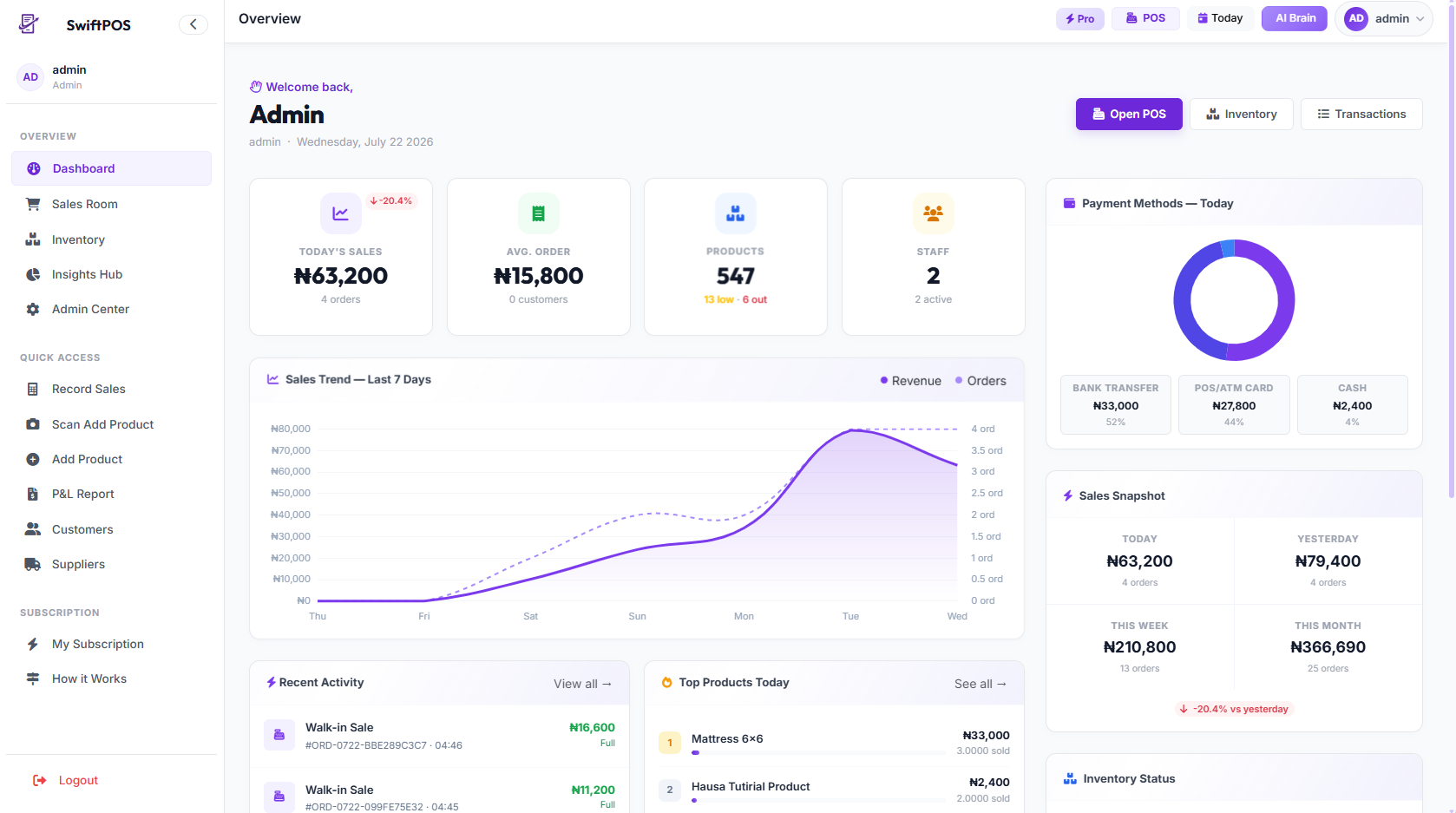 SwiftPOS Dashboard Overview showing sales and inventory data
Step 5: Market Your Business Locally and Digitally
Even in a bustling market like Balogun in Lagos or Kantin Kwari in Kano, you still need to actively market.
- What to do: Start with local marketing. Print flyers, put up signs, offer opening discounts. Engage with your community. For digital marketing, create a simple social media presence (WhatsApp Business, Instagram, Facebook) and consistently post engaging content. Consider boosting posts with a small budget (₦10,000 - ₦50,000 monthly).
- Why it matters: Marketing creates awareness, attracts new customers, and builds your brand's reputation. In today's world, a blend of physical and digital presence is key.
- Common shortcut that backfires: Opening your doors and expecting customers to magically appear. Or, spending a huge amount on a single ad campaign without a clear strategy.
- Action Item: Design a simple opening promotion or loyalty program. Set up your WhatsApp Business profile and share it widely.
The Numbers That Will Make or Break You
Understanding the financial realities is paramount for any of the top businesses to start in Kano State. These aren't just abstract figures; they are the bloodline of your business.
Startup Costs (Initial Outlay)
Let's break down what you’re realistically looking at for a small-to-medium retail or service business in Kano in 2026.
- Business Registration (CAC): ₦20,000 - ₦50,000 (depending on structure). Don't skip this.
- Shop Rent (Annual): ₦50,000 (small stall in a local market like Kofar Wambai) to ₦300,000 (medium shop in a commercial area of Kano City). Always budget for at least one year upfront.
- Kiosk/Container Fabrication (if applicable): ₦100,000 - ₦400,000. This is for a sturdy, secure setup.
- Initial Stock: This varies wildly.
- Small provision store: ₦150,000 - ₦350,000 (essential items like rice, oil, noodles, toiletries).
- Fabric/boutique shop: ₦300,000 - ₦700,000 (initial rolls of fabric from Kantin Kwari, tailoring supplies).
- Food vending (e.g., masa, kunu): ₦40,000 - ₦120,000 (equipment, initial ingredients).
- Electronics/phone accessories: ₦250,000 - ₦600,000 (basic phones, chargers, power banks).
- Generator (2.5KVA): ₦80,000 - ₦150,000. An absolute necessity.
- Shop Fittings (shelves, counter, basic furniture): ₦50,000 - ₦200,000.
- POS Hardware (optional, but recommended): ₦150,000 - ₦300,000 (for a good setup including printer, scanner, and tablet).
- Total Minimum Startup Capital: You're looking at a bare minimum of ₦490,000 for a very small provision stall, scaling up to ₦2,300,000+ for a well-stocked medium-sized retail shop in a prime Kano location.
Monthly Running Costs (Operating Expenses)
These are the costs that keep coming, month after month. Many businesses fail because they don't adequately budget for these.
- Staff Salary (monthly): ₦35,000 - ₦60,000 per unskilled staff, ₦70,000 - ₦120,000 for skilled staff.
- Generator Fuel (monthly): ₦20,000 - ₦60,000 (depending on usage and power supply consistency).
- PHCN Bills: ₦5,000 - ₦20,000.
- Marketing/Advertising (local, monthly): ₦10,000 - ₦50,000.
- Stock Replenishment (monthly): This is your biggest variable, but budget at least ₦100,000 - ₦300,000 to keep shelves stocked.
- Working Capital (buffer for unforeseen expenses): ₦50,000 - ₦150,000.
- Internet/Data: ₦5,000 - ₦15,000.
- SwiftPOS NG Subscription: Starts from as low as ₦5,000/month. A small price for massive insights.
- Total Minimum Monthly Operating Costs: Realistically, you're looking at ₦175,000 on the low end, soaring to ₦700,000+ for larger operations.
Expected Monthly Revenue and Profitability
This is the goal, right? What can you actually make?
- Small retail/service (e.g., provision store, food vendor): ₦100,000 - ₦250,000 in monthly revenue. Your profit margin here is critical, often 15-25%.
- Medium retail/service (e.g., mid-sized boutique, electronics shop): ₦250,000 - ₦400,000+ in monthly revenue. Profit margins can range from 20-40% depending on the product.
Quote:
> "Many Nigerian entrepreneurs focus on how much money they're making, not how much they're keeping. The difference between revenue and net profit is where most businesses die."
Growth After Launch: The Next 90 Days
The launch is just the beginning. The next 90 days are critical for establishing momentum and identifying areas for improvement. This is where your initial planning meets reality.
1. Daily Performance Review
Don't wait until the end of the month to see how you're doing. Check your sales daily. What sold well? What didn't? How many customers did you serve? If you're using a system like SwiftPOS NG, you can easily access your
daily dashboard overview2. Customer Feedback Loop
Actively seek feedback. Ask customers what they liked, what they didn't, and what products they wish you carried. Create a suggestion box or a simple online survey. Word-of-mouth is powerful in Kano; positive experiences will bring more customers.
3. Inventory Optimisation
Based on your initial sales data, adjust your stock levels. Reorder fast-moving items promptly and consider reducing orders for slow-movers. Pay attention to inventory management mistakes crushing profits. If you're using SwiftPOS NG, its
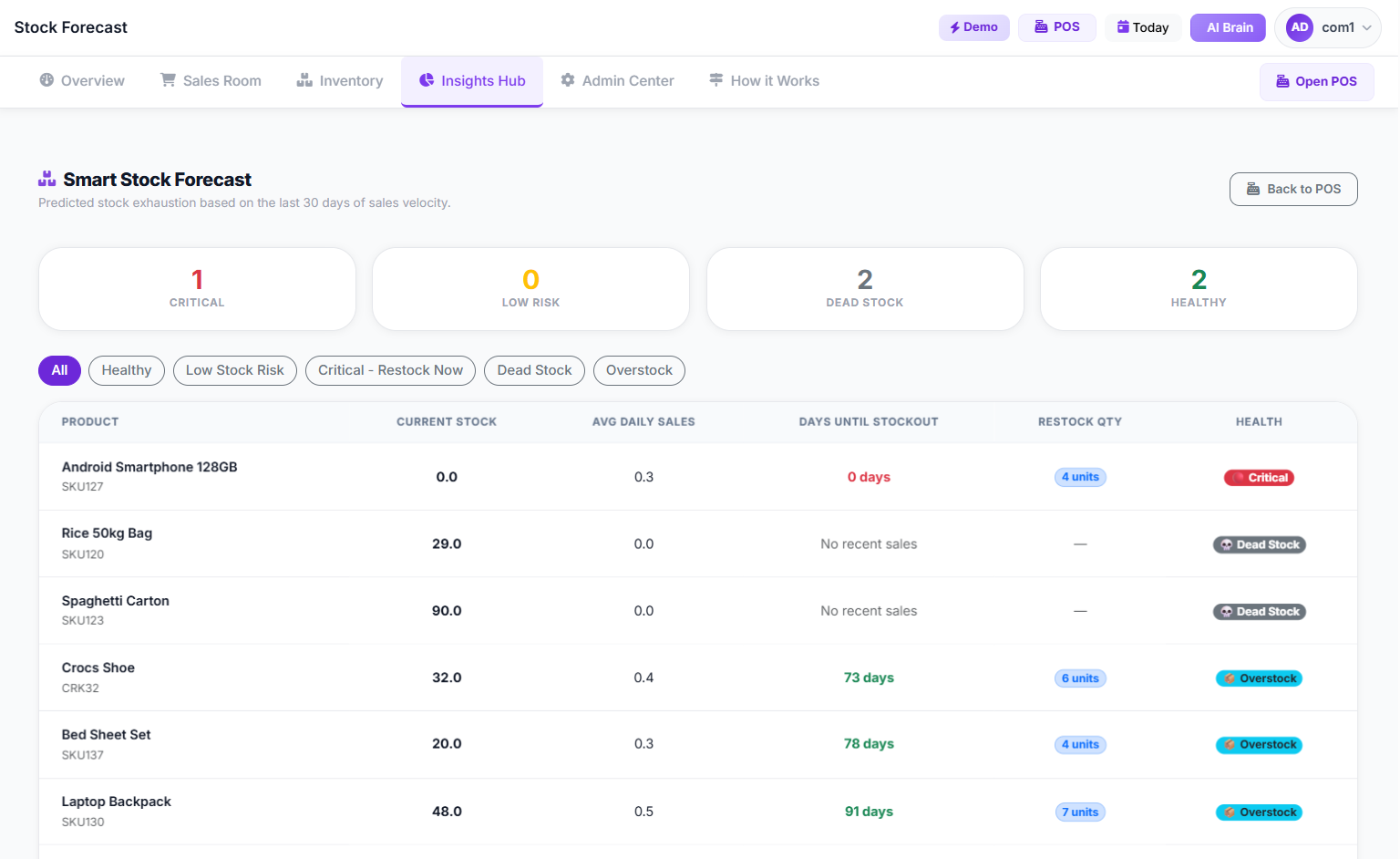 stock forecasting
4. Staff Performance and Training
Observe your staff. Are they engaging with customers? Are they efficient? Provide constructive feedback and additional training where needed. Remember, happy and well-trained staff are more productive. You can even use SwiftPOS NG's
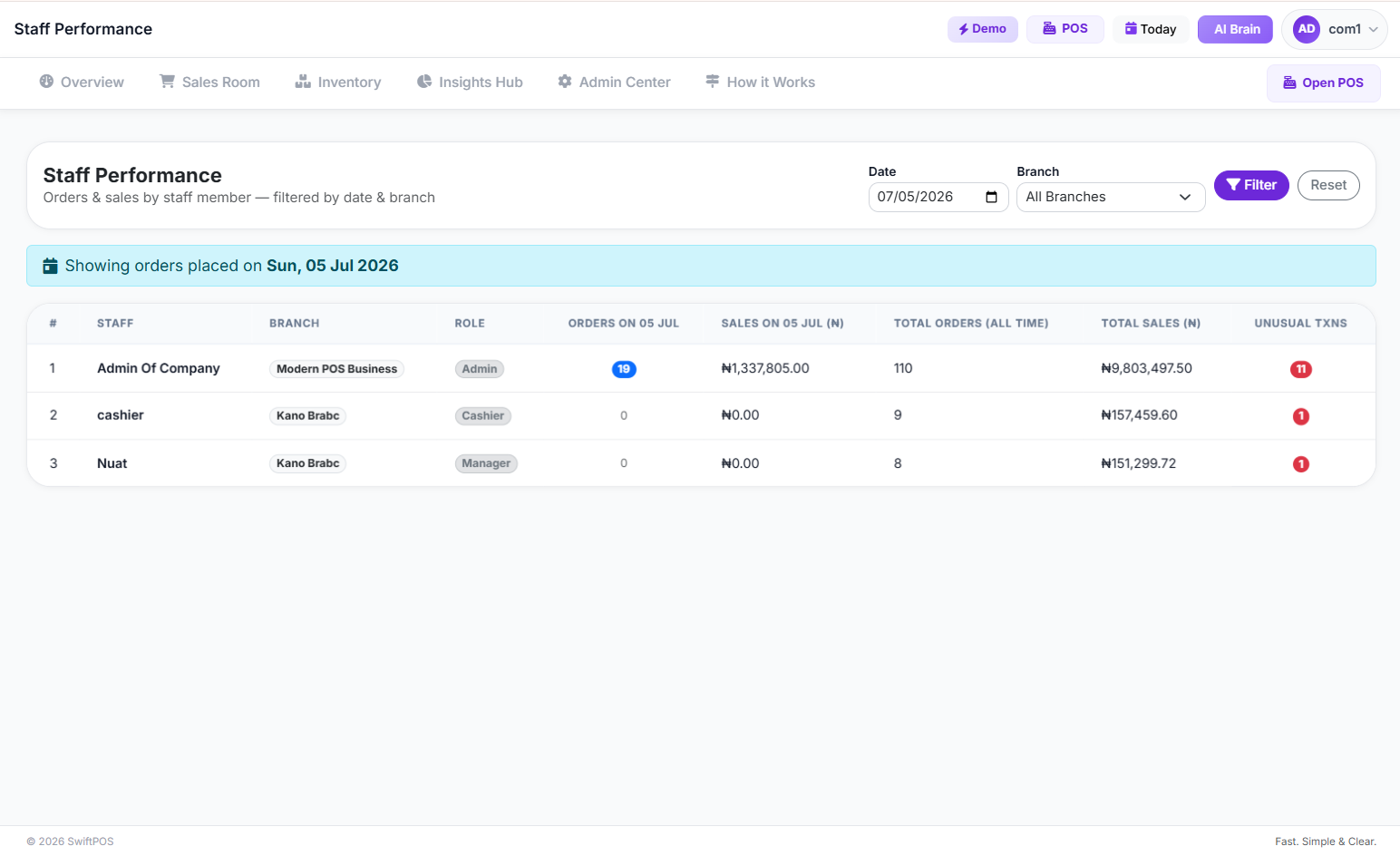 staff performance page
5. Expense Tracking
Keep a tight lid on your expenses. Every Naira counts. Categorise all your spendings and regularly review them. Are there areas where you can cut costs without impacting quality? SwiftPOS NG allows you to
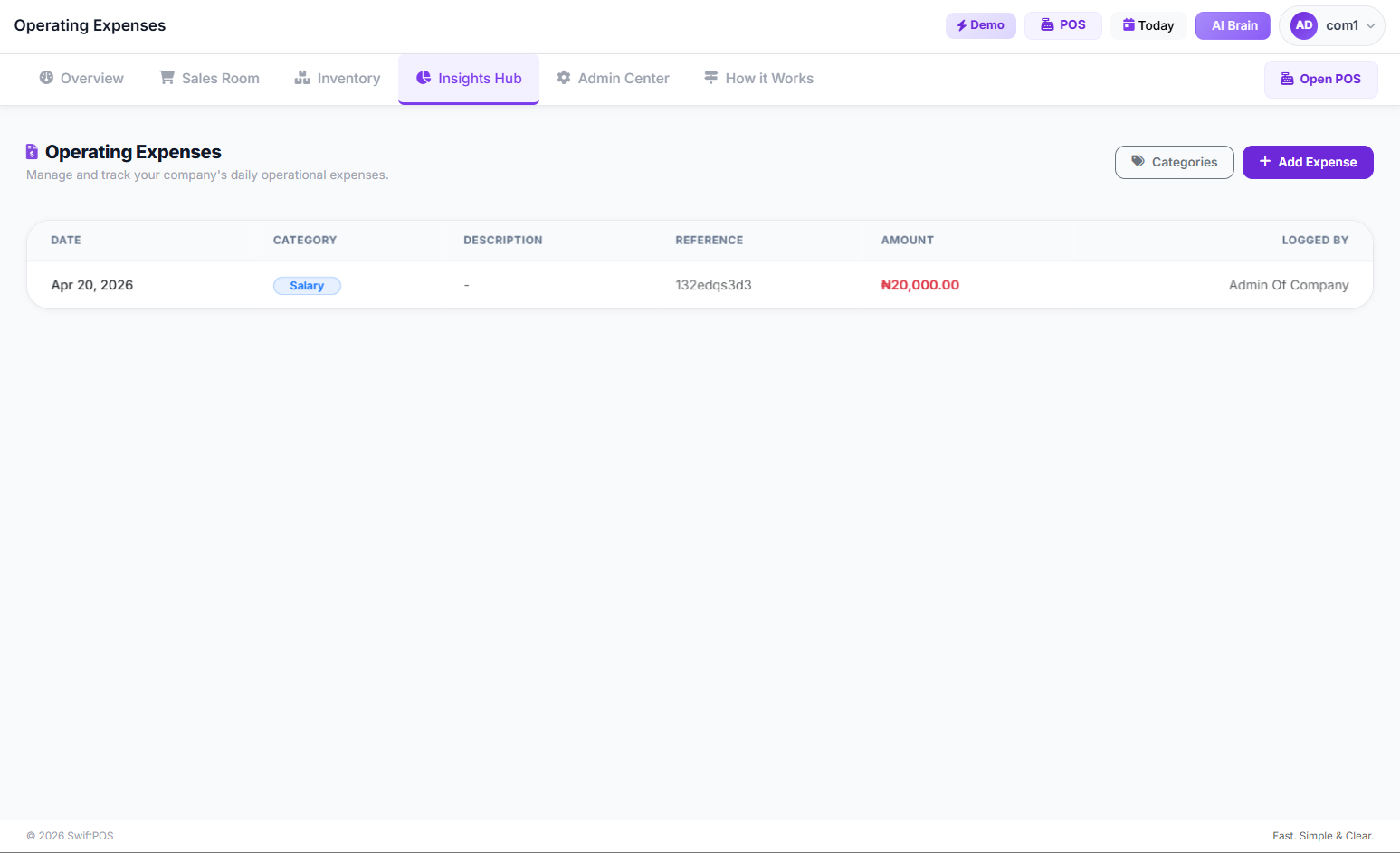 track all your expenses
FAQ: Answers to What You're Actually Googling
Q1: How much capital do I need to start a small business in Kano State in 2026?
Honestly, it varies wildly depending on the type and scale of business. For a very small provision stall or food vending business, you might start with as little as ₦150,000 - ₦300,000, covering initial stock, a small kiosk, and some working capital. For a more established mini-supermarket or a mid-sized fashion boutique, you could be looking at anywhere from ₦700,000 to over ₦2,500,000. This includes rent, significant initial stock, a generator, and shop fittings. Always add a 20% contingency fund to your calculations. Don't forget to check out our detailed guide on how much money you need to open a mini supermarket in Nigeria in 2026.
Q2: What are some profitable business Kano opportunities with low startup capital?
If you're looking for low-capital business ideas in Kano, consider:
- Food Vending: Masa, kunu, kosai, or even a small buka (local eatery) can start with ₦40,000 - ₦120,000. The demand for ready-to-eat food is always high.
- Phone Accessories Kiosk: A small kiosk selling chargers, earphones, screen protectors can start with ₦100,000 - ₦250,000 for initial stock and kiosk fabrication.
- Tailoring/Fashion Design (home-based initially): If you already have a sewing machine, you can start taking orders from home with ₦50,000 - ₦150,000 for fabrics and accessories.
- Dropshipping/Online Retail: You can start with almost zero capital, selling goods sourced from suppliers directly to customers online, though marketing costs will apply.
Q3: How do I find reliable suppliers for my business in Kano?
Networking is key! Visit major markets like Singer Market for provisions, Kantin Kwari for textiles, or Sabon Gari for general goods. Talk to other successful business owners (respectfully, of course). Attend trade fairs. Online platforms can also connect you with wholesalers. Always start with small orders to test reliability and product quality before committing to large purchases. Build relationships, and always negotiate.
Q4: Is a POS system really necessary for a small business in Kano? I use paper and it works fine.
"Works fine" is often a polite way of saying "I don't know what I'm losing." While paper might seem sufficient, it's a huge hidden cost. Manual systems are prone to errors, make it impossible to track inventory accurately, hide theft, and give you no real insights into your profits or customer behaviour. A POS system, even for a small business, helps you manage stock, track sales, identify best-selling products, handle customer credit, and understand your true profit. It's an investment in efficiency and growth, not an expense. You can read more about the hidden costs of manual retail operations in Nigeria to understand what you're really missing.
Q5: What are the key retail metrics Nigerian businesses must track for profit growth?
Beyond just sales, you need to track:
- Gross Profit Margin: How much profit you make from each sale before operating expenses.
- Net Profit Margin: Your actual profit after all expenses are paid. This is the real measure of success.
- Inventory Turnover: How quickly you sell your stock. High turnover means efficient use of capital.
- Customer Retention Rate: How many customers return to buy again. Loyal customers are cheaper to serve.
- Average Transaction Value (ATV): The average amount a customer spends per visit.
- Break-Even Point: How much you need to sell to cover all your costs.
- Expense-to-Revenue Ratio: How much of your revenue is eaten up by expenses.
Ready? Here's Where to Start
Starting a profitable business in Kano State in 2026 isn't a walk in the park, but with the right preparation and tools, it's absolutely achievable. The key is to be strategic, understand your market deeply, and embrace efficiency from day one. Don't just dream of success; plan for it.
If you're ready to move beyond guesswork and manual ledgers, it's time to equip your business with the right technology. Take the first step towards smarter business management. SwiftPOS NG offers a 14-day free trial that lets you explore all its features – from sales and inventory management to expense tracking and profit insights – without any commitment. Visit our pricing page to see which plan fits your business best and start your journey to profitable growth today.