Top Businesses to Start in Northern Nigeria
SwiftPOS Team
Published November 02, 2026

The aroma of freshly baked bread mixed with the distant rumble of a generator at the edge of the market. Mama Aisha, her headtie perfectly in place, meticulously arranged sachets of milk and sugar on her provision store shelf in Kano. She knew every single item, its cost, and its selling price, but the nagging worry about what truly sold best, and where her money actually went, kept her up at night. She just wanted to know if her hard work was really paying off.
Busy nigerian provision store interiorThe Reality Check: What Nobody Tells You About Top Businesses to Start in Northern Nigeria
Look, everyone talks about starting a business, right? You hear phrases like "be your own boss" and "financial freedom." But what most people gloss over is the nitty-gritty, the actual work involved, and the real capital you need, especially when you're looking at top businesses to start in Northern Nigeria. It’s not just about having a good idea; it’s about understanding the market, the risks, and the hidden costs. Many aspiring entrepreneurs jump in thinking ₦50,000 will solve everything, only to find themselves stuck.
Let's be honest about this. The average Nigerian in 2026 earns somewhere between ₦50,000 and ₦150,000 a month. That means any business you start needs to be able to generate enough profit to not just cover your expenses, but also provide a living wage, and hopefully, some growth capital. We're not talking about billions here, but you need enough to scale. For instance, a small provision shop in a place like Kaduna, which might look simple, demands an initial stock investment of anywhere from ₦150,000 to ₦500,000. Then you have annual rent, which could be ₦50,000 for a local market stall up to ₦150,000 for a slightly better roadside spot. Monthly running costs? Think ₦15,000 to ₦30,000 for things like transport and utilities. These numbers are real, and they add up faster than you think.
Many people also forget about the competition. Northern Nigeria, with its bustling markets like Kano textile market and the growing urban centers, is ripe with opportunities, but it's also a place where everyone is hustling. Your business idea needs a solid foundation, not just a fleeting spark of inspiration. You need to understand your unique selling proposition. Are you offering something better, cheaper, or simply more convenient? If you want to build a truly profitable business, you need to look beyond the surface.
What You Actually Need to Get Started
Alright, let's break down what it really takes to get these startup ideas off the ground. Forget the motivational speakers for a minute, and let's talk brass tacks.
The Non-Negotiables:
- Capital (Your Seed Money): This is where many dreams crash. You need actual cash. Not just for initial stock, but for unexpected delays, permits, and even a little buffer for your personal upkeep while the business finds its feet.
- Small Provision Shop: You're looking at ₦150,000 to ₦500,000 for initial stock. Rent in a place like Zaria could be ₦75,000 annually, while in a busier part of Kaduna, it might hit ₦140,000.
- Small Scale Poultry Farming: If you're starting with 100 day-old chicks, that's already ₦30,000 to ₦45,000. Feeds for 8 weeks will set you back ₦80,000 to ₦120,000. And a basic pen? ₦50,000 to ₦150,000 using local materials.
- Tailoring/Fashion Design: An industrial sewing machine alone can be ₦80,000 to ₦150,000. Then add annual rent of ₦60,000 to ₦180,000 for a small space, and initial fabric stock of ₦50,000 to ₦150,000.
- Mobile Phone Accessories & Repair (Kiosk): Initial stock of chargers, screens, and cases will be ₦100,000 to ₦300,000. Kiosk rent can be ₦5,000 to ₦15,000 monthly in a busy market like Computer Village in Abuja. Repair tools? Another ₦20,000 to ₦50,000.
You see? These aren't small figures for many Nigerians. My advice? Start small, but plan for growth. Don't borrow everything unless you have a rock-solid repayment plan.
- Market Research (Know Your Customers): Who are you selling to? What do they need? What can they afford? Don't just assume. Go to the markets, talk to people. If you’re thinking about a provision store in a new estate, find out if there’s a demand for specific imported goods or if local staples are preferred. This is your Northern Nigeria investment in intelligence.
- Basic Business Acumen: You don't need an MBA, but you need to understand profit margins, expenses, and customer service. You’ll learn a lot on the job, but a basic grasp of numbers will save you from major headaches.
- Resilience: Nigeria will test you. Power outages, fuel price hikes, unexpected taxes, market fluctuations. You need to be able to roll with the punches and keep pushing.
The Nice-to-Haves (But They Become Must-Haves as You Grow):
- A Business Management System: If you're still using paper or Excel to track sales, stock, and expenses, you're leaving money on the table. Trust me, I've been there. Manual systems are a headache and a major source of loss. A system that can track your monthly profit margins and give you clear insights is a game-changer.
- A Solid Network: Connections in the market, with suppliers, and even with other business owners can open doors you didn't even know existed.
- Online Presence: Even a simple WhatsApp Business account can boost your reach significantly.
The Complete Step-by-Step Breakdown: Building Your Profitable Business
Starting a business, especially one of the top businesses to start in Northern Nigeria, is a journey, not a sprint. You need a clear roadmap. Here’s how I’d advise you to approach it.
### Step 1: Idea Validation and Niche Identification
This is where you move from "I want to start a business" to "I will start this specific business for these specific people." Don't just pick an idea because it sounds good. Is there a real need for it in your chosen location?
For instance, if you're eyeing the tailoring business, are you going to focus on everyday wear, or specialize in unique traditional attire for weddings and festivals in a city like Sokoto? Specialization often allows you to charge more and build a stronger brand. Talk to potential customers. What are their pain points with existing options? What are they willing to pay? You need to understand the market before you commit your hard-earned capital.
### Step 2: Develop a Lean Business Plan
Forget the fancy, 50-page documents. You need a simple, actionable plan. This isn't for the bank (yet), it's for you. What are you selling? Who are your customers? How will you reach them? What are your costs? How will you make money?
Write down your initial capital required, your projected monthly expenses (rent, utilities, transport, staff if any), and your expected monthly revenue. Be realistic. Use the market data we discussed earlier. If you're planning a mobile phone accessories kiosk, calculate how many screen protectors, chargers, and repairs you need to do daily to hit your targets. This plan helps you visualize your journey and identify potential pitfalls early on.
### Step 3: Secure Your Funding and Location
Once your plan is solid, it's time to get the money and a place to operate. For many small businesses, this means personal savings, loans from family or friends, or microfinance. Be cautious with high-interest loans.
When it comes to location, visibility is key for retail businesses. A provision store needs to be easily accessible to residents. A tailoring shop might benefit from being near a market where fabric is sold. For a mobile phone repair kiosk, proximity to a busy junction or a tech hub like parts of Computer Village in Kano can be a goldmine. Remember, annual shop rent in a place like Katsina could be ₦65,000, but in a prime spot in Abuja, it could easily be ₦187,500. Choose wisely.
### Step 4: Setup, Stock, and Staff
Now for the exciting part: bringing your vision to life. This involves purchasing initial stock, setting up your shop, and if needed, hiring and training staff. For a provision store, this means shelves, a counter, and enough variety to attract customers. For poultry farming, it's building the pens and getting your first batch of chicks.
This is also where a good business management system becomes incredibly useful. Imagine trying to manually track hundreds of items in a provision store, each with its own cost, selling price, and expiry date. It's a nightmare. This is where SwiftPOS NG comes in. It's built for Nigerian businesses like yours. You can easily manage your inventory and stock, track sales, and even manage customer credit, all from one system. It helps you stay organized from day one. You can even
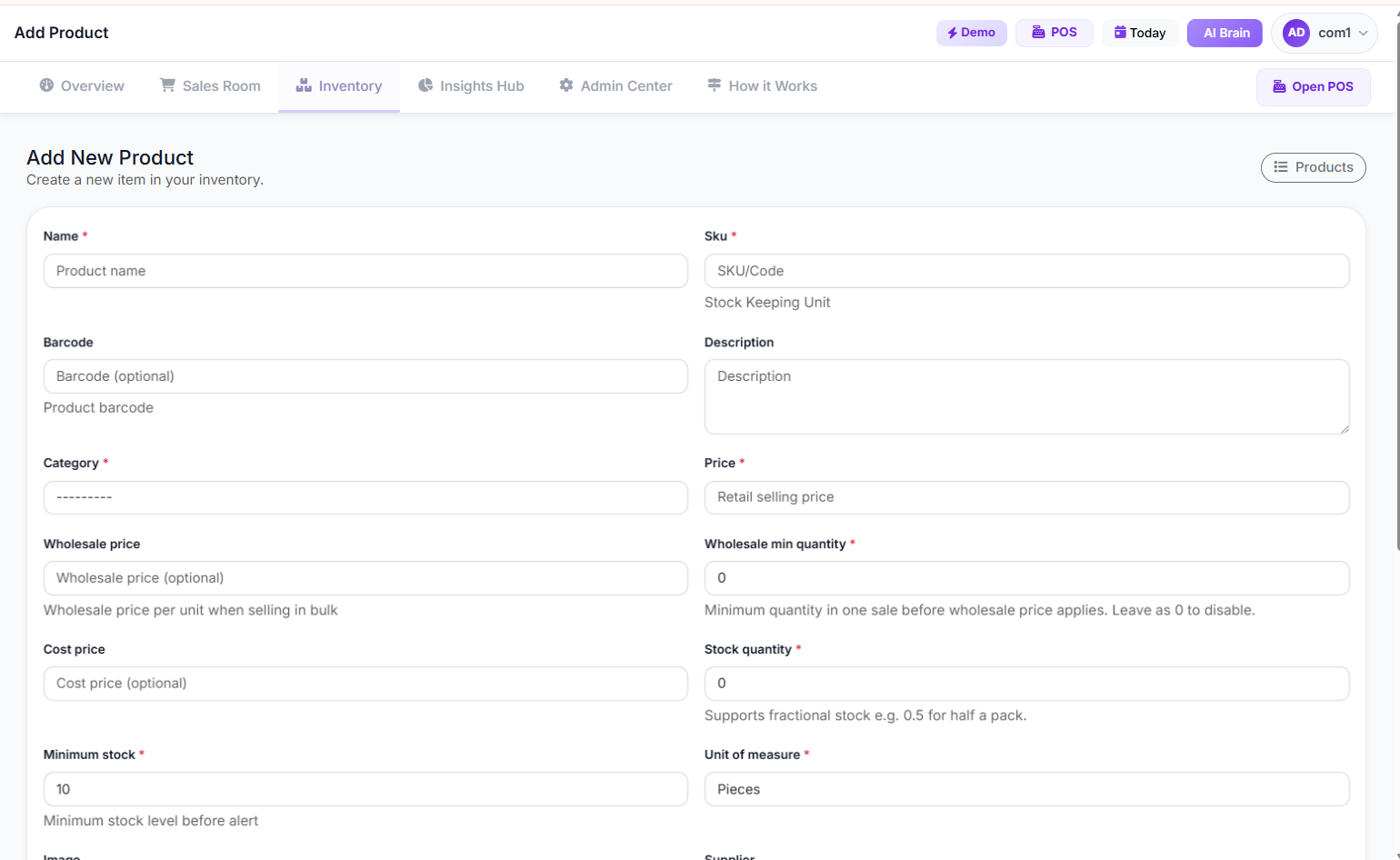 manage your products and stockAdd/Edit Product Page
### Step 5: Marketing and Grand Opening
You've set up shop, now tell the world! Even small businesses need to market themselves. This could be as simple as local flyers, word-of-mouth referrals, or a strong presence on WhatsApp. Offer an opening discount, run a small promo.
For a tailoring business, showing off your designs on social media can attract clients. For a poultry farm, reliable supply and competitive pricing will get you repeat customers. The goal is to generate buzz and get those first customers through your door or placing their first orders.
### Step 6: Monitor, Adjust, and Grow
This isn't a "set it and forget it" game. You need to constantly monitor your sales, expenses, and customer feedback. Are certain products not selling? Is your profit margin lower than expected? Are customers asking for something you don't have?
Use the data you're collecting. If you're using a system like SwiftPOS NG, you can easily pull up sales reports and profit and loss statements to see what's working and what isn't. This kind of insight is invaluable. It helps you make informed decisions to adjust your strategy, optimize your stock, and identify areas for growth. This continuous cycle of monitoring and adjustment is how you build a truly profitable business. You can also
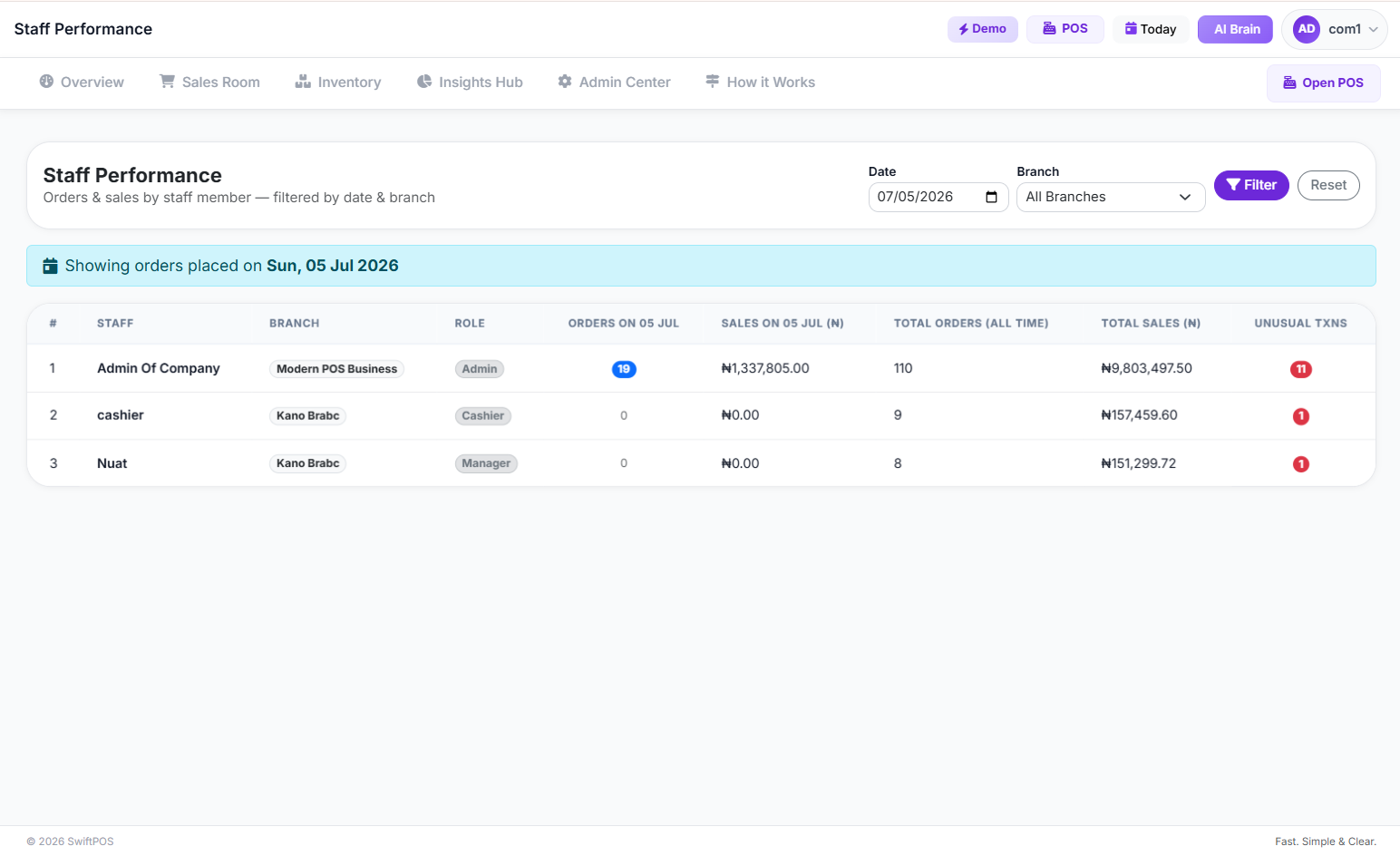 track staff performanceStaff Performance Page
5 Mistakes That Cost Nigerian Business Owners the Most
I've seen it all in my 12 years managing retail shops. These are the things that will quietly drain your profits if you let them.
- Ignoring Inventory Management: Oh, this is a big one. You think you know what you have, but suddenly, popular items are out of stock, and slow-moving items are gathering dust. Or worse, you have dead stock that ties up your capital. I remember a fabric seller in Balogun Market who lost nearly ₦300,000 in one year because she didn't realize how much of her "latest stock" was actually outdated prints nobody wanted. You need to know what's coming in, what's going out, and what's about to expire. Without proper inventory management, you're flying blind.
- Mixing Business and Personal Funds: This is a classic Nigerian business trap. Your business makes some money, and you dip into it for personal expenses. Before you know it, you don't know if your business is actually making a profit or if you're just cycling money. Keep them separate. Open a separate bank account for your business, even if it's a small one. It makes tracking your true profit and loss much easier.
- No Record Keeping (or Poor Record Keeping): "I know what I sold today," you say. But do you know what you sold last week? Last month? Do you know which products are your top sellers? Without accurate records, you can't make smart decisions. You can't identify revenue leaks or understand your true profit. This is why tools like a good POS system are not a luxury; they're essential. You can't improve what you don't measure.
- Neglecting Customer Relationships: Your customers are your lifeline. In a competitive market, personal relationships can make all the difference. Knowing your regulars by name, remembering their preferences, or even offering a small discount for their loyalty goes a long way. If you're running a tailoring business, a happy customer will bring five more. A disgruntled one will tell ten.
- Underpricing or Overpricing: Finding that sweet spot is crucial. If you price too low, you kill your profit margins. If you price too high, customers go elsewhere. You need to understand your costs, your market, and what your competitors are doing. This isn't a one-time exercise; market prices fluctuate, especially in Nigeria. You need to stay updated.
How to Know If You're on Track (Success Metrics)
So, you've started one of these promising business ideas Northern Nigeria offers. How do you measure if you're actually succeeding? It's not just about the money in your hand at the end of the day. You need clear metrics.
- Monthly Revenue Growth: Are your sales increasing month-over-month? Even a small, consistent increase, say 5-10%, shows you're on the right path. If it's stagnant or dropping, you need to investigate why.
- Gross Profit Margin: This tells you how much money you make from sales after deducting the direct costs of those goods. If you buy an item for ₦1,000 and sell it for ₦1,500, your gross profit is ₦500. Your margin is 33.3%. Track this for individual products and for your overall business. A healthy provision store might aim for a 15-25% profit margin.
- Net Profit: This is the real deal. After all your operating expenses (rent, salaries, utilities, transport, etc.) are paid, what's left? This is your true profit. Many businesses have high revenue but low net profit because their expenses are too high.
> "Revenue is vanity, profit is sanity, but cash is king."
- Customer Retention Rate: How many of your customers come back? Repeat customers are cheaper to serve and more loyal. For a tailoring business, repeat clients are a huge indicator of success.
- Stock Turnover Rate: How quickly do you sell your inventory? A high turnover means your products are popular and your capital isn't tied up. A low turnover means you might have too much stock or the wrong products. SwiftPOS NG can help you with stock forecasting to predict when products might run out or if you have dead stock. This helps you manage your inventory smarter. You can learn more about predicting stock levels.
- Expense Control: Are your expenses growing faster than your revenue? Keep a tight lid on costs. Review them regularly. Can you negotiate better deals with suppliers? Can you reduce your generator usage?
- Cash Flow: Do you have enough cash to meet your short-term obligations (pay suppliers, staff, rent)? You can be profitable on paper but still run out of cash if payments are delayed or you've invested too much in slow-moving inventory.
Real Questions People Ask (FAQ)
Q1: What are the most profitable business ideas Northern Nigeria has right now, with low capital?
Honestly, "low capital" is relative, but the most consistently profitable businesses often involve essential goods and services. Provision stores, tailoring, small-scale poultry farming, and mobile phone accessories/repair are strong contenders. They cater to everyday needs. For example, a basic provision store can start with ₦150,000-₦500,000 for stock, plus rent. Poultry farming for 100 birds might be ₦120,000-₦180,000 for chicks and feed. These are businesses where you can start small and scale up.
Q2: How can I protect my Northern Nigeria investment from market fluctuations?
Diversification is key. Don't put all your eggs in one basket. If you have a provision store, don't just sell one brand of noodles. Keep a variety. For poultry, consider selling both eggs and birds. Also, build strong relationships with multiple suppliers to avoid being dependent on just one. Most importantly, keep excellent records. Knowing your best-selling products and understanding your cash flow helps you adapt quickly when the market shifts. Using a system that provides business insights can give you early warnings.
Q3: Is it better to start a business in a city like Kano or a smaller town?
Both have pros and cons. Cities like Kano or Kaduna offer a larger customer base and potentially higher prices, but also higher competition and higher operating costs (rent, transport). A small town might have lower costs and less competition, but also a smaller market and lower purchasing power. My advice? Start where you have a strong network and understand the local dynamics best. The success of startup ideas often depends on local knowledge.
Q4: How do I manage staff effectively in a small business in Northern Nigeria?
Clear communication and defined roles are crucial. Even if you have just one staff member, make sure they know what's expected of them. Provide training, even if it's basic. And critically, use a system that allows you to set staff permissions. This way, your cashier can handle sales without having access to sensitive management functions, reducing the risk of internal theft or errors. You can learn more about setting staff access permissions.
Q5: What's the biggest challenge for these top businesses to start in Northern Nigeria?
Access to consistent power and reliable internet can be a major headache. This drives up operational costs due to generators and alternative power sources. However, this is also where technology helps. Many modern POS systems, like SwiftPOS NG, are designed to work even when the internet is down, syncing data later. This means your business doesn't stop just because NEPA did. You can read more about POS systems working offline.
Your Next Move
You've got the ideas, you've got the reality check, and you've got a step-by-step guide. The next move is yours. Don't just read this and do nothing. Pick one of these top businesses to start in Northern Nigeria, do your research, and start small.
If you're serious about building a profitable business and avoiding the common pitfalls of manual record-keeping, consider a smart business management system. SwiftPOS NG is built specifically for Nigerian retailers, helping you manage sales, stock, staff, and profit, so you can focus on growing your business, not just surviving.
Ready to take control? Learn more about how SwiftPOS NG can transform your retail business.
Explore SwiftPOS NG Features Today