Paper vs. Digital Receipts: Which is Best for Your Nigerian Retail Business?
SwiftPOS Team
Published August 10, 2026
Are you still grappling with stacks of paper receipts, struggling to keep track of sales, or watching customers walk away frustrated by slow checkout lines? The chaos of manual record-keeping isn't just a nuisance; it's a drain on your time, money, and potential for growth. Many Nigerian retail businesses, from bustling supermarkets to niche boutiques, face this daily struggle, unknowingly sacrificing efficiency and valuable customer insights.
The Hidden Costs of Sticking with Paper
The traditional paper receipt, a staple for decades, carries more baggage than many business owners realize. While seemingly simple, its hidden costs and inefficiencies can significantly impact your bottom line and customer experience in 2026.
Firstly, there's the direct financial burden. Thermal receipt paper, printer maintenance, and ink cartridges add up. For a busy retail outlet processing hundreds of transactions daily, these consumables represent a continuous, often underestimated, expense. Furthermore, the sheer volume of paper generated requires physical storage, which can quickly become a challenge in limited retail spaces.
Beyond direct costs, consider the operational inefficiencies. Reconciling daily sales becomes a tedious, error-prone task when relying on manual tallying from physical slips. According to a 2025 survey by a leading retail analytics firm, businesses heavily reliant on manual processes spend 30% more time on administrative tasks compared to their digital counterparts, diverting valuable staff hours from customer service or strategic planning. Imagine the time lost searching for a specific receipt for a customer return or an audit – time that could be spent growing your business.
Descriptive Alt TextThe impact on customer experience is equally significant. Longer checkout times due to slow receipt printing or manual entry can lead to impatient customers and abandoned purchases. In today's competitive market, where convenience is king, a cumbersome checkout process can drive customers to competitors. Moreover, paper receipts are easily lost, damaged, or faded, making returns or warranty claims a headache for both the customer and your staff. This directly affects customer loyalty and your brand's reputation.
Finally, the lack of data and insights is perhaps the most detrimental long-term effect. Paper receipts are static records. They offer no immediate analytical value. You can't easily track purchasing patterns, identify your best-selling products, or understand peak sales hours without painstaking manual data entry and analysis. This absence of actionable data leaves you guessing about crucial business decisions, hindering your ability to optimize inventory, marketing, or staffing.
The Modern Retailer's Advantage: Embracing Digital
The solution to the paper receipt dilemma lies in embracing digital alternatives. Modern Point-of-Sale (POS) systems offer a seamless transition from physical to digital, transforming not just how you issue receipts but how you manage your entire retail operation. This shift provides a modern retailer with a significant competitive advantage.
Digital receipts are typically delivered via email, SMS, or even WhatsApp, offering an immediate and convenient record for your customers. This eliminates the need for physical paper, reducing your operational costs and environmental footprint. More importantly, digital transactions are automatically logged and stored within your POS system, creating a rich database of sales information that can be leveraged for powerful business insights.
For instance, imagine instantly accessing a customer's purchase history to offer personalized recommendations, or quickly reviewing sales trends to make informed decisions about restocking. This level of data access is simply impossible with traditional paper-based systems. It empowers you to move beyond reactive operations to proactive strategic planning, ultimately leading to increased profitability and customer satisfaction.
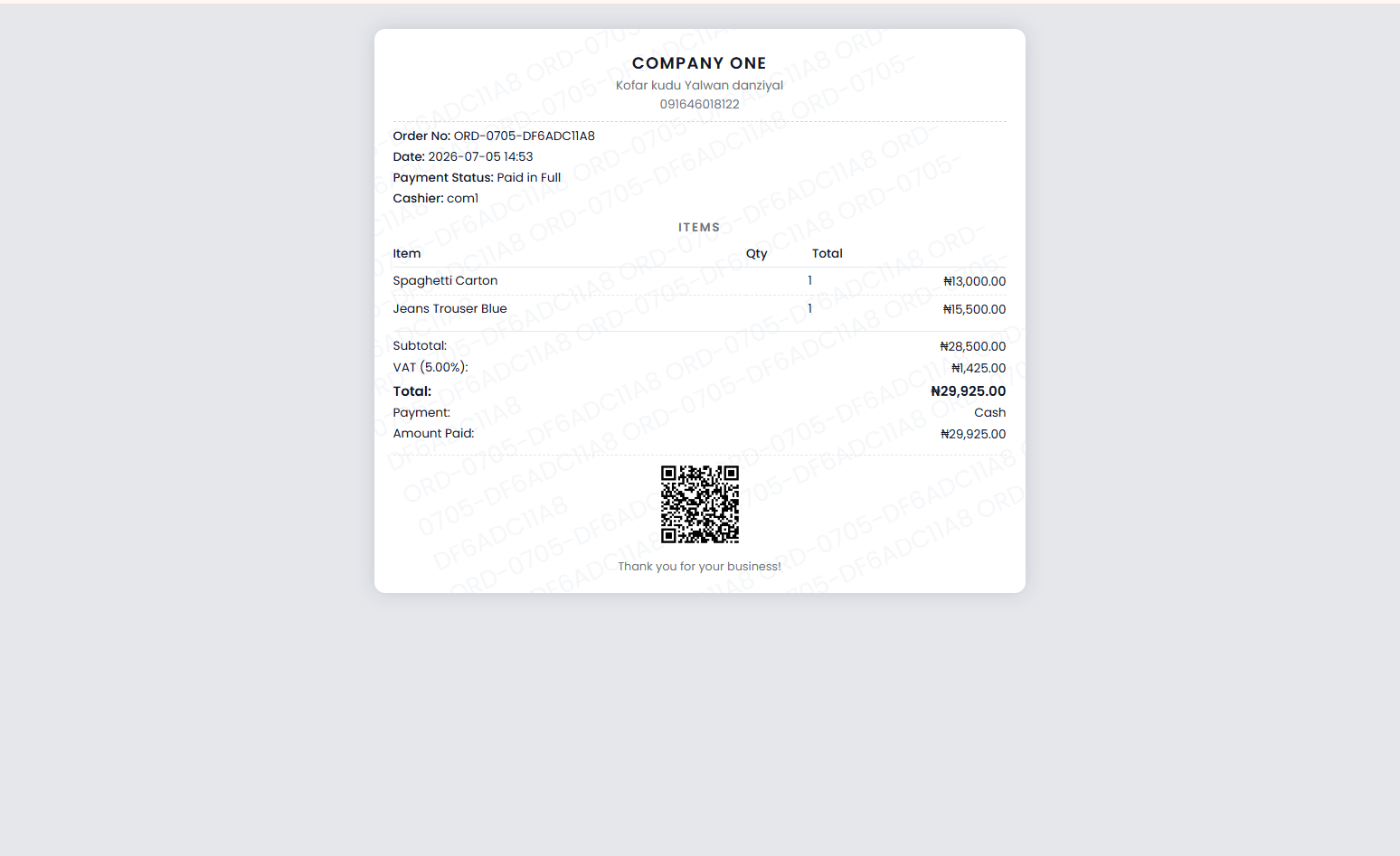 Reciept image sample
SwiftPOS NG: Your Partner in Digital Transformation
This is where a robust POS system like SwiftPOS NG becomes invaluable. Designed specifically for the needs of Nigerian retailers, SwiftPOS NG provides a comprehensive platform that moves beyond just issuing digital receipts to transforming your entire sales and inventory management. With SwiftPOS NG, you can effortlessly generate digital receipts via email or WhatsApp, offering your customers convenience while simultaneously streamlining your operations. This feature is just one component of an integrated system built to enhance efficiency and provide valuable insights.
The platform's intuitive Classic POS interface allows for quick and accurate transaction processing, minimizing customer wait times. Every sale processed, whether paid by cash, bank transfer, or mobile money, is instantly recorded and contributes to your comprehensive sales data. This means no more manual reconciliation at the end of the day, freeing up your staff to focus on customer engagement.
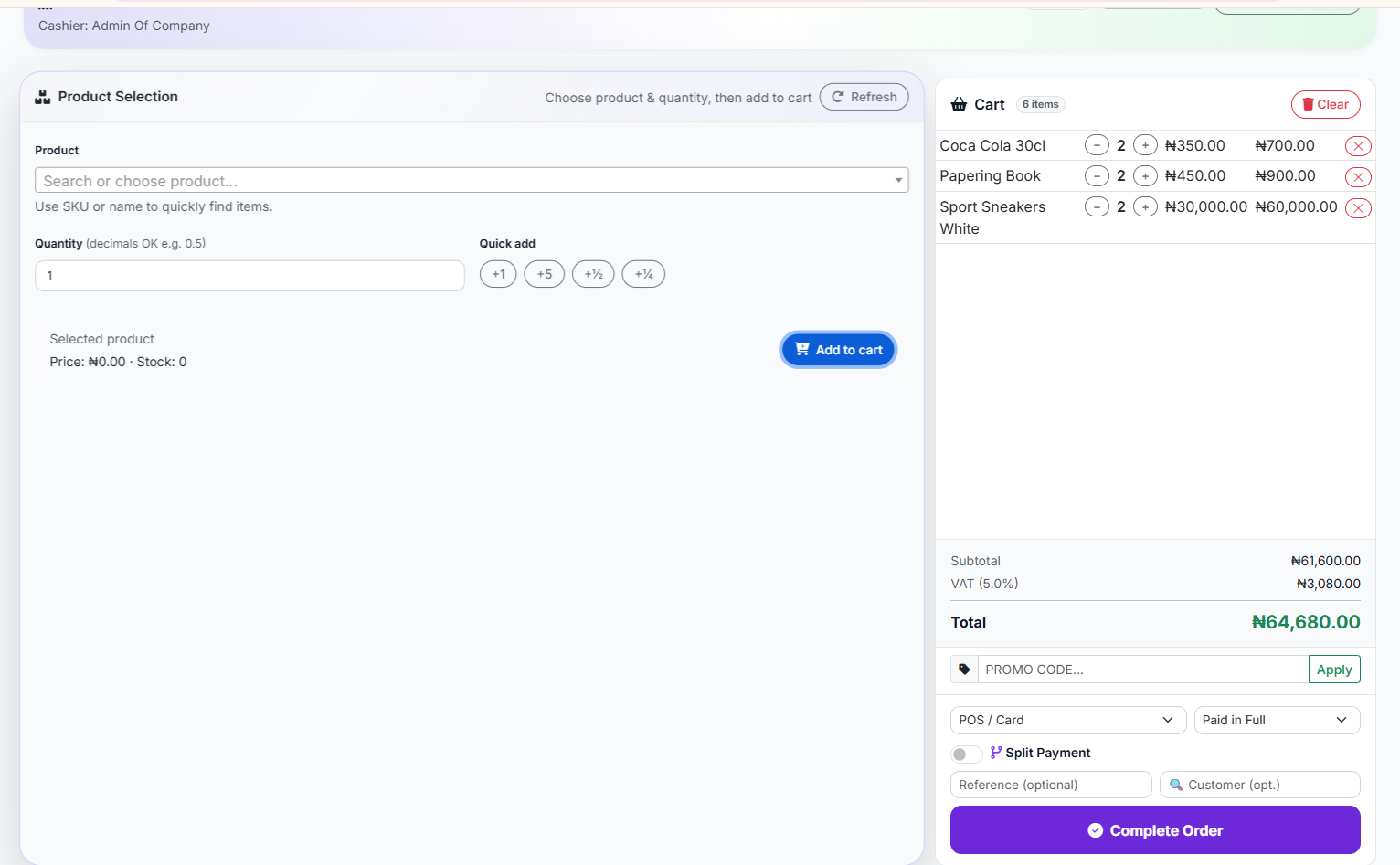 Classic POS Interface (List select)
Beyond simple transactions, SwiftPOS NG offers powerful inventory management features that are intrinsically linked to your sales data. When a product is sold, stock levels are automatically updated, giving you real-time visibility into your inventory. You can track sales by item, identify best-sellers, and even receive automated low-stock alerts, all driven by the digital data collected from your daily transactions. This integrated approach ensures that the benefits of digital receipts extend far beyond just saving paper, providing a holistic view of your business performance.
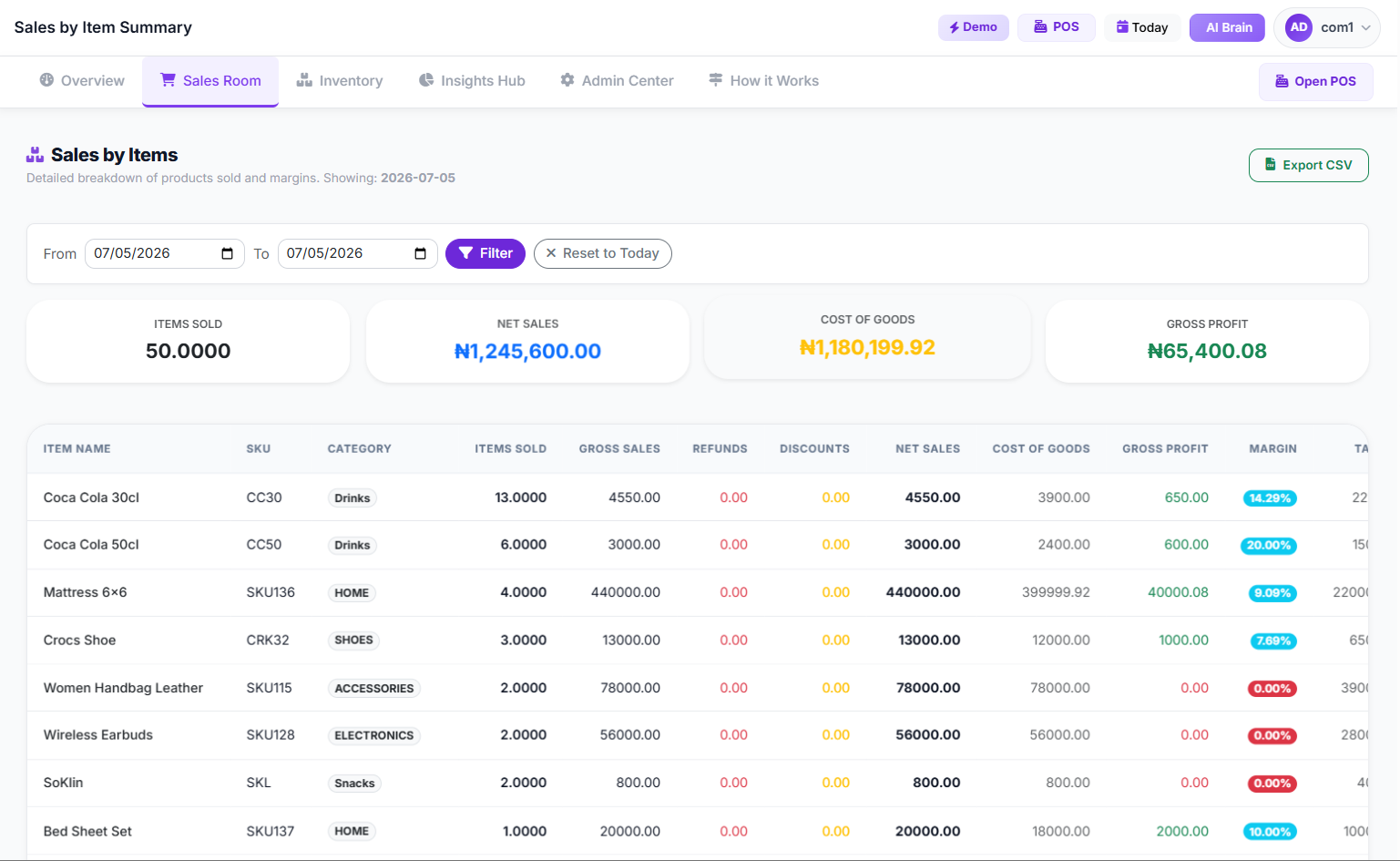 Sales By Item Page
The Smarter Approach: Integrated Digital POS
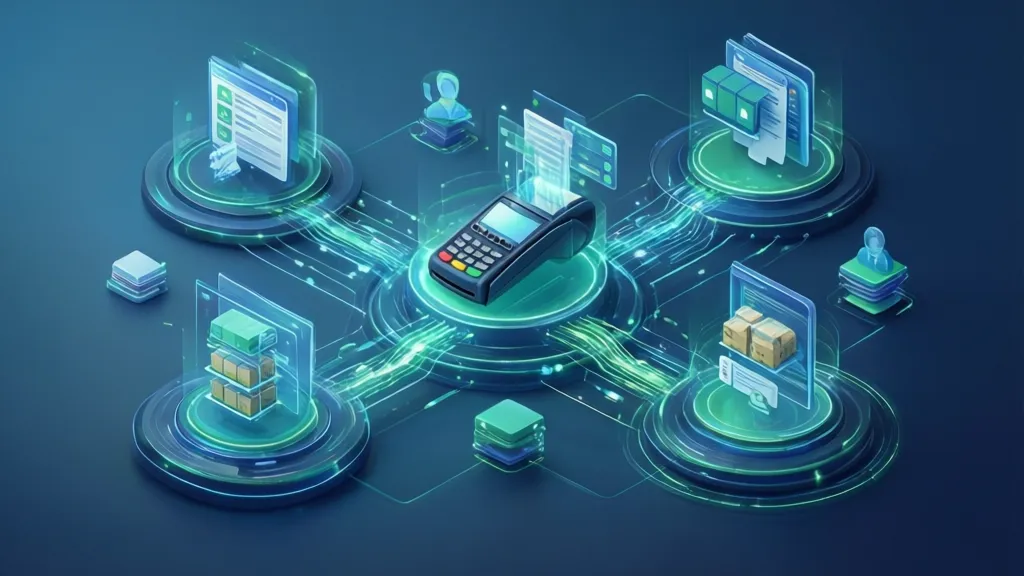
The smarter approach for any retail business in 2026 is to adopt an integrated digital Point-of-Sale (POS) system. This isn't merely about replacing paper with digital files; it's about leveraging technology to create a cohesive ecosystem for your business operations. An integrated digital POS system centralizes all sales, inventory, and customer data, making it easily accessible and actionable.
Instead of disparate systems where sales are recorded on paper, inventory tracked in a notebook, and customer information stored haphazardly, a digital POS unifies everything. When a sale occurs, the system automatically updates inventory, records customer details if applicable, and generates a digital receipt. This automation drastically reduces manual errors, saves time, and provides a single source of truth for all your business data.
Moreover, a modern POS system offers advanced reporting and analytics capabilities. With every digital transaction, valuable data points are captured. This data can then be transformed into insightful reports on sales trends, product performance, and customer behavior. This empowers you to make data-driven decisions, optimize your product offerings, streamline your supply chain, and tailor marketing efforts more effectively. The agility and intelligence gained from an integrated digital POS are crucial for thriving in today's competitive retail landscape.
 Descriptive Alt Text
| Feature / Aspect | Traditional Paper-Based Receipts | Modern Digital POS Receipts (e.g., SwiftPOS NG) |
|---|---|---|
| Receipt Issuance | Manual printing, prone to printer jams/paper shortages | Instant email, SMS, or WhatsApp delivery |
| Cost | Ongoing costs for paper, ink, printer maintenance | Significantly reduced consumable costs, often included in POS subscription |
| Environmental Impact | High paper consumption, contributes to waste | Eco-friendly, zero paper waste |
| Data Capture | Manual data entry required for analysis, prone to errors | Automatic, real-time data capture for every transaction |
| Sales Reporting | Time-consuming manual tallying, limited insights | Automated sales reports, detailed analytics on products, customers, and trends |
| Inventory Management | Manual stock updates, often inaccurate and delayed | Real-time inventory updates, automated low-stock alerts |
| Customer Experience | Slow checkout, lost/faded receipts, difficult returns | Fast checkout, easily accessible digital records, smoother returns |
| Marketing Opportunities | Minimal, requires separate data collection | Direct customer communication, personalized offers based on purchase history |
| Storage | Physical storage space required, fire/water risk | Secure cloud storage, accessible anytime, anywhere |
| Security | Easily lost, sensitive info visible on physical copies | Encrypted data, secure access controls, audit trails |
Frequently Asked Questions
Q1: Is switching to digital receipts complicated for my staff?
A1: Not at all. Modern POS systems are designed for ease of use. Training cashiers to use a digital POS to issue receipts typically takes very little time. The interface is often intuitive, mimicking the familiar process of a physical checkout but with added digital options. Many systems also offer tutorials and support to ensure a smooth transition for your team.
Q2: What if my customers prefer paper receipts or don't have a smartphone/email?
A2: A good digital POS system offers flexibility. While the primary option is digital, many systems can still print a physical receipt on demand for customers who prefer it or require one. This ensures you cater to all customer preferences without compromising your overall digital strategy. The goal is to offer choice, not to eliminate paper entirely overnight.
Q3: How secure are digital receipts and customer data?
A3: Digital receipts and the underlying customer data are generally far more secure than paper records. Modern POS systems use encryption and robust security protocols to protect sensitive information. Cloud-based storage means data is backed up and less susceptible to physical damage or theft compared to paper files. Always choose a reputable POS provider with strong data security practices.
Q4: Can digital receipts help me understand my customers better?
A4: Absolutely. Each digital receipt is linked to a transaction record, and if you capture customer details, it builds a rich profile of their purchasing habits. This data allows you to identify your most loyal customers, understand their preferred products, and tailor marketing campaigns. For example, you can send targeted promotions based on past purchases, significantly boosting customer engagement and sales.
Q5: Will a digital POS system be too expensive for my small business?
A5: Many digital POS solutions, especially SaaS models, are highly scalable and affordable for small and medium-sized businesses. They often operate on a subscription basis, meaning lower upfront costs compared to traditional hardware-heavy systems. The long-term savings from reduced paper costs, improved efficiency, and enhanced data insights often far outweigh the subscription fees. You can explore various pricing plans to find one that fits your budget and business needs.
 Descriptive Alt Text
Ready to transform your retail business with the power of digital? Explore the benefits of a modern POS system and streamline your operations today.
Contact us to learn more or to get started:
WhatsApp: 2349164601810
How to Reduce Supermarket Checkout Lines (Without Hiri…
Sep 24, 2026
How Much Does It Cost to Open a Pharmacy in Nigeria?
Sep 23, 2026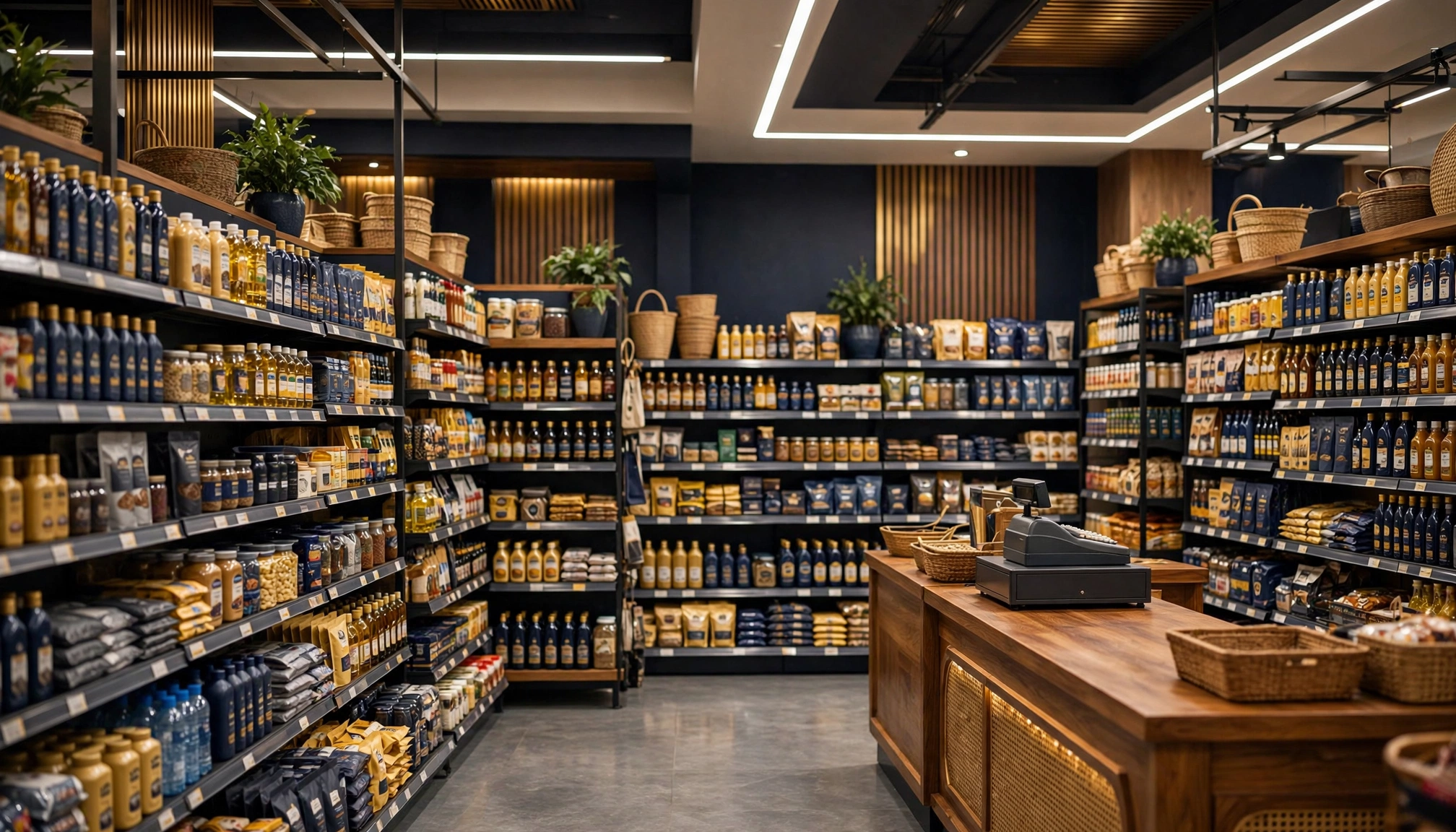
How to Prevent Inventory Shrinkage in Retail: A Comple…
Sep 22, 2026