Retail POS System Checklist: Essential Features for Nigerian Businesses
SwiftPOS Team
Published August 10, 2026
Are you still wrestling with handwritten ledgers, deciphering faded receipts, or struggling with complex spreadsheets to manage your retail business? The constant worry of inaccurate stock counts, missed sales opportunities, and a fuzzy picture of your actual profits can be overwhelming. It's a common frustration for many Nigerian retailers, hindering growth and stealing valuable time.
The Hidden Costs of Outdated Retail Management
The challenges of manual or rudimentary record-keeping extend far beyond simple inconvenience. They directly impact your bottom line and stifle your business's potential. Consider these critical areas:
Inventory Blind Spots Lead to Lost Revenue
Without a robust system, managing inventory becomes a guessing game. You might have shelves overflowing with slow-moving items while your bestsellers are constantly out of stock. This directly translates to lost sales and wasted capital. A 2026 industry report revealed that poor inventory management costs small businesses in emerging markets an average of 10-15% of their annual revenue due to overstocking, stockouts, and shrinkage. Imagine what an extra 10% could do for your business.
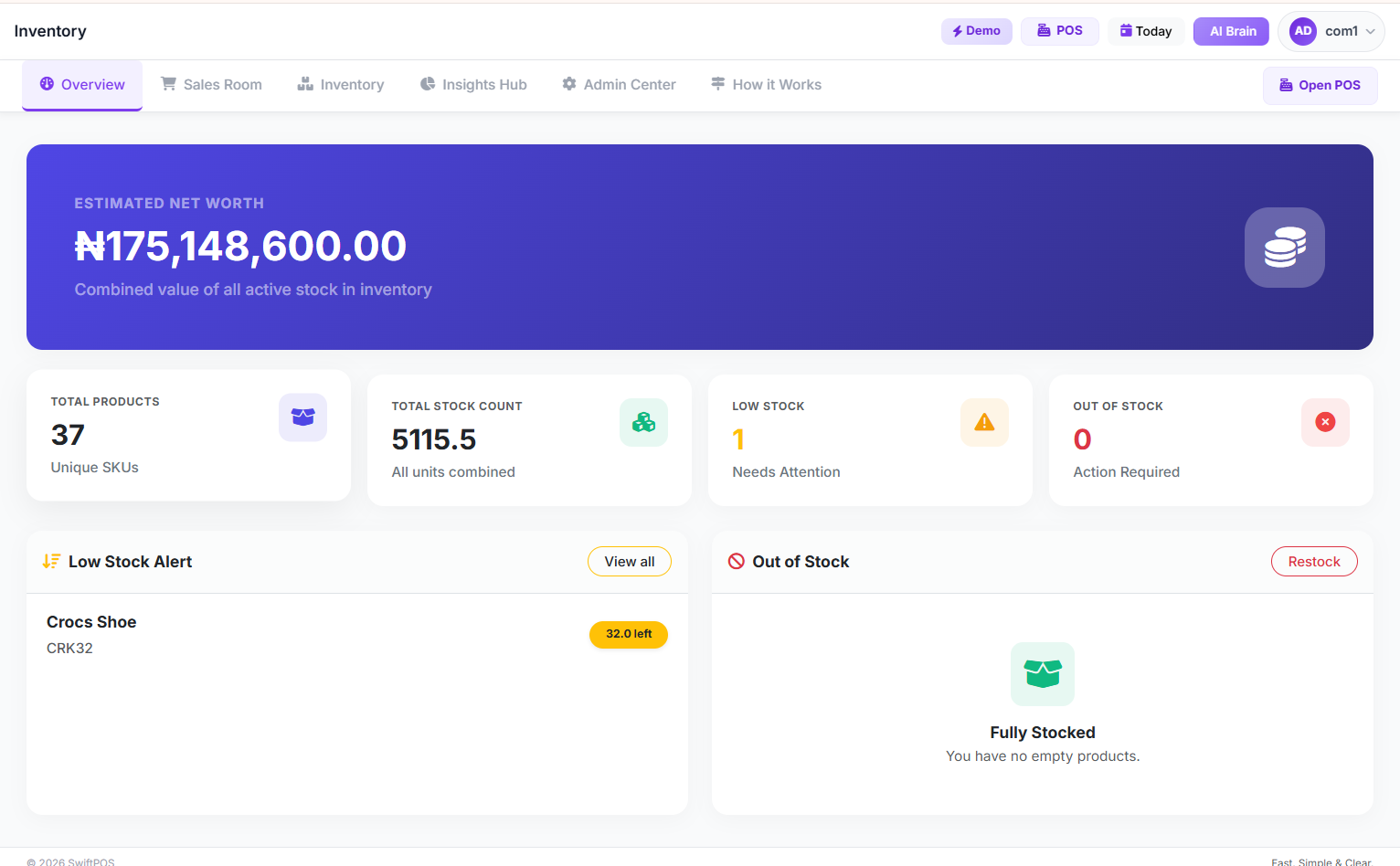
Inventory DashboardFurthermore, the lack of real-time data makes it nearly impossible to identify trends or anticipate demand. Seasonal spikes or sudden shifts in customer preferences can catch you off guard, leaving you scrambling to restock or liquidate excess inventory at a loss. This reactive approach is unsustainable in today's competitive retail landscape.
Inaccurate Sales Data Masks Profitability
Relying on manual sales tracking means you're likely missing crucial insights into your business's performance. How much did you truly sell yesterday? Which products are your top performers? What are your peak sales hours? Without this granular data, making informed decisions about pricing, promotions, and staffing is incredibly difficult.
A recent survey among Nigerian SMEs showed that businesses using manual sales systems often underestimate their operational costs by up to 20%, leading to skewed profit calculations and poor strategic planning. This lack of clarity can severely impact your ability to grow and secure financing.
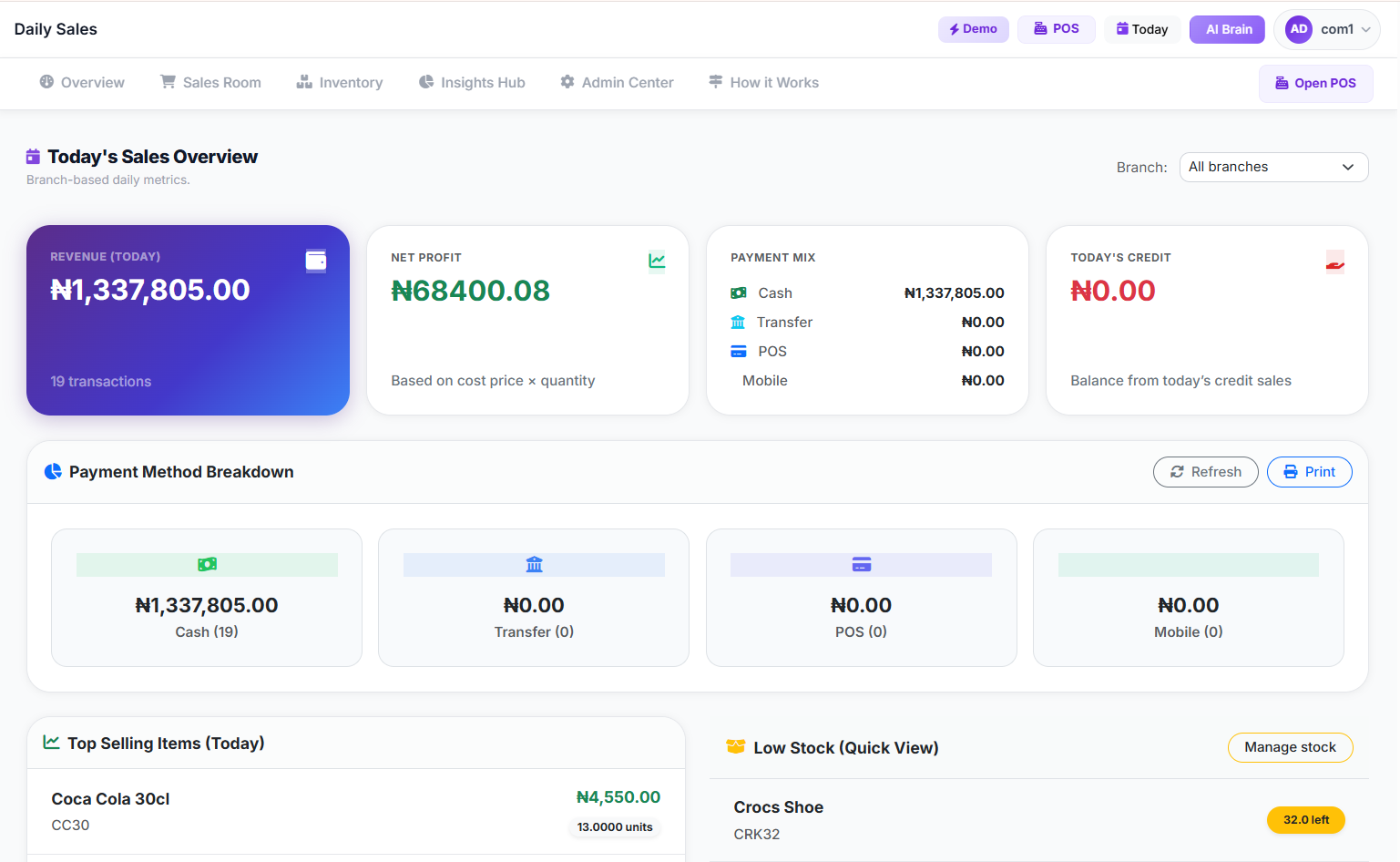 Today's Dashboard
Operational Inefficiencies Drain Time and Resources
Every minute spent manually counting stock, reconciling cash, or preparing reports is a minute not spent serving customers, strategizing for growth, or enjoying your personal life. These inefficiencies create bottlenecks, increase the likelihood of human error, and contribute to employee burnout.
Consider the time your cashiers spend manually calculating change or searching for product prices, or the hours you dedicate each week to compiling sales figures into a basic spreadsheet. This time has a real cost, and it's a cost that modern retail technology is designed to eliminate.
> "In the rapidly evolving retail sector of 2026, efficiency isn't just a goal; it's the bedrock of survival and growth for small and medium-sized enterprises."
 Descriptive Alt Text
Embracing a Smarter Approach: The Integrated POS System
The solution to these pervasive problems lies in adopting an integrated Point-of-Sale (POS) system. This isn't just a cash register; it's a comprehensive business management platform that centralizes your sales, inventory, customer data, and reporting. A modern POS system transforms your operations from reactive to proactive, providing real-time insights and automating tedious tasks.
The core principle is seamless data flow. When a sale is made, the inventory is automatically updated, sales figures are recorded, and customer purchase history is logged. This interconnectedness eliminates manual data entry, reduces errors, and provides a holistic view of your business's health. It empowers you to make data-driven decisions that propel your business forward.
How SwiftPOS NG Elevates Your Retail Operations
SwiftPOS NG is purpose-built to address the unique challenges faced by Nigerian retail businesses, from small supermarkets and pharmacies to boutiques and wholesale distributors. It consolidates all your essential operations into one accessible platform, enabling you to manage your entire retail enterprise from anywhere with an internet connection.
With SwiftPOS NG, you get a powerful POS terminal for quick and accurate sales, robust inventory management to keep track of every item, and in-depth reporting that turns raw data into actionable insights. For instance, the AI Insights Dashboard provides auto-generated insights on sales, inventory, and customers, helping you spot trends and opportunities you might otherwise miss.
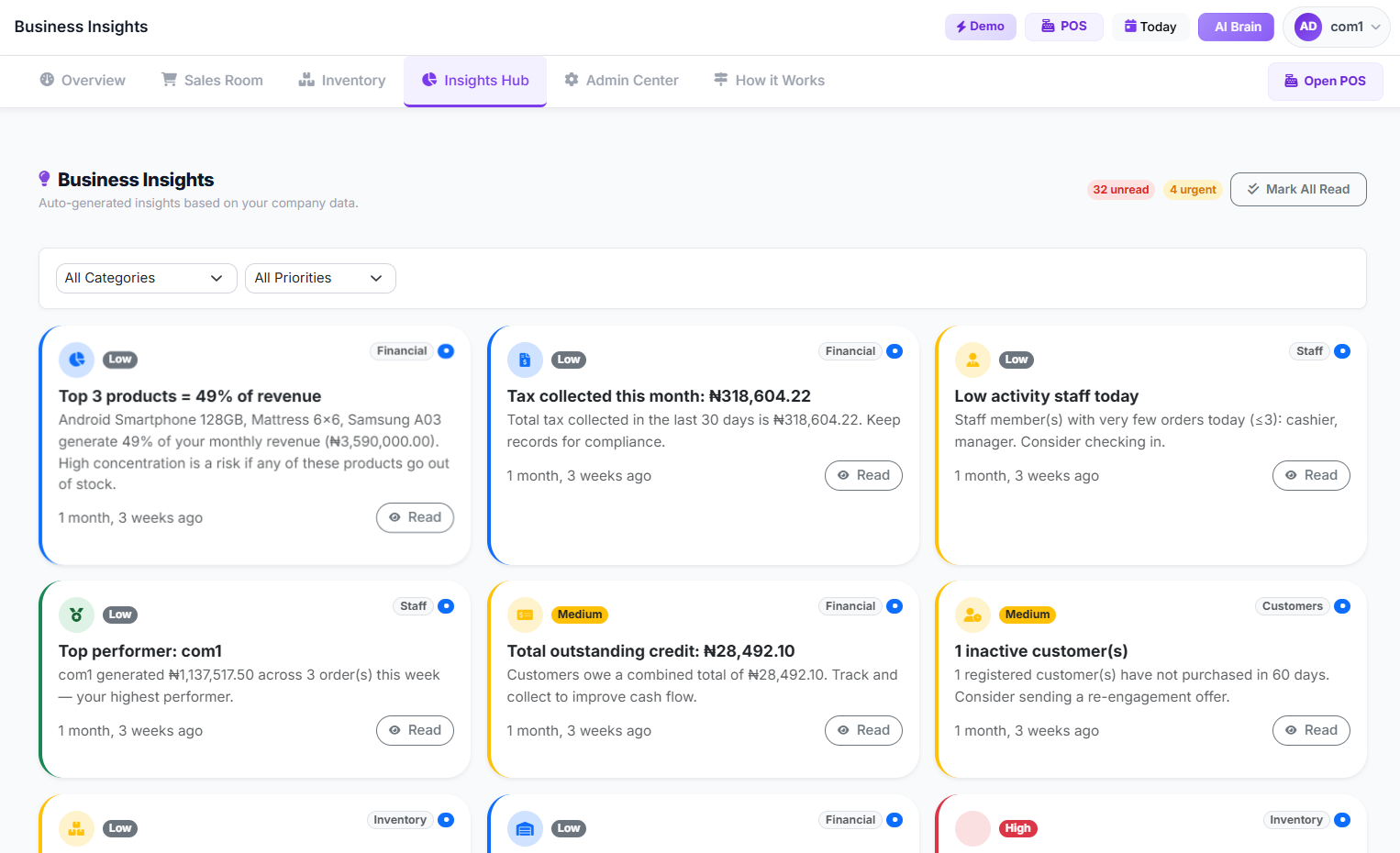 Business Insights Page
The system supports multiple payment methods common in Nigeria, including cash, bank transfers, POS/ATM card, and mobile money, even allowing for split payments to cater to diverse customer needs. Its multi-branch management capabilities mean you can oversee all your locations from a single dashboard, with branch-level stock tracking and reports. You can explore the full range of features designed to streamline your business operations by visiting the comprehensive features page on the SwiftPOS NG website.
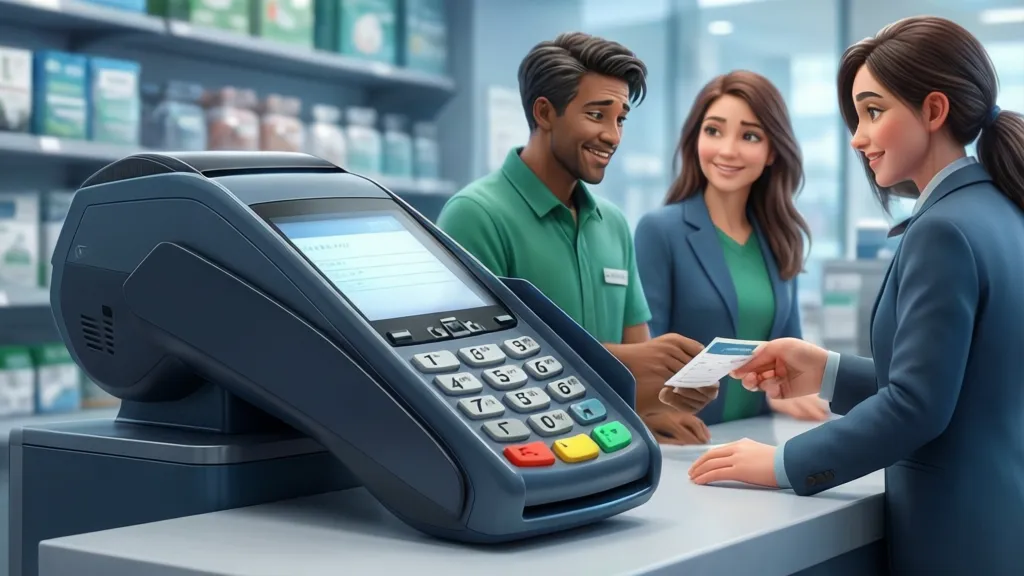 Descriptive Alt Text
Proof: Side-by-Side Comparison
Let's look at how a modern POS system like SwiftPOS NG stacks up against traditional retail management methods:
| Feature | Traditional Methods (Manual/Excel) | Modern POS System (e.g., SwiftPOS NG) |
|---|---|---|
| Sales Processing | Manual calculations, slow, prone to errors, no digital record | Fast, accurate, automated calculations, digital receipts, multiple payment options |
| Inventory Tracking | Periodic physical counts, estimated stock levels, frequent stockouts/overstocks | Real-time updates, automated low-stock alerts, detailed stock history, barcode scanning |
| Reporting & Analytics | Time-consuming manual compilation, basic sales totals, no profit/loss insights | Instant, detailed reports (sales by item, P&L), AI-powered insights, staff performance |
| Customer Management | Limited or no customer data, no purchase history | Centralized customer profiles, purchase history, credit tracking, personalized service |
| Multi-Branch Support | Disconnected operations, difficult reconciliation, no unified view | Centralized management, branch-level stock & sales, unified reporting |
| Security & Oversight | High risk of theft/fraud, difficult to audit | Audit logs, staff permissions, suspicious activity detection, PIN verification |
| Time Efficiency | Significant time spent on administrative tasks | Automated processes, more time for customer service and growth |
| Accessibility | Limited to physical location or specific computer | Web-based, accessible from any device, anywhere, anytime |
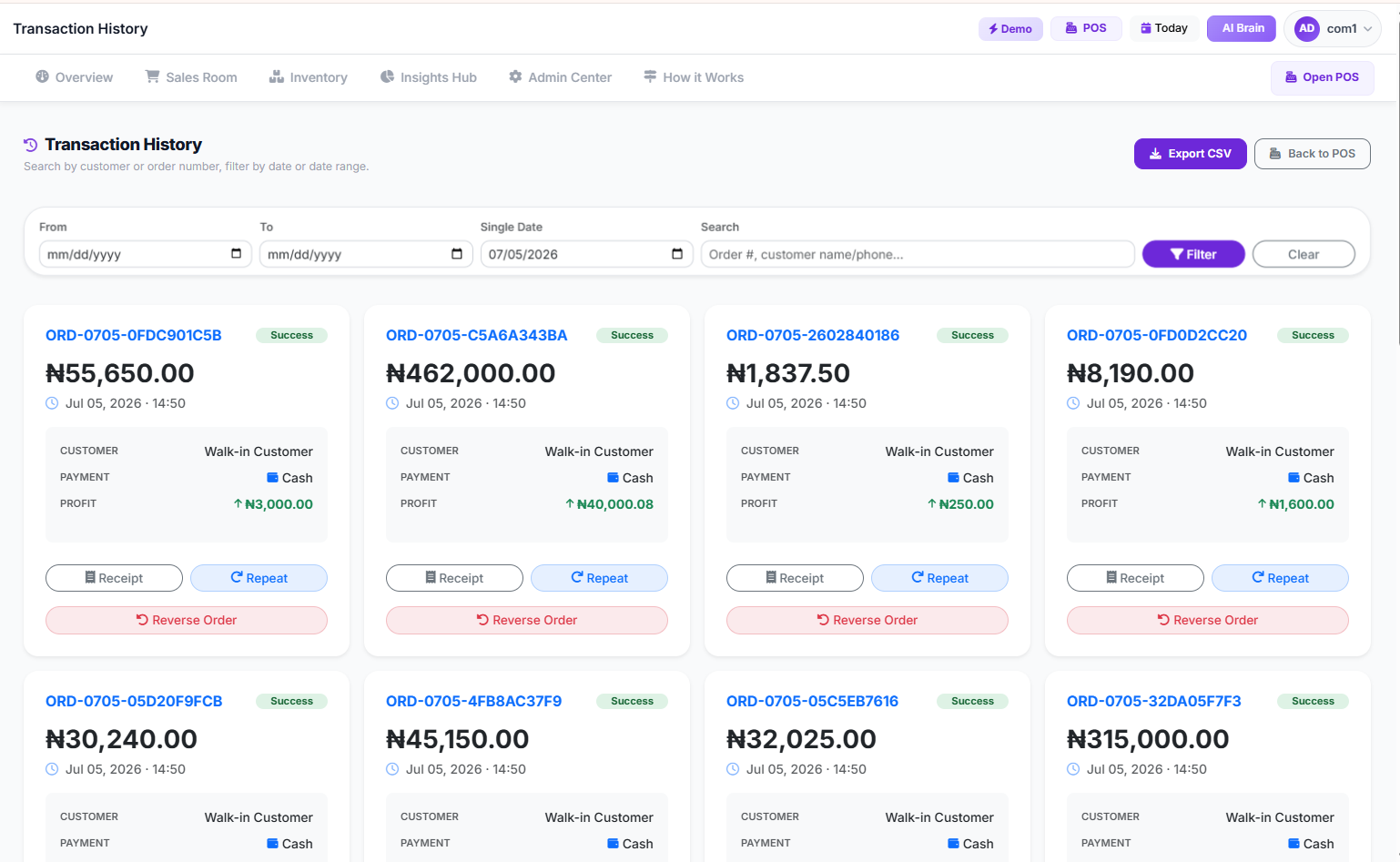 ALL Transaction History Page
Key Features to Look for in a Retail POS System
When evaluating a POS system for your Nigerian business, ensure it offers these essential capabilities:
1. Intuitive Point-of-Sale (POS) Interface
Your POS terminal should be fast, easy to use, and minimize training time for your staff. Look for features like:
- Quick Product Selection: Whether it's a list-style interface or a smart grid for faster tap-to-buy, speed matters.
- Barcode Scanning: Support for USB or camera barcode scanners significantly speeds up checkout.
- Multiple Payment Options: The ability to accept cash, bank transfers, card payments (POS/ATM), mobile money, and even split payments is crucial for the Nigerian market.
- Discounts and Promo Codes: Easily apply percentage or fixed discounts and validate promotional codes.
- Offline Mode Support: Crucial for areas with unreliable internet, allowing sales to continue and sync later.
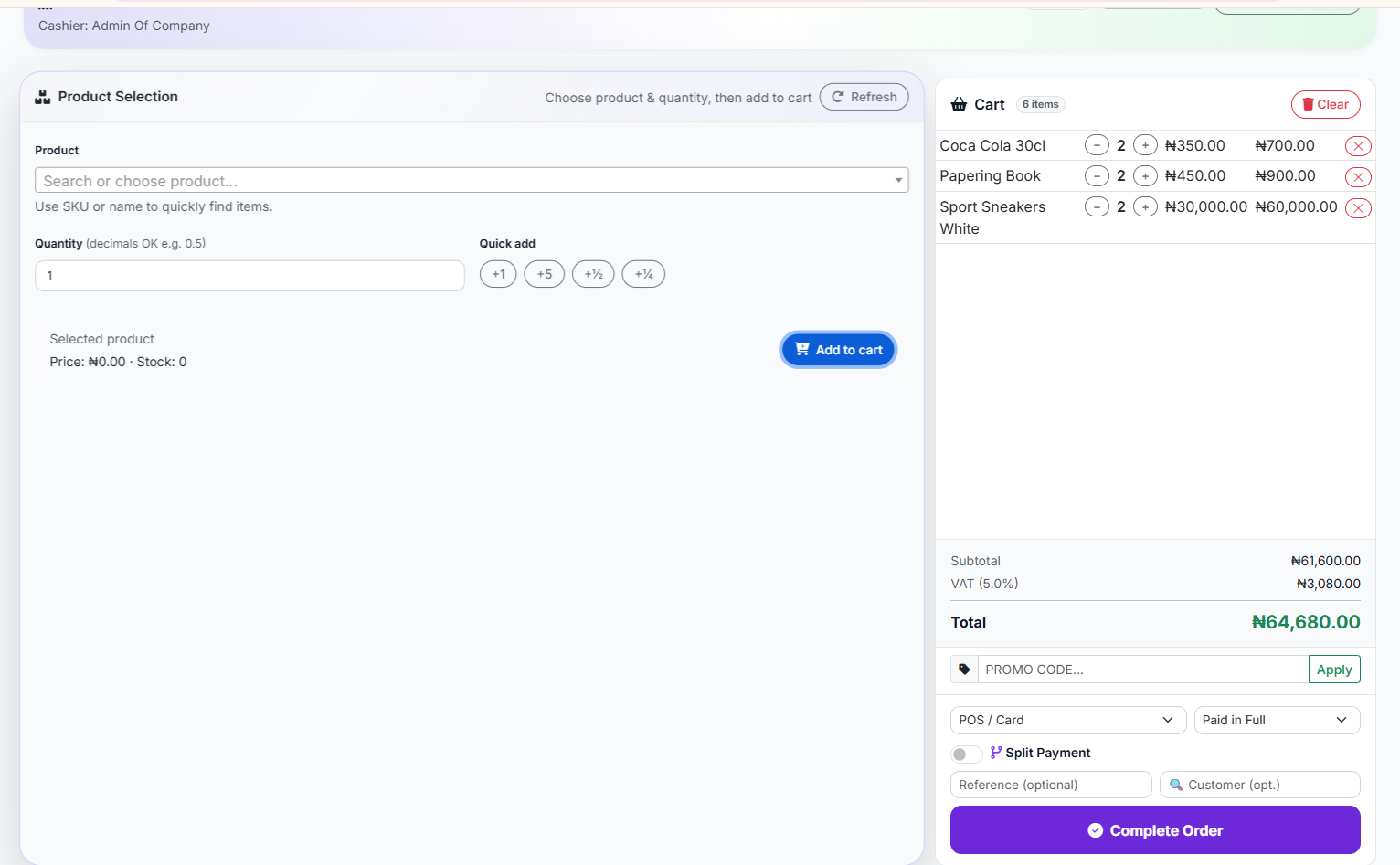 Classic POS Interface (List select)
2. Comprehensive Inventory Management
Accurate inventory is the backbone of a profitable retail business. Your POS should provide:
- Detailed Product Management: Track name, SKU, barcode, category, price, cost, stock levels, minimum stock alerts, and expiry dates.
- Product Variants and Bundles: Manage different sizes, colors, or bundled product kits with independent stock tracking.
- Stock Adjustments: Easily record restocks, reductions, damage, or returns with clear logging.
- Barcode Generation: The ability to generate and print barcodes for your products.
- Supplier Management and Purchase Orders: Streamline ordering, track supplier balances, and auto-update stock upon receipt of goods.
- Bulk Import/Export: Efficiently manage large product catalogs through Excel import/export.
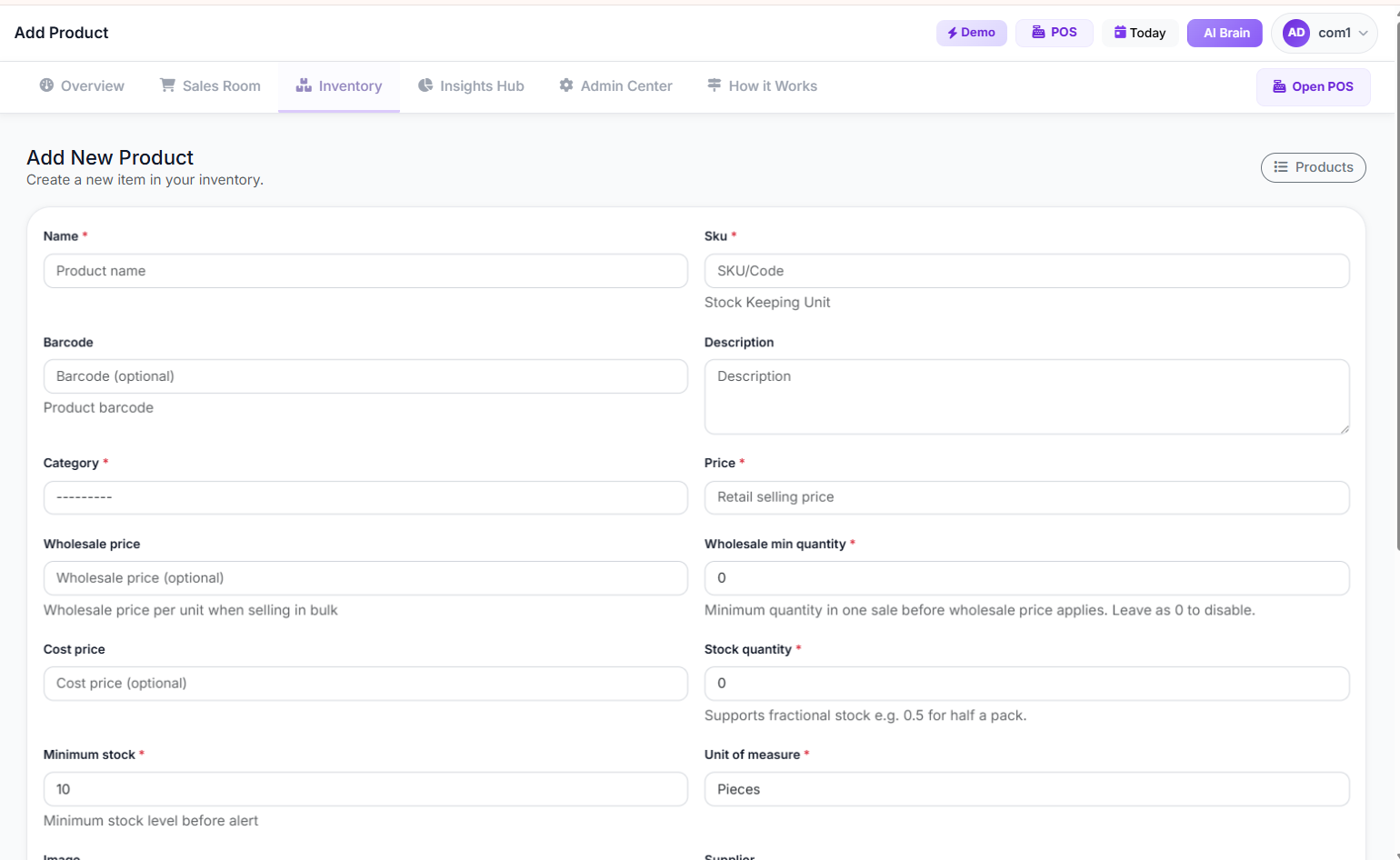 Add/Edit Product Page
3. Robust Sales and Financial Reporting
Beyond just recording sales, a good POS system should offer insightful reports:
- Daily Sales Dashboard: A quick overview of revenue, transactions, and top products.
- Profit and Loss (P&L) Report: Essential for understanding your true profitability by tracking revenue, cost of goods sold, and operating expenses.
- Sales by Item/Category: Identify your best and worst sellers to optimize purchasing.
- Staff Performance Tracking: Monitor individual cashier performance to identify training needs or reward top performers.
- End-of-Day Reconciliation: Simplify cash-up procedures by comparing physical cash to system records.
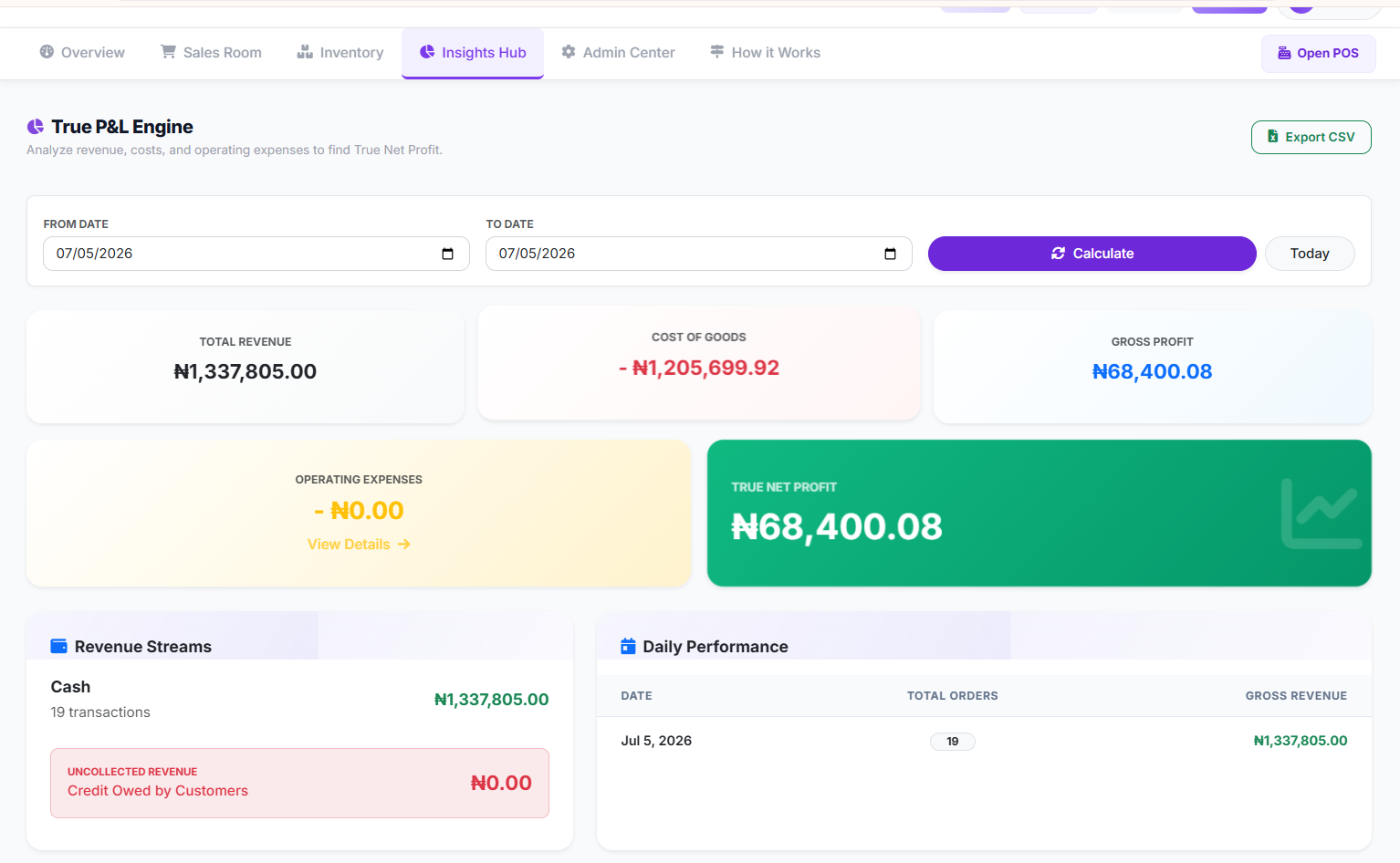 Profit and Loss Page
4. Smart Customer Relationship Management (CRM)
Understanding your customers helps you serve them better and build loyalty:
- Customer Registry: Maintain profiles with contact info, notes, and specific pricing if applicable.
- Purchase History: Track what each customer buys, enabling personalized recommendations.
- Credit Sales Management: Easily manage and track outstanding balances for customers who purchase on credit.
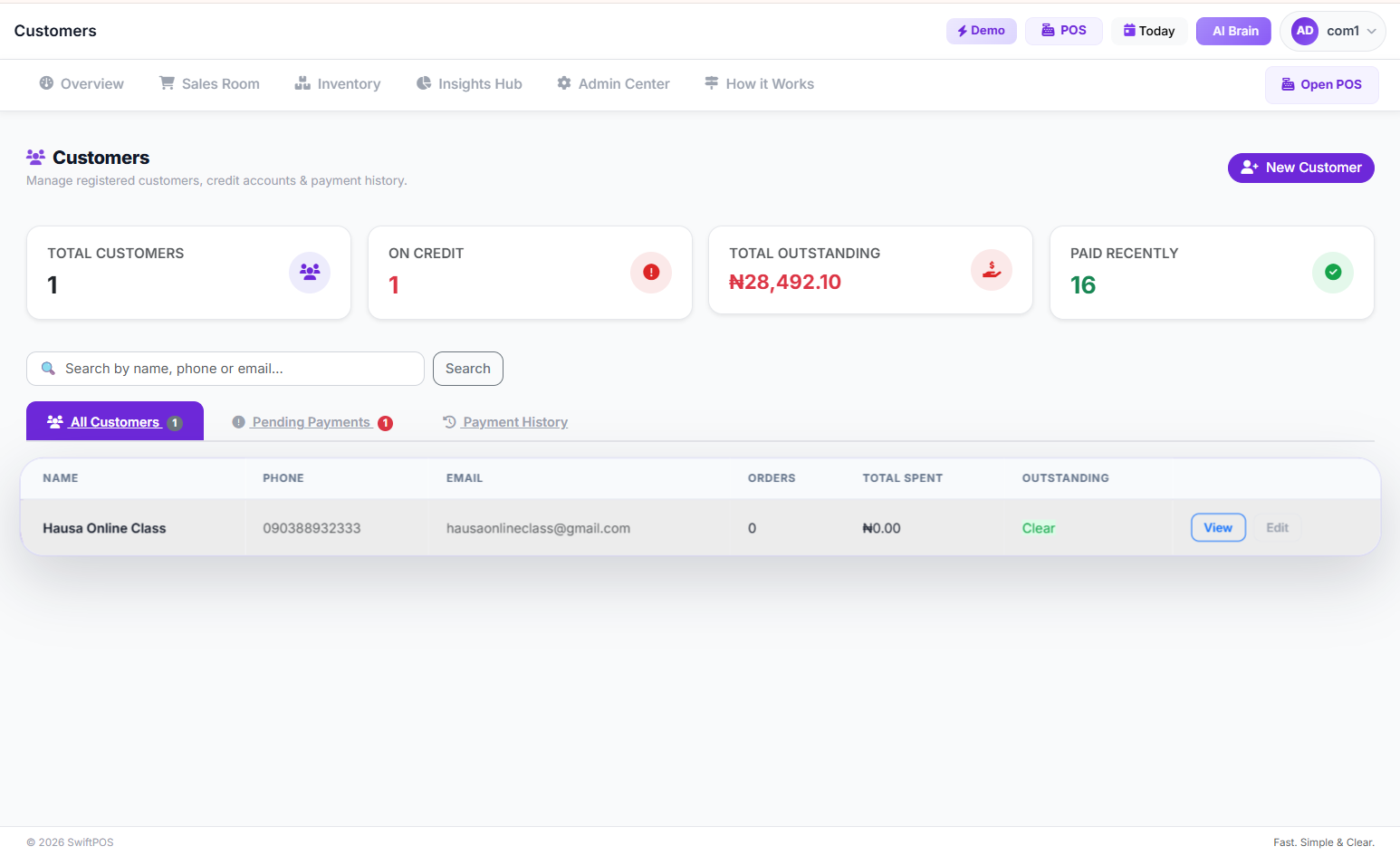 Customers List Directory
5. Multi-Branch and User Management
If you have multiple locations or a team, these features are critical:
- Branch Setup: Easily add and manage multiple retail branches.
- Branch-Level Stock: Track inventory unique to each branch while maintaining a global overview.
- User Roles and Permissions: Assign specific roles (cashier, manager, admin) with granular access controls to different features, ensuring security and accountability.
- Audit Log: Keep a detailed record of all user actions for transparency and security.
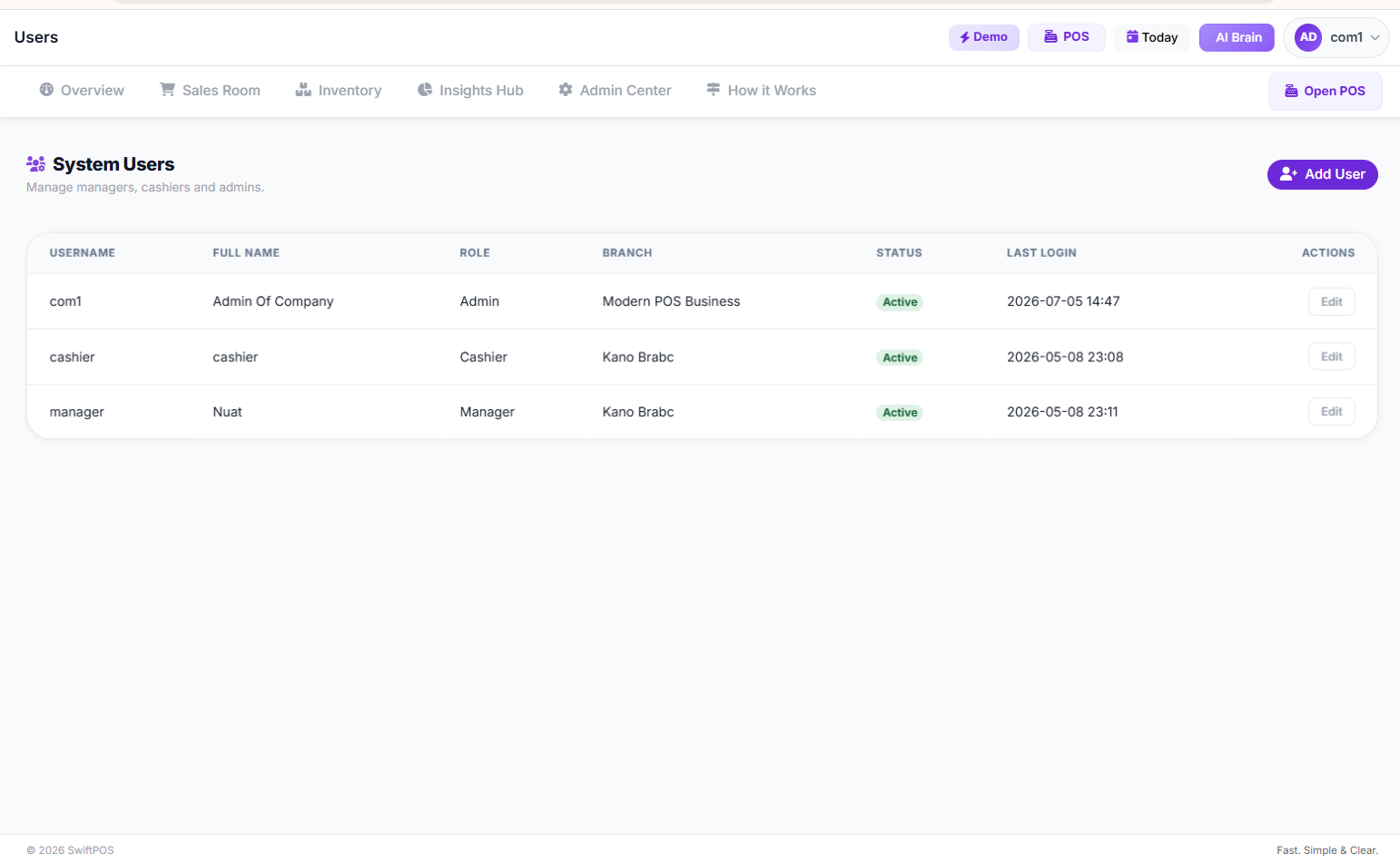 Staff Users Managemnet Page
6. AI-Powered Insights and Forecasting
Leverage technology to predict and optimize:
- AI Insights Dashboard: Get automated, actionable recommendations based on your sales and inventory data.
- Stock Forecast: Predict future stock needs based on average daily sales, helping you avoid stockouts and overstocking.
- Business AI Chat: A conversational AI assistant that can answer questions about your business data.
 Descriptive Alt Text
7. Security and Reliability
Protecting your business data and transactions is paramount:
- Secure Access: Features like two-factor authentication (2FA) for staff and strong password policies.
- Data Backup: Cloud-based systems inherently offer better data security and backup than local files.
- Audit Trails: A comprehensive record of all activities within the system.
Frequently Asked Questions
Q1: How much does a good retail POS system cost in Nigeria?
A1: The cost of a retail POS system in Nigeria can vary widely based on features, vendor, and subscription model. Basic systems might start from a few thousand Naira per month, while more comprehensive solutions with advanced analytics, multi-branch support, and AI features can range higher. Many providers, including SwiftPOS NG, offer different subscription tiers to suit various business sizes and budgets. It's important to compare the features offered against the price to ensure you're getting value for your investment.
Q2: Can a POS system help with managing multiple branches?
A2: Absolutely. One of the most significant advantages of a modern POS system is its ability to centralize multi-branch management. Look for systems that offer features like branch-level stock tracking, consolidated reporting across all locations, and the ability to manage staff and products for each branch from a single dashboard. This provides a unified view of your entire operation, simplifying oversight and inventory transfers between locations.
Q3: Is it difficult to train staff to use a new POS system?
A3: Most modern POS systems are designed with user-friendliness in mind, featuring intuitive interfaces that minimize the learning curve. Look for systems that offer clear navigation, visual product selection (like a grid POS), and comprehensive tutorials or customer support. SwiftPOS NG, for example, provides tutorials to help you and your staff get started quickly. The ease of use is a critical factor in ensuring smooth adoption and maximizing the benefits of the system.
Q4: What if my internet connection is unreliable? Can I still process sales?
A4: This is a crucial consideration for businesses in Nigeria. Many advanced POS systems offer an "offline mode" capability. This means that if your internet connection drops, your staff can continue to process sales, and the system will automatically sync all transactions once connectivity is restored. This ensures business continuity and prevents lost sales due to network issues. Always confirm this feature when evaluating POS options.
Q5: How can a POS system help me prevent theft or fraud in my store?
A5: A robust POS system includes several security features to mitigate theft and fraud. These often include:
- User Role Permissions: Granular controls that restrict staff access to only the functions necessary for their role (e.g., cashiers cannot access financial reports or make stock adjustments without authorization).
- Audit Logs: A detailed record of every action performed within the system, including who did what, when, and from where.
- Suspicious Activity Detection: Automated flagging of unusual transactions, such as excessive voids, discounts, or refunds, for review.
- PIN Verification: Requiring a manager's PIN for sensitive operations like refunds or price overrides.
Ready to transform your retail business with intelligent, integrated management? Get started with SwiftPOS NG today by signing up for an account at https://app.swiftpos.ng/.
Contact Details: 2349164601810

How Much Does It Cost to Open a Pharmacy in Nigeria?
Sep 23, 2026
How to Prevent Inventory Shrinkage in Retail: A Comple…
Sep 22, 2026
Assisted Self-Checkout for Retailers: How It Works & W…
Sep 20, 2026