Gross Profit vs. Net Profit: A Small Business Guide

You are probably making less money than you think you are. Most small business owners in Nigeria, especially those running retail shops, focus so much on sales that they completely miss the real picture of their finances. This is where understanding Gross Profit vs. Net Profit: A Small Business Guide becomes not just useful, but absolutely essential for your survival in 2026.
A small business owner in lagos reviewing financialI've seen it time and again, from my 12 years managing retail shops before I started consulting: a shop owner in Balogun Market, let's call her Mama Nkechi, is boasting about her high daily sales, maybe ₦300,000 on a good day. She feels rich, you know? But when we sit down and look at her books – or rather, her stack of notebooks and loose receipts – she's barely breaking even. In fact, some months, after paying for everything, she’s actually running at a loss. The problem? She only understood her gross profit, not her net profit.
The Honest Breakdown: What This Actually Costs
Let's be direct. Running a small retail business in Nigeria in 2026 is tough. The costs are real, and they add up quickly. You need to know these numbers cold if you want to stay afloat, let alone grow. This isn't just theory; these are the figures I see my clients grappling with every single month.
1. Cost of Goods Sold (COGS): This is the direct cost of the products you sell. If you buy a carton of soft drinks for ₦3,000 and sell each bottle for ₦300, the ₦3,000 is your COGS for that carton. This is usually your biggest expense.
- Monthly Range: ₦150,000 (for a small provisions stand) to ₦800,000 (for a mid-sized fashion boutique in Ikeja City Mall).
- Monthly Equivalent: ₦7,000 (for a kiosk in a rural town) to ₦170,000 (for a decent shop in a busy Lagos market like Computer Village). That's a huge difference, so you need to pick your spot wisely.
- Monthly Range: ₦40,000 (smaller towns) to ₦80,000 (Lagos or Abuja). If you have more than one staff, multiply that.
- Monthly Range: ₦10,000 (minimal power needs) to ₦70,000 (if you're running heavy appliances or a big generator for long hours).
- Monthly Range: ₦5,000 to ₦50,000 (depending on distance, volume, and if you have a dedicated delivery person or vehicle).
- Monthly Range: ₦2,000 to ₦25,000 (for basic social media ads, local flyers, or market association fees).
- Monthly Range: ₦3,000 to ₦20,000. Don't ever forget this line item; it's where many people get caught off guard.
- One-time: ₦15,000 to ₦30,000 for a sole proprietorship.
The Income Side: What You Can Realistically Earn
Now, let's talk about money coming in. Your monthly revenue is the total amount of money your business brings in from sales before any expenses are deducted.
- Monthly Revenue Range: ₦200,000 (for a roadside food vendor) to ₦1,500,000 (for a busy salon or a thriving mini-mart in a good location).
Formula: Gross Profit = Total Revenue - Cost of Goods Sold (COGS)
Let's say your small electronics shop in Aba sells ₦800,000 worth of phones and accessories in a month. If the cost of buying those items from the wholesalers was ₦500,000, then your gross profit is ₦300,000.
Gross Profit Margin % = (Gross Profit / Total Revenue) * 100
In this example, (₦300,000 / ₦800,000) * 100 = 37.5%. That's a decent gross margin for a retail business.
- Typical Gross Profit Margin: 20% (for fast-moving consumer goods like drinks) to 50% (for specialized services or unique fashion items).
This is where the distinction between gross profit vs. net profit becomes absolutely critical.
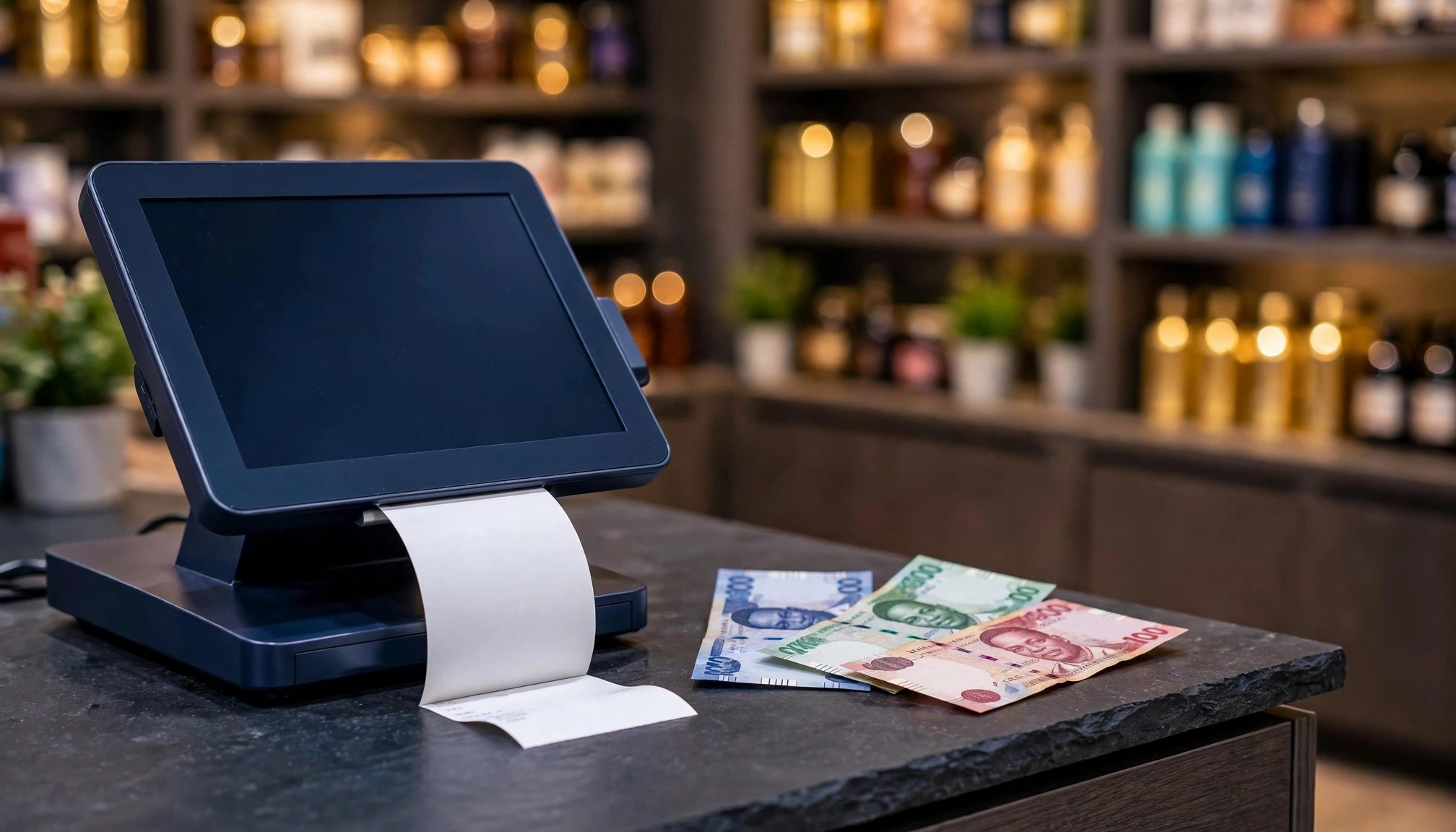 A cashier at a busy mini mart in
The Hidden Costs Nobody Mentions
Beyond the obvious expenses, there are other costs that silently eat into your business profit. These are the ones that don't always appear on a neat ledger, especially if you're still using paper and pen.
1. Inventory Shrinkage: This is a fancy term for lost or stolen goods. It could be due to shoplifting, staff theft, damage, or simply miscounting. If you're running a provision store in Surulere, and you lose ₦15,000 worth of goods every month to "missing items," that's a direct hit to your bottom line that you might not even be tracking. This is a huge factor in your real net profit.
2. Opportunity Cost of Manual Operations: Time is money, abi? If you're spending hours each week manually tallying sales, checking stock, and trying to balance your books in an Excel sheet, that's time you could have spent strategizing, finding new suppliers, or engaging customers. The lost potential from not having efficient systems is a real, though invisible, cost. I've seen business owners in Kano spend half their day just trying to figure out what they sold the day before. That's money walking away. This is one of the biggest hidden costs of manual retail operations in Nigeria.
3. Unplanned Repairs and Maintenance: Your fridge breaks down. The signboard falls. A pipe bursts. These things happen. And they always seem to happen at the worst possible time. Having a small emergency fund, or at least accounting for these "surprises," is vital.
4. Seasonality and Market Fluctuations: Some months are better than others. During festive periods, sales might boom. But what about the lean months? If you don't account for these dips, your average monthly profit could be misleading. The cost of holding excess inventory during slow seasons, or losing sales because you're understocked during peak times, affects your overall business profit.
5. The Cost of Bad Data: If your records are messy, you can't make smart decisions. You might order too much of a slow-moving item, tying up capital, or run out of a popular product, losing sales. This poor inventory management directly impacts your net profit. Imagine a pharmacy on Ago-Palace Way running out of a common painkiller because they didn't track sales properly. That's lost revenue, lost customer trust, and a hit to their business profit.
How Successful Nigerian Business Owners Control These Numbers
So, how do you move from just knowing your gross profit to truly understanding and improving your net profit? It comes down to control, visibility, and smart tools.
1. Track Everything, Religiously: You need to know every single naira that comes in and every single naira that goes out. Not just sales, but rent, transport, electricity, even that small daily expense for sachet water. This is the foundation of good retail accounting.
- Action: Implement a system for tracking all sales, expenses, and inventory movements. Forget the paper notebooks; they are costing you more than you think. You need a centralized system that records every transaction.
3. Categorize Your Expenses: Group your expenses. Is it staff-related? Utility? Marketing? When you see exactly where your money is going, you can identify areas to cut back or optimize.
- Action: Create clear expense categories. A good system will help you do this automatically.
- Action: Use an inventory management system. This is non-negotiable for serious growth.
For example, SwiftPOS NG can automatically record your operating expenses and include them in your profit calculations. You can input your rent, staff salaries, generator fuel costs (all those things that eat into your gross profit), and it will present you with your actual net profit. This kind of clarity is priceless.
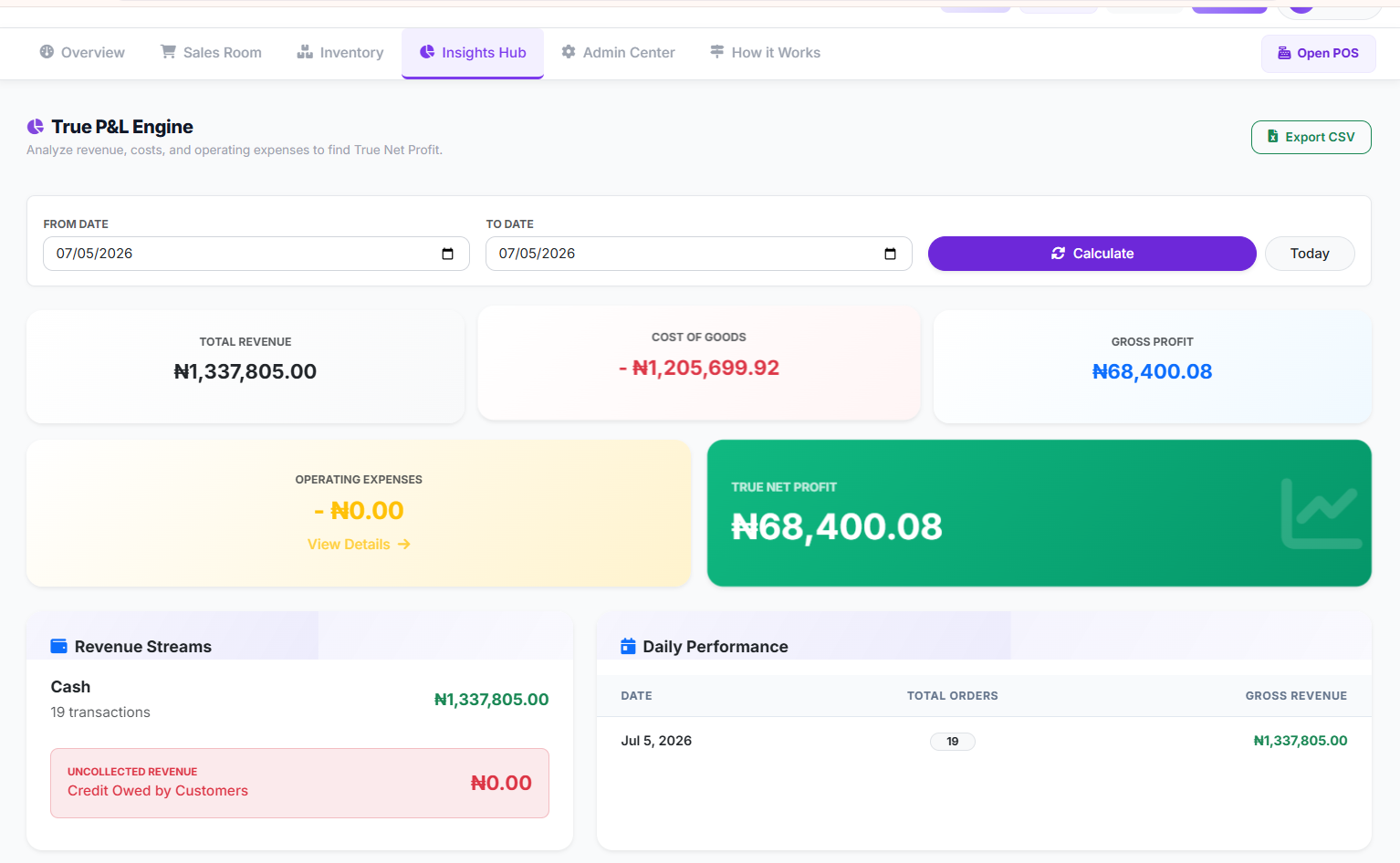 SwiftPOS Profit and Loss Page showing detailed financial reports
This is what financial clarity looks like: your real Profit and Loss statement in SwiftPOS NG.
Real Comparison: Manual vs. Systemized Operations
Let's look at a typical month for two identical provision stores in Ibadan, both with a monthly revenue of ₦600,000. One uses manual methods (notebooks, basic Excel), the other uses a system like SwiftPOS NG.
| Expense Category | Manual Operations (Estimated Monthly Cost) | Systemized Operations (Estimated Monthly Cost) |
|---|---|---|
| Revenue | ₦600,000 | ₦600,000 |
| Cost of Goods Sold (COGS) | ₦380,000 | ₦380,000 |
| Gross Profit | ₦220,000 | ₦220,000 |
| Operating Expenses | ||
| Shop Rent (Monthly) | ₦40,000 | ₦40,000 |
| Staff Salary (1 person) | ₦55,000 | ₦55,000 |
| Electricity/Fuel | ₦35,000 | ₦30,000 (Slightly reduced due to efficient tracking) |
| Transportation/Logistics | ₦15,000 | ₦10,000 (Optimized sourcing with data) |
| Marketing (basic) | ₦5,000 | ₦5,000 |
| Miscellaneous | ₦12,000 | ₦8,000 (Fewer unexpected costs with better planning) |
| Inventory Shrinkage | ₦10,000 (Untracked losses) | ₦2,000 (Reduced with proper inventory control) |
| Cost of Lost Sales (due to stockouts) | ₦8,000 (Estimated) | ₦2,000 (Reduced with stock forecasting) |
| Total Operating Expenses | ₦180,000 | ₦152,000 |
| Net Profit | ₦40,000 | ₦68,000 |
| Net Profit Margin | 6.67% | 11.33% |
Look at that difference! Almost double the net profit simply by moving from chaotic manual processes to a systemized approach. The systemized store is making an extra ₦28,000 every month! That's ₦336,000 annually, just from being smarter about how they manage their business. This isn't magic; it's the power of accurate retail accounting and proactive management. It's the difference between merely surviving and actually thriving.
<blockquote style="background-color: #f9f9f9; border-left: 5px solid #ffcc00; padding: 15px; margin: 15px 0;">
"Sales are vanity, profit is sanity, cash is reality."
</blockquote>
This old business adage hits different when you realize how much money you might be leaving on the table.
Frequently Asked Financial Questions
I get a lot of questions from business owners about their money. Let's tackle some common ones, especially around gross profit vs. net profit and general business profit.
1. What's a good net profit margin for a small retail business in Nigeria?
Honestly, it varies a lot. For small retail, anything from 5% to 25% is generally considered healthy. If you're consistently below 5%, you need to re-evaluate your pricing, costs, or sales strategy. Fast-moving consumer goods often have lower margins, while specialized products or services can command higher ones. The key is to know your numbers and strive for continuous improvement.
2. How often should I check my gross profit and net profit?
Ideally, you should be able to see your gross profit daily (after sales) and your net profit at least monthly. With a good POS and business management system, you can see these figures in real-time or at the click of a button. Manual tracking makes this difficult, but with tools like SwiftPOS NG, you can easily access your
profit and loss page3. My sales are high, but my bank account is always low. What am I doing wrong?
This is the classic sign that you're confusing gross profit with actual cash in hand. High sales mean good gross profit, but if your operating expenses are too high, or you have too much money tied up in unsold inventory or customer credit, your net profit will suffer, and your cash flow will be tight. You need to scrutinize your expenses and improve your cash collection from credit customers. This is also why understanding your 7 Revenue Leaks is so important.
4. Is it better to focus on increasing sales or cutting costs to improve net profit?
Both are important, but often, cutting costs is faster and more directly impactful, especially for a small business. A ₦10,000 reduction in unnecessary expenses goes straight to your net profit. To get the same ₦10,000 from sales, you might need to sell ₦50,000 worth of goods (assuming a 20% net profit margin). So, review your expenses first, then focus on smart strategies to increase sales.
5. How can technology help me manage my business profit better?
A good POS and business management system like SwiftPOS NG is designed to give you clarity. It tracks every sale, manages inventory, records expenses, and automatically calculates your gross profit vs. net profit. It reduces errors from manual entry, identifies slow-moving stock, and helps you make data-driven decisions. This means less guesswork and more accurate retail accounting. It's about moving from reacting to problems to proactively growing your business profit. You can even use the
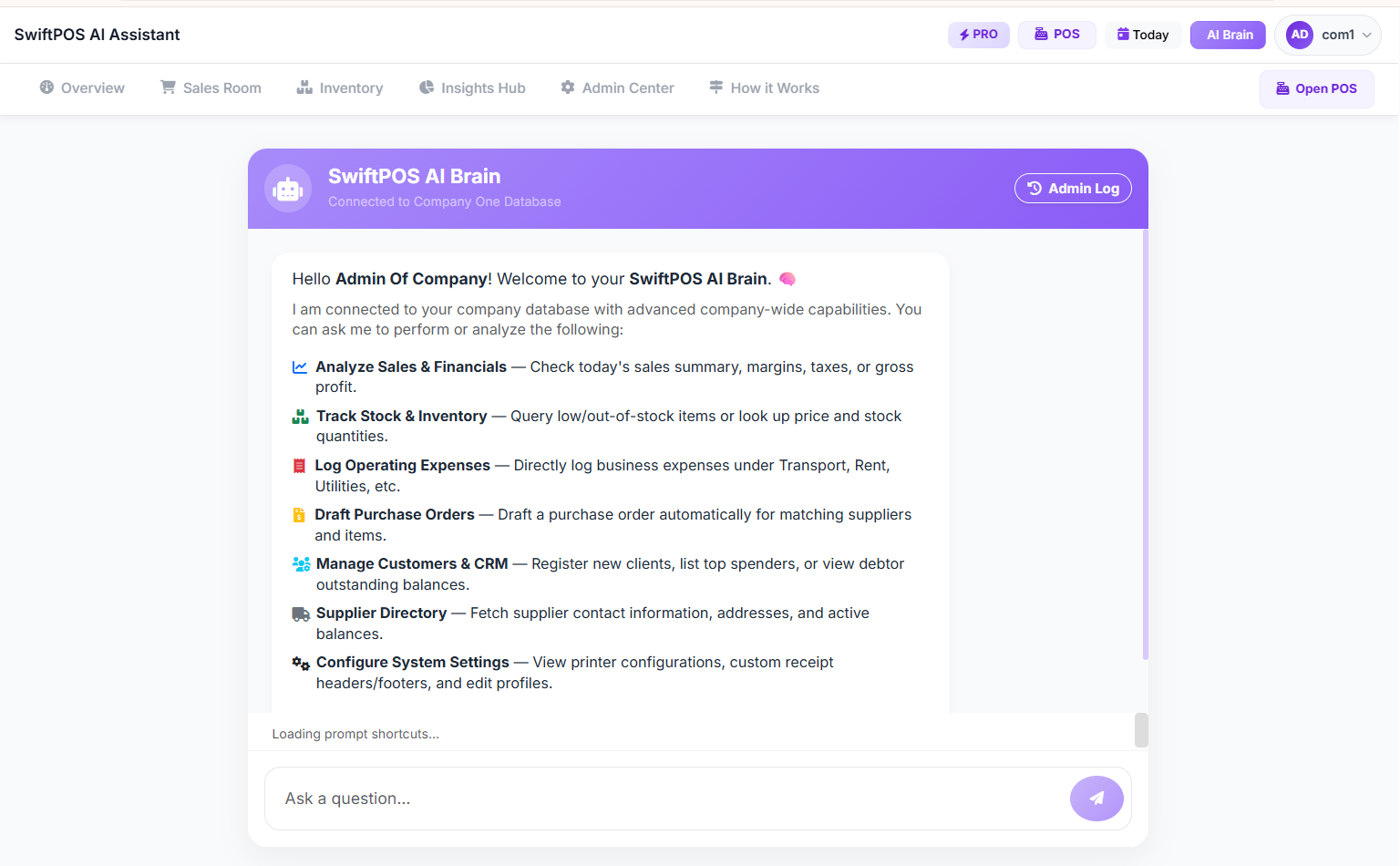 SwiftPOS AI Assistant
Your Next Step to Financial Clarity
You've read this far because you know, deep down, that managing your business finances isn't just about how much money comes in. It's about how much actually stays in your pocket after everything is paid. Understanding gross profit vs. net profit is the bedrock of any successful small business, especially in Nigeria's dynamic market.
If you're still relying on notebooks or complex spreadsheets, you're missing out on vital insights and potentially losing money without even knowing it. It's time to upgrade your approach to retail accounting.
Take the first step towards true financial clarity today. SwiftPOS NG offers a 14-day free trial, so you can see for yourself how it transforms your business operations and helps you track your real net profit.
Don't let hidden costs and manual errors eat into your hard-earned money. Visit SwiftPOS.ng to start your free trial and get a clear picture of your business profit. You can also explore our features to see how SwiftPOS NG can help your business thrive.
Written by SwiftPOS Team
Practical guides from the retail specialists at Nura Mustapha Technologies Limited, for modern Nigerian merchants.