How to Start a Wholesale Business in Nigeria: A Step-by-Step Guide
SwiftPOS Team
Published October 21, 2026

The aroma of fried yam and akara hung heavy in the morning air, mixing with the diesel fumes from a generator sputtering nearby. Mama Ngozi sat hunched over a worn ledger, her brow furrowed, trying to reconcile yesterday's sales of bulk rice and palm oil against the cash in her strongbox. She’d spent hours counting, recounting, but the numbers just weren't adding up. Again. She knew she was making money, but where was it all going? This struggle is real for many who want to know how to start a wholesale business in Nigeria, and it’s a journey I know well.
Busy nigerian market with vendors and customersWhy Most People Get This Wrong from Day One
Look, I've been there. Twelve years in retail, managing three shops before I even thought about consulting. I’ve seen the excitement of starting a wholesale business in Nigeria, and I’ve seen the heartbreak when it collapses, not because of a bad product, but because of foundational mistakes. Most people jump straight into sourcing products and finding customers, completely bypassing the crucial groundwork. They think, "I have capital, I have a product, let's go!" That's the wrong way to think about it.
The biggest error? Underestimating the sheer complexity of managing inventory and cash flow on a larger scale. When you’re selling wholesale, your margins are typically smaller, but your volumes are massive. A small error in pricing a carton of instant noodles can cost you thousands of naira across a hundred cartons. Imagine doing that every week. It adds up. Fast.
Another common mistake is ignoring the legal and logistical framework. You can't just wake up and start a distribution business. There are permits, registrations, and clear operational structures you need to put in place. Many start with a "let's see how it goes" mentality, using basic notebooks or shaky Excel sheets to track everything. That works for a small roadside stall, maybe, but not for a proper wholesale operation where you're dealing with multiple suppliers, different payment terms, and a network of retailers. You need a system that can handle the volume and complexity, otherwise, you're just setting yourself up for Mama Ngozi's daily headaches, but on a much larger, more painful scale. You need to understand the hidden costs of manual retail operations in Nigeria if you're serious about this.
Before You Do Anything: The Foundation Work
Before you even think about buying your first pallet of goods, you need to lay a solid foundation. This isn't just theory; it's what separates the thriving wholesale businesses from the ones that fold within a year.
- Business Registration (CAC): This is non-negotiable. Whether you’re a sole proprietor or aiming for a limited company, get registered. A sole proprietorship can cost you anywhere from ₦25,000 to ₦35,000, while a limited company might set you back ₦50,000 to ₦70,000. It legitimizes your business, opens doors for bank accounts, and allows you to deal with bigger suppliers. Don't skip this.
- Wholesale Business Permit/License: Depending on your state and the specific goods you're distributing, you'll need permits. Selling food items might require different licenses than general merchandise. Expect to pay between ₦15,000 and ₦100,000 annually. This is crucial for avoiding issues with local government authorities, especially if you operate in major markets like Balogun or Onitsha.
- Market Research & Niche Selection: This is where you determine what you're going to wholesale. Don't just pick something because "everyone is selling it." Find a gap. Is there a demand for affordable electronics in Aba? Or maybe specific imported fabrics in Kano? Understand your target retailers. What are their pains? What products do they struggle to source consistently or at a good price? Your profit margin, typically 5% to 25% in wholesale, depends heavily on smart product selection and efficient sourcing.
- Secure Your Warehouse/Storage Space: For a distribution business, your warehouse is your heart. You need a secure, accessible location. Annual rent can range from ₦300,000 in a smaller town to a staggering ₦5,000,000 in a prime commercial area of Lagos or Abuja. Factor in security, proximity to major roads, and ease of loading/unloading. A good warehouse is an investment, not an expense.
- Develop a Solid Business Plan: Don't just keep it in your head. Write it down. This plan should detail your market analysis, product strategy, operational flow, marketing approach, and, most importantly, your financial projections. It's your roadmap. It helps you anticipate challenges and articulate your vision, which is vital if you ever need funding.
The Step-by-Step Path (What Actually Works)
Once your foundation is solid, you can start building. This isn’t a sprint; it’s a marathon. Each step builds on the last.
Step 1: Source Your Products Wisely
This is where you make or break your wholesale startup. Finding reliable suppliers with competitive pricing is paramount.
- What to Do: Look for manufacturers, direct importers, or large-scale distributors. Places like Alaba International Market for electronics, Onitsha Main Market for general goods, or the Kano textile market for fabrics are good starting points. Negotiate hard. Build relationships. Ask about bulk discounts, payment terms, and delivery schedules.
- Why It Matters: Your buying price directly impacts your selling price and, ultimately, your profit. If you buy expensive, you sell expensive, and your retailers might go elsewhere.
- Common Shortcut That Backfires: Buying from a middleman who claims to be a direct source. You cut into your own margins before you even start. Always verify your supplier's legitimacy and pricing.
- Action Item: Identify at least three potential suppliers for your chosen product category. Get quotes and compare their terms.
Step 2: Set Up Your Operations
This covers everything from how goods come in, how they are stored, and how they go out.
- What to Do: Design your warehouse layout for efficiency. Think about receiving, shelving, picking, packing, and dispatch. You need clear systems for everything. Consider how you'll handle different product units – buying in cartons and selling in dozens, for instance.
- Why It Matters: An inefficient operation means wasted time, damaged goods, and frustrated customers. When you’re dealing with high volumes, speed and accuracy are key.
- Common Shortcut That Backfires: Stacking goods haphazardly, relying on memory for stock location. This leads to lost stock, expired products, and delays.
- Action Item: Draw a simple layout of your warehouse. Designate areas for receiving, storage, and dispatch.
Step 3: Implement a Robust Inventory and Sales System
This is where many businesses, especially those moving from retail to wholesale, fall short. Manual tracking is a nightmare when you're dealing with hundreds or thousands of units.
- What to Do: You need a system that tracks every single item coming in and going out. It needs to manage stock across your central warehouse and any potential retail branches you might have or supply. It should also handle different pricing tiers (retail vs. wholesale). This is where a solution like SwiftPOS NG becomes invaluable. It's built for businesses like yours, allowing you to manage products, track stock across multiple locations, handle unit conversions (e.g., cartons to pieces), and set wholesale pricing rules. Imagine being able to see exactly how much stock you have, where it is, and when it's about to expire, all from one dashboard.
- Why It Matters: Accurate inventory prevents stockouts, reduces waste from expired goods, and gives you real-time data to make smart purchasing decisions. It helps you predict when products will run out of stock in Nigeria so you can reorder proactively.
- Common Shortcut That Backfires: Using paper ledgers or basic spreadsheets. They are prone to errors, time-consuming, and don't give you the real-time insights you need. You'll spend more time counting than selling.
- Action Item: Research inventory management software. Consider systems that offer features like wholesale pricing, multi-branch support, and detailed sales reporting. If your business is ready to scale, check out how SwiftPOS NG can manage your entire wholesale and retail operations from one system. You can even manage your retail store using AI in Nigeria with its intelligent features.
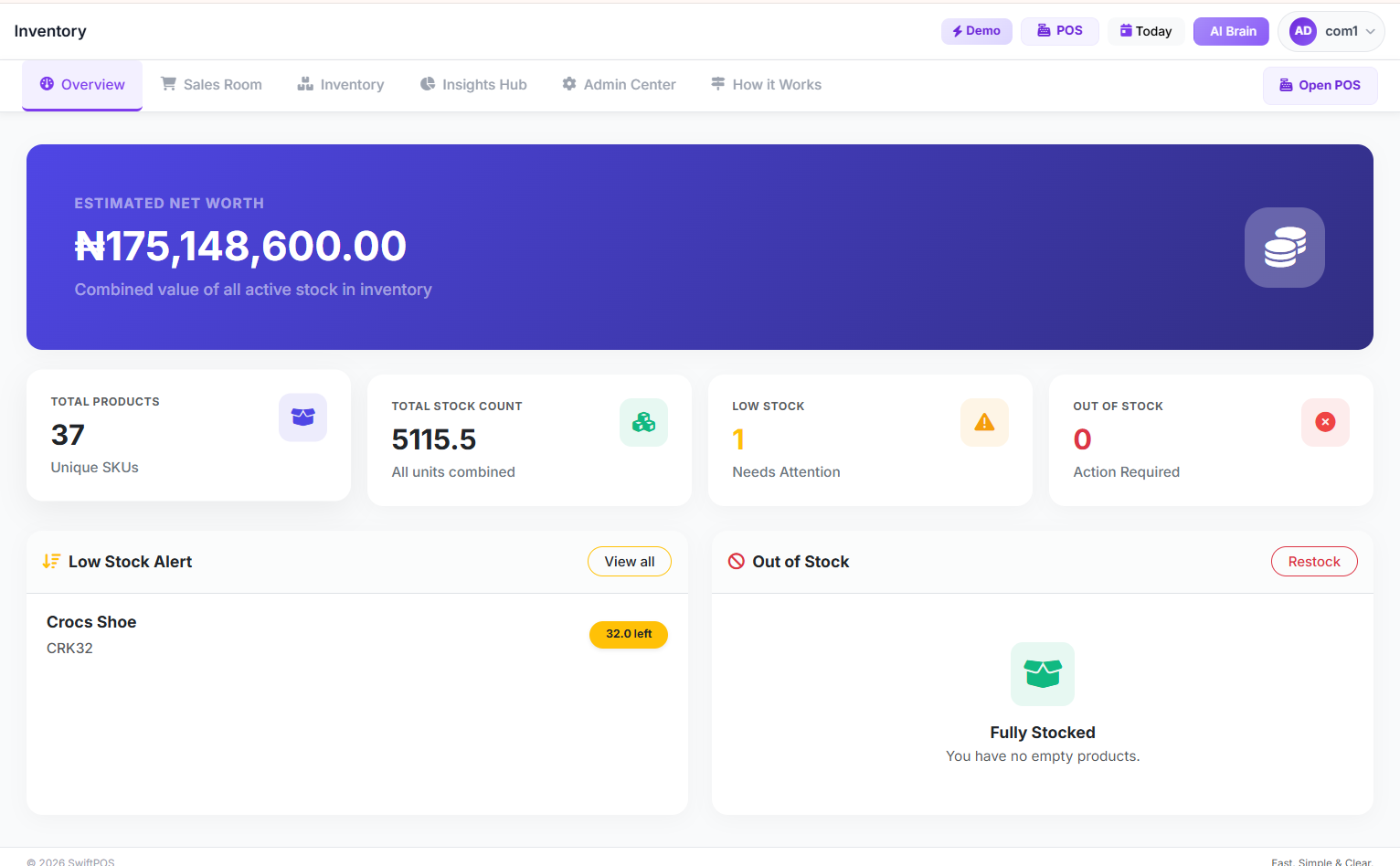 SwiftPOS Inventory Dashboard showing product stock levels
Step 4: Build Your Retailer Network
A wholesale business is nothing without customers – your retailers.
- What to Do: Identify potential retailers: supermarkets, provision stores, smaller shops in local markets. Visit them, build rapport, and present your product offerings. Offer flexible delivery options and competitive pricing.
- Why It Matters: Strong relationships lead to consistent sales and word-of-mouth referrals. Happy retailers mean recurring business.
- Common Shortcut That Backfires: Just waiting for retailers to come to you. You need to be proactive, especially when starting out.
- Action Item: Compile a list of 20-30 potential retail clients in your target area. Plan how you'll approach them.
Step 5: Establish a Robust Delivery and Logistics System
Getting products from your warehouse to your retailers efficiently is non-negotiable for a successful distribution business.
- What to Do: Decide on your delivery method. Will you use your own vehicles, outsource to logistics companies, or a mix of both? For local deliveries, a fairly used Keke Napep cargo might cost ₦1,500,000 to ₦3,000,000, while a mini-truck could be ₦3,000,000 to ₦8,000,000. New delivery vans can run from ₦10,000,000 to ₦35,000,000. Plan your routes to optimize fuel consumption and delivery times.
- Why It Matters: Timely and reliable delivery builds trust and keeps your retailers stocked. Delays mean lost sales for them and potentially for you.
- Common Shortcut That Backfires: Relying on public transport for bulk deliveries. It’s risky, unprofessional, and can damage your goods.
- Action Item: Map out common delivery routes. Get quotes from logistics companies or research vehicle acquisition options.
Step 6: Manage Finances and Cash Flow
This is the lifeblood of your wholesale business. Without proper financial management, you’re flying blind.
- What to Do: Track every naira. Every sale, every expense, every payment received, every payment made to suppliers. Understand your true profit margins after all operating costs. This is where a system that helps you calculate after expenses like rent, fuel, and salaries is critical.
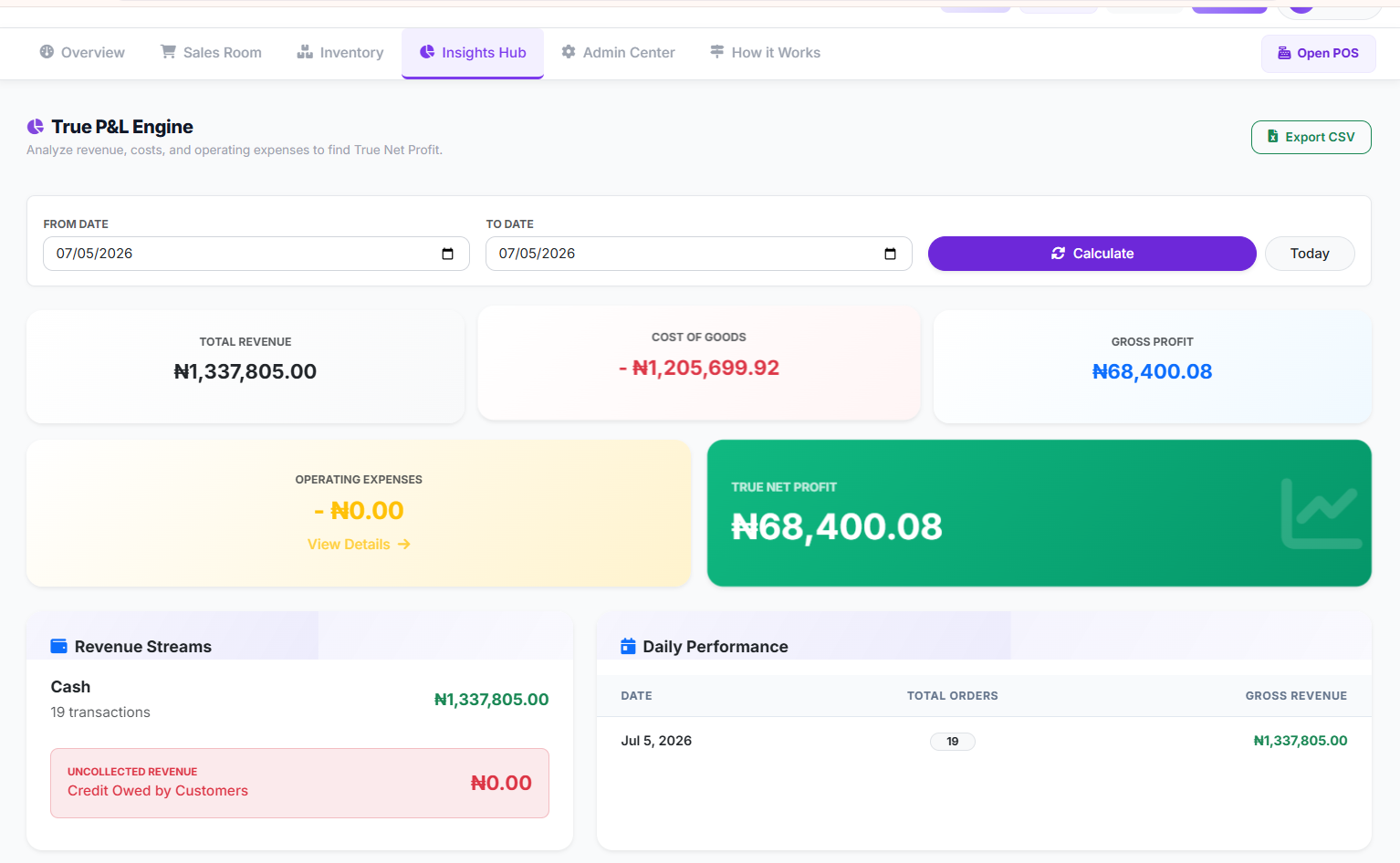 gross profit and true net profit
- Why It Matters: Cash flow issues kill more businesses than bad products. You need to know exactly where you stand financially at all times to make informed decisions, manage credit, and plan for growth.
- Common Shortcut That Backfires: Mixing personal and business finances, or only tracking sales without accounting for costs. You won't know if you're truly profitable.
- Action Item: Set up a dedicated business bank account. Implement a system for tracking all income and expenses daily.
The Numbers That Will Make or Break You
Let's talk money, because that’s what everyone is really asking when they say, "how to start a wholesale business in Nigeria." These are realistic figures for 2026.
Startup Costs (Initial Outlay)
This is the money you need before you even sell your first carton.
- Business Registration (CAC): ₦25,000 - ₦70,000
- Wholesale Business Permit/License: ₦15,000 - ₦100,000 (annual)
- Warehouse/Storage Space Rent (Annual): ₦300,000 - ₦5,000,000
- Initial Stock Purchase: ₦1,000,000 - ₦15,000,000 (This is your biggest chunk. Start small, scale up.)
- Delivery Van/Truck (Used): ₦1,500,000 - ₦8,000,000 (If buying, otherwise factor in logistics costs)
- Office Setup (Basic furniture, laptop): ₦150,000 - ₦500,000
- Generator (Small, for office/warehouse): ₦100,000 - ₦500,000
- Initial Marketing/Promotions (Website, flyers): ₦50,000 - ₦300,000
Monthly Running Costs (Operating Expenses)
Once you're operational, these are your recurring bills.
- Staff Salary (Warehouse Assistant/Driver): ₦60,000 - ₦120,000 per person
- Staff Salary (Sales/Admin Officer): ₦80,000 - ₦180,000 per person
- Fuel/Logistics: ₦80,000 - ₦500,000 (depending on delivery radius and frequency)
- Marketing/Promotions: ₦30,000 - ₦200,000
- Utilities (Electricity, Internet, Water): ₦20,000 - ₦100,000
- Maintenance (Vehicle, Generator, Warehouse): ₦15,000 - ₦80,000
- Software Subscriptions (like SwiftPOS NG): (Check pricing plans, but budget for efficient operations)
Working Capital
This is the money you need to cover your monthly operating costs for a few months without relying on immediate sales. This is where most people get it wrong. You need a buffer.
- Recommended Working Capital (3-6 months operating costs): ₦1,000,000 - ₦5,000,000. This is absolutely critical. Imagine you just paid for a huge order of stock, and your retailers are taking 30 days to pay you. How will you cover salaries, fuel, and rent in the meantime? This capital keeps your business breathing.
Expected Profit Margin
As mentioned, wholesale margins are tighter than retail.
- Typical Profit Margin: 5% - 25%. This depends heavily on your product. High-volume, fast-moving consumer goods (FMCG) like drinks or provisions might be on the lower end (5-10%), while specialized electronics or fashion items could hit the higher end (15-25%).
Growth After Launch: The Next 90 Days
You've launched your wholesale business. Congratulations! But the work doesn't stop there. The first 90 days are critical for establishing momentum and ironing out kinks.
- Monitor Your Inventory Like a Hawk: You need to know what's selling, what's slow, and what's about to expire. Use your inventory management system to . This data will guide your reordering. Don't let popular items run out of stock; that's lost revenue. SwiftPOS NG provides real-time stock forecasting to warn you about low stock and helps identify dead stock. This is how you avoid tying up capital in goods that aren't moving.
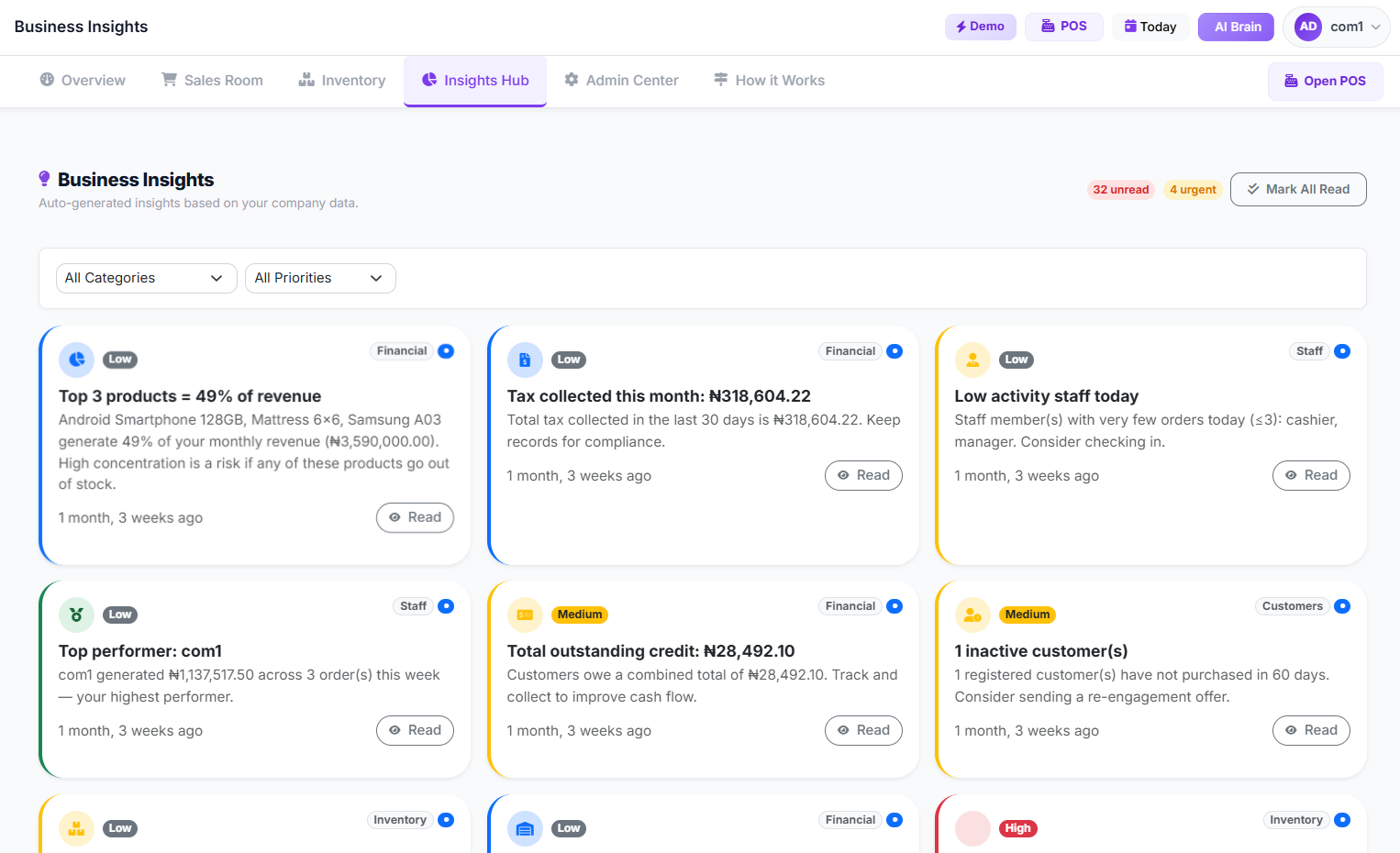 track product performance
- Build Relationships, Don't Just Sell: Regularly check in with your retailers. Ask for feedback. What products are they struggling to get? What prices are competitive? Your retailers are your eyes and ears on the ground. Strong relationships lead to loyalty and consistent orders.
- Optimize Your Logistics: Are your delivery routes efficient? Is your fuel consumption too high? Can you combine deliveries to save costs? Continuously look for ways to reduce your logistics expenses without sacrificing service quality.
- Analyze Your Sales Data: Don't just look at the total sales figure. Dive deeper. Which products are your bestsellers? Which retailers are buying the most? When are your peak selling periods? This data helps you refine your marketing, purchasing, and even staffing decisions. A system like SwiftPOS NG gives you access to and business insights that would take days to compile manually.
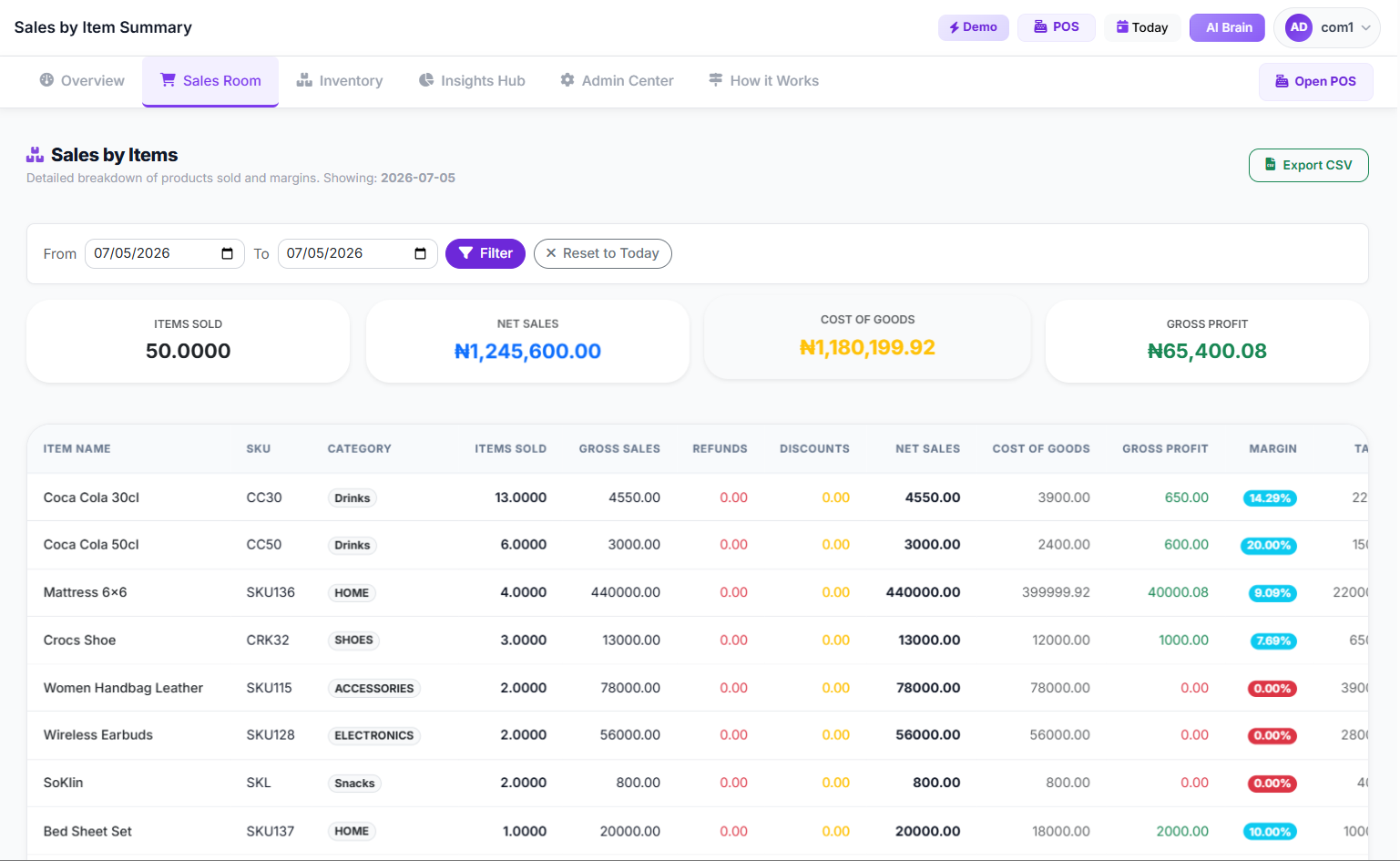 detailed sales reports
- Manage Credit Carefully: Many wholesale businesses offer credit to trusted retailers. This is a double-edged sword. It can boost sales, but it can also cripple your cash flow if not managed properly. Set clear credit limits and strict payment terms. Follow up on overdue payments promptly. SwiftPOS NG includes a to help you track customer debts and payments, which is essential.
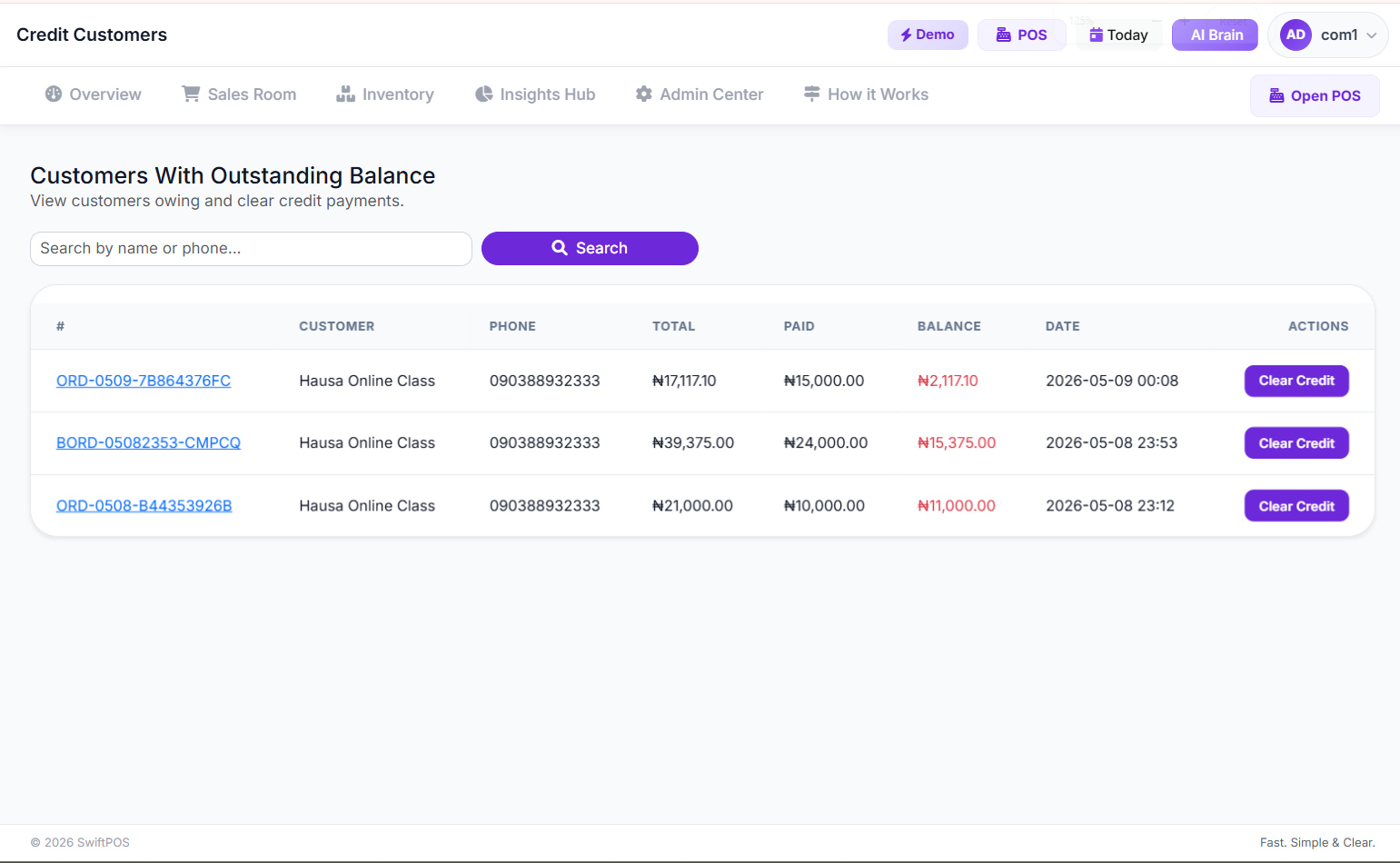 customer credit book
- Review Your Profitability: At least once a month, sit down and look at your profit and loss statement. Are you meeting your target margins? Where can you cut costs? Where can you increase revenue? Remember the 7 key retail metrics Nigerian businesses must track for profit growth.
FAQ: Answers to What You're Actually Googling
Q1: How much capital do I really need to start a wholesale business in Nigeria?
Honestly, you're looking at a minimum of ₦3,000,000 for a very lean operation, and that’s if you’re strategic with your initial stock and maybe lease a small warehouse outside prime areas. For a more comfortable start with decent stock and a reliable delivery vehicle, you should aim for ₦8,000,000 to ₦15,000,000. Don't forget that working capital for 3-6 months of operating expenses; it's a lifesaver.
Q2: What are the most profitable wholesale products in Nigeria right now?
It changes, but generally, fast-moving consumer goods (FMCG) like provisions (rice, oil, sugar, beverages), household essentials, and affordable electronics (phone accessories, small appliances) remain consistently profitable due to high demand. Also, building materials and agricultural produce can be very lucrative, but they often require larger capital and specialized logistics. Always do current market research for your specific location.
Q3: How do I find reliable suppliers for my wholesale business?
Networking is key. Visit major markets like Balogun, Alaba, Onitsha Main Market, or Aba shoe market. Talk to other distributors (they might not share their direct sources, but they can give you leads). Attend trade fairs. Look online for manufacturers and large importers. Always start with small orders to test reliability and product quality before committing to huge volumes.
Q4: Is it better to start with a physical store or an online wholesale platform?
For a distribution business, a physical warehouse is almost always essential for storage and efficient logistics in Nigeria. An online presence (website, social media for B2B) is great for marketing and reaching more retailers, but it usually complements your physical operations, rather than replacing the need for a warehouse. You need space to hold your bulk inventory.
Q5: How can I manage credit sales to retailers without losing money?
This is tough, but manageable. First, only offer credit to trusted, long-term clients with a good payment history. Second, set clear, short payment terms (e.g., 7-14 days). Third, use a system that tracks every credit sale and payment. SwiftPOS NG, for example, has a
customer credit bookReady? Here's Where to Start
Starting a wholesale business in Nigeria is a serious undertaking, but it's absolutely achievable with the right planning and tools. Don't rush it. Take your time to build a strong foundation, understand your market, and put solid systems in place.
If you're serious about scaling beyond manual ledgers and chaotic spreadsheets, consider exploring how smart business management software can transform your operations. Visit our SwiftPOS NG features page to see how a system designed for Nigerian businesses can help you manage sales, stock, staff, and profit, giving you the control you need to thrive. You can even check out our blogs page for more practical guides and insights into growing your business in Nigeria.