How Much Capital to Start a Wholesale Business?
SwiftPOS Team
Published October 21, 2026

A staggering 63% of small and medium-sized wholesale businesses in Nigeria fail within their first five years, with undercapitalization and poor inventory management being two of the biggest culprits. That's a hard pill to swallow, especially when you're dreaming of making it big in the distribution business Nigeria. You see the success stories, but what about the hidden costs, the ones that drain your pockets before you even make a single sale? Knowing how much capital to start a wholesale business isn't just about the initial stock; it’s about understanding the full financial landscape so you don't become another statistic.
Busy wholesale market in lagos with goods stackedThe Reality Check: What Nobody Tells You About Wholesale Capital
Look, everyone talks about the massive profit margins in wholesale, especially if you're importing or dealing with high-demand goods from, say, Onitsha Main Market or Kano textile market. But what they don't often tell you is the sheer amount of upfront business investment you need just to get off the ground, and how quickly that capital can vanish if you're not careful. Most aspiring wholesalers focus heavily on the cost of goods, thinking that’s the bulk of their wholesale startup cost. That’s a mistake, a big one.
The real challenge isn't just buying the products. It's securing a good location, setting up your operations, dealing with logistics, and, crucially, having enough working capital to survive the inevitable slow periods and unexpected expenses. Imagine you've just spent ₦5,000,000 on stock, and then your generator packs up, or a major client delays payment for two weeks. Where does that money come from? If you haven't planned for it, you're already in trouble. The average Nigerian earns between ₦50,000 and ₦150,000 a month, so every naira of your investment needs to work hard. You can't afford to miscalculate your wholesale capital.
What You Actually Need to Get Started
Alright, let's break down the actual figures. When people ask "how much capital to start a wholesale business?", I tell them to think in categories, not just one lump sum. This isn't about discouraging you; it's about preparing you.
Non-Negotiables (The Absolute Must-Haves)
These are the things you simply cannot skip if you want to operate legally and efficiently.
- Business Registration (CAC): You need to make it official. For a sole proprietorship, you're looking at about ₦25,000. If you're going for a Limited Company, which offers more protection and can attract bigger clients, budget up to ₦75,000. Don't cut corners here; a properly registered business builds trust.
- Shop/Warehouse Rent (Annual): This is a huge one. In a smaller town or suburban area, you might find a decent warehouse for ₦150,000 annually. But if you're eyeing a prime spot in Lagos Island or Abuja for your distribution business Nigeria, be ready to shell out up to ₦3,000,000 a year. Remember, most landlords ask for 1-2 years' rent upfront, plus a security deposit. So, if your annual rent is ₦1,000,000, you might need ₦2,000,000 to ₦3,000,000 just for the space.
- Security Deposit (Rent): This often gets overlooked. It's typically 1-2 years' worth of rent. So, for that ₦150,000 annual rent, you'd need another ₦150,000 to ₦300,000. For the ₦3,000,000 annual rent, prepare for ₦3,000,000 to ₦6,000,000. It's a significant chunk of your wholesale capital sitting idle, but it's standard practice.
- Initial Stock Purchase: This is where your business lives or dies. You need enough variety and quantity to attract wholesale buyers. For a small-scale distributor, you might start with ₦500,000. But if you're serious about being a major wholesaler with a good range of products from, say, Balogun Market or Aba shoe market, prepare for ₦5,000,000 to ₦10,000,000. This is the core of your business investment.
- Shelving/Racks/Basic Fittings: You can't just dump products on the floor. Basic, functional shelving might cost you ₦80,000. For a more robust and organized display, especially if you're dealing with delicate items, budget up to ₦500,000. Good organization makes for efficient operations.
- Generator (Small to Medium): This isn't a luxury in Nigeria, it's a necessity. Power stability is crucial for any business. A small generator will set you back about ₦150,000, while a medium-sized, more reliable one could be ₦700,000. Factor in fuel costs too; diesel prices can fluctuate wildly.
- Licensing/Permits (Local Government, Annual): This varies by LGA and the type of goods you sell. Expect to pay anywhere from ₦20,000 to ₦150,000 annually. Always check with your local council to avoid issues.
Nice-to-Haves (Things That Make Life Easier and Business Better)
These aren't strictly necessary on day one but will significantly boost your efficiency and professionalism.
- Delivery Vehicle (Used Keke Napep/Small Van): If you're serious about distribution, you'll need to move goods. A used Keke Napep for local deliveries might be ₦800,000. A fairly used small delivery van could be ₦2,500,000 to ₦3,500,000. This improves your service delivery and expands your reach.
- Staff Salary (Sales Assistant/Loader, per month): You can't do it all yourself. An entry-level staff member in a smaller town might earn ₦60,000 a month. In a major city like Lagos, an experienced hand could command ₦120,000. Budget for at least one or two staff members.
- POS Machine/Basic Accounting Software: This is where efficiency comes in. A basic POS system or accounting software for sales tracking and inventory management can start from ₦40,000 and go up to ₦200,000. This is an investment that pays for itself by preventing losses and giving you clear data.
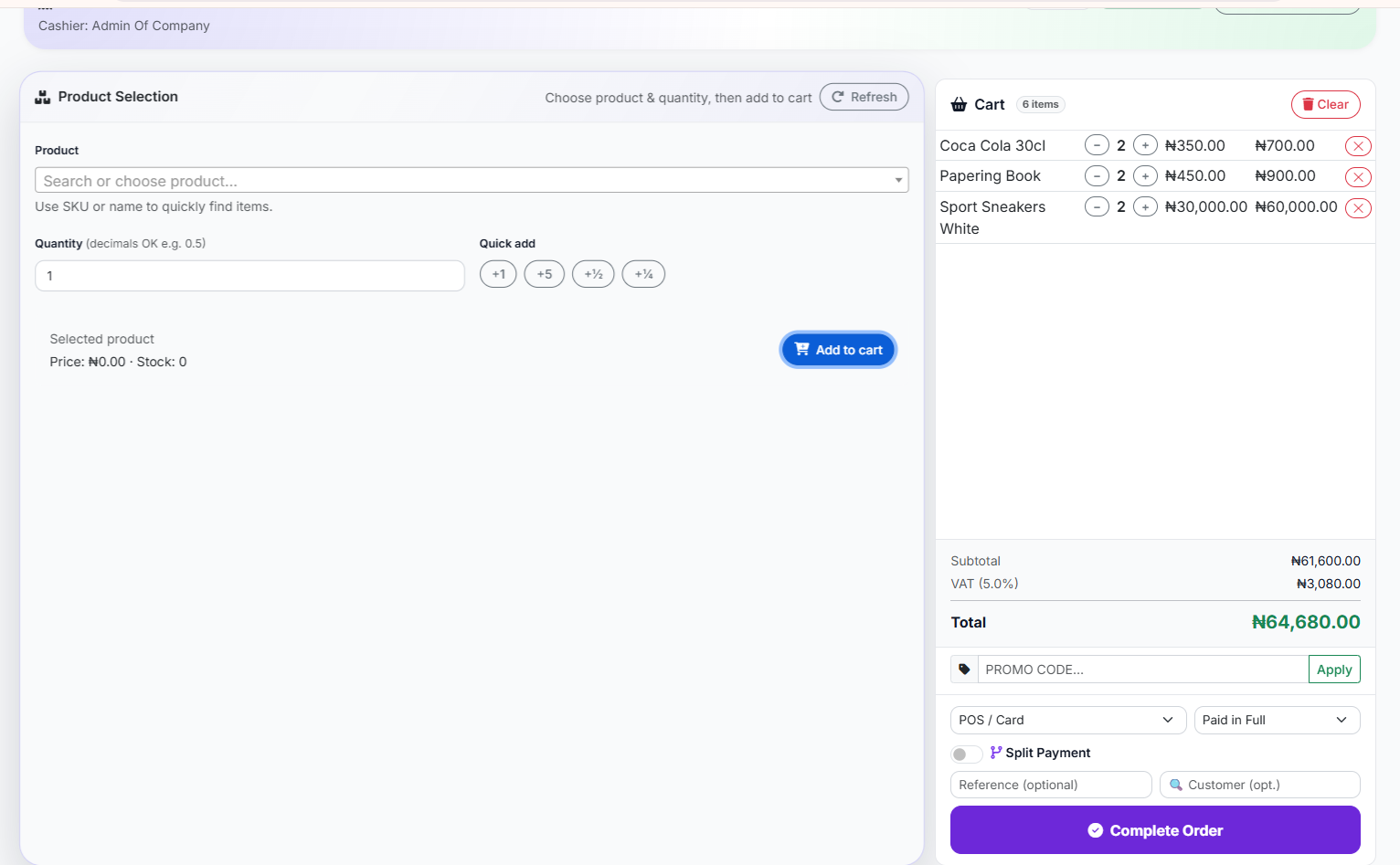 Classic POS Interface (List select)
So, if you add up the low-end non-negotiables, you're looking at an absolute minimum of around ₦1,225,000 to ₦1,500,000 just to get a small wholesale operation going in a low-cost area. For a more serious setup in a major city, you could easily be staring at ₦10,000,000 to ₦20,000,000+ in initial business investment. That's a significant wholesale capital requirement, isn't it?
The Complete Step-by-Step Breakdown
Starting a wholesale business in Nigeria is a journey, not a sprint. You need a clear roadmap. Here's how I'd advise you to approach it.
### Step 1: Market Research and Niche Identification
Before you spend a single naira, you need to know what you're selling and to whom. Don't just jump into popular products because everyone else is doing it. That's a quick way to get lost in a saturated market. What are the specific needs in your target area? Is there a gap for quality electronics, affordable fashion, or perhaps specialized agro-products?
For instance, a client of mine wanted to sell mobile phone accessories in Computer Village. Instead of just buying generic power banks, he researched the most popular phone models in Nigeria and focused on high-quality screen protectors and unique phone cases for those specific models. His initial stock was smaller, but his profit margins were higher because he wasn't competing on price alone. This kind of focused market research helps you optimize your initial stock purchase and reduce risk.
Actionable Tip: Spend at least two weeks talking to potential retailers, visiting markets, and observing trends. Use online forums and local business groups to gather intelligence. What are people always asking for? What's hard to find?
### Step 2: Develop a Solid Business Plan
A business plan isn't just a document you write for the bank; it's your blueprint. It forces you to think through every aspect of your wholesale startup cost, from your sales strategy to your financial projections. How will you fund your business? What are your projected sales for the first 6-12 months? What's your break-even point?
Let's be honest about this: many Nigerian entrepreneurs skip this step, relying on 'street sense'. While street sense is vital, it needs to be backed by solid planning. I've seen countless businesses fail because they didn't project their cash flow accurately. They ran out of working capital before they could stabilize. Your business plan should clearly outline your wholesale capital requirements and how you intend to generate revenue to cover them.
Actionable Tip: Include a detailed financial section covering your startup costs, operating expenses, pricing strategy, and projected profit and loss. Even if it's just for yourself, write it down. You can find free templates online or get help from business development services.
### Step 3: Legal Registration and Compliance
This is non-negotiable. Register your business with the Corporate Affairs Commission (CAC). It gives your business legitimacy and opens doors for partnerships and financing. Depending on your type of goods, you might also need permits from NAFDAC or SON.
A wholesale business, especially a distribution business Nigeria, will interact with many other businesses. Having your papers in order protects you and builds trust with suppliers and customers. Imagine trying to secure a major supply deal or a bank loan without proper registration; it's almost impossible. Don't wait until you're already operating to sort this out.
Actionable Tip: Visit the nearest CAC office or their website to understand the registration process. For sole proprietorship, it's straightforward. For a limited company, you might need the help of a lawyer or a business consultant. Budget ₦25,000 - ₦75,000 for this.
### Step 4: Secure Your Location and Set Up Infrastructure
Your warehouse or shop location is critical for a wholesale business. Accessibility for delivery vehicles and buyers is key. Consider security, storage capacity, and proximity to major transport routes. Once you have the space, you need to set it up. This includes shelving, proper lighting, and, yes, that all-important generator.
I remember a client who rented a cheap warehouse far from the main road. His transport costs for moving goods in and out, plus the time wasted, quickly ate into his profits. Sometimes, paying a bit more for a strategic location saves you money in the long run. Also, ensure your space is secure. Inventory theft is a real issue.
Actionable Tip: Prioritize security. Install sturdy doors, good locks, and consider CCTV. For shelving, start with functional, affordable options and upgrade as your business grows. Remember to factor in ₦150,000 - ₦3,000,000 for annual rent and an equivalent security deposit.
### Step 5: Source Your Products and Manage Inventory
This is the heart of your wholesale capital investment. Finding reliable suppliers who offer good quality at competitive prices is crucial. Build relationships, negotiate bulk discounts, and always verify product quality before making large purchases. For example, if you're importing, consider samples first.
Once you have your stock, you need to manage it. This is where many small businesses, especially those using manual or Excel-based systems, bleed money. They lose track of what's selling, what's expiring, and where stock is located. You need a system that gives you real-time visibility.
This is exactly where a tool like SwiftPOS comes in handy. It's more than just a cash register; it helps you manage your products, track stock across different branches (if you have them), handle expiration dates, and even manage suppliers and purchases. For a distribution business Nigeria, being able to track stock from a central warehouse to multiple retail outlets, and even manage unit conversions (e.g., cartons to pieces), is invaluable. It helps you prevent revenue leaks and make smarter purchasing decisions. You can check out their tutorials to see how easy it is to set up.
Actionable Tip: Start with a diverse but manageable range of products. Don't overcommit to one item. Implement a robust inventory management system from day one. This will save you headaches and money down the line.
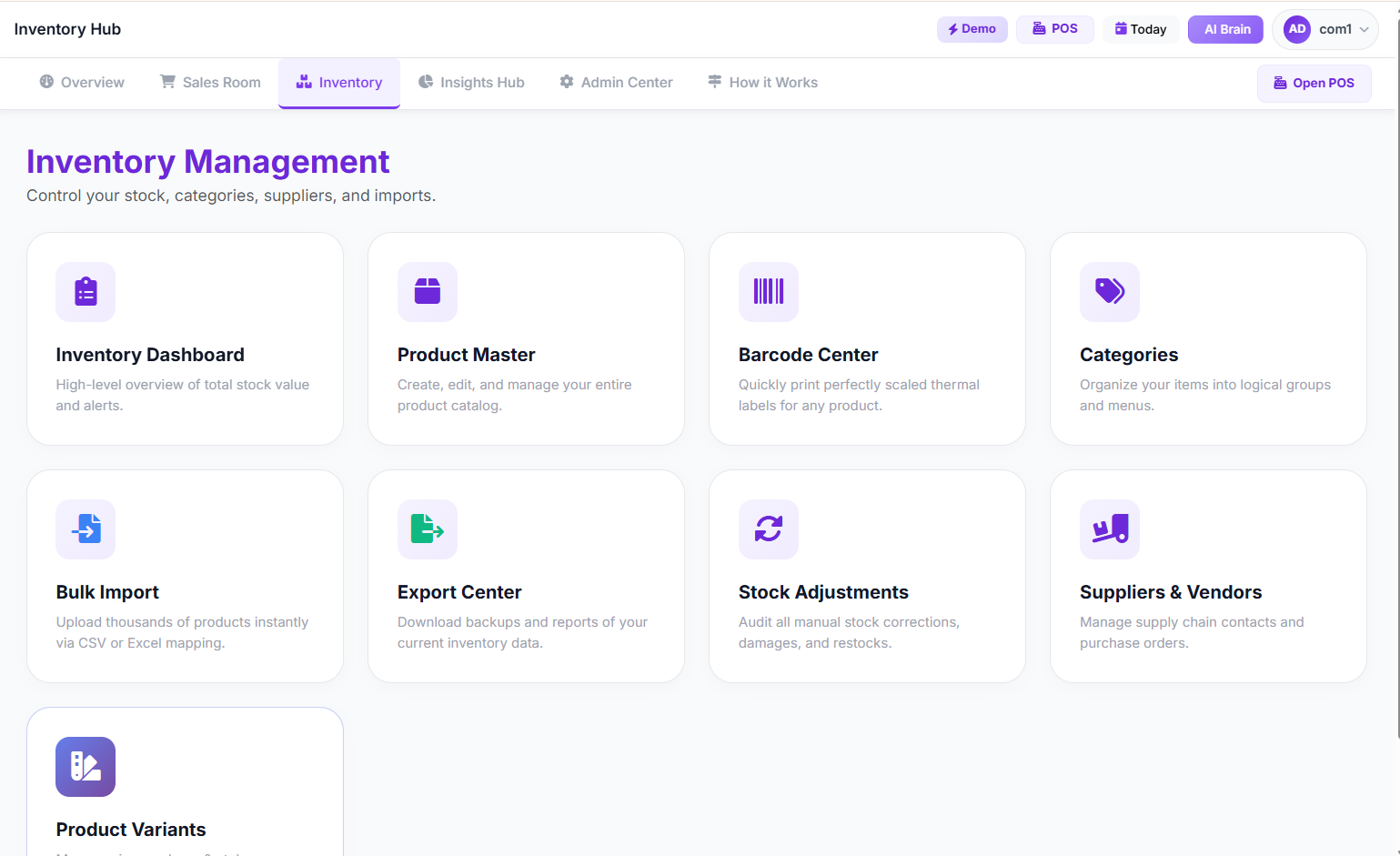 Inventory Hub
### Step 6: Build Your Sales and Distribution Network
With products in hand, you need to get them to your customers. Identify your target retailers: supermarkets, provision stores, small independent shops, pharmacies. Develop a clear pricing strategy that includes wholesale pricing tiers. How will you deliver? Will you use your own vehicle, or outsource?
Networking is key. Visit potential retail partners, make cold calls, and leverage social media. Offer introductory discounts or flexible payment terms to new clients to build trust. Remember, your success as a wholesaler depends entirely on the success of your retail partners. So, think about how you can support them.
Actionable Tip: Start small with a few reliable retailers. Focus on excellent customer service and timely deliveries. As you build a reputation, you can expand your network. Consider a used Keke Napep (₦800,000) or a small van (₦2,500,000) for deliveries to improve your distribution efficiency.
### Step 7: Manage Finances and Cash Flow
This step never ends. You need to meticulously track all your income and expenses. Understand your gross profit, your net profit, and where every naira is going. Cash flow is the bloodstream of your business. Without it, even a profitable business can die.
Many Nigerian business owners struggle with this, often relying on notebooks or fragmented records. When you're dealing with bulk purchases, credit sales, and multiple suppliers, it gets complicated fast. A system that can help you track your monthly profit margins and expenses is invaluable. SwiftPOS, for example, can help you record all your operating expenses and give you a clearer picture of your true net profit after all costs. This is critical for knowing if your business investment is truly paying off.
QUOTE BLOCK
> "In Nigeria, cash flow isn't just king; it's the entire royal family. Without a clear view of your money in and out, you're driving blind on a Lagos highway during rush hour."
Actionable Tip: Use dedicated business bank accounts. Reconcile your accounts daily or weekly. Track customer debts rigorously. If you offer credit, have a clear repayment policy and stick to it. Tools that provide
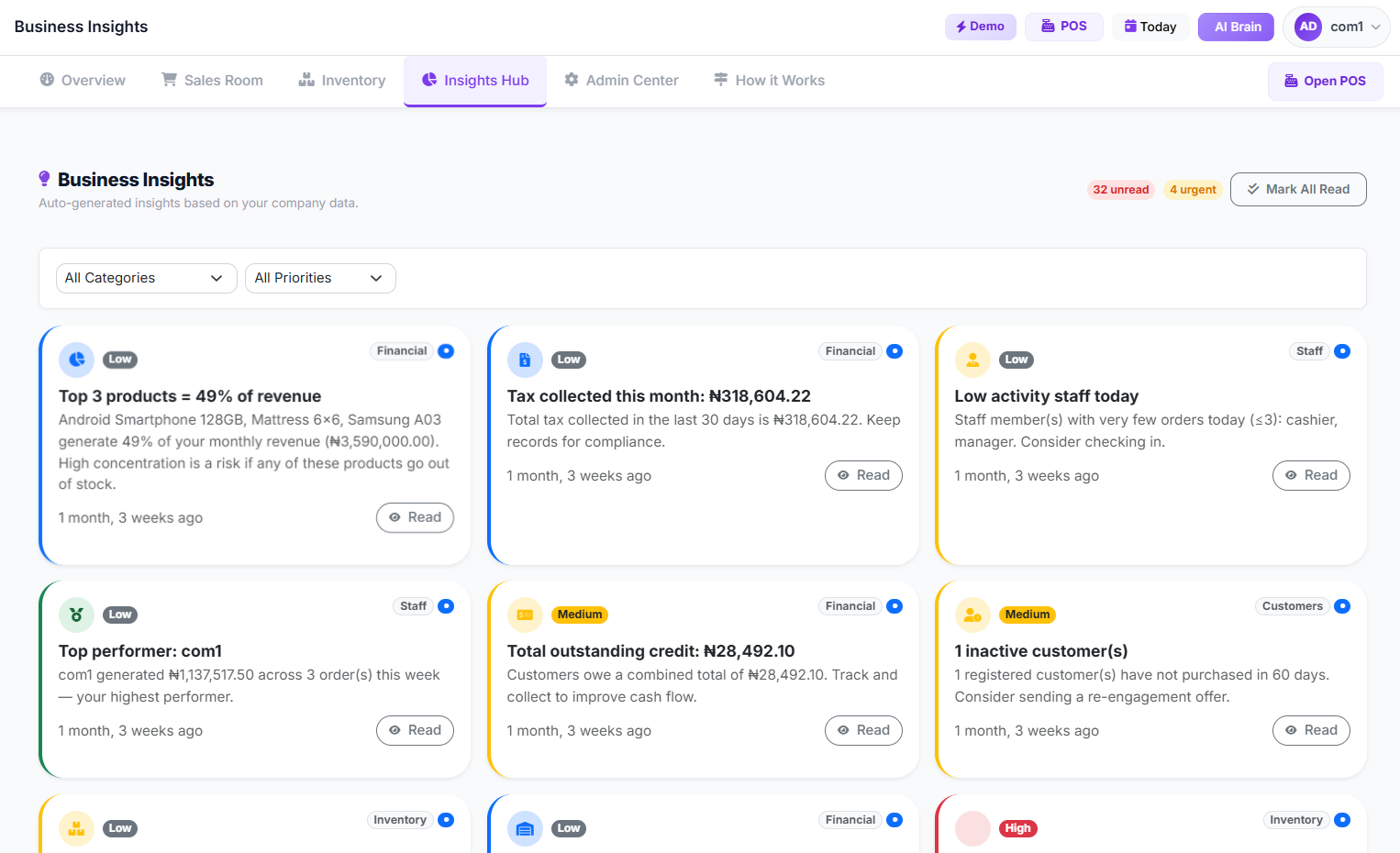 business insights
5 Mistakes That Cost Nigerian Business Owners the Most
I've seen these mistakes play out time and time again, and they can be brutal. Don't fall victim to them.
- Undercapitalization (The Silent Killer): This is the number one reason many businesses fail. You think you have enough, but you haven't accounted for all the hidden costs: generator repairs, unexpected import duties, staff sick days, or a sudden hike in fuel prices. You need a buffer. Always add at least 20-30% to your initial wholesale capital projections for contingencies. If you don't, you'll be scrambling, making bad decisions, or worse, shutting down.
- Poor Inventory Management: This is a profit-eater. Not knowing what you have, where it is, or when it expires leads to dead stock, expired goods, and missed sales. Imagine having a customer asking for a popular product, only for you to find out it expired last month because it was buried under older stock. Or worse, you think you have it, but you don't. This is why inventory management mistakes crush profits. Manual tracking simply isn't sustainable for a wholesale business.
- Ignoring Operating Expenses: Many focus only on the cost of goods and selling price. But what about rent, electricity, transportation, staff salaries (₦60,000 - ₦120,000 per staff member), internet, and all the small, recurring costs? These add up fast and can turn a seemingly profitable sale into a net loss. You need to know your true cost of doing business.
- Lack of Customer Debt Management: Offering credit is common in wholesale, but if you don't track it diligently, you're basically giving away your capital. I've seen businesses collapse because they had millions in outstanding debt that they couldn't collect. A simple notebook isn't enough when you have multiple customers with varying credit limits and payment schedules. You need a system to track effectively.
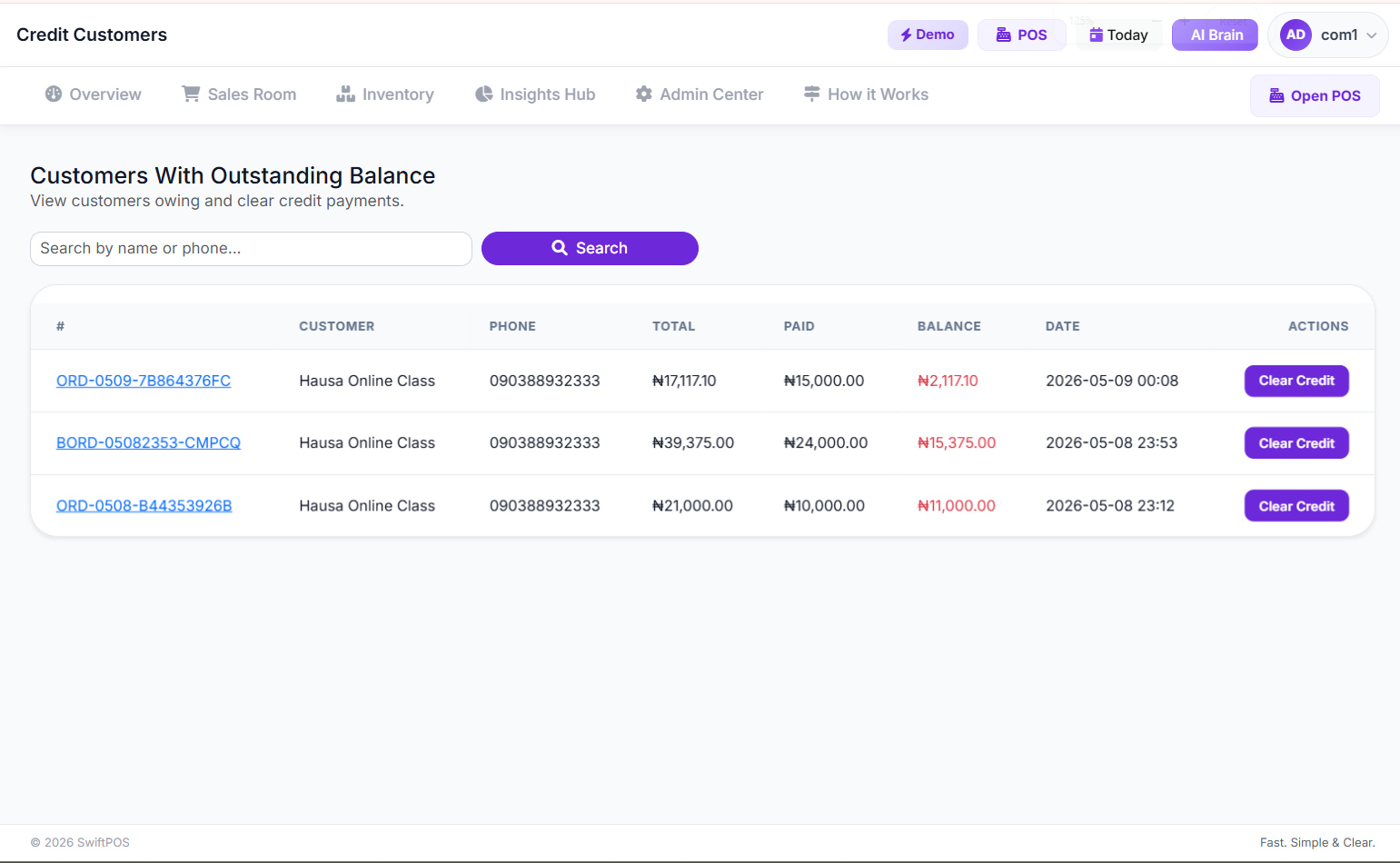 customer credit and debt
- Not Investing in Technology Early: "Ah, I'll buy a POS system when the business grows." This is a common phrase I hear. But by then, you've already lost so much money to manual errors, theft, and inefficient processes. The hidden costs of manual retail operations are far greater than the cost of a good system. A small investment in a POS machine/software (₦40,000 - ₦200,000) at the start can save you hundreds of thousands, if not millions, later on. It gives you the data you need to make smart decisions, right from day one.
How to Know If You're on Track (Success Metrics)
So, you've invested your wholesale capital, you're up and running. How do you know if you're actually succeeding? You need to track key performance indicators (KPIs). Don't just guess; look at the numbers.
- Gross Profit Margin: This tells you how much money you make from sales after deducting the cost of goods sold. If you buy for ₦100 and sell for ₦120, your gross profit is ₦20. Track this percentage. Is it healthy enough to cover your operating expenses?
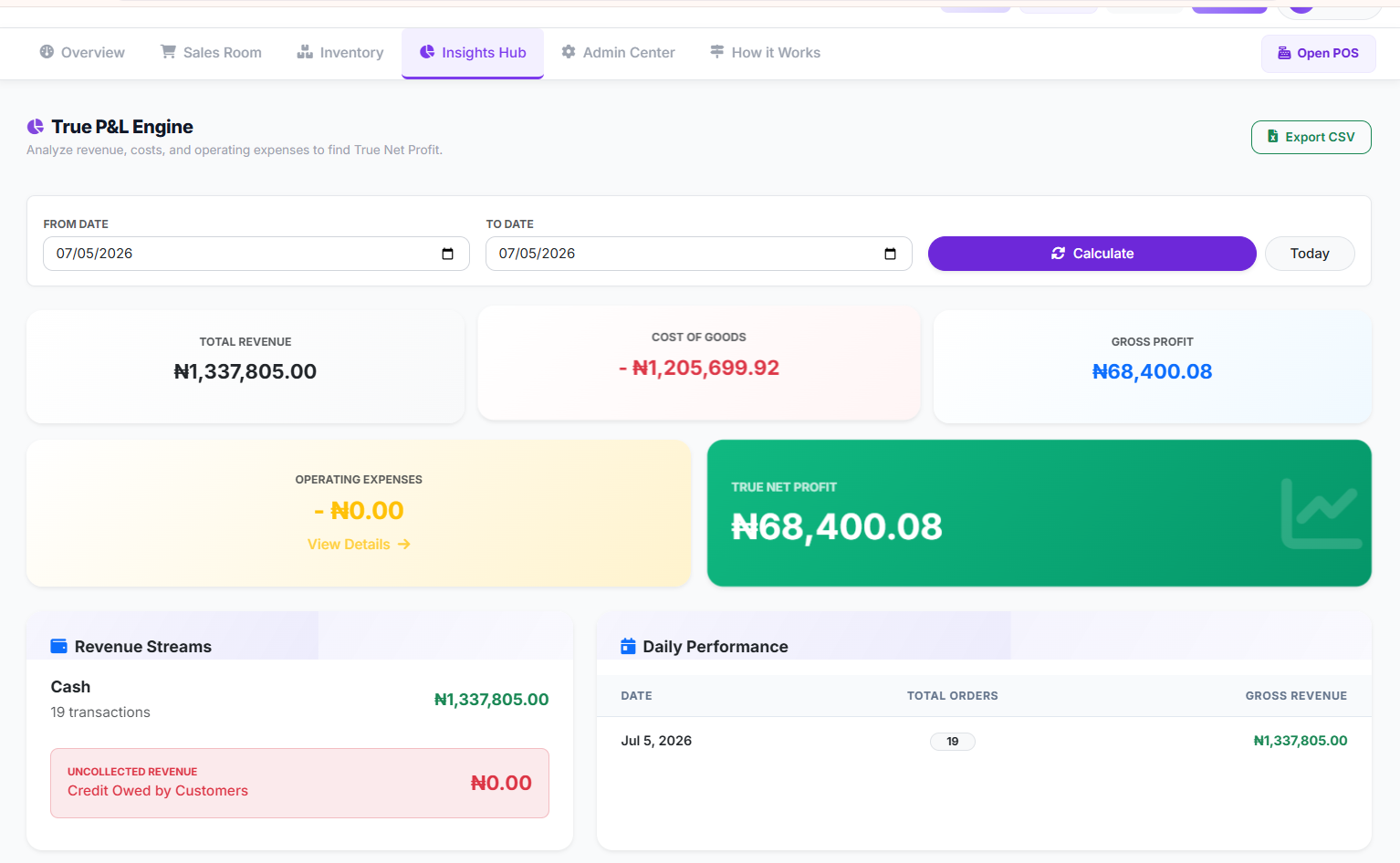 Profit and Loss Page
- Inventory Turnover Rate: How quickly are you selling your stock? A high turnover means your products are in demand and your capital isn't tied up. A low turnover means you have dead stock, and your money is just sitting there. SwiftPOS can help you with to identify slow-moving items.
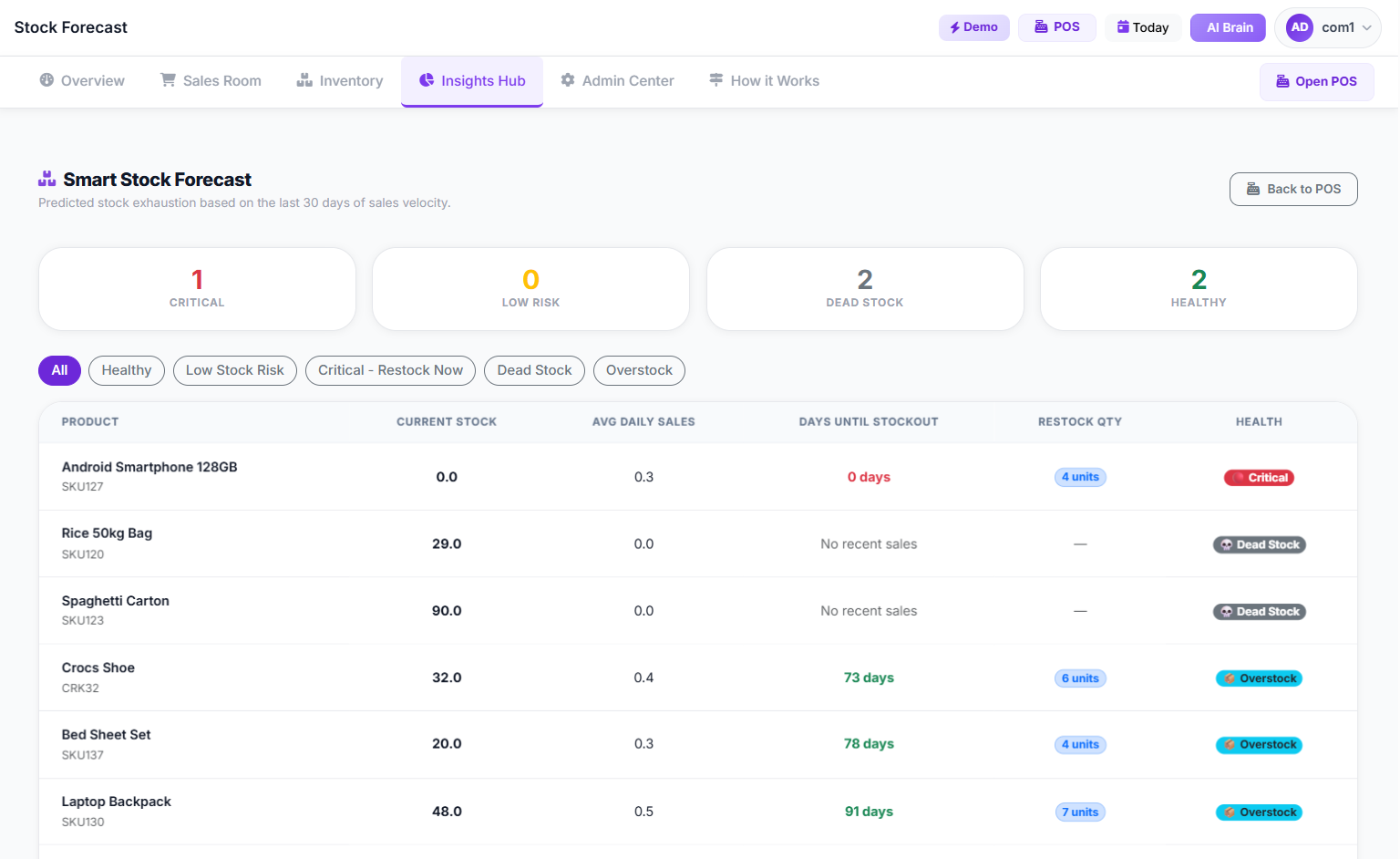 stock forecasting
- Customer Retention Rate: Are your wholesale customers coming back? Loyal customers are cheaper to serve and more profitable. Great service, consistent product quality, and fair pricing build loyalty.
- Cash Flow: Are you consistently having more money coming in than going out? This is crucial for sustainability. If you're always short on cash, even if you have sales, it means your payment terms, collection process, or expense management needs an overhaul.
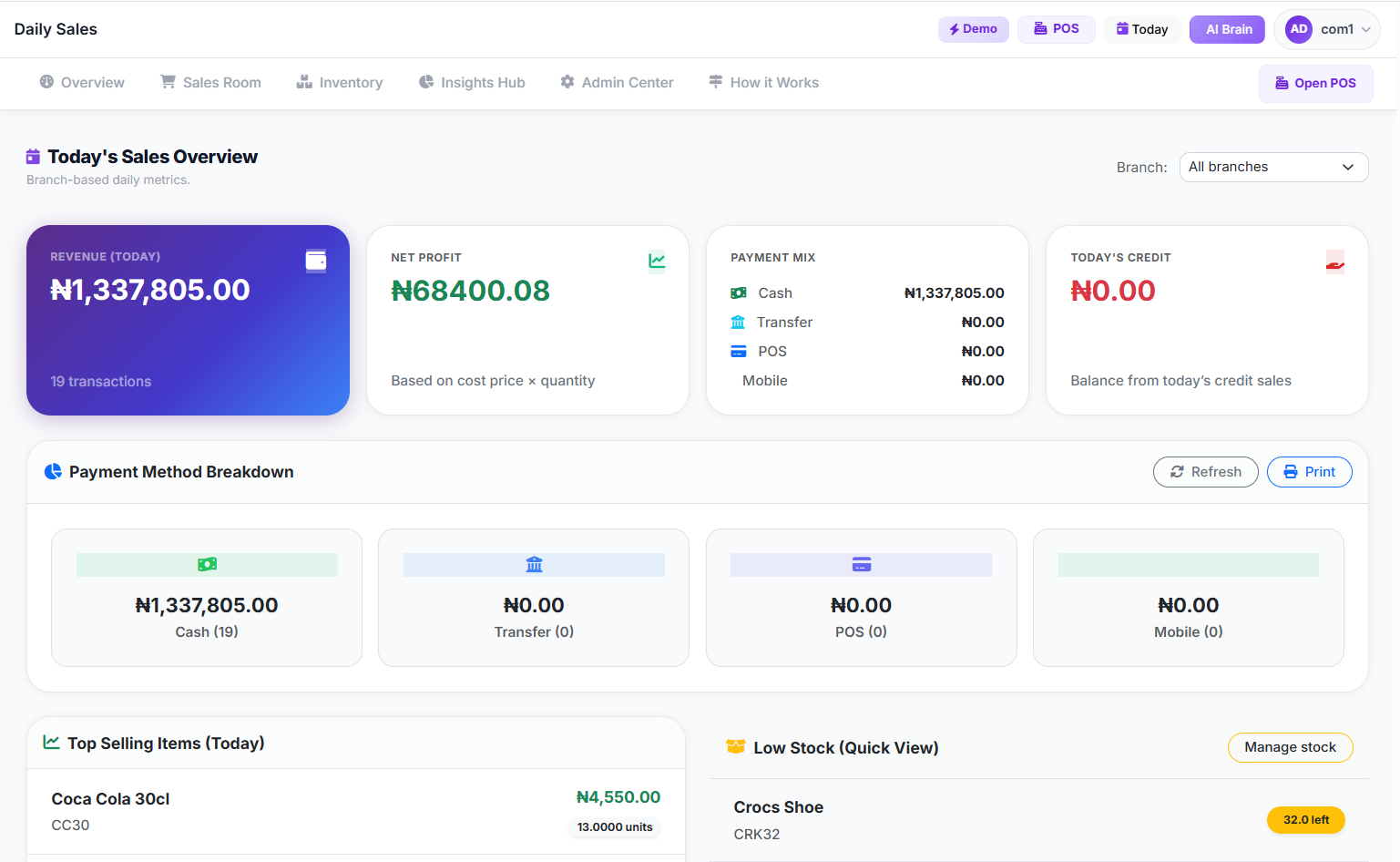 daily performance
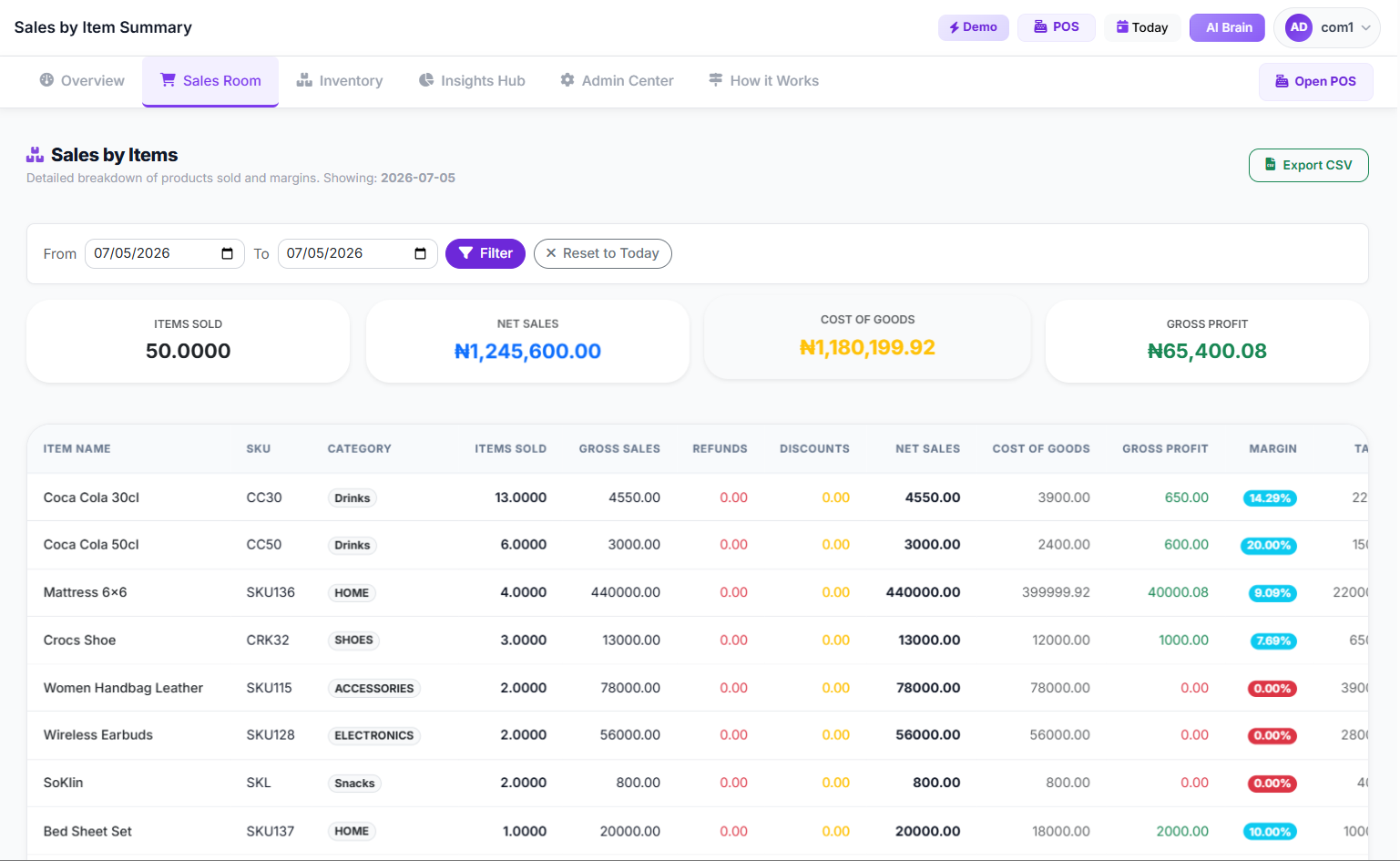 product performance
 A small business owner reviewing sales reports on
Real Questions People Ask (FAQ)
How can I reduce my wholesale startup cost in Nigeria?
The biggest way to reduce your wholesale startup cost is by starting small and scaling up. Instead of renting a massive warehouse, begin with a smaller space or even operate from a secure section of your home, if feasible and legal. Focus on a very specific niche with high-demand products, reducing your initial stock purchase. You can also buy a used delivery Keke Napep instead of a new van, and handle some tasks yourself instead of hiring multiple staff immediately. Prioritize essential equipment like a generator over fancy fittings. Most importantly, have a clear business plan to avoid unnecessary expenses.
Is a wholesale business profitable in Nigeria?
Yes, a wholesale business can be very profitable in Nigeria, especially if you identify a strong niche, source products competitively, and manage your operations efficiently. The key is volume. You might have smaller margins per item compared to retail, but you make up for it by selling large quantities. Success depends on factors like market demand, your ability to manage logistics, control costs, and maintain healthy cash flow. Good inventory management software for supermarkets in Nigeria or any wholesale business can significantly boost your profitability.
What are the biggest risks for a distribution business Nigeria?
The biggest risks include fluctuating exchange rates (if importing), unstable power supply, poor road infrastructure affecting logistics, intense competition, and, crucially, inadequate cash flow management. Customer credit defaults are also a significant risk. Without proper systems to track inventory, expenses, and customer debts, you're exposed to potential losses. Political instability and changes in government policy can also impact import/export and general business operations.
How much working capital do I need for a wholesale business?
You should aim for at least 3-6 months of operating expenses as working capital. This includes rent, salaries, utilities, transportation, and other recurring costs. For a small wholesale operation, this could be ₦300,000 to ₦500,000. For a larger, more established distribution business Nigeria, it could easily be ₦1,500,000 to ₦2,500,000 or more. This buffer helps you navigate slow sales periods, unexpected expenses (like generator repairs or fuel price hikes), and delayed payments from customers without dipping into your core business investment.
Can I start a wholesale business with less than ₦1,000,000?
It's challenging but possible, especially if you start extremely lean. You would need to operate from a very low-cost location (perhaps even your home if regulations allow), focus on a very specific, high-demand product with minimal initial stock (say, ₦300,000 - ₦400,000), and handle all logistics yourself. Your rent would need to be on the lowest end (₦150,000 annually, with ₦150,000 security deposit), and you'd have very little working capital. You'd also need to secure all necessary registrations and permits (₦20,000 - ₦75,000). This approach requires immense dedication and a rapid turnover of stock to generate cash flow quickly. It's a high-risk, high-effort strategy, but not impossible if you're resourceful.
Your Next Move
Now you have a clearer picture of how much capital to start a wholesale business, and it's probably more than you initially thought. That's good. It means you're prepared. The next step is to put this knowledge into action. Start with that detailed business plan, calculate your actual wholesale capital needs, and then secure your funding.
Don't let manual processes hold you back. If you're looking to manage your distribution business Nigeria efficiently, track inventory, handle multiple branches, and understand your true profit, then a system like SwiftPOS is designed for you. It's a complete business management and POS system that helps you sell products, collect payments, control stock, manage customers and staff, track expenses and profit, and understand what is happening in your business — all from one system.
Ready to take control of your wholesale business and ensure your investment pays off? Learn more about SwiftPOS features today.

How to Start a Beverage Business in Nigeria: A Step-by…
Oct 21, 2026
How to Start a Wholesale Business in Nigeria: A Step-b…
Oct 21, 2026
Phone Accessories Business Startup Costs: Your Complet…
Oct 21, 2026