Phone Accessories Business Startup Costs: Your Complete Guide
SwiftPOS Team
Published October 21, 2026
₦187,500 – that's the absolute minimum you'll likely need to scrape together just to get the doors open for a small phone accessories business in a local Nigerian market. Many people think they can just buy some stock and start selling, but that figure is a stark reminder that even a lean operation has real phone accessories business startup costs. You're looking at permits, a space, some basic display, and that crucial first batch of inventory. The truth is, starting an accessories shop cost here in Nigeria, especially in 2026, involves more than just a few naira notes and a dream. You need a clear understanding of the numbers, or you'll be out of business before you even truly begin.
A bustling nigerian phone accessories market stallWhy Most People Get This Wrong from Day One
You know, I've seen it countless times. Someone gets excited about the idea of a phone business Nigeria because, let's be honest, everyone has a phone. They see the demand, they see people spending money on screen protectors, chargers, earphones – the whole nine yards. So, what do they do? They rush to Alaba International Market or Computer Village, buy a few cartons of accessories, find a small kiosk, and think they're set.
Here's the thing though – that's the wrong way to think about it. That approach rarely works beyond being a hawker. You're not just buying stock; you're building a business. You need a proper foundation. I remember this young man, Bode, who wanted to open a small spot in Surulere. He had about ₦300,000 saved up. He spent ₦250,000 on stock and then realized he had no money left for rent deposit, a generator, or even a proper sign. He ended up selling from a tray on the street corner for months, his stock getting sun-damaged, just trying to raise enough for a real shop. That's a classic example of underestimating the true phone accessories startup cost. You need to look beyond the obvious. Most guides will tell you "get a good product." Yes, that's important, but if you don't budget for the entire setup, your good product will just sit in a dusty carton. You'll lose money before you even make your first sale.
Before You Do Anything: The Foundation Work
Before you even think about buying a single charger, you need to lay the groundwork. This isn't just about money; it's about planning. Skipping these steps is like building a house without a proper foundation – it will collapse eventually.
- Market Research & Niche Selection (Time: 1-2 weeks): Who are your customers? Are you targeting high-end iPhone users in Ikoyi or budget Android users in Agege? The accessories they buy, and the prices they'll pay, are vastly different. Go to different markets, talk to other sellers (discreetly, of course), and observe. What's selling? What's missing? This helps you define your initial accessories shop cost for inventory.
- Business Plan & Budget (Time: 2-3 weeks): This is non-negotiable. You need a detailed plan. How much do you realistically expect to spend on rent, stock, staffing, and utilities? What's your projected revenue? This isn't just a formality; it's your roadmap. You can find some useful templates in SwiftPOS NG's free 40 Business Tools to help you get started.
- Legal Registration (Time: 2-4 weeks): Don't operate in the shadows. Register your business with the Corporate Affairs Commission (CAC). For a sole proprietorship, this can cost between ₦25,000 and ₦70,000. It gives you credibility and opens doors for things like bank accounts and future partnerships.
- Action Item: Visit the CAC website or a reliable agent to understand the registration process for your chosen business structure.
- Secure Your Location (Time: 1-3 months): This is often the biggest chunk of your initial capital. Shop rent in Nigeria is paid annually, and it varies wildly.
- For a small kiosk in a local town, you might find something for ₦80,000 per year.
- A decent shop in a busy Lagos suburb could be ₦500,000 to ₦1,500,000 annually.
- A prime spot on Lagos Island or in Abuja's commercial districts could hit ₦2,500,000 or more.
- Remember, you'll also likely need a security deposit, usually 6 months to a year's rent, so budget an extra ₦40,000 to ₦1,250,000 for that.
- Action Item: Identify 3-5 potential locations. Inquire about annual rent, security deposit, and any agency fees.
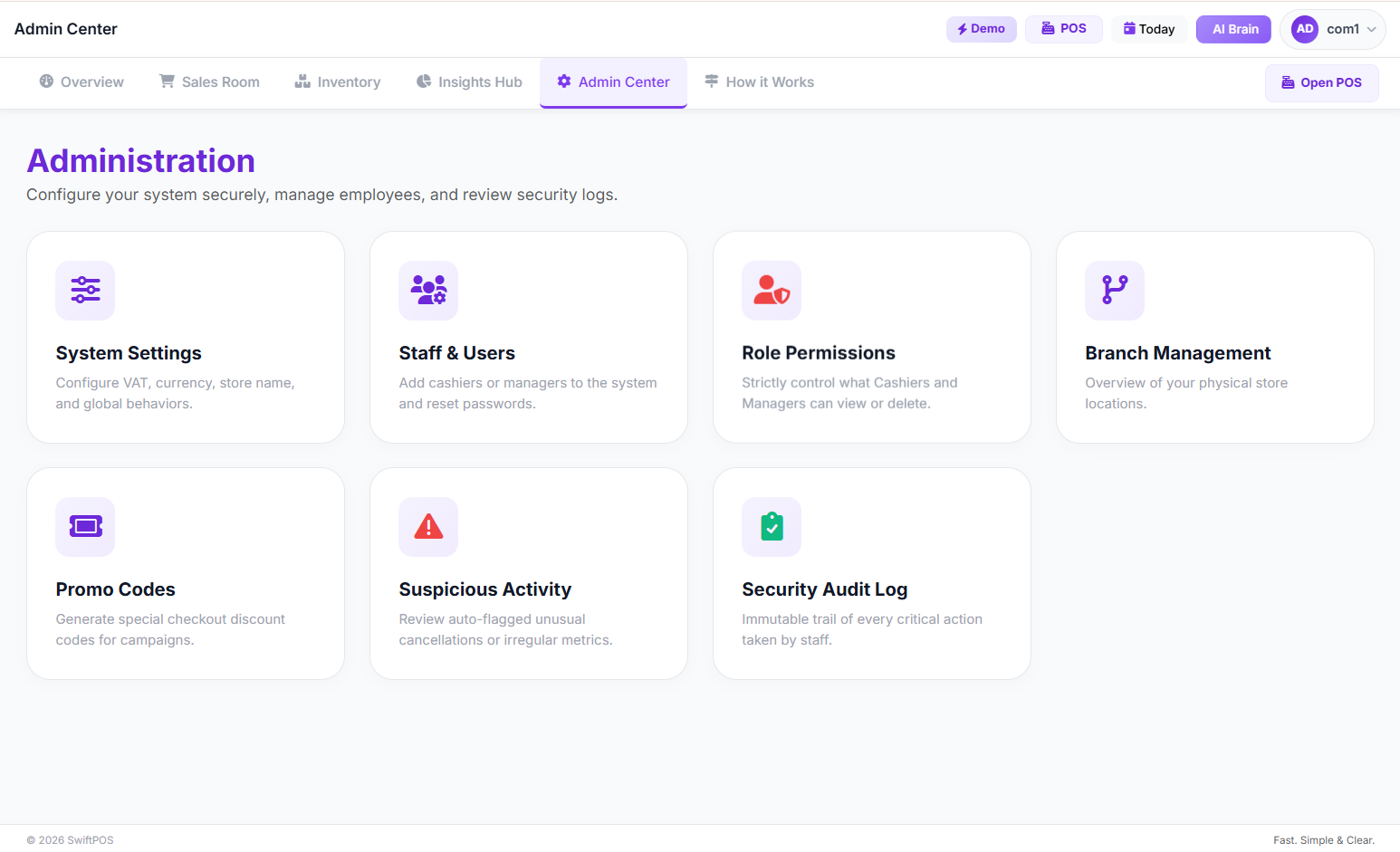 Admin Center Hub
<br>
The Step-by-Step Path (What Actually Works)
Once your foundation is solid, you can start building. This isn't about rushing; it's about being strategic.
Step 1: Initial Stock Purchase – Go for Variety, Not Volume (₦150,000 - ₦1,000,000)
Your first stock purchase is critical. Most new businesses make the mistake of buying too much of one thing. You want variety. Start with a diverse range of fast-moving items: chargers (Type C, Micro USB, iPhone), earphones (wired and wireless), screen protectors for popular phone models, phone cases, and power banks. Don't forget small items like SIM ejector tools and memory cards.
Why it matters: You need to see what sells in your* specific location. What's hot in Balogun Market might not be in Computer Village.
- Common shortcut that backfires: Buying a huge quantity of a single "hot" item because it's cheaper. What if it suddenly goes out of fashion or a newer model comes out? You're stuck with dead stock.
- Action Item: Make a list of 20-30 different accessory types. Research wholesale prices from suppliers in places like Alaba or Onitsha Main Market. Aim to buy smaller quantities of each to test the waters. Your initial stock budget could range from ₦150,000 for a very basic stall to ₦1,000,000 for a more diverse inventory.
Step 2: Shop Fittings & Essential Equipment (₦75,000 - ₦340,000)
This is where your shop starts looking like a business. You need shelves to display your goods, a counter, and certainly, a generator. Power is not constant in Nigeria, you know this.
- Display Shelves/Showcase: You're looking at ₦30,000 to ₦150,000. Basic wooden shelves are cheaper, but glass display cases offer better security and presentation.
- Generator: A small 'I-better-pass-my-neighbour' generator is essential. Budget ₦45,000 to ₦120,000. Don't skimp here; constant power means you can operate, charge customer phones (a potential extra service!), and keep your devices running.
- Miscellaneous: Signage, basic tools, maybe a small stool or chair. Budget ₦20,000 to ₦70,000.
- Why it matters: A well-organized shop looks professional and makes it easier for customers to browse. A generator keeps you in business when NEPA decides to go on holiday.
- Common shortcut that backfires: Using makeshift displays or relying solely on public power. Your shop looks unappealing, and you lose sales every time there's a blackout.
- Action Item: Get quotes for shelves and a counter. Purchase a reliable small generator.
Step 3: Set Up Your Operations – The Brains of Your Business
Now, this is where many small businesses, especially those currently using manual ledgers or basic Excel sheets, really miss out. You need a system to manage your sales, inventory, and customers from day one. Relying on paper or memory? That's a recipe for revenue leaks and stock losses. I've seen shops lose thousands of naira because they couldn't track what was sold, what was returned, or what simply "disappeared."
This is where a tool like SwiftPOS NG comes in. It’s not just a cash register; it's a complete business management platform. You can use it to:
- Track every sale: Whether it's cash, POS, or bank transfer, every transaction is recorded.
- Manage your inventory: Know exactly what you have, what's selling fast, and what's gathering dust. You can add products, update stock, and even set wholesale pricing.
- Understand your profit: This is key. SwiftPOS NG doesn't just show you sales; it helps you calculate your gross and net profit after factoring in expenses.
- Manage staff and permissions: If you have staff, you can control what they can access and do, preventing theft and errors.
- Why it matters: You need real-time data to make smart decisions. Are those new earphones selling? Did the last batch of screen protectors make a profit after all the generator fuel? Without a system, you're guessing, and guessing is expensive.
- Common shortcut that backfires: Sticking with manual record-keeping because it seems "cheaper." In reality, you're losing more money to errors, untracked stock, and missed insights than the cost of a good system. Check out Why Manual Retail Management Is Costing Nigerian Shops Money to understand this better.
- Action Item: Look into a robust POS system. SwiftPOS NG offers a 14-day free trial, so you can test it out without commitment. Learn how to set up your SwiftPOS account properly.
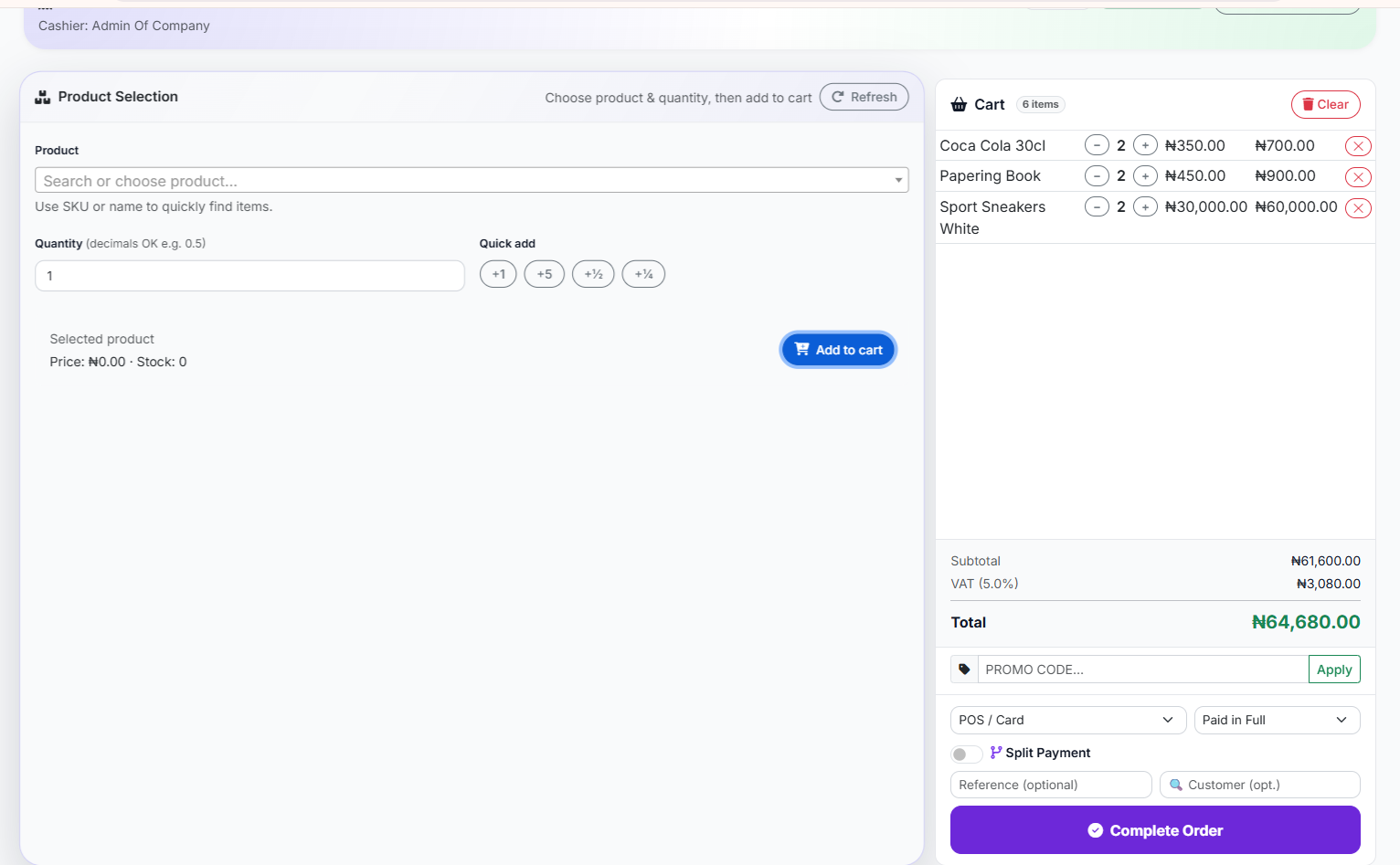 Classic POS Interface (List select)
<br>
Step 4: Hiring & Training (If Applicable) (₦45,000 - ₦80,000/month per staff)
If you plan to run your shop alone, you can skip this for now. But if you envision growth, or need help from day one, you'll need staff. A sales assistant in a local market might earn ₦45,000-₦60,000 per month, while experienced staff in a busier shop could command ₦70,000-₦80,000.
- Why it matters: Good staff can make or break your customer experience. They are your front line.
- Common shortcut that backfires: Hiring friends or family without clear roles or training, or paying too little and getting unreliable workers.
- Action Item: Define roles, create a simple training plan, and budget for at least one month's salary for any staff you hire.
The Numbers That Will Make or Break You
Let's talk real money for your phone accessories business startup costs. These are the figures you absolutely need to have in your head, not just as estimates, but as committed funds.
Initial Startup Costs (One-Off Expenses):
- Shop Rent (Annual): ₦80,000 - ₦2,500,000 (Small town kiosk vs. prime Lagos Island shop). This is often your biggest initial outlay.
- Security Deposit (Rent): ₦40,000 - ₦1,250,000 (Typically 6 months to 1 year of rent). Don't forget this!
- Initial Stock Purchase (Wholesale): ₦150,000 - ₦1,000,000 (Basic range for a small stall vs. diverse inventory for a medium shop).
- Display Shelves/Showcase: ₦30,000 - ₦150,000 (Basic wooden shelves vs. glass display cases).
- Generator (Small 'I-better-pass-my-neighbour'): ₦45,000 - ₦120,000 (Essential for power in most locations).
- Business Registration (CAC): ₦25,000 - ₦70,000 (Sole proprietorship vs. limited company).
- Miscellaneous (Signage, basic tools, initial branding): ₦20,000 - ₦70,000.
Honestly, this range surprised me when I first compiled the data. It's a wide gap, but it accurately reflects the Nigerian reality from a small town kiosk to a high-end Lagos shop.
Monthly Running Costs (Ongoing Expenses):
- Staff Salary (per person): ₦45,000 - ₦80,000.
- Monthly Electricity/Fuel for Generator: ₦15,000 - ₦60,000 (Depending on power supply reliability and generator usage). You’ll be spending a lot on fuel, especially if you’re in an area with poor power.
- Internet/Data: ₦5,000 - ₦15,000 (For POS system, online presence, etc.).
- SwiftPOS NG Subscription: Starts from a very affordable rate, depending on your business size and features needed. Check their pricing page for details.
- Replenishing Stock: This isn't a fixed cost, but you need to budget for continuous restocking as items sell. This will be your biggest variable cost.
- Working Capital (First 3-6 months): ₦100,000 - ₦500,000. This is crucial for unexpected costs, slow sales periods, and ensuring you can re-stock. Many businesses fail because they run out of cash before they break even.
- Expected Monthly Revenue: ₦100,000 - ₦1,500,000. This is a huge range, from a small stall in a local market to a well-stocked shop in a high-traffic area. Your sales volume will depend heavily on your location, product range, and marketing efforts.
- Profit Margin (Per item): 15% - 40%. Phone accessories can have decent margins, but it varies wildly by product and how good you are at sourcing. Screen protectors might have 30-40% margin, while a popular charger might only be 15-20% because of competition.
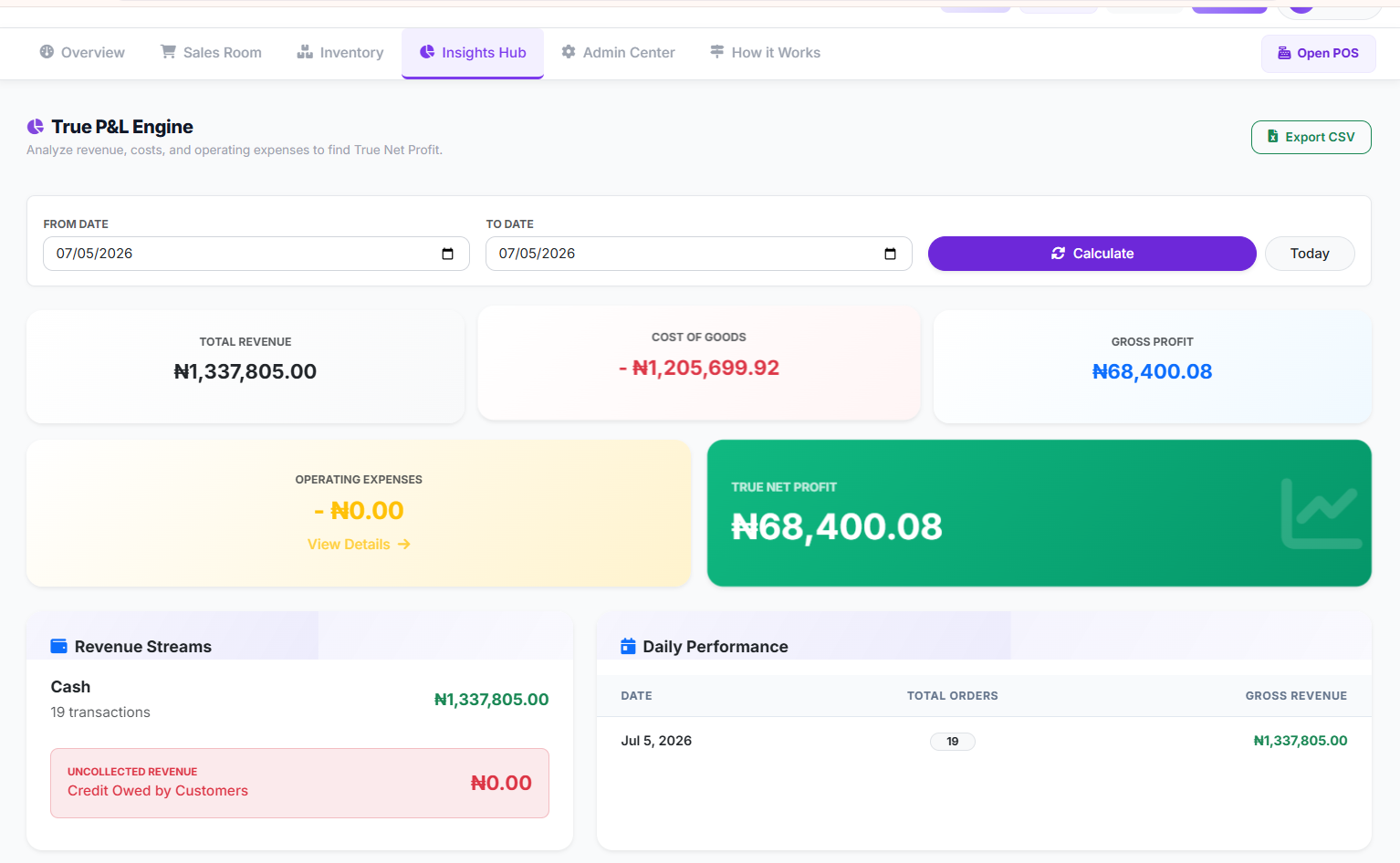 Profit and Loss Page
<br>
> "The difference between a thriving business and a struggling one isn't always about how much you sell, but how well you manage what you sell and what you spend."
Growth After Launch: The Next 90 Days
The first three months after opening are critical. This isn't the time to relax; it's the time to observe, adapt, and push for growth.
- Analyze Sales Data: Remember that POS system we talked about? Use it! Look at your . Which phone cases are flying off the shelves? Which chargers are just sitting there? Adjust your inventory purchases based on real data, not guesswork. SwiftPOS NG’s
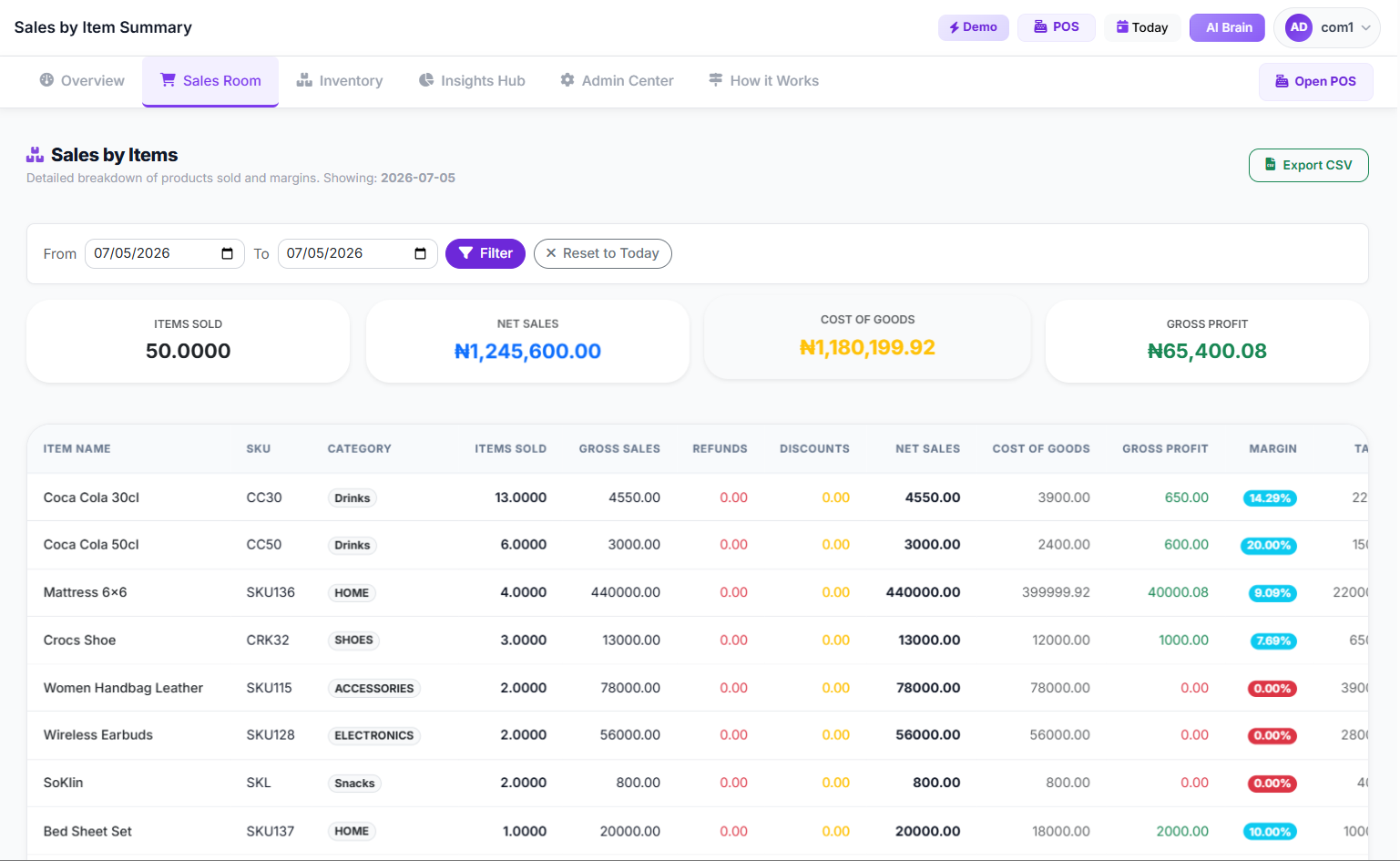 sales by item pagecan show you these trends clearly.
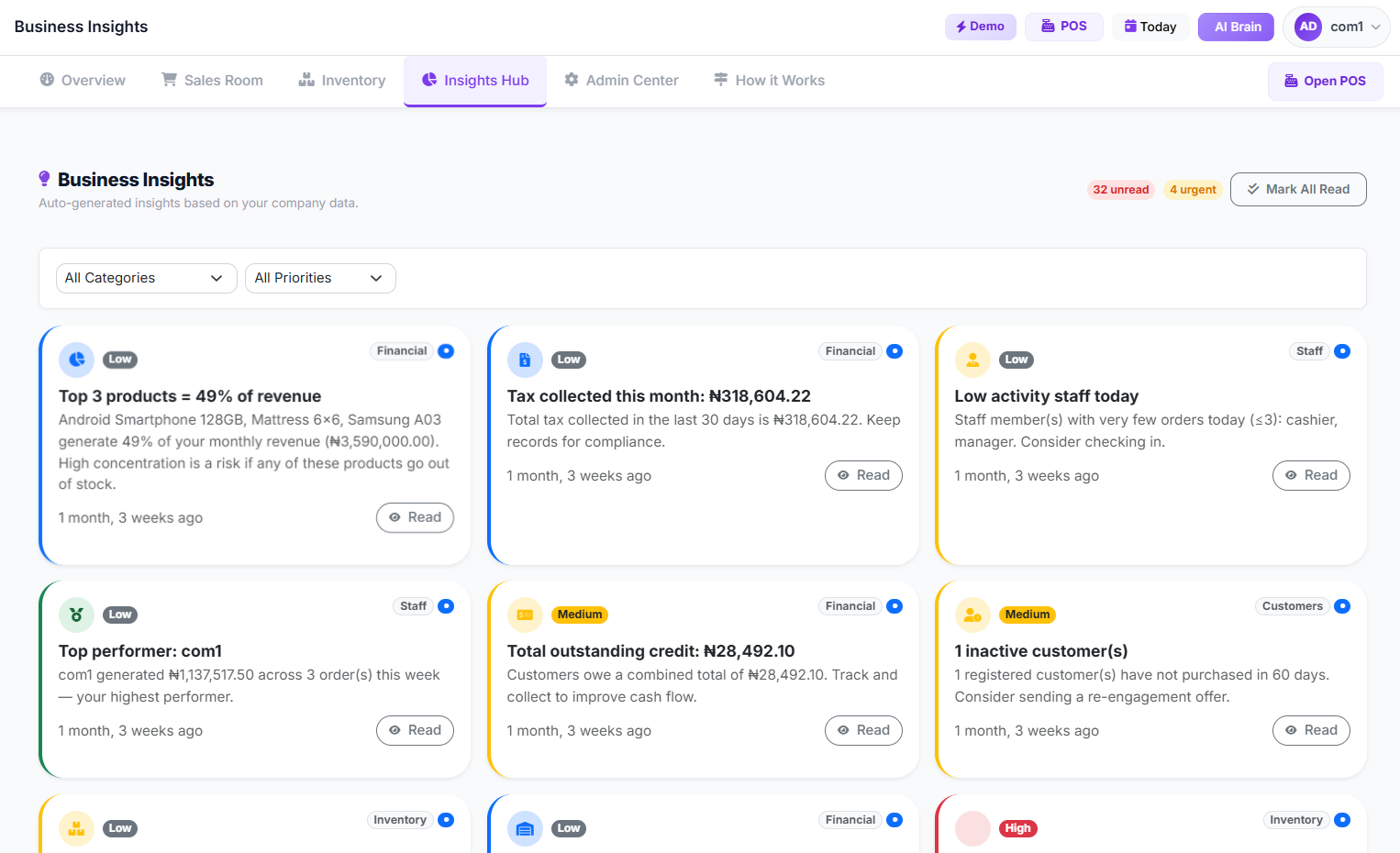 business insights page
- Customer Feedback: Talk to your customers. What do they like? What are they looking for that you don't have? A simple question like, "Are you finding what you need?" can give you invaluable insights.
- Local Marketing: Even for a small retail startup, local marketing works. Print flyers, run small promotions, partner with a nearby phone repair shop. Offer a small discount for first-time customers or bundle deals (e.g., screen protector + case).
- Manage Cash Flow Tightly: Keep a close eye on your expenses. Review your regularly. Are you overspending on fuel? Can you negotiate better prices with suppliers? Every naira saved is a naira earned.
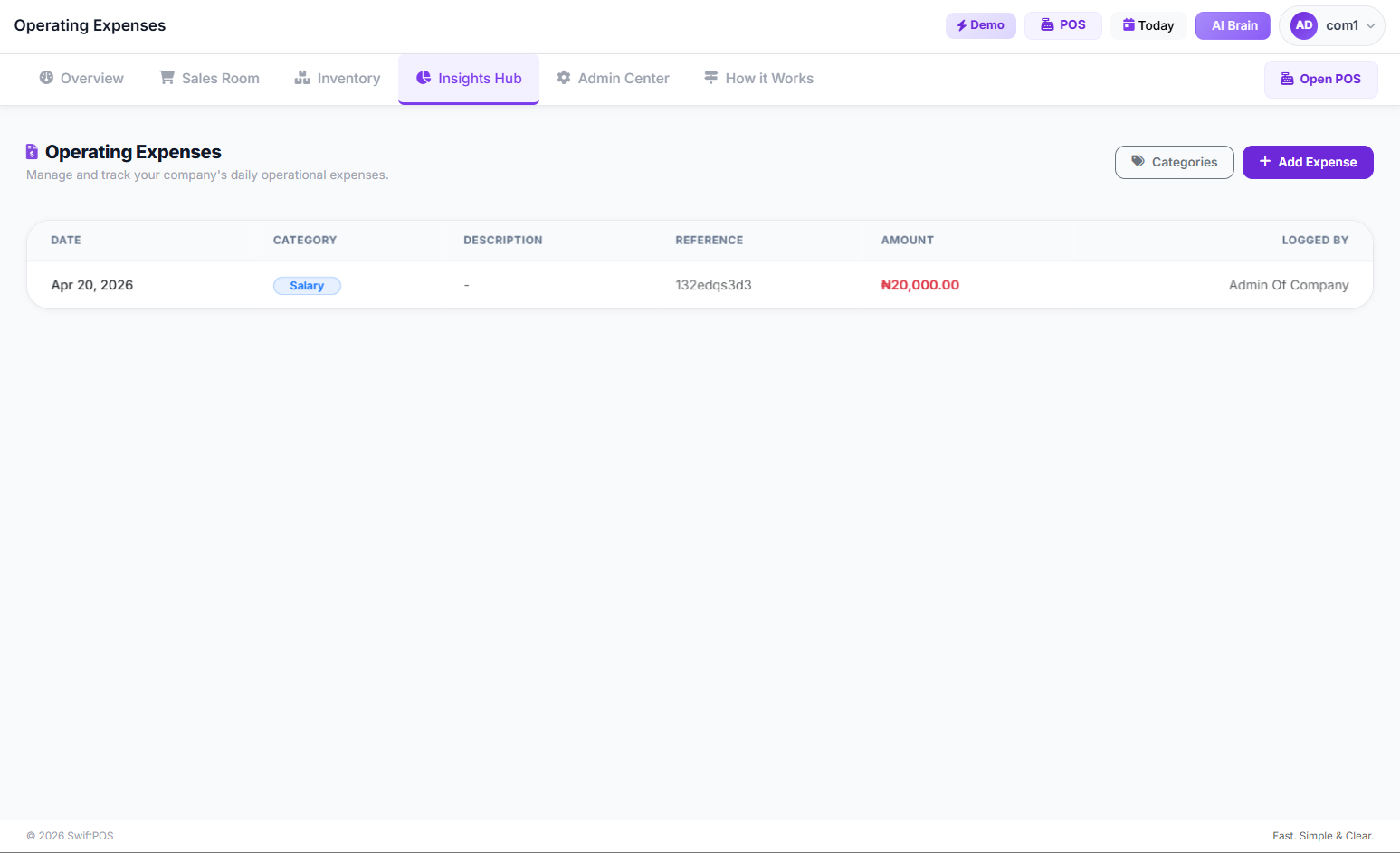 expenses list management page
- Build Supplier Relationships: Good relationships with your wholesalers mean better prices and credit terms down the line. This can significantly reduce your accessories shop cost over time.
- Consider Expanding Offerings: Maybe you start with just accessories, but after 90 days, you might see demand for minor phone repairs (screen replacement, charging port fix). That's a natural extension for a phone business Nigeria.
- Monitor Staff Activity: If you have staff, use your system's or suspicious activity reports. This helps you ensure accountability and prevent internal losses.
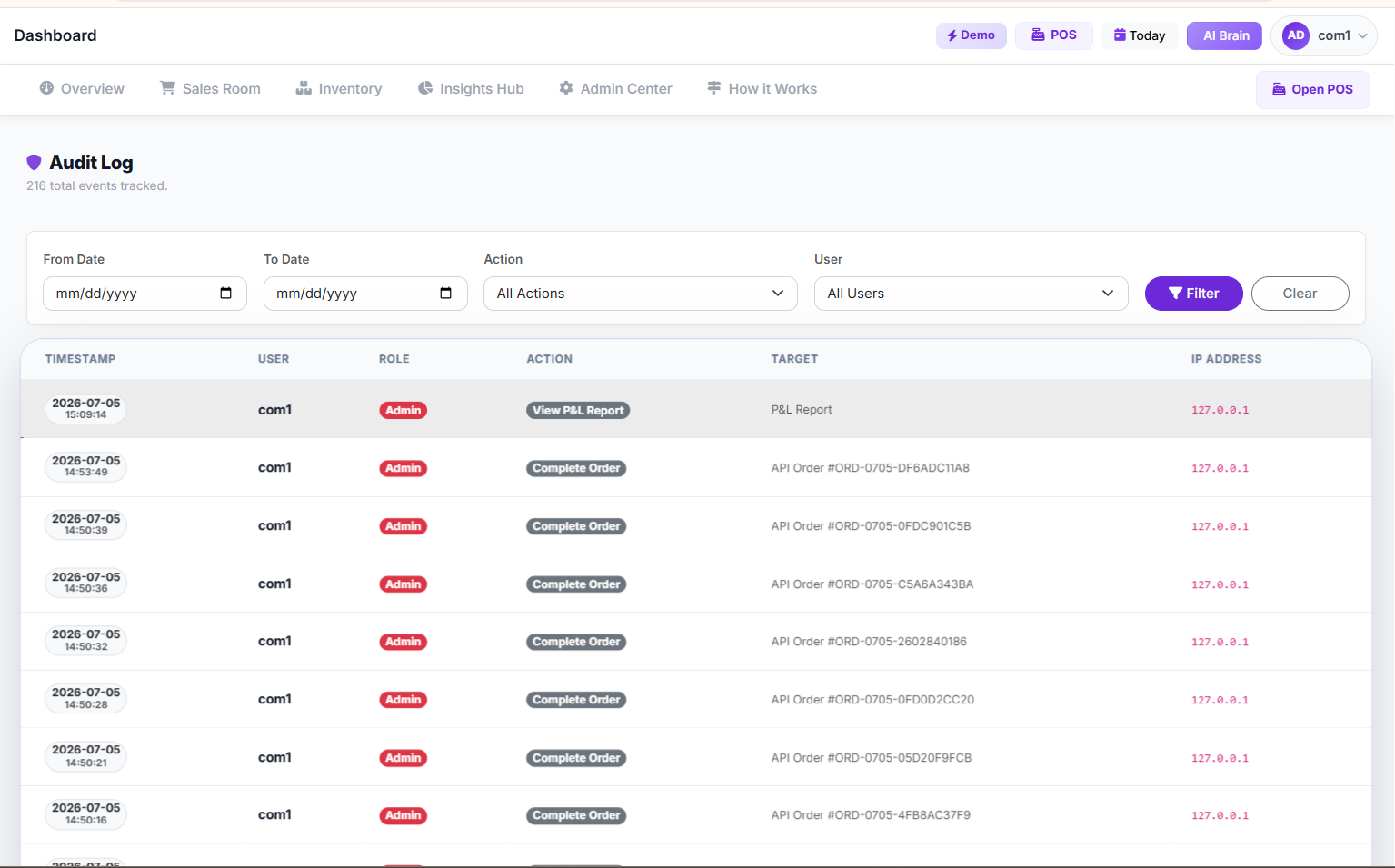 audit log page
FAQ: Answers to What You're Actually Googling
Q1: How much money do I really need to start a phone accessories business in Lagos?
For a decent, small-to-medium phone accessories shop in a good Lagos location, you're realistically looking at a minimum of ₦1,500,000 to ₦3,000,000 for your phone accessories startup cost. This covers annual rent, a security deposit, diverse initial stock, display units, a generator, and some working capital. If you're targeting a prime commercial area, it could easily go up to ₦5,000,000 or more. Remember, rent and security deposits are the biggest chunk of this, and they are usually annual payments.
Q2: Is a phone accessories business profitable in Nigeria in 2026?
Yes, it can be very profitable, but it's competitive. The key is knowing your market, sourcing quality products at good prices, and managing your inventory effectively. With profit margins per item ranging from 15% to 40%, high sales volume can lead to substantial profits. However, without proper inventory management and expense tracking, you could be busy but not truly profitable. This is where a system that helps you track your monthly profit margins becomes indispensable.
Q3: Where can I source phone accessories wholesale in Nigeria?
The major hubs are Alaba International Market in Lagos and Onitsha Main Market. For more specialized items, Computer Village in Ikeja is also a good option. You'll find a wide range of suppliers there. Always compare prices from multiple vendors and try to build relationships for better deals. You can also explore online wholesale platforms, but always verify the supplier first.
Q4: Do I need a physical shop, or can I sell online?
While online sales are growing, for phone accessories in Nigeria, a physical shop still holds significant advantages. Customers often want to see and feel cases, test earphones, or get a screen protector applied immediately. A physical presence builds trust and allows for impulse purchases. That said, having an online presence (even just a WhatsApp Business account) to complement your physical shop is a smart move. It allows you to reach more customers and even offer delivery services.
Q5: What's the biggest mistake new phone accessory shop owners make?
Without a doubt, it's poor inventory management. They either overstock items that don't sell, run out of popular items, or can't track what they actually have. This leads to lost sales, expired goods, and even theft. I've seen businesses crumble because they didn't know their true stock levels or what their actual profit was on each item. That's why having a robust system for retail inventory management is so important from day one.
Ready? Here's Where to Start
Look, starting any business in Nigeria, especially a retail startup like a phone accessories shop, requires grit, smarts, and a clear plan. You've got the passion, now you need the tools and the knowledge. Don't just jump in. Take the time to plan, budget, and equip yourself with the right systems.
If you're serious about not just starting, but thriving, then you need to get your operations in order from day one. Consider exploring SwiftPOS NG. It's built for Nigerian businesses like yours, helping you manage everything from sales and inventory to staff and profits. You can learn more about its features and how it can help you avoid common pitfalls. The journey might be tough, but with the right preparation, your phone accessories business can be a huge success.