How to Start a Phone Accessories Business in Nigeria: A Step-by-Step Guide
SwiftPOS Team
Published October 21, 2026

Everyone tells you that to start a phone accessories business in Nigeria, you just need a small shop and some stock from Alaba. "Just open shop, the customers will come!" they'll say. Honestly, that's half-truth, half-folktale, and it's exactly the kind of advice that leaves many promising ventures gasping for air by their second year.
Building a successful phone accessories business in Nigeria in 2026 demands more than just a physical presence; it requires strategic planning, smart inventory management, and a keen eye on your finances. If you’ve been told it’s easy money, prepare for a dose of reality – and a roadmap to actually make it work. This guide will walk you through exactly how to start a phone accessories business in Nigeria, step-by-step, ensuring you build something sustainable, not just another roadside stall.
A bustling phone accessories market stall in lagosThe Reality Check: What Nobody Tells You About the Phone Business
We all see the thriving phone accessories shops in Computer Village or Onitsha Main Market and think, "I can do that!" But what you don't see are the silent struggles, the expired stock, the missing cash, and the thin profit margins that many owners grapple with daily. This isn't just about selling chargers and screen protectors; it's about navigating a competitive landscape with fluctuating currency rates and unpredictable power supply.
Most people underestimate the true startup cost for a decent accessories shop in Nigeria. They focus on the initial stock and forget everything else. For instance, a small kiosk in a local market might go for ₦80,000 annually, but a prime spot in a high-traffic area in Lagos or Abuja could easily set you back ₦2,500,000 per year. That's a massive difference, isn't it? Then there's the power. You simply cannot run an electronics business without a reliable power source. A small generator, crucial for consistent operations, costs anywhere from ₦70,000 to ₦180,000. Neglecting these seemingly minor details is how businesses quickly run into trouble, bleeding cash on unexpected expenses.
Then there's the issue of competition. Every street corner, every major market, has multiple people selling similar items. How do you stand out? It's not just about having the cheapest price; that's a race to the bottom that no small business wins. It’s about offering value, reliability, and an experience that keeps customers coming back. Many also overlook the sheer volume of products. You might start with ₦150,000 worth of basic chargers and earphones, but to truly compete, you need a wider variety – power banks, smartwatches, unique cases – pushing your initial stock purchase closer to ₦1,500,000. And managing all that? That's where the real work begins, far beyond a simple notebook.
What You Actually Need to Get Started
Before you even think about buying your first set of Bluetooth earphones, let's talk about the essentials. This isn't a "nice-to-have" list; these are your non-negotiables if you want your phone accessories business to survive past its first birthday in Nigeria.
Non-Negotiables:
- Location, Location, Location: This isn't just a cliché; it's gospel for any retail business. You need foot traffic. Consider areas near universities, busy bus stops, tech hubs, or popular markets. The annual shop rent can range from a modest ₦80,000 for a small kiosk in a bustling local market to a staggering ₦2,500,000 for a prime, visible storefront in places like Ikeja City Mall or a busy street in Wuse 2. Don't compromise here.
- Initial Stock: This is the heart of your business. Start with high-demand items: chargers (fast chargers, Type-C, iPhone), power banks, screen protectors (tempered glass), earphones (wired and wireless), and popular phone cases. A realistic budget for a decent, varied initial stock would be between ₦150,000 and ₦1,500,000, depending on your scale. Don't overstock on niche items initially.
- Display Shelves/Cabinets: Presentation matters. You need secure and attractive ways to display your products. Basic wooden shelves might cost ₦40,000, but investing in glass display cabinets, especially for higher-value items like smartwatches or premium earphones, could run you up to ₦250,000. It protects your goods and makes them look more appealing.
- Reliable Power Source: NEPA, bless its heart, won't always be there for you. A small generator is essential. Budget ₦70,000 to ₦180,000 for a reliable unit. Factor in fuel costs too; that's a recurring expense.
- Business Registration (CAC): Don't be a roadside hawker. Register your business. A sole proprietorship could cost ₦25,000, while a limited company might be closer to ₦60,000. It adds credibility and opens doors to better supplier deals and financial services. You can get more details on the process from the Corporate Affairs Commission (CAC) website.
Nice-to-Haves (but quickly become necessities):
- POS System: This is where many small business owners make a huge mistake, relying on pen and paper or basic Excel. A proper Point-of-Sale (POS) system, like SwiftPOS, helps you track sales, manage inventory, understand your profit margins, and keep tabs on customer debt. It's an investment that pays for itself by preventing loss and giving you clear insights. Manual methods are costing Nigerian shops money, and you can read more about it here: Why Manual Retail Management Is Costing Nigerian Shops Money.
- Staff: As you grow, you'll need help. A single sales assistant might earn ₦45,000 to ₦80,000 per month, depending on their experience and your shop's location.
- Basic Marketing: Flyers, social media boosts, local radio ads – even ₦15,000 to ₦50,000 can make a difference in getting the word out initially.
- Internet/POS Fees: For online transactions, payment gateways, and your POS system, budget ₦10,000 to ₦25,000 monthly.
The Complete Step-by-Step Breakdown
Alright, you've got the reality check and know what you need. Now, let's break down the actual steps to launch your phone accessories business in Nigeria.
Step 1: Market Research and Niche Identification
Don't just jump in. Look around. What are people buying? What are they complaining about? Is there a particular brand of phone accessories that's always out of stock in your area? Maybe everyone sells earphones, but nobody has quality, durable phone cases for specific phone models.
Walk through markets like Balogun, Alaba International, or even local tech stores. Observe. Talk to potential customers. Ask them what they look for, what their pain points are. This isn't about copying; it's about identifying gaps. Perhaps you focus on premium accessories for high-end phones, or maybe you become the go-to spot for affordable, durable items for the masses. Your niche could be quality, affordability, or even rare, imported items. This research helps define your brand and target audience, which is critical for your marketing efforts down the line.
Step 2: Develop a Solid Business Plan
A business plan isn't just for investors; it's your roadmap. It forces you to think through every aspect of your phone accessories business. What's your unique selling proposition? How will you source your products? What are your projected sales and expenses? What's your marketing strategy?
Include a detailed financial projection: your startup costs, monthly operating expenses, projected revenue, and expected profit margins (which can range from 20% to 45% in this business, depending on your products and suppliers). This plan helps you understand if your idea is viable and how much capital you truly need. It also helps you stay disciplined when the inevitable challenges arise.
Step 3: Secure Your Location
As I said earlier, location is paramount. Find a spot with high foot traffic, visibility, and security. Negotiate your rent. Remember, shop rent is annual in Nigeria, so be prepared for that lump sum payment.
Once you have a location, consider the layout. How will you arrange your display shelves to maximize product visibility and customer flow? Is there enough space for storage? Will customers feel comfortable browsing? A well-organized shop encourages sales and reduces theft. Think about the ambiance too; a clean, well-lit store with clear pricing makes a huge difference.
Step 4: Register Your Business and Get Permits
This is non-negotiable for credibility and legality. Register your business name with the Corporate Affairs Commission (CAC). Decide if you want a sole proprietorship, which is simpler, or a limited company, which offers more protection but costs more.
Beyond CAC, you might need local government permits or trade association memberships, depending on your location. For example, if you're operating in a specific market, there might be market levies or association fees. In Lagos, for instance, there are environmental permits and signage fees. Don't skip this; operating illegally can lead to fines, closures, and unnecessary headaches.
Step 5: Source Your Products Wisely
This is where your profit margins are made or broken. You need reliable suppliers who offer quality products at competitive prices. Balogun Market, Alaba International Market, and even some wholesalers in Aba are good starting points. Look for direct importers or manufacturers if you can to cut out middlemen.
Don't buy everything from one supplier. Diversify. Compare prices. Always test samples of new products for quality. A charger that burns out in a week will ruin your reputation faster than you can say "customer service." Negotiate for bulk discounts, and always consider the lifespan and warranty of the products you're buying. Remember, a good phone accessories business thrives on repeat customers, and quality is key to that.
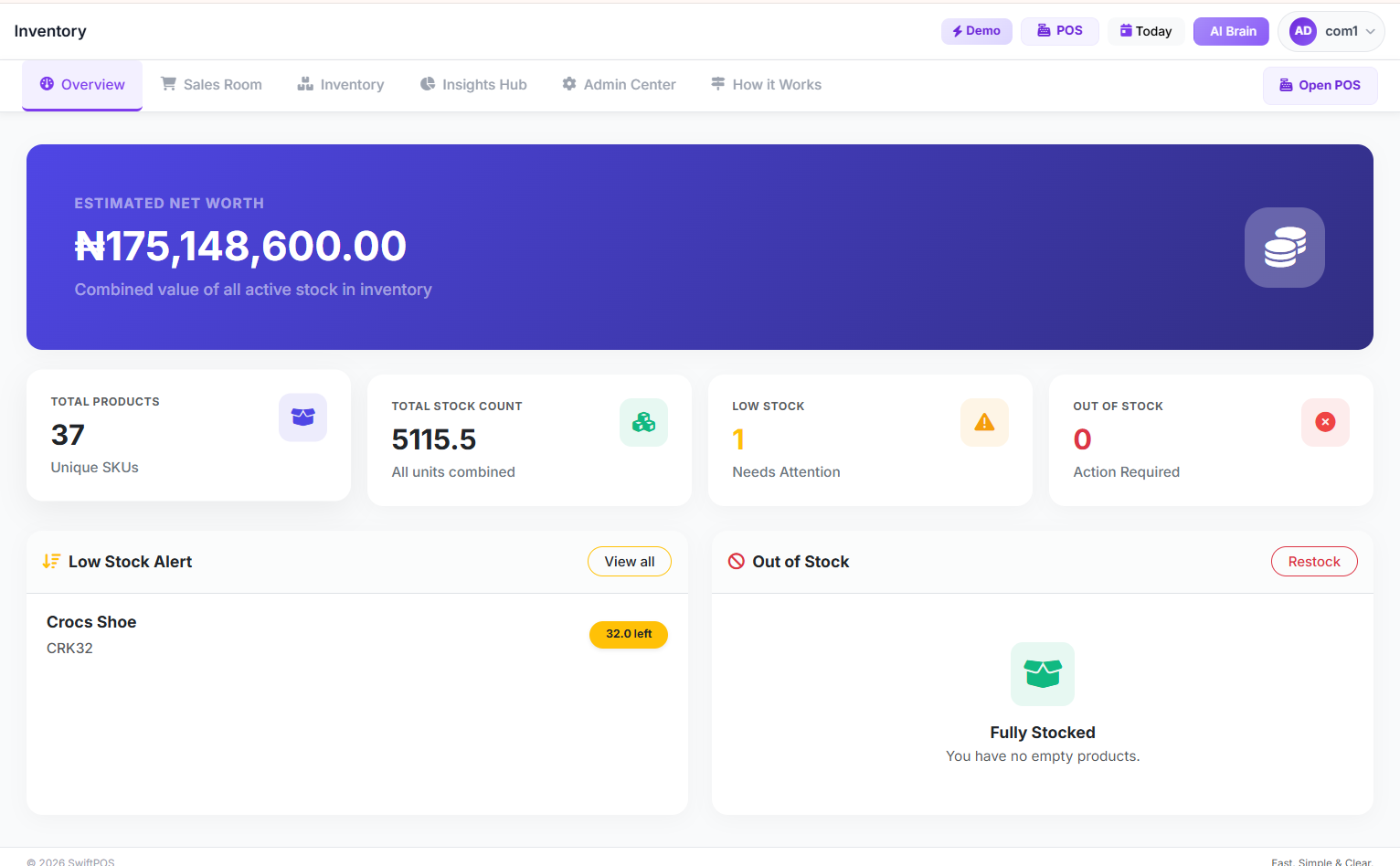 An inventory dashboard displaying product lists, stock quantities, and categories
Step 6: Set Up Your Shop and Inventory System
Once you have your location and initial stock, it's time to set up. Arrange your display shelves, ensure good lighting, and put clear price tags on everything. This is also where you need a proper system to manage your goods. Manual stock taking is tedious and prone to errors, especially as your inventory grows.
This is where a tool like SwiftPOS comes in. It's a complete business management and POS platform designed for retailers like you. It helps you manage products and stock, track quantities, and even handle fractional quantities. You can quickly sell products, take different payment methods (cash, POS/card, bank transfer), and print receipts. For a phone accessories business with hundreds of different items and variations, this is a game-changer. Imagine knowing exactly what's in stock, what's selling fast, and what's gathering dust, all without flipping through notebooks or endless spreadsheets. You can even use the SwiftPOS AI Assistant for quick product additions, as shown here:
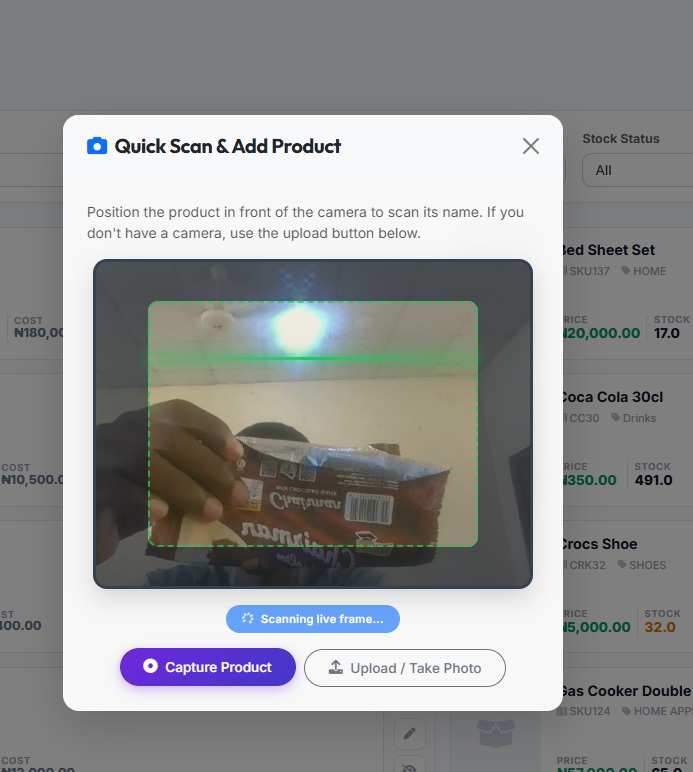 AI Quick add product scan
Step 7: Hire and Train Staff (If Needed)
If your budget allows, hiring a sales assistant can free up your time to focus on growth. Look for someone trustworthy, personable, and eager to learn. Train them not just on product knowledge, but also on customer service and how to use your POS system.
Crucially, set clear staff permissions. You don't want your new assistant having full access to your entire business data. With a system like SwiftPOS, you can easily manage staff and control what different staff can do, setting roles like cashier or storekeeper with specific permissions. This helps prevent internal theft and ensures accountability. You can learn more about this in our guide on How to Set Staff Access Permissions in Retail Software in Nigeria (2026 Guide).
Step 8: Marketing and Grand Opening
Don't just open your doors and expect a crowd. Plan a small grand opening. Offer discounts, bundle deals, or a free screen protector with every phone case purchase. Use social media – Instagram and WhatsApp are powerful tools in Nigeria. Run targeted ads in your local area.
Word-of-mouth is still king. Encourage satisfied customers to spread the word. Provide excellent customer service. Maybe even offer a small repair service for phone screens or charging ports to draw in more traffic. A little creativity goes a long way in attracting your first wave of customers.
Step 9: Monitor, Analyze, and Adapt
This is an ongoing process. Once your business is running, you need to constantly monitor its performance. Are you hitting your sales targets? What are your best-selling products? Which items aren't moving? What are your actual monthly expenses?
Your POS system becomes invaluable here. SwiftPOS helps you review sales and stock performance, giving you insights into what's working and what isn't. You can track your gross profit and true net profit, identify revenue leaks, and even forecast when stock might run out. This data-driven approach allows you to make informed decisions, adjust your strategy, and keep your business profitable. Don't be afraid to change your product mix or marketing approach if the data tells you to.
> "Many Nigerian retailers focus solely on sales volume, but true profitability lies in understanding your costs and inventory movement. Without that insight, you're just busy, not necessarily profitable."
5 Mistakes That Cost Nigerian Business Owners the Most
I've seen it countless times. Good intentions, hard work, but avoidable mistakes that drain profits. Here are five common pitfalls in the phone accessories business in Nigeria:
- Ignoring Inventory Management: Relying on mental math or a tattered notebook to track stock is a recipe for disaster. You'll lose products to theft, misplacement, or simply forgetting what you have. This leads to overstocking slow-moving items and running out of popular ones, resulting in lost sales. A provision store owner in Surulere once told me how he realized he had 50 USB cables he thought were out of stock, hidden in a dusty box. Imagine the sales he missed! This is why proper inventory management is so critical. You can learn more about avoiding these errors in our article on Nigerian Retailers: Inventory Management Mistakes Crushing Your Profits.
- Poor Cash Flow Management: Many small business owners don't separate personal and business finances. They dip into the business account for personal expenses, leading to confusion and shortages when it's time to pay suppliers or rent. Keep meticulous records of all income and expenses. Understand your true net profit, not just your sales revenue.
- Neglecting Customer Service: In a competitive market, a rude sales assistant or a shop owner unwilling to address a product issue can cost you more than just one customer. Word spreads fast, especially negative word-of-mouth. Treat every customer like gold; they are your best marketing tool.
- Underpricing or Overpricing: Pricing is a delicate balance. Underprice, and you leave money on the table; overprice, and customers go elsewhere. Research your competitors, understand your costs, and factor in your desired profit margin. Don't just pick a price out of thin air. Offer competitive prices but don't be the cheapest if it means sacrificing quality or your own margins.
- Ignoring Data and Insights: If you don't know your best-selling products, your busiest hours, or your most profitable category, you're flying blind. Many small business owners just keep selling without analyzing what's truly happening. This prevents them from optimizing their stock, marketing, and even staffing. You need to identify the 7 Key Retail Metrics Nigerian Businesses Must Track for Profit Growth.
How to Know If You're on Track (Success Metrics)
So, how do you measure success beyond just seeing money in the bank? You need key performance indicators (KPIs) to tell you if your phone accessories business is truly thriving.
- Monthly Revenue Growth: Are your sales increasing month-over-month? Even a small, consistent percentage growth (e.g., 5-10%) shows you're doing something right. Aim for a target, say ₦150,000 to ₦1,000,000 in monthly revenue, depending on your scale and location.
- Gross Profit Margin: This tells you how much profit you make from selling your products before operating expenses. For phone accessories, a healthy gross profit margin is typically between 20% and 45%. If it's consistently lower, you might need to re-evaluate your pricing or supplier deals.
- Inventory Turnover Rate: How quickly are your products selling and being replaced? A high turnover rate means your capital isn't tied up in stagnant stock. If items sit for months, you have "dead stock" – money you can't use.
- Customer Retention Rate: Are customers coming back? Loyal customers are more profitable than new ones. Implement a simple loyalty program or just focus on exceptional service.
- Average Transaction Value (ATV): How much does an average customer spend per visit? Try to increase this by upselling (e.g., "Would you like a screen protector with that case?") or cross-selling (e.g., "This power bank pairs well with these fast-charging cables.").
- Net Profit: After all expenses (rent, salaries, electricity, generator fuel, internet, etc.), what's left? This is your true take-home profit. If your net profit is consistently low despite high sales, you need to scrutinize your operating costs.
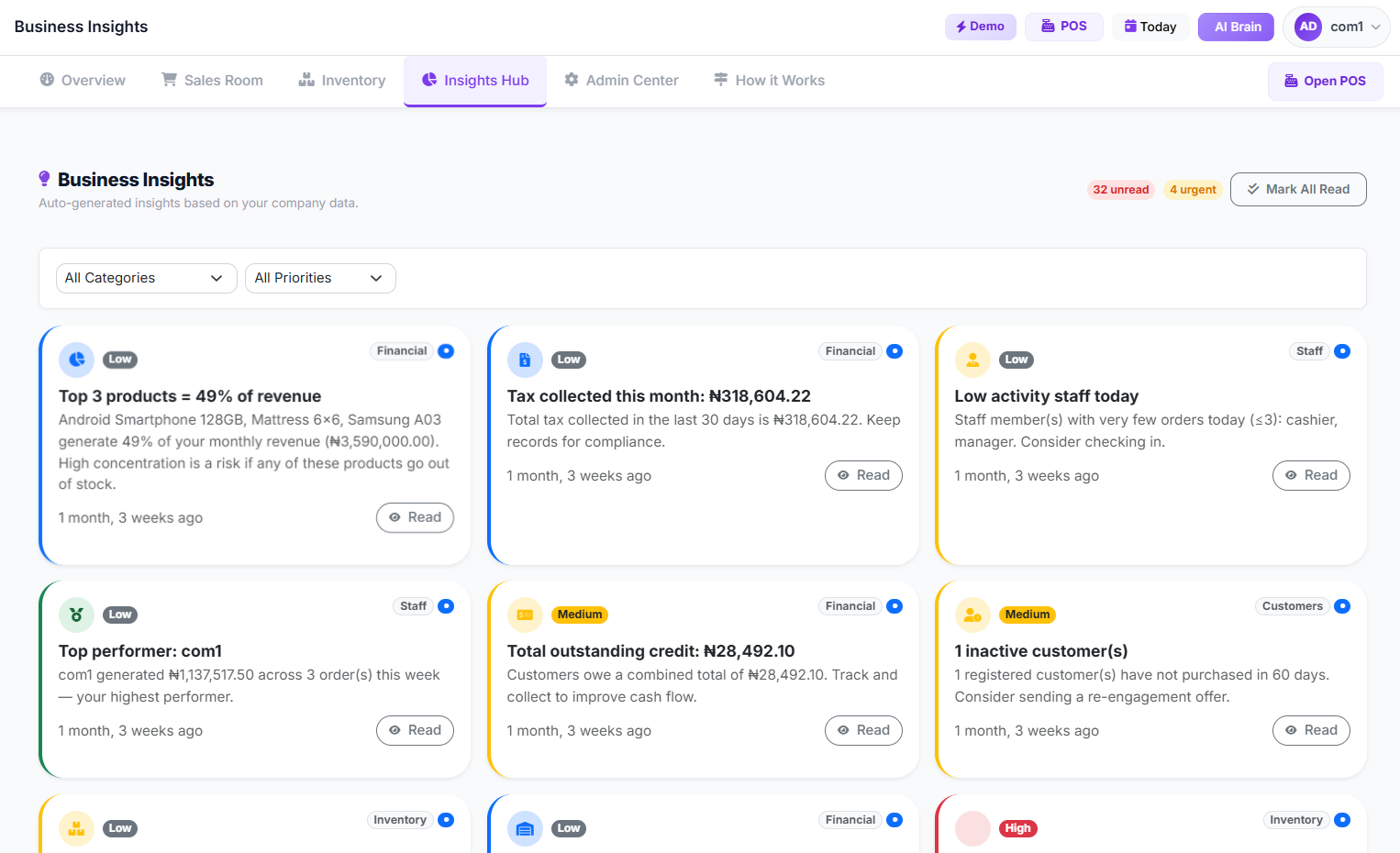 Business Insights Page
Real Questions People Ask (FAQ)
Q1: How much capital do I really need to start a phone accessories business in Nigeria?
Honestly, it varies wildly based on your ambition and location. For a very small, basic setup in a local market, you might scrape by with ₦300,000 – ₦500,000 for initial stock, basic shelves, and registration. But for a more competitive, well-stocked shop in a city like Port Harcourt or Ibadan, you should budget at least ₦1,000,000 to ₦3,500,000. This covers rent, diverse stock, a generator, proper display, and a contingency fund. Don't forget your operating costs for the first few months!
Q2: Is a phone accessories business still profitable in 2026 given the competition?
Absolutely, but you have to be smart about it. The demand for phone accessories isn't going anywhere; everyone has a phone! Profitability comes from smart sourcing, excellent customer service, and efficient management. Your gross profit margin can be anywhere from 20% to 45% if you source well. The key is to reduce waste, manage inventory tightly, and understand your true costs. Don't just sell; solve problems for your customers.
Q3: Where can I find reliable suppliers for phone accessories in Nigeria?
The major hubs are Alaba International Market in Lagos and Onitsha Main Market. You can also find good deals in Balogun Market. For specific, higher-end items, consider exploring online B2B platforms that ship to Nigeria, though you'll need to factor in import duties and shipping costs. Always try to build direct relationships with importers to get better prices and ensure product quality.
Q4: Should I sell only physical accessories or offer services too?
To stand out, offering services like screen repairs, software updates, or even phone unlocking can be a significant differentiator. It brings in additional revenue and drives foot traffic to your shop. A customer coming in for a screen repair might also pick up a new case or charger. This expands your phone business beyond just retail, creating multiple revenue streams.
Q5: How important is technology (like a POS system) for a small phone accessories shop?
Extremely important. Think about it: every day, you deal with dozens, if not hundreds, of small items. Tracking sales, managing stock levels, identifying best-sellers, and preventing theft manually is a nightmare. A POS system like SwiftPOS helps you do all of this efficiently. It reduces errors, saves time, and gives you data to make smarter business decisions. It's the difference between guessing your profits and knowing them. You can check out more about its benefits here: Benefits of SwiftPOS.
Your Next Move
Starting a phone accessories business in Nigeria in 2026 isn't a walk in the park, but with the right approach, it's a genuinely profitable venture. You need to be prepared, strategic, and willing to embrace tools that make your life easier and your business stronger.
Don't let manual processes hold you back. Take the first step towards smarter business management. Explore the features of SwiftPOS and see how it can transform your phone accessories shop, helping you manage everything from inventory to sales and staff with ease. Ready to build a business that not only survives but thrives? Sign up for your free trial today and start managing your business with the clarity it deserves.