Supermarket Profit Margins in Nigeria: How Much Do They Make?
SwiftPOS Team
Published September 03, 2026
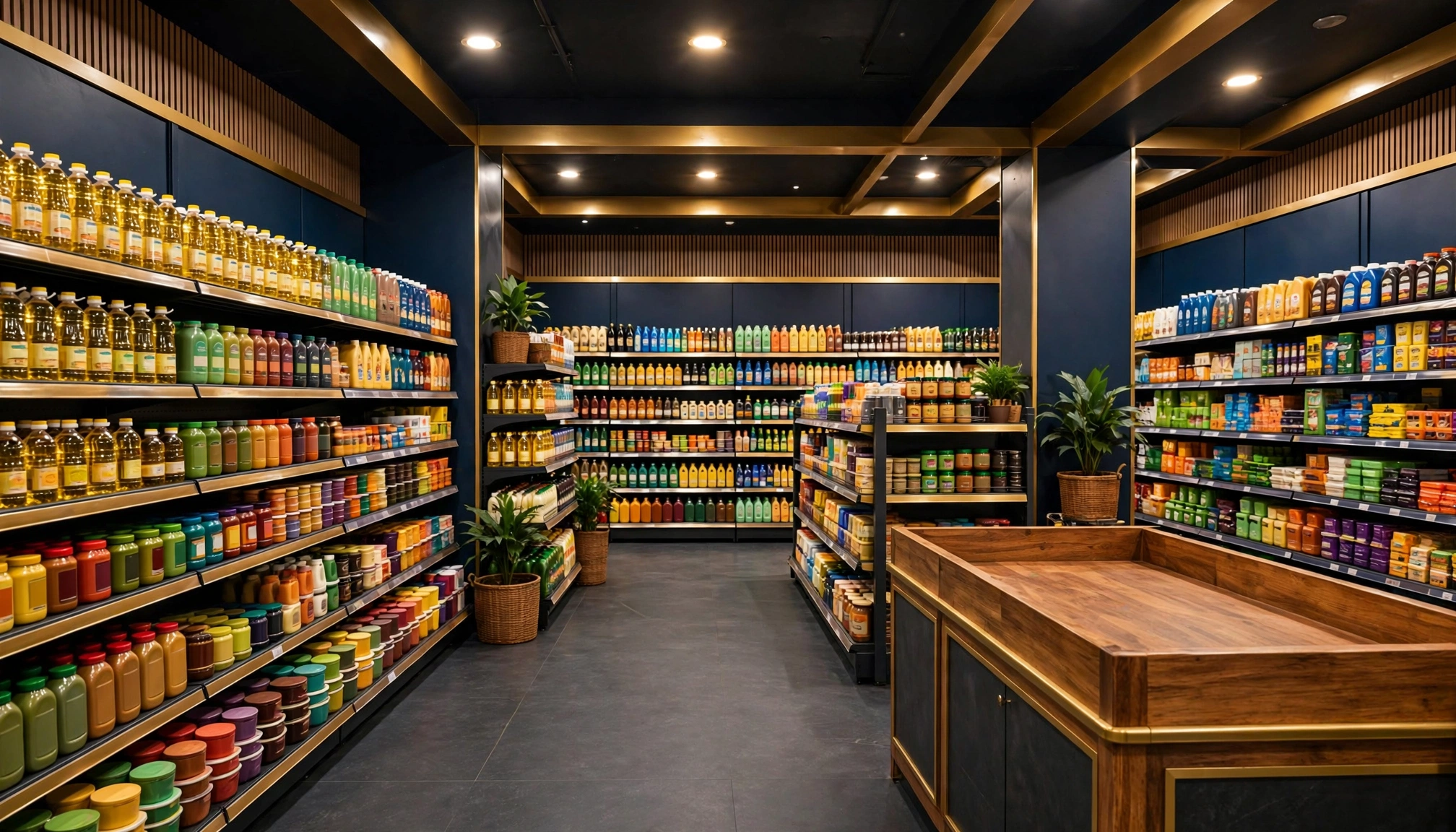
Supermarket Profit Margins in Nigeria: How Much Do They Make?
You’re running a supermarket in Nigeria, working tirelessly, watching customers come and go, but at the end of the month, the numbers just don't add up to your expectations. The cash flow feels tight, and despite high sales volumes, you're constantly asking: "Where is the profit actually going?" This uncertainty can be disheartening, making it difficult to plan for growth or even cover unexpected costs.
Busy nigerian supermarket with diverse customersThe Elusive Supermarket Profit: Why It's Hard to Pin Down
Many Nigerian supermarket owners struggle to accurately assess their true profitability. This isn't just about counting naira notes at the end of the day. The supermarket business, while seemingly straightforward, is a complex dance of high volume and thin margins. A small supermarket might generate monthly revenue between ₦1,500,000 and ₦5,000,000, while a medium-sized one in a busy location could hit ₦8,000,000 to ₦30,000,000. These figures sound impressive, but what really matters is what's left after all expenses are paid.
The core challenge lies in numerous hidden costs and inefficiencies that erode profits. Without precise data, it's easy to misjudge which products are truly profitable, where money is being lost, or how much inventory is simply sitting idle. This lack of clarity can lead to poor decision-making, impacting everything from stocking choices to staffing levels. For more on this, read our guide on Why Manual Retail Management Is Costing Nigerian Shops Money.
Understanding the Key Profit Metrics
To truly understand supermarket profit in Nigeria, we need to break down two critical metrics:
- Gross Profit Margin: This is the profit you make from selling products, before deducting operating expenses. Supermarkets typically buy goods from wholesalers at 80% to 92% of the retail price. This means your gross profit margin usually ranges from 8% to 20%. For example, if you buy an item for ₦800 and sell it for ₦1,000, your gross profit is ₦200, which is a 20% gross margin. This percentage varies greatly by product category; highly perishable goods or luxury items often have higher margins, while staple goods might have thinner ones.
The Hidden Profit Eaters in Nigerian Supermarkets
Beyond the cost of goods, several operational expenses significantly impact your supermarket profit margin:
- Rent: This is a major fixed cost. A small neighborhood supermarket might pay ₦300,000 - ₦1,500,000 per year, while a medium-sized store in a prime Lagos or Abuja location could face ₦2,500,000 - ₦10,000,000 per year.
- Staff Salaries: Labour costs are substantial. A sales attendant or cashier earns ₦45,000 - ₦80,000 per month, while a supervisor or manager can earn ₦90,000 - ₦180,000 per month. For a store with 3-5 staff, this quickly adds up.
- Power Costs: Nigeria's power situation makes this a variable and often high expense. Generator fuel alone can cost ₦80,000 - ₦400,000 monthly, depending on size and refrigeration needs. Even with grid power, electricity bills range from ₦30,000 - ₦150,000 monthly, often supplemented by generator use.
- Inventory Shrinkage: This includes theft (internal and external), damage, spoilage (especially for perishables), and administrative errors. Uncontrolled shrinkage can easily eat away 1-3% of revenue, directly impacting your net supermarket profit. Learn more about avoiding common inventory mistakes in Nigerian Retailers: Inventory Management Mistakes Crushing Your Profits.
- Operational Inefficiencies: Manual stock tracking, slow checkout processes, and poor customer service can lead to lost sales and increased operational costs. These "invisible" costs chip away at your potential profit. Our article on Hidden Costs of Manual Retail Operations in Nigeria delves deeper into this.
The Smarter Approach: Data-Driven Profit Maximization
To thrive in Nigeria's competitive retail landscape, supermarket owners must move beyond guesswork and embrace a data-driven approach. This means having real-time visibility into every aspect of your business: sales, inventory, expenses, and staff performance. Instead of waiting until month-end to see if you made money, you need insights that empower daily strategic decisions.
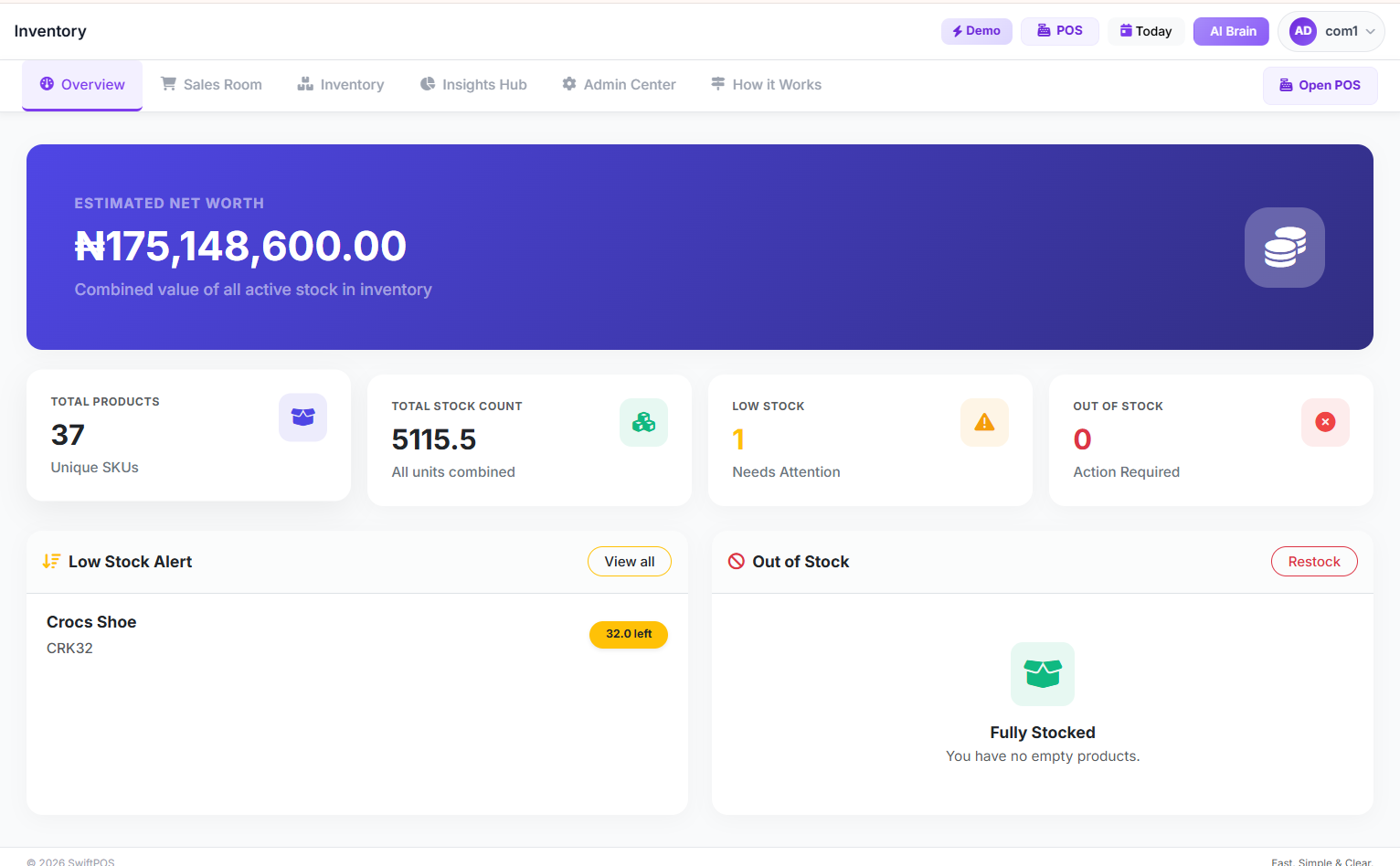 Inventory Dashboard
This smarter approach focuses on:
- Precise Inventory Control: Knowing exactly what you have, what's selling, what's expiring, and what needs reordering. This minimizes waste, prevents stockouts of popular items, and reduces capital tied up in slow-moving goods.
- Detailed Expense Tracking: Categorizing and monitoring every expense, from rent and salaries to generator fuel and cleaning supplies. This allows you to identify areas where costs can be reduced without impacting operations.
- Sales Performance Analysis: Understanding which products, categories, and even staff members are driving the most revenue and profit. This informs your purchasing decisions and marketing strategies.
- Customer Insights: Tracking customer preferences and purchasing habits to tailor promotions and improve loyalty.
- Loss Prevention: Identifying patterns of theft or error through detailed transaction logs and inventory adjustments.
How SwiftPOS NG Helps Supermarkets Boost Profitability
This is where a robust business management platform like SwiftPOS NG becomes invaluable. It’s designed specifically for Nigerian retailers, connecting every critical facet of your supermarket operations into one easy-to-use system.
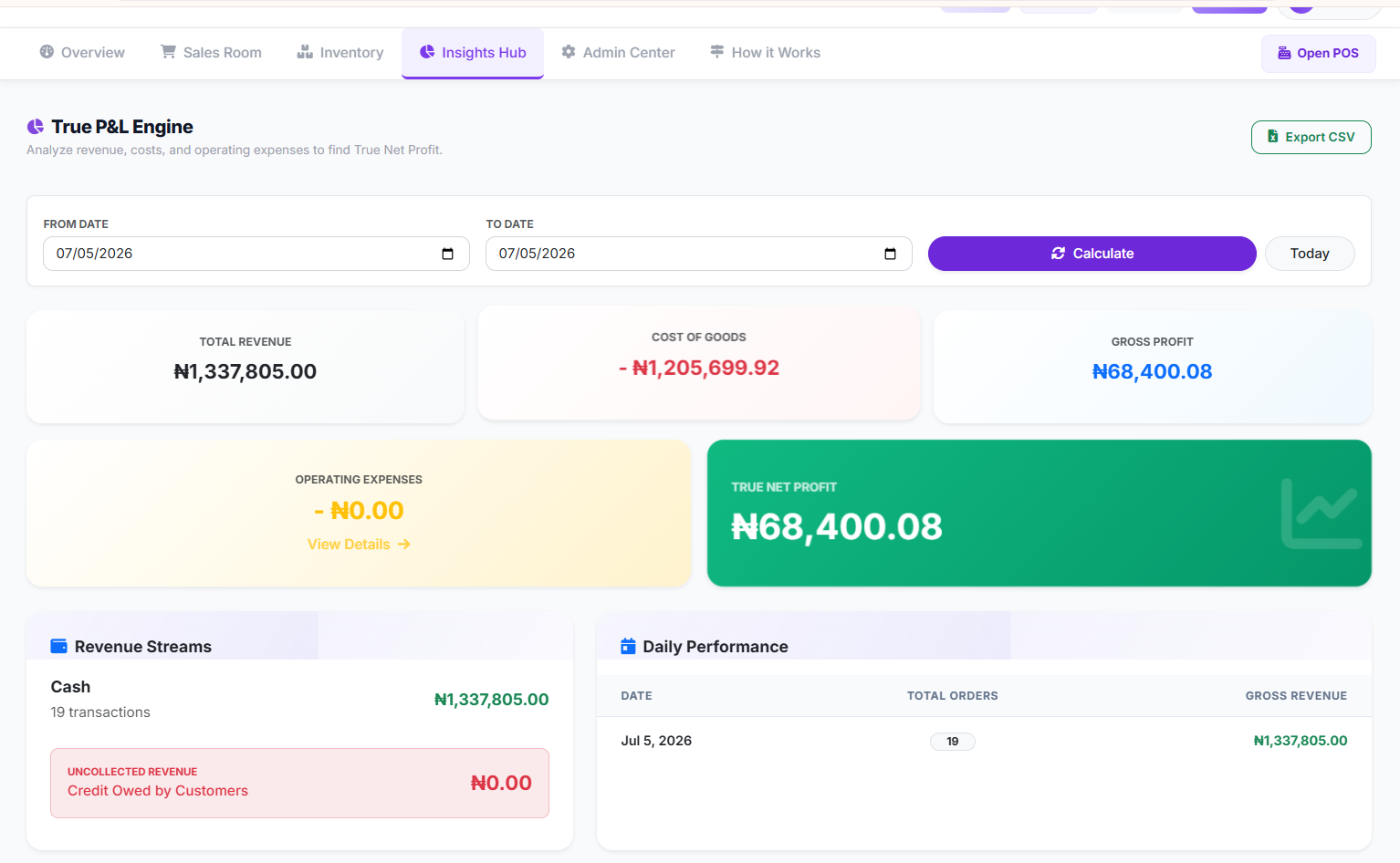 Profit and Loss Page
Here’s how SwiftPOS NG directly addresses the challenges of maximizing supermarket profit:
- Accurate Profit & Loss Reporting: SwiftPOS NG helps you track not just sales, but also your cost of goods sold and operating expenses. This means you can see your true gross profit and, crucially, your net profit margin in real-time, helping you understand the real financial health of your supermarket.
- Advanced Inventory Management: From tracking product expiration dates (critical for food items) to managing stock across multiple branches or a central warehouse, SwiftPOS NG ensures you always know what's on your shelves. It helps identify slow-moving or dead stock, preventing capital from being tied up unnecessarily, and forecasts when popular items will run out so you can restock proactively.
- Streamlined Sales & Payment Processing: With fast POS modes (Classic, Smart Grid, Barcode) and support for various payment methods (cash, POS, bank transfer, mobile money, split payments), checkout is quick and efficient, enhancing customer experience and reducing queues.
- Expense Tracking & Control: Record all your operating expenses within the system, categorizing them for clear visibility. This helps you identify spending leaks and make informed decisions to reduce overheads, directly improving your net supermarket profit.
- Staff Performance & Security: Monitor staff activity, set user permissions, and flag suspicious transactions like excessive voids or discounts. This helps prevent internal theft and ensures accountability, protecting your bottom line.
- Business Insights & Forecasting: SwiftPOS NG provides actionable insights into sales trends, product performance, and stock levels. Its smart stock forecasting feature helps you make data-driven purchasing decisions, reducing waste and optimizing inventory turnover. You can explore more about how AI can transform your retail operations in How to Manage Your Retail Store Using AI in Nigeria.
Proof: Side-by-Side Comparison
Let's look at how a modern POS system transforms supermarket operations compared to traditional methods:
| Feature | Traditional (Manual/Excel) Methods | Modern POS System (e.g., SwiftPOS NG) |
|---|---|---|
| Profit Calculation | Manual aggregation of sales and expenses; often inaccurate and delayed. | Real-time gross and net profit reports; automated expense tracking. |
| Inventory Management | Tedious manual stock counts; high risk of errors, stockouts, or overstock. | Real-time stock levels, expiry date tracking, low-stock alerts, forecasting. |
| Expense Tracking | Paper receipts, manual ledger entries; difficult to categorize and analyze. | Digital expense recording, categorization, and detailed reports. |
| Sales Analysis | Basic sales totals; little insight into best-selling items or trends. | Detailed sales by item, category, time; identifies high-profit products. |
| Loss Prevention | Difficult to detect theft or errors; reliant on trust and physical checks. | Staff activity logs, manager approvals for sensitive actions, suspicious activity flags. |
| Customer Management | Limited customer data; no tracking of credit or purchase history. | Customer database, credit management, purchase history for loyalty. |
| Operational Efficiency | Slow checkout, manual pricing updates, time-consuming data entry. | Fast barcode scanning, automated pricing, quick payment processing. |
| Decision Making | Based on intuition or incomplete historical data. | Data-driven insights, predictive analytics for stocking and sales. |
Frequently Asked Questions
Q1: What is a realistic net profit margin for a small supermarket in Nigeria?
A realistic net profit margin for a well-managed small to medium supermarket in Nigeria typically ranges from 2% to 7%. This means for every ₦1,000,000 in sales, you might retain between ₦20,000 and ₦70,000 after all operating expenses. This figure can fluctuate based on location, efficiency, and product mix.
Q2: How much capital do I need to start a small supermarket in Nigeria in 2026?
Startup capital for a small neighborhood supermarket (stock and basic fit-out) can range from ₦3,000,000 to ₦15,000,000. This covers initial stock, shelving, a basic POS machine (₦35,000 - ₦80,000), and perhaps a few refrigeration units (₦300,000 - ₦1,200,000 each). For a more detailed breakdown, read How Much Money Do You Need to Open a Mini Supermarket in Nigeria in 2026? (Full Cost Breakdown).
Q3: What are the biggest expenses eating into supermarket profit in Nigeria?
The biggest expenses are typically rent, staff salaries, and power costs (electricity and generator fuel). Inventory shrinkage (theft, damage, spoilage) is another significant but often underestimated profit eater. Efficient management of these areas is crucial for improving your overall supermarket profit.
Q4: How can I improve my supermarket's profit margin?
To improve your supermarket profit margin, focus on:
- Optimizing Inventory: Reduce waste, prevent stockouts, and manage expiry dates.
- Controlling Expenses: Track and reduce unnecessary spending on power, utilities, and supplies.
- Increasing Sales & Average Transaction Value: Offer promotions, cross-sell, and ensure excellent customer service.
- Minimizing Shrinkage: Implement better security measures and inventory controls.
- Using Technology: Employ a robust POS and business management system to gain insights and automate processes.
Q5: Is the supermarket business profitable in Nigeria in 2026?
Yes, the supermarket business can be very profitable in Nigeria, provided it is well-managed, strategically located, and efficiently operated. Despite thin margins, the high volume of transactions can lead to substantial overall profits. Success hinges on precise control over inventory, expenses, and customer satisfaction. To learn more about profitability, see our article: Is Supermarket Business Profitable in Nigeria? The Real Cost-to-Profit Breakdown for a Mini Supermarket (2026).
Take Control of Your Supermarket Profitability Today
Don't let guesswork or manual processes erode your hard-earned profits. It's time to gain clear, real-time insights into every aspect of your supermarket business.
Start your free trial of SwiftPOS NG and discover how easy it is to manage your sales, inventory, expenses, and staff, all while boosting your supermarket profit margins.

How Much Does It Cost to Start a Clothing Business in …
Oct 17, 2026
How Much Does It Cost to Open a Cosmetics Shop in Nige…
Oct 17, 2026
How to Start a Cosmetics Business in Nigeria: A Step-b…
Oct 17, 2026