Top 10 Profitable Businesses to Start in Nigeria With ₦5 Million Investment
SwiftPOS Team
Published October 27, 2026

The harsh afternoon sun beat down on Balogun Market, sweat trickling down Mama Ngozi’s back as she tallied her day’s sales. Her ledger, dog-eared and stained with palm oil, showed a decent turnover, but her gut told her something was off. She’d spent hours counting actual stock, only to find a glaring discrepancy between what she thought she sold and what she actually had. That sinking feeling? Every business owner knows it. It’s the feeling of money slipping through your fingers, and it’s why understanding Top 10 Profitable Businesses to Start in Nigeria With ₦5 Million Investment is just the beginning; you need to know how to actually run them.
A busy outdoor market scene in nigeria withWhy Most People Get This Wrong from Day One
Look, everyone talks about business ideas Nigeria can offer, especially with a decent capital like ₦5 million. But here's the thing: most people jump straight into the what without truly understanding the how. They see a profitable business and think, "I have the money, I can do it!" They ignore the foundational work, the hidden costs, and the operational headaches that can quickly turn a promising venture into a money pit.
I've seen it countless times. A young man, fresh out of university, gets a substantial inheritance. He decides to open an electronics shop in Computer Village, Ikeja. He buys a generator for ₦550,000, pays a year's rent of ₦1,800,000, and stocks up with ₦2,500,000 worth of phones and accessories. Sounds good, right? But he forgets about business registration, which can be ₦25,000 to ₦70,000, and then the monthly staff salaries of ₦75,000 per person. He doesn't factor in monthly marketing of ₦50,000 or the daily fuel costs that can easily hit ₦40,000 a month. Before he knows it, his ₦5 million is gone, and he's barely broken even.
The real challenge isn't finding a good investment idea; it's building a sustainable system around it. You need to think beyond the initial splash and consider the long game. What happens when NEPA disappoints? What about tracking inventory across multiple branches if you expand? These are the real questions that separate the thriving businesses from the struggling ones. Many new entrepreneurs fail because they focus on revenue projections without a solid understanding of expenses and operational efficiency. That's why managing your retail shop using AI and useful insights is key.
Before You Do Anything: The Foundation Work
Before you even think of putting that ₦5 million into any of these profitable business ideas, you need to lay a solid foundation. This isn't just theory; it's what keeps your business standing when the winds blow.
- Market Research, Not Just "Gut Feeling": Don't just open a provision store because your aunty’s friend’s cousin is doing well. Go to the markets—Balogun, Alaba, Onitsha Main Market. Talk to vendors. What are people buying? What are they complaining about? Where are the gaps? What are the current prices? This helps you refine your business ideas Nigeria needs.
- Business Plan – Even a Simple One: You don't need a 50-page document for the bank. A simple plan that outlines your product/service, target market, marketing strategy, and a detailed financial projection (startup costs, running costs, projected revenue) is enough. This helps you figure out if your 5 million business idea is truly viable.
- Legal & Regulatory Checklist:
- Business Registration (CAC): Get your business registered. It costs between ₦25,000 and ₦70,000, depending on whether it's a sole proprietorship or a Private Limited Company. This gives you credibility and opens doors.
- Permits & Licenses: Local government permits can range from ₦15,000 to ₦100,000 annually, depending on your business type and location. Don't skip this; you don't want to deal with task force issues.
- Tax Identification Number (TIN): Essential for all businesses.
- Capital Allocation – The Hard Truth: Your ₦5 million isn't just for stock. You need to break it down.
- Shop Rent (Annual): This is a big one. A small kiosk in a town might be ₦80,000, but a prime retail spot on Lagos Island could hit ₦2,500,000. Factor this in.
- Initial Stock/Inventory: For a small foodstuff vendor, ₦500,000 might be enough. For an electronics retailer, you're looking at ₦3,000,000 or more.
- Generator/Power Solution: Don't underestimate this. A small "I-better-pass-my-neighbour" generator might cost ₦150,000, but a reliable 5kVA inverter generator can go up to ₦700,000. Power is crucial.
- Equipment/Machinery: This varies wildly. A small processing machine could be ₦200,000, while commercial kitchen equipment might be ₦2,000,000.
- Working Capital Buffer: This is your lifeline. Aim for 3-6 months of operating expenses. That's easily ₦300,000 to ₦1,500,000. This buffer covers unexpected costs and slow sales periods. Many businesses collapse because they run out of cash before they break even.
- POS Machine/Payment Gateway Setup: A one-time cost of ₦15,000 to ₦50,000. Don't cheap out here; it’s an investment in efficiency.
"In Nigeria, a business isn't just about selling; it's about solving problems that the system creates for you. Power, logistics, security – if you don't plan for them, they will plan for you, and it won't be pretty."
</blockquote>
The Step-by-Step Path (What Actually Works)
Alright, you've done your homework. Now, let's talk about the practical steps to launch your profitable business. This is where the rubber meets the road.
Step 1: Define Your Niche and Location (Don't Be Everything to Everyone)
You've got ₦5 million. That's a good chunk of change, but it's not enough to compete with Shoprite or Ebeano. You need to focus. Are you selling high-end fashion to Lagos Island residents? Or affordable groceries to a growing estate in Ikorodu? Your target audience will dictate your location, your product range, and your pricing.
- What to do: Identify a specific gap in the market. Maybe it's organic foodstuff, specialized electronics, or a unique fashion line.
- Why it matters: Niche markets often have less competition and allow you to become a go-to expert. It also helps you manage your initial stock and marketing efforts more efficiently.
- Common shortcut that backfires: Trying to sell everything to everyone. You end up with diluted stock, confused customers, and a messy operation.
- Action item: Spend a week visiting potential locations. Observe foot traffic, competitor presence, and local demographics.
Step 2: Source Smart, Not Just Cheap
This is where many businesses lose money before they even open. You want quality products at a good price. This means building relationships.
- What to do: Visit major wholesale markets like Alaba International for electronics, Onitsha Main Market for general goods, or Aba for shoes and leather products. Don't just buy from the first person you see. Compare prices, negotiate hard, and consider buying in bulk directly from manufacturers or major distributors if your capital allows.
- Why it matters: Your cost of goods sold directly impacts your profit margins. A 5% saving on sourcing can mean thousands of naira more in your pocket each month.
- Common shortcut that backfires: Buying exclusively from local retailers at slightly higher prices or importing without understanding customs duties and logistics. You pay more, and your prices aren't competitive.
- Action item: Get at least three quotes for your initial stock from different suppliers.
Step 3: Set Up Your Operations (The Engine Room)
This covers everything from your physical shop layout to how you handle sales. For any retail-focused 5 million business venture, efficiency here is non-negotiable.
- What to do:
- Shop Layout: Make it inviting and easy for customers to navigate. Good lighting, clear pricing, and organized shelves make a difference.
- Payment Systems: Get a POS machine. Offer multiple payment options: cash, card, bank transfer, mobile money. You don't want to lose a sale because a customer's preferred payment method isn't available.
- Initial Staffing: Start lean. Hire one or two reliable people. Look for honesty, a good attitude, and a willingness to learn. You can always expand later.
- Why it matters: Smooth operations create a positive customer experience and prevent revenue leaks.
- Common shortcut that backfires: Relying solely on cash or a single payment method. You alienate customers and make it harder to track sales accurately. Also, hiring family members who aren't competent can be a huge problem.
- Action item: Decide on your shop's aesthetic and layout. Interview at least five candidates for your first staff position.
Step 4: Implement a Robust Management System (This is Non-Negotiable)
This is the most important step for profitability, especially for any retail investment idea. Manual record-keeping, paper ledgers, or basic Excel sheets are costing you money – trust me, I've seen it. You need a system that connects everything.
- What to do: Invest in a comprehensive Point-of-Sale (POS) and business management system. This is where a tool like SwiftPOS NG comes in. It helps you manage sales, track inventory in real-time across different branches if you have them, manage customer credit, track expenses, and even identify suspicious staff activity. You can see your true net profit after all expenses, not just sales revenue.
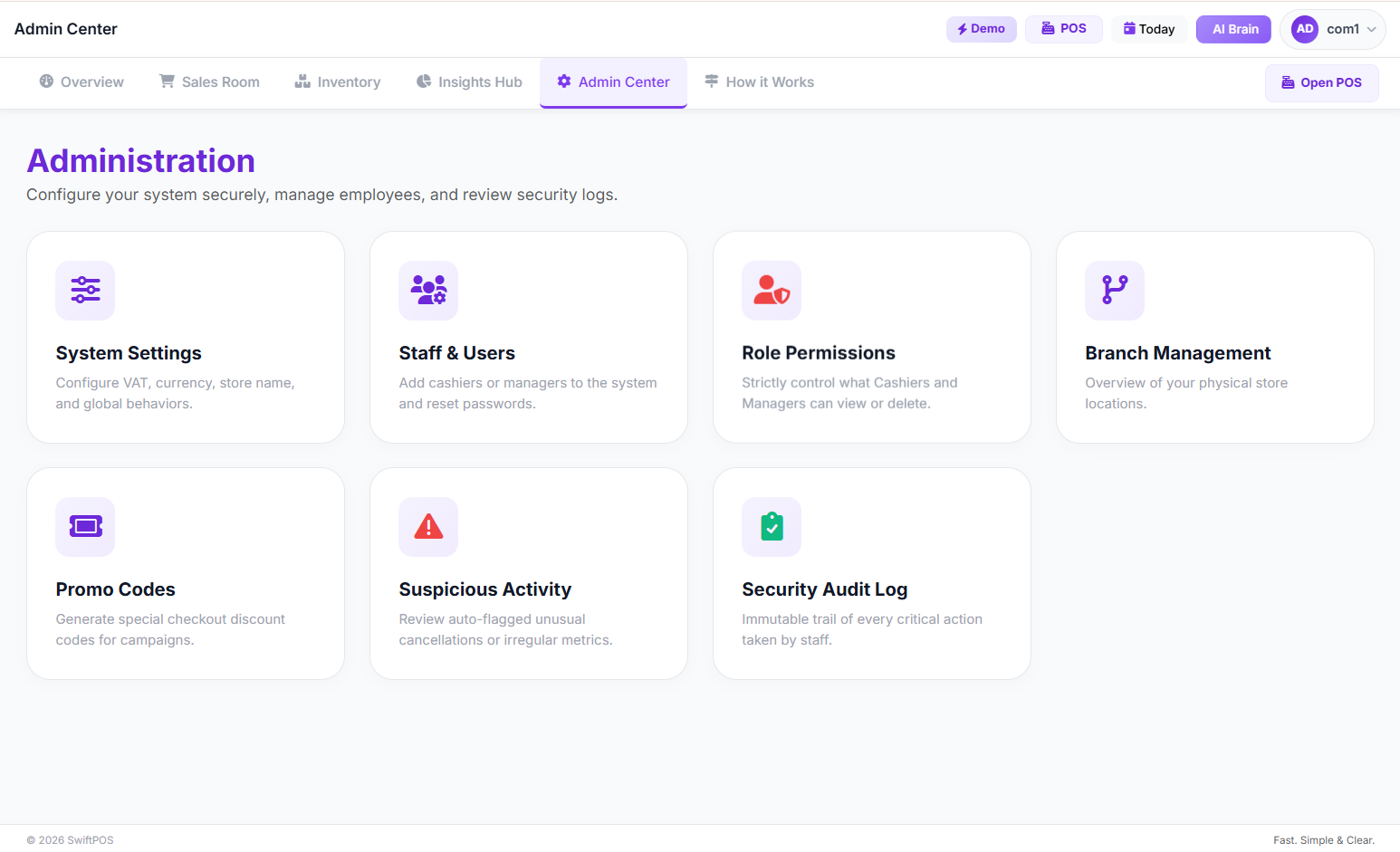 Admin Center Hub
With SwiftPOS NG, you're not just recording sales; you're gaining insights. For example, you can use its stock forecasting feature to know when popular products are running low, so you can restock before you lose sales. It also handles multi-branch operations seamlessly, which is crucial if your ₦5 million business grows beyond a single location.
- Why it matters: This system is your business brain. It gives you data to make smart decisions, prevents theft, reduces errors, and saves you countless hours. Without it, you're flying blind. You can't truly know your without proper expense tracking.
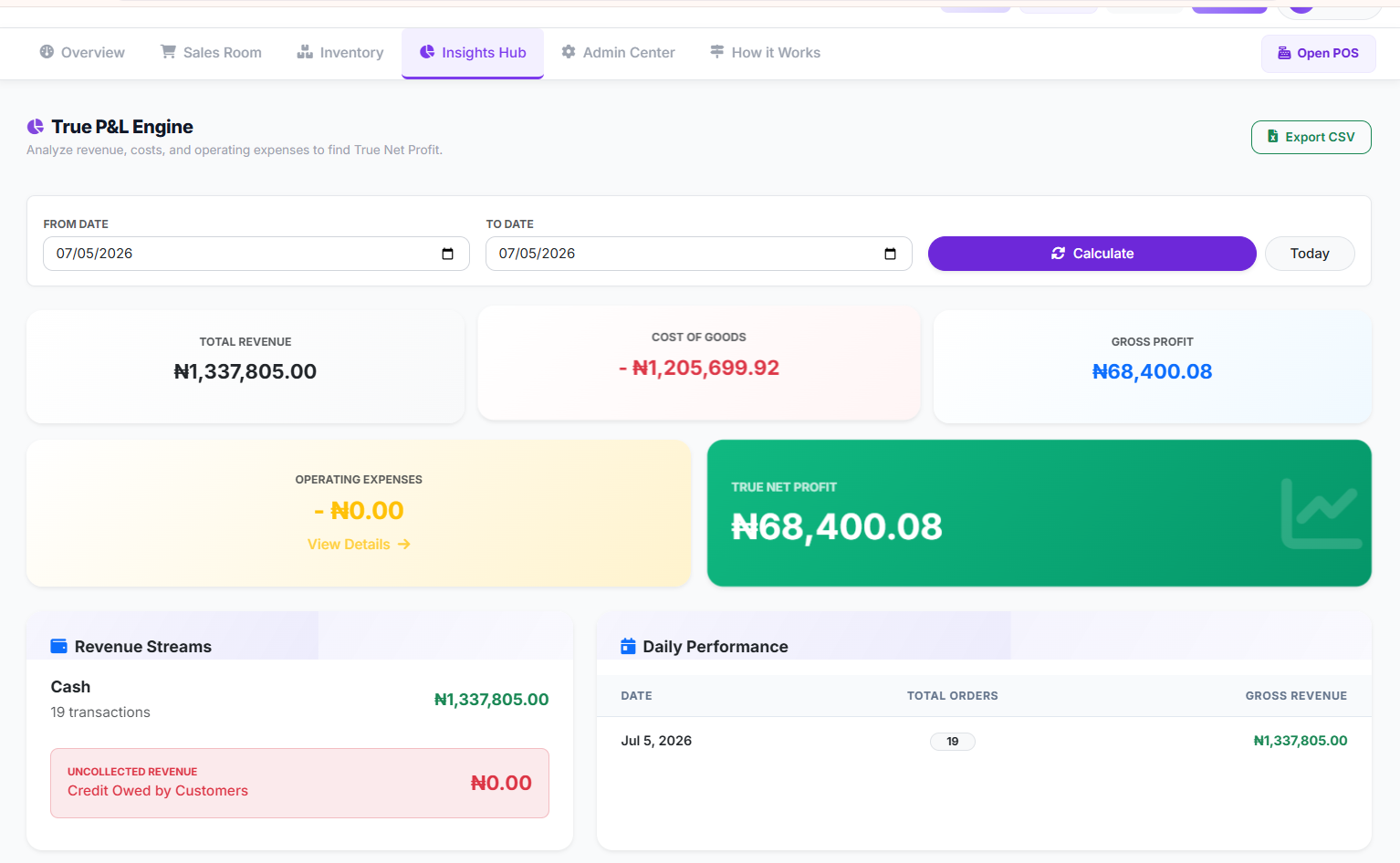 profit and loss
- Common shortcut that backfires: Sticking to manual ledgers or spreadsheets. This leads to stock discrepancies (like Mama Ngozi's problem), missed sales opportunities, and difficulty identifying actual profit. You also leave yourself vulnerable to dishonest staff. Read about the hidden costs of manual retail operations for more on this.
- Action item: Research POS systems and sign up for a demo or free trial. SwiftPOS NG offers a 14-day free trial, giving you enough time to see how it can transform your operations.
Step 5: Marketing and Customer Retention (Don't Just Open and Wait)
Even the most profitable business needs customers. You can't just open your doors and expect people to flock in.
- What to do:
- Local Marketing: Flyers, banners, word-of-mouth. Offer opening discounts. Partner with local businesses.
- Social Media: Create a strong online presence. Use Instagram and Facebook to showcase your products. Run targeted ads.
- Customer Loyalty: Offer loyalty programs. Collect customer details (with their permission) and send out promotions.
- Why it matters: Consistent marketing drives traffic, and loyal customers are your cheapest and most effective form of advertising.
- Common shortcut that backfires: Assuming "if you build it, they will come." In a competitive market like Nigeria, you have to actively attract and retain customers. Spending all your capital on stock and none on marketing is a recipe for slow sales.
- Action item: Allocate a monthly budget for marketing (₦20,000 to ₦200,000) and plan your first three months of promotions.
The Numbers That Will Make or Break You: Top 10 Profitable Businesses to Start in Nigeria With ₦5 Million Investment
Here's the part where we get into the specifics. Having ₦5 million is a good starting point, but it's crucial to see how it breaks down for different business ideas in Nigeria. Remember, these are ranges, and your specific location (Lagos vs. a smaller city like Osogbo) will affect the final figures.
Let's look at some popular and potentially profitable business sectors for your ₦5 million investment.
- Mini-Supermarket/Provision Store:
- Initial Stock: ₦1,500,000 - ₦3,000,000 (You need variety to attract customers).
- Shop Rent (Annual): ₦500,000 - ₦2,000,000 (Good visibility is key).
- Shelving/Fixtures: ₦250,000 - ₦700,000.
- Generator (5kVA): ₦450,000 - ₦700,000.
- POS System & Hardware: ₦50,000 - ₦150,000 (including scanner, printer, cash drawer).
- Working Capital (3 months): ₦600,000 - ₦1,200,000.
- Total Estimated Startup: ₦3,350,000 - ₦7,750,000.
- Why it works: Essential goods always sell. With good inventory management, this is a very stable business. You can read more on how much money you need to open a mini supermarket in Nigeria.
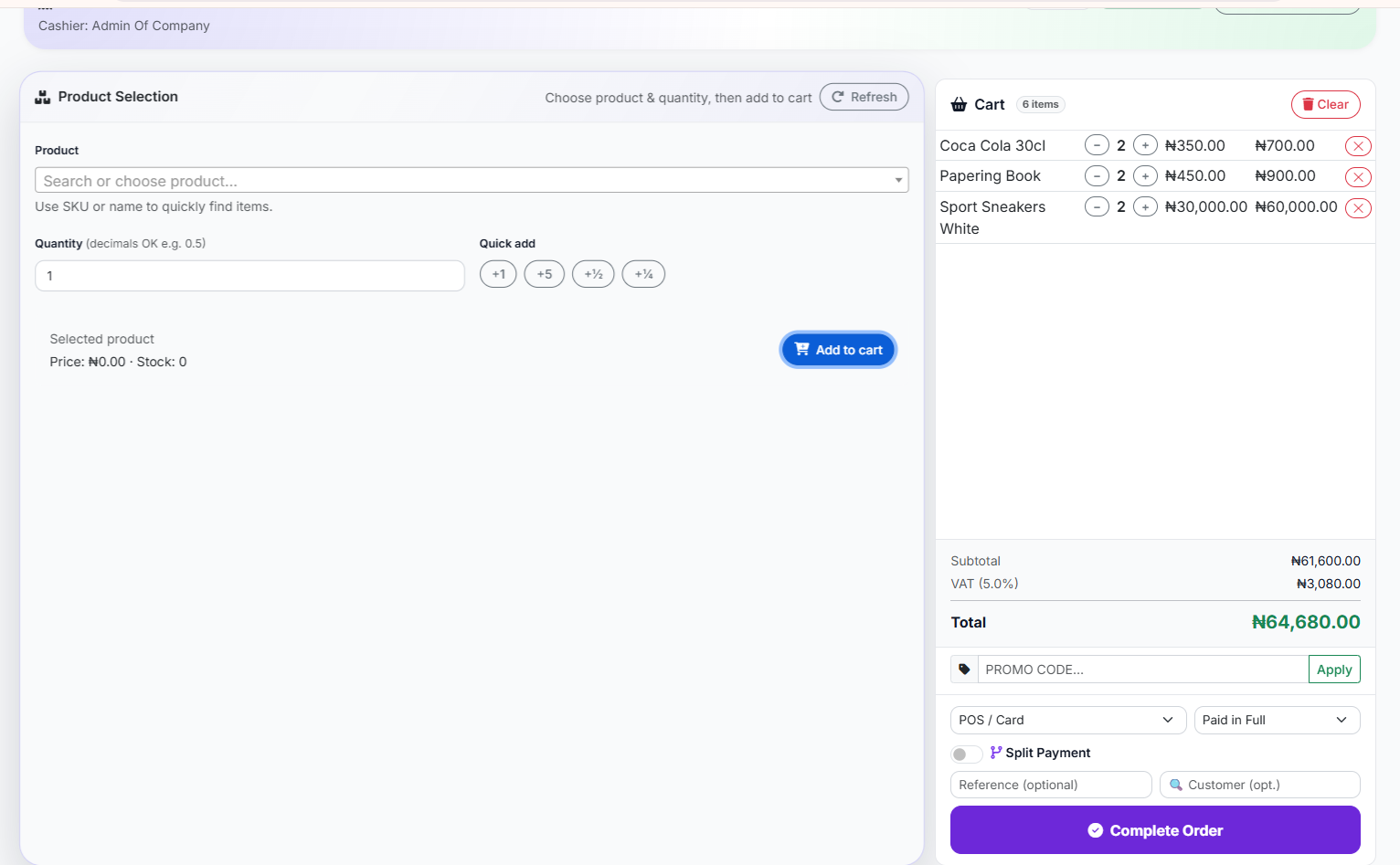 Classic POS Interface (List select)
- Pharmacy/Drug Store:
- Initial Stock (Medicines): ₦2,000,000 - ₦4,000,000 (High-value, regulated items).
- Shop Rent (Annual): ₦700,000 - ₦2,500,000 (Prime location near residential areas or hospitals).
- Licensing/Permits (PCN, etc.): ₦100,000 - ₦300,000 (Annual, can be higher for initial setup).
- Fixtures (shelves, refrigeration): ₦300,000 - ₦800,000.
- Working Capital (3 months): ₦800,000 - ₦1,500,000.
- Total Estimated Startup: ₦3,900,000 - ₦9,100,000.
- Why it works: Healthcare is always in demand. Requires professional certification but offers high margins on certain products.
- Electronics & Phone Accessories Shop (e.g., in Computer Village):
- Initial Stock: ₦2,500,000 - ₦4,000,000 (Phones, laptops, accessories, repairs).
- Shop Rent (Annual): ₦1,000,000 - ₦2,500,000 (High-traffic areas are expensive).
- Showcases/Security: ₦300,000 - ₦700,000.
- Working Capital (3 months): ₦700,000 - ₦1,300,000.
- Total Estimated Startup: ₦4,500,000 - ₦8,500,000.
- Why it works: Nigerians love gadgets. High turnover, but also high competition and risk of counterfeit goods. Strong inventory tracking is vital here.
- Fashion Boutique (ready-to-wear):
- Initial Stock: ₦1,800,000 - ₦3,500,000 (Trendy clothes, shoes, bags from Lagos, Aba, or imported).
- Shop Rent (Annual): ₦600,000 - ₦2,000,000 (Appealing location matters).
- Interior Decor/Mannequins: ₦200,000 - ₦600,000.
- Working Capital (3 months): ₦500,000 - ₦1,000,000.
- Total Estimated Startup: ₦3,100,000 - ₦7,100,000.
- Why it works: Fashion is evergreen. Strong branding and social media presence can drive sales.
- Restaurant/Fast Food Joint (small scale):
- Kitchen Equipment: ₦1,000,000 - ₦2,000,000 (Cookers, freezers, sinks).
- Shop Rent (Annual): ₦700,000 - ₦2,000,000.
- Initial Ingredients: ₦300,000 - ₦700,000.
- Permits (Health, Food Safety): ₦50,000 - ₦200,000.
- Working Capital (3 months): ₦700,000 - ₦1,500,000.
- Total Estimated Startup: ₦2,750,000 - ₦6,400,000.
- Why it works: Nigerians eat out a lot. Good food and hygiene can build a loyal customer base.
- Wholesale/Distribution Business (specific product, e.g., beverages, provisions):
- Initial Stock: ₦3,000,000 - ₦4,500,000 (Bulk purchase).
- Warehouse/Storage Rent (Annual): ₦400,000 - ₦1,500,000.
- Delivery Vehicle (used small van): ₦1,000,000 - ₦2,000,000 (can be leased).
- Working Capital (3 months): ₦800,000 - ₦1,500,000.
- Total Estimated Startup: ₦5,200,000 - ₦9,500,000 (might exceed ₦5M slightly if you buy a vehicle outright).
- Why it works: High volume, lower margins but consistent income. Needs strong logistics and supplier relationships.
- Beauty Supply Store (cosmetics, hair products):
- Initial Stock: ₦1,500,000 - ₦3,000,000.
- Shop Rent (Annual): ₦400,000 - ₦1,500,000.
- Fixtures/Display: ₦150,000 - ₦400,000.
- Working Capital (3 months): ₦400,000 - ₦800,000.
- Total Estimated Startup: ₦2,450,000 - ₦5,700,000.
- Why it works: High demand from both individuals and salons. Good profit margins on quality products.
- Bookshop/Stationery Store:
- Initial Stock: ₦1,000,000 - ₦2,500,000 (school books, office supplies, novels).
- Shop Rent (Annual): ₦300,000 - ₦1,000,000 (near schools or offices).
- Shelving/Furniture: ₦100,000 - ₦300,000.
- Working Capital (3 months): ₦300,000 - ₦600,000.
- Total Estimated Startup: ₦1,700,000 - ₦4,400,000.
- Why it works: Consistent demand from students and professionals. Can combine with printing/photocopying services.
- Building Materials Supply (small scale, specific items):
- Initial Stock: ₦2,000,000 - ₦4,000,000 (e.g., tiles, sanitary ware, electrical fittings).
- Shop/Yard Rent (Annual): ₦500,000 - ₦2,000,000.
- Working Capital (3 months): ₦700,000 - ₦1,500,000.
- Total Estimated Startup: ₦3,200,000 - ₦7,500,000.
- Why it works: Construction is always ongoing in Nigeria. Good relationships with artisans and contractors are key.
- Agricultural Produce Retail (farm-to-table focus):
- Initial Stock: ₦800,000 - ₦2,000,000 (fresh produce, processed items).
- Shop/Stall Rent (Annual): ₦200,000 - ₦800,000 (market stall or small shop).
- Refrigeration/Storage: ₦200,000 - ₦500,000.
- Transportation (monthly): ₦50,000 - ₦150,000 (sourcing from farms).
- Working Capital (3 months): ₦300,000 - ₦700,000.
- Total Estimated Startup: ₦1,550,000 - ₦4,150,000.
- Why it works: High demand for fresh, healthy food. Can command premium prices for quality and direct sourcing.
Growth After Launch: The Next 90 Days
The first three months after launch are critical. This is where you test your assumptions, adapt, and build momentum.
- Monitor Everything: This is where your management system shines. Track daily sales, stock movement, and customer feedback. Are certain products selling faster than others? Are your staff performing well? SwiftPOS NG's and
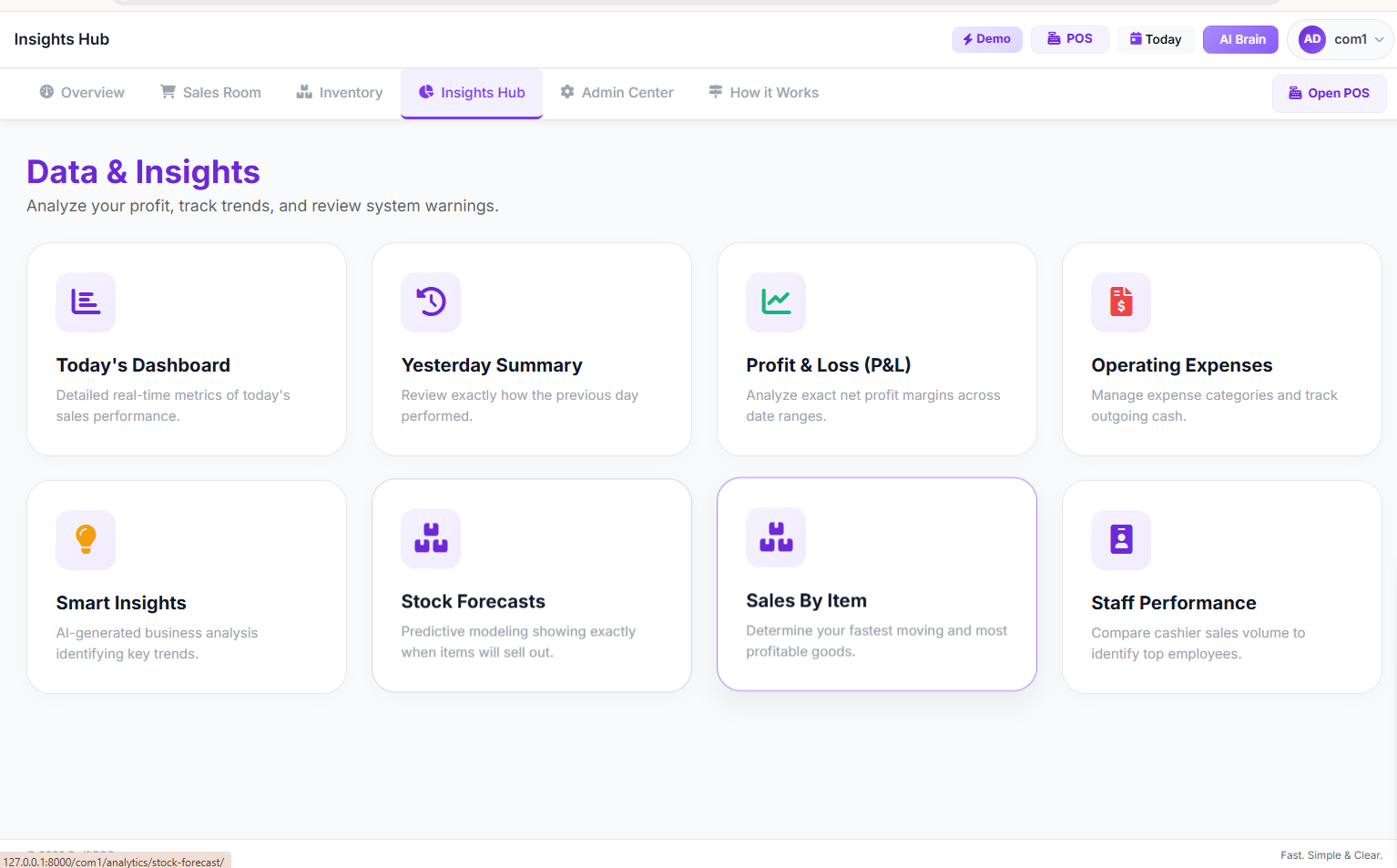 insights hubfeatures give you a clear picture of what's happening. You can even monitor
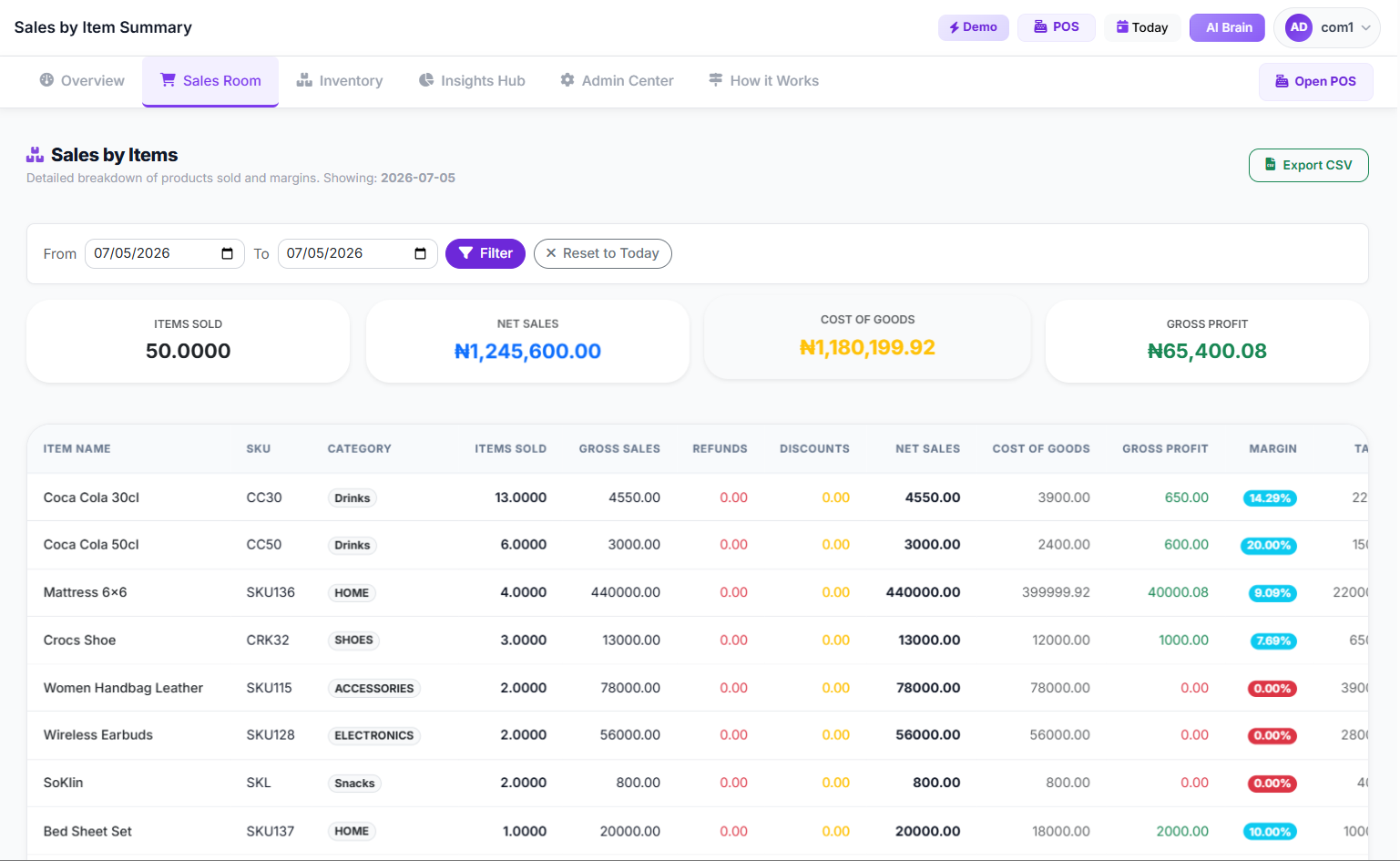 sales reportingand identify
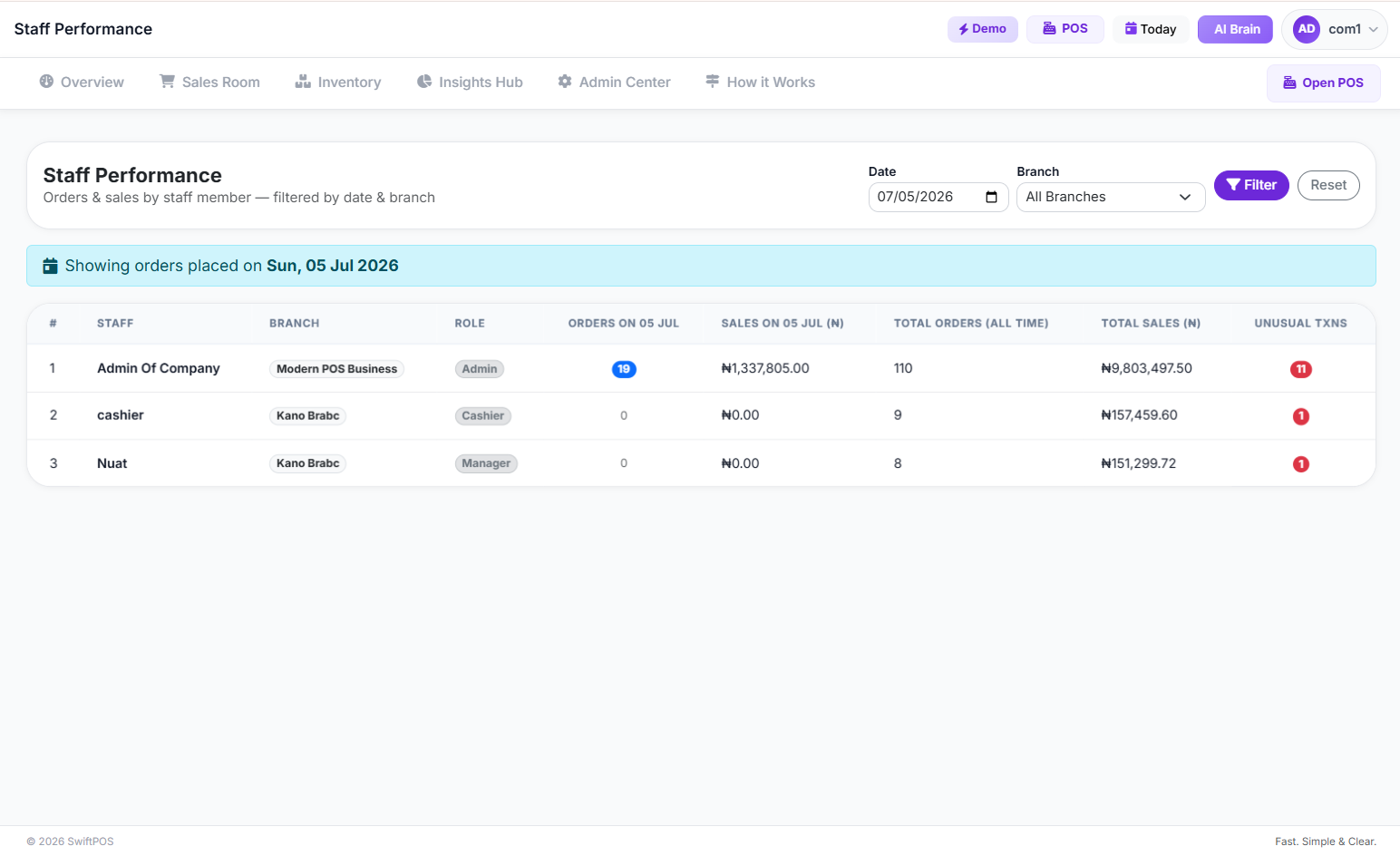 staff performance.
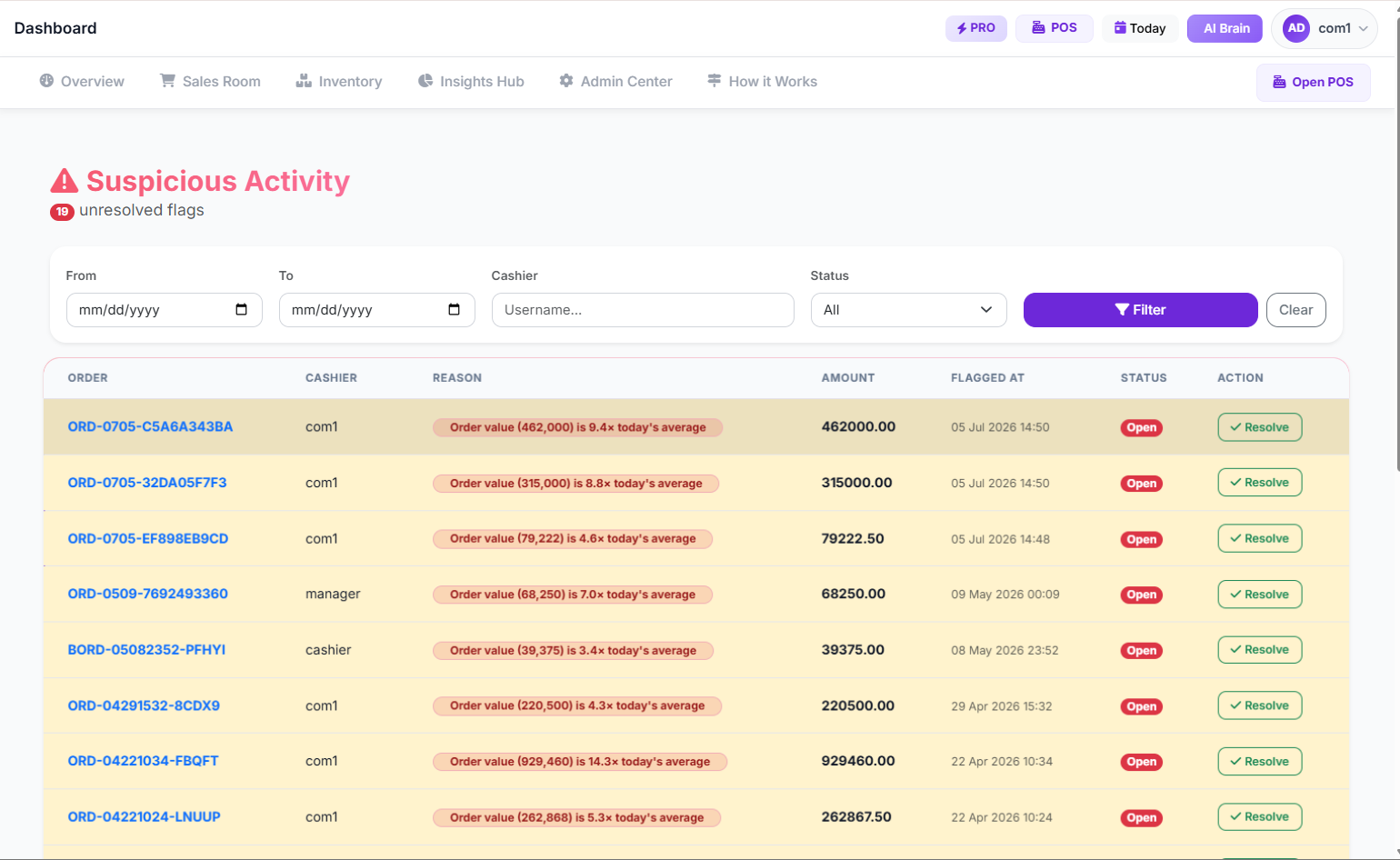 suspicious activity
- Adjust Stock Levels: Based on your sales data, adjust your purchasing. Don't let popular items run out of stock (lost sales!) and don't overstock slow-moving items (tying up capital). This is a constant dance.
- Refine Marketing: What's working? What's not? Are your social media ads converting? Are your local flyers bringing in customers? Tweak your campaigns based on actual results.
- Customer Feedback Loop: Actively ask customers what they like and what could be improved. Their feedback is gold. Use it to improve your service, product range, or even shop layout.
- Manage Expenses Ruthlessly: Keep a tight rein on your monthly running costs. Review your utility bills (₦10,000 - ₦80,000), transportation costs (₦30,000 - ₦150,000), and staff salaries (₦45,000 - ₦120,000 per person). Every naira saved is a naira earned. SwiftPOS NG helps you efficiently, giving you a clearer picture of your net profit.
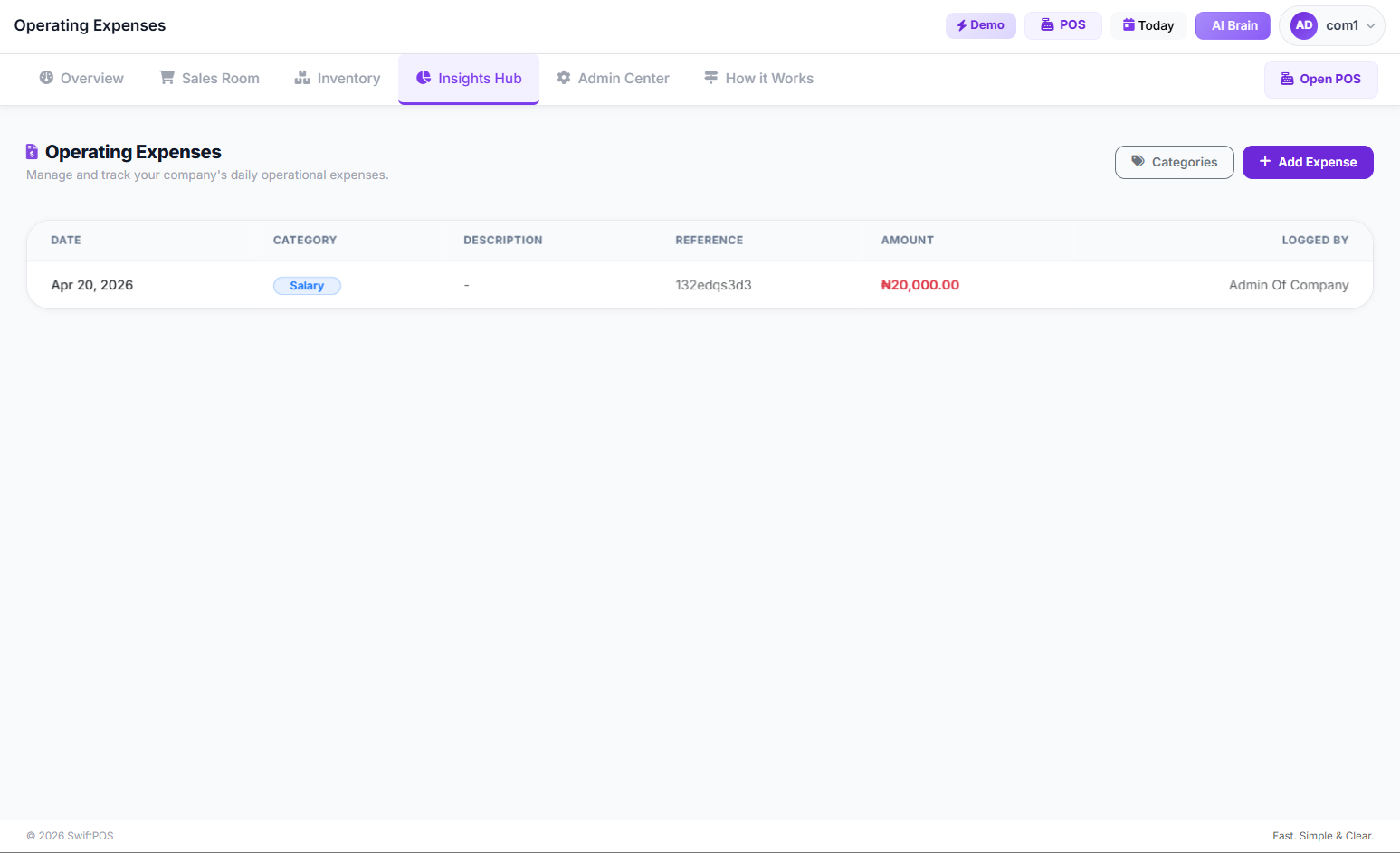 track business expenses
FAQ: Answers to What You're Actually Googling
How quickly can I make a profit with a ₦5 million business in Nigeria?
Honestly, it varies wildly. Most retail businesses in Nigeria can expect to break even within 6 to 18 months, sometimes even 24 months for larger ventures. Profitability depends on your profit margins, sales volume, and how well you manage your operating costs. Don't expect to be rolling in cash in the first three months. Focus on building a solid foundation first.
Is ₦5 million enough to start a profitable business in Lagos?
Yes, it is, but you need to be very strategic. Lagos is expensive. Rent alone can eat up a significant portion of your capital (up to ₦2,500,000 annually for a good spot). You'll need to focus on a niche, manage your inventory tightly, and be prepared for higher operating costs compared to other states. A mini-supermarket in Surulere is a more realistic 5 million business idea than a huge department store in Lekki.
What are the biggest risks for a new business with a ₦5 million investment in Nigeria?
The biggest risks are poor financial management, lack of proper market research, and operational inefficiencies. Many entrepreneurs fail because they don't track their money properly, leading to cash flow problems. Theft (internal and external) is also a significant concern, especially if you're not using a system to monitor stock and sales. Don't forget the impact of inconsistent power supply and rising fuel costs on your monthly expenses.
Can I run a profitable business in Nigeria without a physical shop?
Absolutely! Many profitable businesses today operate primarily online, especially in fashion, electronics, and even some food services. With ₦5 million, you could invest heavily in a robust e-commerce platform, digital marketing, and efficient logistics. This significantly reduces your annual rent burden (₦80,000 - ₦2,500,000) and allows you to reach customers nationwide. However, you'll need to budget more for advertising (₦20,000 - ₦200,000 monthly) and delivery.
How important is technology for a new 5 million business in Nigeria?
Extremely important. In 2026, relying on manual processes is like trying to drive a car with no fuel. Technology, like a good POS system, helps you manage inventory, track sales, understand customer behavior, prevent losses, and make data-driven decisions. It saves you time, money, and headaches. Don't see it as an expense; it's an investment idea that pays for itself in efficiency and reduced losses. Check out the benefits of a modern POS system for Nigerian retailers.
Ready? Here's Where to Start
You've got the capital, you've got the drive. Now, it's about taking that first deliberate step. Don't rush into buying stock or signing a lease. Start with the foundation. Get your business plan down, even if it's just on one page. Do your market research. And most importantly, think about how you'll manage your business once it's up and running.
If you're serious about not just starting, but growing a profitable retail business in Nigeria, you need a system that works as hard as you do. SwiftPOS NG is designed for Nigerian retailers like you, connecting sales, inventory, customers, and expenses in one easy-to-use platform. Why not check out our features and see how it can help you avoid the common pitfalls and truly succeed? You can even download the Android application to get started on your mobile device.

How to Start a Retail Business in Nigeria With ₦500,00…
Oct 27, 2026
10 Best Small Businesses to Start in Nigeria With ₦1 M…
Oct 27, 2026
How to Start a Bakery Business in Nigeria: A Step-by-S…
Oct 24, 2026