Why Daily Sales Reports Are Essential for Every Shop Owner

Everyone tells you to "track your sales." They say, "Just write it down!" or "Use a simple notebook!" Let me tell you something: that's probably the worst advice you can get if you're serious about your retail business in Nigeria in 2026. You see, simply tracking sales isn't enough. It's like having a car but no fuel gauge—you know you're moving, but you'll run out of gas unexpectedly. What you really need, what is truly essential for every shop owner, is a daily sales report that tells you not just what you sold, but why and what it means for your profit. Without it, you're leaving money on the table, and honestly, you might as well be guessing.
Busy lagos market scene with traders and customersThe Gap: Why Your Shop Can Be Busy But Still Broke
You know the feeling, right? Your shop is buzzing. Customers are coming in and out, cash is exchanging hands, and the day feels successful. You close up, count the money, and think, "Today was good!" But then, at the end of the month, after paying rent, staff, and restocking, your bank account looks… thin. Sound familiar? This isn't just you. It's a common story for many Nigerian retail business owners, especially those running provision stores in Surulere, or a fashion boutique in Abuja. The problem isn't necessarily a lack of sales; it's the gap between your revenue and your actual profit.
Let's break down the numbers a bit. A medium-sized shop in a busy area might pull in anywhere from ₦30,000 to ₦150,000 in daily revenue. That’s impressive, no doubt. But the cost of goods sold (COGS) can eat up a massive 60% to 85% of that revenue, leaving you with a gross profit margin of just 15% to 40%. Think about a shop selling fast-moving consumer goods in Onitsha Main Market. If they make ₦80,000 in a day, but their COGS is ₦60,000, they're left with ₦20,000. That's a 25% gross margin. Not bad, but then the expenses hit.
You've got rent, which for a medium shop can be anywhere from ₦70,000 to ₦300,000 per month (remember, rent is annual here, so divide that big yearly sum by 12). Staff salaries for even one sales assistant can be ₦40,000 to ₦80,000 monthly. Then there are utility bills – electricity, water, generator fuel – easily ₦10,000 to ₦50,000 a month. Add transportation costs for restocking, maybe ₦15,000 to ₦70,000. Suddenly, that ₦20,000 daily gross profit starts to shrink, fast. Without a proper daily sales report, you're just seeing the top-line revenue, not the bottom-line truth. You’re tracking busy-ness, not actual business health.
The Silent Thief: Unaccounted Stock and Petty Theft
One of the biggest holes in many Nigerian retail businesses, especially those relying on manual record-keeping, is the silent loss from unaccounted stock and petty theft. You might think, "My staff are loyal," or "It's just one or two items." But let me tell you, those "one or two items" add up. Quickly. Imagine a small kiosk in a suburban area. Losing just ₦1,000 to ₦3,000 worth of stock daily from unrecorded sales, spoilage, or outright theft might not seem like much on a single day. But over a month? That's ₦30,000 to ₦90,000 gone. Annually, you're looking at ₦360,000 to ₦1,080,000. That's someone's entire annual salary, or even your shop's annual rent in a smaller town.
I once consulted for a provision store in Port Harcourt. The owner was convinced his staff were honest. He'd manually record sales in a big ledger, but he rarely did a full stock count. We introduced a proper stock audit, and within two weeks, we found discrepancies averaging about ₦7,500 a day. That was nearly 15% of his daily gross profit just walking out the door! This is why a simple sales tracking book, which costs maybe ₦500 to ₦2,000, simply won't cut it for serious shop management. It doesn't connect sales to inventory in real-time. It doesn't flag unusual voids or discounts. It doesn't give you the granular detail a proper daily sales report provides.
This isn't just about staff theft, by the way. It's also about errors. A cashier might accidentally give the wrong change, or forget to record a small item sold during a rush. A product might get damaged and thrown out without being logged. All these small leaks, over time, become a flood. You need a system that shines a light on every single transaction, every movement of stock, so you can identify exactly where your money is disappearing.
The Blind Spot: No Real-Time Inventory Control
Okay, so you're tracking sales, maybe even doing a weekly stock count. That's better than nothing, but it still leaves a huge blind spot: real-time inventory. Think about it. If you sell a crate of soft drinks at 10 AM, and another at 2 PM, does your stock record reflect that immediately? If you're using a paper ledger or even basic Excel, probably not. You're likely waiting until the end of the day, or even the next morning, to update your stock.
This delay creates several problems. First, you risk stockouts. You might think you have enough of a popular item, say, a specific brand of detergent, only for a customer to ask for it and you discover your shelf is empty. That's a lost sale, pure and simple. If your daily revenue is ₦50,000, and you lose just two or three sales worth ₦2,500 each because of a stockout, that's ₦7,500 gone. Over a month, that's ₦225,000. That’s a lot of lost opportunity.
Second, you can't accurately forecast what you need to buy. If you don't know what's selling fast right now, how do you know what to order from Balogun Market or Alaba International? You end up overstocking slow-moving items, tying up your capital, and understocking popular ones. This is especially critical for businesses dealing with perishable goods like a bakery or a local foodstuff seller. Knowing your sales velocity for each product is key.
Third, you can't identify dead stock. These are products sitting on your shelves for weeks or months, gathering dust, and not making you any money. They take up valuable space and represent capital that could be invested in faster-moving, more profitable items. A proper daily sales report, integrated with inventory management, highlights these issues instantly. You need to know not just how much you have, but how much you should have, and how quickly it's moving.
What Smart Business Owners Do Instead
So, what's the solution? You guessed it: a robust system for generating daily sales reports that goes beyond just counting cash. Smart business owners understand that knowledge is power, and data is the new currency. They focus on three key areas:
- Automated Sales Tracking: Instead of scribbling in a book, they use a system that automatically records every sale as it happens. This means using a Point-of-Sale (POS) system. When a customer buys something, the item is scanned, the price is automatically applied, and the sale is logged. This eliminates human error in calculation and recording.
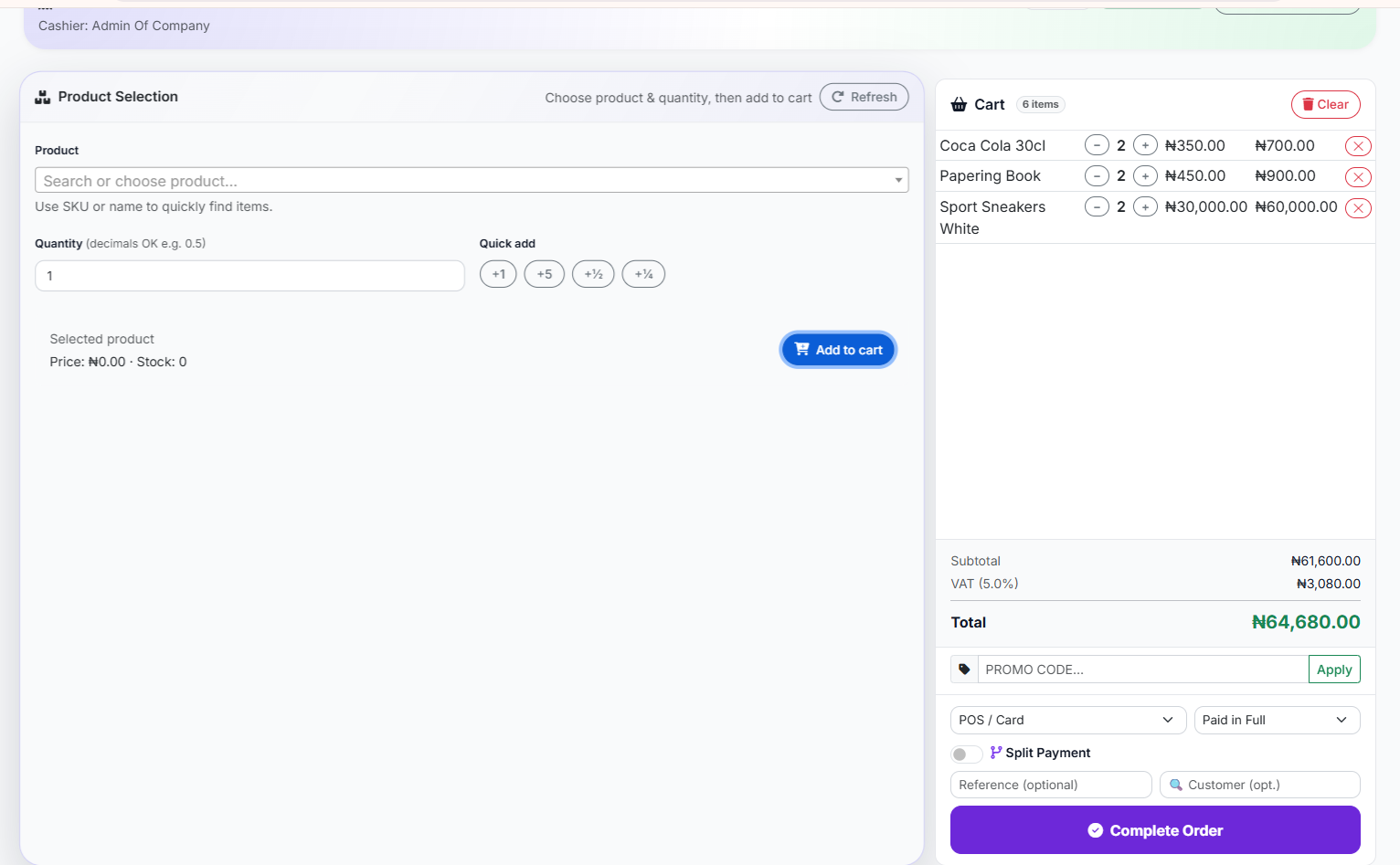 Classic POS Interface (List select)
Think about a busy supermarket in Ikeja. Do you think they're manually writing down every pack of Indomie, every bottle of Coke? No. They're scanning. This speed and accuracy isn't just for big businesses anymore. Even a small provision store can benefit immensely.
- Integrated Inventory Management: The sales system isn't just for sales; it talks to the inventory. When an item is sold, it's automatically deducted from stock. This gives you a real-time, accurate picture of what you have on hand. No more guessing. No more relying on physical counts every other day. This is crucial for maintaining optimal stock levels and avoiding those frustrating stockouts or the capital drain of dead stock. It also helps with tracking expiration dates, which is vital for pharmacies and food businesses.
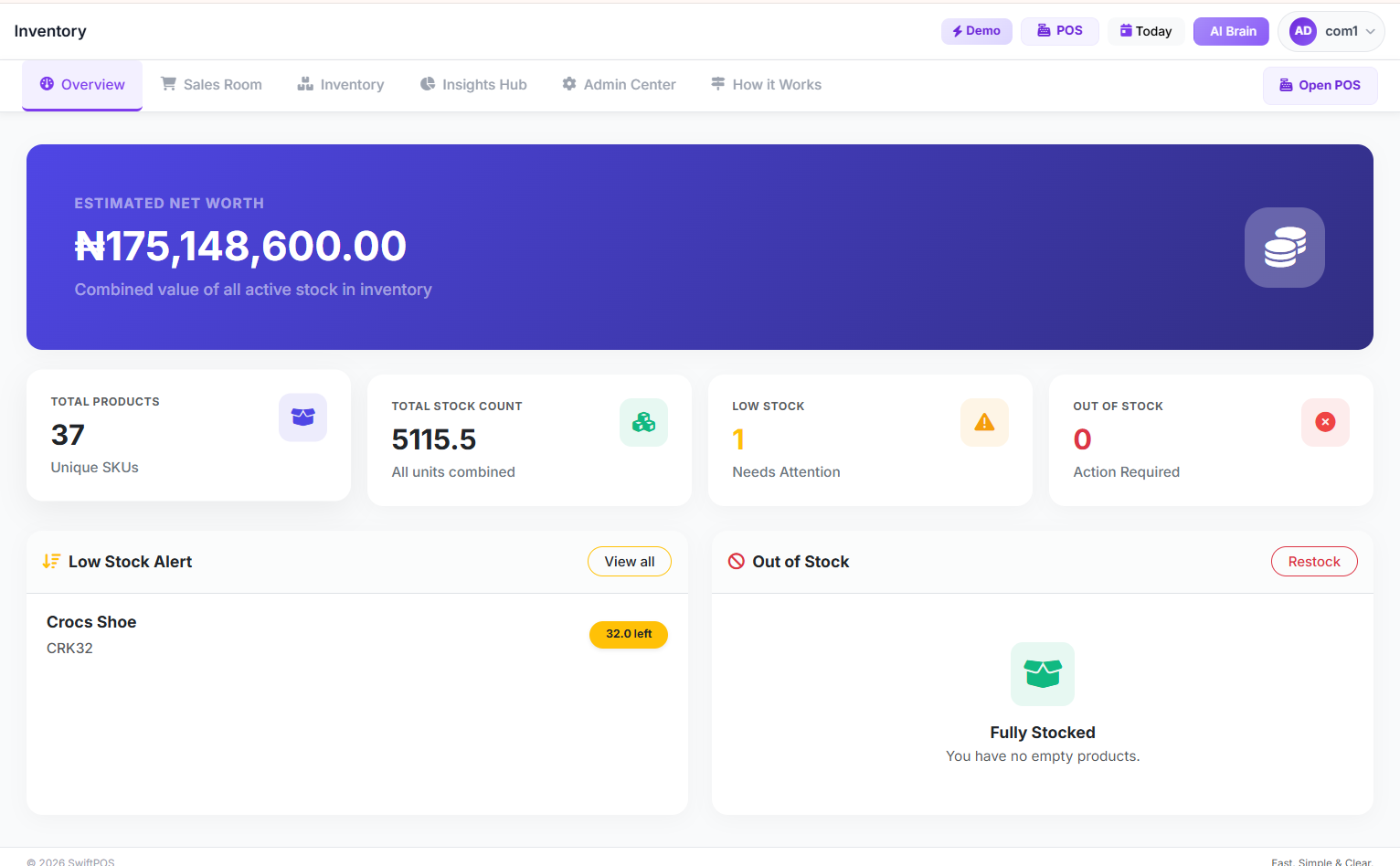 Inventory Dashboard
- Comprehensive Reporting and Insights: This is where the magic happens. A good system doesn't just collect data; it turns it into actionable insights. You get reports that show:
- Total daily revenue: How much money actually came in.
- Sales by product: Which items are your bestsellers? Which are gathering dust?
- Sales by staff: Who are your top performers? Are there any patterns in their transactions that need reviewing (like excessive voids or discounts)?
- Payment methods: Are most customers paying cash, or are card and bank transfers becoming more popular? This helps you manage your cash flow.
- Customer trends: Who are your loyal customers? What do they buy? (This is especially useful if you offer credit).
These reports are your eyes and ears into your business. They help you make informed decisions, not just operate on gut feeling. You can see trends, identify problems early, and seize opportunities. For example, if your daily sales report shows a dip in sales for a particular product category, you can immediately investigate – maybe a competitor has a promotion, or your pricing is off.
> "You cannot improve what you do not measure. In retail, if you're not measuring daily sales and their impact on your inventory and profit, you're not truly managing your business; you're just opening your doors every morning hoping for the best."
Where SwiftPOS NG Gives You Back Control
This is exactly where a system like SwiftPOS NG comes in. It's built for Nigerian retail businesses like yours, helping you move from guesswork and manual errors to precision and profit. SwiftPOS NG isn't just a cash register; it's a complete retail business management platform that integrates all those crucial elements we just talked about.
Imagine this: You launch your shop in the morning. Your cashier logs in. Every product sold, every payment taken, is automatically recorded. If a customer needs credit, it's logged against their profile. If an item is returned, the stock is adjusted. At the end of the day, with just a few clicks, you get a full, clear daily sales report. You see your total revenue, your top-selling products, even your gross profit for the day. You don't have to spend hours reconciling ledgers or chasing down discrepancies.
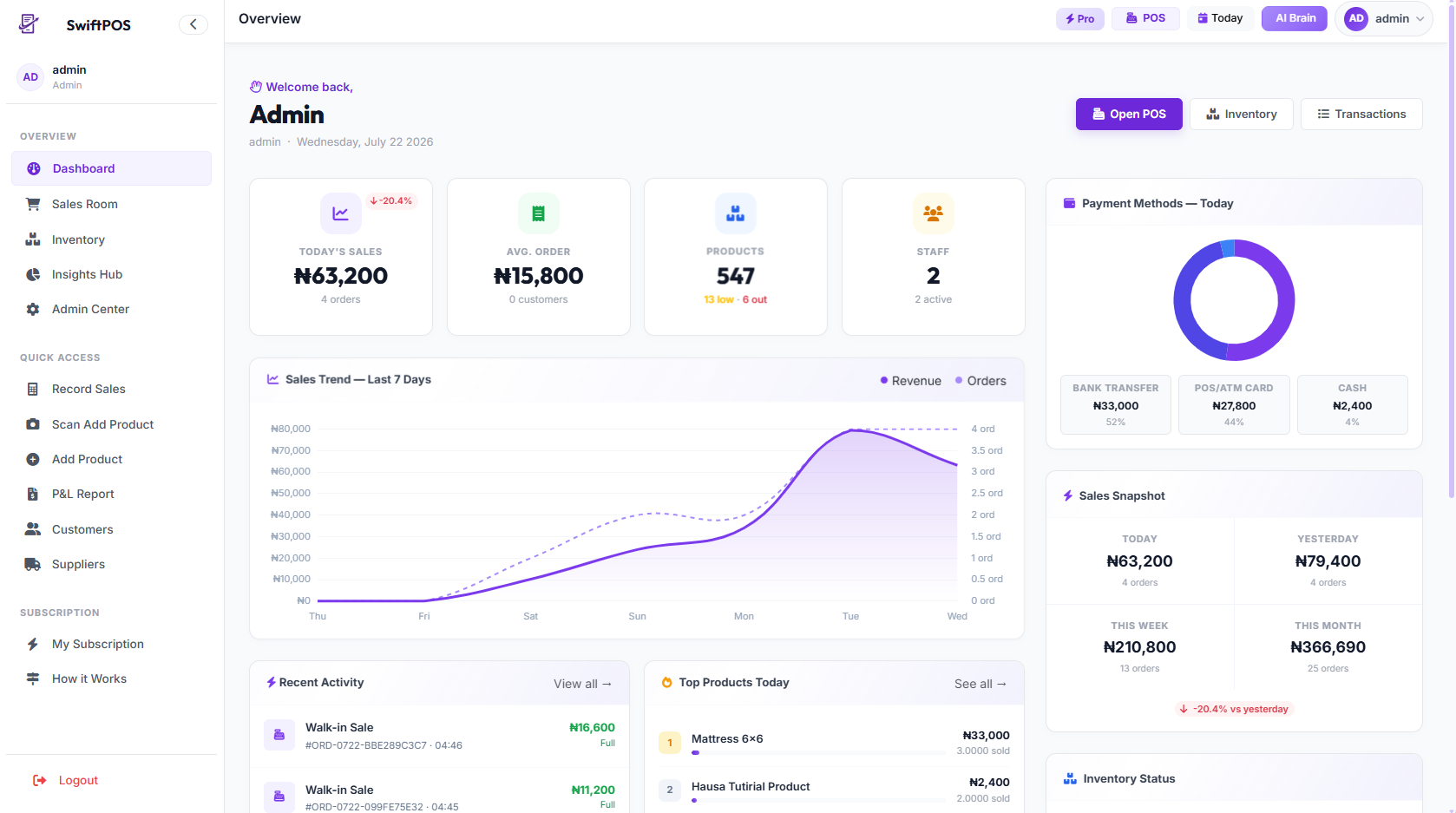 Dashboard Overciew 1:
SwiftPOS NG automates your sales tracking, linking it directly to your inventory management. This means when you sell a bottle of groundnut oil, your stock count for groundnut oil updates instantly. You can set minimum stock levels, and the system will alert you when it's time to reorder, preventing those costly stockouts. It even helps you track expiration dates, a lifesaver for supermarkets and pharmacies. Need to see how well your new sales assistant is doing? The system tracks individual staff performance and can even flag suspicious activity like unusual discounts or voided sales, giving you peace of mind. Check out how SwiftPOS NG helps you set staff permissions to prevent such issues on our blog about How to Set Staff Access Permissions in Retail Software in Nigeria (2026 Guide).
With features like automated reporting, you can easily see which products are your cash cows and which are just taking up space. This helps you make smarter purchasing decisions. For multi-branch businesses, SwiftPOS NG allows you to manage stock and sales across all your locations from a single dashboard, centralizing your entire operation. You can learn more about managing multiple branches efficiently in our guide on Multi-Branch Retail: Guide to Seamless Operations & Profitability.
The Numbers That Change When You Fix This
Let's put some real numbers to this. What happens when you implement a proper daily sales report system, like SwiftPOS NG, in your retail business?
Consider a medium shop in a busy Lagos area.
- Current Situation (Manual):
- Daily Revenue: ₦100,000
- COGS (70%): ₦70,000
- Gross Profit: ₦30,000
- Estimated Daily Loss from theft/errors: ₦5,000 (conservatively, this could be higher)
- Lost Sales from Stockouts (2-3 items/day): ₦2,500
- Effective Daily Gross Profit: ₦30,000 - ₦5,000 - ₦2,500 = ₦22,500
- Monthly Effective Gross Profit: ₦22,500 x 30 = ₦675,000
- Improved Situation (With Automated Daily Sales Reports & Inventory):
- Daily Revenue: ₦100,000 (initially same, but likely to increase with better stock)
- COGS (70%): ₦70,000
- Gross Profit: ₦30,000
- Reduced Daily Loss from theft/errors (due to staff accountability and tracking): Down to ₦500 (a 90% reduction!)
- Reduced Lost Sales from Stockouts (due to smart forecasting): Down to ₦0 (or negligible)
- Effective Daily Gross Profit: ₦30,000 - ₦500 = ₦29,500
- Monthly Effective Gross Profit: ₦29,500 x 30 = ₦885,000
And let's not forget the cost. A basic sales record book might be ₦500-₦2,000, but it gives you almost nothing. A simple POS software subscription, like what SwiftPOS NG offers, can start from as low as ₦5,000 to ₦15,000 per month. Even if you factor in the one-time cost of a basic Android POS device at ₦80,000 to ₦150,000, the return on investment is undeniable. You can even read our detailed breakdown of POS System ROI: Calculating True Value for Nigerian Retailers to see the real numbers.
This isn't just about saving money; it's about making more money. When you know your best-selling items, you can optimize your promotions. When you understand your peak hours, you can schedule staff more efficiently. When you see your true profit margins, you can adjust your pricing strategy. A daily sales report is your business's GPS, guiding you to profitability.
FAQ: Your Daily Sales Report Questions Answered
Q1: I use a notebook for my daily sales. Isn't that enough for a small shop?
A: While a notebook records sales, it won't give you real-time inventory updates, track gross profit per item, identify theft or errors, or provide comprehensive reports. It's a record, not a management tool. For true shop management and profit growth, you need more. Our article on Traditional Bookkeeping vs. POS Software: Real Costs for Nigerian Retailers explains why.
Q2: How long does it take to generate a daily sales report with a POS system?
A: With a modern POS system like SwiftPOS NG, generating a comprehensive daily sales report takes seconds. All the data is automatically collected as sales happen throughout the day. You just click a button, and it's there.
Q3: What if I don't have constant internet access in my shop? Can I still use a digital daily sales report system?
A: Absolutely. Many modern POS systems, including SwiftPOS NG, are designed for offline operation. You can continue making sales and recording data even without internet. Once connectivity is restored, all your sales data automatically syncs, ensuring your sales tracking is always up-to-date. Read more about this on our blog: Can Your POS System Work Without Internet? Here's What Every Shop Owner in Nigeria Needs to Know.
Q4: Besides sales figures, what other crucial information should a daily sales report include?
A: A truly essential daily sales report should include:
- Total revenue, broken down by payment method (cash, POS, transfer).
- Number of transactions.
- Average transaction value.
- Top-selling products (by quantity and revenue).
- Least-selling products.
- Gross profit for the day (revenue minus COGS).
- Any discounts or refunds processed.
- Sales by individual staff member.
Q5: How can a daily sales report help me prevent stockouts for my fast-moving goods?
A: By tracking sales of every item in real-time, the report shows you exactly how quickly products are moving. A good system will integrate this with inventory, allowing you to set reorder points and even forecast when you'll run out. This ensures you can restock popular items before they disappear from your shelves, preventing lost sales. You can explore this further in our guide on How to Predict When Products Will Run Out of Stock in Nigeria: A Practical Guide for Shop Owners.
Stop Letting Money Walk Out the Door
Look, I've been in retail for 12 years before consulting, and I've seen it all. The difference between a struggling business and a thriving one often comes down to fundamental practices, not just luck. You work hard. You invest your money. You deserve to see that effort pay off. But if you're not getting accurate, timely daily sales reports, you're essentially flying blind. You're losing money to invisible leaks, missing opportunities, and making decisions based on guesses instead of facts.
It's 2026. The days of balancing ledgers with a pen and paper are over if you want to compete and grow. It's time to embrace technology that empowers you, not complicates things. Take control of your retail business. Understand every naira that comes in and goes out.
Ready to see how much more profitable your shop can be? Start your journey to smarter shop management today.
Click here to learn more about SwiftPOS NG and get your 14-day free trial!
You can also explore more features and benefits of SwiftPOS NG on our features page and benefits page. If you're curious about our pricing plans, visit our pricing page.
Written by SwiftPOS Team
Practical guides from the retail specialists at Nura Mustapha Technologies Limited, for modern Nigerian merchants.