
Good Profit Margins for Retail Businesses in Nigeria

Most Nigerian retail businesses are leaving money on the table, plain and simple. I've seen it time and again, from bustling markets in Onitsha to high-street boutiques in Victoria Island: owners work themselves ragged, yet their bank accounts don't reflect the effort. The truth is, many struggle with good profit margins for retail businesses in Nigeria not because they lack customers or good products, but because they don't truly understand their numbers. They're guessing, hoping, and praying, instead of strategizing with data.
A busy cashier taking payment at a wellThe Honest Breakdown: What This Actually Costs
Let's be brutally honest about what it takes to run a retail shop here in Nigeria in 2026. This isn't about scaring you; it's about equipping you with the facts. Many aspiring business owners only look at the cost of goods and then slap on a small percentage, thinking that's their profit. That's a recipe for disaster, my friend.
Your startup capital alone can range wildly. For a small kiosk or tabletop stall in a rural area, you might scrape by with ₦50,000 to ₦200,000. But if you're dreaming of a proper small shop in a medium-sized city, say in Ibadan or Kaduna, you're looking at ₦500,000 to ₦2,500,000. This covers your initial stock, basic shelving, and maybe a small signboard.
Then there's rent. Oh, rent! It's an annual beast here. A small town market stall could be as low as ₦5,000 to ₦50,000 annually. But a prime spot in Lagos or Abuja? You're talking ₦80,000 to ₦350,000 monthly, which translates to millions annually. Imagine the pressure to sell just to cover that!
Here's a breakdown of common costs you absolutely cannot ignore:
- Initial Stock Purchase: This is your lifeblood. For a provision store, you might start with ₦100,000 worth of goods, but an electronics shop in Computer Village could easily need ₦1,000,000 or more to have a decent variety. Don't skimp here, or your shelves will look empty.
- Shop Rent (Annual): As I mentioned, this varies wildly. Let's say you find a decent spot in a bustling area of Surulere for ₦1,800,000 annually. That's ₦150,000 a month before you even sell one item.
- Staff Salary: If you hire a sales assistant, expect to pay them anywhere from ₦30,000 to ₦70,000 monthly, depending on their experience and your location. Remember, good staff are worth their weight in gold, but they are also a consistent expense.
- Generator Fuel (Monthly): Power outages are a fact of life. Most shops in Nigeria rely on generators for significant hours. You could spend ₦15,000 to ₦80,000 a month on fuel, especially if you're keeping things cool or running heavy machinery. This is a non-negotiable cost for many.
- Transportation/Logistics (Monthly): How do you get your goods from Balogun Market or Alaba International to your shop? Whether it's Okada, Keke Napep, or a delivery van, you'll spend ₦10,000 to ₦100,000 monthly sourcing goods, especially if your suppliers are far.
- Utilities & Maintenance: Electricity bills, water, security, cleaning supplies, minor repairs – these add up. Budget at least ₦10,000 to ₦50,000 monthly for these bits and pieces.
- Permits & Licenses (Annual): From local government levies to business registration, these are recurrent costs. They might seem small individually, but they bite if you don't plan for them.
The Income Side: What You Can Realistically Earn
Now, let's talk about the exciting part: what you can actually bring in. This is where many people get carried away with fantasies of huge markups. The reality is often more modest, especially for fast-moving consumer goods (FMCG).
Your gross profit margin is the percentage of revenue you keep after subtracting the cost of the goods sold. It's the first indicator of how healthy your pricing strategy is.
- Fast-Moving Consumer Goods (FMCG): Think provisions, toiletries, basic food items. These move quickly, but their margins are tight, typically 10% to 25%. You sell a lot to make decent money here. For example, a small provision store selling ₦800,000 worth of goods a month at a 15% gross margin makes ₦120,000.
- Electronics/Gadgets: Phones, accessories, small appliances. These usually have better margins, from 15% to 35%. A phone shop in Ikeja Computer Village might sell ₦1,500,000 worth of items monthly at a 25% margin, bringing in ₦375,000.
- Fashion/Apparel: Clothing, shoes, accessories. If you source directly from Aba shoe market or design locally, your margins can be quite good: 30% to 70%. A boutique selling unique pieces can thrive here.
- Specialty/Niche Products: Unique imported items, artisanal goods, high-demand niche products. This is where you can see margins from 40% to a whopping 150% or more. Think specialized organic foods or rare imported cosmetics.
- Small Kiosk: Realistically, ₦80,000 to ₦300,000 monthly.
- Medium Shop: A well-stocked neighborhood shop could hit ₦500,000 to ₦2,500,000 monthly.
If your medium shop pulls in ₦1,500,000 in revenue and you manage a 10% net profit margin, that's ₦150,000 in your pocket. Sound familiar? It's not a get-rich-quick scheme, but it's a solid foundation if managed well.
When it comes to understanding your true profit, you need to track more than just sales. You need to know your gross profit and your net profit. This is where a system that helps you record operating expenses, like SwiftPOS, becomes invaluable. It shows you the full picture, not just the sales numbers.
The Hidden Costs Nobody Mentions
Alright, let's talk about the silent killers of retail profit margin Nigeria. These are the costs that don't always show up on your initial business plan, but they can eat deeply into your earnings if you're not prepared. I've seen countless businesses in Lagos and Port Harcourt falter because they overlooked these.
- Shrinkage (Theft & Damage): This is a big one. It's not just customers stealing; sometimes it's staff, or products getting damaged during handling. If you're running a provision store, a few expired goods here, a broken bottle there, or a staff member giving away items to friends – it all adds up. I remember a client, a small pharmacy owner in Festac, who was losing an estimated ₦30,000-₦50,000 every month just from products going missing or expiring unnoticed. Without proper inventory tracking, you wouldn't even know the extent of the problem.
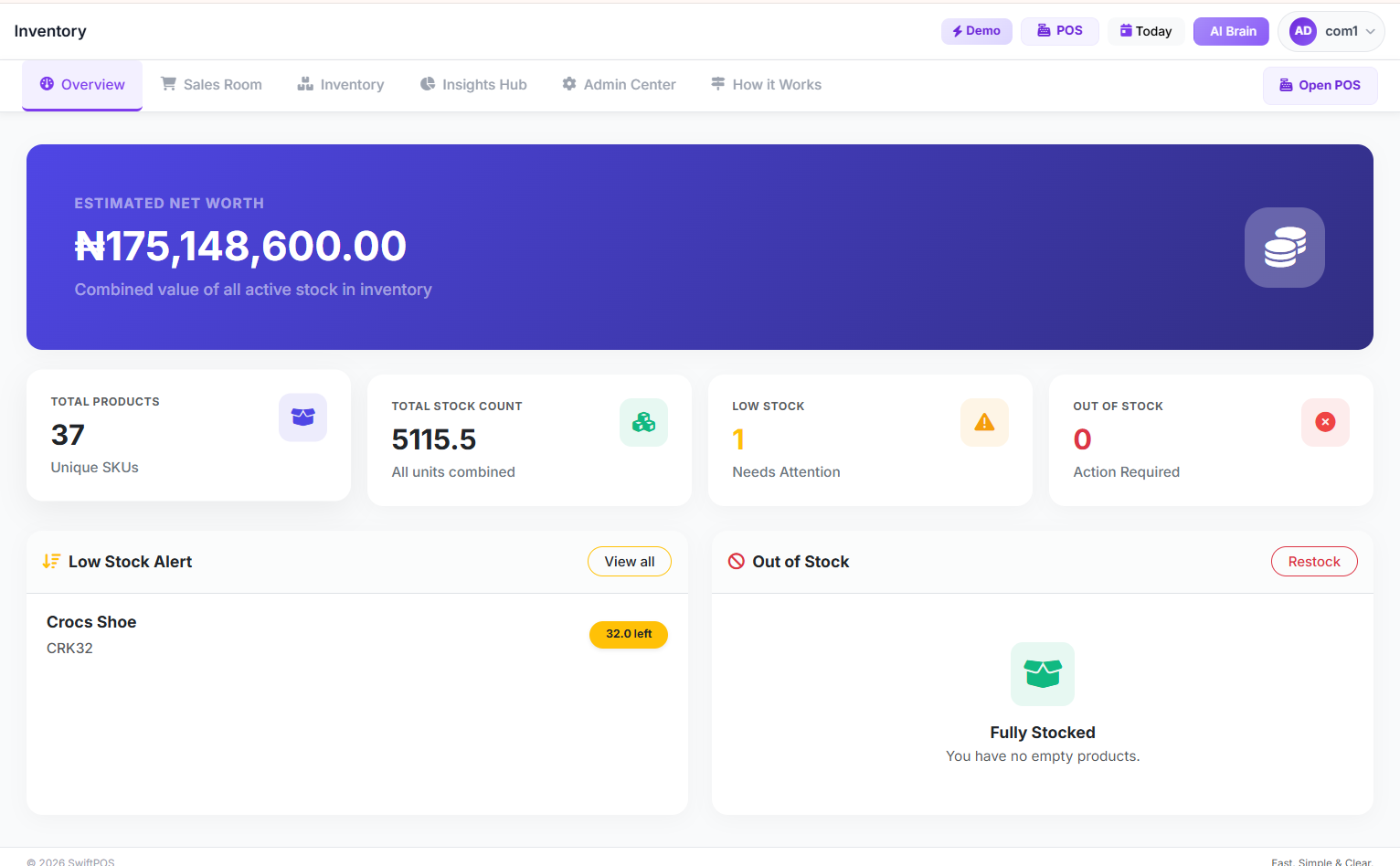 Inventory Dashboard
- Opportunity Cost of Dead Stock: You bought 100 pieces of a certain fashion item because it was on sale, but only 20 sold. The remaining 80 pieces are sitting there, tying up your capital. That money could have been used to buy fast-moving items, or to pay for a pressing expense. This is a massive hidden cost. It's not just the money you spent, it's the money you could have made elsewhere.
- Inefficient Manual Processes: How much time do you or your staff spend counting stock manually? Reconciling cash at the end of the day? Chasing down customer debts? All that time is money. If your staff spends 2 hours a day on manual tasks that could be automated, and you pay them ₦50,000 a month, that's roughly ₦6,250 a month (or ₦75,000 a year) per staff member lost to inefficiency. Multiply that by multiple staff or branches, and you see the problem. This is why tools that streamline operations are key. You can read more about the hidden costs of manual retail operations in Nigeria if you want to dive deeper.
- Unplanned Marketing & Promotions: Sometimes, you need to run an unexpected promotion to clear old stock or respond to a competitor. These unplanned discounts eat into your margins. Without a clear marketing budget or understanding of your product's shelf life, these can become reactive, costly decisions.
- Bank Charges & Transaction Fees: Every POS transaction, every transfer, every withdrawal – they all come with fees. Individually small, but cumulatively, they can be significant. If you process ₦1,000,000 in card payments at 0.75% per transaction, that's ₦7,500 gone. It adds up.
- Staff Turnover & Training Costs: Hiring and training new staff is expensive. The time spent, the potential errors of new hires, and the loss of institutional knowledge all impact your bottom line. Creating a stable, well-trained team is an investment that pays off.
How Successful Nigerian Business Owners Control These Numbers
So, how do the smart ones do it? How do they achieve good profit margins even in our challenging economic climate? It's not magic, I promise you. It's about being intentional, data-driven, and leveraging the right tools.
- Precise Inventory Management: This is non-negotiable. You need to know exactly what you have, where it is, how much it cost you, and how fast it's selling. Successful owners don't guess their stock levels; they track them. They know which products are flying off the shelves and which ones are gathering dust. This helps them restock efficiently and avoid dead stock.
- Actionable Tip: Implement a system that tracks every item in and out. If you're using paper, you're already behind. A tool like SwiftPOS allows you to manage products, track stock quantities, and even set minimum reorder levels. It helps you identify low-stock risks and overstock situations, making your inventory work for you.
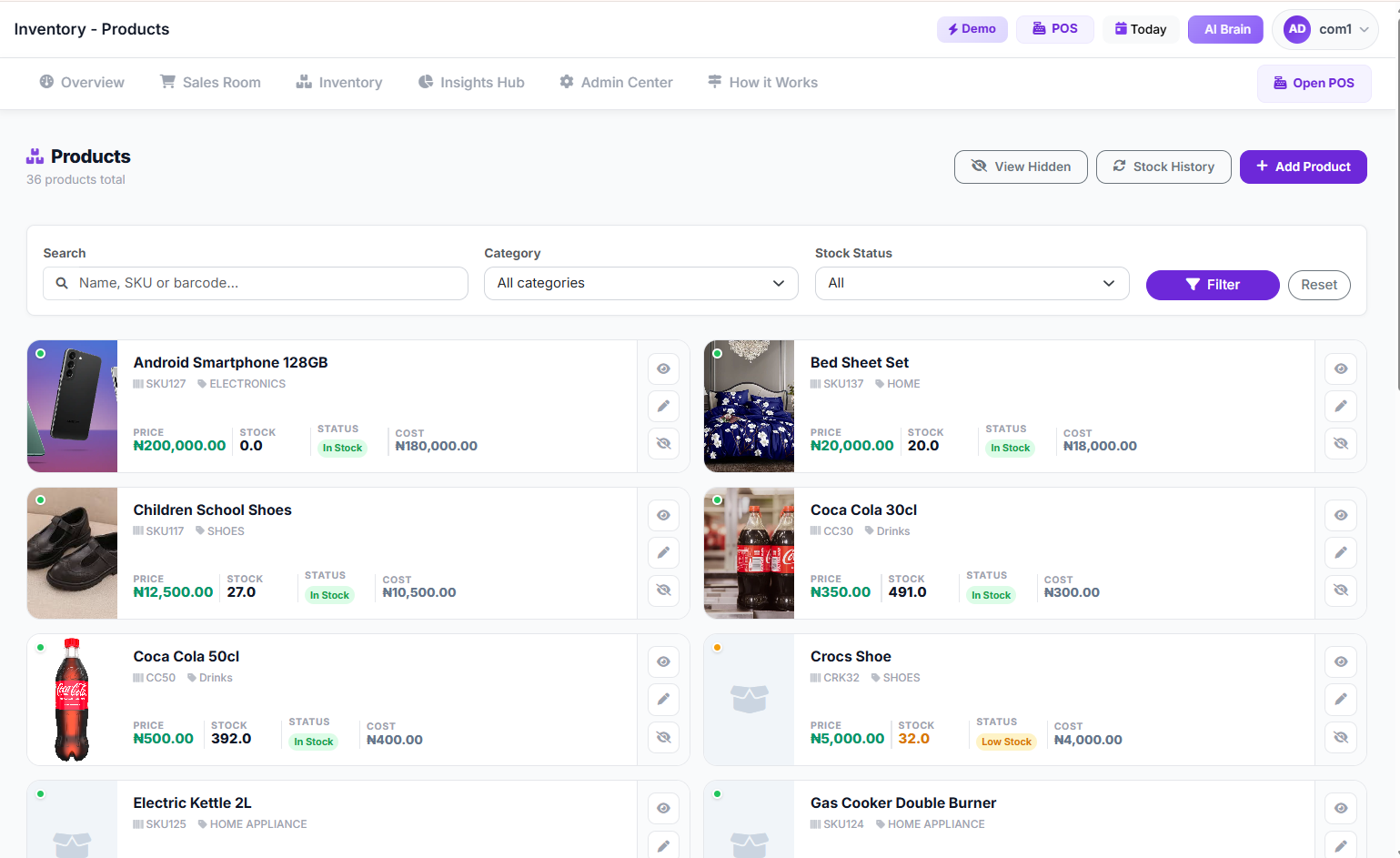 Products List Page
- Aggressive Expense Tracking: Every naira spent needs to be accounted for. From generator fuel to staff salaries, successful owners categorize and monitor their expenses religiously. They know their overheads down to the last kobo. This isn't just about saving money; it's about identifying where your money is actually going.
- Actionable Tip: Use an expense management feature. Don't just dump receipts in a box. Record them. Categorize them. See where you can cut back without impacting quality. SwiftPOS offers expense management that feeds directly into your profit and loss reports, giving you a clear picture of your actual net profit.
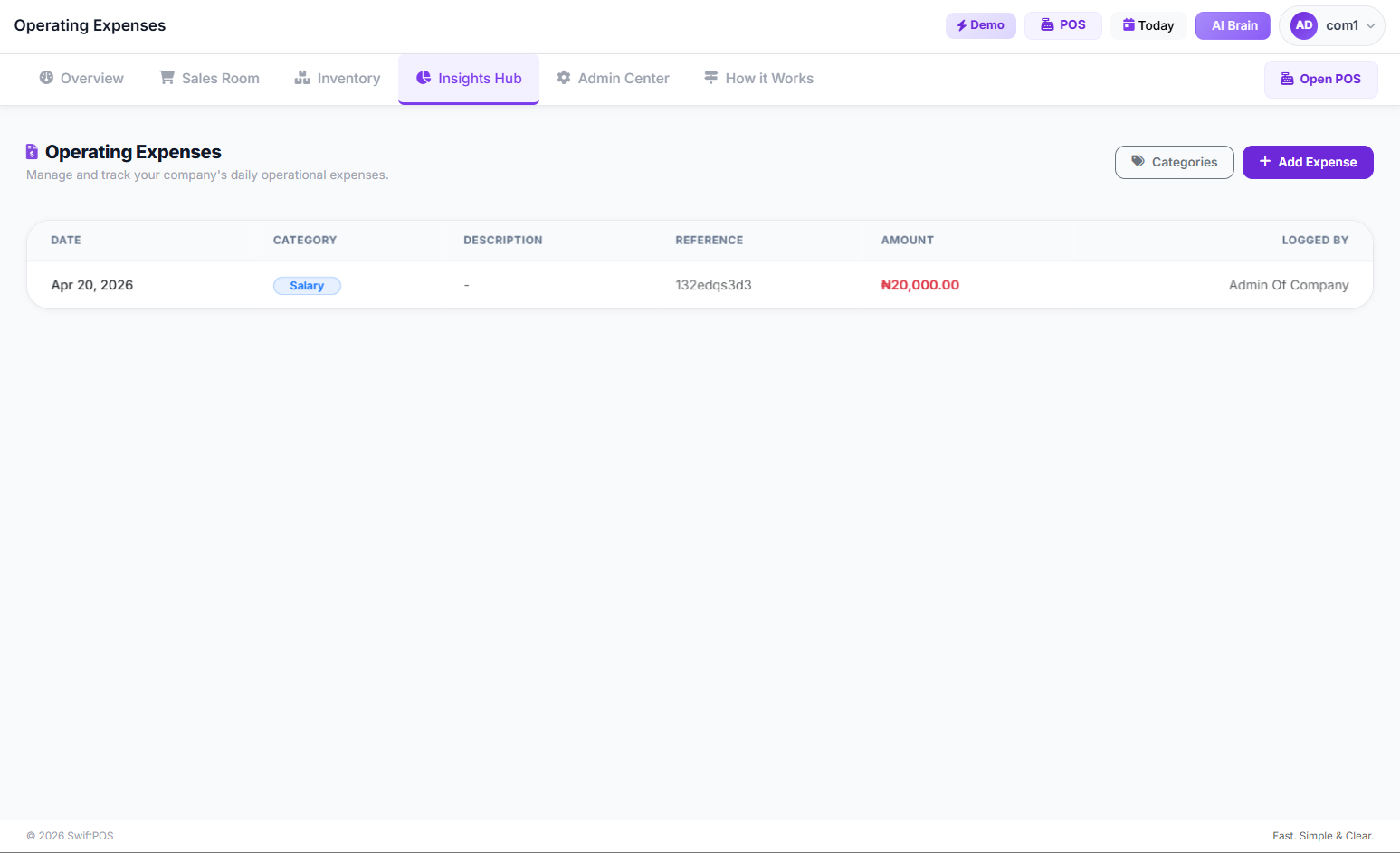 Expenses List mn=anaagement Page
- Strategic Pricing: They don't just add a flat percentage. They consider their cost of goods, overheads, competitor pricing, and perceived customer value. Sometimes, a lower margin on a high-volume item brings in more overall profit than a high margin on a slow-moving one. They understand the elasticity of demand for their products.
- Actionable Tip: Regularly review your pricing. Are you competitive? Are you covering your costs? Experiment with different price points for different products. SwiftPOS allows you to set cost prices, selling prices, and even wholesale prices for bulk buyers, giving you flexibility.
- Customer Relationship Management: Loyal customers are gold. They buy more frequently and are less price-sensitive. Successful businesses focus on building relationships, offering loyalty programs, and understanding their customer base.
- Actionable Tip: Keep a customer directory. Track their purchases. Offer small discounts or personalized service. If you're selling on credit, a system that manages customer debts and payment history, like SwiftPOS, is crucial for maintaining healthy relationships and recovering funds.
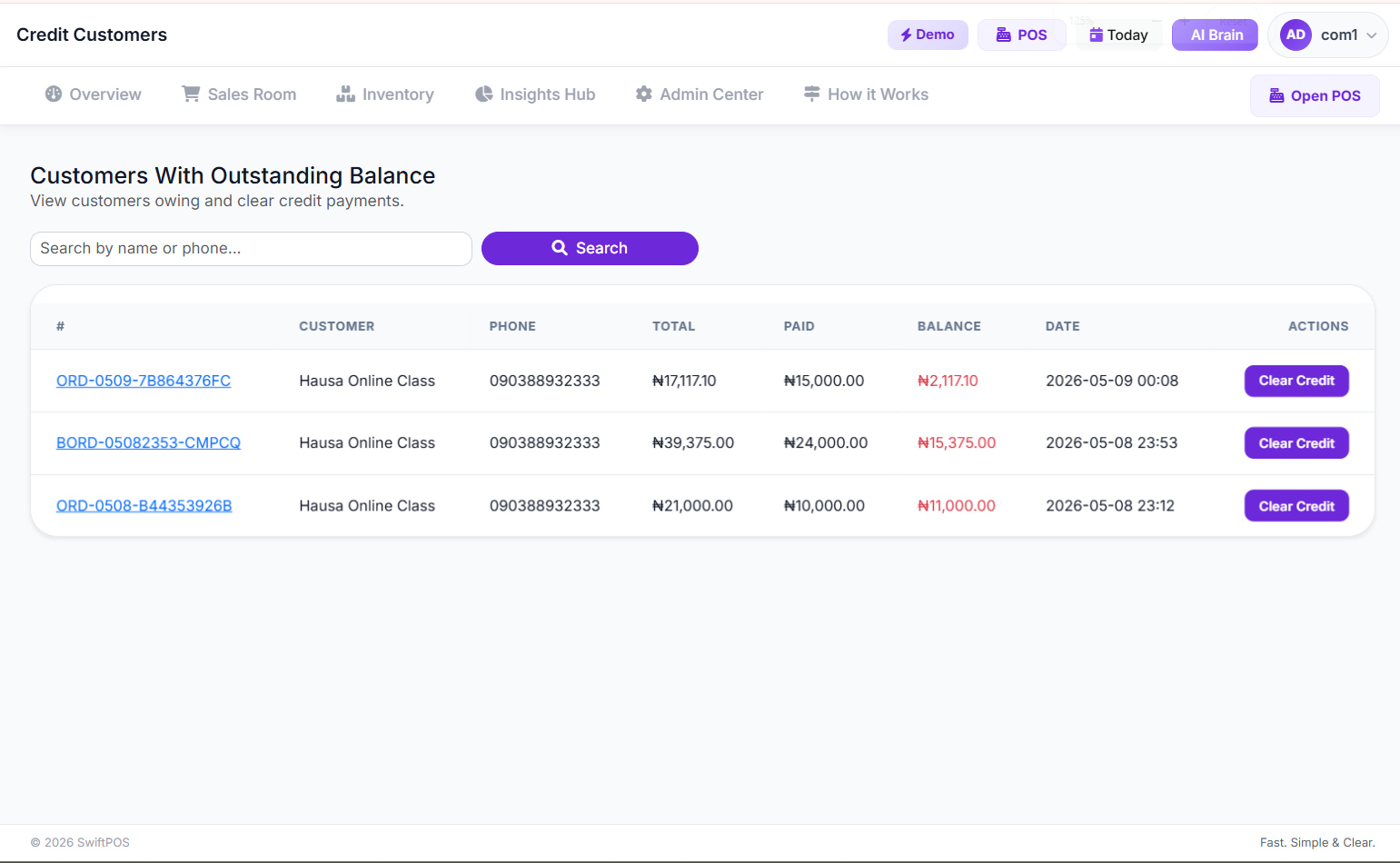 Credit Customers List Page
- Leveraging Technology: This is where the real shift happens. Manual record-keeping is slow, prone to errors, and makes it impossible to get real-time insights. Successful owners embrace POS and business management software. They know that investing in the right tools isn't an expense; it's an investment in efficiency and profitability.
- Actionable Tip: Explore integrated POS systems. They connect sales, inventory, expenses, and customer data. This means fewer errors, faster checkouts, and instant reports. For example, SwiftPOS is designed specifically for Nigerian retailers, providing tools that help you manage your retail store using AI in Nigeria and gain useful insights into your business performance.
Real Comparison: Manual vs. Systemized Operations
Let's put this into perspective with a quick comparison. Imagine two provision stores in the same neighborhood, both aiming for good profit margins. One relies on manual ledgers and memory, the other uses a system like SwiftPOS.
| Feature | Manual Operations (Typical Scenario) | Systemized Operations (With SwiftPOS) |
|---|---|---|
| Inventory Accuracy | 60-75% (Frequent stockouts, overstock, shrinkage) | 95-99% (Real-time tracking, low-stock alerts, expiry dates) |
| Daily Reconciliation | 1-2 hours (Error-prone, delays closing) | 5-15 minutes (Automated, accurate, instant reports) |
| Shrinkage/Loss | ₦20,000 - ₦80,000/month (Theft, damage, expiry unnoticed) | ₦5,000 - ₦15,000/month (Reduced by tracking, staff accountability) |
| Capital Tied in Dead Stock | ₦50,000 - ₦200,000 (Slow-moving items, lost opportunities) | ₦10,000 - ₦30,000 (Better purchasing decisions, faster turnover) |
| Customer Debt Management | Disorganized (Lost records, forgotten debts, strained relationships) | Organized (Clear balances, payment history, automated reminders) |
| Profit & Loss Visibility | Vague (Guesswork, hard to identify true net profit) | Clear (Accurate gross & net profit, expense breakdown, business insights) |
| Staff Productivity | Lower (More time on manual tasks, less on selling/customer service) | Higher (Faster sales, less admin, more focus on core tasks) |
| Decision Making | Reactive, based on gut feeling | Proactive, based on real-time data and insights |
| Expansion Potential | Limited (Difficult to scale manual processes) | High (Scalable systems, multi-branch management) |
You see the difference, right? It's not just about saving time; it's about saving money, making smarter decisions, and ultimately achieving much better profit margins for your retail business. If you're still using spreadsheets, you're missing out on serious growth. I even wrote a whole piece on why Nigerian retailers should stop using spreadsheets.
Frequently Asked Financial Questions
I get a lot of questions from shop owners about money, profits, and how to stay afloat. Here are some of the most common ones, and my honest answers:
What's a "good" retail profit margin in Nigeria?
Honestly, "good" depends on your industry, scale, and location. For FMCG, a net profit margin of 5-10% is decent, given the volume. For electronics, 10-15% is healthy. For fashion or specialty goods, you should aim for 15-20% or even higher. But the real "good" is when you're consistently making enough to cover your expenses, reinvest in your business, and still have something left for yourself. Don't compare your small provision store to a massive supermarket chain; compare your current performance to your previous month's. Always aim for improvement.
How long does it take for a new retail business to break even in Nigeria?
This is the golden question! It largely depends on your startup capital, your product margins, and your sales volume. For a small kiosk, you might break even in 3-6 months. For a medium-sized shop with higher initial investment, it could be 9-18 months. The key is meticulous planning and aggressive sales in the early days. If you want a detailed breakdown for a specific type of business, check out my article on how much money you need to open a mini supermarket in Nigeria in 2026.
My sales are high, but my bank account isn't growing. What am I doing wrong?
This is a classic sign of poor expense management or high operational costs. You might have great sales, but if your rent is too high, your generator fuel consumption is excessive, or you have too much dead stock, your net profit will suffer. You need to look beyond just sales figures and dive deep into your expenses and inventory turnover. A system that shows you your
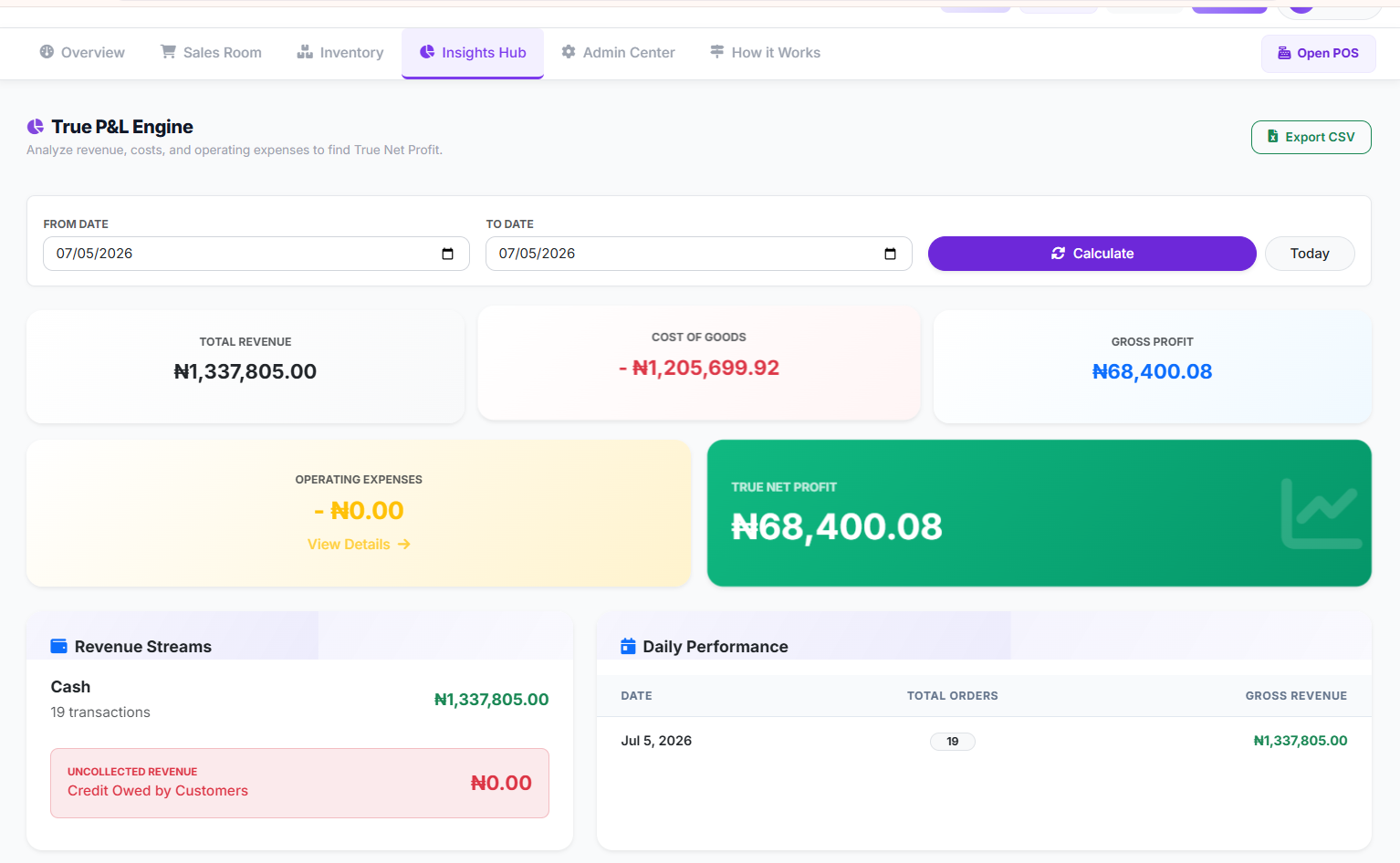 true profit and loss
Is it better to have high volume with low margins or low volume with high margins?
It depends on your product and market. Fast-moving consumer goods (FMCG) typically thrive on high volume and low margins. Think sachet water or soft drinks – you sell thousands to make a decent profit. Specialty items or luxury goods, however, work better with low volume and high margins. You sell fewer items, but each sale brings in significant profit. The important thing is to understand which strategy suits your business model and stick to it, optimizing for efficiency in either case.
How can I track my retail profit margin effectively?
You need a system that integrates your sales, cost of goods, and operating expenses. Manual methods (like paper ledgers or basic Excel sheets) make it incredibly difficult to get an accurate, real-time picture. A modern POS system designed for Nigerian retailers, like SwiftPOS, automatically calculates your gross profit with every sale and helps you track expenses so you can see your true net profit. It's the difference between guessing your profit and knowing it.
Your Next Step to Financial Clarity
Look, achieving good profit margins for retail businesses in Nigeria isn't about magic formulas or unrealistic markups. It's about clarity, control, and consistent effort. It's about knowing your numbers inside out, cutting down on waste, and making informed decisions.
If you're still relying on manual records or basic spreadsheets, you're fighting an uphill battle. You're leaving money on the table, missing critical insights, and making it harder for your business to grow.
It's time to take control. SwiftPOS offers a complete business management and POS system designed to help Nigerian retailers like you. It helps you:
- Track every sale and expense to see your true profit.
- Manage your inventory to avoid stockouts and dead stock.
- Keep tabs on customer debts to ensure you get paid.
- Monitor staff activity to reduce shrinkage and improve accountability.
- Get real-time insights into your business performance, so you can make smarter decisions.
Written by SwiftPOS Team
Practical guides from the retail specialists at Nura Mustapha Technologies Limited, for modern Nigerian merchants.