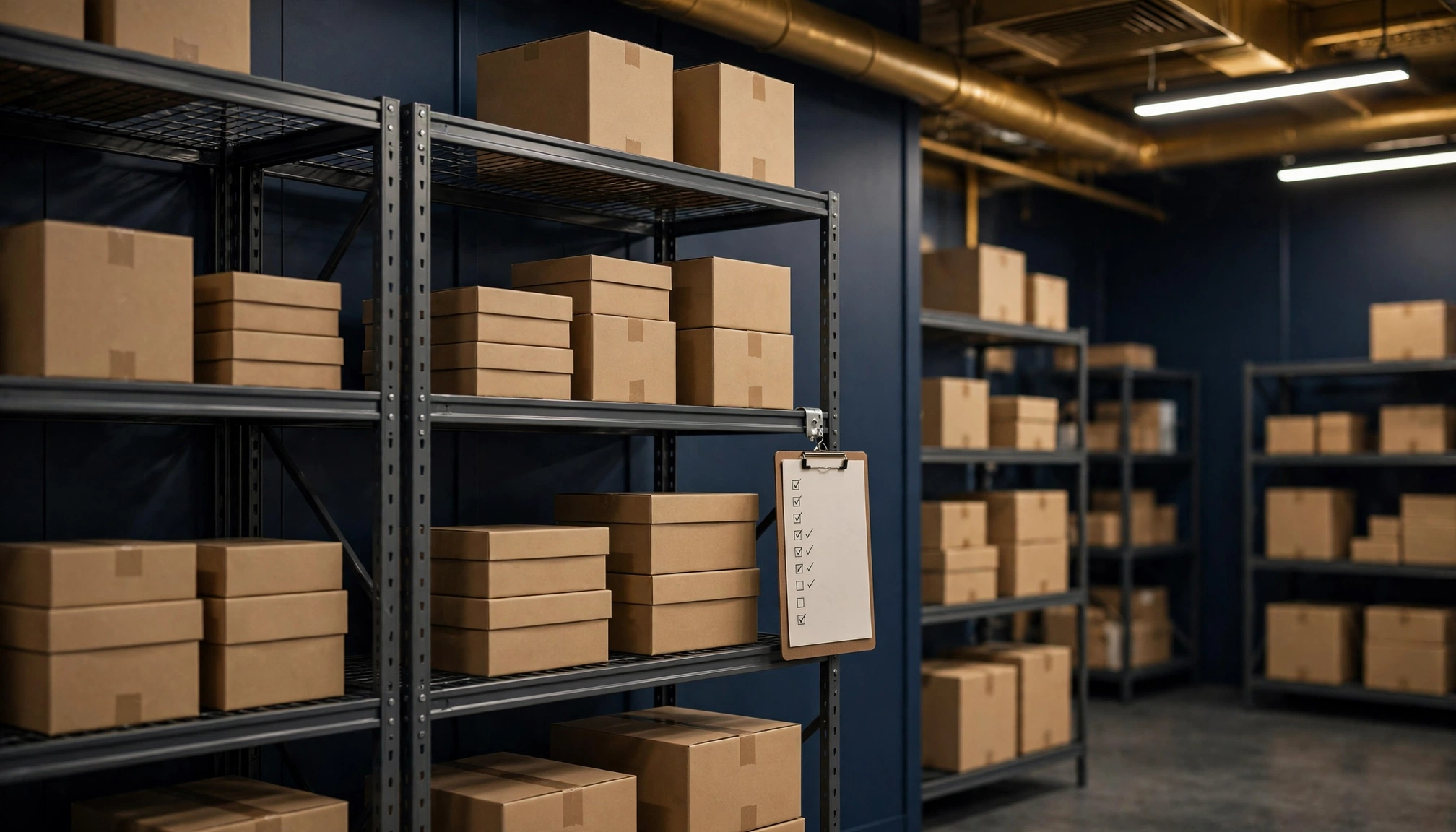
How to Calculate Supermarket Profitability in Nigeria: A Step-by-Step Guide
SwiftPOS Team
Published September 15, 2026

For many Nigerian supermarket owners, knowing exactly how profitable their business is feels like a guessing game. You see cash flow, but are you truly making money after all expenses? Understanding your supermarket's real profitability is the difference between thriving and just surviving in Nigeria's competitive retail landscape.
Busy nigerian supermarket with customers and stocked shelvesThe Realities of Supermarket Profitability in Nigeria (2026)
The Nigerian retail sector, particularly supermarkets and mini-marts, is dynamic but also presents unique challenges. In 2026, businesses face fluctuating supply costs, rising operational expenses (especially for power), and intense competition. A recent market analysis indicated that while average daily sales for a small community store might range from ₦50,000, a busy city supermarket can pull in up to ₦300,000. However, these figures only tell half the story. The gross profit margin on goods typically hovers between 10% and 25%, depending on the product mix—fast-moving staples have lower margins, while specialty items offer more.
Many Nigerian retailers still rely on manual record-keeping or basic spreadsheets, which makes accurate retail profit calculation a significant hurdle. This often leads to underestimating true costs and overestimating actual profits. Without a clear picture of your net profit Nigeria, strategic decisions about pricing, inventory, and expansion become mere speculation. Understanding these financial realities is crucial for any supermarket owner looking to grow sustainably. For more insights on common pitfalls, read about Nigerian Retailers: Inventory Management Mistakes Crushing Your Profits.
What You Need Before You Start
Before diving into the calculations, ensure you have access to the following essential data:
- Accurate Sales Records: Daily, weekly, or monthly total sales revenue.
- Cost of Goods Sold (COGS) Data: The actual cost you paid for every item sold. This is crucial for gross profit calculation.
- Operating Expenses Records: A detailed breakdown of all recurring costs (rent, salaries, utilities, transportation, marketing).
- Inventory Records: Up-to-date stock levels and their associated costs.
- Capital: An understanding of your initial investment for context. For a detailed breakdown, see How Much Money Do You Need to Open a Mini Supermarket in Nigeria? (2026 Full Cost Breakdown).
Step-by-Step: How to Calculate Supermarket Profitability in Nigeria
Calculating your supermarket's profitability involves more than just looking at your daily takings. It requires a systematic approach to account for all inflows and outflows.
Step 1: Calculate Your Total Sales Revenue
This is the easiest part: the total money your supermarket brought in from selling goods over a specific period (e.g., a month, a quarter).
- How to do it: Sum up all your sales transactions. If you use a POS system, this figure is readily available. If you're manual, consolidate your daily sales records.
- Example: If your supermarket sold goods worth ₦3,000,000 in a month.
Step 2: Determine Your Cost of Goods Sold (COGS)
This is perhaps the most critical component for accurate supermarket profit calculation. COGS represents the direct costs attributable to the production of the goods sold by your supermarket. It does not include operating expenses like rent or salaries.
- Formula: Beginning Inventory + Purchases – Ending Inventory = COGS
- Beginning Inventory: Value of stock at the start of your period.
- Purchases: Total cost of all new stock bought during the period.
- Ending Inventory: Value of stock remaining at the end of the period.
- Why it matters: Accurately tracking COGS helps you understand the true cost of what you sell. Many small businesses make the mistake of just looking at total purchases, which can be misleading if a lot of that stock hasn't been sold yet.
- Example:
- Beginning Inventory: ₦1,500,000
- Purchases during the month: ₦2,000,000
- Ending Inventory: ₦1,000,000
- COGS = ₦1,500,000 + ₦2,000,000 – ₦1,000,000 = ₦2,500,000
Step 3: Calculate Your Gross Profit
Gross profit is your first indicator of profitability. It shows how much money you have left from sales after covering the direct cost of the products you sold.
- Formula: Total Sales Revenue – Cost of Goods Sold (COGS) = Gross Profit
- Importance: A healthy gross profit margin indicates effective pricing and purchasing strategies. If your gross profit is low, you might be pricing too low or paying too much for your stock.
- Example (continuing from above):
- Total Sales Revenue: ₦3,000,000
- COGS: ₦2,500,000
- Gross Profit = ₦3,000,000 – ₦2,500,000 = ₦500,000
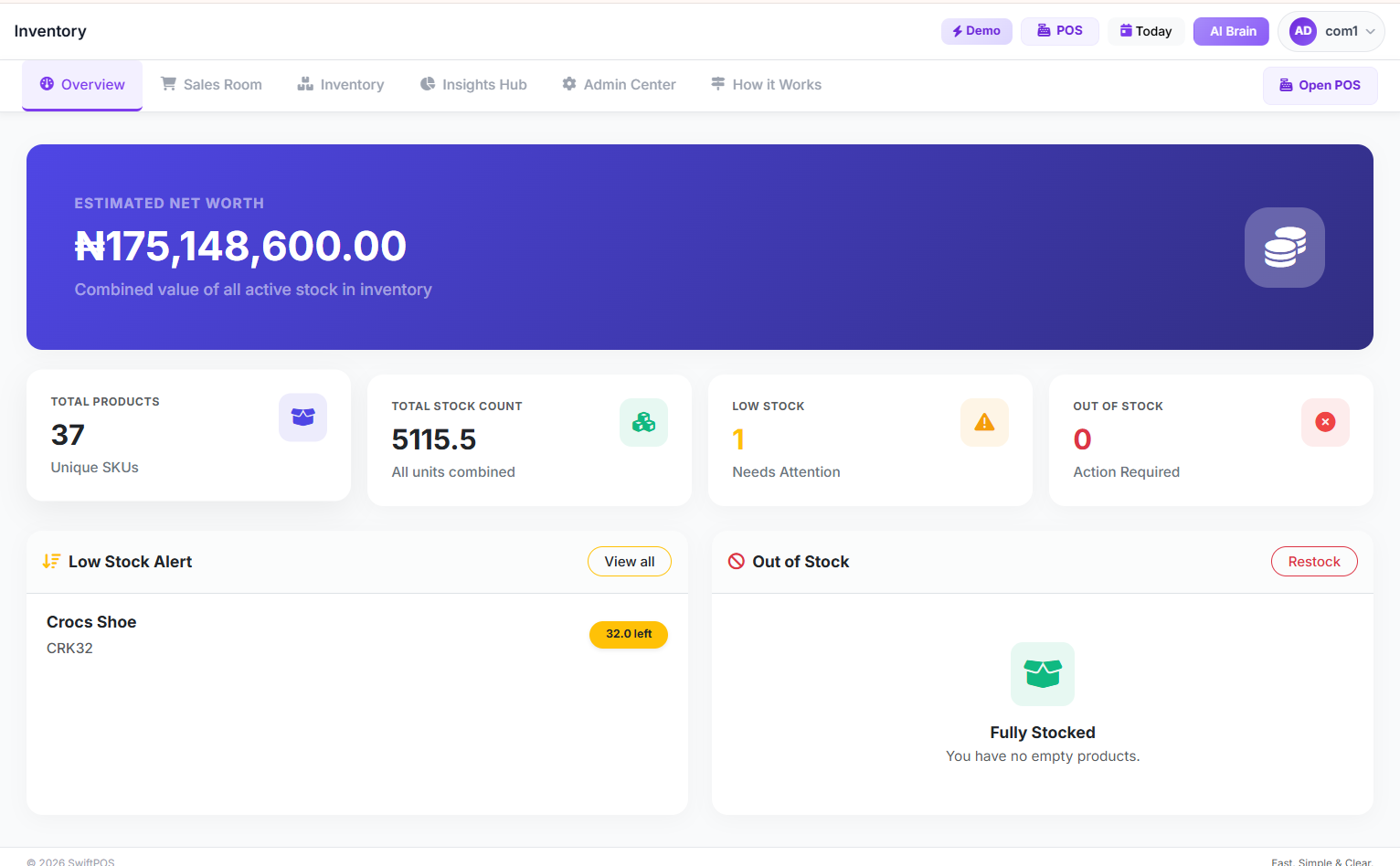 Inventory Dashboard
Step 4: List and Sum All Operating Expenses
Operating expenses are all the costs incurred to run your supermarket that are not directly tied to the products themselves. These are crucial for determining your net profit Nigeria.
- Common Operating Expenses in Nigeria:
- Rent: Annually paid, so divide by 12 for monthly figures. (e.g., ₦150,000 - ₦3,000,000 per year)
- Staff Salaries: (e.g., ₦100,000 - ₦300,000 per month for 2-4 staff)
- Electricity/Generator Fuel: (e.g., ₦50,000 - ₦250,000 per month)
- Transportation/Logistics (for stock): (e.g., ₦30,000 - ₦150,000 per month)
- Marketing/Promotions: (e.g., ₦10,000 - ₦80,000 per month)
- Shop Fitting/Maintenance: (Amortize one-time costs or track monthly repairs).
- Bank Charges/POS Machine Fees:
- Security Costs:
- Software Subscriptions: (e.g., for POS systems, accounting software).
- Example:
- Rent (monthly portion): ₦100,000
- Staff Salaries: ₦250,000
- Electricity/Fuel: ₦150,000
- Transportation: ₦70,000
- Marketing: ₦30,000
- Miscellaneous: ₦20,000
- Total Operating Expenses = ₦620,000
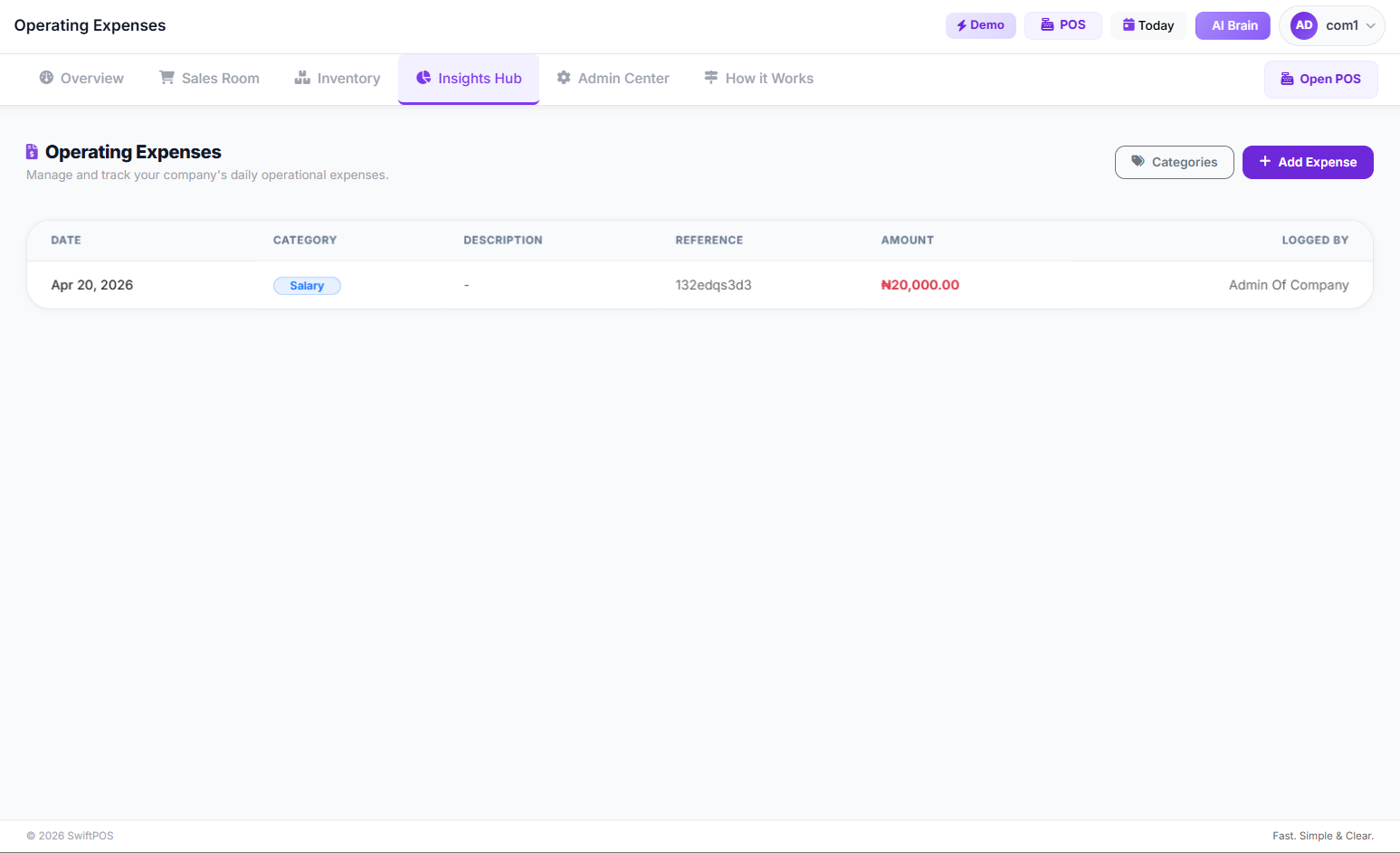 Expenses List mn=anaagement Page
Step 5: Calculate Your Net Profit (or Loss)
This is the ultimate figure that tells you if your supermarket is truly profitable. Net profit is what remains after all expenses (both direct COGS and operating expenses) have been paid.
- Formula: Gross Profit – Total Operating Expenses = Net Profit (or Loss)
- Significance: A positive net profit means your business is making money. A negative figure (net loss) indicates you're spending more than you earn, and adjustments are urgently needed.
- Example (continuing from above):
- Gross Profit: ₦500,000
- Total Operating Expenses: ₦620,000
- Net Profit = ₦500,000 – ₦620,000 = -₦120,000 (A net loss of ₦120,000 for the month)
Step 6: Calculate Profit Margins
Beyond the absolute profit figures, profit margins give you percentages that are useful for comparison and strategic planning.
- Gross Profit Margin: (Gross Profit / Total Sales Revenue) x 100
- Example: (₦500,000 / ₦3,000,000) x 100 = 16.67%
- Net Profit Margin: (Net Profit / Total Sales Revenue) x 100
- Example: (-₦120,000 / ₦3,000,000) x 100 = -4%
Common Mistakes to Avoid
- Ignoring Inventory Shrinkage: Theft, damage, or expired goods (shrinkage) reduce your actual inventory and inflate your perceived profit. Always account for stock adjustments.
- Mixing Personal and Business Finances: This is a common pitfall that makes accurate profit calculation impossible. Keep separate bank accounts and meticulously record all business transactions.
- Underestimating Operating Costs: Many small businesses forget to include smaller, irregular expenses or the full cost of generator fuel and maintenance. Every Naira spent on the business must be accounted for.
- Inaccurate COGS Calculation: Simply subtracting what you spent on purchases from sales is not COGS. You must factor in beginning and ending inventory to get an accurate cost for what was actually sold.
- Lack of Regular Tracking: Waiting until the end of the year to calculate profit is too late to make timely adjustments. Track your sales, COGS, and expenses monthly, or even weekly.
- Not Leveraging Technology: Relying solely on paper or basic spreadsheets is prone to errors and makes detailed analysis difficult. Consider how Traditional Bookkeeping vs. POS Software: Real Costs for Nigerian Retailers can impact your business.
"In Nigeria's competitive retail market, what you don't track, you can't improve. Profitability isn't just about selling more; it's about understanding every Naira that comes in and goes out."
>
How to Track and Grow After Launch
Calculating profit is not a one-time event; it's an ongoing process. Once you have your numbers, the real work of growth begins.
- Regular Monitoring: Review your profit and loss statements monthly. This helps you spot trends, identify issues early, and make quick adjustments.
- Key Performance Indicators (KPIs): Beyond net profit, monitor metrics like average transaction value, customer retention rate, and stock turnover. These give you deeper insights into your supermarket's health. Learn more about 7 Key Retail Metrics Nigerian Businesses Must Track for Profit Growth.
- Expense Reduction: Continuously look for ways to cut unnecessary costs without impacting quality or customer experience. Negotiate better deals with suppliers, optimize energy consumption, or streamline staff schedules.
- Sales Growth Strategies: Implement marketing campaigns, loyalty programs, or diversify your product offerings. Understanding your profitable product categories can help you focus your efforts.
- Inventory Optimization: Use sales data to forecast demand accurately, reduce dead stock, and ensure popular items are always available. This directly impacts your COGS and gross profit. Tools like SwiftPOS can provide detailed sales reports and inventory insights, helping you identify best-selling products and manage stock levels efficiently to boost your retail profit calculation.
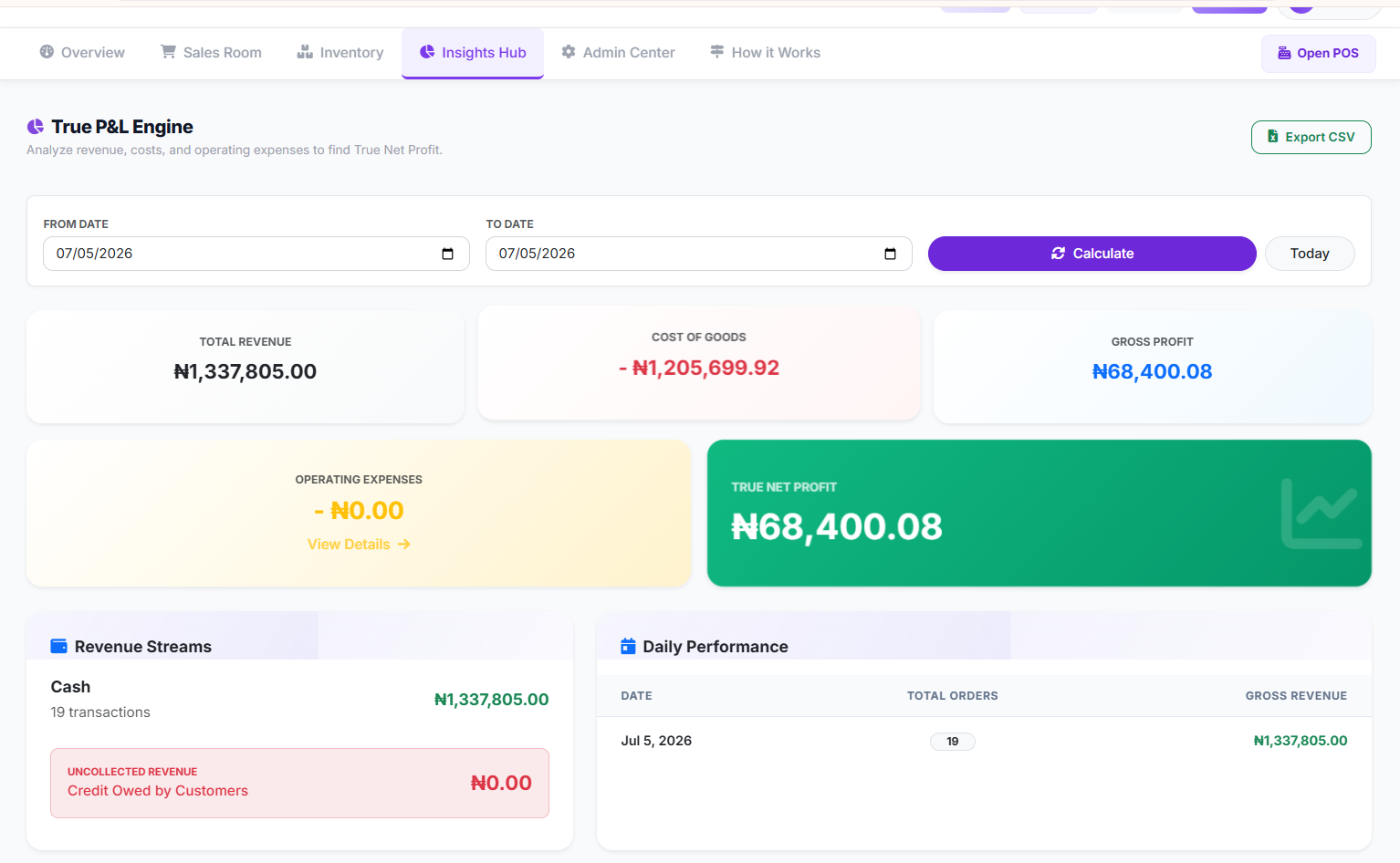 Profit and Loss Page
Frequently Asked Questions
Q1: What is the difference between gross profit and net profit for a supermarket?
Gross profit is the revenue from sales minus the direct cost of the goods sold (Cost of Goods Sold - COGS). It shows how much profit you make from selling products before accounting for operating expenses. Net profit, on the other hand, is what's left after you subtract all business expenses (COGS, rent, salaries, utilities, marketing, etc.) from your total sales revenue. Net profit is the true measure of your supermarket's financial success.
Q2: How often should I calculate my supermarket's profitability?
Ideally, you should calculate your supermarket's profitability monthly. This allows you to identify problems quickly, make timely adjustments, and track performance trends. Waiting until the end of the quarter or year can mean missing crucial opportunities to improve your financial health.
Q3: What is a good profit margin for a supermarket in Nigeria?
Profit margins vary widely based on location, size, product mix, and operational efficiency. While gross profit margins might range from 10% to 25% for different product categories, a healthy net profit margin for a well-managed supermarket in Nigeria might typically fall between 3% and 8%. Some highly efficient operations might achieve more, while others might struggle to break even. The goal is continuous improvement.
Q4: How can technology help improve my supermarket's profitability?
Technology, especially a comprehensive POS system, can significantly boost profitability. It automates sales tracking, provides real-time inventory updates, helps manage expenses, and generates detailed financial reports (like profit and loss statements). This reduces manual errors, saves time, helps identify profitable products, and highlights areas for cost reduction, directly impacting your supermarket profit calculation. For example, a system that tracks expiry dates can prevent losses from spoiled goods.
Q5: What are common hidden costs that affect supermarket profit in Nigeria?
Hidden costs can significantly erode your net profit Nigeria. These include:
- Generator fuel and maintenance: Often underestimated due to unreliable power supply.
- Spoilage and waste: Especially for fresh produce or perishable goods.
- Inventory shrinkage: Losses from theft (internal or external), damage, or administrative errors.
- Bank charges and transaction fees: Small fees that add up over time.
- Unexpected repairs: For refrigerators, generators, or shop fittings.
- Opportunity cost: The profit lost from not having popular items in stock or having too much slow-moving inventory.
Ready to Streamline Your Supermarket's Profit Calculation?
Understanding your supermarket's true financial health is no longer a luxury, but a necessity for survival and growth in Nigeria. Stop guessing and start making data-driven decisions. Discover how SwiftPOS can transform your operations by providing real-time insights into your sales, inventory, and expenses, making retail profit calculation effortless and accurate. Get started with SwiftPOS today and take control of your supermarket's profitability.

How to Open a Supermarket in Nigeria with ₦5 Million (…
Sep 14, 2026
How to Start a Mini Supermarket in Nigeria With ₦1 Mil…
Sep 11, 2026
How to Start a Mini Supermarket in Nigeria With ₦1 Mil…
Sep 11, 2026