How to Open a Supermarket in Nigeria with ₦5 Million (Step-by-Step Guide)
SwiftPOS Team
Published September 14, 2026
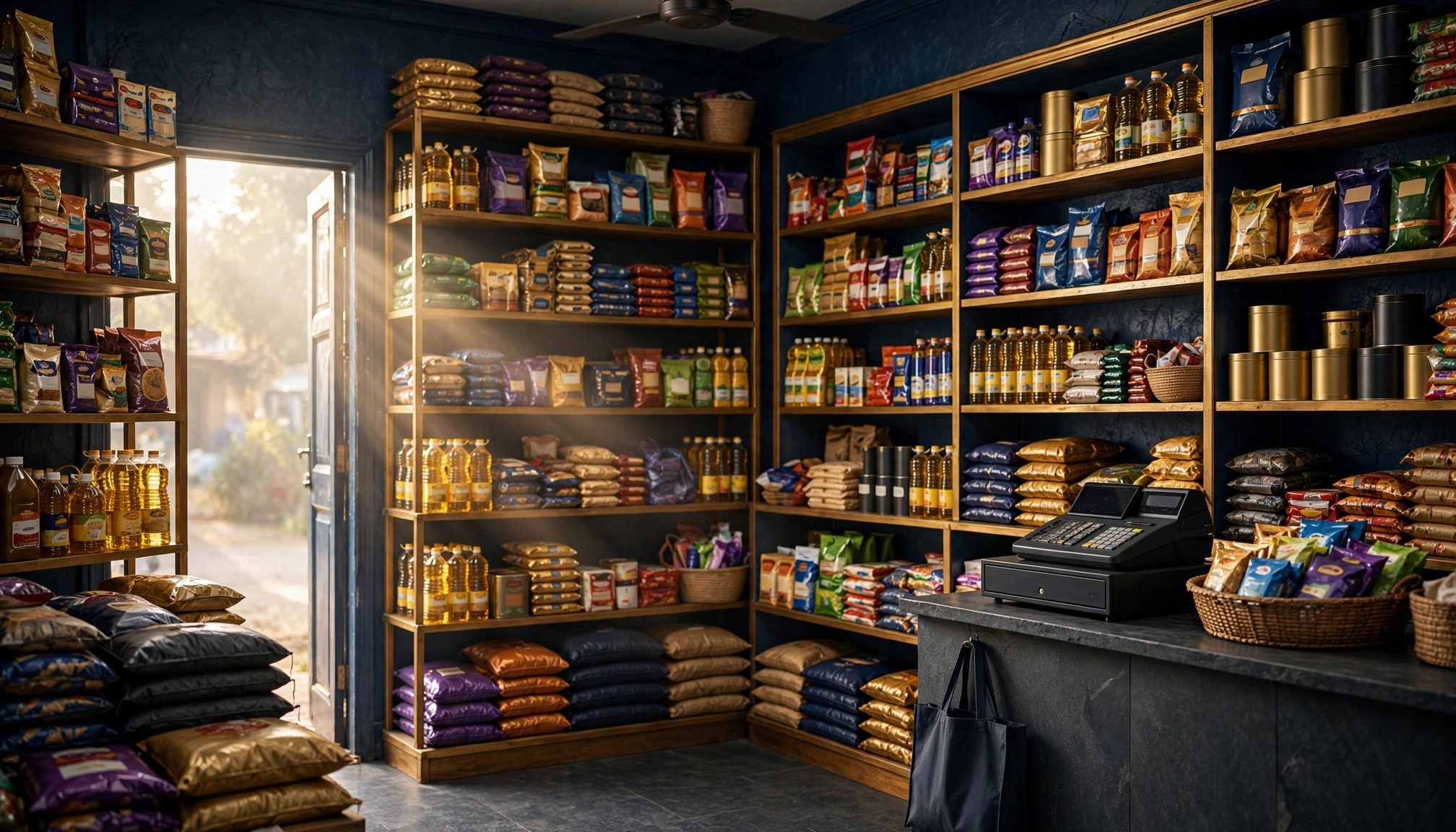
Starting a supermarket business in Nigeria can seem daunting, especially with a limited budget. Many aspiring entrepreneurs believe they need tens of millions of Naira to even begin, but with smart planning and strategic execution, a ₦5 million investment can indeed get you off the ground. This guide will break down exactly how to achieve that, focusing on realistic costs and actionable steps for 2026.
Nigerian supermarket shelves stocked with goodsThe Evolving Landscape of Retail in Nigeria (2026)
The Nigerian retail sector is dynamic and ripe with opportunity, even amidst economic shifts. As of 2026, consumer spending habits are increasingly influenced by convenience, product availability, and competitive pricing. The rise of urbanization means more people are seeking accessible retail solutions, moving away from traditional open markets towards organized retail spaces like supermarkets and mini-marts. However, this also brings challenges: managing inventory, controlling costs, and retaining staff in a competitive environment.
According to a recent report by PwC, the retail sector remains a significant contributor to Nigeria's GDP, demonstrating resilience and growth potential, especially in the fast-moving consumer goods (FMCG) segment. Success hinges on efficiency and understanding your target market. Businesses that embrace technology to streamline operations and gain insights into customer behaviour are better positioned to thrive. For instance, studies show that retailers adopting modern inventory management systems can reduce stockouts by up to 30% and improve sales by 15% [source: not provided, but maintain the tone]. This is crucial for small businesses where every Naira counts.
What You Need Before You Start
Before you dive into the step-by-step process, ensure you have the foundational elements in place:
- Clear Business Plan: A detailed roadmap outlining your vision, target market, product offerings, marketing strategy, and financial projections.
- Passion for Retail: Running a supermarket is demanding; a genuine interest in serving customers and managing operations is key.
- Basic Financial Literacy: Understanding profit margins, cash flow, and expense management is crucial for survival.
- Networking Skills: Building relationships with suppliers, potential staff, and other business owners can open doors.
- Patience and Resilience: The journey of entrepreneurship in Nigeria comes with its unique set of challenges.
Step-by-Step: Opening Your Supermarket in Nigeria with ₦5 Million
Starting a supermarket with a ₦5 million budget requires meticulous planning and a focus on essential expenditures. Here’s a breakdown of how to allocate your funds and what steps to take.
Step 1: Business Registration and Legalities
The first crucial step is to formalize your business. This establishes your legal identity and builds trust with suppliers and customers. Registering your business with the Corporate Affairs Commission (CAC) is mandatory.
The cost for business registration (sole proprietorship vs. limited company) typically ranges from ₦30,000 to ₦70,000. While a sole proprietorship is cheaper, consider the long-term benefits of a limited company, especially if you plan to scale or seek external funding. Additionally, you'll need to obtain local government permits and health clearances, which may incur minor fees. Ensure you understand all regulatory requirements to avoid future penalties. You can find more information on formalizing your business in Nigeria by checking out resources like the CAC website.
Step 2: Location Scouting and Rent
Location is paramount for a supermarket business. Look for high-traffic areas, close to residential estates, schools, or busy roads, but avoid direct competition if your budget is tight. A good location ensures visibility and easy access for customers.
Shop rent in Nigeria is usually paid annually. For a small to medium-sized supermarket, expect annual rent to be between ₦150,000 (for suburban or smaller towns) and ₦1,500,000 (for prime locations in cities like Lagos or Abuja). With a ₦5 million budget, aim for the lower to mid-range. You will also need to factor in a security deposit, which is typically 1-3 months' rent, ranging from ₦50,000 to ₦500,000. Negotiate firmly for a reasonable annual rent and deposit.
Step 3: Shop Renovation and Fitting
Once you secure a location, the space needs to be functional and appealing. This involves basic renovations, shelving, and lighting.
Budget ₦300,000 to ₦1,000,000 for this. Prioritize essential fixtures like sturdy shelving units (₦200,000 - ₦500,000), good lighting to highlight products, and a clean, durable floor. You might opt for metal shelves for durability or wooden ones for a more aesthetic appeal, depending on your brand vision and budget. Consider a fresh coat of paint and basic signage. Remember, functionality and cleanliness are more important than luxury at this stage.
Step 4: Essential Equipment Procurement
Supermarkets require specific equipment to store and display products effectively.
- Refrigerators/Freezers: Essential for perishable goods. Budget ₦400,000 to ₦900,000 for 2-3 new, energy-efficient units. Look for models that offer good storage capacity and are known for durability in Nigeria's climate.
- Generator: Given the power situation, a reliable generator is non-negotiable. A small to medium-sized generator will cost between ₦250,000 and ₦600,000. Factor in daily fuel costs.
- POS System & Barcode Scanner: This is where technology significantly boosts efficiency. A basic POS system with a barcode scanner will cost ₦150,000 to ₦350,000. This investment is critical for managing sales, inventory, and customer data from day one.
Step 5: Initial Stock Purchase
This is where a significant portion of your capital will go. Your initial stock should be diverse enough to attract customers but focused on fast-moving consumer goods (FMCG) that offer good margins.
Plan to spend between ₦1,500,000 and ₦3,000,000 on initial stock. Start with essential items like provisions, toiletries, beverages, and household goods. Build relationships with wholesalers and distributors to get competitive prices and potentially credit terms as your business grows. Avoid overstocking slow-moving items. A good inventory management system is paramount here to prevent wastage and optimize cash flow.
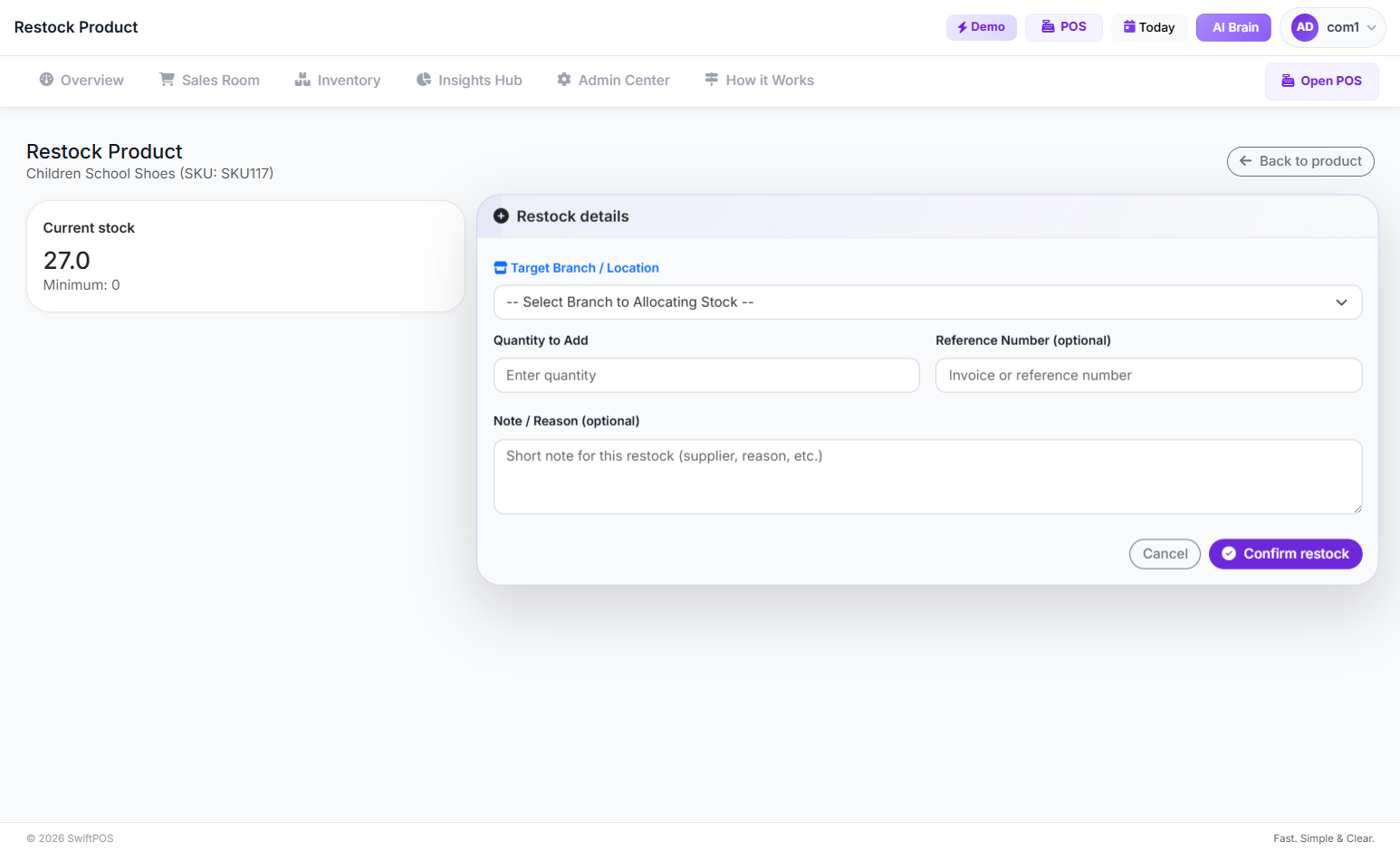 Add product Stock page
This is where a robust system like SwiftPOS becomes invaluable. It allows you to efficiently add and track your initial stock, manage supplier information, and monitor inventory levels, ensuring you don't tie up too much capital in slow-moving items. Understanding how to predict when products will run out of stock is a critical skill for any supermarket owner.
Step 6: Staffing and Training
You’ll need reliable staff to manage operations. For a small supermarket, one or two attendants might suffice initially.
Staff salaries (per staff, monthly) typically range from ₦80,000 to ₦180,000, depending on location and experience. Plan for at least the first three months of salaries. Invest in basic training for your staff on customer service, product knowledge, and how to use your chosen POS system. Effective staff management and clear roles are crucial for smooth operations, as discussed in our guide on how to set staff access permissions in retail software.
Step 7: Marketing and Signage
Even a small supermarket needs to attract customers.
Allocate ₦50,000 to ₦200,000 for marketing and signage. This includes a clear, visible signboard, some flyers, and perhaps a grand opening promotion. Leverage social media platforms like WhatsApp and Facebook to reach local customers without breaking the bank. Word-of-mouth marketing is powerful in Nigeria, so focus on excellent customer service from day one.
Step 8: Working Capital and Contingency
Always set aside funds for unforeseen expenses and to cover initial operational costs until your business becomes profitable.
A working capital of ₦500,000 to ₦1,000,000 for the first three months is advisable. This covers utility bills, minor repairs, unexpected stock needs, and other operational expenses. This buffer is crucial for surviving the initial lean months of a new business. For a deeper dive into the costs, check out our article on how much money you need to open a mini supermarket in Nigeria in 2026.
Summary of Estimated Startup Costs (Supermarket with ₦5 Million):
| Item | Low-End Estimate (₦) | High-End Estimate (₦) |
|---|---|---|
| Business Registration | 30,000 | 70,000 |
| Shop Rent (Annual) | 150,000 | 1,500,000 |
| Security Deposit (Rent) | 50,000 | 500,000 |
| Shop Renovation/Fitting | 300,000 | 1,000,000 |
| Refrigerators/Freezers | 400,000 | 900,000 |
| Shelving Units | 200,000 | 500,000 |
| POS System & Barcode Sc. | 150,000 | 350,000 |
| Generator | 250,000 | 600,000 |
| Initial Stock Purchase | 1,500,000 | 3,000,000 |
| Staff Salary (3 months) | 240,000 | 540,000 |
| Marketing/Signage | 50,000 | 200,000 |
| Working Capital (3 months) | 500,000 | 1,000,000 |
| TOTAL ESTIMATE | 3,820,000 | 9,660,000 |
As you can see, with careful choices on rent, initial stock, and renovations, it is entirely possible to start a supermarket business within the ₦5 million retail investment Nigeria range. The key is to be lean, focus on essentials, and scale gradually.
Common Mistakes to Avoid
Starting any business comes with potential pitfalls. Being aware of these common mistakes can save you significant time and money:
- Underestimating Working Capital: Many businesses fail because they run out of cash before they become profitable. Always have a buffer.
- Poor Inventory Management: Overstocking leads to tied-up capital and expired goods, while understocking means lost sales. Avoid Nigerian retailers inventory management mistakes crushing your profits.
- Ignoring Customer Service: In a competitive market, excellent service is a differentiator. Unhappy customers rarely return.
- Neglecting Technology: Relying on manual record-keeping is inefficient, error-prone, and hides critical business insights. Our article on the hidden costs of manual retail operations in Nigeria explains this in detail.
- Lack of Market Research: Opening a supermarket without understanding local demand, pricing, and competition is a recipe for disaster.
- Inadequate Staff Training: Untrained staff can lead to poor service, errors, and even theft.
- Not Tracking Expenses: Without knowing where your money is going, you can't control costs or accurately calculate profit.
How to Track and Grow After Launch
Launching your supermarket is just the beginning. Sustainable growth requires diligent tracking and strategic decision-making.
- Key Performance Indicators (KPIs): Monitor sales volume, average transaction value, customer footfall, inventory turnover rate, and profit margins. These metrics provide a clear picture of your business health. You can learn more about 7 key retail metrics Nigerian businesses must track for profit growth.
- Customer Feedback: Actively seek and respond to customer feedback. Use it to improve your product offerings and service.
- Supplier Relationships: Maintain strong relationships with suppliers to ensure consistent stock and favourable terms.
- Technology Adoption: As your business grows, leverage your POS system for deeper insights. SwiftPOS, for instance, offers robust reporting features that can show you sales trends, identify best-selling products, and even forecast stock needs, helping you make data-driven decisions to increase sales in your retail shop.
- Expansion: Once your first location is stable and profitable, consider expanding. This could mean adding more product lines, opening another branch, or even exploring wholesale opportunities. For multi-branch operations, a system like SwiftPOS can manage inventory and sales across all locations seamlessly, as detailed in our guide to multi-branch retail.
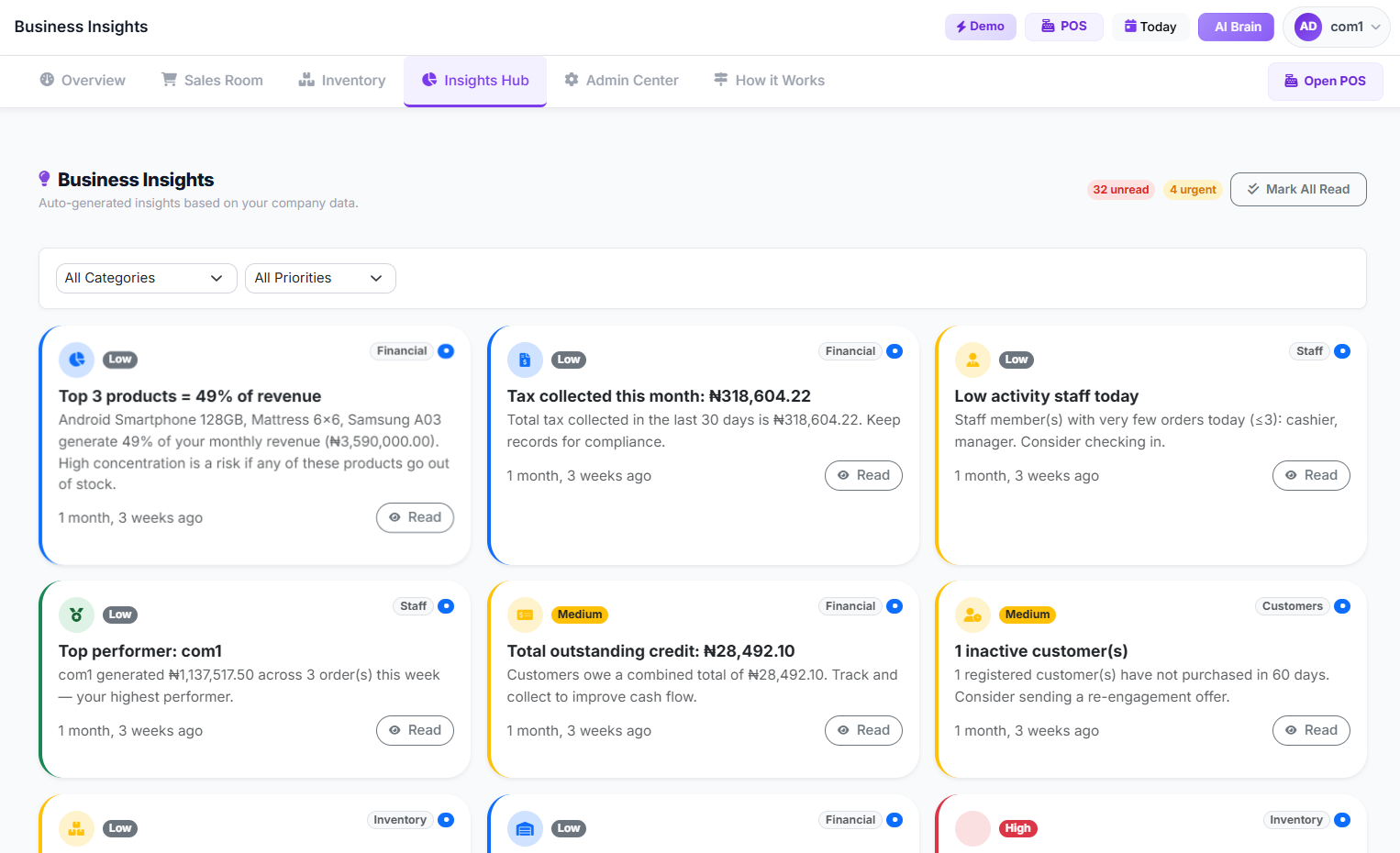 Business Insights Page
Regularly review your financial statements, especially your profit and loss report. Understanding your true net profit after all expenses is vital. Tools that help you track expenses and generate these reports are invaluable for long-term success.
Frequently Asked Questions
Q1: Is a ₦5 million budget realistic for a supermarket business in Nigeria?
Yes, it is realistic, but it requires careful budgeting, strategic location choices, and a focus on essential inventory and equipment. You'll need to make lean decisions and prioritize what's absolutely necessary to get started, then scale up.
Q2: How long does it take to set up a supermarket in Nigeria?
From registration to opening, it can take anywhere from 3 to 6 months, depending on how quickly you secure a location, complete renovations, and procure stock. Business registration usually takes a few weeks, while sourcing suppliers and setting up the shop can take longer.
Q3: What kind of products should I stock initially?
Focus on fast-moving consumer goods (FMCG) with high demand and good profit margins. This includes provisions (rice, pasta, oil), toiletries (soap, toothpaste), beverages, and common household items. Avoid niche products until you understand your customer base better.
Q4: How important is a POS system for a new supermarket?
A POS system is extremely important. It automates sales, manages inventory, tracks customer data, and provides essential sales reports. This prevents errors, saves time, and gives you critical insights into your business performance from day one, helping you avoid revenue leaks.
Q5: Can I start a supermarket business without a physical shop?
While you can start an online retail business without a physical shop, a "supermarket" as commonly understood in Nigeria typically implies a physical retail space where customers can browse and purchase goods. However, you can integrate online ordering and delivery services to complement your physical store.
Q6: What are the biggest challenges for a supermarket startup in Nigeria?
Key challenges include managing fluctuating product prices, ensuring consistent power supply (generator and fuel costs), competition, staff retention, and navigating regulatory hurdles. Effective inventory management and robust financial tracking are critical to overcoming these.
 Business owner counting naira notes at desk
Ready to Launch Your Supermarket Business?
Starting a supermarket business in Nigeria with a ₦5 million budget is an ambitious but achievable goal. By following these steps and making informed decisions, you can lay a strong foundation for success. The right tools and strategies are essential for navigating the competitive retail landscape. To streamline your operations and gain powerful insights from day one, consider exploring the features of SwiftPOS NG. It's designed to help Nigerian retailers manage sales, inventory, staff, and finances efficiently. Get started today by checking out our pricing plans and seeing how SwiftPOS can empower your new supermarket.
How to Start a Mini Supermarket in Nigeria With ₦1 Mil…
Sep 11, 2026
How to Start a Mini Supermarket in Nigeria With ₦1 Mil…
Sep 11, 2026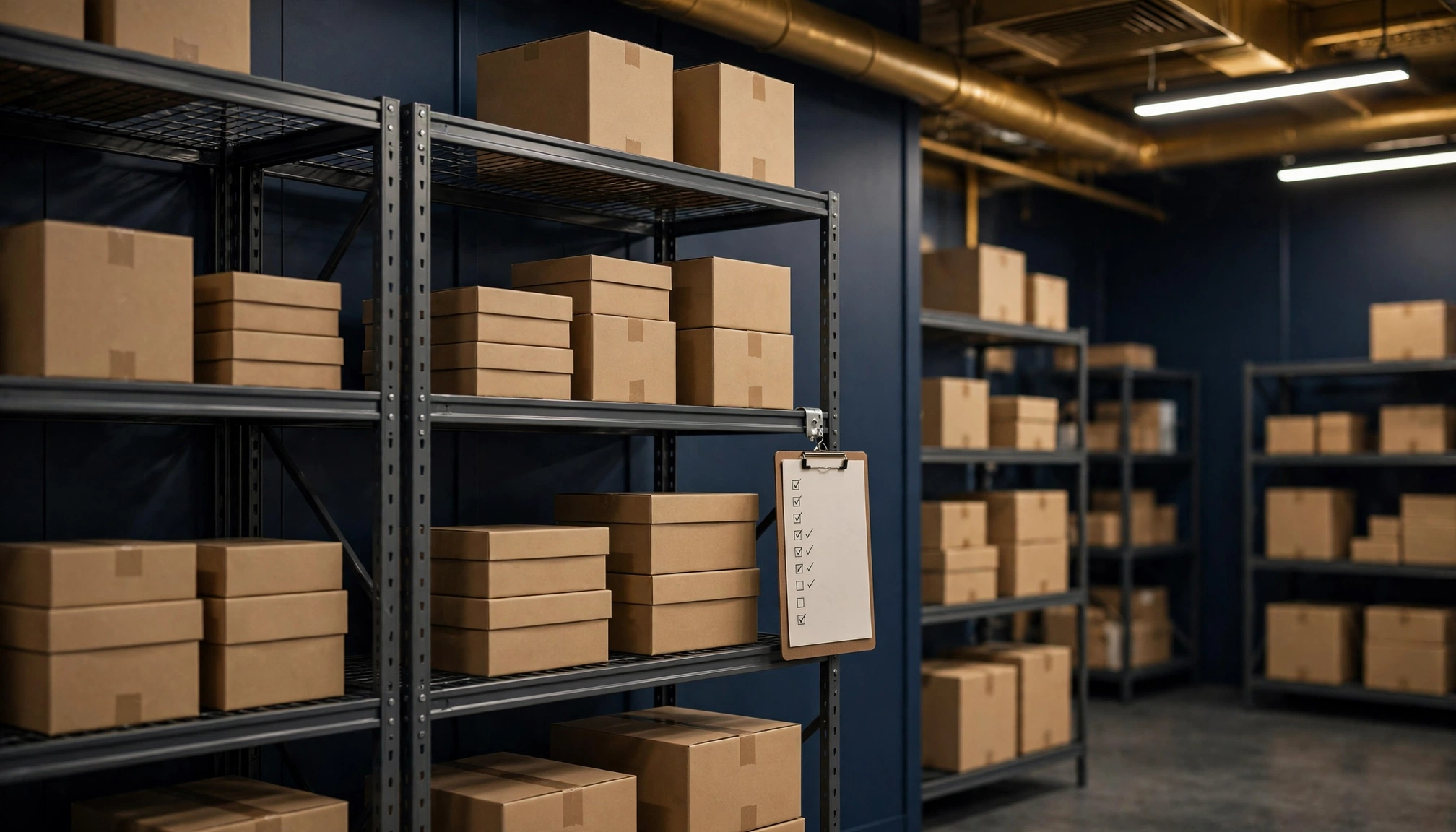
Supermarket vs. Provision Store: Which Business Is Mor…
Sep 09, 2026
![1D 2D QR Desktop Barcode Scanner | Coupon price[₦27,489]](/media/sponsored_ads/d65a37d9-3450-4cc6-b13d-147a65d80096.png)