How to Manage Multiple Cashiers in a Single Store: A Complete Guide
SwiftPOS Team
Published October 16, 2026

The afternoon sun beat down relentlessly on Balogun Market, the usual cacophony of hawkers and buyers a dizzying symphony. Inside Mama Nkechi's bustling provision store, the air conditioner struggled, and a queue snaked from the single checkout counter, each customer clutching their goods impatiently. Mama Nkechi, wiping sweat from her brow, watched her lone cashier, a young girl named Amaka, fumble with a calculator and a tattered ledger, the pressure mounting with each passing minute. Amaka was good, but one person simply couldn't handle the rush, and Mama Nkechi knew every frustrated customer was a potential lost sale.
A busy cashier in a nigerian supermarket scanningWhy Most People Get This Wrong from Day One
Look, we all start somewhere. Maybe you're like Mama Nkechi, running a thriving shop in a busy market, or perhaps you have a growing pharmacy in Surulere. As your business expands, so does your customer base, and suddenly, that single cashier who used to handle everything perfectly is overwhelmed. What's the natural solution? You hire another cashier, right? You think, "More hands, less stress." But here's the thing — does that actually work without a proper strategy?
Many Nigerian business owners just add more people to the problem without addressing the underlying issues. They assume that two cashiers operating like two separate islands will double efficiency. But what often happens? You get confusion, discrepancies in cash counts, stock disappearing without a trace, and staff disputes over who handled which sale. It's like trying to fill a leaky bucket with two spoons instead of patching the hole. This isn't just about managing people; it's about managing your entire operation, especially when you have multiple cashiers in a single store.
The real challenge isn't just having more staff; it's about integrating them seamlessly into your existing shop operations so they work as a cohesive unit. Without a system, you're not just paying another salary of ₦40,000 - ₦80,000 per month; you're multiplying your headaches. You're increasing the chances of theft, errors, and ultimately, losing money. In 2026, with the economic realities we face, you can't afford to be leaking profits due to inefficient cashier management.
Before You Do Anything: The Foundation Work
Before you even think about hiring that second or third cashier, you need to lay a solid foundation. This isn't optional; it's essential for survival and growth. Without these steps, adding more staff is like pouring good money after bad.
- Define Clear Roles and Responsibilities: Every single person on your retail staff needs to know exactly what they are responsible for and, more importantly, what they are NOT responsible for. This prevents overlap and blame games. Is one cashier responsible for opening the till and another for closing? Who handles returns? Who deals with customer complaints? Write it down. Make it clear.
- Standardize Your Processes: How do you handle sales? What's the process for accepting payments – cash, POS, bank transfer? How do you manage returns, exchanges, or customer credit? If every cashier has their own way of doing things, you've already lost control. You need a universal playbook. This is where many small businesses fail; they grow organically but without structure.
- Invest in the Right Tools: This is perhaps the most critical step. If your current system involves a calculator, a pen, and a paper ledger, you're setting yourself up for failure, especially with multiple cashiers. You need a Point-of-Sale (POS) system. A good POS system isn't just for big supermarkets; it's a lifeline for any retail business looking to scale.
- Capital Range for Essential Tools (One-time investment):
- POS System (Hardware & Software): Expect to spend anywhere from ₦150,000 for a basic standalone system suitable for a small provision store, up to ₦600,000 for a fully integrated system in a larger retail outlet in, say, Lekki.
- Cash Register/Drawer: A basic manual drawer can cost ₦30,000, while a more secure, electronic model might be ₦70,000.
- Barcode Scanner: A handheld scanner for low inventory is about ₦25,000, but a robust countertop scanner for high volume can go up to ₦90,000.
- Thermal Receipt Printer: Budget around ₦35,000 for a standard USB printer, or up to ₦80,000 for a network-enabled one if you plan on having multiple checkout points.
- Internet Connectivity: In 2026, reliable internet is no longer a luxury but a necessity for modern retail. Your POS system, especially cloud-based ones, will depend on it. Budget ₦10,000 - ₦35,000 monthly for a decent fiber connection. If you're in an area with unstable power, consider a backup power solution like a small inverter or a generator. Even a small generator might cost you ₦3,000 - ₦10,000 daily in fuel if needed for several hours.
- Legal & Administrative: Ensure all your business registrations are up to date. If you're hiring, understand the labor laws in Nigeria. You'll need to register with relevant bodies and understand your tax obligations. This isn't directly related to cashier management but it's a foundational element of any legitimate business.
The Step-by-Step Path (What Actually Works)
Alright, you've got your foundation. Now, let's talk about the practical steps to manage multiple cashiers effectively, ensuring your shop operations run like a well-oiled machine.
Step 1: Implement a Centralized POS System
What to do: Install and configure a robust Point-of-Sale (POS) system that can handle multiple users simultaneously. This is non-negotiable.
Why it matters: A centralized POS system is the brain of your retail operation. It tracks every sale, every payment method, every inventory movement, and every cashier's activity. When you have multiple cashiers, this system ensures that all transactions are recorded in one place, eliminating discrepancies and providing a single source of truth. Without it, you're relying on manual reconciliation, which is prone to errors and can hide significant losses. Imagine trying to reconcile two separate cash registers at the end of the day, each with its own paper trail – it's a nightmare.
Common shortcut that backfires: Using multiple basic cash registers or even separate Excel sheets for each cashier. This creates data silos. You can't get a clear picture of your total sales, your actual inventory, or individual cashier performance. It also makes it incredibly easy for cashiers to hide errors or, worse, engage in theft. You're not just losing track of money; you're losing trust.
Specific action item: Research and select a POS system that is designed for Nigerian businesses and can support multiple users. For example, SwiftPOS NG allows you to set up different staff accounts, each with unique login details, so every transaction is linked to the specific cashier who processed it. This is key for accountability and for seeing which of your retail staff are performing well.
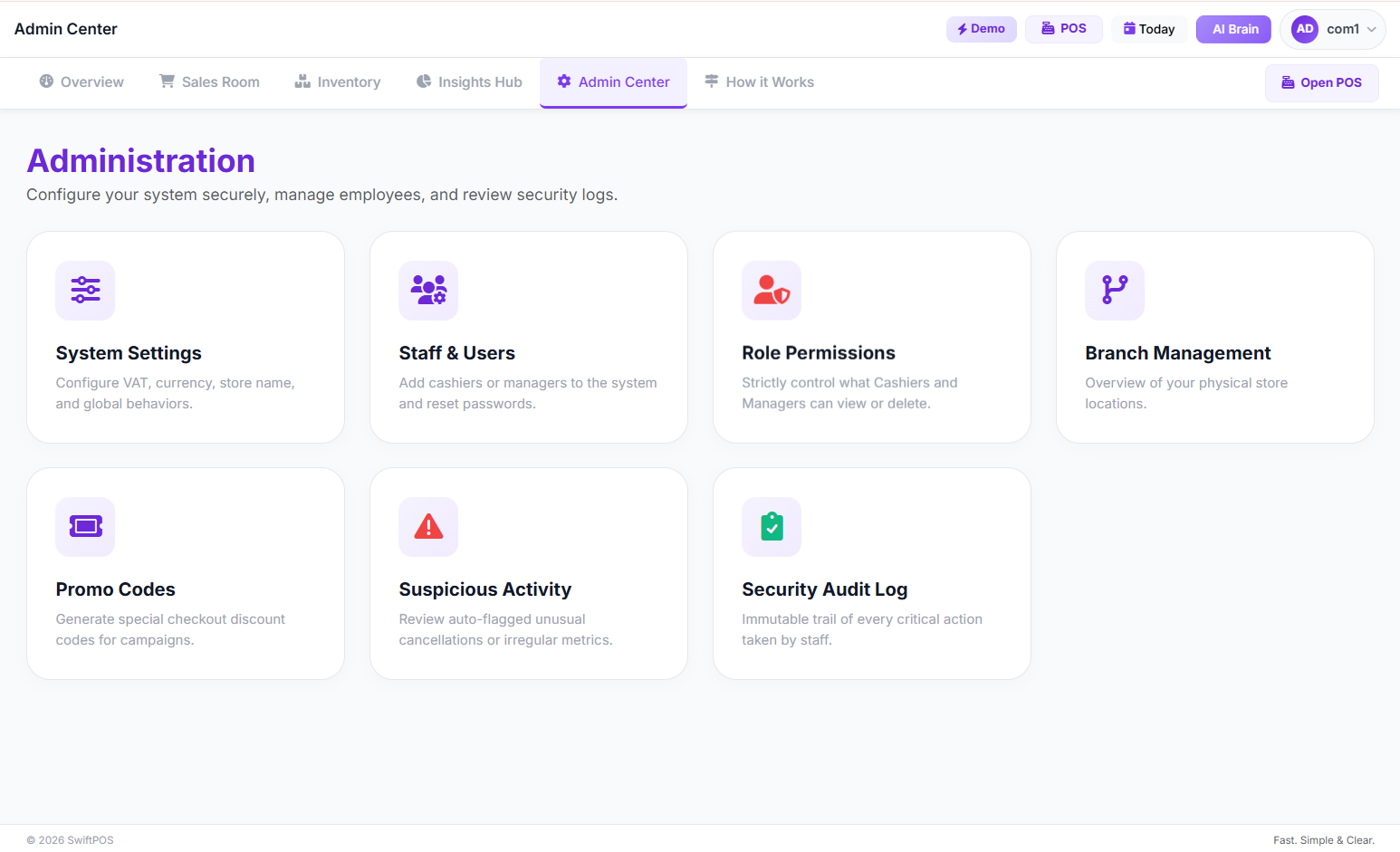 Admin Center Hub
Step 2: Define and Enforce User Permissions and Roles
What to do: Within your POS system, create distinct roles for your cashiers and managers, assigning specific permissions to each.
Why it matters: Not everyone needs access to every part of your system. Your cashiers need to process sales, handle payments, and maybe manage basic returns. Your managers, however, might need to approve discounts, void transactions, adjust inventory, or view sensitive reports like profit margins. By setting clear permissions, you minimize the risk of internal theft, accidental errors, and unauthorized actions. You want your staff to be efficient, but also to operate within defined boundaries. This is crucial for maintaining security and control over your shop operations.
Common shortcut that backfires: Giving all cashiers the same level of access, or worse, giving them the admin password. This is like leaving your safe open. It’s an open invitation for problems. I’ve seen businesses in Aba lose hundreds of thousands of naira because one cashier had full access and decided to "borrow" from the till, knowing no one would easily trace it back.
Specific action item: Go into your chosen POS system's settings and configure staff roles and permissions. Ensure that sensitive actions, like price overrides or voiding a sale, require a manager's approval or a supervisor PIN. You can learn more about this by checking out How to Set Staff Access Permissions in Retail Software in Nigeria (2026 Guide).
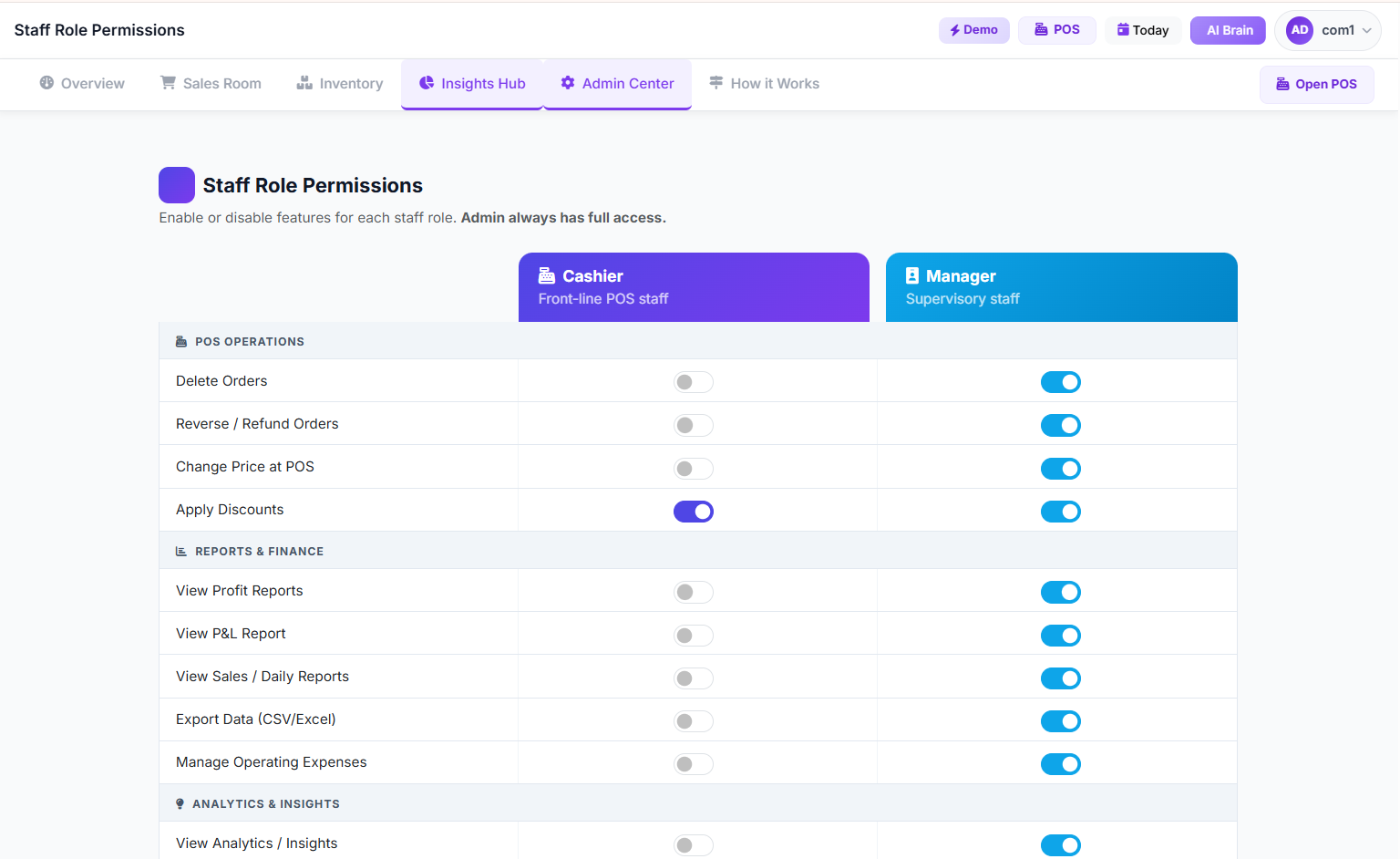 Staff Roler Permissions Page
Step 3: Implement Daily Cash Reconciliation Procedures
What to do: Establish a strict routine for reconciling cash at the beginning and end of each cashier's shift.
Why it matters: This is where the rubber meets the road. Each cashier should start their shift with a specific float (starting cash amount) and end it by counting their till and reconciling it with the sales recorded by the POS system. This process holds each individual cashier accountable for the cash and transactions they handled during their shift. It makes it incredibly difficult for money to go missing without immediate detection. This is fundamental to effective cashier management.
Common shortcut that backfires: Reconciling cash only at the end of the day for the entire store, or worse, not reconciling at all. This makes it impossible to pinpoint where discrepancies occurred if you have multiple cashiers. If ₦5,000 is missing at the end of the day and three cashiers worked, who is responsible? This ambiguity breeds mistrust and can lead to significant losses over time.
Specific action item: Train your cashiers on the reconciliation process. Use your POS system's shift management features to track individual cashiers' sales and cash movements. Many modern POS systems, like SwiftPOS, have built-in features for this, including shift reports that show sales per cashier, cash-in, cash-out, and expected cash at the end of a shift. This makes the "end of day" process much more efficient and accurate.
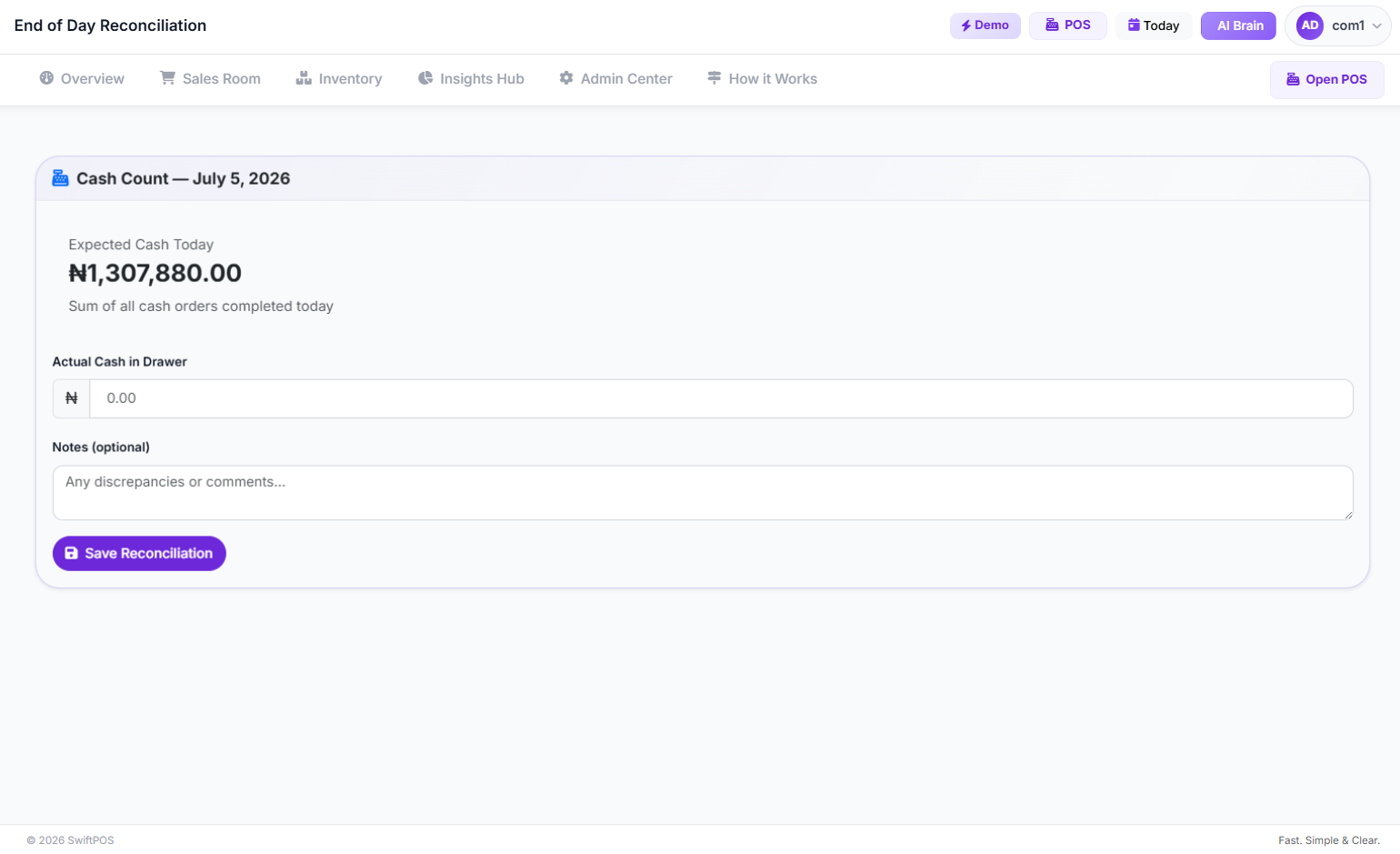 End Of Day reconciliation page
Step 4: Monitor Staff Activity and Performance
What to do: Regularly review staff activity logs and sales reports generated by your POS system.
Why it matters: Your POS system isn't just for sales; it's a powerful monitoring tool. It tracks every action your cashiers perform: when they log in, log out, process a sale, issue a refund, apply a discount, or void a transaction. By regularly reviewing these logs, you can identify patterns, spot potential issues, and understand individual cashier performance. This proactive monitoring helps you address problems before they escalate and reward your best-performing retail staff. It's about transparency and accountability in your shop operations.
Common shortcut that backfires: Trusting your staff blindly without any verification. While trust is good, systems and checks are better. Relying solely on verbal reports or anecdotal evidence means you're missing crucial data. You wouldn't manage your inventory without counting, so why manage your cash and staff without tracking?
Specific action item: Schedule weekly or bi-weekly reviews of your staff activity reports. Look for unusual voids, excessive discounts, or frequent cash discrepancies. Use these insights to provide targeted training or address behavioral issues. You might be surprised at what you find. The
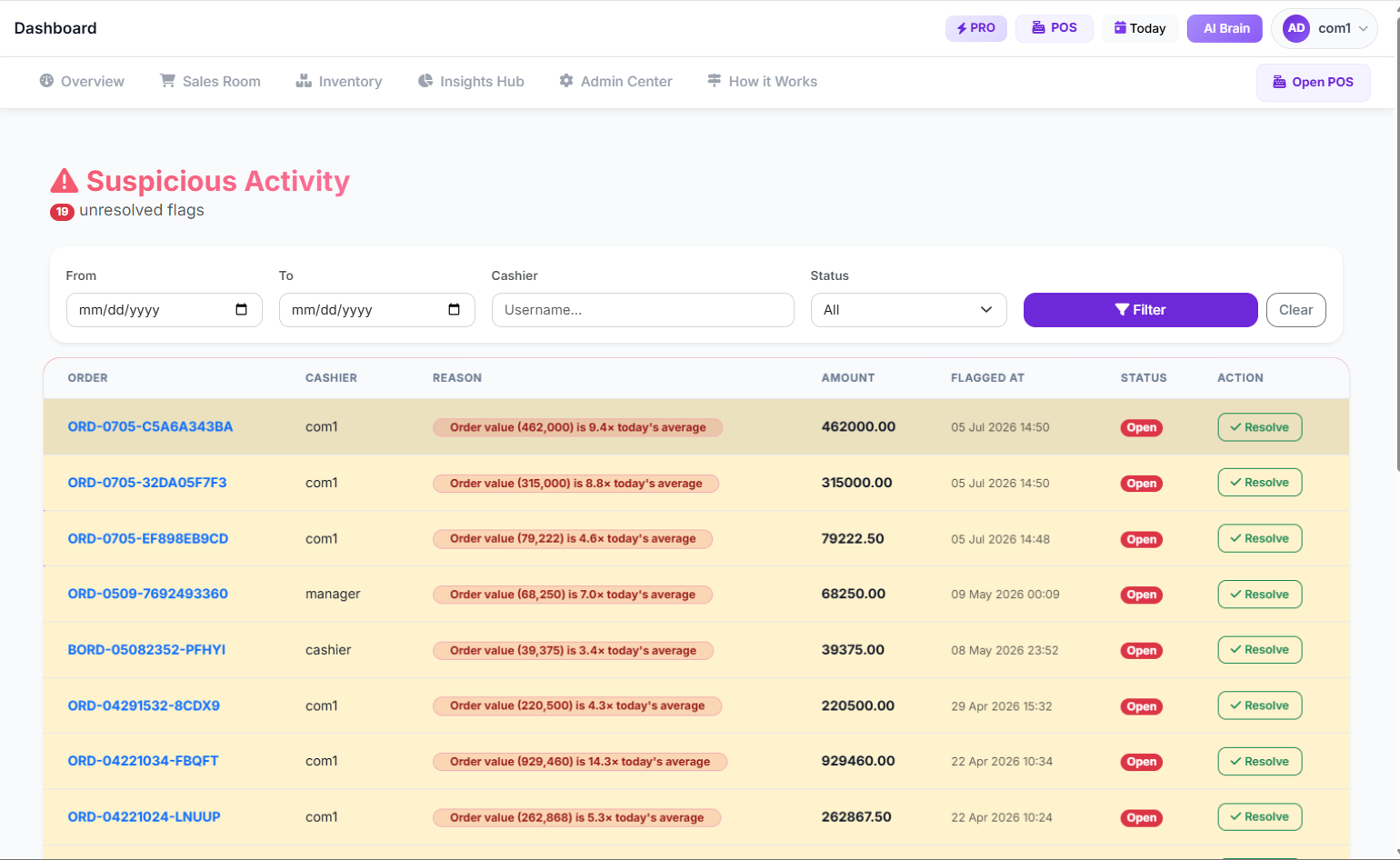 Suspicious Activity Page
Step 5: Implement Self-Checkout for Peak Periods (Optional but Powerful)
What to do: Consider integrating an assisted self-checkout system for busy periods to reduce pressure on your cashiers.
Why it matters: In a busy supermarket or provision store, especially in places like Computer Village or Alaba International, queues can get incredibly long. An assisted self-checkout system allows customers to scan their own items, review their cart, and then take a payment slip to a cashier for final payment. This significantly speeds up the initial scanning process, reducing wait times and allowing your cashiers to focus on collecting payments and providing better customer service. It essentially turns multiple customers into one streamlined transaction for the cashier.
Common shortcut that backfires: Trying to manage peak periods with insufficient staff or without any technological aid. This leads to frustrated customers, abandoned carts, and lost sales. In Nigeria, customers won't hesitate to go to the next shop if your queue is too long.
Specific action item: Explore POS systems that offer self-checkout capabilities. SwiftPOS NG, for instance, has an assisted self-checkout feature where customers scan their items and then a cashier confirms the order and collects payment. This balances speed with security.
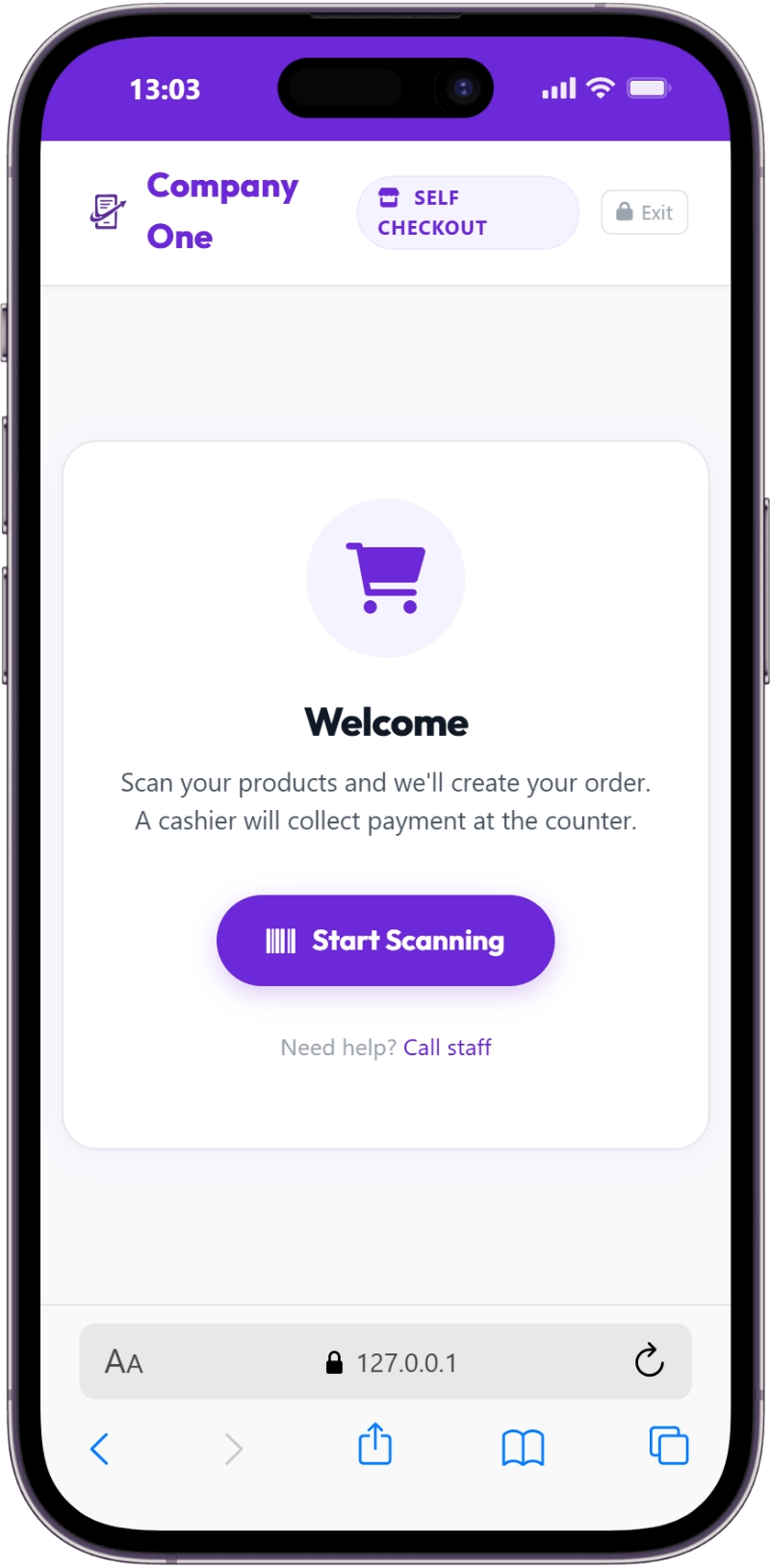 Self Checkout Customer Section - Step 1 - Welcome Screen and "Start Scanning" Button
The Numbers That Will Make or Break You
Understanding the financial implications of managing multiple cashiers is vital. It's not just about salaries; it's about the bigger picture of your shop operations.
Let’s break down some costs and potential savings in 2026:
- Cashier Salary (Monthly): As we discussed, this ranges from ₦40,000 for an entry-level position in a smaller town to ₦80,000 for an experienced cashier in a major city like Lagos or Abuja. If you have two cashiers, that’s ₦80,000 - ₦160,000 monthly just in salaries.
- Staff Training (Per Session/Trainer): Don't skimp here. Basic in-house training might cost ₦20,000, but bringing in a professional to train your team on a new POS system and proper procedures could be ₦100,000. This is an investment that pays dividends by reducing errors.
- Cost of Errors/Theft (Annual Estimate): This is the silent killer. Without proper systems, losses from errors, "discounts" given to friends, or outright theft can range from ₦100,000 to over ₦1,000,000 annually for a medium-sized retail business. This isn't theoretical; it's the reality I’ve seen in countless shops. A good POS system drastically cuts this down.
- Internet Subscription (Monthly): ₦10,000 - ₦35,000. Essential for cloud-based systems and smooth operations.
- CCTV Camera (One-time, per camera): ₦40,000 - ₦150,000. While not directly for cashier management, good CCTV provides an extra layer of security and accountability, especially around cash handling areas.
- Shop Rent (Annual): Just for context, a small stall in a local market might be ₦84,000 annually (₦7,000/month), while a prime retail space in a place like Victoria Island could be ₦2,040,000 annually (₦170,000/month). Your overheads are significant, so every naira saved through efficiency matters.
> "The true cost of manual operations isn't just the visible overheads; it's the invisible leaks from errors, shrinkage, and missed opportunities that slowly bleed a business dry."
Growth After Launch: The Next 90 Days
So, you've implemented your systems, trained your staff, and your multiple cashiers are now (hopefully) working in harmony. What next? The first 90 days post-implementation are crucial for solidifying these new habits and pushing for growth.
- Continuous Training & Feedback: Don't assume one training session is enough. Schedule weekly quick huddles with your retail staff to discuss common issues, answer questions, and reinforce best practices. Use the data from your POS system to give specific, constructive feedback. If a cashier consistently struggles with a particular type of transaction, provide extra support.
- Monitor Key Metrics: Beyond just sales, start looking at metrics like average transaction value, sales per cashier, peak sales hours, and even customer wait times if you have a way to track them. Your POS system should be able to provide these insights. Tools like the can help you understand these trends. This will help you optimize staffing schedules and identify areas for improvement.
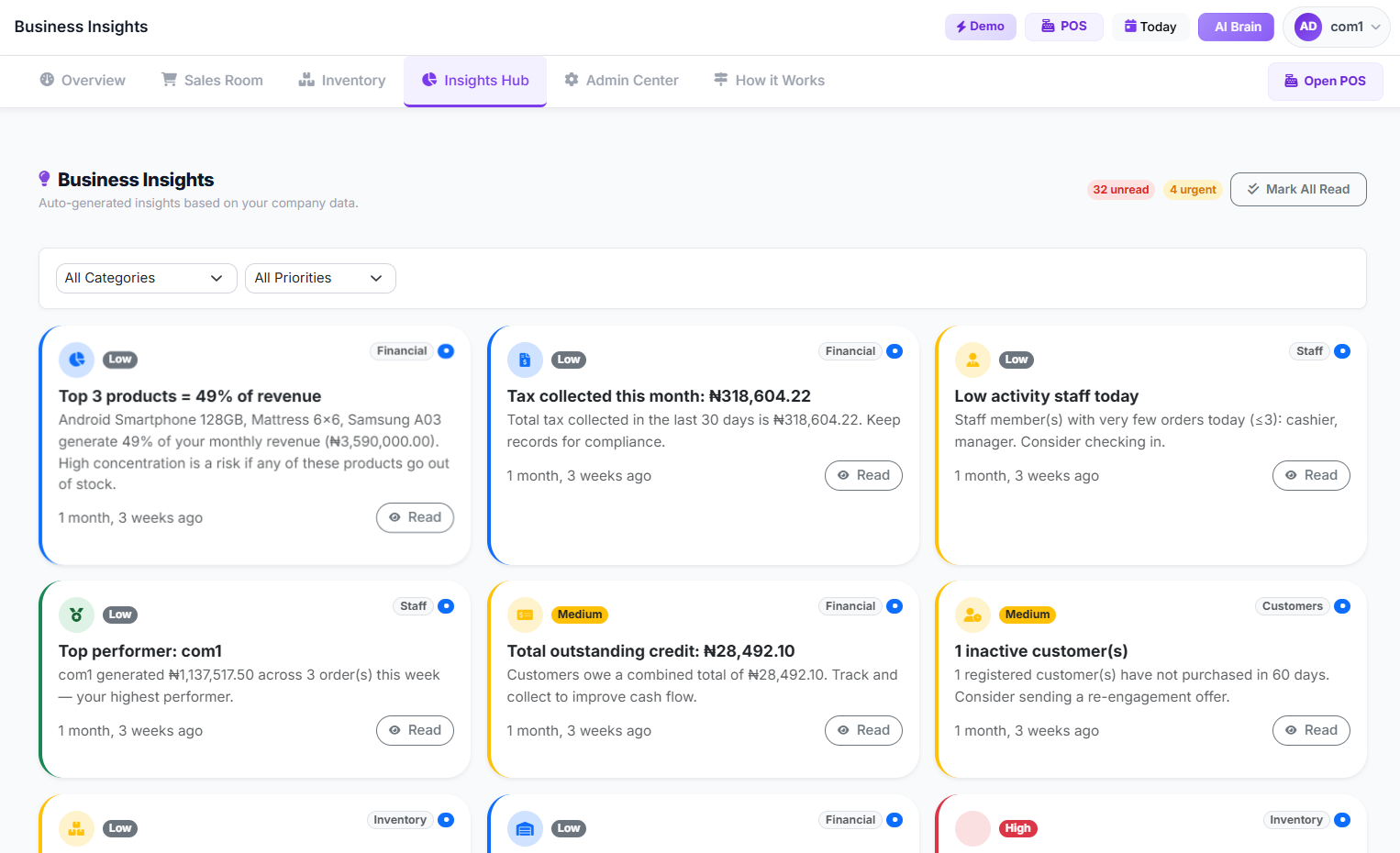 Business Insights Page
 - Optimize Inventory Management: With a proper POS system, your inventory tracking becomes more accurate. Use this data to identify fast-moving and slow-moving products. This helps you make smarter purchasing decisions, reduce dead stock, and ensure popular items are always available. This is how you prevent Nigerian Retailers: Inventory Management Mistakes Crushing Your Profits.
- Customer Feedback Loop: Actively solicit feedback from your customers about their checkout experience. Are queues shorter? Are transactions faster? Use this feedback to fine-tune your processes. A happy customer is a returning customer.
- Explore Advanced Features: Once your team is comfortable with the basics, start exploring more advanced features of your POS system. Maybe it's customer loyalty programs, or perhaps integrating with an accounting package. The goal is continuous improvement. For example, understanding your can help you make more strategic decisions.
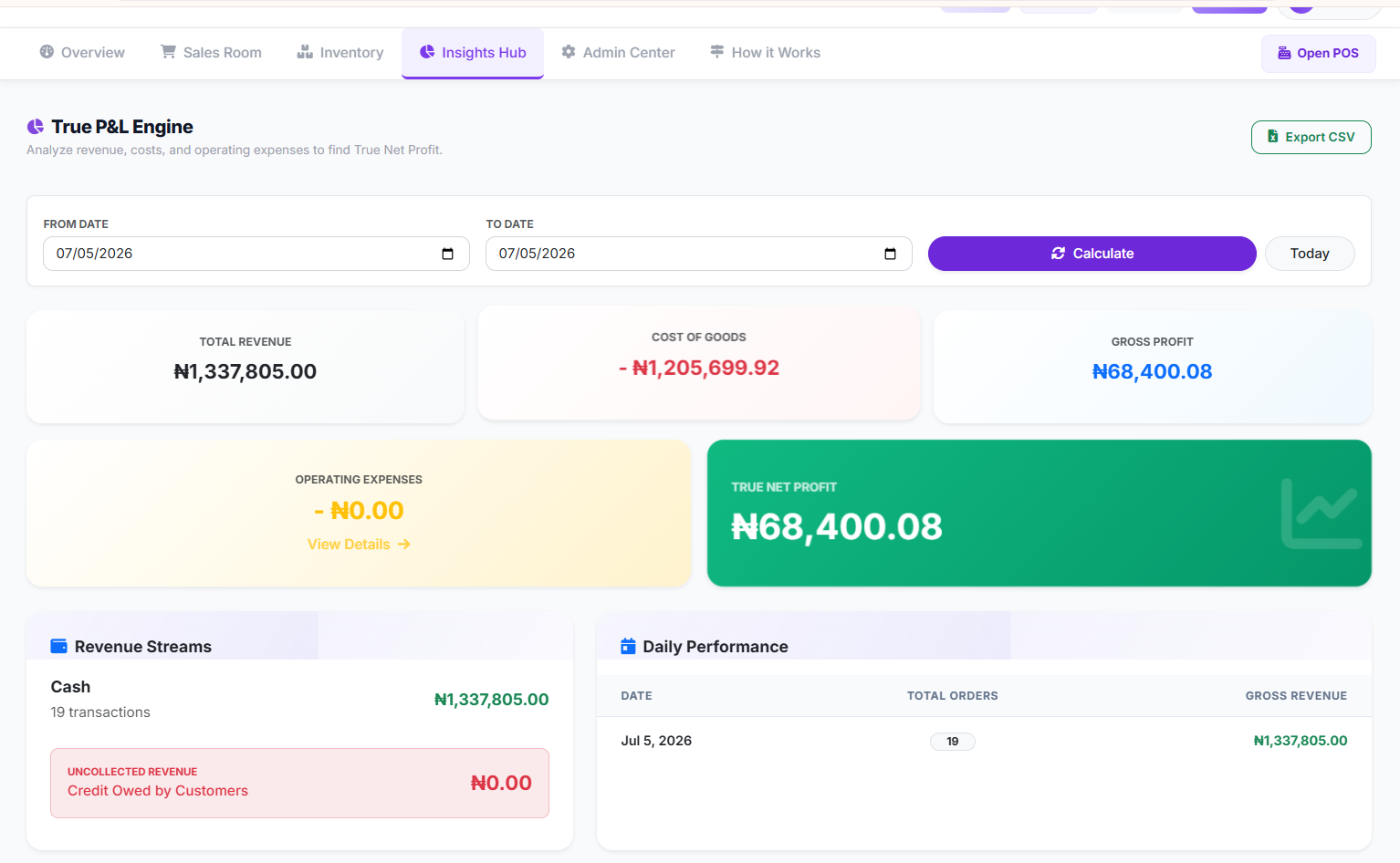 Profit and Loss Page
FAQ: Answers to What You're Actually Googling
Q1: How do I prevent theft when I have multiple cashiers?
A: Preventing theft with multiple cashiers comes down to three things: accountability, transparency, and control. First, use a POS system that assigns every transaction to a specific cashier. This creates a clear audit trail. Second, implement strict daily cash reconciliation procedures where each cashier balances their till at the end of their shift. Third, utilize staff permissions to restrict access to sensitive functions like voids and discounts, requiring manager approval. Finally, regularly review activity logs and consider CCTV in high-risk areas. Remember, a system like SwiftPOS is designed with features like staff activity records and suspicious activity monitoring specifically to help you with this.
Q2: What's the biggest challenge in managing multiple cashiers, and how do I overcome it?
A: The biggest challenge is often lack of standardized processes and poor communication. When cashiers operate independently without clear guidelines, errors, inconsistencies, and conflicts arise. Overcome this by first, documenting every procedure (sales, returns, payments). Second, invest in a centralized POS system that enforces these procedures and captures all data. Third, conduct regular training and team meetings to ensure everyone is on the same page and to foster open communication. Think of it as building a team, not just hiring individuals.
Q3: Is a POS system really necessary for a small shop with only two cashiers?
A: Absolutely, yes! Many small business owners in Nigeria think a POS system is only for large supermarkets. That's a huge misconception. Even with two cashiers, a POS system brings immense benefits: it provides accurate sales data, automates inventory tracking, reduces manual errors, speeds up checkout, and most importantly, offers accountability for each cashier. The cost of not having one—in terms of lost stock, inaccurate records, and potential theft—far outweighs the investment. It's about securing your business's future and making informed decisions, not just processing sales. If you're still using manual methods, you need to read Nigerian Retailers: Stop Using Spreadsheets & Boost Your Business with POS Software.
Q4: How can I ensure fair workload distribution among my cashiers?
A: This is a great question. The best way to ensure fair workload distribution is by using your POS system's data and implementing shift management. Your POS system can show you sales volume per hour, allowing you to schedule more cashiers during peak times and fewer during slow periods. You can also track sales performance per cashier to identify if one person is consistently handling significantly more transactions. Beyond data, establish a rotation schedule for less desirable tasks (like cleaning the counter) and encourage teamwork. A good POS system can even track individual cashier shifts and their performance within those shifts.
Ready? Here's Where to Start
Managing multiple cashiers in a single store doesn't have to be a headache. It's an opportunity to scale your business, serve more customers, and ultimately, grow your profits. But it requires strategy, the right tools, and a commitment to modernizing your shop operations. If you're ready to move past the calculator and ledger, and truly take control of your business, it's time to explore the solutions available.
Don't let the fear of change or initial investment hold you back. The cost of inaction is always higher. Take the first step today towards more efficient cashier management and a more profitable retail business. If you want to see how a comprehensive solution can transform your operations, start by exploring the SwiftPOS Features or check out their tutorials to see it in action. You can even download the SwiftPOS Android Application to get a feel for the mobile experience.

Restaurant Startup Cost in Nigeria: Your Complete Guide
Oct 16, 2026
How Much Profit Do Restaurants Make in Nigeria? (2024 …
Oct 16, 2026
How to Start a Restaurant in Nigeria: A Step-by-Step G…
Oct 16, 2026