
How to Set Profitable Retail Store Margins: A Step-by-Step Guide

The fluorescent hum of the single bulb barely illuminated the dusty shelves of Madam Ngozi's provision store in Iyana-Ipaja. It was past 9 PM, and she was hunched over a tattered exercise book, her brow furrowed, trying to reconcile the day's cash with the scribbled sales. A small sigh escaped her lips as she realised, yet again, that the numbers just weren't adding up. She knew she was selling, but where was the profit disappearing to? This struggle, this silent battle with numbers, is one many Nigerian retailers face daily. If this sounds like you, then understanding How to Set Profitable Retail Store Margins: A Step-by-Step Guide isn't just a fancy business term; it's the lifeline for your shop's survival and growth.
Busy nigerian provision store interiorThe Reality Check: What Nobody Tells You About Retail Profitability
Let's be honest about this. Most aspiring business owners in Nigeria jump into retail with a passion for a product, a good location, and a prayer. They look at the cost price, add a bit, and call that their selling price. "If I bought it for ₦1,000 and sell it for ₦1,200, I made ₦200, right?" Well, not exactly. That's your gross profit on that single item, but it tells you nothing about your actual retail profitability. This simplistic approach is why so many shops, even busy ones, struggle to break even or scale.
Here's the thing: many guides will tell you to aim for a 20-30% profit margin across the board. That's a nice theory, but in the gritty reality of Nigerian markets, with fluctuating exchange rates, fuel costs, and unpredictable supply chains, a blanket percentage just doesn't cut it. You need a deeper understanding of your actual costs, not just the cost of the product itself. For instance, the average gross profit margin for Nigerian retailers can range anywhere from 15% for fast-moving consumer goods (FMCGs) to a healthier 40% for specialized items. But even a 40% gross margin can evaporate if your overheads are too high. I've seen provision store owners in places like Ajegunle, with monthly revenues of ₦300,000, barely take home ₦40,000 after all expenses, simply because they didn't factor in every single kobo.
Think about it: that ₦200 you made on that ₦1,000 item? It also needs to cover a tiny fraction of your annual shop rent, which could be anywhere from ₦80,000 in a small town to ₦2,500,000 in a prime Lagos Island spot. It also needs to contribute to your staff's monthly salary (₦40,000-₦80,000 per person), generator fuel, transportation costs for restocking, and even the airtime you use to call suppliers. Without accurately accounting for these, your perceived product margin is a mirage. You can't just pluck a number from thin air; your shop pricing needs to be strategic.
What You Actually Need to Get Started
Before we even talk about formulas, let's get real about the foundational elements you need to have in place. This isn't just about opening a shop; it's about building a sustainable business.
Non-Negotiables:
- Clear Understanding of ALL Costs: This means knowing your direct product cost, but also every single overhead expense. We're talking rent, salaries, utilities, transportation, and even the cost of that POS machine (₦25,000 - ₦80,000) you might need. If you don't know your numbers, you're driving blind.
- Market Research: Who are your customers? What are they willing to pay? What are your competitors selling similar items for? You can't price a luxury item for someone earning ₦80,000 a month, and you can't underprice yourself out of business just to compete. A provision store in Surulere might have different pricing flexibility than one in a bustling market like Balogun.
- Basic Record-Keeping System: Whether it’s a simple ledger or a digital solution, you must track sales, expenses, and inventory. Manual methods are prone to errors and theft, but if that's where you're starting, ensure it's meticulous. To truly understand your retail profit margin, you need data. This is where tools that help you track everything from daily sales to supplier payments become invaluable. You can learn more about avoiding the pitfalls of manual systems by reading about the hidden costs of manual retail operations in Nigeria.
Nice-to-Haves (But Increasingly Essential):
- A Reliable POS System: Look, I know many still use pen and paper, but in 2026, if you're serious about your business, a good Point-of-Sale (POS) system is a game-changer. It automates sales, tracks inventory in real-time, and gives you reports on your best-selling products and actual profit margins. It makes setting profitable retail store margins so much easier. You can find out more about how a POS system helps Nigerian retailers stop losing money.
- Dedicated Business Bank Account: Separate your personal money from your business money. This makes tracking expenses and income infinitely easier and gives you a clearer picture of your business's financial health.
- Emergency Fund: Nigeria is unpredictable. Generator breakdowns, unexpected levies, or a sudden dip in sales can hit hard. Having a buffer of at least 3-6 months' operating expenses can save your business.
The Complete Step-by-Step Breakdown: How to Set Profitable Retail Store Margins
Alright, let's dive into the practical steps. This isn't just theory; this is how successful Nigerian retailers actually calculate their product margin and price their goods.
Step 1: Calculate Your True Cost of Goods Sold (COGS)
This is more than just the price you paid the wholesaler. For each product, you need to factor in everything it cost you to get that item onto your shelf, ready to sell.
Let's say you buy a carton of soft drinks from Alaba International Market for ₦3,500. There are 12 bottles in the carton. So, the direct cost per bottle is ₦3,500 / 12 = ₦291.67. But is that all?
You paid for transport from Alaba to your shop. Let’s say the keke napep cost ₦500 for that trip, and you bought 10 cartons of various items. So, the transport cost per carton is ₦500 / 10 = ₦50. This means an additional ₦50 / 12 = ₦4.17 per bottle. Did you pay a market tout? Factor it in. Did you offer a small dash to the truck driver? Add it.
Your true COGS for that soft drink bottle is now ₦291.67 + ₦4.17 = ₦295.84. This might seem small, but these tiny amounts add up, especially when you're dealing with hundreds of products.
Step 2: Determine Your Overhead Costs
This is where many businesses fail. Overhead costs are your fixed and variable expenses that aren't directly tied to a specific product but are essential for your business to operate. You need to know these monthly and then figure out how to allocate them to your products.
Fixed Overheads (Annual, then convert to monthly):
- Shop Rent: ₦80,000 - ₦2,500,000 annually. Let's assume you're paying ₦360,000 a year for a decent spot in a high-traffic area in Ibadan. That's ₦30,000 per month.
- Business Registration (CAC): ₦15,000 - ₦50,000 (one-time, but you can amortize it).
- Shop Fittings/Shelving: ₦50,000 - ₦300,000 (one-time, amortize over several years).
- Security Deposit (Rent): ₦50,000 - ₦1,000,000 (one-time, but a significant initial capital outlay).
- Staff Salary: ₦40,000 - ₦80,000 per person. If you have one sales assistant, that's ₦50,000.
- Electricity (Estimated): ₦10,000 - ₦50,000. This includes generator fuel (diesel/petrol) and grid supply. Let's say ₦35,000.
- Transportation/Logistics (Monthly): ₦15,000 - ₦100,000. This is for restocking, personal business trips, etc. Let's budget ₦25,000.
- Marketing/Promotions (Monthly): ₦5,000 - ₦50,000. Flyers, social media boosts. Let's say ₦10,000.
- Miscellaneous (Airtime, repairs, cleaning supplies): Budget ₦15,000.
₦30,000 (Rent) + ₦50,000 (Salary) + ₦35,000 (Electricity) + ₦25,000 (Transport) + ₦10,000 (Marketing) + ₦15,000 (Misc.) = ₦165,000 per month.
Now, how do you allocate this ₦165,000 across your products to ensure your retail profit margin is actually profitable? This is where your expected monthly revenue comes in. If you expect to make ₦500,000 in monthly revenue, then your overheads consume ₦165,000 / ₦500,000 = 33% of your revenue. This means for every ₦100 you sell, ₦33 goes to cover overheads.
Step 3: Determine Your Desired Profit Margin
This is your actual profit—what you take home after COGS and overheads. Typical gross profit margins in Nigeria range from 15% to 40%. For a healthy business, you should aim for a net profit margin of at least 10-15% after all expenses.
To figure out your desired gross profit margin, you need to work backwards.
Desired Net Profit Margin + Overhead Percentage = Desired Gross Profit Margin.
If you want a 15% net profit and your overheads are 33% of revenue, then your target gross profit margin needs to be 15% + 33% = 48%. This is the percentage you need to add to your COGS to cover everything and still have money left over.
Step 4: Calculate Your Selling Price
Now for the formula that brings it all together.
Selling Price = COGS / (1 - Desired Gross Profit Margin as a decimal)
Using our soft drink example:
COGS = ₦295.84
Desired Gross Profit Margin = 48% (or 0.48 as a decimal)
Selling Price = ₦295.84 / (1 - 0.48)
Selling Price = ₦295.84 / 0.52
Selling Price = ₦568.92
So, you should aim to sell that bottle of soft drink for around ₦570. Does that sound high for a soft drink? Perhaps. This is where market realities come in. If everyone else is selling it for ₦400, you can't realistically sell it for ₦570. This tells you one of two things:
- Your overheads are too high for your expected sales volume.
- You need to find a cheaper supplier or negotiate better deals to reduce your COGS.
- You need to increase your sales volume significantly to spread your fixed overheads thinner.
For businesses with hundreds or thousands of products, performing these calculations manually for every item is a nightmare. This is where a system like SwiftPOS NG becomes indispensable. It allows you to input your cost prices, set your desired profit margins, and automatically calculates selling prices. It also tracks your inventory, sales, and expenses, giving you a real-time picture of your
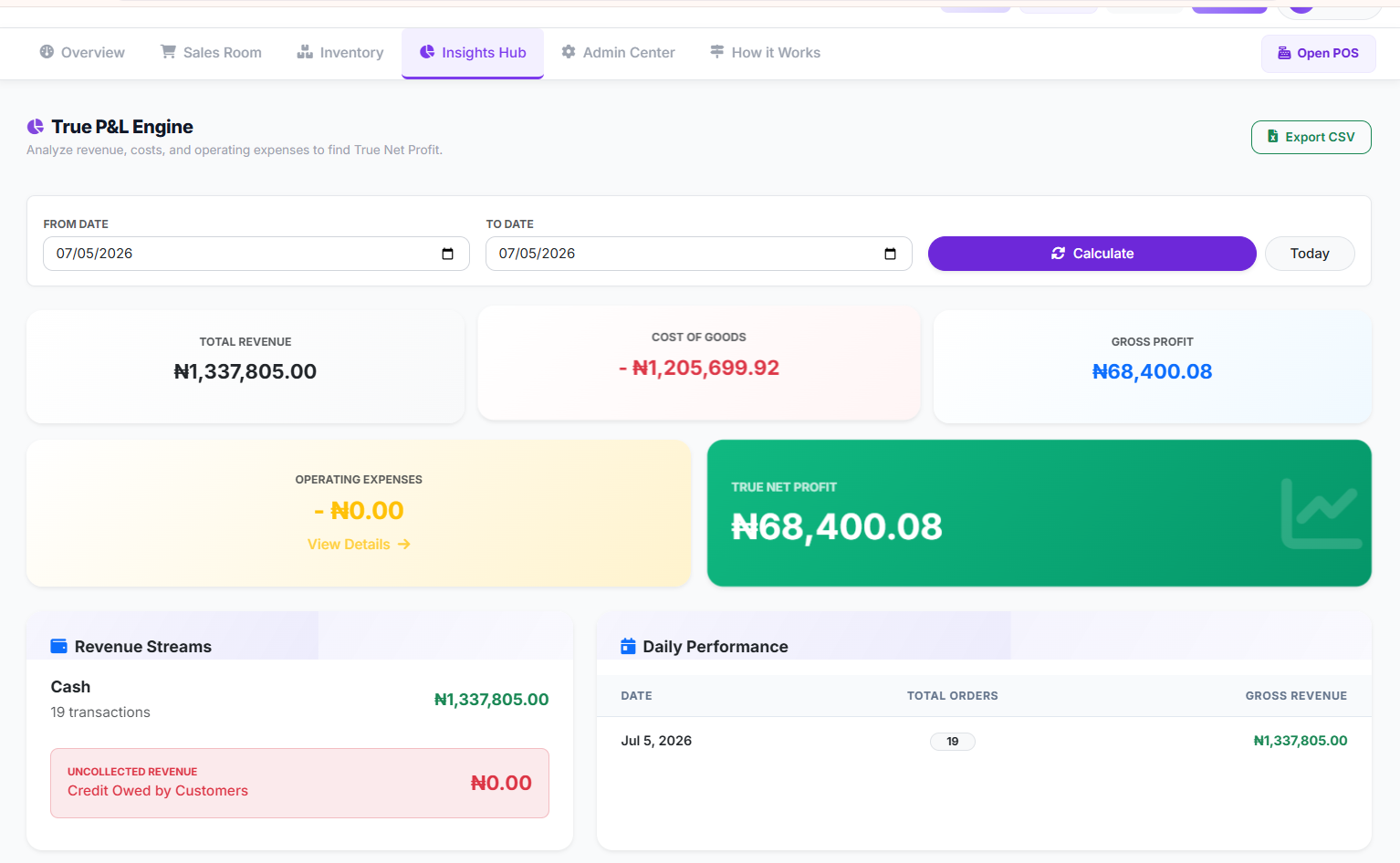 gross profit and true net profit
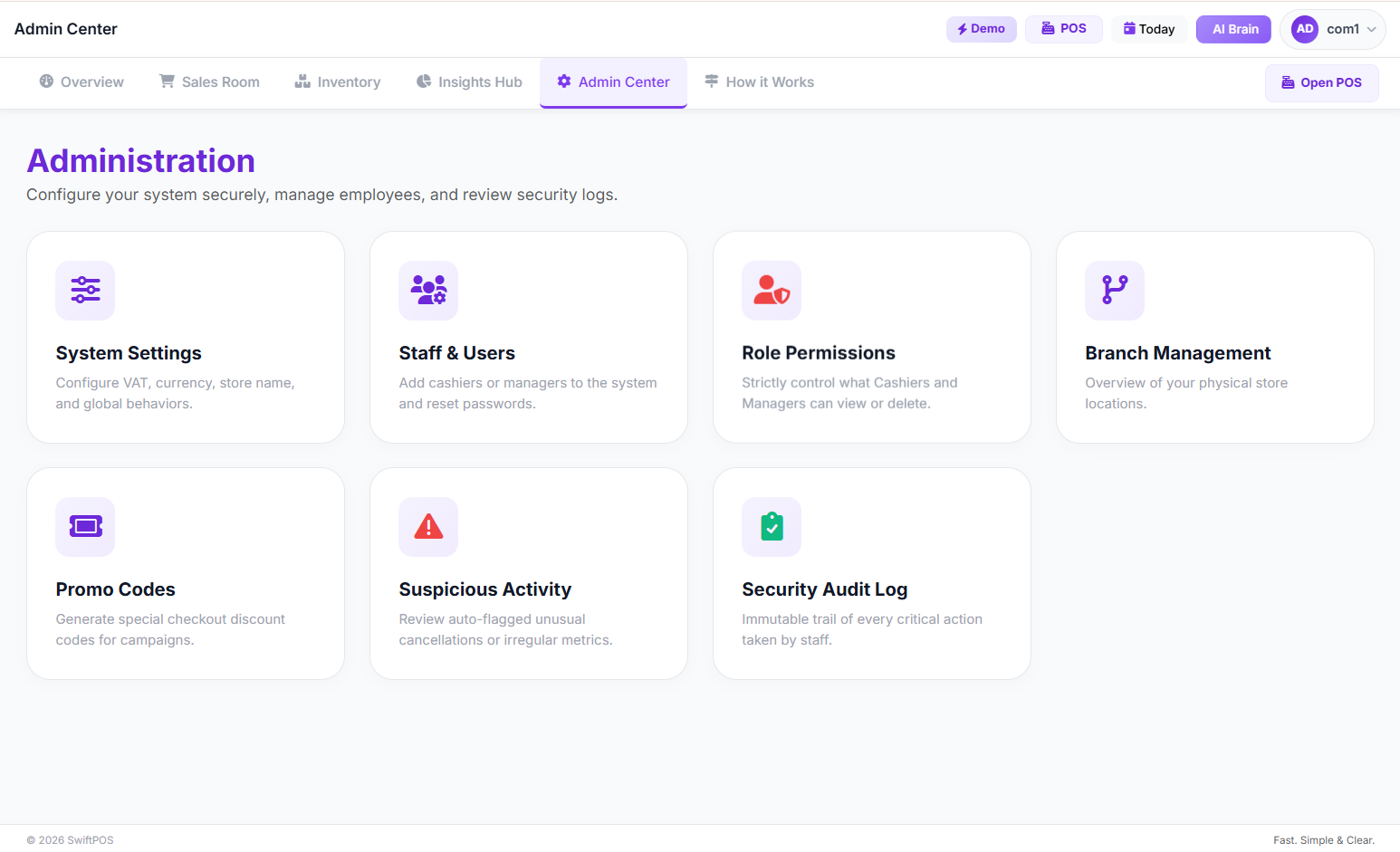 Admin Center Hub
Step 5: Implement Dynamic Pricing (Where Possible)
Not all products can carry the same product margin. Fast-moving consumer goods (FMCGs) like provisions, drinks, and airtime often have lower margins but high turnover. Specialized items like electronics, boutique clothing, or certain pharmaceuticals can command higher margins due to their perceived value or exclusivity.
Consider the perceived value. A unique fashion item from Aba shoe market might carry a 60% margin, whereas a sachet of water from Onitsha Main Market might only carry a 10% margin. Your shop pricing strategy should reflect this. Group similar products and apply a general margin, then adjust individual items based on demand, competition, and unique value.
5 Mistakes That Cost Nigerian Business Owners the Most
Even with the right formulas, many still stumble. Here are common pitfalls I've observed that crush retail profitability:
- Ignoring Shrinkage and Spoilage: This is a silent killer. Damaged goods, expired products (especially for provision stores or pharmacies), and theft (internal or external) eat directly into your profit. If you bought 100 items but only sold 90, your COGS for the sold items effectively went up. You can learn more about this by reading about inventory management mistakes crushing profits.
- Not Factoring in Transaction Costs: POS charges, bank transfer fees, and even the cost of receipt paper add up. These are small, but they chip away at your product margin. Are you passing these costs onto the customer, or absorbing them? Make an intentional decision.
- Lack of Regular Price Reviews: The Nigerian market is dynamic. Fuel prices change, exchange rates fluctuate, and supplier costs shift. If you set your prices once and forget them, you're likely selling at a loss when your costs inevitably rise. Review your prices quarterly, or even monthly for volatile items.
- Underestimating Operational Expenses: Many only think of rent and salary. But what about generator maintenance? Cleaning supplies? Repairs to your shop? Unexpected levies? These "small small" expenses can quickly become a significant chunk of your overheads, eroding your retail profit margin.
- Failing to Track Customer Debt: Allowing customers to buy on credit without a robust tracking system is a recipe for disaster. Unpaid debts are essentially products given away for free, and they directly impact your cash flow and retail profitability. A good system should track effectively.
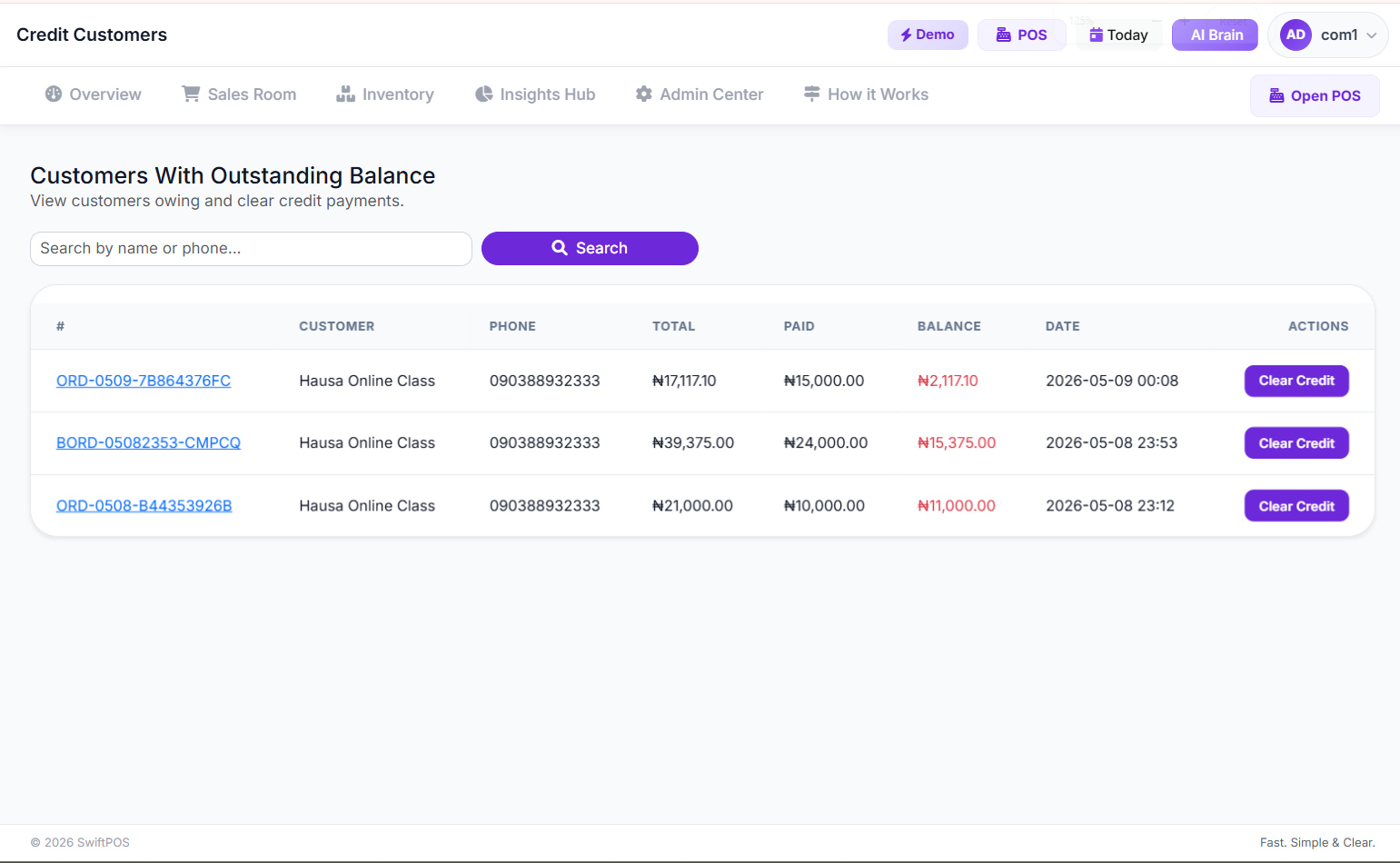 customer credit and debt
How to Know If You're on Track (Success Metrics)
Setting margins is just the start. You need to constantly monitor your performance to ensure your shop pricing strategy is working.
Here are the key metrics you should be tracking:
- Gross Profit Margin (GPM): This is (Total Revenue - COGS) / Total Revenue * 100. It tells you how much profit you're making before overheads. A healthy GPM is crucial. If it's too low, your COGS are too high, or your selling prices are too low.
- Net Profit Margin (NPM): This is (Total Revenue - COGS - Operating Expenses) / Total Revenue * 100. This is the real indicator of your business's health. It shows what you actually take home. You can easily see this on your in a system like SwiftPOS.Profit and Loss Page
- Sales Volume: Are you selling enough to cover your fixed costs? Sometimes, a lower product margin on a high-volume item can be more profitable than a high margin on something that rarely sells.
- Inventory Turnover Rate: How quickly are you selling your stock? Slow-moving inventory ties up capital and incurs storage costs, reducing your overall retail profitability. Tools that provide can help here.
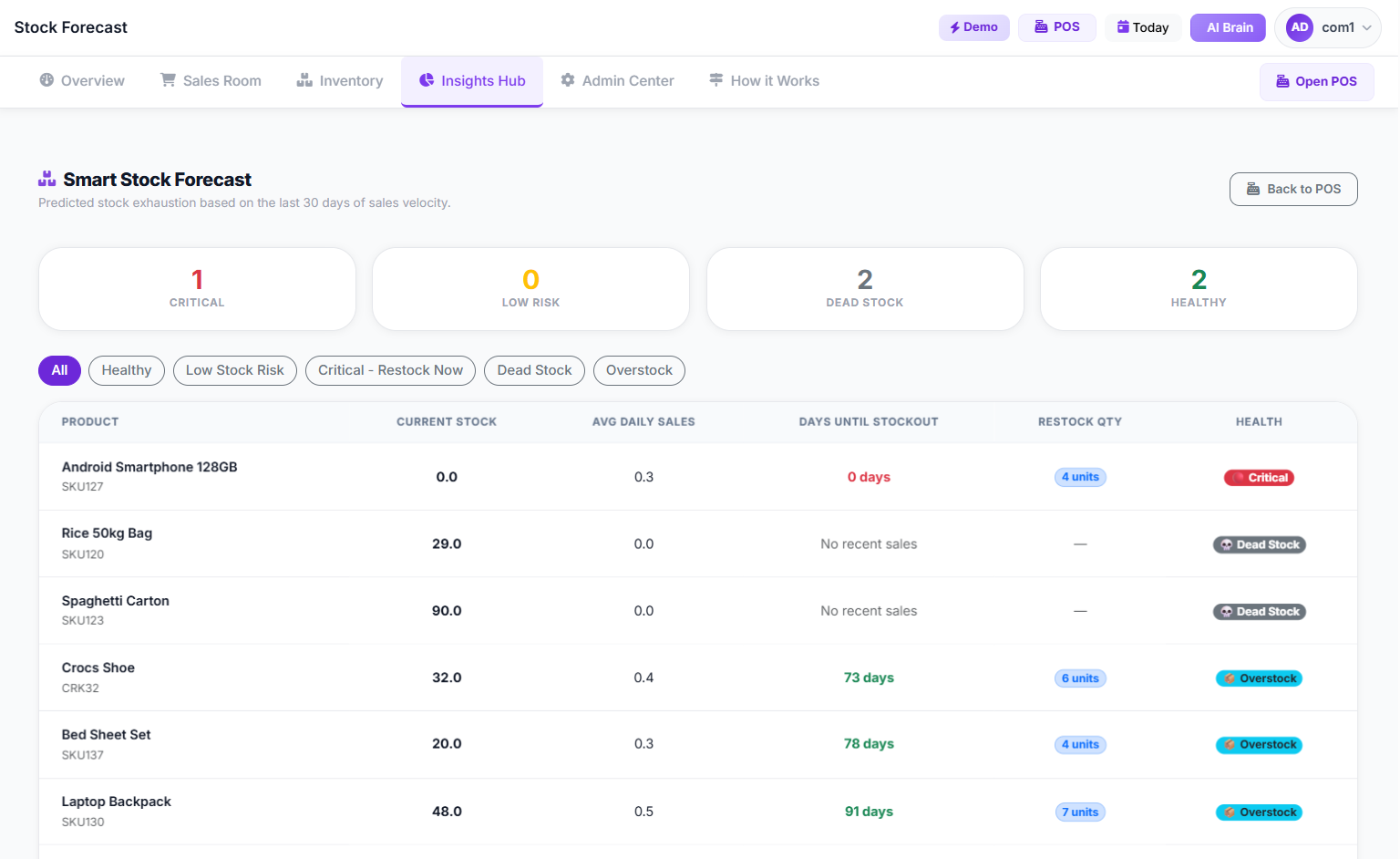 smart stock forecasts
- Average Transaction Value (ATV): How much does an average customer spend per visit? Increasing this through upselling or cross-selling can significantly boost your revenue without necessarily increasing your customer count.
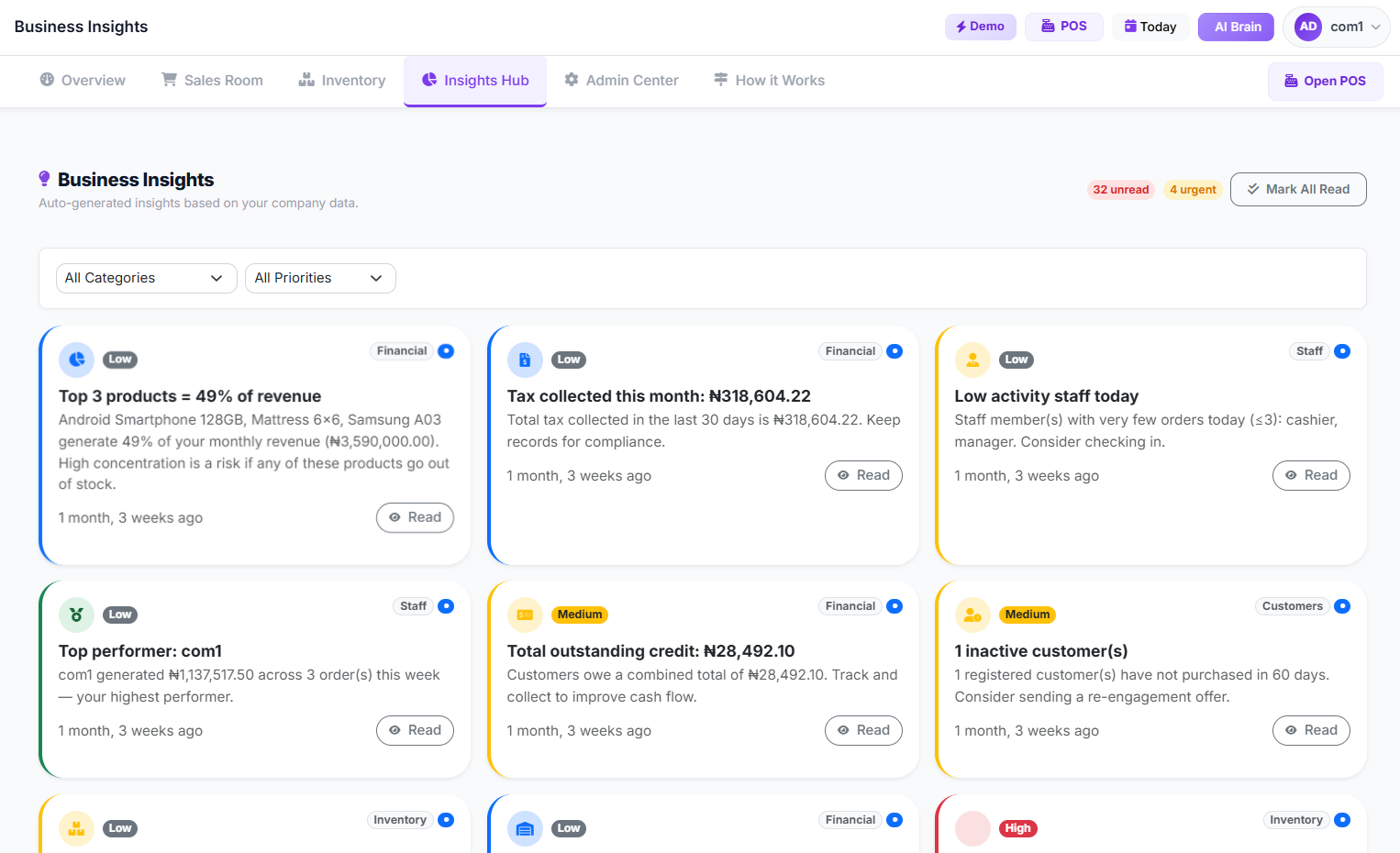 business insights
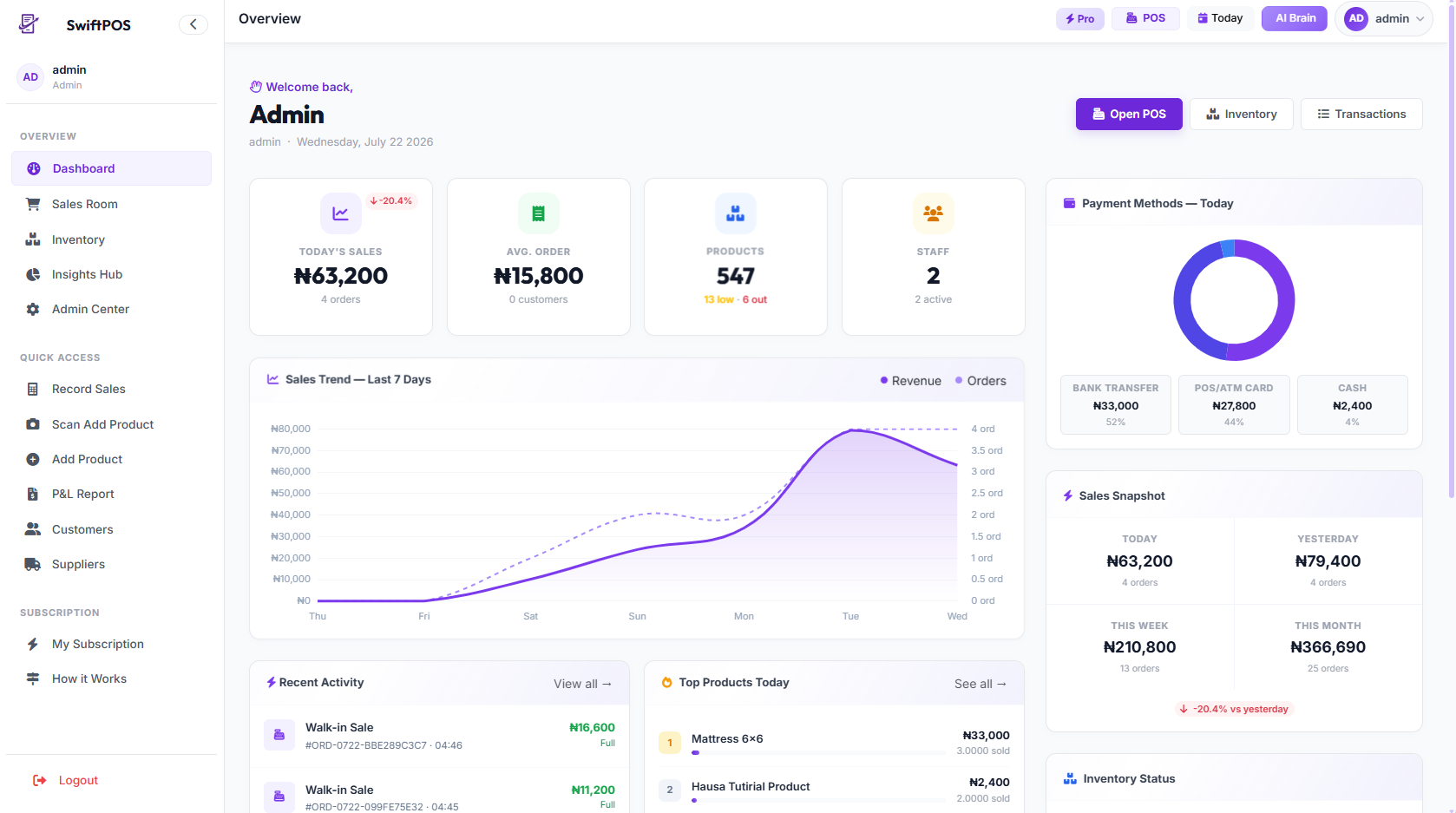 Dashboard Overciew 1:
Real Questions People Ask (FAQ)
Q1: Is it better to have a high profit margin or high sales volume?
A: This is the age-old question! The answer is, it depends on your business model and product. Generally, a balanced approach is best. High-volume, low-margin products (like provisions) rely on selling a lot to make enough profit. High-margin, low-volume products (like fashion accessories) need fewer sales but require careful inventory management. The key is to understand your overall retail profitability – sometimes, the product with the higher margin isn't the one contributing the most to your actual net profit after all expenses.
Q2: How do I calculate my break-even point in Nigeria?
A: Your break-even point is when your total revenue equals your total costs (fixed and variable), meaning you're making zero profit but also zero loss. To calculate it:
Break-Even Point (in units) = Total Fixed Costs / (Selling Price Per Unit - Variable Cost Per Unit)
For example, if your monthly fixed costs are ₦165,000, and your average product sells for ₦1,000 with a variable cost (COGS) of ₦600, then your contribution margin per unit is ₦400. Your break-even point would be ₦165,000 / ₦400 = 412.5 units. You need to sell approximately 413 units to cover all your costs. This is a critical metric for understanding your retail profitability.
Q3: What's a good target profit margin for a small retail shop in Nigeria in 2026?
A: While gross profit margins vary wildly (15-40%), a good target net profit margin (what you actually take home after all expenses) for a small retail shop in Nigeria should be at least 10-15%. If you're consistently hitting below 10%, you need to seriously re-evaluate your shop pricing, COGS, or overheads. Remember, the goal is not just to sell, but to make money.
Q4: How can technology help me set and manage profitable retail store margins?
A: Technology, specifically a good POS and inventory management system, is a game-changer. It automates COGS tracking, helps you monitor sales in real-time, highlights fast-moving vs. slow-moving inventory, and provides detailed reports on your actual product margin and overall retail profitability. It takes the guesswork out of pricing and gives you data-driven insights. Think about how much time Madam Ngozi spent with her ledger – a system can do that instantly. You can explore a range of features that help with this on the SwiftPOS Features page.
Q5: Should I ever sell at a loss to clear old stock?
A: Yes, sometimes. This is called a loss leader strategy or a clearance sale. If stock is old, expired, or taking up valuable shelf space, selling it at a slight loss to recover some capital is often better than letting it sit and incur more costs or become completely worthless. The key is that it should be a strategic decision, not a regular occurrence, and you must understand the true cost of holding that dead stock.
Your Next Move
Setting profitable retail store margins isn't a one-time task; it's an ongoing process of analysis, adjustment, and strategic thinking. It requires a deep understanding of your costs, your market, and your desired profit. If you're still relying on guesswork or manual ledgers, you're leaving money on the table, and honestly, you're at a significant disadvantage in 2026.
Ready to take control of your retail profitability and move beyond guesswork? Explore how SwiftPOS NG can help you track every kobo, understand your true profit, and make smarter pricing decisions. Start your 14-day free trial today and see the difference real data makes.
Written by SwiftPOS Team
Practical guides from the retail specialists at Nura Mustapha Technologies Limited, for modern Nigerian merchants.