How to Track Daily Sales for Small Businesses: A Step-by-Step Guide

"Did you ever close your shop at the end of the day, look at a stack of crumpled receipts or a half-filled notebook, and wonder, 'How much did I really make today?' You're not alone. In Nigeria, countless small business owners grapple with this exact frustration. Many still rely on manual shop sales records, which, let's be honest, can feel like you're running a marathon with your shoelaces tied together. It’s a common scenario, and it’s costing businesses real money and peace of mind. This is about how to track daily sales for small businesses, properly."
A small business owner in lagos looking atand other market activity. Style: photorealistic editorial photography. Color palette: warm, earthy tones with pops of vibrant market colors. Mood: professional, trustworthy, modern. Composition: rule of thirds, clean background, negative space. Format: 16:9 landscape. Constraints: ABSOLUTELY NO text, words, numbers, logos, watermarks, or distorted hands.)
The Reality Check: What Nobody Tells You About Tracking Sales
Most people think tracking daily sales for small businesses is just about writing down how much cash came in. They'll tell you, "Just get a book, write it down, simple!" That's the wrong way to think about it. It's not about just writing down figures; it's about understanding what those figures actually mean for your business.
Here's the thing: manual tracking is often a black hole. You jot down sales, sure, but what about returns? What about items that expired or got damaged? Or that credit you extended to Mama Tunde? These are all crucial details that impact your true profit, but they rarely make it into those basic sales record books. When you’re running a provision store in Surulere or a boutique in Computer Village, every naira counts.
Consider this: an average small business in Nigeria might lose anywhere from ₦5,000 to ₦20,000 daily due to inaccuracies in manual record-keeping, stock discrepancies, and unnoticed theft. Over a month, that's ₦150,000 to ₦600,000 – money that could be paying salaries, restocking popular items, or even expanding your shop. This isn't just about missing a few naira; it's about missing the bigger picture of your business's health. You can read more about these hidden costs and revenue leaks in our blog on 7 Revenue Leaks: Mistakes Costing Nigerian Retailers Thousands (and How to Fix Them).
What You Actually Need to Get Started
Before we dive into the steps, let's be brutally honest about the tools you'll need. Forget fancy, expensive systems if you're just starting. Focus on practicality.
Non-Negotiables (The Absolute Basics)
- Sales Record Book: Look, even if you upgrade later, start here. A basic notebook from Balogun Market will cost you about ₦500. A more structured ledger, maybe ₦1,500. Just get something dedicated.
- Simple Calculator: You need to sum things up quickly. A basic handheld calculator is about ₦1,000, while a slightly better desktop model could be ₦5,000.
- Pens: Get a pack of reliable pens. Don't underestimate this. Running out of ink mid-sale is frustrating. A pack of 10 generic pens is ₦300; quality ones might be ₦800.
- Small Cash Box/Drawer: You need a secure place for your daily takings. A plastic box with a lock is around ₦3,000. A more robust metal cash drawer can go up to ₦10,000.
- An Entry-Level Smartphone: Even if you're not using an app initially, a smartphone is vital for communication, bank transfers, and later, for mobile sales tracking. You can find a used basic model for ₦35,000 or a new entry-level Android for ₦80,000. This is your gateway to modern retail management.
Nice-to-Haves (When You're Ready to Upgrade)
- Monthly Data Subscription: If you're using any digital tools, data is key. A basic plan for app usage is ₦1,500/month, but for more frequent syncing and reporting, budget up to ₦5,000/month.
- Basic POS Terminal (for card payments): In 2026, cashless is king. Customers expect to pay with cards. A basic POS terminal (the machine from banks) costs between ₦25,000 (used/refurbished) and ₦60,000 (new). Remember, there are also transaction fees, typically 0.5% to 1.5% of the transaction value, capped at ₦2,000.
- Subscription for a Basic Sales Tracking App: This is where you move beyond paper. Local apps might start from ₦1,000/month, while more feature-rich options could be ₦5,000/month. This is a game-changer for daily sales tracking.
- Thermal Printer (for receipts): Gives your business a professional touch. A used or refurbished one is about ₦20,000, a new basic model ₦45,000. Don't forget the paper: a roll of 5 thermal paper rolls is ₦800 to ₦2,000.
- Part-time Assistant: As your business grows, you might need help with data entry or sales. An apprentice in a small town could be ₦20,000/month, while a student in a city might cost ₦40,000/month.
The Complete Step-by-Step Breakdown: How to Track Daily Sales for Small Businesses
Right, so you've got your tools. Now, let's walk through the actual process of effective daily sales tracking. This isn't just about recording; it's about understanding, analyzing, and growing.
Step 1: Record Every Single Transaction, No Exceptions
This sounds obvious, but you'd be surprised how many small business owners skip this, especially for small cash sales. Every sale, every return, every discount needs to be documented.
When a customer buys something, write down the item, quantity, price, and the total. If they pay with cash, note it. If it's a POS transaction or bank transfer, write down the payment method and any reference number. For a small provision store, this means logging every sachet of Milo and every loaf of bread. For a pharmacy on Ago-Palace Way, it's every paracetamol and malaria drug. Consistency is your best friend here. If you're using a book, dedicate specific columns for item, quantity, unit price, total, and payment type.
- Actionable Tip: At the counter, have a dedicated "sales log" area. Make it a habit for you or your staff to record immediately after each sale. Don't wait till the end of the day.
Step 2: Categorize Your Sales and Payments
Just knowing you made ₦50,000 isn't enough. How was that ₦50,000 split? How much came from cash, how much from POS, how much from bank transfers, and importantly, how much was on credit?
Categorizing helps you see payment trends. Maybe most of your customers prefer cash, but a growing number are using bank transfers. This insight can help you decide if you need another POS terminal or if you should look into mobile money options. Also, categorize your products. Are drinks selling more than snacks? Are clothes flying off the shelves faster than accessories? This data is gold for inventory management.
- Actionable Tip: Create separate columns or sections in your record book for 'Cash Sales', 'POS Sales', 'Transfer Sales', and 'Credit Sales'. At the end of the day, total each category.
Step 3: Reconcile Your Cash and Payments Daily
This is where many businesses fail, and it leads to huge discrepancies. At the close of business, count your physical cash. Check your POS terminal's daily summary. Look at your bank transfer alerts. Does it match what you recorded?
If your physical cash is ₦187,500 but your cash sales record says ₦192,000, you have a problem. There's a deficit of ₦4,500. This could be due to wrong change given, an unrecorded sale, or something worse. This daily reconciliation isn't just about catching errors; it’s about preventing theft and ensuring accountability. It’s also crucial for tracking your cash flow accurately.
- Actionable Tip: Designate a specific time each evening for reconciliation. Make it non-negotiable. Have a second person (if available) double-check the figures.
Step 4: Move from Paper to Digital (Your Business Needs This)
Look, paper works for a bit, but it's slow, prone to errors, and impossible to analyze quickly. If you want to genuinely track daily sales for small businesses and get meaningful insights, you need to go digital.
This is where a proper retail management system comes in. Something like SwiftPOS NG. It connects everything: sales, inventory, customers, staff, expenses. When you make a sale on a system like this, it automatically updates your stock, records the payment method, and gives you a real-time view of your daily performance. You don't have to worry about missing entries or totaling columns manually. It's a game-changer, especially for businesses with multiple products or branches. Imagine tracking sales across your main store in Ikeja and your satellite shop in Festac, all from one dashboard.
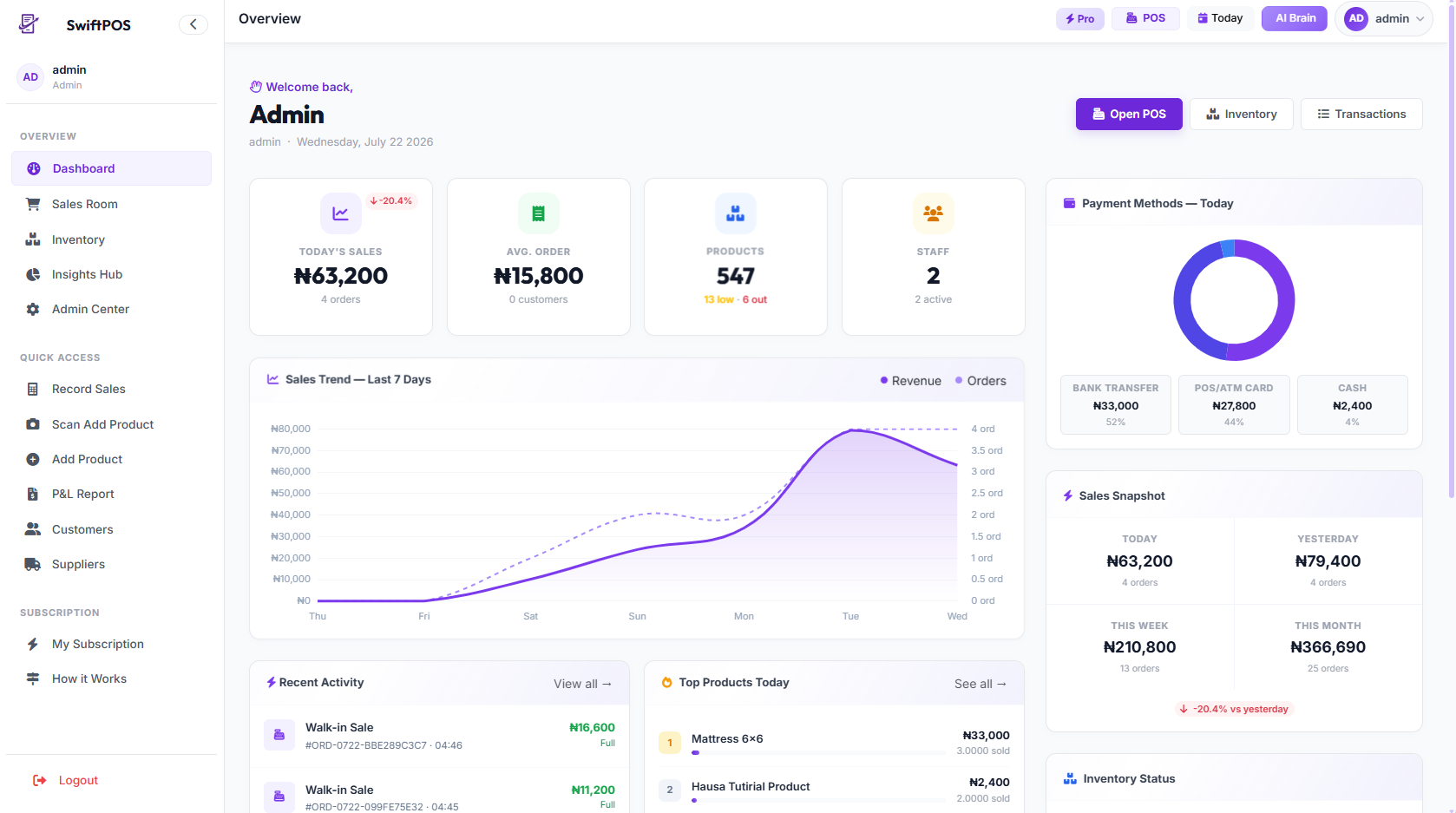 Dashboard Overview showing sales, revenue, and product performance
- Actionable Tip: Start with a free trial of a reputable POS system. Many offer a 14-day free trial. Use it to see how much easier your life becomes. You can check out SwiftPOS NG's features and see how it can help you.
Step 5: Track Your Inventory Alongside Sales
This is the part most people don't expect when talking about sales tracking. But trust me, your sales figures are meaningless without knowing your stock. Every time you sell an item, your inventory should reduce. Every time you receive new stock, it should increase.
If you sell 5 cartons of soft drinks but your stock records only show a reduction of 3, where did the other 2 go? This mismatch is a major indicator of problems – either unrecorded sales, theft, or damaged goods. A good system will automatically adjust inventory as sales happen. This gives you a clear picture of what's selling, what's slow-moving, and what you need to restock before you run out and lose sales. You can learn more about this in our guide on Nigerian Retailers: Inventory Management Mistakes Crushing Your Profits.
- Actionable Tip: When you're still on paper, do a quick physical count of your fastest-moving items at the start and end of each day. Compare it to your sales. This mini-inventory check will reveal a lot.
Step 6: Analyze Your Sales Data Regularly
Having data is one thing; using it is another. Once you have consistent sales records, start looking for patterns. What days are your busiest? What time of day do you sell the most? Which products are your bestsellers? Which ones are just sitting there gathering dust?
This analysis helps you make smart business decisions. If Tuesdays are consistently slow, maybe you run a special promotion on Tuesdays. If a particular product isn't selling, stop ordering it! Or find out why. This is how you optimize your stock, staff scheduling, and marketing efforts. You don't want to be like that shop in Onitsha Main Market always stocking too much of one thing and running out of another.
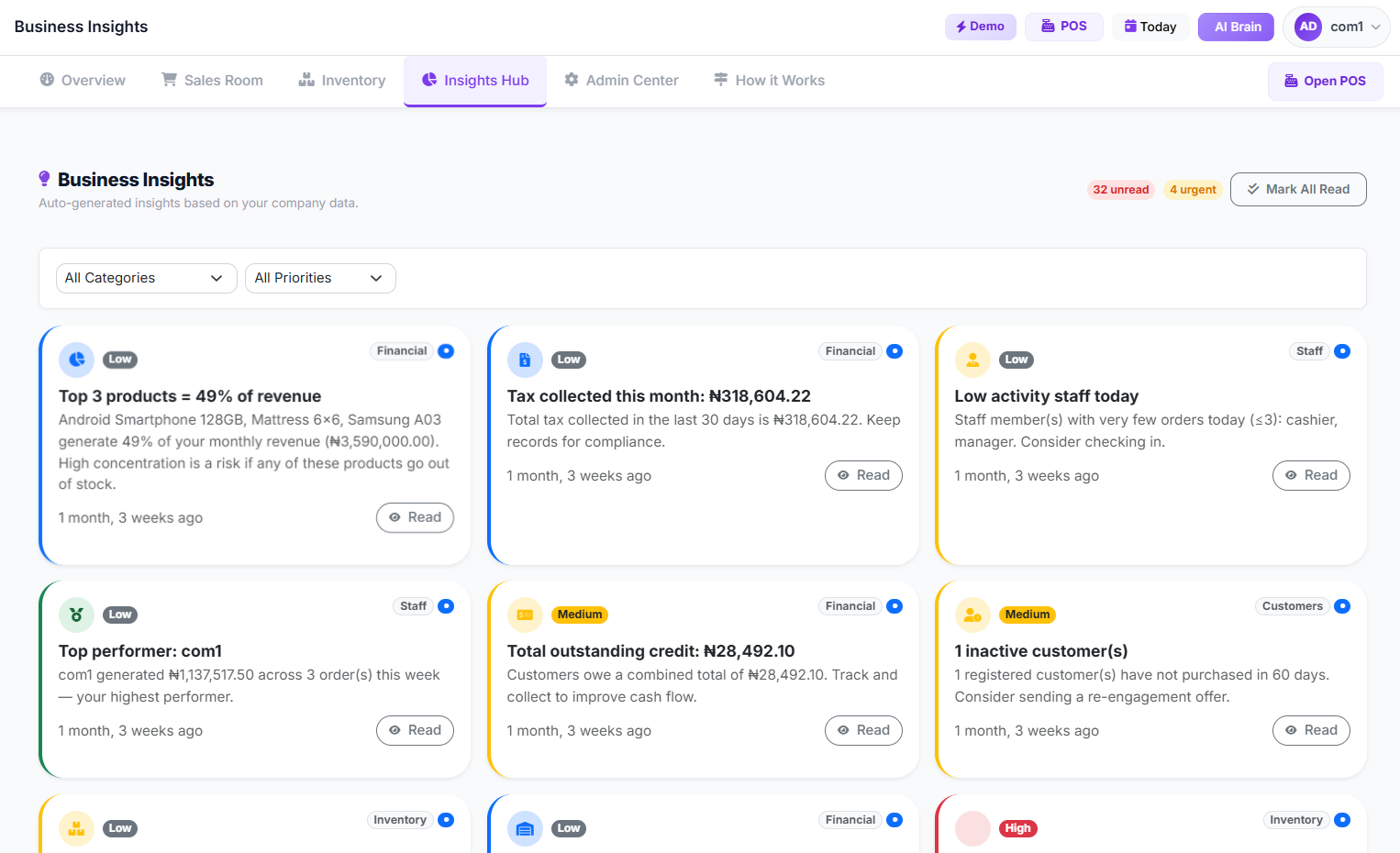 Business Insights page showing trends and key metrics
- Actionable Tip: Once a week, spend 30 minutes reviewing your daily totals and your top 5 best-selling and worst-selling products. Jot down any observations.
5 Mistakes That Cost Nigerian Business Owners the Most
I've seen these mistakes play out repeatedly across retail shops in Lagos, Aba, and Kano. They're avoidable, and they hit your pocket hard.
- Ignoring Small Cash Sales: "Ah, it's just ₦200, no need to record." This is a killer. Those "small" sales add up. If you miss recording ten ₦200 sales a day, that's ₦2,000 daily, ₦60,000 monthly. Over a year, that's ₦720,000 gone, just like that.
- Not Reconciling Daily: Thinking, "I'll do it at the end of the week." No, you won't. Or if you do, the errors will be too complex to trace. A missing ₦5,000 today is easier to find than a missing ₦35,000 at week's end. This is a common pitfall that hides 7 Key Retail Metrics Nigerian Businesses Must Track for Profit Growth.
- Mixing Business and Personal Funds: This is a classic. You make a sale, take some cash from the drawer to buy personal suya, and forget to record it as an expense or withdrawal. Your sales records become meaningless, and you can't tell if your business is truly profitable.
- Not Tracking Credit Sales Properly: You give goods on credit to a trusted customer, write it on a tiny scrap of paper, and then lose the paper. Or forget to follow up. Customer debt is a major issue for many Nigerian businesses. If you're running a provision store, you need a solid system for tracking who owes you what.
- Underestimating the Cost of Manual Errors: You think a few mistakes here and there are minor. But manual data entry, calculation errors, and lost records can easily cost you 5-10% of your potential daily profit. For a shop making ₦100,000 in daily sales, that's ₦5,000-₦10,000 lost every single day. This is money you earned but won't see because of inefficient processes.
How to Know If You're on Track (Success Metrics)
So, how do you know if your daily sales tracking efforts are actually working? You look at your metrics. These are your business's vital signs.
- Daily Sales Volume: Is it consistent? Is it growing? If you see a dip, your records should help you investigate why.
- Average Transaction Value (ATV): How much does an average customer spend per visit? If your ATV is ₦3,500 today, but it was ₦4,200 last week, something has changed. Maybe you need to upsell more or review pricing.
- Payment Method Breakdown: Are you getting more cashless payments? This is a good sign of modernization and convenience for customers.
- Stock-to-Sales Ratio: Are you selling through your inventory at a healthy rate? If stock is sitting too long, it's dead money. If it's selling too fast, you risk running out.
- Accuracy of Cash/Payment Reconciliation: The closer your recorded sales match your actual money (cash, POS, transfers), the better your tracking system is working. Aim for 99% accuracy, then 100%.
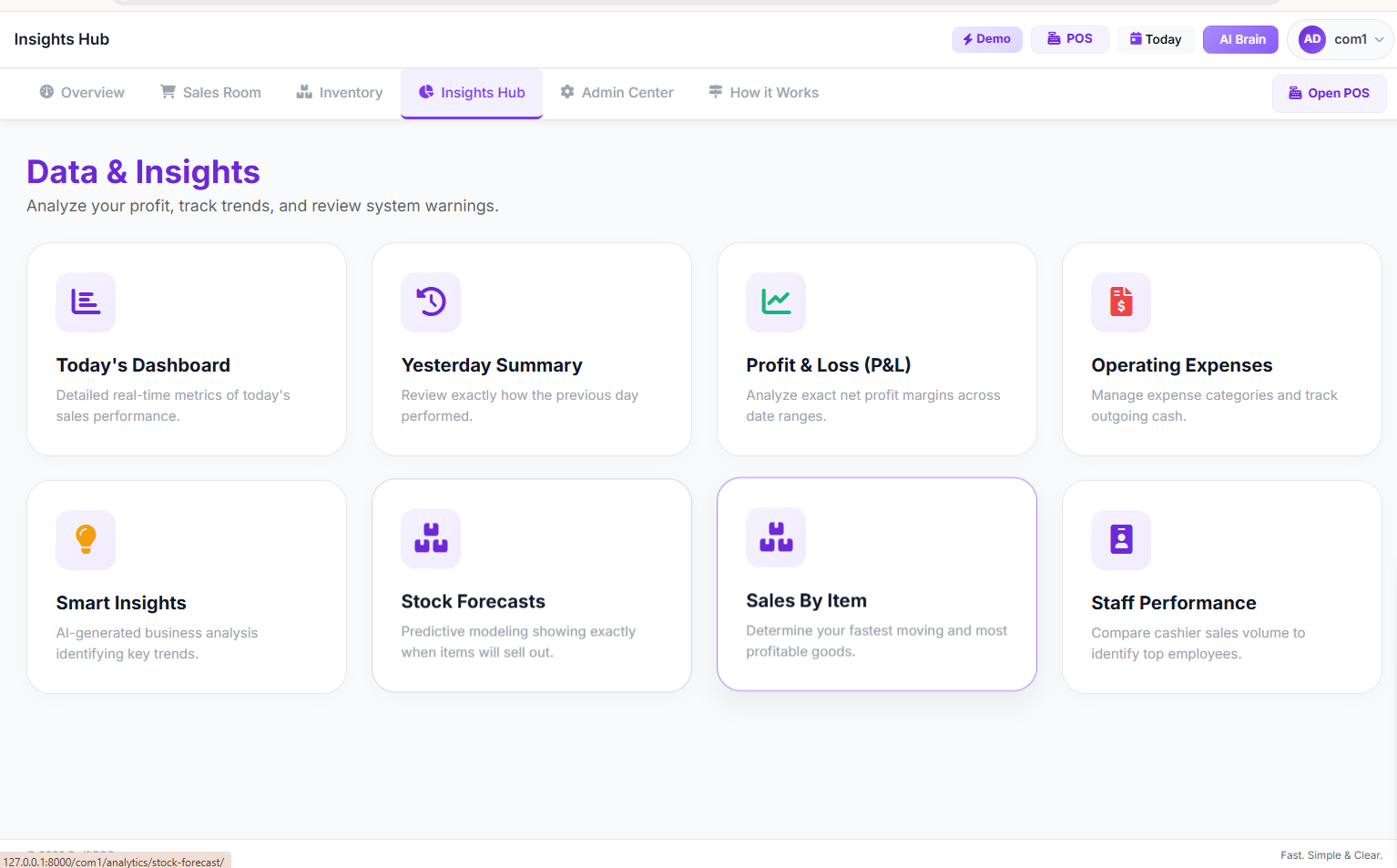 Insights Hub
Real Questions People Ask (FAQ)
Q: How much does it cost to start tracking sales digitally in Nigeria?
A: You can start surprisingly affordably. An entry-level smartphone (if you don't have one) is ₦35,000-₦80,000. A basic sales tracking app might be ₦1,000-₦5,000/month. So, an initial outlay of ₦35,000-₦80,000 for hardware, plus a small monthly subscription. It's an investment that pays for itself quickly by preventing losses and giving you clear data.
Q: Can I use Excel to track daily sales for my small business?
A: Yes, you can use Excel, and it's definitely an improvement over paper. It allows for better organization and basic calculations. However, it requires manual data entry, which is time-consuming and prone to errors. It also doesn't manage inventory in real-time or handle staff permissions like a dedicated POS system. It's a stepping stone, not a long-term solution for serious retail management. Check out our comparison on Traditional Bookkeeping vs. POS Software: Real Costs for Nigerian Retailers.
Q: What if I don't have constant internet in my shop? Can I still track sales?
A: Absolutely. This is a common concern in Nigeria. Many modern POS systems, like SwiftPOS NG, are designed to work offline. You can record sales even without internet, and the data will sync automatically once you're back online. This ensures your business never stops just because the network is down. You can learn more about this crucial feature in our blog, Can Your POS System Work Without Internet? Here's What Every Shop Owner in Nigeria Needs to Know.
Q: How do I handle returns and discounts when tracking daily sales?
A: This is why a good system is crucial. On paper, you'd write it as a negative sale or a deduction. With a digital system, you can process a "return" which automatically adds the item back to your inventory and adjusts your sales figures. Similarly, discounts are applied at the point of sale and recorded, showing you the net amount. This helps you track profitability accurately.
Q: My staff are not tech-savvy. Will they be able to use a digital sales tracking system?
A: Most modern POS systems are designed to be user-friendly, with intuitive interfaces. Many, like SwiftPOS NG, offer simple "Classic POS" or "Smart Grid POS" modes that are easy to learn. Plus, you can set staff permissions so they only see what they need to, reducing complexity. A little training, and they'll be up to speed quickly. It's often easier than you think, and the benefits far outweigh the initial learning curve. We even have tutorials to help you and your staff get started.
Your Next Move
You've read through this, and now you know the drill. Stop guessing about your daily sales. Stop losing money to avoidable errors. It's 2026, and your business deserves better.
Take the first step towards smarter retail management. Visit SwiftPOS NG today, sign up for a free trial, and see how easy it is to take control of your daily sales.
Written by SwiftPOS Team
Practical guides from the retail specialists at Nura Mustapha Technologies Limited, for modern Nigerian merchants.