Cost to Open a Mini Supermarket in Nigeria: A Detailed Breakdown
SwiftPOS Team
Published September 28, 2026
Starting a mini supermarket in Nigeria can feel like navigating a complex maze of costs and logistics. Many aspiring entrepreneurs are held back by uncertainty, wondering if their capital is enough to cover everything from rent to initial stock and daily operations. The fear of hidden expenses or underestimating crucial investments is a common barrier, often leading to delays or even abandonment of promising business ideas.
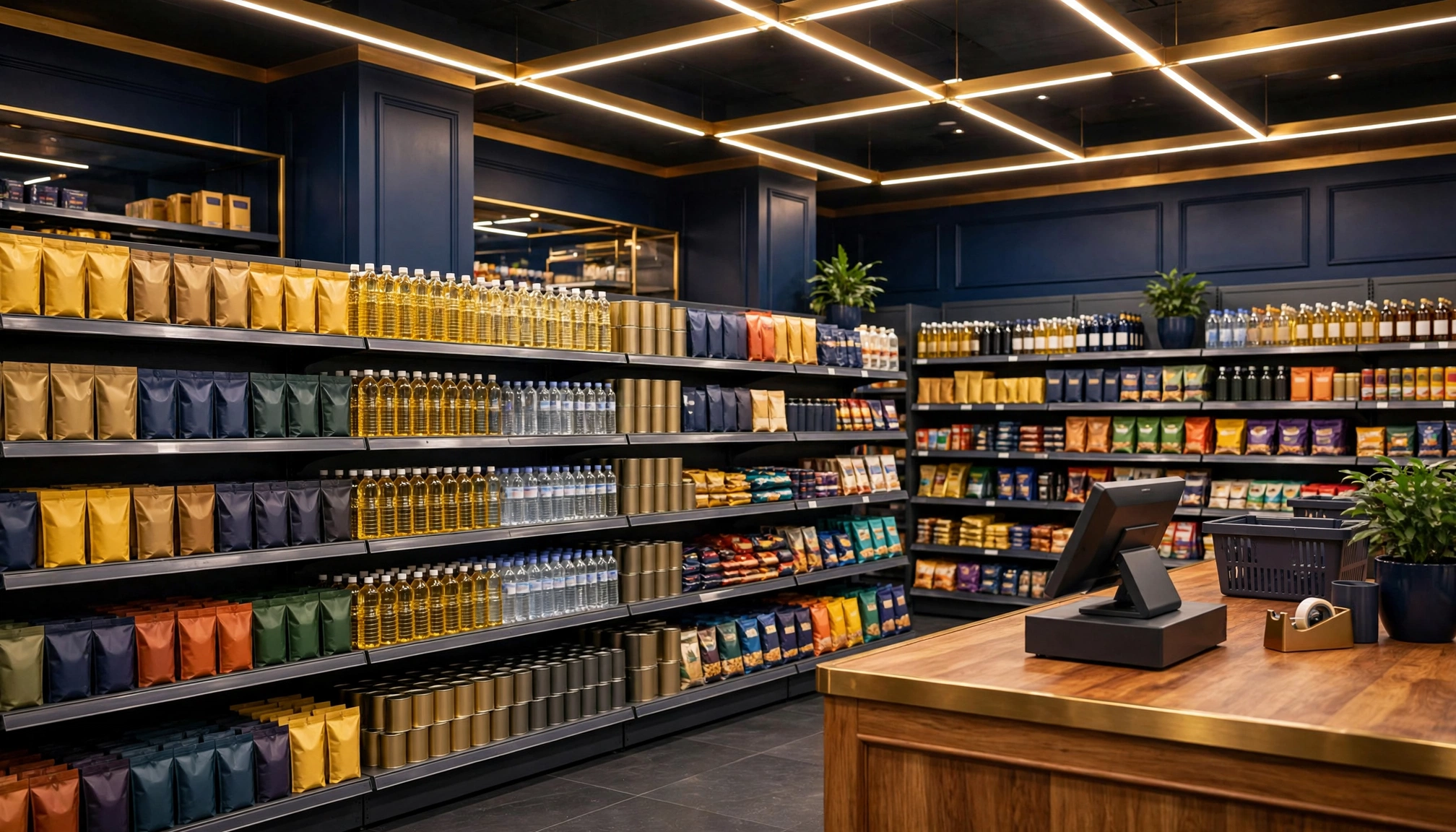
Interior of a small but well stocked miniThe Evolving Landscape of Retail in Nigeria (2026)
The Nigerian retail sector is dynamic, marked by increasing consumer demand and technological adoption. In 2026, mini supermarkets and provision stores continue to be vital hubs for communities, offering convenience and a diverse range of goods. However, profitability hinges not just on location and product variety, but also on efficient management and a keen understanding of operational costs. The market is competitive, with both traditional open-air markets and larger retail chains vying for consumer spend. Small and medium-sized enterprises (SMEs) in this space must be agile, cost-conscious, and customer-focused to thrive. Digital transformation, though gradual, is becoming increasingly critical for staying competitive and managing resources effectively. According to a recent report, nearly 60% of small retailers in urban areas are exploring or have already adopted some form of digital tool to streamline operations, highlighting a significant shift from purely manual processes. Understanding the full financial picture is the first step towards building a resilient and profitable business.
What You Need Before You Start
Before you even begin to budget, ensure you have these foundational elements in place:
- A Clear Business Plan: This should outline your vision, target market, product offerings, marketing strategy, and financial projections.
- Market Research: Understand your potential customers, competitors, and the specific needs of your chosen location. What products are in high demand? What pricing strategies do competitors use?
- Legal & Regulatory Knowledge: Familiarise yourself with requirements from the Corporate Affairs Commission (CAC), local government levies, and any specific permits needed for food handling or sales.
- Initial Capital: A realistic assessment of your financial capacity is crucial. This article will help you break down what that capital needs to cover.
- Supplier Network: Begin identifying reliable suppliers for your initial stock. Building good relationships early can secure better pricing and credit terms.
Step-by-Step: Cost to Open a Mini Supermarket in Nigeria
Opening a mini supermarket or provision store in Nigeria involves several key investments. Breaking these down will give you a clear picture of the financial commitment required.
Step 1: Secure Your Business Location
The location of your mini supermarket is paramount to its success. High foot traffic areas, residential estates, or busy commercial streets are ideal, but come at a higher cost. Rent is typically paid annually in Nigeria, often with a security deposit equivalent to one or two years' rent.
Expect to pay between ₦80,000 to ₦2,500,000 annually for shop rent, depending heavily on whether you're in a small town/suburban area or a prime location like Lagos Island. The security deposit could double this initial outlay. For instance, a prime spot in Abuja might demand ₦2,000,000 in annual rent plus another ₦2,000,000 as a security deposit, totaling ₦4,000,000 upfront. Always factor in agency fees and legal fees, which can add another 5-15% of the annual rent.
Step 2: Register Your Business and Obtain Permits
Formalising your business is a non-negotiable step. This involves registration with the Corporate Affairs Commission (CAC) and obtaining various local government permits and levies.
Business registration with the CAC can cost anywhere from ₦30,000 to ₦100,000, depending on whether you register as a sole proprietorship or a limited company. Additionally, local government levies and permits, which are often annual, can range from ₦20,000 to ₦150,000 based on your local government area (LGA) and the size of your business. These permits cover things like waste disposal, signage, and general trading licenses.
Step 3: Stock Your Shelves with Inventory
This is often the largest single expenditure for a mini supermarket. Your initial stock purchase will dictate the variety and quantity of products you can offer.
For a small neighborhood shop, an initial stock purchase might be around ₦500,000. However, for a larger mini-supermarket aiming for diverse inventory and a broader range of products, this could easily go up to ₦5,000,000. Consider stocking fast-moving consumer goods (FMCGs) first, then gradually expanding your product range based on customer demand. Effective inventory management is crucial here to avoid tying up capital in slow-moving goods; you can learn more about avoiding common inventory mistakes in our article on Nigerian Retailers: Inventory Management Mistakes Crushing Your Profits.
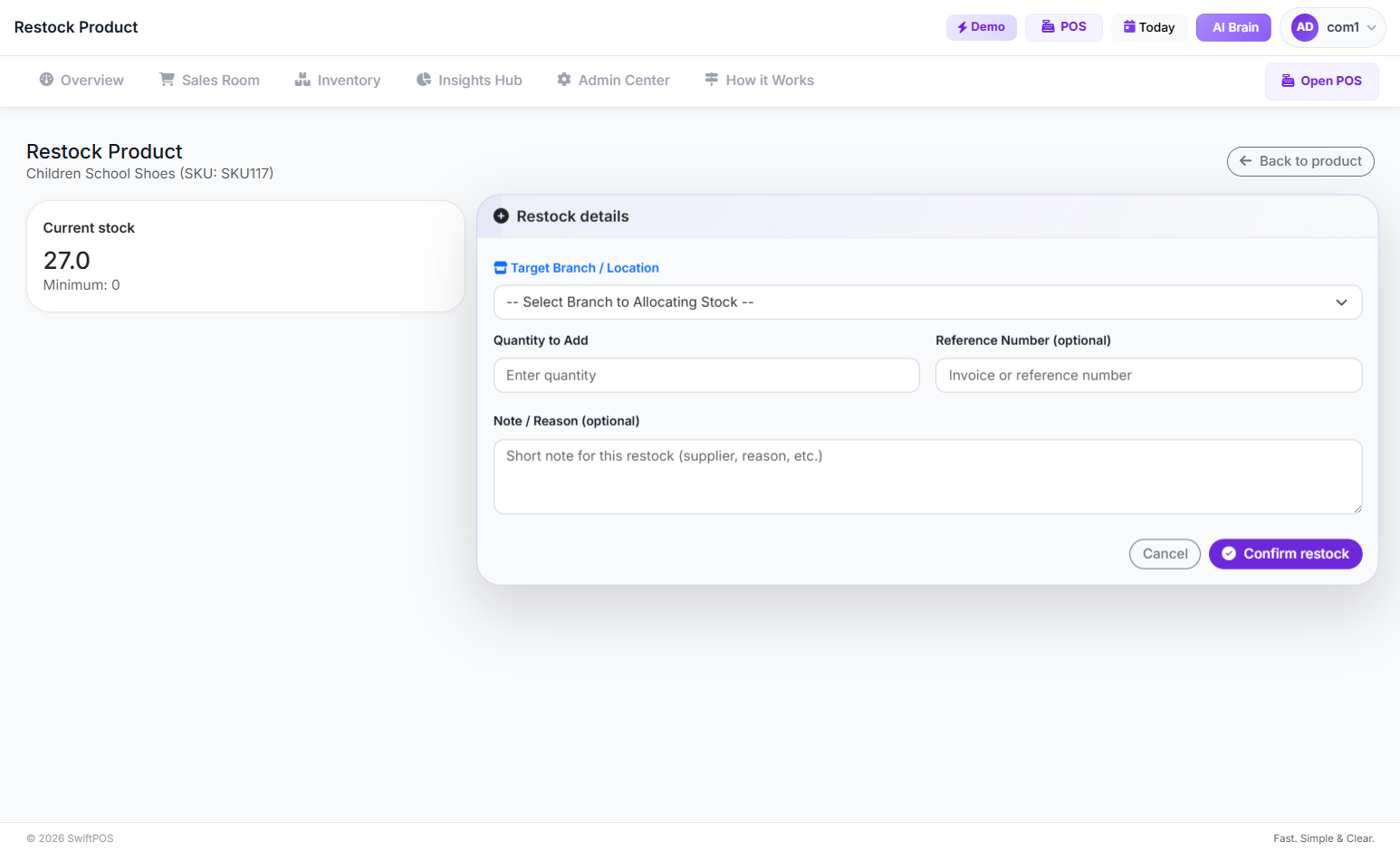 Add product stock page
Step 4: Furnish Your Shop with Equipment and Fixtures
Your shop's interior needs to be functional, attractive, and secure. This includes shelving, display units, and essential appliances.
- Shelving & Display Units: Basic wooden shelves can start from ₦150,000, while modern metal racks and potentially refrigerated displays for drinks or perishables could cost up to ₦800,000.
- Refrigerators/Freezers (2-3 units): Essential for many mini supermarkets, these can cost between ₦300,000 to ₦1,200,000 for used local brands versus new, larger commercial units.
- Generator (Small to Medium): Given the power situation in Nigeria, a reliable generator is a must. A basic "I-better-pass-my-neighbor" generator might be ₦250,000, but a more robust inverter generator suitable for commercial use could reach ₦1,500,000.
- POS System/Cash Register: A modern point-of-sale system is no longer a luxury but a necessity for efficiency and accurate record-keeping. A basic standalone cash register might be ₦80,000, but an integrated POS with inventory management and sales tracking capabilities, like SwiftPOS, will be more comprehensive, costing between ₦150,000 to ₦350,000 for the hardware setup. This investment streamlines your operations significantly.
- Security Measures: Consider CCTV cameras (₦80,000 - ₦300,000), burglar-proof installations (₦50,000 - ₦250,000), and possibly a security guard for larger establishments (monthly salary of ₦40,000 - ₦70,000).
Step 5: Set Up Utilities and Initial Marketing
Getting your shop ready for customers involves connecting to essential services and letting people know you exist.
- Utility Connection (Electricity, if new): If your shop requires a new electricity connection, budget ₦50,000 to ₦200,000 depending on the capacity needed.
- Initial Marketing/Signage: A simple banner might cost ₦50,000, but an illuminated signboard, flyers, and local promotions could range up to ₦300,000. Word-of-mouth marketing is powerful in Nigeria, so good service and local engagement are key.
- Internet Connection: A stable internet connection is vital for modern POS systems and payment processing. Budget around ₦10,000 - ₦30,000 monthly for a reliable plan.
Step 6: Hire and Train Your Staff
Even a mini supermarket often requires at least one or two staff members to assist customers and manage sales.
- Staff Salary (Per Staff, Monthly): An entry-level shop assistant might earn ₦45,000, while an experienced sales clerk could command up to ₦80,000 per month. You should budget for at least 1-2 months' salary upfront as part of your initial capital.
- Training: While not a direct monetary cost, investing time in training your staff on customer service, product knowledge, and how to use your POS system (like SwiftPOS) is crucial.
Step 7: Ongoing Monthly Operating Costs
Once your mini supermarket is open, you'll have recurring expenses that need careful management.
- Monthly Electricity Bill: This can range from ₦20,000 for a small shop with minimal refrigeration to ₦150,000 for a larger store with multiple cooling units and longer operating hours.
- Monthly Generator Fuel: With varying power supply, generator fuel is a significant operational cost, typically ₦30,000 to ₦120,000 per month, depending on usage.
- Replenishing Stock: This will be your largest ongoing cost, directly tied to your sales volume.
- Salaries: As mentioned, ₦45,000 - ₦80,000 per staff.
- Maintenance & Repairs: Budget a small amount monthly for unexpected repairs to equipment or the shop itself.
- Marketing (Ongoing): Small, consistent efforts like local flyers, community engagement, or social media boosts can keep your business visible.
Summary of Estimated Initial Capital Required:
Based on the ranges provided, here's a rough breakdown of what you might need to open a mini supermarket in Nigeria:
- Low-End Estimate (Small shop, suburban/rural area):
- Rent & Deposit: ₦160,000 (80k x 2 years)
- Business Registration & Permits: ₦50,000
- Initial Stock: ₦500,000
- Shelving & Display: ₦150,000
- Refrigerators: ₦300,000
- Generator: ₦250,000
- POS System/Cash Register: ₦80,000
- Marketing/Signage: ₦50,000
- Utility Connection: ₦50,000
- Total Low-End Initial Capital: ₦1,590,000
- High-End Estimate (Larger shop, prime urban area like Lagos/Abuja):
- Rent & Deposit: ₦5,000,000 (2.5m x 2 years)
- Business Registration & Permits: ₦250,000
- Initial Stock: ₦5,000,000
- Shelving & Display: ₦800,000
- Refrigerators: ₦1,200,000
- Generator: ₦1,500,000
- POS System/Cash Register: ₦350,000
- Marketing/Signage: ₦300,000
- Utility Connection: ₦200,000
- Total High-End Initial Capital: ₦14,600,000
Common Mistakes to Avoid
Starting a mini supermarket is exciting, but pitfalls can quickly derail your efforts. Be mindful of these common errors:
- Underestimating Initial Capital: Many entrepreneurs fail to account for all startup costs, leading to cash flow problems shortly after opening. Always have a contingency fund.
- Poor Inventory Management: Overstocking leads to tied-up capital and expired goods, especially for a provision store. Understocking means lost sales. Finding the right balance is crucial.
- Neglecting Local Government Levies: Ignoring permits and annual fees can lead to fines, harassment, or even forced closure.
- Ignoring Technology: Sticking to manual record-keeping is inefficient, prone to errors, and makes it impossible to gain insights into your business. The hidden costs of manual retail operations are substantial.
- Lack of Customer Service: In a competitive market, excellent customer service can be your biggest differentiator. Train your staff well.
- Inadequate Security: High-value goods and cash make shops targets. Skimping on security can lead to significant losses.
- Failing to Track Profitability: Many focus only on sales revenue without understanding true gross and net profit after expenses. This can give a false sense of financial health.
How to Track and Grow After Launch
Once your mini supermarket is operational, the real work of managing and growing it begins. Effective tracking and strategic growth initiatives are critical for long-term success.
- Monitor Sales Performance Daily: Keep a close eye on daily sales figures, identifying peak hours, best-selling products, and any dips. This data helps you optimize staffing, stock levels, and promotions. A good POS software for supermarket in Nigeria will provide these insights automatically.
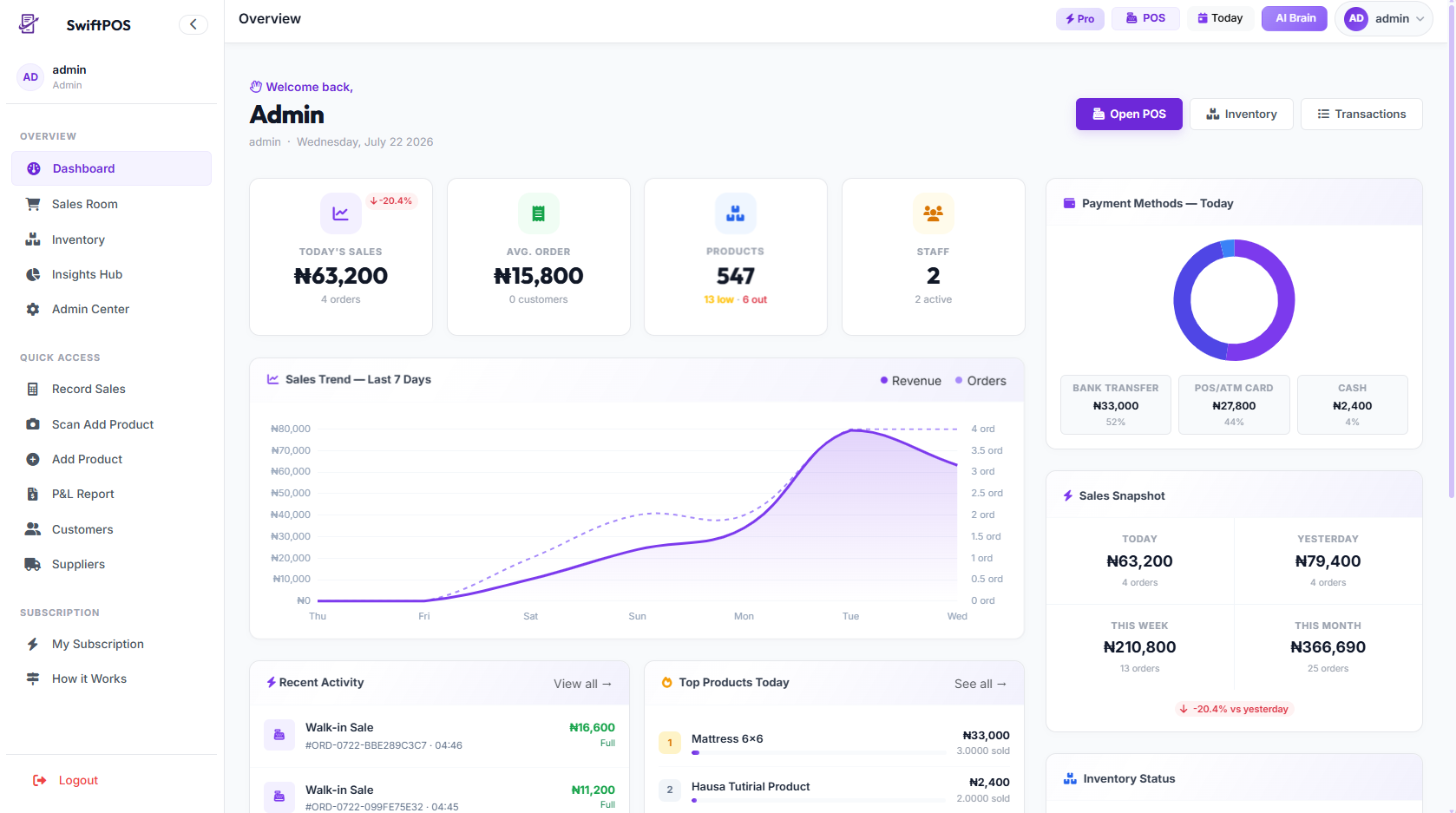 Dashboard Overview 1
- Conduct Regular Inventory Audits: Beyond tracking sales, regularly reconcile your physical stock with your system records. This helps identify discrepancies, reduce shrinkage, and prevent stockouts or overstocking. For a step-by-step guide on this, read our article on Retail Inventory Management: Step-by-Step Guide to Efficient Stock Adjustments.
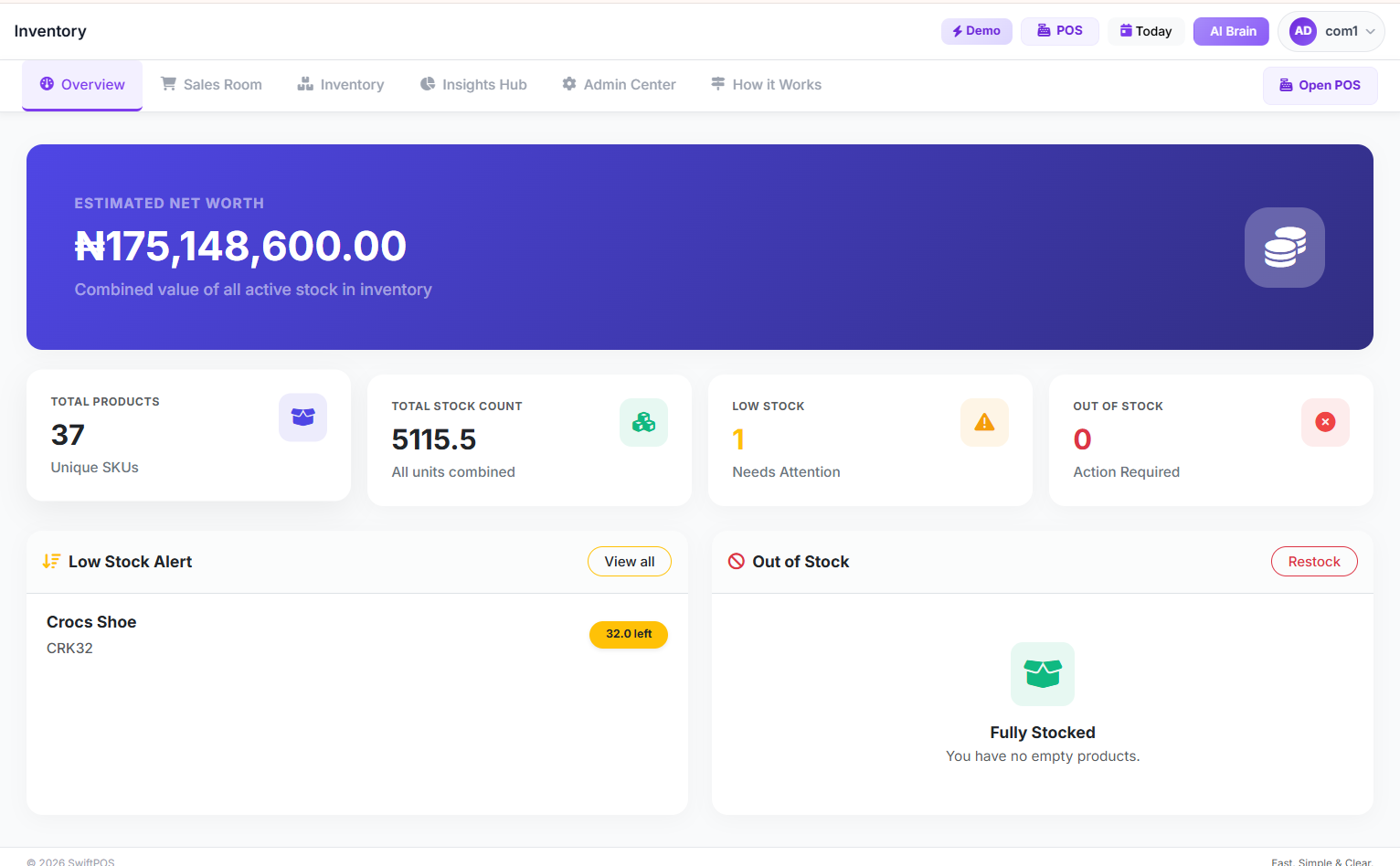 Inventory Dashboard
- Analyze Profit & Loss: Don't just look at revenue. Understand your gross profit (revenue minus cost of goods sold) and net profit (gross profit minus all operating expenses). This is the true measure of your business's financial health.
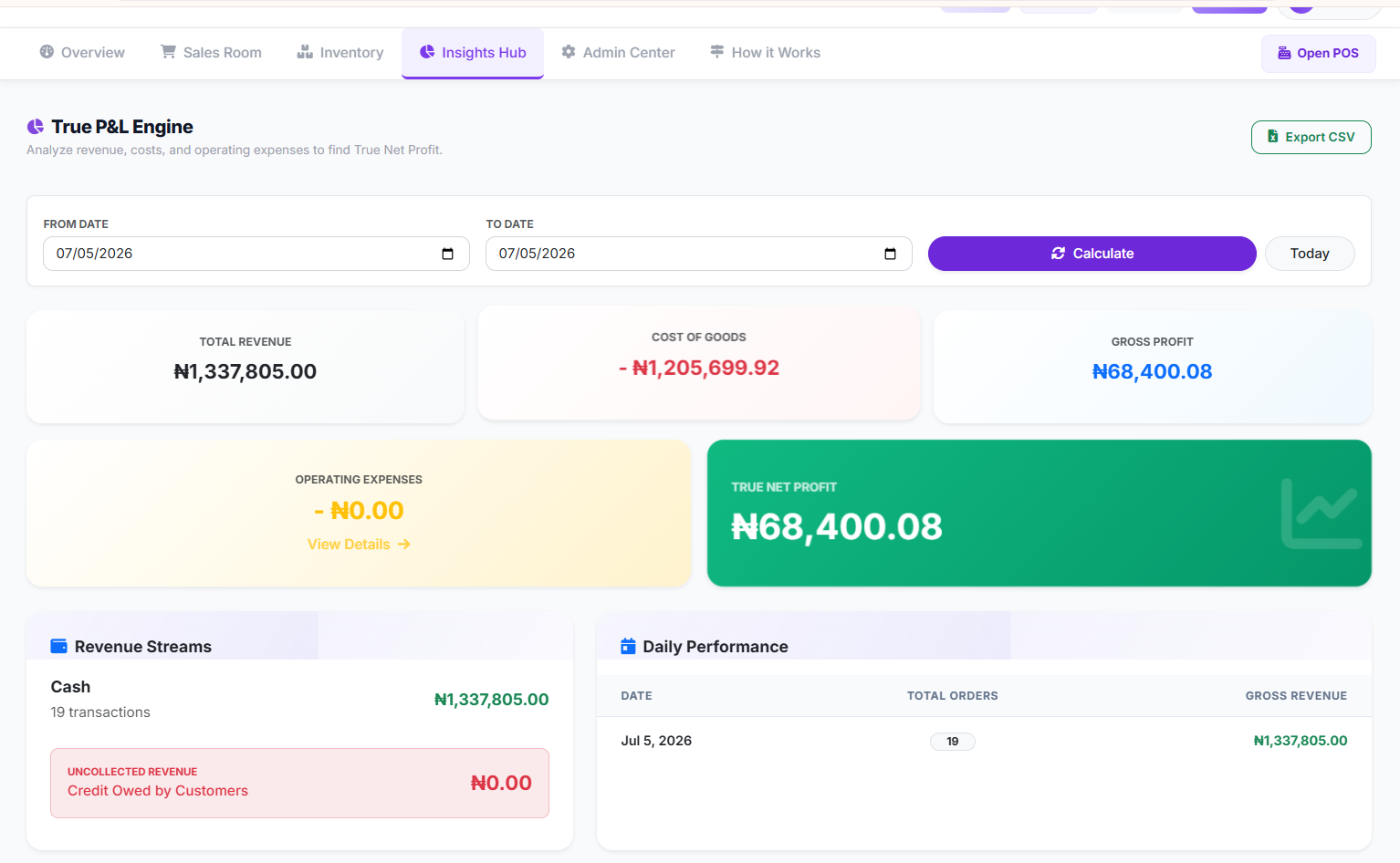 Profit and Loss Page
- Manage Customer Relationships: Build loyalty by offering excellent service, perhaps implementing a simple loyalty program. Collect customer feedback to continuously improve. Our guide on WhatsApp Automation: Customer Notifications for Nigerian Retail Businesses can help you stay connected.
- Utilize Technology for Insights: Tools like SwiftPOS NG are designed to give you a comprehensive overview of your business. From sales trends and inventory forecasting to staff performance and expense tracking, a robust system provides the data you need to make informed decisions. Its features extend beyond basic sales, offering insights into 7 Key Retail Metrics Nigerian Businesses Must Track for Profit Growth.
- Explore Growth Opportunities:
- Expand Product Range: Introduce new items based on market demand and customer requests.
- Offer Value-Added Services: Consider services like mobile money transfers, small parcel collection, or even home delivery for nearby customers.
- Strategic Pricing: Continuously review your pricing strategy to remain competitive while maintaining healthy margins.
- Marketing & Promotions: Run targeted promotions, discounts, or bundle deals to attract new customers and reward loyal ones.
Frequently Asked Questions
Q1: Is opening a mini supermarket in Nigeria still profitable in 2026?
Yes, opening a mini supermarket or provision store can still be very profitable in 2026, provided you have a strategic location, manage your inventory efficiently, offer competitive pricing, and provide excellent customer service. While competition is high, the demand for convenient access to goods remains strong across Nigeria. Careful cost management and leveraging technology are key to maximising profitability.
Q2: How can I manage inventory effectively to avoid losses?
Effective inventory management is crucial. This involves tracking all incoming and outgoing stock, monitoring product expiry dates, identifying fast-moving and slow-moving items, and conducting regular stock takes. Implementing a robust inventory management system, often part of a comprehensive POS software like SwiftPOS, can automate much of this process, provide real-time data, and help you forecast demand accurately. Learn more in our article on AI vs. Traditional Inventory: Real-Time Profit for Nigerian Businesses.
Q3: What is the most important factor for success in a mini supermarket business?
While many factors contribute, location and customer service are arguably the most critical. A good location ensures visibility and accessibility, driving foot traffic. Exceptional customer service builds loyalty and word-of-mouth referrals, which are invaluable in the Nigerian market. Combining these with efficient operations and a well-managed stock can set you apart.
Q4: Do I really need a POS system for a small mini supermarket?
Absolutely. While a basic cash register might seem sufficient initially, a modern POS system offers far more than just recording sales. It provides real-time inventory tracking, sales analytics, customer management, expense tracking, and can help identify revenue leaks. For a small business, a POS system is an investment that pays for itself by reducing errors, saving time, and providing actionable insights for growth. Consider the benefits outlined in POS System ROI: Calculating True Value for Nigerian Retailers.
Q5: How can I protect my business from theft and fraud?
Security is paramount. Implement a combination of physical security (CCTV, strong locks, burglar bars), operational procedures (strict cash handling, regular stock audits), and technological solutions. A good POS system with staff permission controls and activity logging can help monitor employee actions and flag suspicious activities like excessive voids or discounts, as discussed in our How to Set Staff Access Permissions in Retail Software in Nigeria (2026 Guide) blog.
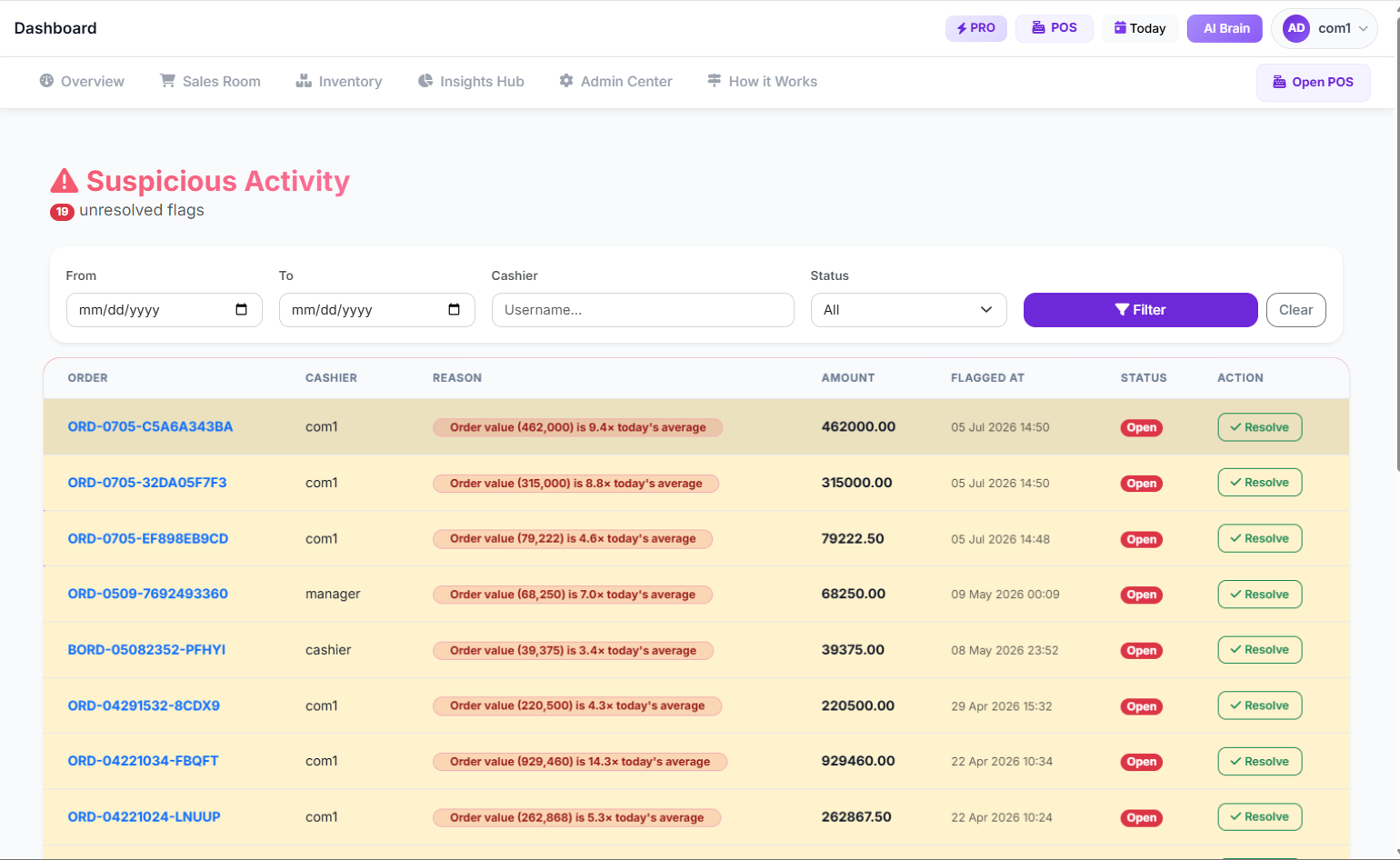 Suspicious activity page
Ready to Build a Profitable Mini Supermarket?
Understanding the costs is just the beginning. The next step is to equip your business with the tools for success. SwiftPOS NG provides a comprehensive business management and POS platform designed specifically for Nigerian retailers like you. From managing your inventory and sales to tracking expenses and gaining crucial business insights, we help you streamline operations and boost your profitability. Explore all our features and see how we can help your mini supermarket thrive by visiting our features page.
5 Best POS Systems for Small Businesses in Nigeria (20…
Sep 28, 2026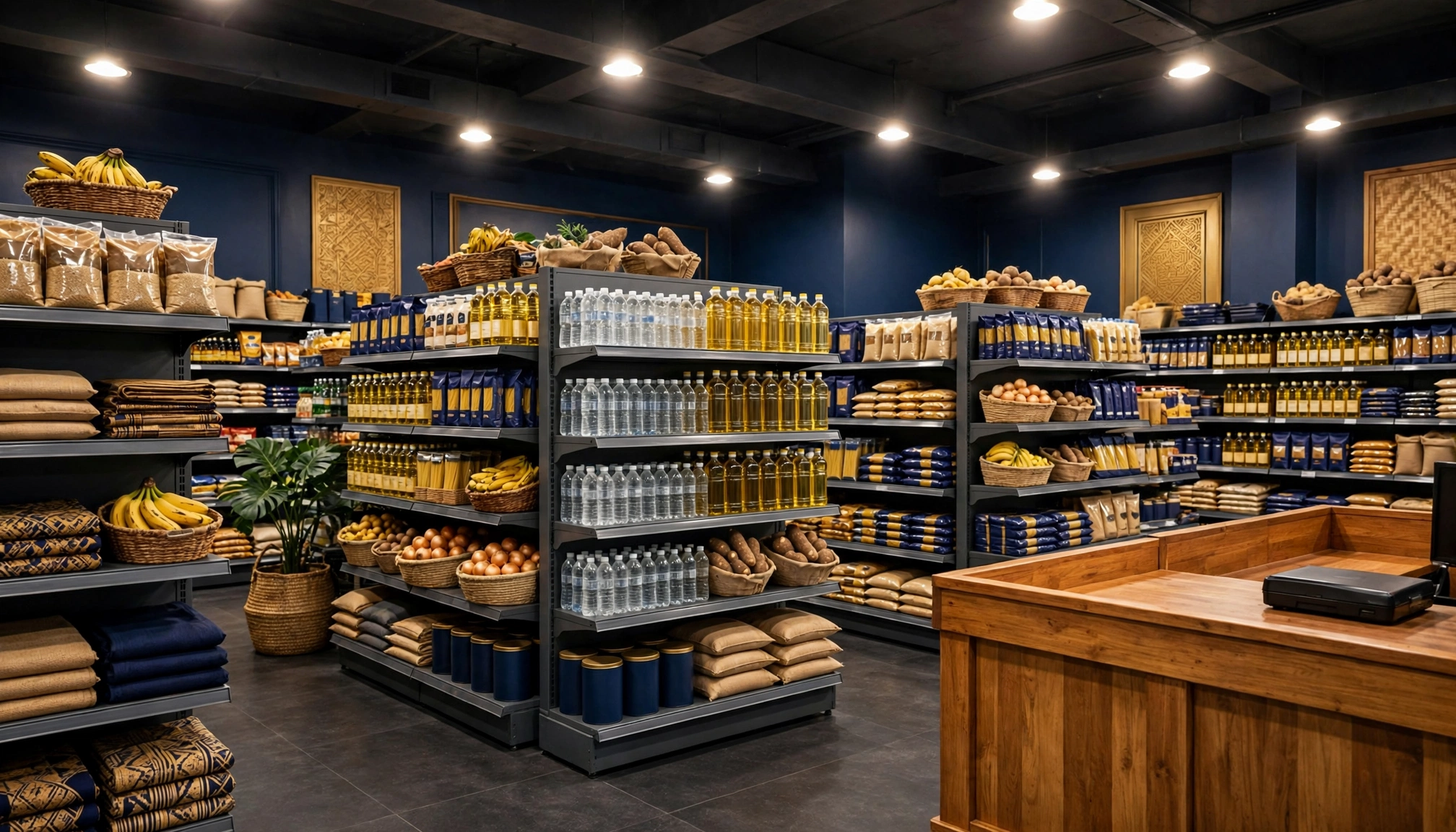
10 Best Retail POS Systems for 2026: Unbiased Reviews …
Sep 27, 2026
7 Best Retail POS Systems for Small Businesses in 2026…
Sep 27, 2026