
How to Start a Pharmacy Business in Nigeria: Costs, Licenses & Profitability

Everyone tells you that to start a pharmacy business in Nigeria, you need to focus on securing a prime location and getting your initial stock. They'll say, "Location, location, location!" and "Buy big to get discounts!" But let me tell you something: that's only half the story, and honestly, it's the part that trips up most aspiring pharmacy owners. If you jump into rent and stock without understanding the hidden costs and the true path to profitability, you'll find yourself stuck with shelves full of medicine and an empty bank account. Today, in 2026, the game has changed. I'm going to show you how to start a pharmacy business in Nigeria: costs, licenses & profitability, by focusing on what truly matters before you spend a single naira.
Modern pharmacy interior with a pharmacist consulting aWhy Most People Get This Wrong from Day One
The biggest mistake I see? People underestimate the regulatory hurdles and overestimate their ability to manage everything manually. You see a thriving pharmacy on Ago-Palace Way in Lagos and think, "I can do that!" But you don't see the mountain of paperwork, the constant stock management, and the daily battle against expired drugs and pilferage behind the scenes.
Think about it: you're dealing with life-saving medications. This isn't selling provisions or phone accessories. The Pharmacy Council of Nigeria (PCN) isn't playing games. They want to see proper registration, premises that meet specific standards, and licensed professionals. Many people rush to find a shop, sign a lease for, say, ₦1,500,000 annually in a decent suburban area, only to discover their proposed layout doesn't meet PCN standards, forcing them into expensive, unplanned renovations. That's money down the drain before you even open your doors.
Then there's the stock. You buy a huge consignment of popular drugs from Onitsha Main Market, thinking you're getting a great deal. But without a robust system to track expiration dates, sales velocity, and reorder points, you're just guessing. Before you know it, you're sitting on a pile of nearly expired medication, trying to offload it at a loss, or worse, having to destroy it. This is a common tale, especially for those relying on manual ledgers or basic spreadsheets. It’s a costly lesson, believe me. You can read more about common inventory management mistakes crushing your profits in another one of my articles.
Before You Do Anything: The Foundation Work
Before you even think about signing a lease or buying your first paracetamol strip, you need to lay a solid foundation. This isn't optional; it's survival.
1. Get Your Professional & Business Licenses in Order
This is where your journey truly begins. You need a Superintendent Pharmacist – that's non-negotiable. If you're not one, you need to employ one. Their license and registration are central to your pharmacy's operation.
- PCN Registration & License: Expect to pay between ₦150,000 and ₦350,000. This covers initial registration, premises inspection, and annual renewal fees. The fees vary based on the size and type of pharmacy (retail, wholesale, etc.) and where you're located. This isn't a one-time thing; plan for annual renewals.
- Business Registration (CAC): Register your business name with the Corporate Affairs Commission. For a sole proprietorship or a limited company, you're looking at ₦30,000 to ₦70,000 in registration and legal fees. Don't skip this. It gives your business legal standing and protects your brand.
- Local Government Permits: Depending on your location, you'll need various local government permits and levies. These can range from ₦15,000 to ₦50,000 annually. It’s always best to inquire at your specific local government secretariat.
2. Craft a Detailed Business Plan (with Real Numbers)
This isn't just for investors; it's for you. It forces you to think through every aspect. How much capital do you actually need? What are your expected sales? What's your break-even point?
- Capital Range: For a small to medium pharmacy, you're looking at a startup capital requirement anywhere from ₦2,500,000 to ₦12,000,000. This is a significant investment.
- Time Estimates: The entire process, from registration to stocking, can take 3 to 6 months, sometimes more, especially if there are delays with permits or premises modifications. Factor this into your financial planning. You won't be generating revenue immediately.
3. Secure a Suitable Location (and Understand the Lease Terms)
Now, you can scout for a place. But here’s the catch: the PCN has specific requirements for pharmacy premises, including minimum size, ventilation, and storage conditions. Don't just pick a busy street corner; pick one that meets regulatory standards.
- Premises Rent (Annual): This is a huge chunk of your initial cost. In a small town or suburban area, you might find something for ₦250,000 annually. But in a prime commercial spot in Lagos or Abuja, you could be looking at ₦3,000,000 or even more.
- Security Deposit: Landlords often demand 1-2 years' rent as a security deposit. So, if your rent is ₦800,000, be ready to pay an extra ₦800,000 to ₦1,600,000 upfront. This money is tied up for the duration of your tenancy.
"Many small business owners in Nigeria are so focused on the visible costs that they completely miss the silent killers: the inefficiencies, errors, and lost opportunities that manual operations bring."
</blockquote>
The Step-by-Step Path (What Actually Works)
Once your foundation is solid, you can start building. This isn't just about opening a shop; it's about building a sustainable business.
Step 1: Design and Renovate Your Pharmacy (PCN Compliant)
This is where many people cut corners, and it always comes back to bite them. Your pharmacy layout isn't just about aesthetics; it's about patient safety and regulatory compliance.
- What to do: Work with an architect or a contractor who understands PCN requirements. Ensure you have proper storage for different drug categories (e.g., controlled drugs), adequate lighting, ventilation, and a clean dispensing area.
- Why it matters: A non-compliant premises will delay your license, cost you more in rework, and could even lead to fines. More importantly, a well-designed space enhances patient trust and operational efficiency.
- Common shortcut that backfires: "Just put up some shelves, it'll be fine." No, it won't. I once saw a new pharmacy in Port Harcourt get shut down for a week because their drug storage didn't meet temperature control standards. That's a week of lost revenue and a hit to their reputation.
- Action Item: Get quotes for renovation and fitting out. Budget ₦500,000 to ₦2,500,000 for basic shelving, counters, air conditioning (crucial for drug stability!), and security.
Step 2: Source and Stock Your Initial Inventory
This is a critical step. You need a diverse range of essential medicines, over-the-counter (OTC) drugs, toiletries, and medical consumables. Don't just buy what's cheapest; buy what's needed and what sells.
- What to do: Establish relationships with reputable pharmaceutical wholesalers and distributors. Negotiate payment terms. Start with a balanced stock, focusing on fast-moving items first.
- Why it matters: Quality of drugs is paramount. You cannot afford to stock fake or substandard products. Also, managing your inventory efficiently from day one is key to preventing losses from expired stock or stockouts.
- Common shortcut that backfires: Buying solely from the cheapest unknown supplier without verifying product authenticity or storage conditions. Or overstocking slow-moving items because of a "good deal."
- Action Item: Plan your initial stock purchase. This will likely be your largest single expense: ₦1,500,000 to ₦7,000,000 for essential inventory.
Step 3: Hire and Train Your Team (Especially Your Pharmacist)
Your team, especially your Superintendent Pharmacist and pharmacy technicians, are the face of your business and crucial for compliance.
- What to do: Recruit qualified and licensed personnel. Ensure they are well-trained, not just in dispensing but also in customer service and proper record-keeping.
- Why it matters: A knowledgeable and friendly team builds customer trust and ensures smooth operations. Your Pharmacist is legally responsible for the pharmacy's operations.
- Common shortcut that backfires: Hiring unqualified staff to save on salaries. This can lead to dispensing errors, regulatory issues, and a poor customer experience.
- Action Item: Budget for salaries. A Pharmacist in Nigeria earns ₦120,000 to ₦250,000 monthly. Pharmacy technicians/assistants will need ₦60,000 to ₦100,000 monthly.
Step 4: Implement a Robust Business Management System
This is where you differentiate yourself from those still using paper and pen. In 2026, you cannot afford to manage a pharmacy manually.
- What to do: Invest in a comprehensive business management and Point-of-Sale (POS) system. You need something that can handle sales, inventory, expiration dates, customer records, and financial tracking.
- Why it matters: A system like SwiftPOS NG helps you track every single product, from receipt to sale. It flags expiring items, manages stock levels across different categories, records all transactions, and even helps you understand your true profit margins. This is especially useful for pharmacies where product expiry dates are a matter of life and death, not just lost profit. Imagine being able to see exactly when that batch of antibiotics will expire, or which pain relievers are flying off the shelves.
- Common shortcut that backfires: Relying on manual ledgers or basic Excel sheets. This leads to errors, forgotten expiry dates, inaccurate stock counts, and makes auditing a nightmare. You lose money to shrinkage and expired goods without even knowing it.
- Action Item: Research POS systems that offer strong inventory management, expiry date tracking, and sales reporting. You can learn more about how to set up your SwiftPOS account to manage your inventory effectively.
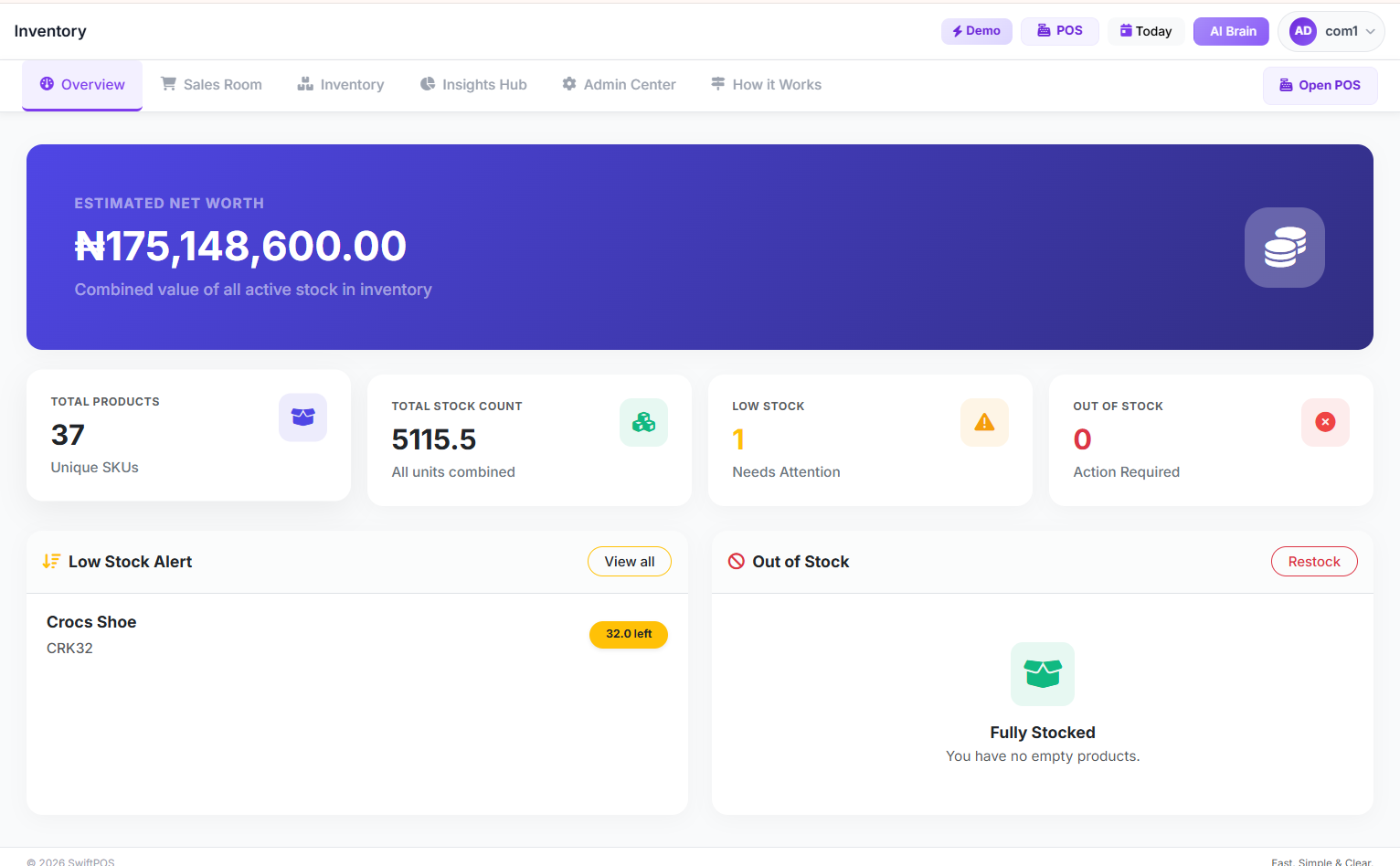 SwiftPOS Inventory Dashboard showing product stock levels
SwiftPOS offers an intuitive dashboard to manage your pharmacy's inventory.
Step 5: Marketing and Grand Opening
Once everything is set, it's time to let your community know you're open for business.
- What to do: Invest in good signage, local flyers, and maybe a small opening event. Build relationships with local doctors and clinics.
- Why it matters: Even a great pharmacy needs visibility. People need to know you exist and where to find you.
- Common shortcut that backfires: Assuming patients will just find you because you're a pharmacy. Competition is real, even in the health sector.
- Action Item: Budget ₦50,000 to ₦200,000 for basic marketing and signage.
The Numbers That Will Make or Break You
Alright, let's talk brass tacks: money. This is where dreams meet reality. Understanding these figures is crucial for your pharmacy's profitability.
Startup Costs (One-Time & Initial)
Here's a breakdown of what you need to get off the ground:
- PCN Registration & License: ₦150,000 - ₦350,000
- Business Registration (CAC): ₦30,000 - ₦70,000
- Premises Rent (Annual): ₦250,000 - ₦3,000,000 (Remember, this is annual, but you pay upfront).
- Security Deposit (Rent): ₦100,000 - ₦1,000,000 (Typically 1-2 years' rent, paid upfront).
- Shop Renovation/Fitting Out: ₦500,000 - ₦2,500,000
- Initial Stock Purchase: ₦1,500,000 - ₦7,000,000
- Generator Purchase (Optional but Recommended): ₦200,000 - ₦800,000 (Power stability is critical for drug storage and operations).
- Marketing/Signage: ₦50,000 - ₦200,000
- Miscellaneous (e.g., initial internet, small equipment): ₦50,000 - ₦250,000
Monthly Running Costs
Once you're open, the bills keep coming. Don't forget these:
- Pharmacist Salary (Monthly): ₦120,000 - ₦250,000
- Pharmacy Technician/Assistant Salary (Monthly): ₦60,000 - ₦100,000 (per staff, if you hire more than one).
- Monthly Utility Bills (Electricity, Water, Internet): ₦30,000 - ₦100,000 (This can fluctuate wildly with power supply and generator use).
- Restocking Inventory: This is ongoing, but you should aim to maintain a healthy cash flow to replenish fast-moving items.
- PCN Annual Renewal (prorated monthly): Roughly ₦12,500 - ₦29,167
- Security, Cleaning, Maintenance: ₦20,000 - ₦80,000
- POS System Subscription: Depending on features and usage, this could be a few thousand naira monthly. Compare plans on the SwiftPOS pricing page.
Expected Monthly Revenue & Profitability
Now for the good news. Pharmacies can be very profitable businesses in Nigeria, given the demand for healthcare.
- Expected Monthly Revenue: A small community pharmacy might pull in ₦800,000 to ₦1,500,000 monthly. A busy urban location could easily hit ₦2,000,000 to ₦4,000,000. These are gross figures, before expenses.
- Gross Profit Margin on Sales: This is where it gets interesting. Margins vary significantly. OTC drugs might have a 20-30% margin, while prescription drugs could be lower, say 15-25%. Overall, aim for a 15% - 30% gross profit margin.
Honestly, this is the part most people don't expect. They see the high revenue and forget about the equally high costs. That’s why having a system that can show you your
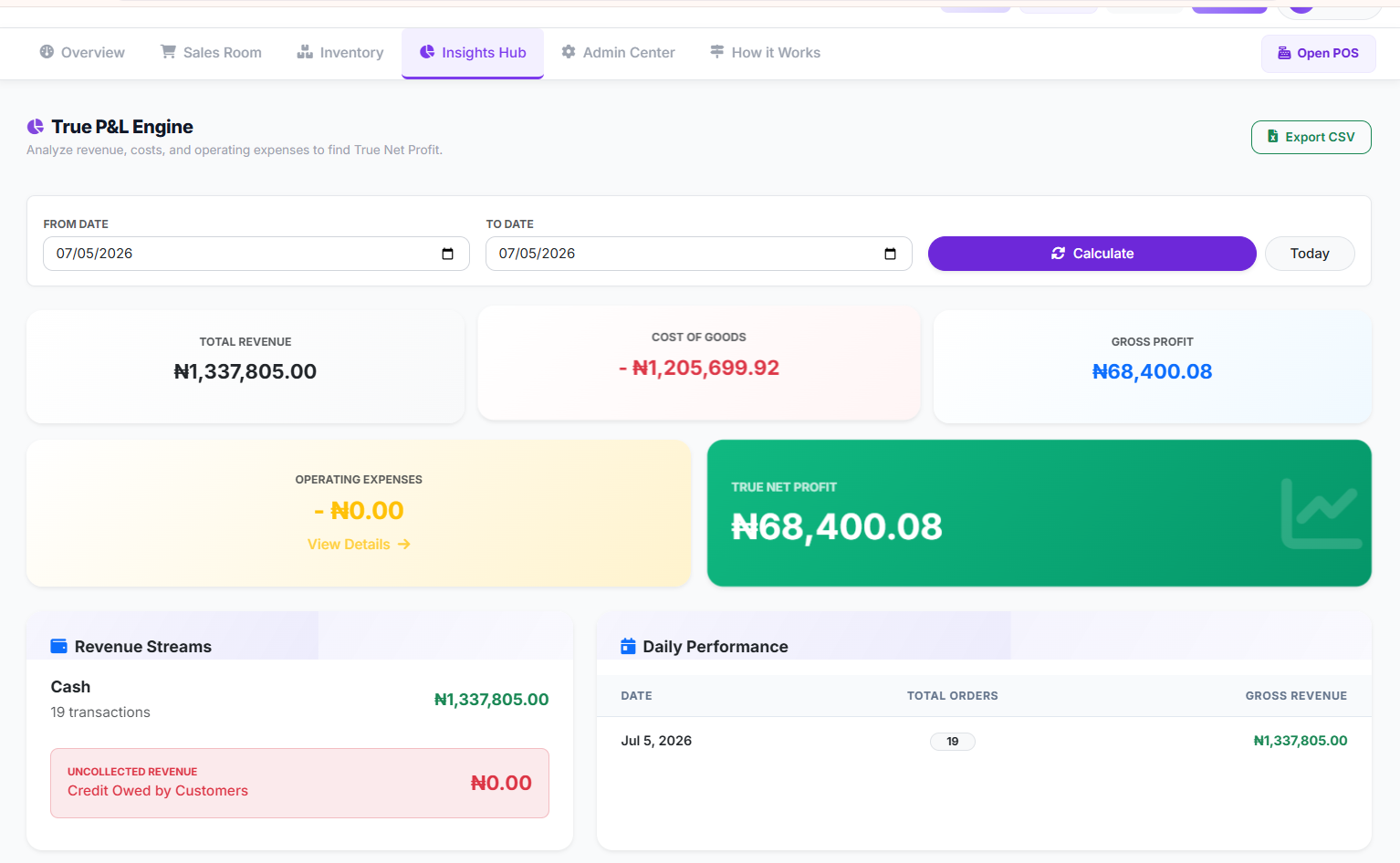 true net profit
Growth After Launch: The Next 90 Days
You've opened your doors, patients are coming in. What now? The first 90 days are about solidifying your operations and building momentum.
- Monitor Your Stock Relentlessly: This is non-negotiable for a pharmacy. Use your POS system to track what's selling, what's slow, and what's nearing expiry. For example, SwiftPOS NG can help you predict when products will run out of stock and identify dead stock. You want to optimize your reorder points to avoid both stockouts and overstocking.
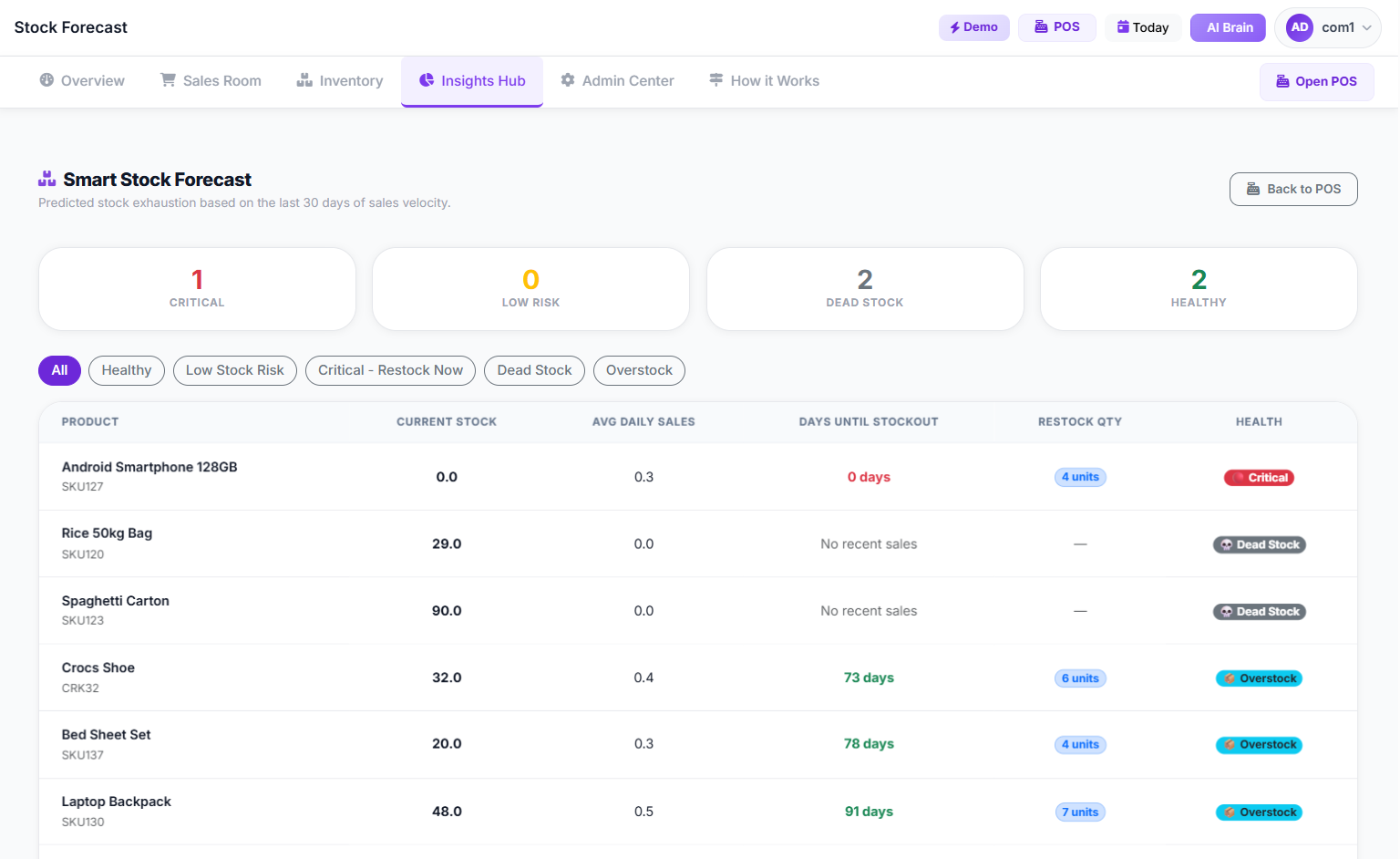 SwiftPOS Inventory Dashboard with stock forecast
SwiftPOS Smart Store Forecast helps you manage stock levels effectively.
- Build Customer Relationships: In Nigeria, loyalty is key. Offer excellent customer service. Remember faces, ask about families (where appropriate), and provide genuine advice. A simple "How are you feeling today?" goes a long way. Consider implementing a simple loyalty program.
- Analyze Your Sales Data: Don't just make sales; understand them. Which products are most popular? At what times of day do you see peak traffic? Are there seasonal trends? This data helps you make smarter purchasing decisions and tailor your marketing efforts. A good system provides that break down performance by item, category, and even staff.
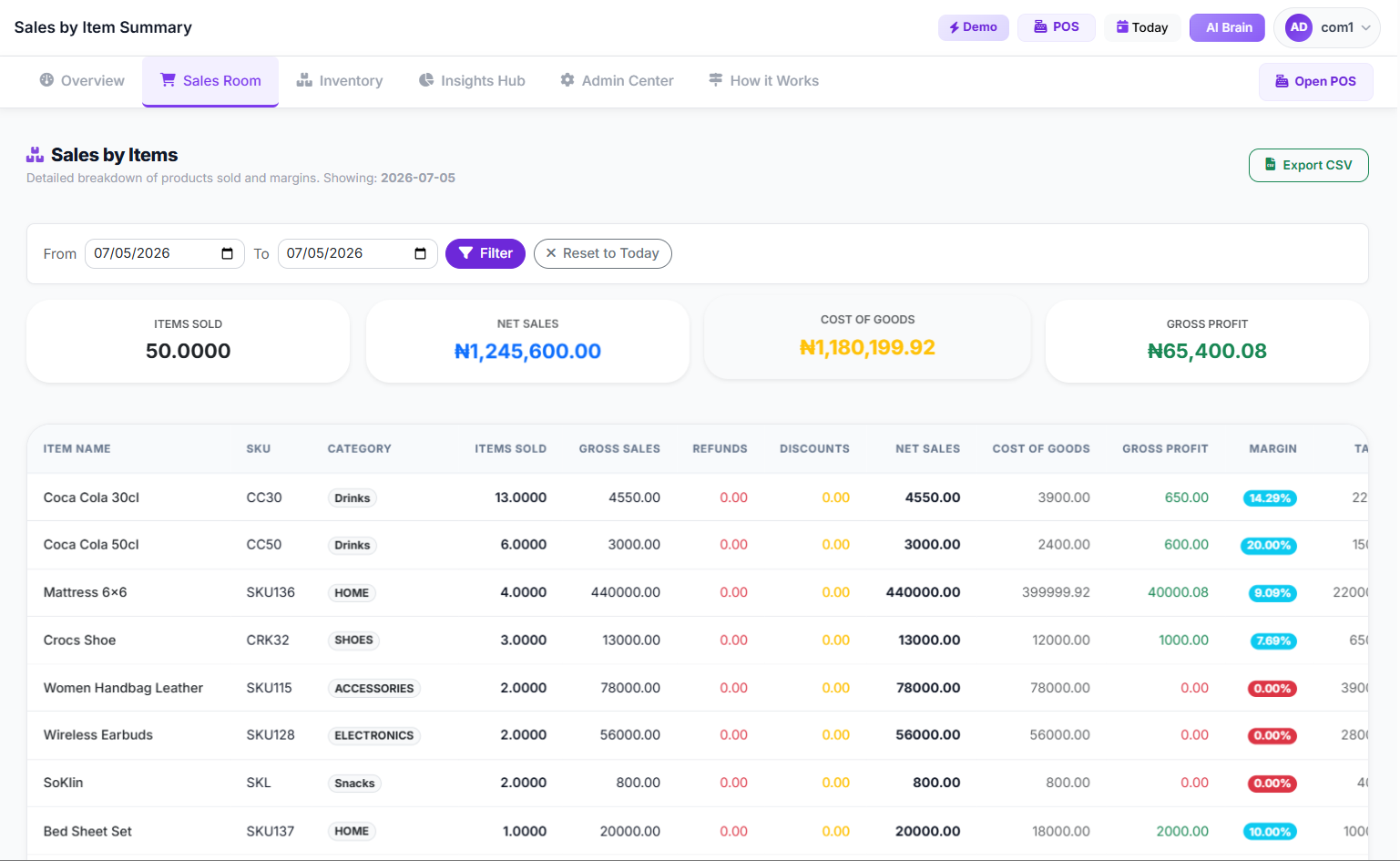 sales reports
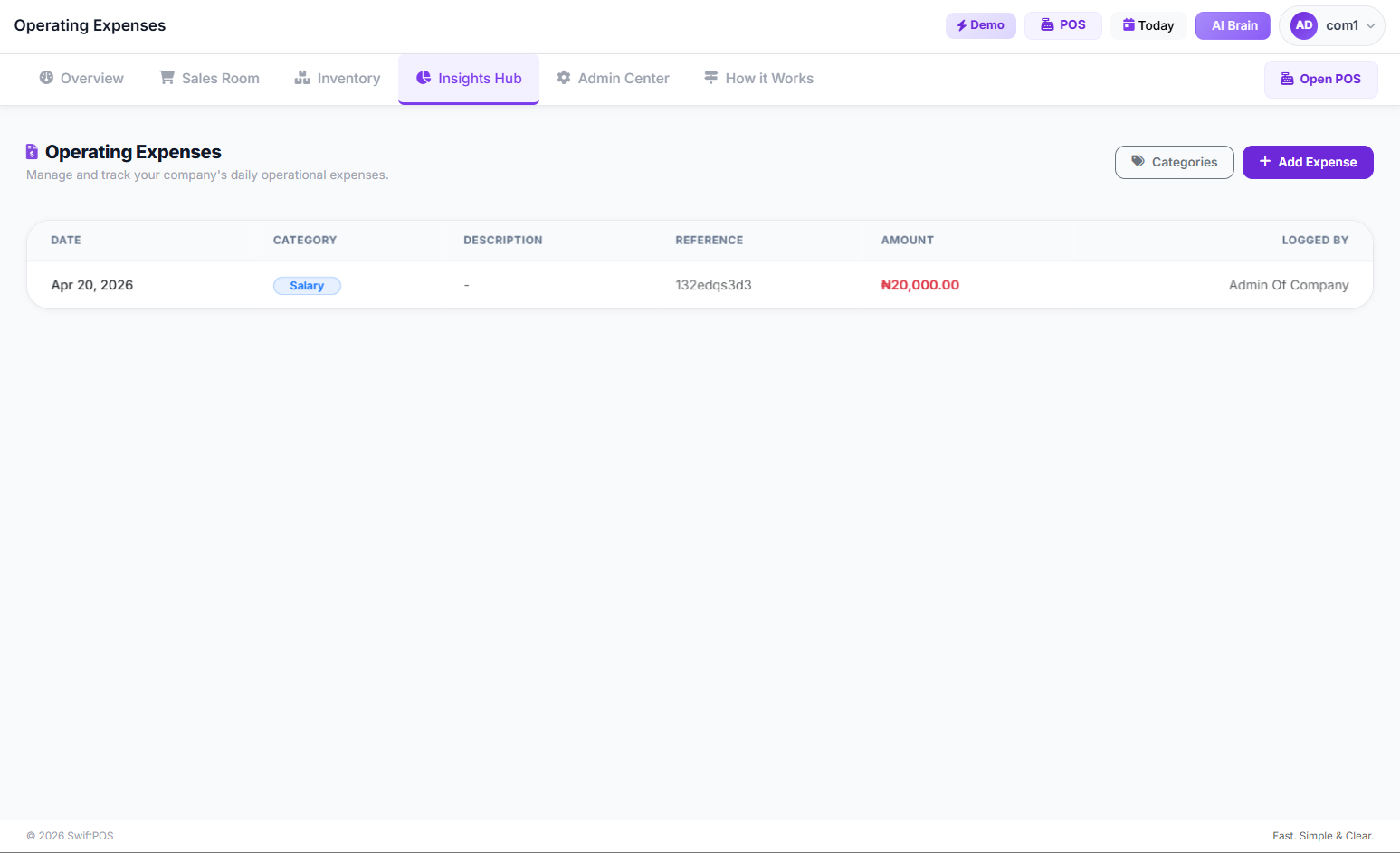
- Manage Your Expenses Tightly: Review your utility bills, supplier costs, and other overheads. Are there areas where you can optimize without compromising quality or service? Every naira saved is a naira earned. SwiftPOS NG, for instance, lets you track all your so you know exactly where your money is going.
 expenses
- Stay Compliant: The PCN can drop in for inspections at any time. Ensure all licenses are current, your premises are clean, and your records are up-to-date. Regular internal audits can help you stay on top of this.
FAQ: Answers to What You're Actually Googling
Q1: Can I start a pharmacy business in Nigeria without being a pharmacist myself?
Yes, you can, but you absolutely must employ a Superintendent Pharmacist who is duly registered with the Pharmacy Council of Nigeria (PCN). This pharmacist is legally responsible for the operations of your pharmacy. You, as the owner, handle the business side, but the professional aspect must be overseen by a licensed pharmacist. It's not a shortcut you can bypass.
Q2: What's the biggest risk when starting a pharmacy in Nigeria?
Beyond the initial capital, the biggest risk is poor inventory management leading to expired stock and stockouts. Expired drugs are a total loss and a regulatory nightmare. Stockouts mean lost sales and frustrated customers who will go elsewhere. This risk is amplified by relying on manual systems. Another significant risk is regulatory non-compliance, which can lead to hefty fines or even closure.
Q3: How long does it take to become profitable?
Honestly, it varies widely, but don't expect to be profitable in the first few months. Given the significant startup costs and monthly operating expenses, most pharmacies take 12 to 24 months to break even and start seeing consistent profits. This assumes good management, a decent location, and consistent customer flow. Your detailed business plan should project this timeline realistically.
Q4: Do I really need a generator, or can I manage with public power supply?
While technically optional, a generator is highly recommended, almost mandatory, for a pharmacy in Nigeria. Consistent power is crucial for several reasons:
- Drug Storage: Many medications require specific temperature controls (e.g., refrigeration). Power fluctuations or outages can compromise their efficacy and safety.
- Operations: Your POS system, lighting, and possibly air conditioning all rely on stable power. You don't want to halt sales or have your systems crash during a busy period.
- Patient Comfort: A well-lit, cool pharmacy is more inviting, especially during long power cuts.
The cost of fuel is an ongoing expense, but the cost of not having power can be far greater.
Q5: Can I start a pharmacy with less than ₦2 million?
It would be extremely challenging, if not impossible, to start a fully licensed and stocked retail pharmacy in Nigeria with less than ₦2 million in 2026. The PCN registration, rent, renovation, and initial stock alone would quickly exceed that. You might be able to start a very small patent medicine store (PPMVL), but that's a different category with different regulations and limitations on what you can sell. For a proper pharmacy, you need more substantial capital.
Ready? Here's Where to Start
Starting a pharmacy business in Nigeria is a serious undertaking, but it's also a rewarding one. You're not just selling products; you're providing essential healthcare services to your community. The key is to approach it systematically, understand the real costs, and put robust systems in place from the very beginning.
Don't let the numbers scare you, but respect them. Plan meticulously, get your licenses in order, and focus on building an efficient, compliant operation. If you're ready to get organized and make sure every naira you spend and earn is accounted for, consider exploring a comprehensive system like SwiftPOS NG. It’s built for Nigerian businesses like yours, helping you manage everything from inventory and staff to sales and profits, so you can focus on serving your community without the headache of manual record-keeping. You can even download the SwiftPOS Android Application to manage your business on the go.
Start by sketching out your business plan, contacting the PCN in your state for exact requirements, and then building your team and systems. The journey is long, but with the right preparation, you can build a truly profitable and impactful pharmacy.
Written by SwiftPOS Team
Practical guides from the retail specialists at Nura Mustapha Technologies Limited, for modern Nigerian merchants.